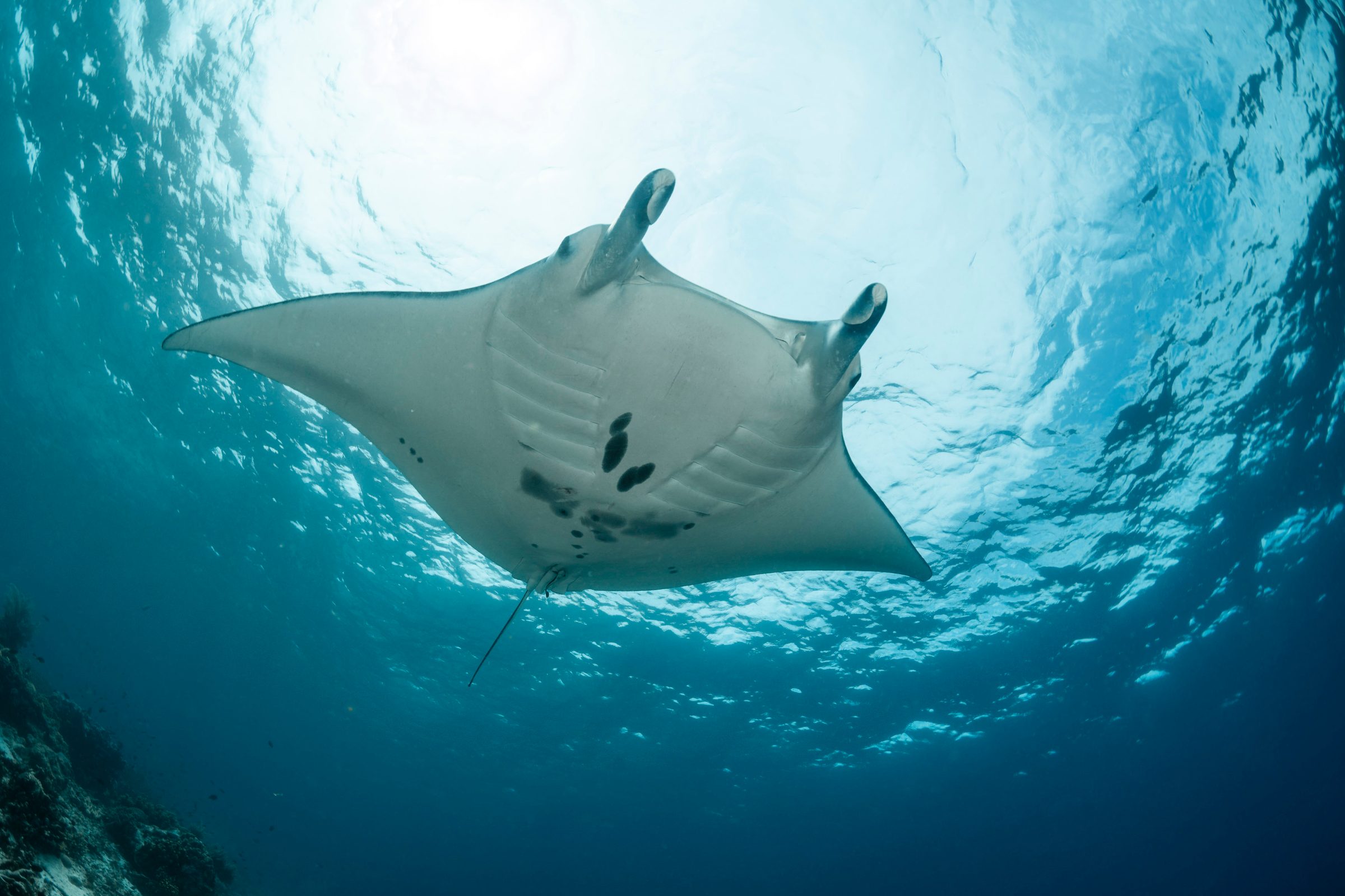




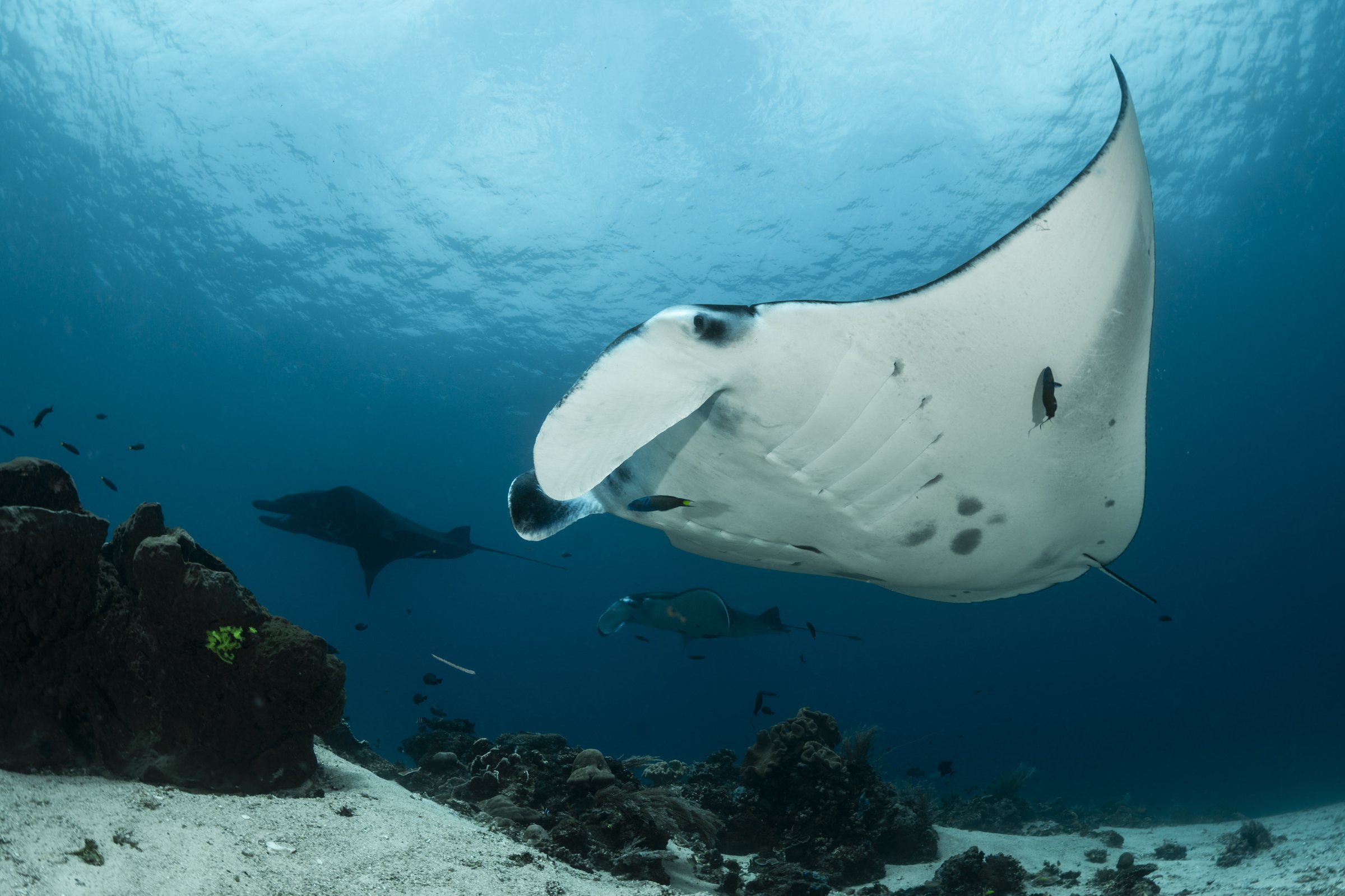
A reef manta ray seen from below, gliding beneath the sunlit surface.

Adopt a Manta Ray

The world's largest rays, studied by MMF scientists in Mozambique, South Africa, Indonesia, and the USA.

Adopt a manta ray · $39Personalized certificate · Card with your message · Instant download

Christmas gift? Download it in minutes, with a free Christmas card.

Your manta ray adoption

A manta ray adoption comes with a personalized certificate. Your gift supports MMF's work, including the scientists who identify, track, and protect manta rays in Mozambique, South Africa, Indonesia, and Florida, and who compile oceanic manta sightings in Hawaii.

  • 7 mWingspan of the oceanic manta, the largest ray
  • 3Manta ray species, the Atlantic manta described in 2025
  • 30 yearsSpan over which individual reef mantas were photographed
  • ~447reef manta rays at Nusa Penida in 2022, up from about 170 in 2012

What you'll give

The certificate and your card arrive the moment you adopt, ready to give, print or send as a gift that opens on the day.

You can change the name after checkout. It stays in your browser and is not stored by MMF.

Nothing to ship and no waste: an instant gift for the ocean lover who has everything.

Plus a gift card with your own message:

  • Christmas gift cardChristmas
  • Birthday gift cardBirthday
  • Valentine's Day gift cardValentine's Day
Dr. Simon Pierce

Signed by the scientist

Every adoption certificate is signed by MMF's Executive Director.

Dr. Simon PierceExecutive Director, Marine Megafauna Foundation

Why adopt a manta ray?

Manta rays are the largest rays in the world: the oceanic manta reaches about 7 meters (23 feet) from wing tip to wing tip. They feed on plankton, cannot sting, and are harmless to people. A manta ray adoption supports MMF's work, including the long-term monitoring that shows whether their protection is working.

The IUCN Red List classifies the oceanic manta as Endangered and the reef manta as Vulnerable. Fishing is the main threat, much of it fed by the trade in dried gill plates, which vendors sell as a health tonic. A 2026 global analysis estimated that fisheries catch about 264,500 manta and devil rays a year.

A female usually gives birth to a single pup after a pregnancy of about a year, and manta rays have one of the lowest population growth rates of any shark or ray, so recovery from heavy fishing can take decades.

At Praia do Tofo in southern Mozambique, our surveys recorded a 99% fall in reef manta sightings and a 92.5% fall in oceanic manta sightings between 2003 and 2023. In contrast, at Nusa Penida in Indonesia, where mantas have been under national protection since 2014, the reef manta population rose from about 170 in 2012 to about 447 in 2022, a recovery that suggests those protections are working.
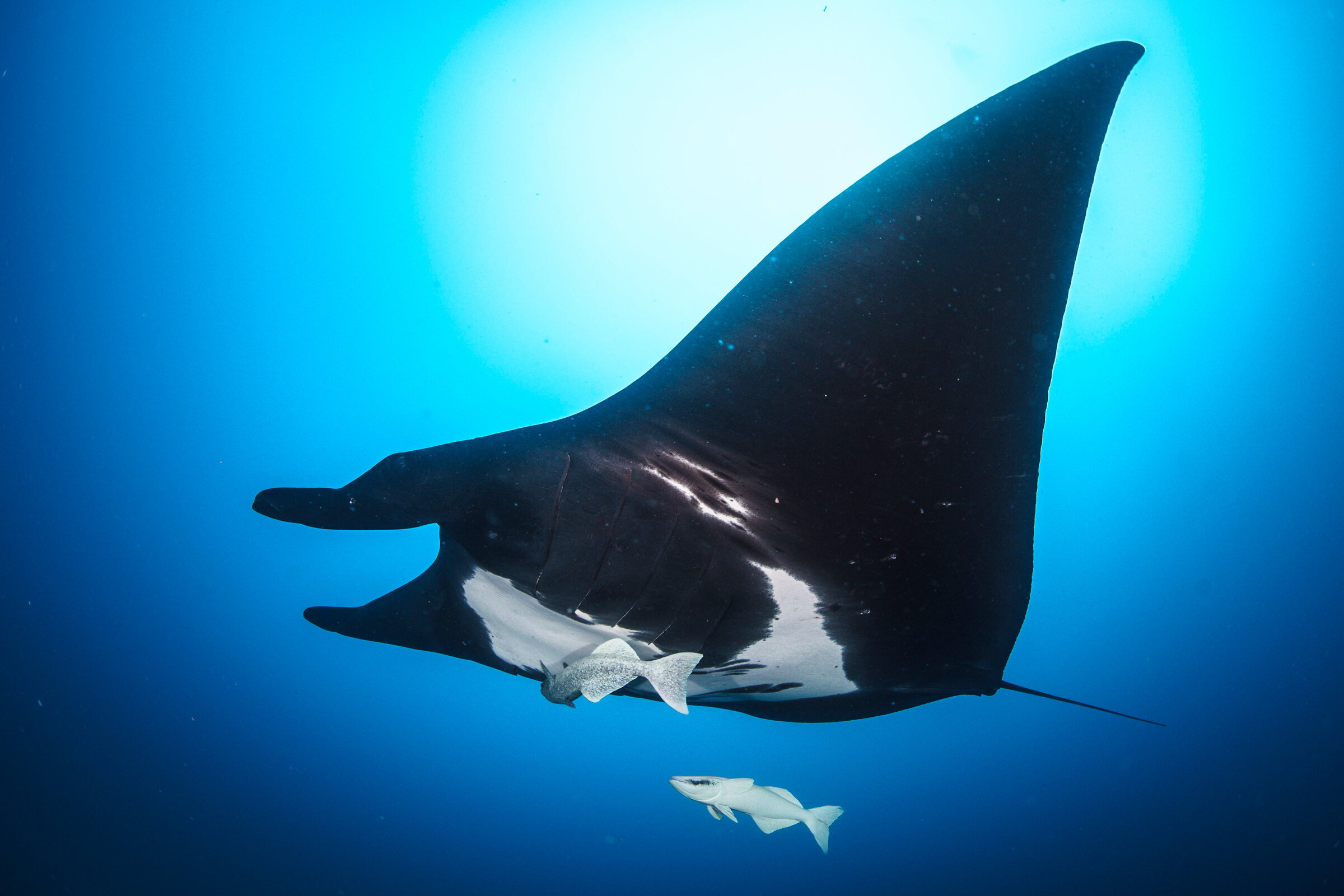
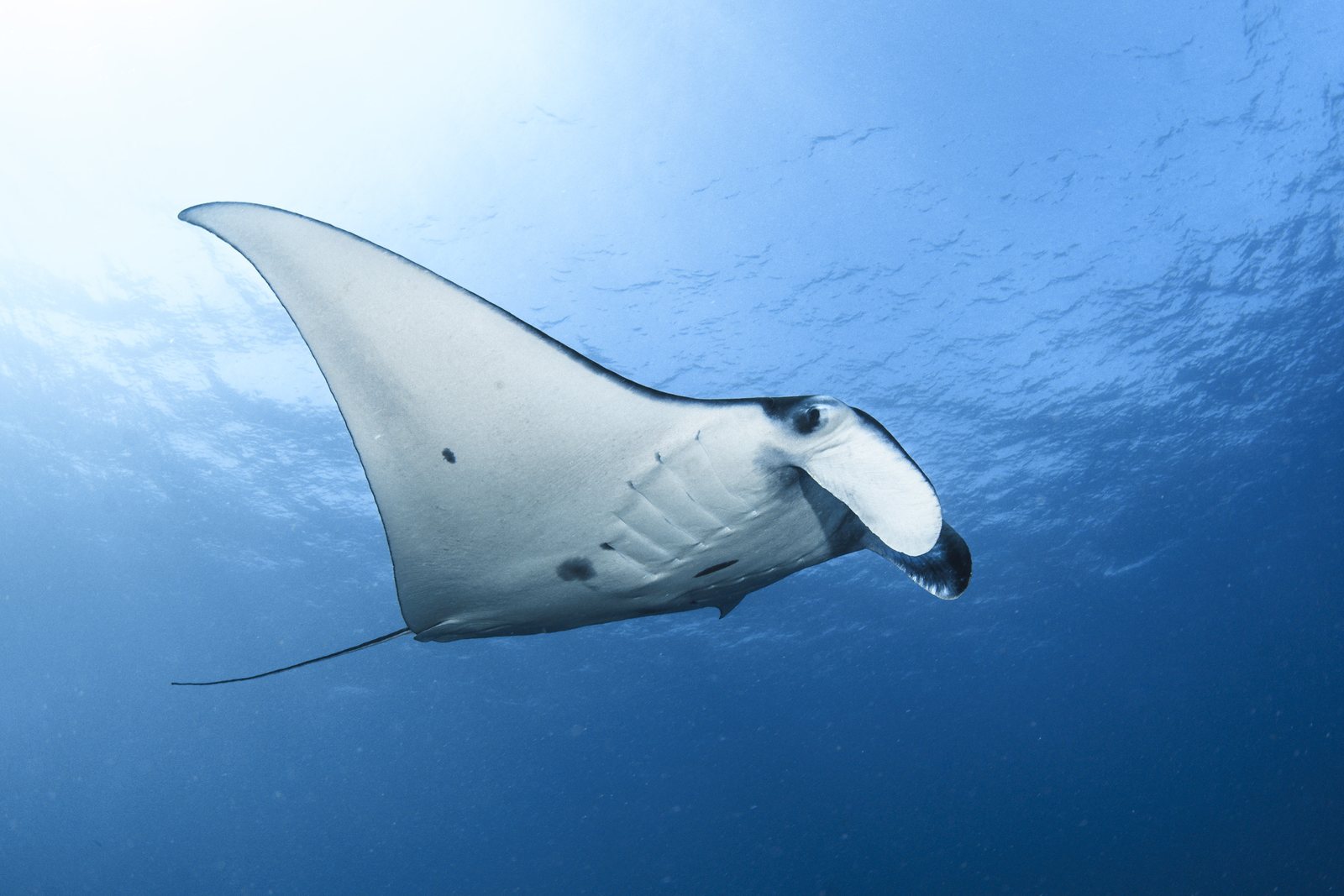
An oceanic manta ray silhouetted against the sun from below.

About manta rays

There are three species: the reef manta ray, the oceanic manta ray, and the Atlantic manta ray, which was formally described in 2025. Until 2009, science recognized a single manta species. MMF co-founder Dr. Andrea Marshall showed that there were two.

Most adult reef mantas measure 3 to 4.9 meters (10 to 16 feet) across, and their pups are born at 1.3 to 1.5 meters (4 to 5 feet). Mantas eat zooplankton, especially crustaceans such as copepods and krill, which rigid plates on their gills sieve from the water. Chemical signatures in oceanic manta tissue from Ecuador suggest that most of their diet comes from deep water. In a separate tracking study off northern Peru, oceanic mantas dived deeper at night than by day, one reaching 648 meters (2,130 feet).

Reef mantas live along coastlines of the Indian and Pacific Oceans, oceanic mantas range more widely offshore, and Atlantic mantas occur only in the Atlantic and Caribbean.

Every manta has a unique pattern of spots on its underside that does not change substantially over the years, so a photograph identifies an individual. That is how we know reef mantas live for at least 30 years: individuals have been photographed across three decades.
How your manta ray adoption helps

Your manta ray adoption supports MMF's work as a whole, including our manta ray projects. MMF scientists led the IUCN Red List assessments for the reef and oceanic manta rays, and led the technical work that placed both species on Appendix I of the UN Convention on Migratory Species.

  • Mozambique and South Africa. Our Mozambique manta research has built the largest and longest-running manta ray photo-ID databases in Africa, and our research and advocacy were a major factor in the government's decision to give manta and devil rays legal protection in January 2021. Our cross-border tracking follows tagged rays across the border into South African waters.
  • Indonesia. Since 2012, the Indonesia Manta Ray Project has identified more than 2,000 reef manta rays at Nusa Penida, Komodo, and Sangalaki. Finding the same mantas at sites 450 kilometers (280 miles) apart helped bring about Indonesia's 2014 national ban on manta ray fishing, and our 2019 carrying-capacity study at Komodo led directly to limits on boat and diver numbers at Karang Makassar.
  • Florida. The Florida Manta Project, founded in 2016, identified potential nursery habitat for young rays along the developed coast of Palm Beach County, where 27% of identified rays were seen foul-hooked or entangled in fishing line. Our team also collected the specimen that became type material for the Atlantic manta ray, described in 2025 with MMF co-founder Dr. Andrea Marshall among its co-describers.
  • Hawaii. The Hawaii Oceanic Manta Project, led by Jessica Pate with Mark Hackney, compiles sightings from researchers and divers to describe where and when oceanic manta rays occur around the islands.

Ready to help? A manta ray adoption is $39, with a personalized certificate to download straight after checkout.

Adopt a manta ray · $39
How it works

  1. 1

    Adopt

    Pay securely in the pop-up. Your receipt arrives by email.

  2. 2

    Add the name

    Type the adoptee's name and see it on the certificate.

  3. 3

    Download and give

    Download the certificate and a gift card, then print or forward them.

Manta ray adoption FAQs

What is an MMF adoption?

An MMF adoption is a gift to MMF's work as a whole. We use it where it does the most good, and that includes the research and conservation behind the animal you chose. No animal is taken from the wild or sent to you. Your certificate records your support.

What do I receive?

A personalized adoption certificate (PDF) with the name you choose and the date, ready to download as soon as checkout is complete. You can also make a gift card for a birthday, Valentine's Day, or Christmas with your own message. Both are yours to print or send by email.

Can I give an adoption as a gift?

Yes. Type the recipient's name for the certificate and write your message on the gift card. Because everything is digital, it works as a last-minute gift too.

How do I get my certificate?

After checkout you are taken to a page where you type the name and download the certificate. The link to that page is also in your receipt email, so you can come back to it later.

Is my adoption tax-deductible?

Your adoption is tax-deductible in the USA. MMF is a registered 501(c)(3) non-profit conservation organization, and you receive a receipt by email.

Is anything sent by mail?

No. The certificate and card are digital files, so nothing is printed or shipped.

Are manta rays dangerous?

No. Manta rays are harmless to people: they feed on plankton, cannot sting, and do not attack swimmers or divers. Reef mantas have no tail spine at all, and oceanic and Atlantic mantas carry only a small, non-functional residual spine at the base of the tail.

How big do manta rays get?

The oceanic manta ray is the largest ray in the world, reaching about 7 meters (23 feet) from wing tip to wing tip. The reef manta ray is smaller, with most adults between 3 and 4.9 meters (10 and 16 feet) across.

How long do manta rays live?

Reef manta rays live for at least 30 years, and probably considerably longer, because individuals have been photographed across three decades. The IUCN Red List estimates a maximum age of about 45 years, based on the reef manta.

Are manta rays endangered?

The IUCN Red List classifies the oceanic manta as Endangered and the reef manta as Vulnerable, and the Atlantic manta ray has not yet been assessed. Since March 5, 2026, all manta and devil rays have been listed on CITES Appendix I, which bans international commercial trade.

Adopt a Manta Ray · $39

Secure checkout by Donorbox. As soon as your adoption is complete you can make your certificate and gift card.

Loading secure checkout…

Form not loading? Open the secure checkout in a new tab.

Our work is made possible by MMF’s core supporters

Join them as a core supporter