Manta Rays · Conservation
MMF’s Indonesian Research shapes New IUCN Important Shark and Ray Areas
The Marine Megafauna Foundation (MMF) is immensely proud of its role in leading the applications for the designation of new Important Shark and Ray Areas (ISRAs) by the International Union for Conservation of Nature (IUCN) (opens in a new tab).
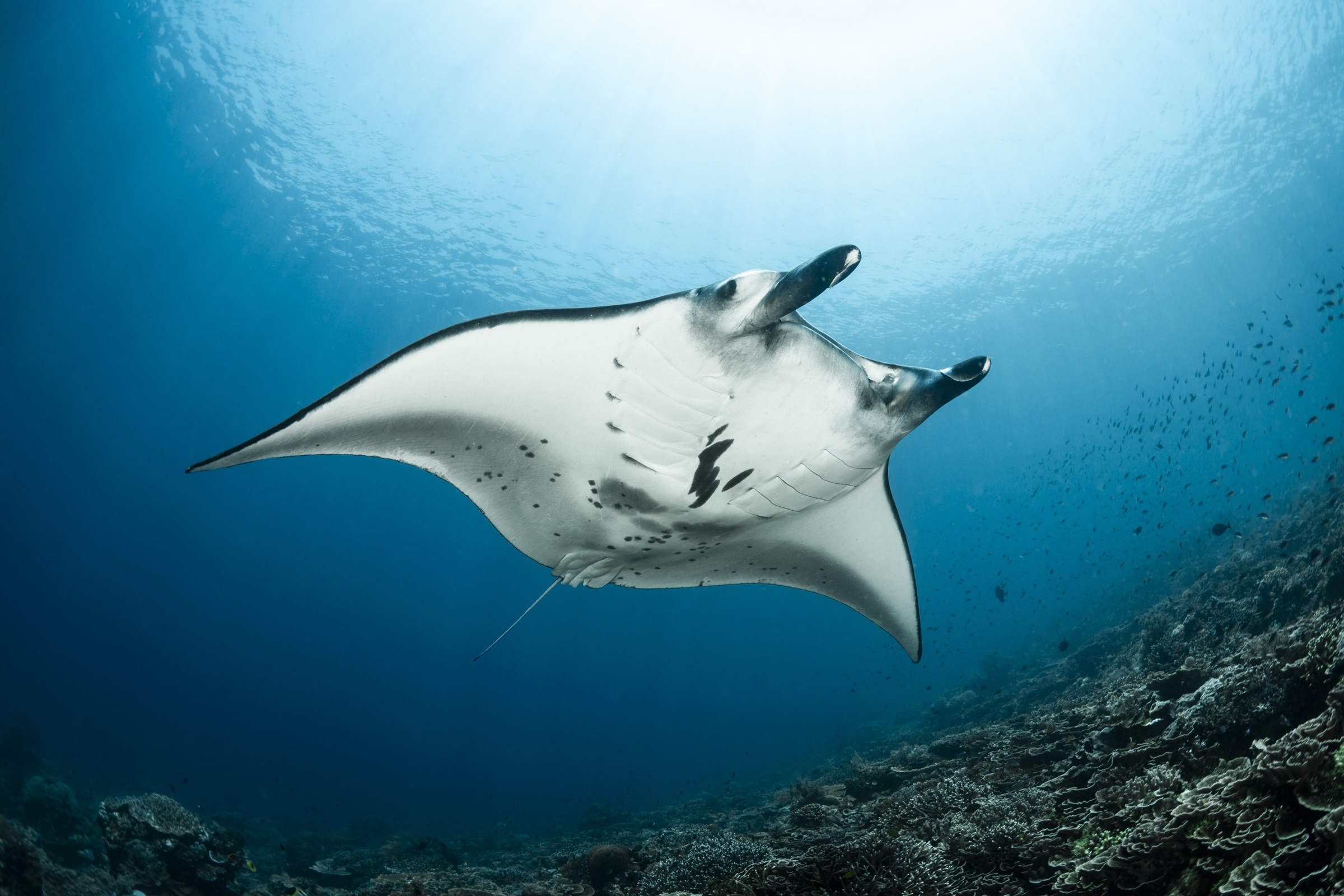
MMF’s committed research in Indonesia has been instrumental in pinpointing vital habitats for reef manta rays. These areas, acknowledged for their significance in highlighting biodiversity hotspots for elasmobranch species, serve as essential guides for developing and executing area-based conservation strategies, including Marine Protected Areas (MPAs). This marks a significant advancement in marine conservation research.
Long-term research secures ISRA’s for key manta ray areas
MMF’s long-term research in Indonesia has played a crucial role in establishing three new ISRAs:
-
Nusa Penida ISRA View PDF (opens in a new tab)
-
Komodo Islands ISRA View PDF (opens in a new tab)
-
Derawan Islands ISRA View PDF (opens in a new tab)
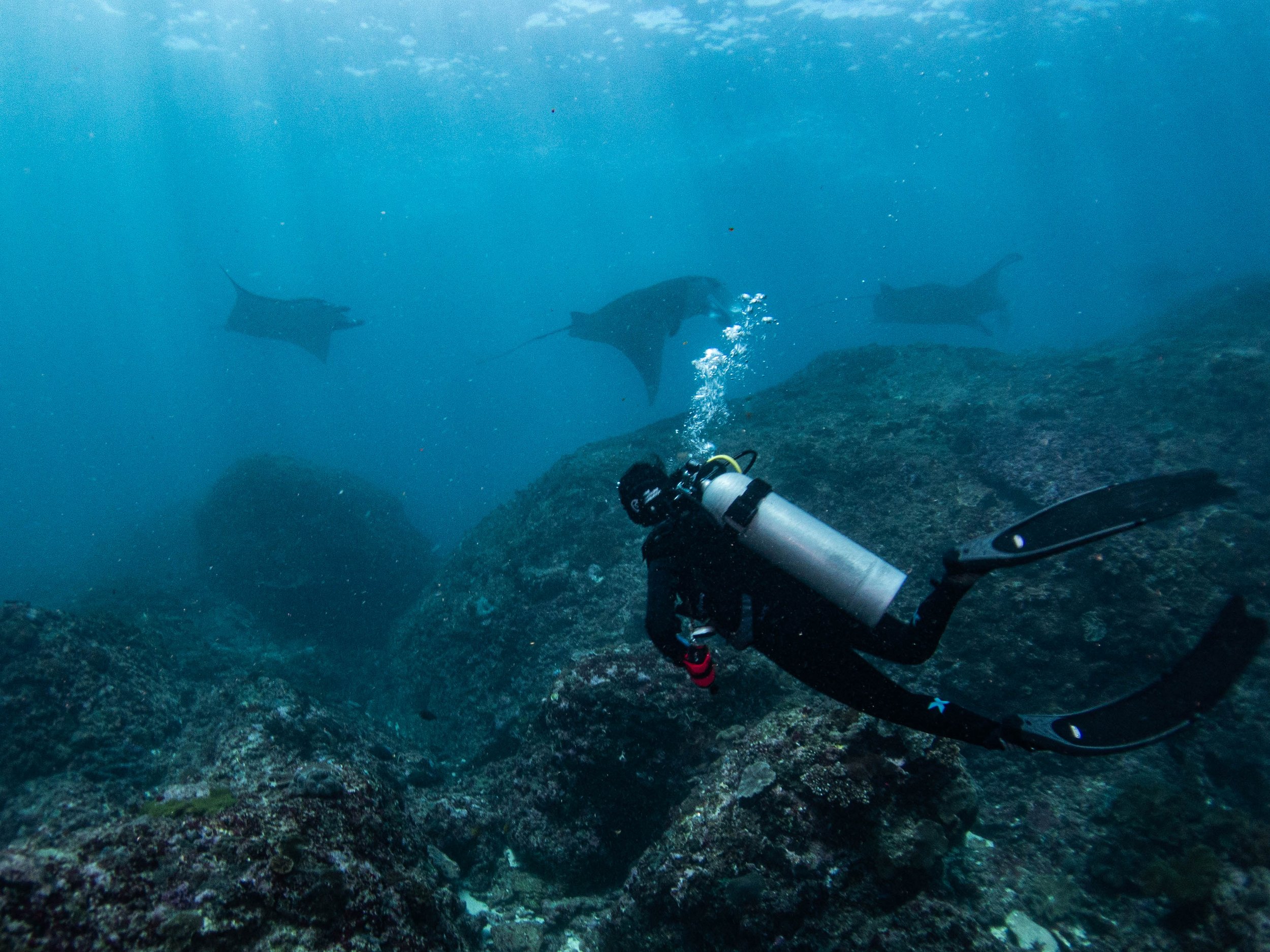
“The decade-long observation of the population dynamics and demographics, habitat use, and threats of reef manta rays in Nusa Penida and the Komodo Islands have directly contributed to the establishment of the two ISRAs,” says Janis Argeswara, who leads MMF Indonesia. “Both ISRAs are identified as critical foraging, cleaning, and reproductive areas for reef manta rays. These regions are home to significant aggregations of reef manta rays and across all life stages, with over 800 identified individuals in Nusa Penida and more than 1,200 identified individuals in the Komodo Islands.”
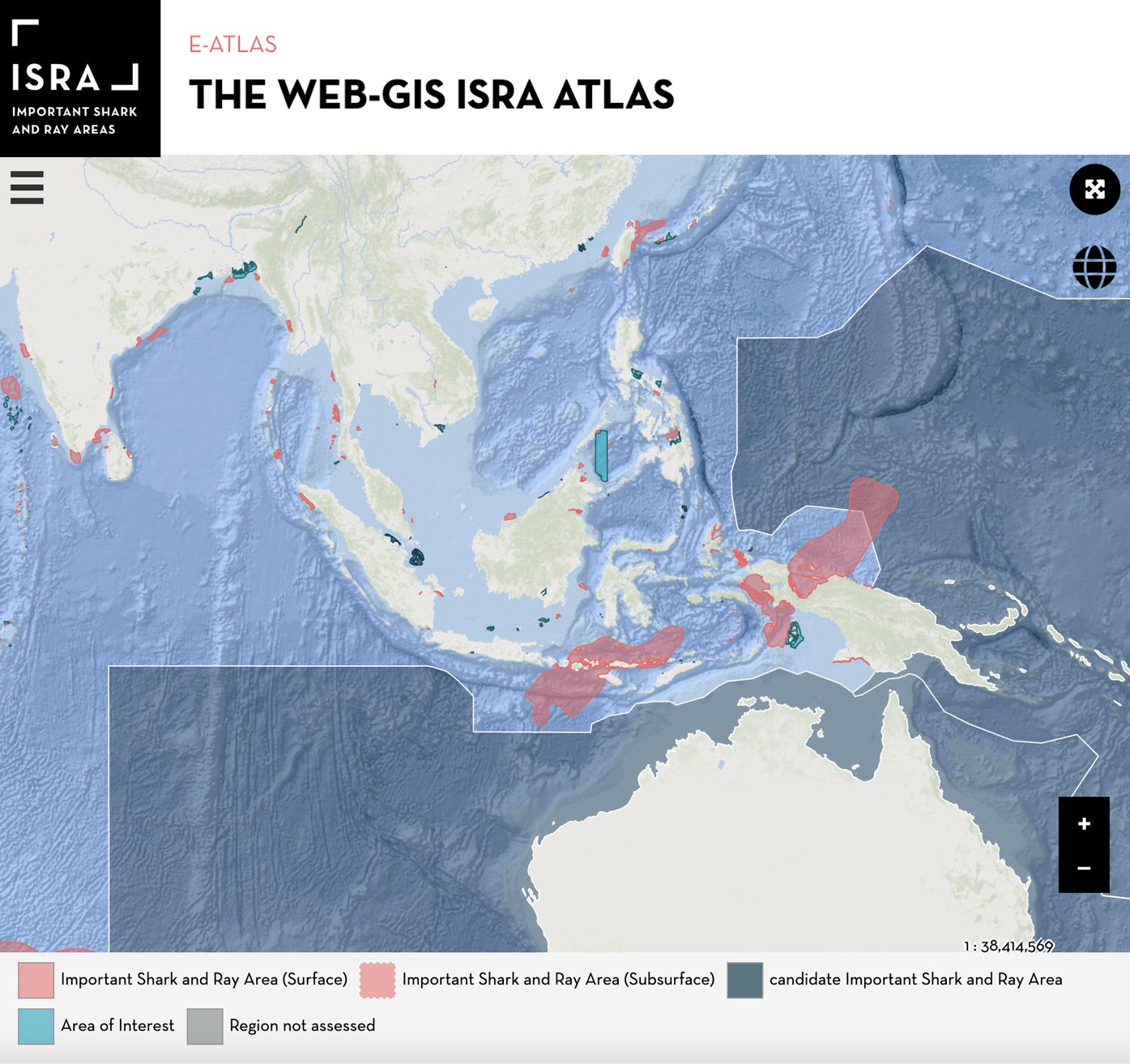
IUCN’s Marine e-Atlas shows the Important Shark and Ray Areas (ISRA) in red.
Collaboration leads to Derawan Islands ISRA designation
In collaboration with researchers from various organizations, the Derawan Islands, located off the eastern Kalimantan coastline, were designated as an ISRA for three key species: Pelagic Thresher Sharks, Indo-Pacific Leopard Sharks, and Reef Manta Rays.
Through MMF’s three-year monitoring initiative, we identified vital foraging, cleaning, and reproductive habitats for the smaller reef manta ray aggregation. We’re excited to continue our long-term monitoring program, focusing on their population demographics and dynamics, habitat use, and threats, for reef manta rays in the Derawan Islands to deepen our understanding of this area’s aggregation.
Teamwork paves the way for conservation success
The compilation and analysis of many years of data from these sites was a massive team effort, with additional contributions from Indo Ocean Project (opens in a new tab), WWF Indonesia (opens in a new tab), IUCN SSC Shark Specialist Group, Mataram University (opens in a new tab), Thresher Shark Indonesia, Duke University (opens in a new tab), Green Nirvana Resort Maratua, and Scuba Junkie Sangalaki, and the entire process was guided by the ISRA team.
ISRAs: A foundation for focused conservation efforts
The creation of Important Shark and Ray Areas (ISRAs) in Asian waters serves as a crucial foundation for focused conservation endeavors. These areas are chosen through thorough scientific analysis, prioritizing sites with significant biodiversity of sharks, rays, and chimaeras, while also considering their importance for breeding, feeding, or other critical aspects of their life cycle.
This designation process acknowledges the ecological importance of these areas and lays the groundwork for improved conservation efforts. Through the ISRA e-Atlas (opens in a new tab), a dynamic and user-friendly tool, governments, conservationists, and communities are empowered to make well-informed decisions, promoting the safeguarding of endangered marine species and their essential habitats.
About The Marine Megafauna Foundation
The Marine Megafauna Foundation (MMF) is a non-profit conservation organization based in Palm Beach, Florida. MMF’s story began with manta ray research in Mozambique in 2003, and its US 501(c)(3) organization was incorporated in 2012. MMF is dedicated to the research and protection of threatened marine megafauna, focusing on large marine species like sharks, rays, and sea turtles, often referred to as ‘megafauna’. Their mission is to ensure these majestic creatures thrive in harmony with humans. With a global reach, MMF works to understand these species’ intricacies and the threats they face. Discover more at www.marinemegafauna.org
About ISRA (Important Shark and Ray Areas):
ISRA, an initiative by the International Union for Conservation of Nature (IUCN), plays a critical role in the conservation of shark and ray species worldwide. These designated areas are identified based on their ecological significance as key habitats for sharks and rays, often marking breeding grounds, feeding areas, or migration routes. The ISRA program aims to highlight these essential zones to guide global and local conservation efforts, including the implementation of Marine Protected Areas (MPAs). By focusing on these vital regions, ISRA seeks to ensure the long-term survival and health of these crucial marine species, contributing significantly to the broader goal of maintaining marine biodiversity and ecosystem balance.







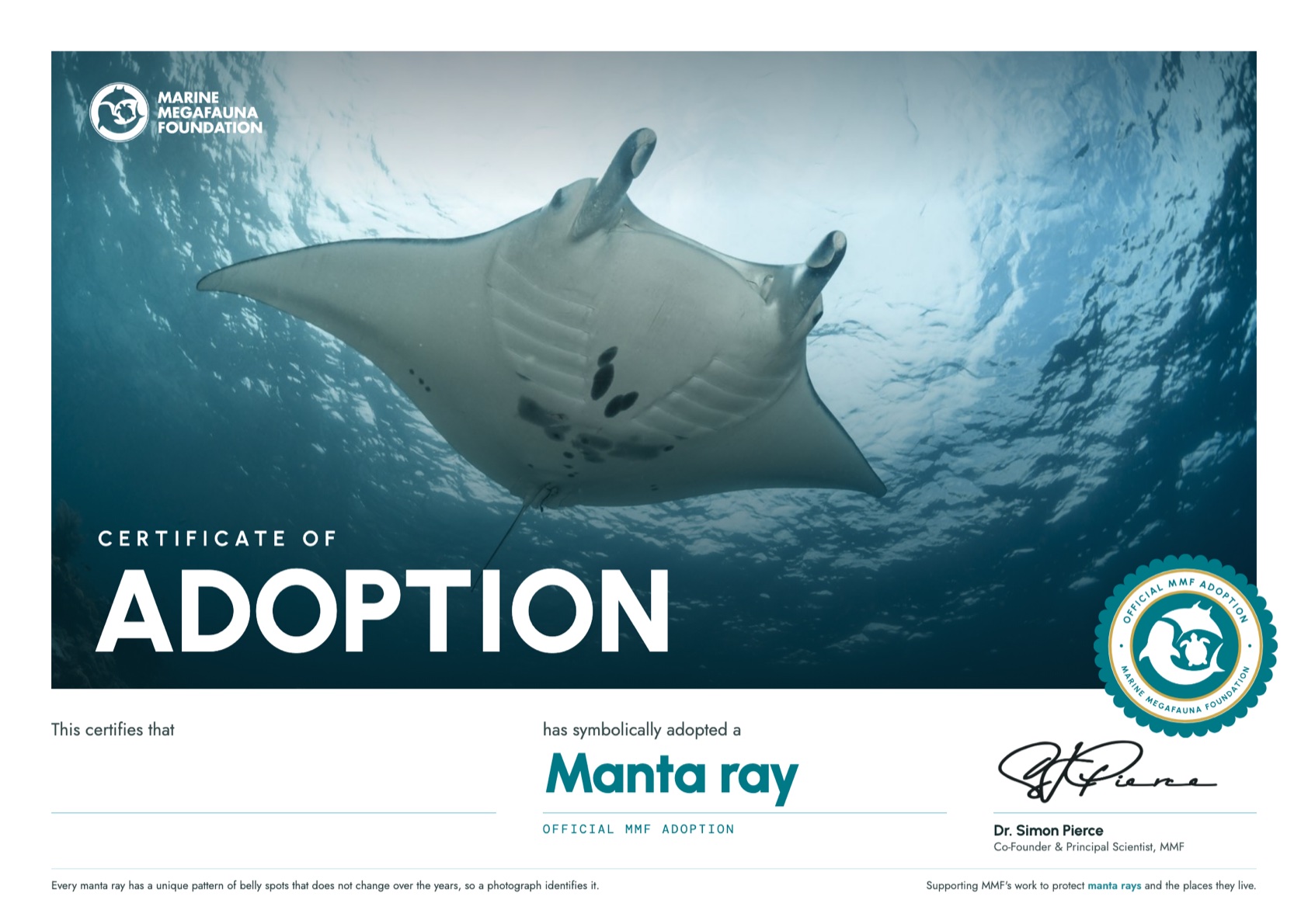

Adopt a manta ray
The world's largest rays, studied by MMF scientists in Mozambique, South Africa, Indonesia, and the USA.
Get news like this in your inbox
Field news, new science, and ways to help, a couple of times a month.
Support work like this
Gifts from supporters fund MMF's research, education, and conservation work to protect the ocean's giants.
Related projects
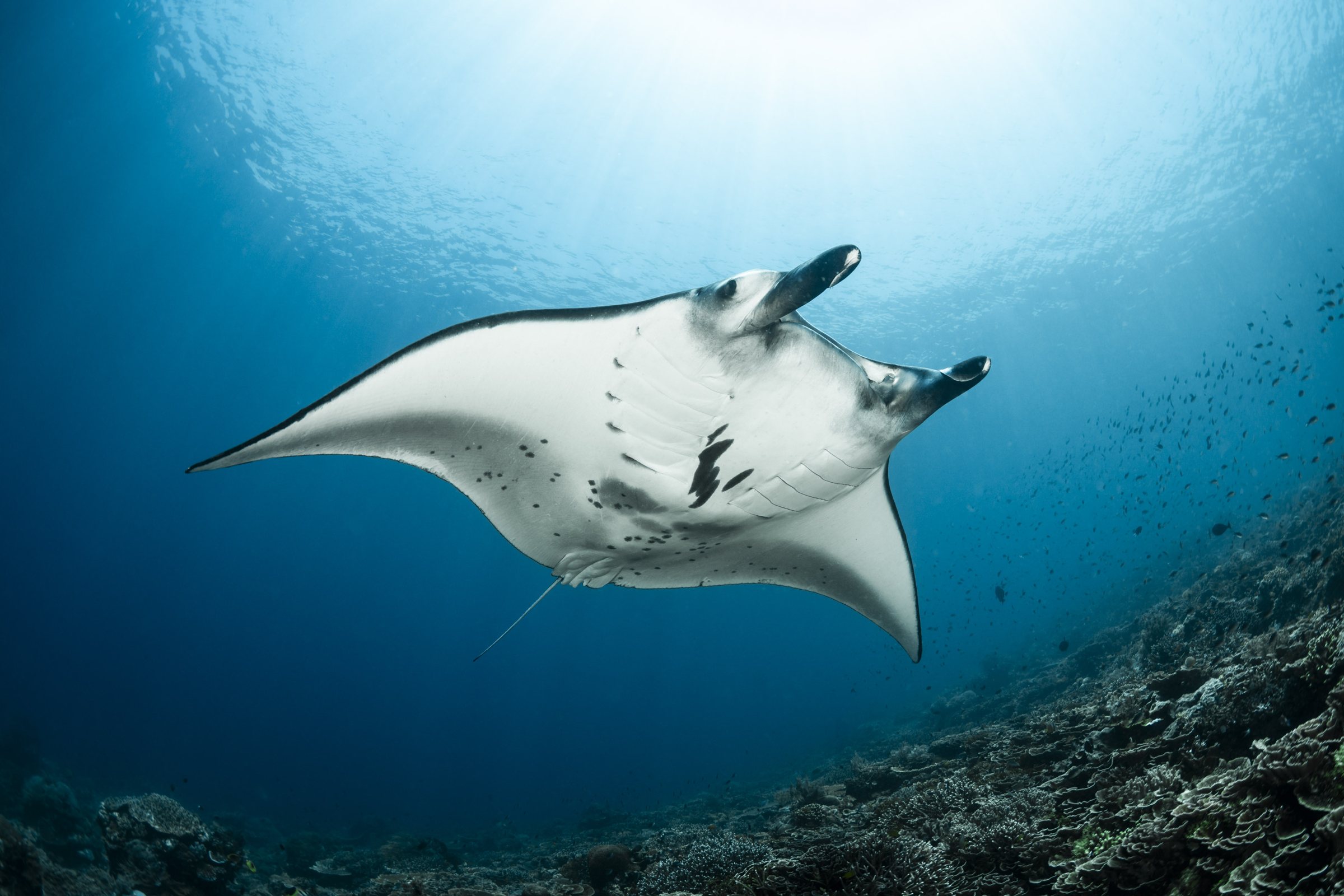 IndonesiaIndonesia Manta Ray ProjectWe have followed Indonesia's reef manta rays since 2012, and the data helped protect the species nationwide.
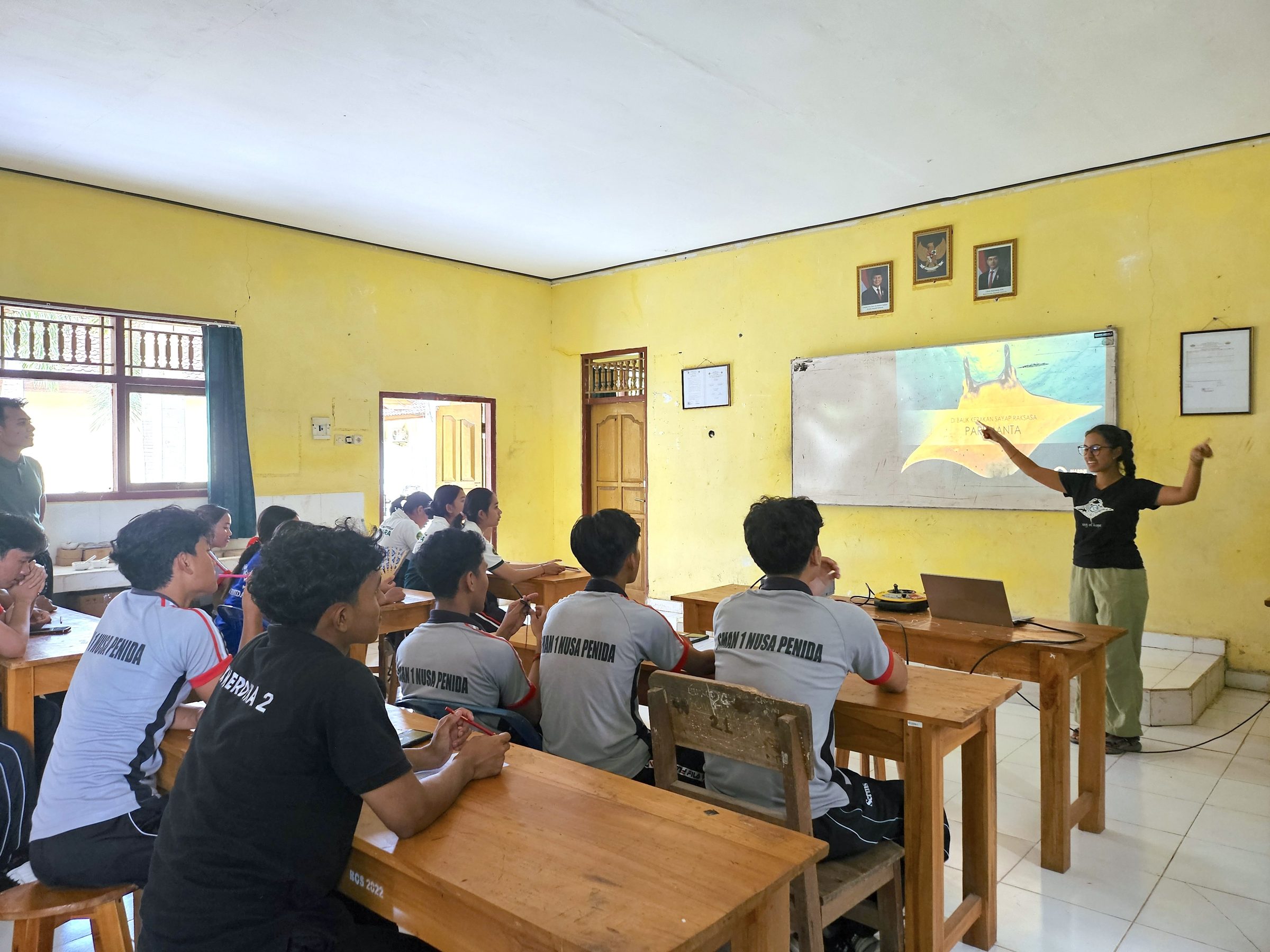 IndonesiaEducation and OutreachPublic talks, school visits with virtual reality, citizen science with dive centers, and hands-on training that build understanding and care for Indonesia's marine megafauna.
 IndonesiaThe Lesser Sunda Seascape Tracking NetworkThe first step toward an acoustic telemetry network stretching from Bali to Komodo National Park, built to show how reef manta rays move between Indonesia's aggregation sites.