
Mozambique, South Africa · Global Manta Ray Program · Since 2022
African Manta Ray Project
Manta rays tagged in Mozambique turn up in South African waters, so we follow them across the border to protect them as one population.
Southern Africa holds the largest known manta ray populations on the continent, and they are declining fast. This project follows the rays wherever they go, across a national border, so that they can be protected as one population.
For most of the twenty years MMF has studied manta rays in Mozambique, they looked like a local population, moving between cleaning stations along the Inhambane coast. Tracking has changed that picture. Reef manta rays (Mobula alfredi) tagged in Mozambique have been recorded 870 km away at Sodwana Bay and inside South Africa’s iSimangaliso Wetland Park, and the species’ known range now extends 140 km further south than it did in 2022. A manta ray protected in Mozambique is unprotected the moment it crosses into South African waters, and the reverse is also true.
The urgency comes from the numbers. Standardized surveys at Praia do Tofo show a 99% fall in reef manta ray sightings and a 92.5% fall in oceanic manta ray (Mobula birostris) sightings between 2003 and 2023. At Závora, sightings dropped 82% between 2009 and 2023. The IUCN Red List classifies the oceanic manta ray as Endangered and the reef manta ray as Vulnerable, assessments built on this data.
Dr. Nakia Cullain leads MMF’s manta and devil ray research across Mozambique and the cross-border tracking program.
Objectives
Our aim is to describe the southern African manta ray population as a single unit, and give both governments the evidence to manage it that way.
- Map where manta rays go along the coast from Mozambique’s Bazaruto Archipelago to South Africa’s Eastern Cape, and how much of that range falls inside protected areas.
- Establish the size, structure, and reproductive rhythm of the remaining population.
- Analyze and publish two decades of oceanic manta ray records from Mozambique, the largest such dataset in Africa and still largely unpublished.
- Turn the results into transboundary management: shared monitoring, aligned protection, and spatial measures that cover the movement corridor.
Help protect Africa's manta rays
Manta rays don't stop at the border, and neither does our work. Your gift keeps the tracking, photo-identification, and surveys going in both Mozambique and South Africa.
Our work on manta rays in Mozambique and South Africa
Tracking manta rays across the border
Manta rays fitted with small acoustic transmitters are logged every time they pass a receiver. MMF maintains receiver arrays at Závora and in the Bazaruto Archipelago, and works with South African partners, including Dr. Ryan Daly of the Oceanographic Research Institute (ORI), whose receivers extend the network south through iSimangaliso. The combined array has produced the longest movements yet documented for this population, including animals spending sustained periods inside iSimangaliso.
Pop-up satellite tags record where the rays travel and how deep they dive between receivers, then detach and transmit. Tags deployed in both Mozambique and South Africa are filling in the offshore parts of the picture. Dr. Stephanie Venables established MMF’s acoustic and satellite telemetry program for manta rays in southern Mozambique.
Identifying individual rays
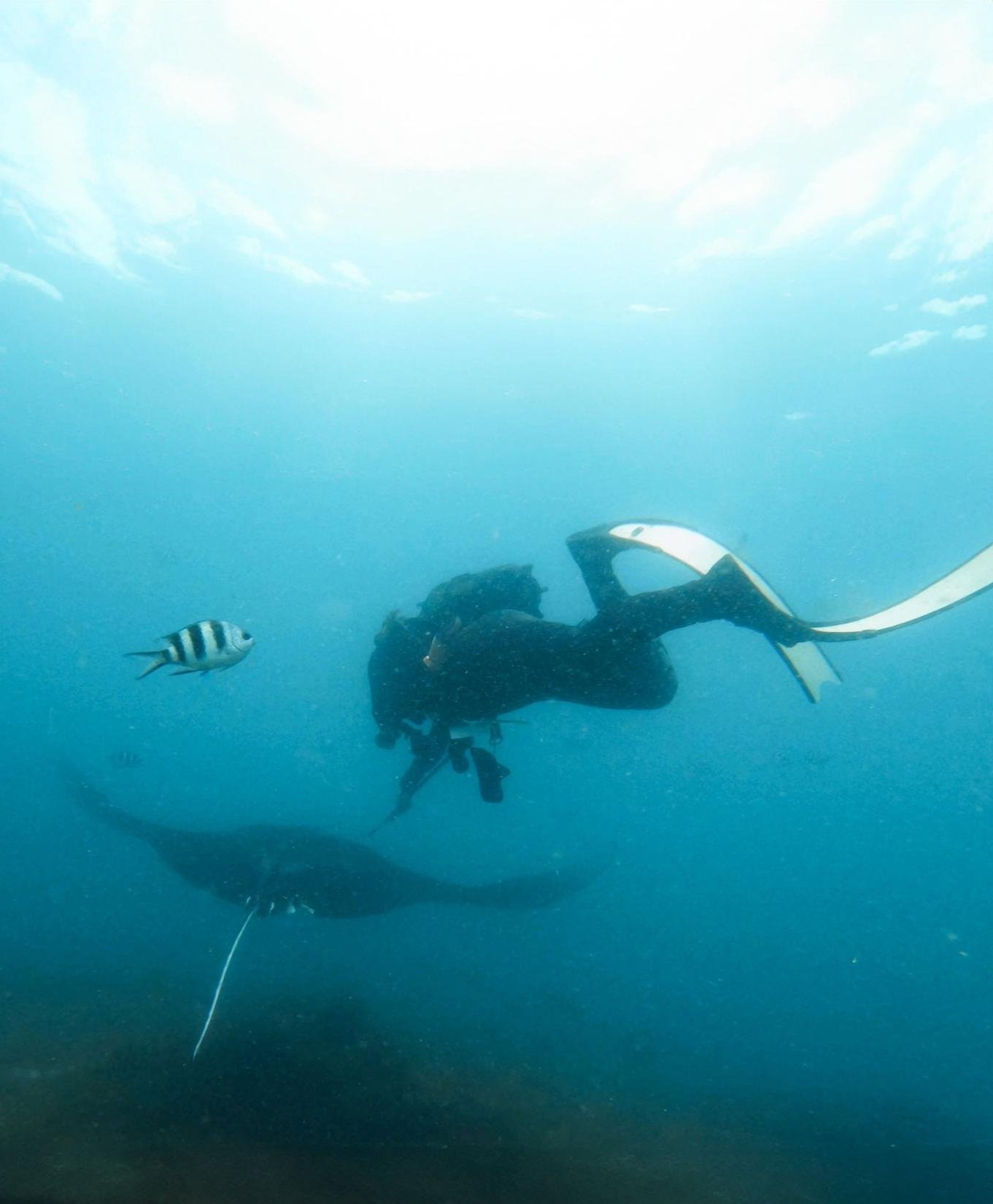
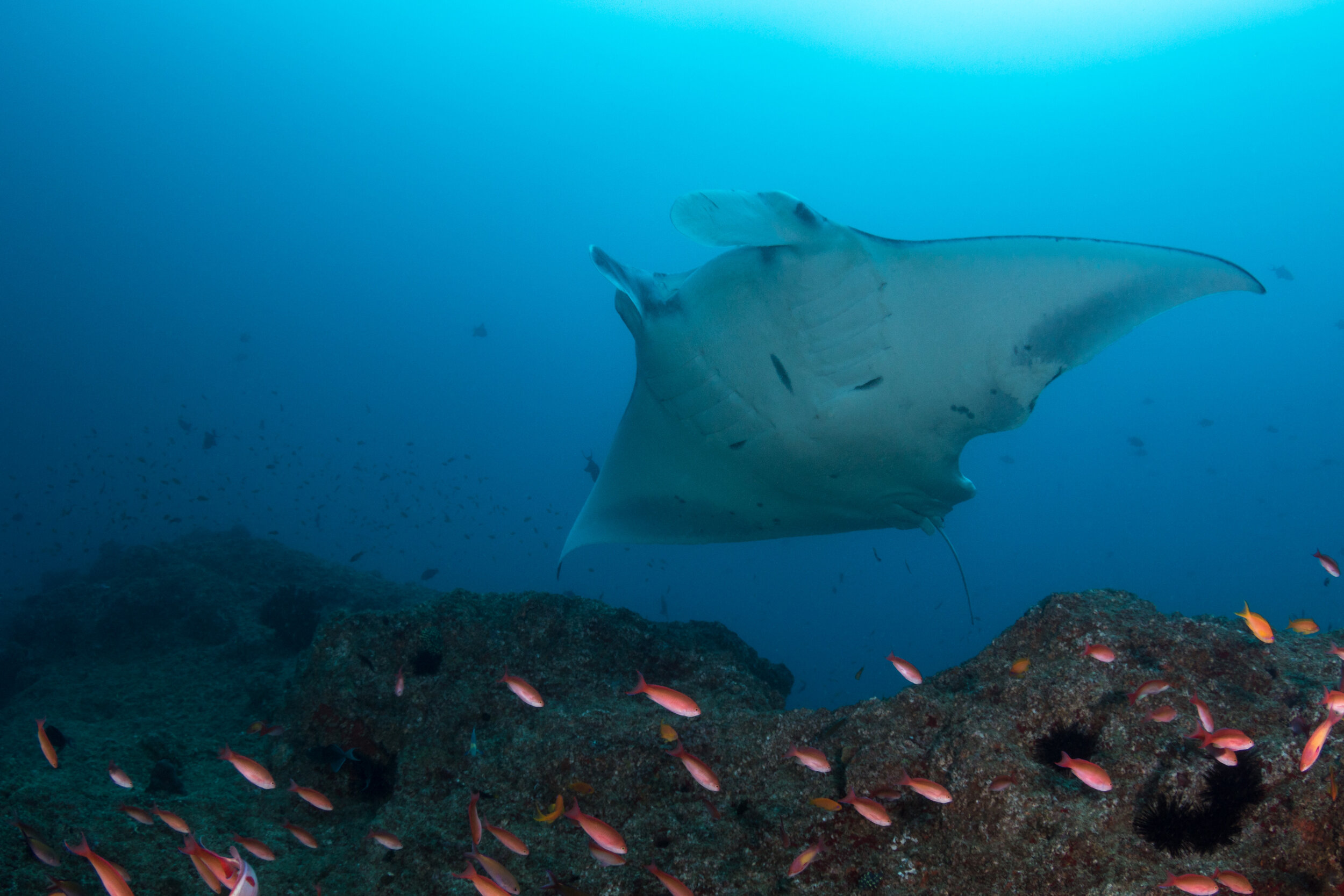
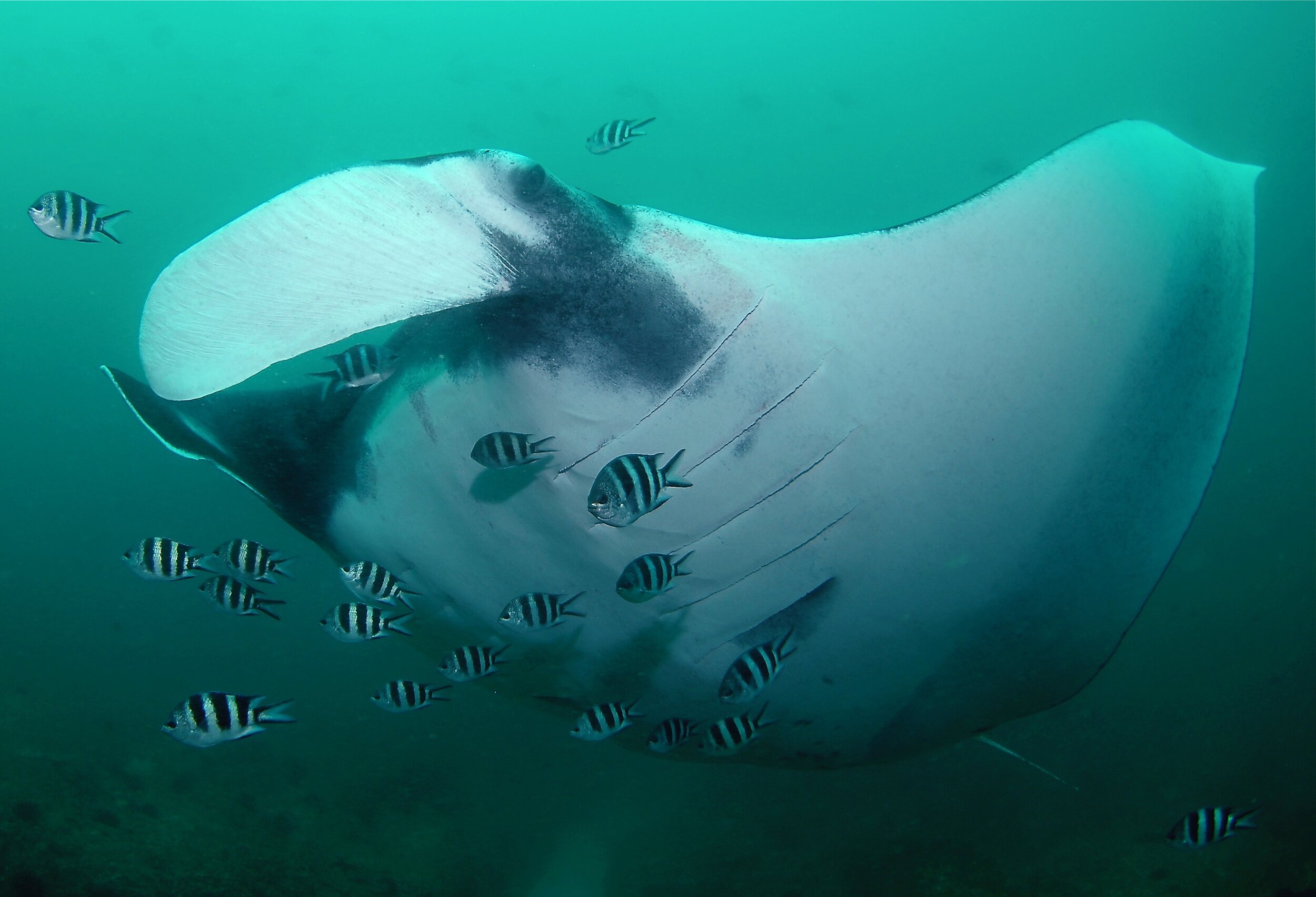
Every manta ray carries a unique pattern of spots on its underside. Our Mozambique catalogs are the longest-running in Africa, and matching them against South African photographs, including sightings from divers and the public, is what first proved the rays cross the border.
One population along the coast
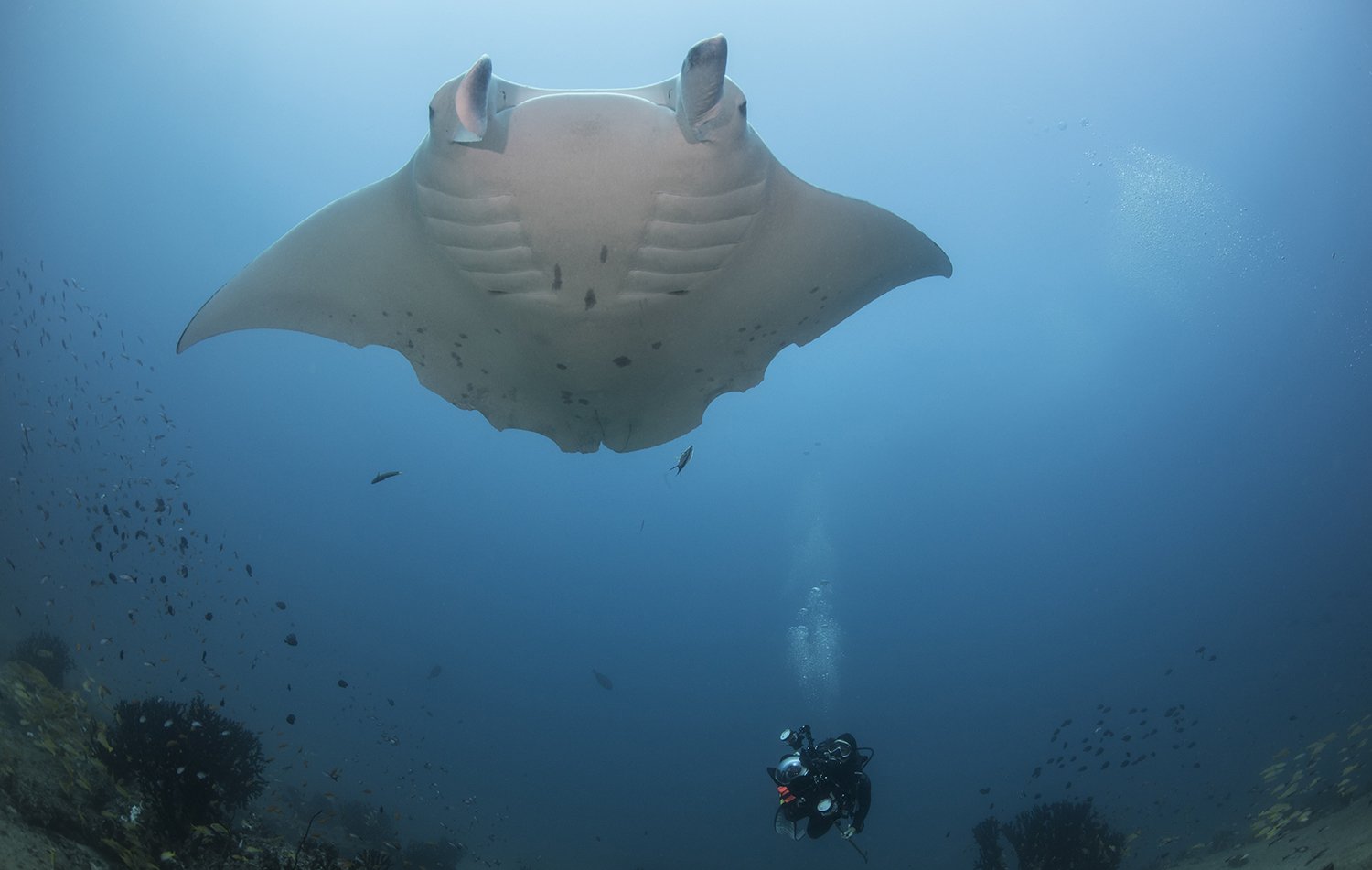
A genome-wide study of 114 Mozambican reef manta rays, led by Dr. Stephanie Venables, found no genetic structure along the coast and an effective population of only a few hundred breeding animals, supporting management of the whole coastline as one unit.
Ultrasound and reproduction
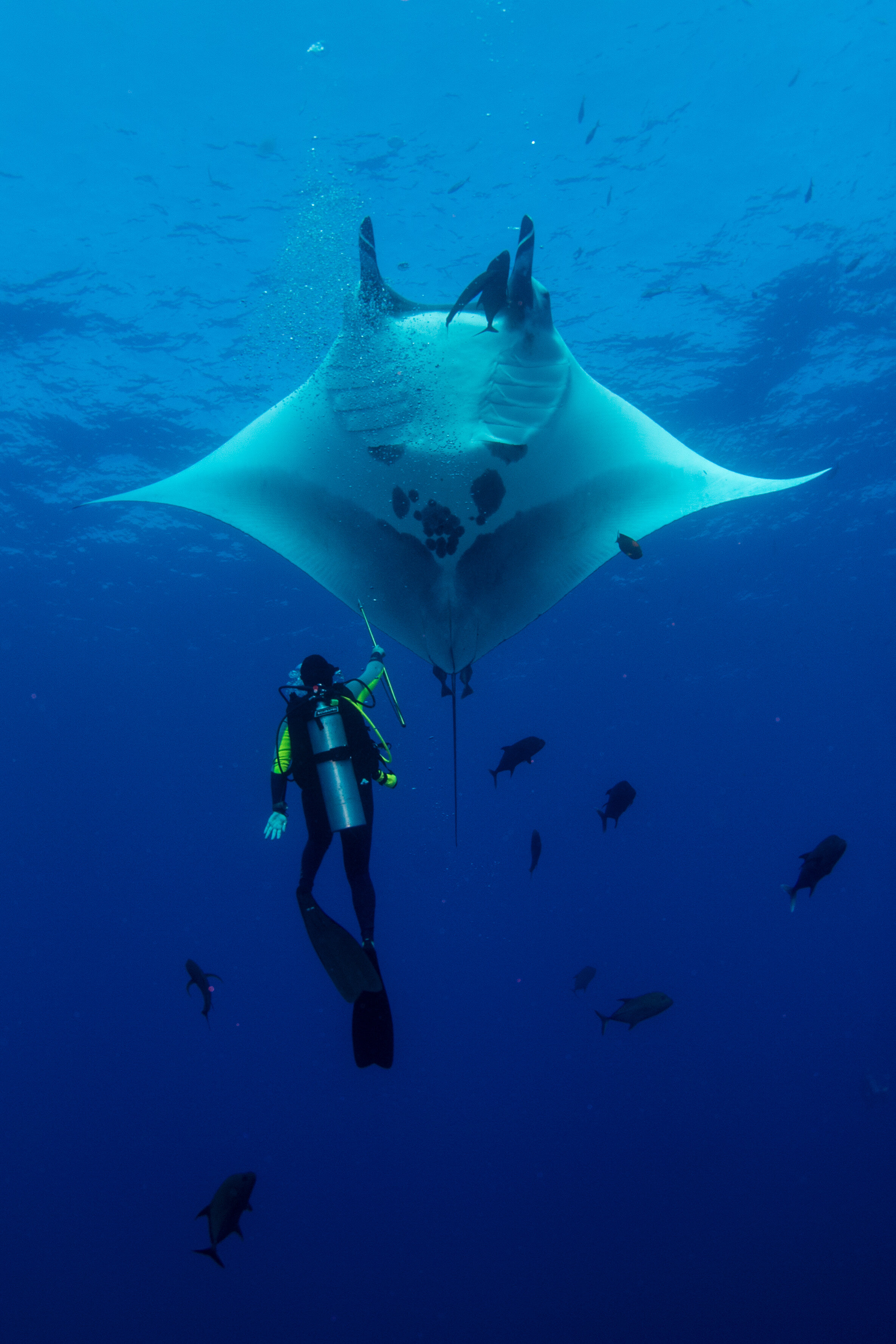
In-water ultrasound of free-swimming manta rays, pioneered at Závora, shows which females are pregnant and when. That tells us what the seasonal aggregations are for, and why the timing of protection matters.
Where the work happens
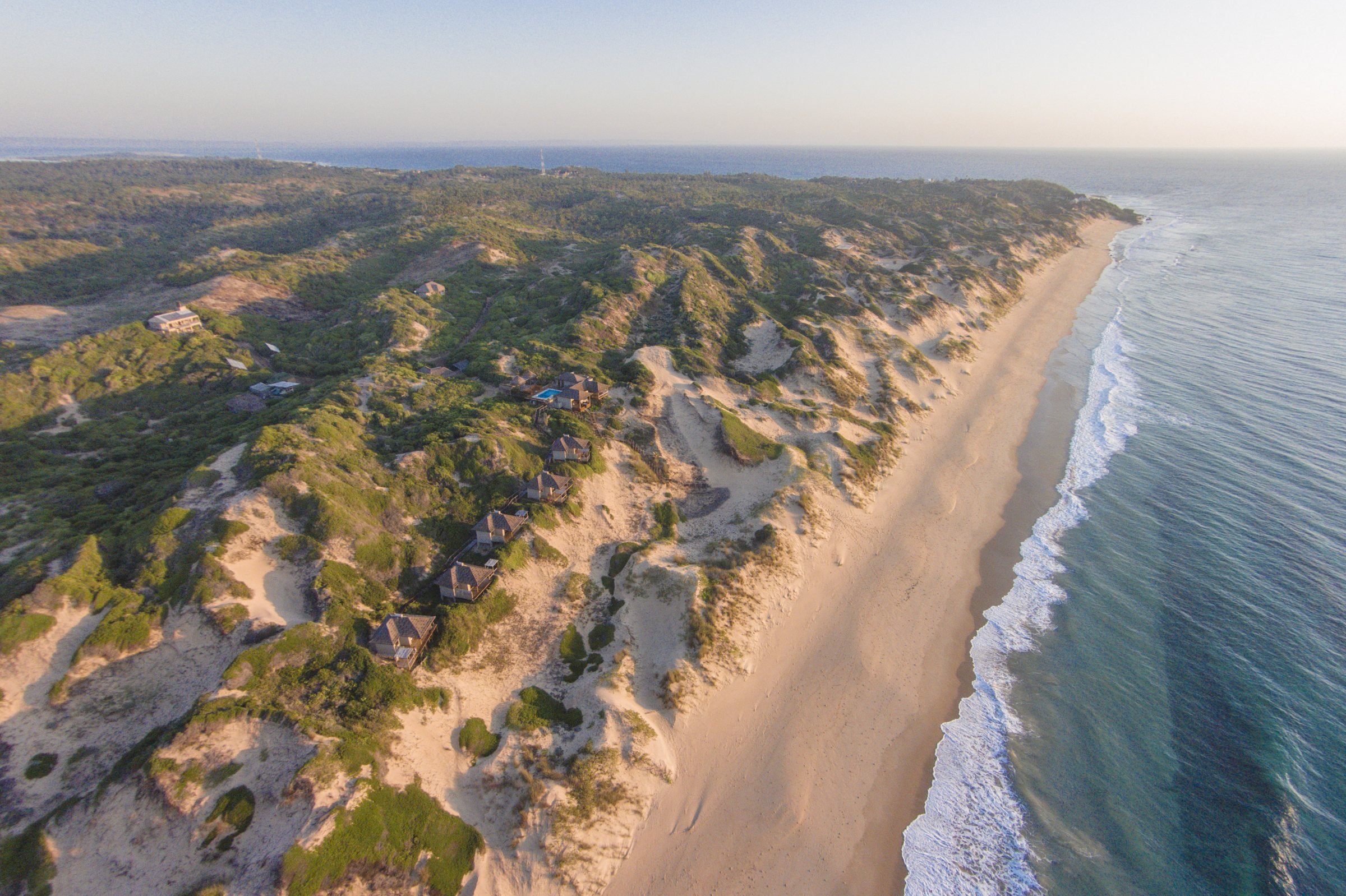
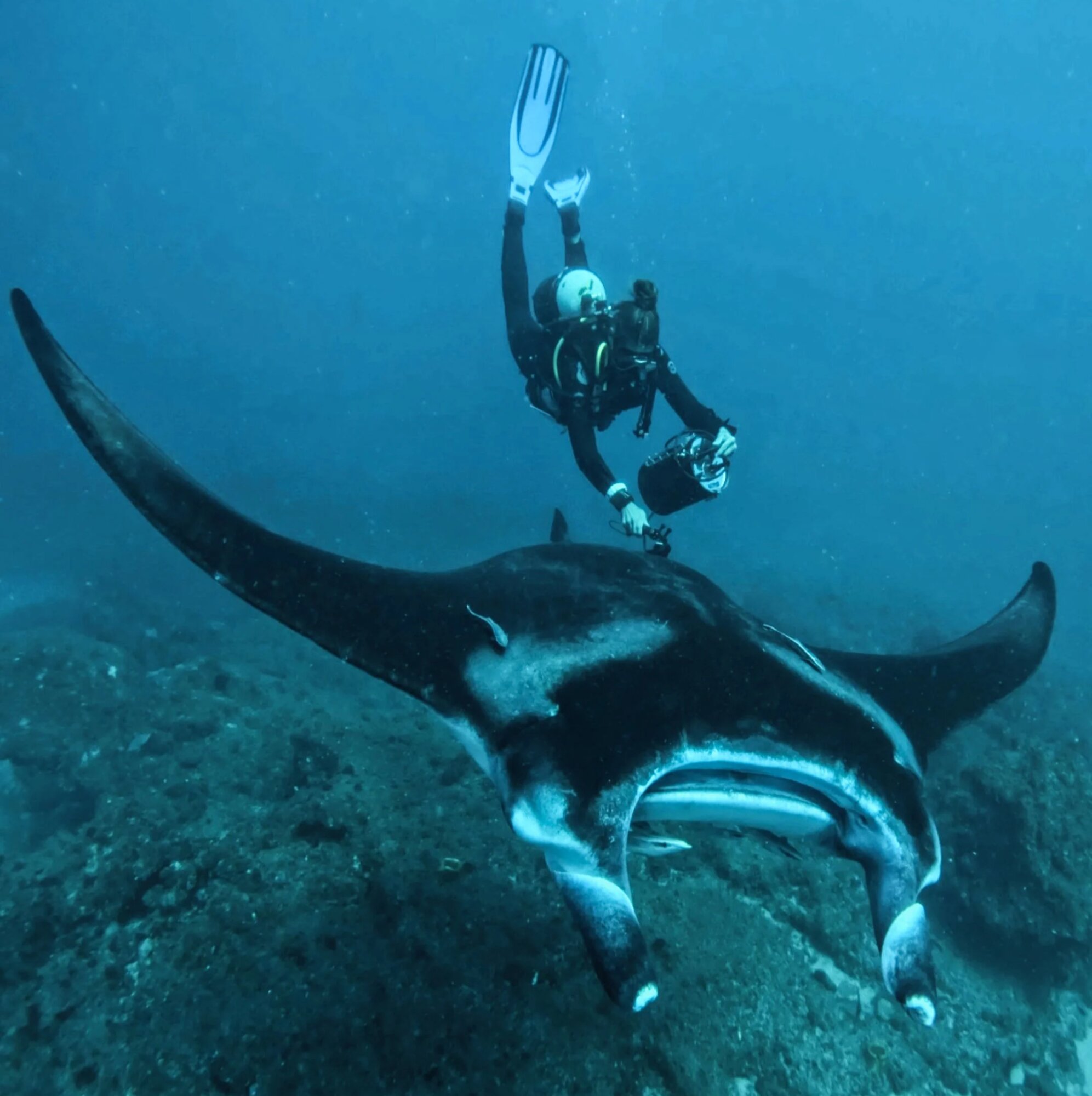
Our year-round base on the southern aggregation is Závora Marine Conservation. The full record of two decades of work along the Inhambane coast is on our Mozambique Manta & Devil Ray Research page. In South Africa, we work in iSimangaliso Wetland Park and at Sodwana Bay with our South African research partners.
From data to protection
MMF’s research was a major factor in Mozambique’s decision to give manta and devil rays legal protection in January 2021. The cross-border results are now being used in the same way: as a case study at a Southern African shark and ray spatial planning workshop, in a forthcoming paper on transboundary management that draws lessons from terrestrial wildlife conservation, and in discussions with the managers of protected areas on both sides of the border. The goal is simple to state and hard to achieve: one population, one plan.
MMF Project Team
 Dr. Nakia Cullain
 Dr. Stephanie Venables
 Anna Flam
Collaborators and Partners

Recent research
- 2026Acoustic telemetry reveals cross-border movements and conservation opportunities for reef manta rays Mobula alfredi in southern Africa
- Movement ecology of the reef manta ray (Mobula alfredi) in southern Africa: multi-scale habitat use and implications for regional and transboundary conservation
- 2025Declines in sightings and changing visitation patterns of reef manta rays at an important aggregation site in Mozambique
- Preliminary insights into manta ray (Mobula alfredi and M. birostris) population demographics and distribution in South Africa
- 2024Persistent declines in sightings of manta and devil rays (Mobulidae) at a global hotspot in southern Mozambique
- Behavior, site use and demographics of shortfin devil rays, Mobula kuhlii, at a newly-discovered cleaning area in South Africa
- 2023Southward range extension and transboundary movements of reef manta rays Mobula alfredi along the east African coastline
- 2020Genome-wide SNPs detect no evidence of genetic population structure for reef manta rays ( Mobula alfredi) in southern Mozambique
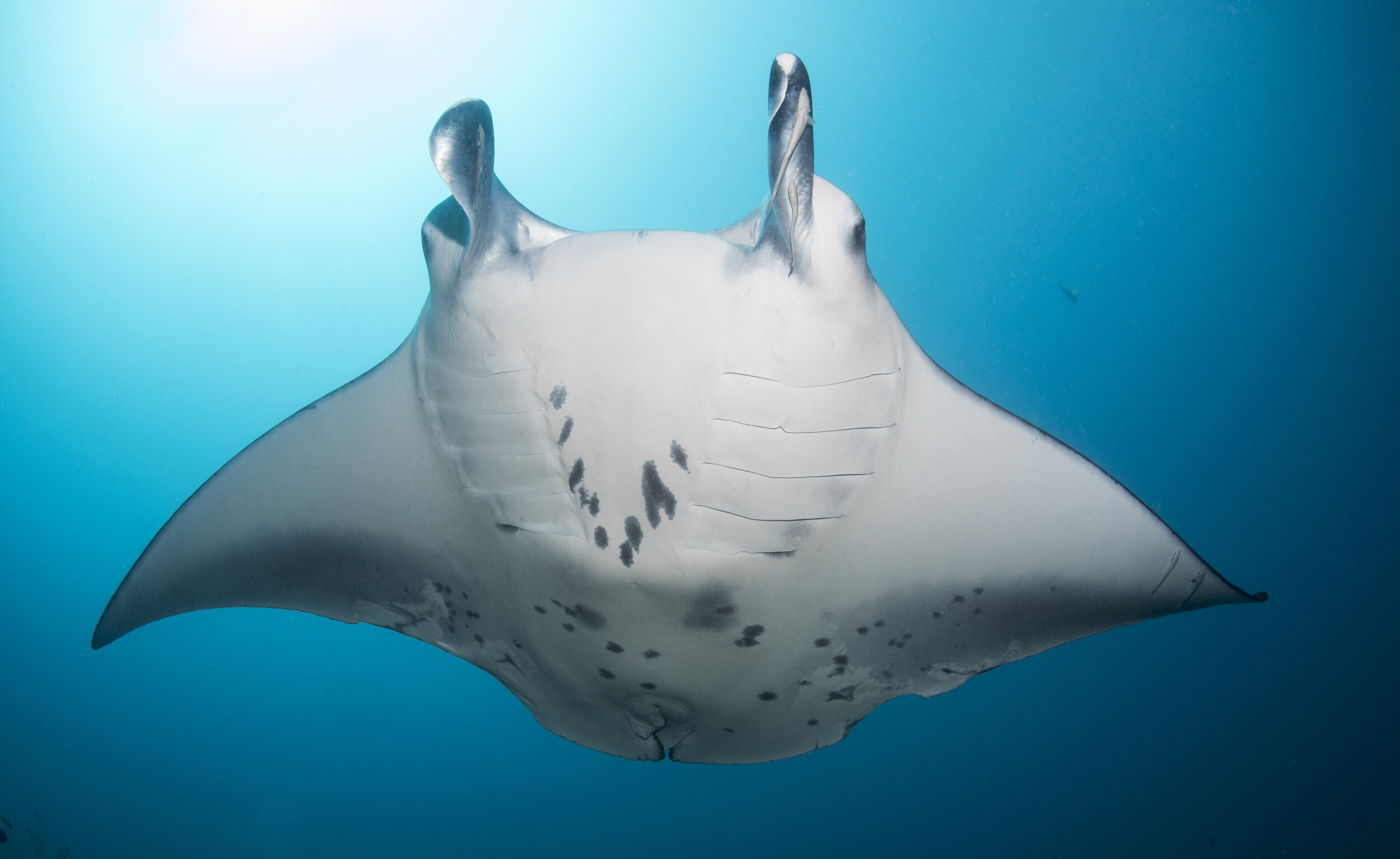 Mozambique Manta & Devil Ray Research Project
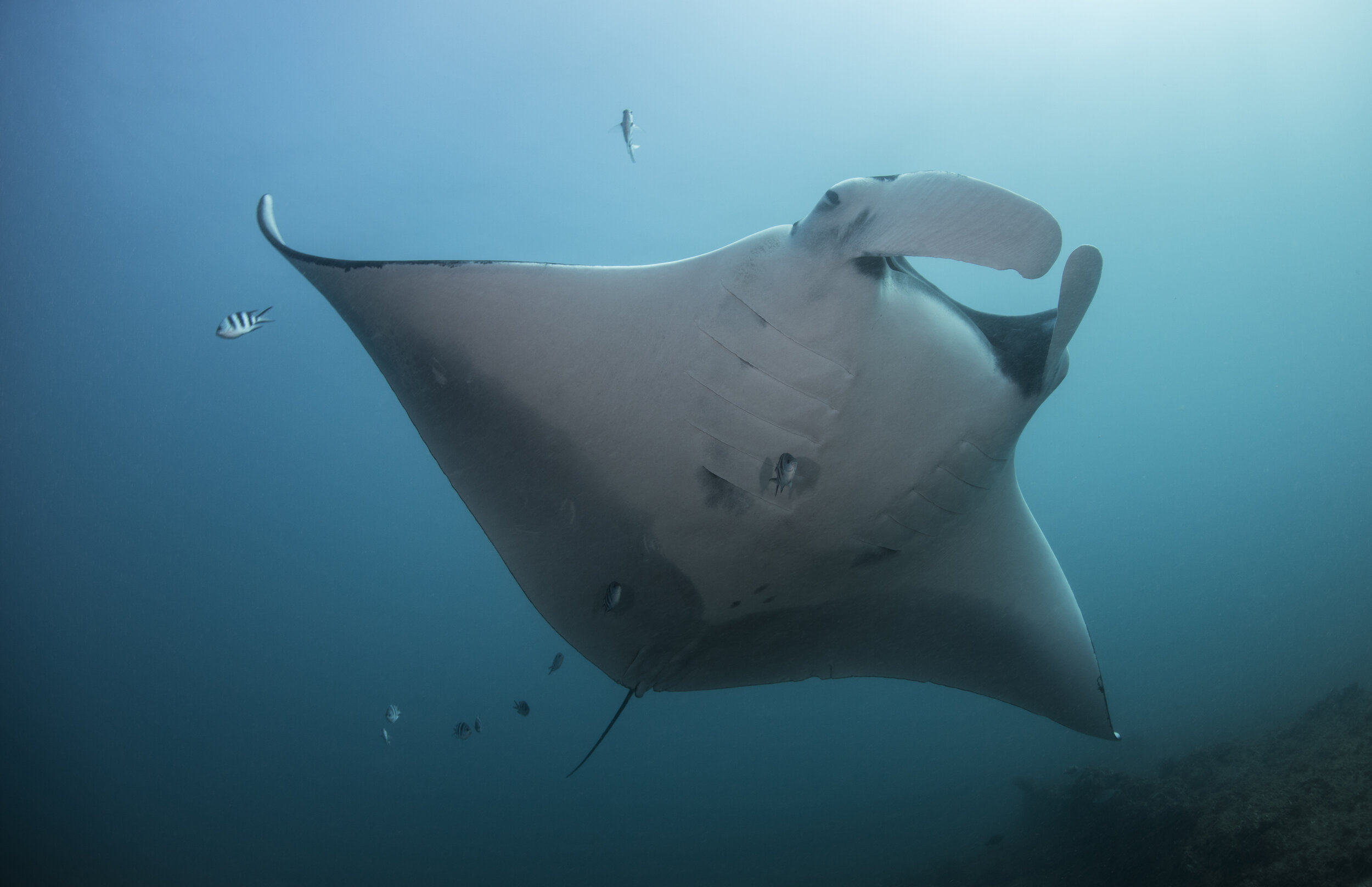 Závora Marine Conservation
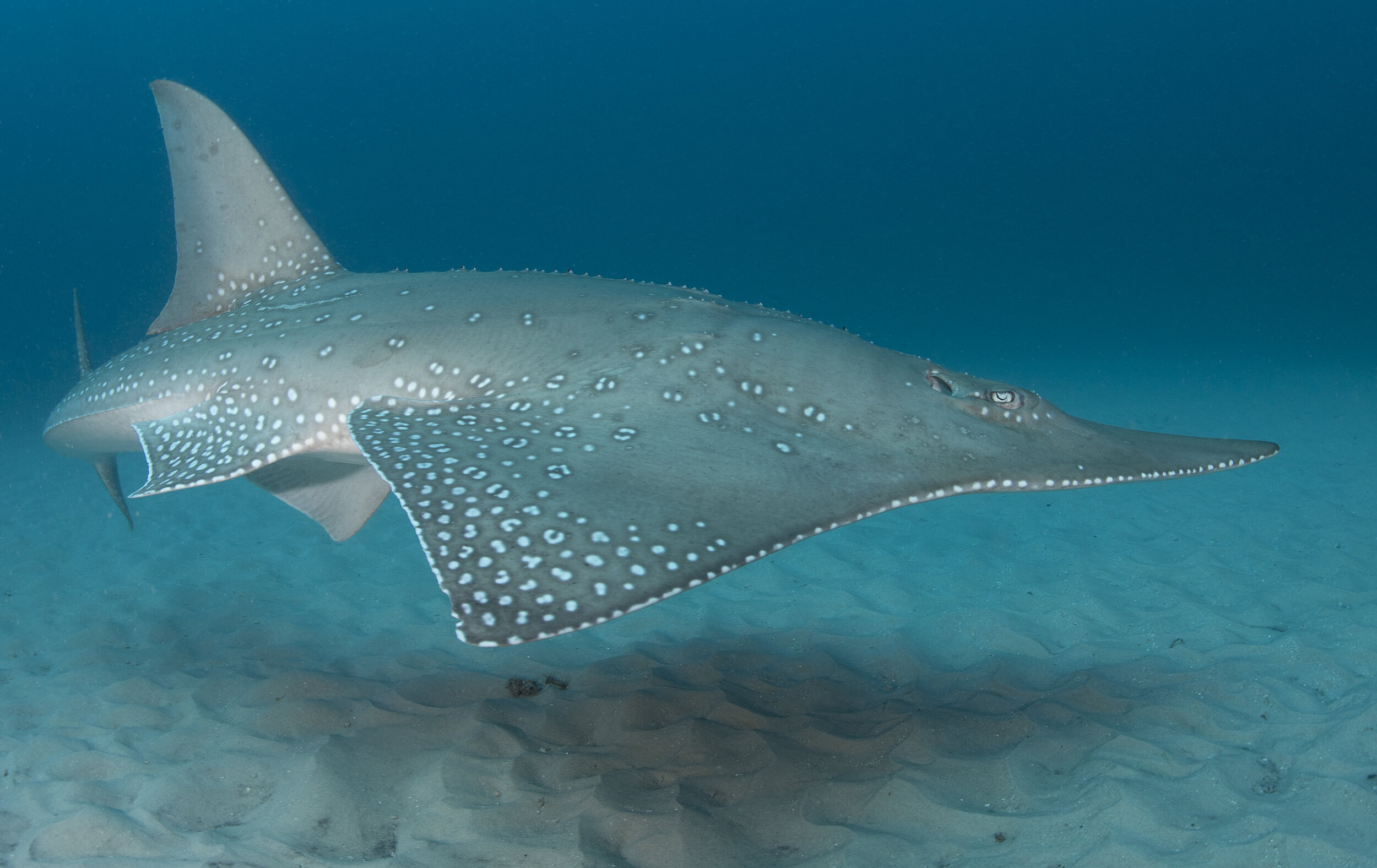 Mozambique Acoustic Telemetry Network
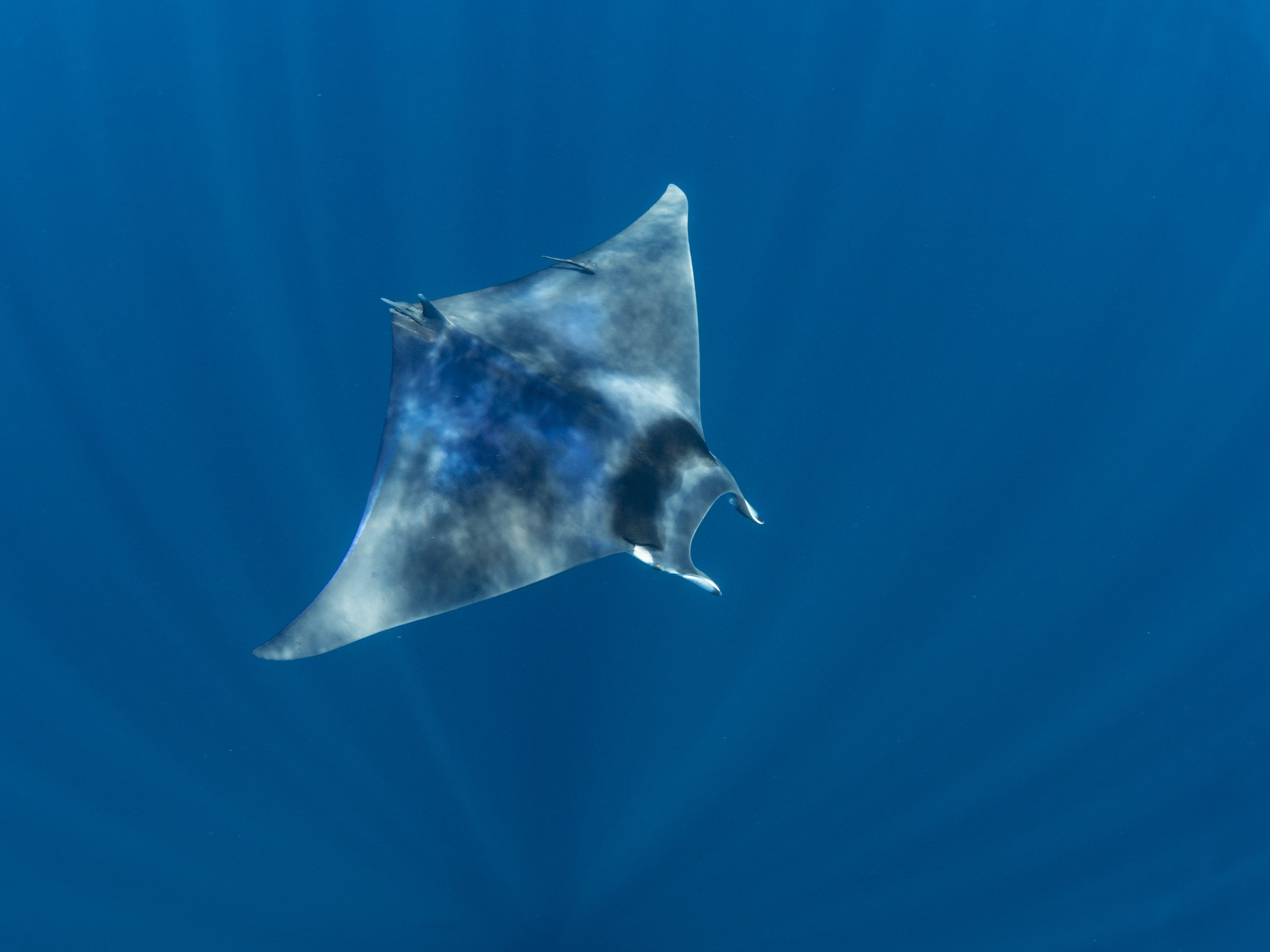 Madagascar Manta and Devil Rays