
Madagascar · Global Manta Ray Program · Since 2016
Madagascar Manta and Devil Rays
Seven years of surveys off Nosy Be documented three threatened species of manta and devil rays feeding and courting in the same bay, but no sign of reef manta rays since 2015.
Led by Madagascar Whale Shark Project, with MMF
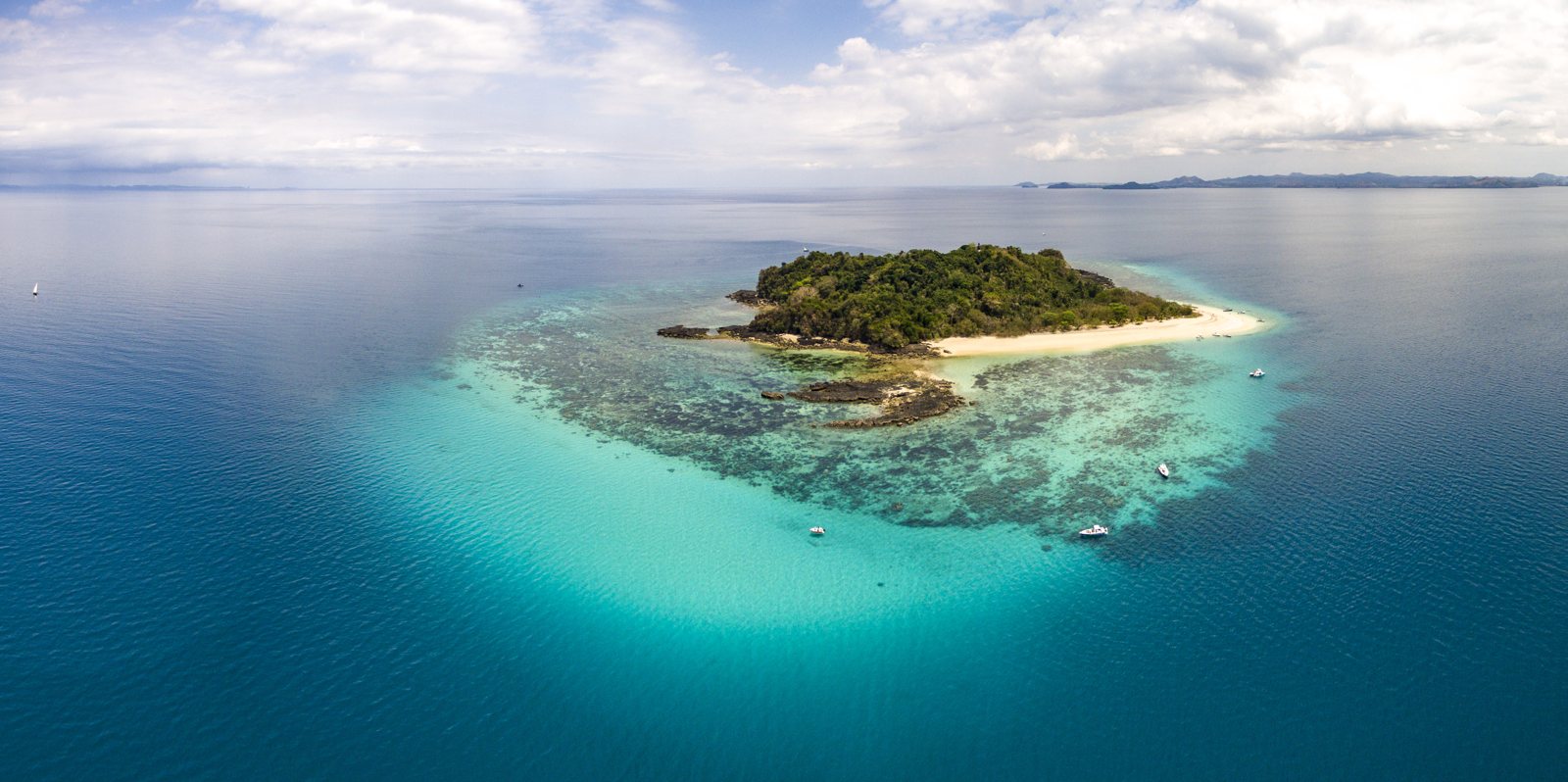
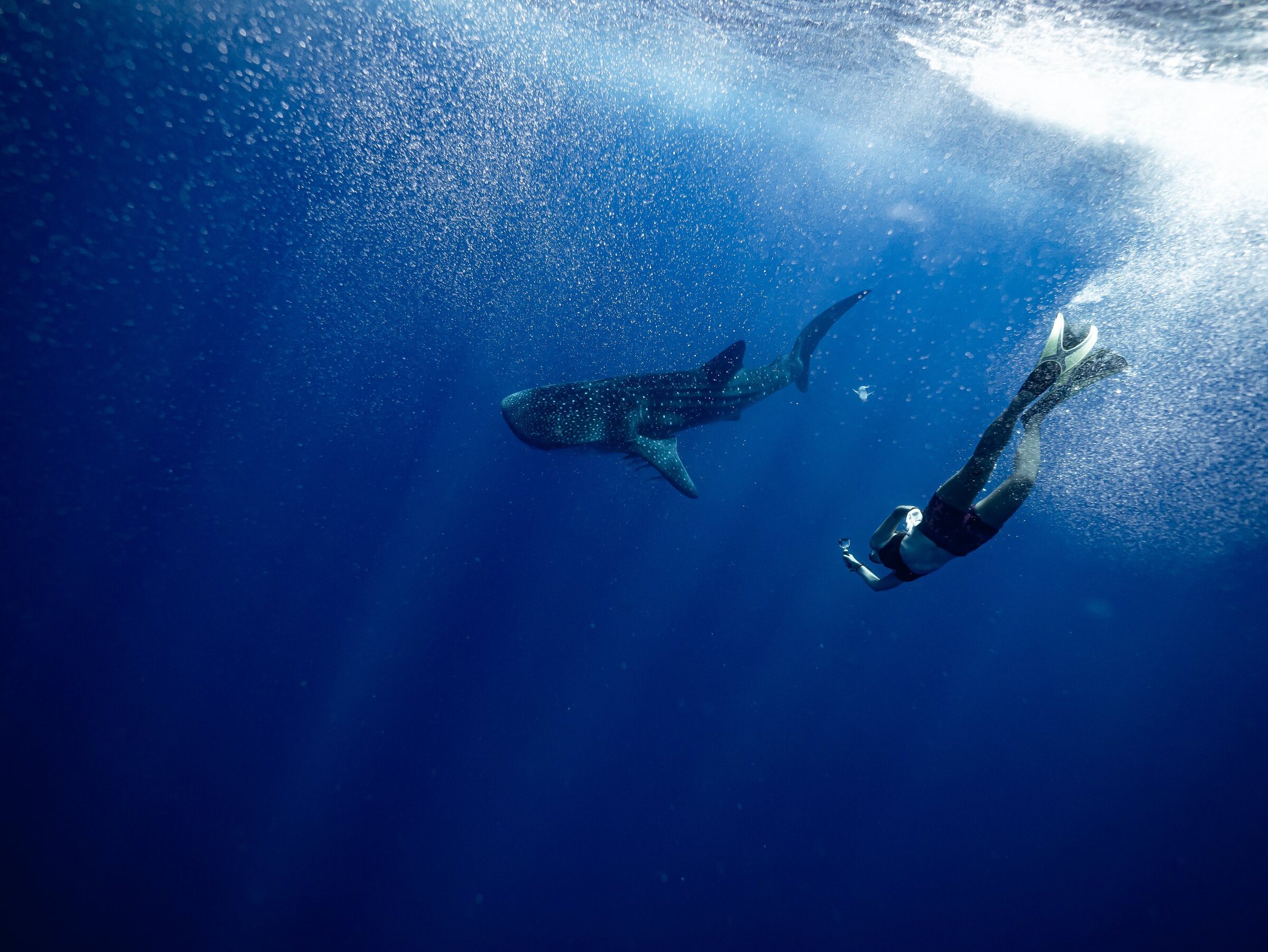
The waters off Nosy Be are known for whale sharks and Omura’s whales. Our first dedicated study of manta and devil rays in Madagascar found three threatened species feeding and courting in the same bay, and no sign of reef manta rays since 2015.
Manta and devil rays are among the most threatened of all vertebrate groups, mainly as a result of overfishing, and every species in this study is listed as Endangered or Vulnerable on the IUCN Red List. Between 2016 and 2022, the Madagascar Whale Shark Project team recorded every ray encountered during surveys off Nosy Be, in northwest Madagascar, and compiled further records from tourism operators, citizen scientists, and social media. Stella Diamant led the study for MMF through the Madagascar Whale Shark Project, which she founded in 2016.
What the project has done
- Published the first dedicated study of manta and devil rays in Madagascar (Diamant et al. 2025), documenting 255 encounters with three species.
- Identified a likely local decline of reef manta rays: none have been confirmed in the area since 2015.
- Documented the fisheries that catch these rays, including bottom-set gillnets that can catch up to 30 rays in a single night.
Support our manta and devil ray research
This study is complete. Your gift supports our current research on manta and devil rays and the threats they face.
Study findings
Three species in one bay
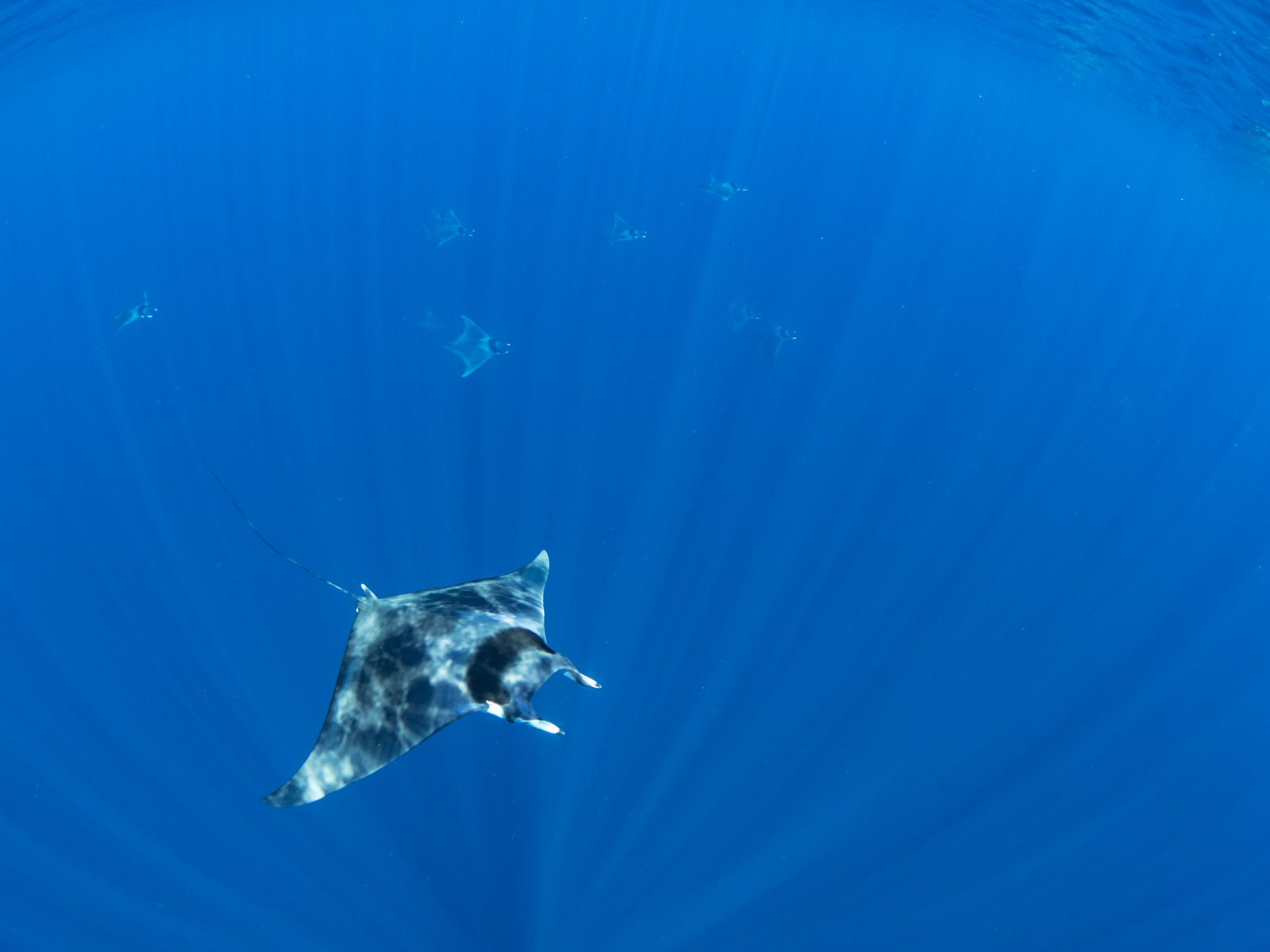
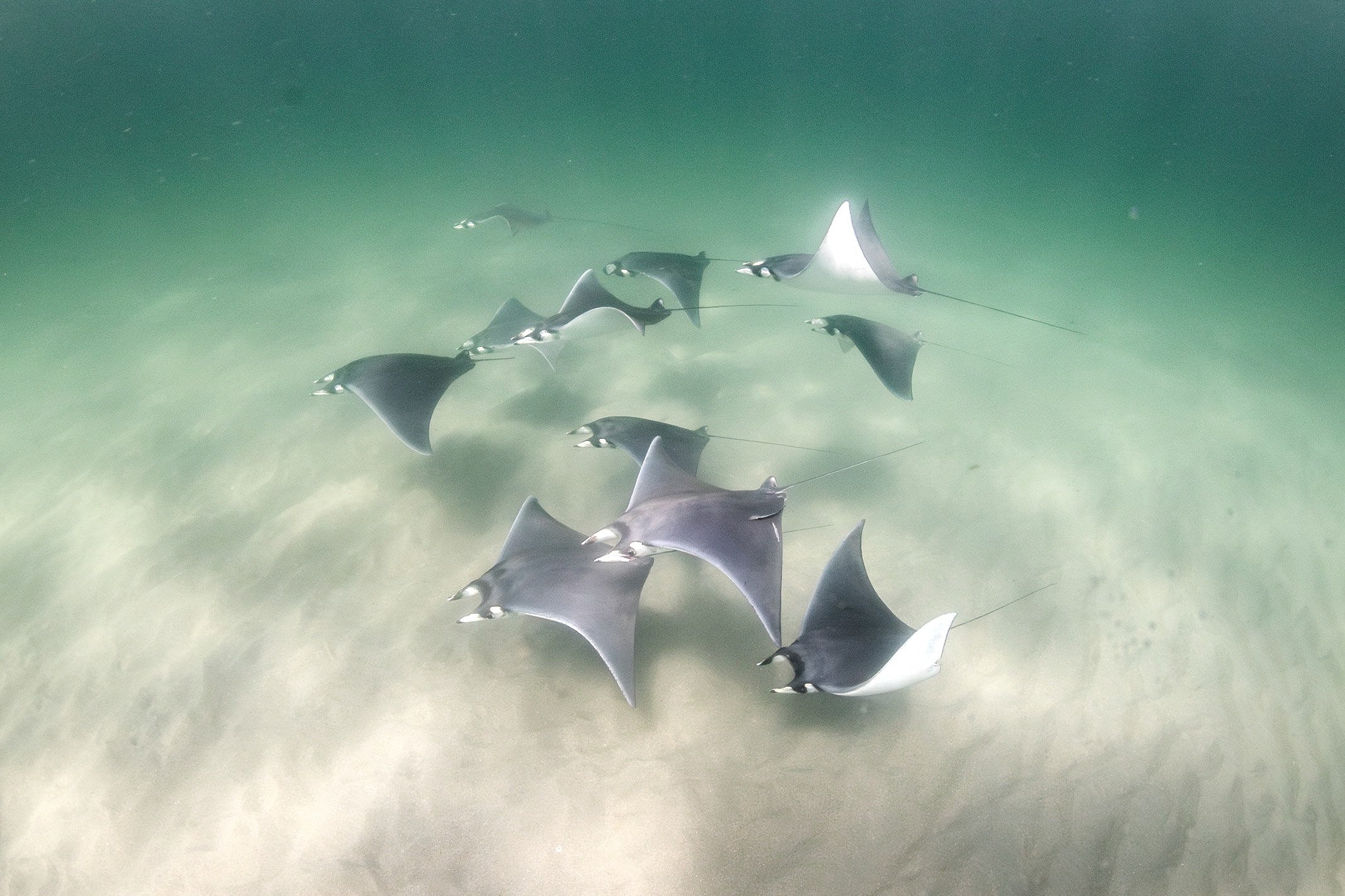
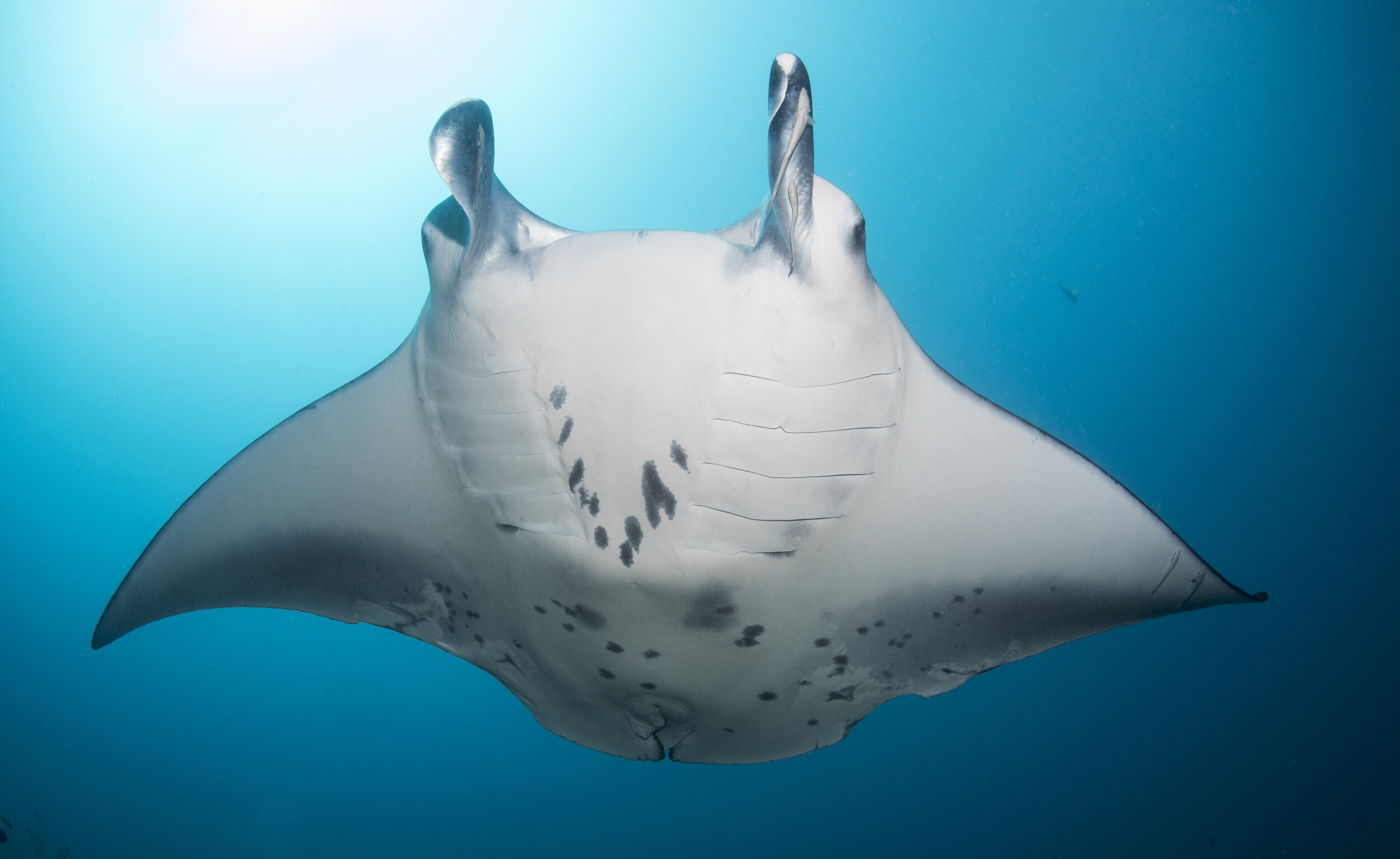
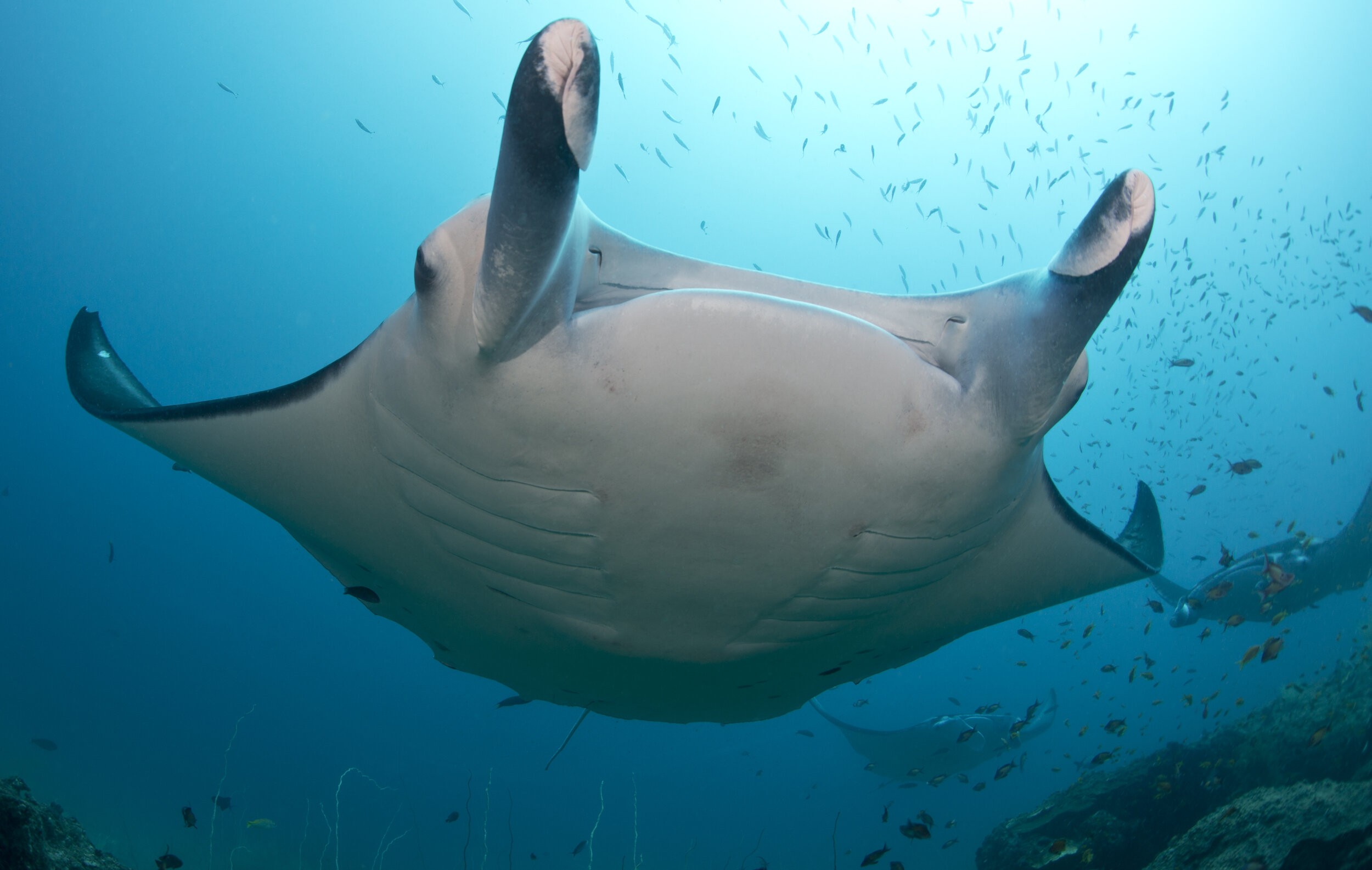
The most common species was the spinetail devil ray (Mobula mobular), with 165 encounters, followed by the oceanic manta ray (M. birostris, 60) and the shortfin devil ray (M. kuhlii, 30). Encounters peaked in October and November, the same months as the whale shark season.
All three species fed on dense patches of zooplankton in Ampasindava Bay, sometimes alongside Omura’s whales and whale sharks. Devil rays were observed in courtship trains, in which several rays follow a female, in more than a quarter of encounters during the peak season. One adult female oceanic manta ray was photographed in four separate years between 2016 and 2022.
Decline in reef manta ray sightings
Reef manta rays (Mobula alfredi) once visited a cleaning station known to dive operators as Manta Point. However, sightings became rare after 2007, and none have been confirmed there since 2015. Without long-term catch records the cause cannot be confirmed, although reef manta rays are known to be highly vulnerable to small-scale fisheries.
Threats
Rays are caught in bottom-set gillnets off Nosy Be and nearby Nosy Faly, and as bycatch in nets set for tuna and billfish. The meat is eaten locally, sold dried in markets, and transported to markets in northeast Madagascar, likely for export. However, gill plates, the product that drives fisheries for these rays elsewhere, were not being traded locally.
Scars from fishing gear and boat propellers were common, with 13 oceanic manta rays carrying injuries from human causes. Tourism boats also sometimes crowd the rays, as they do whale sharks.
Study recommendations
- Extend Madagascar’s marine tourism code of conduct, which already covers whale sharks, sea turtles, and marine mammals, to manta and devil rays.
- Regulate gillnet use around Nosy Be and monitor ray catches.
- Align national fisheries law with Madagascar’s commitments under the Convention on Migratory Species, which lists all manta and devil rays on Appendix I.
- Ensure the planned marine protected area linking Ankivonjy and Ankarea covers the rays’ feeding area, since most of the feeding, cleaning, and courtship the team observed took place outside the current protected area.
Nosy Be has also been recognized as an Important Shark and Ray Area, partly because of these rays.
 Stella Diamant
 Stephanie Venables
 Anna Flam
 Dr. Simon Pierce


 Madagascar Whale Shark Project
 Atlantic Mobula Rays
 Mozambique Manta & Devil Ray Research Project
 African Manta Ray Project