
Mozambique · Global Manta Ray Program · Since 2003
Mozambique Manta & Devil Ray Research Project
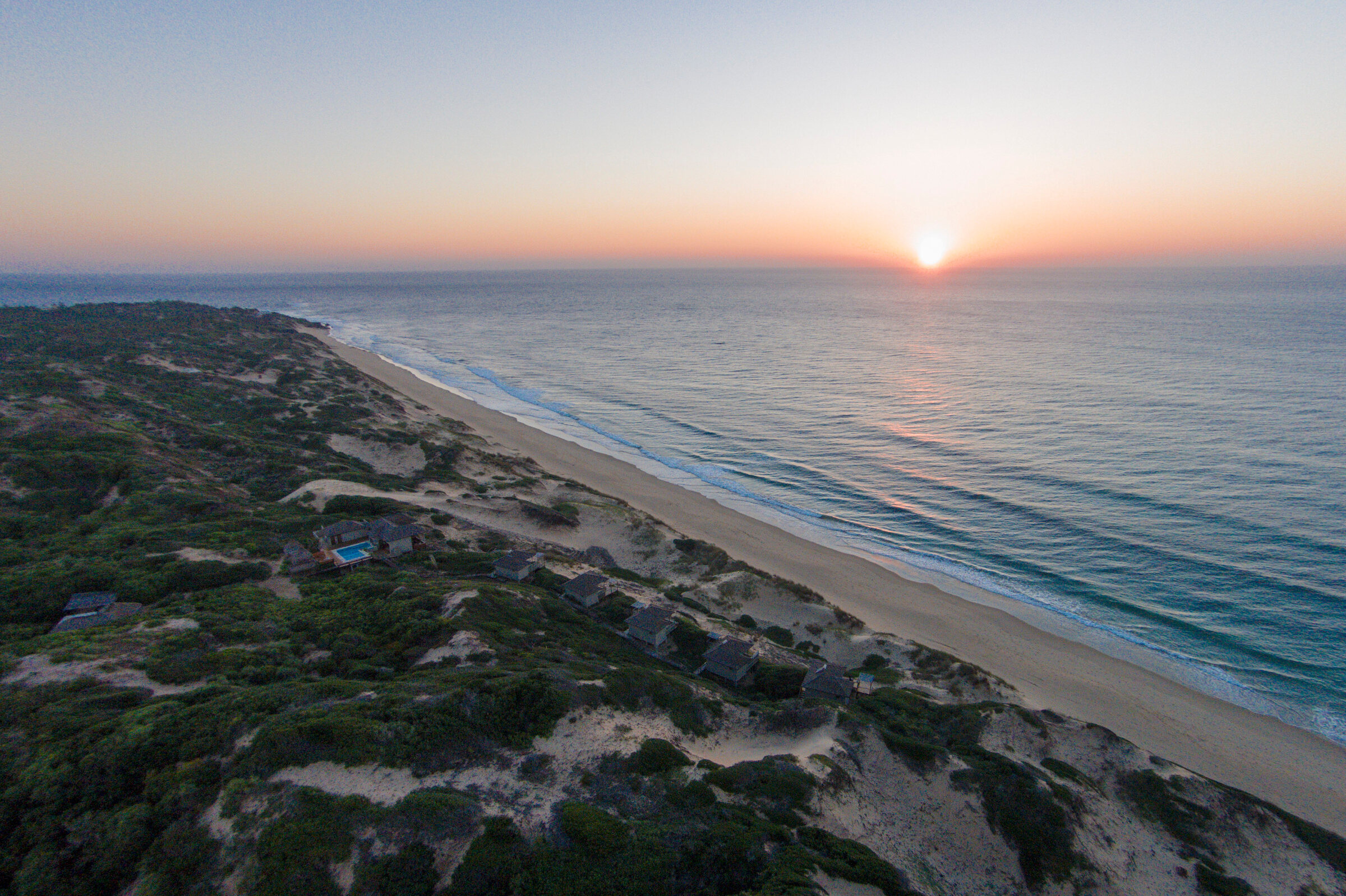
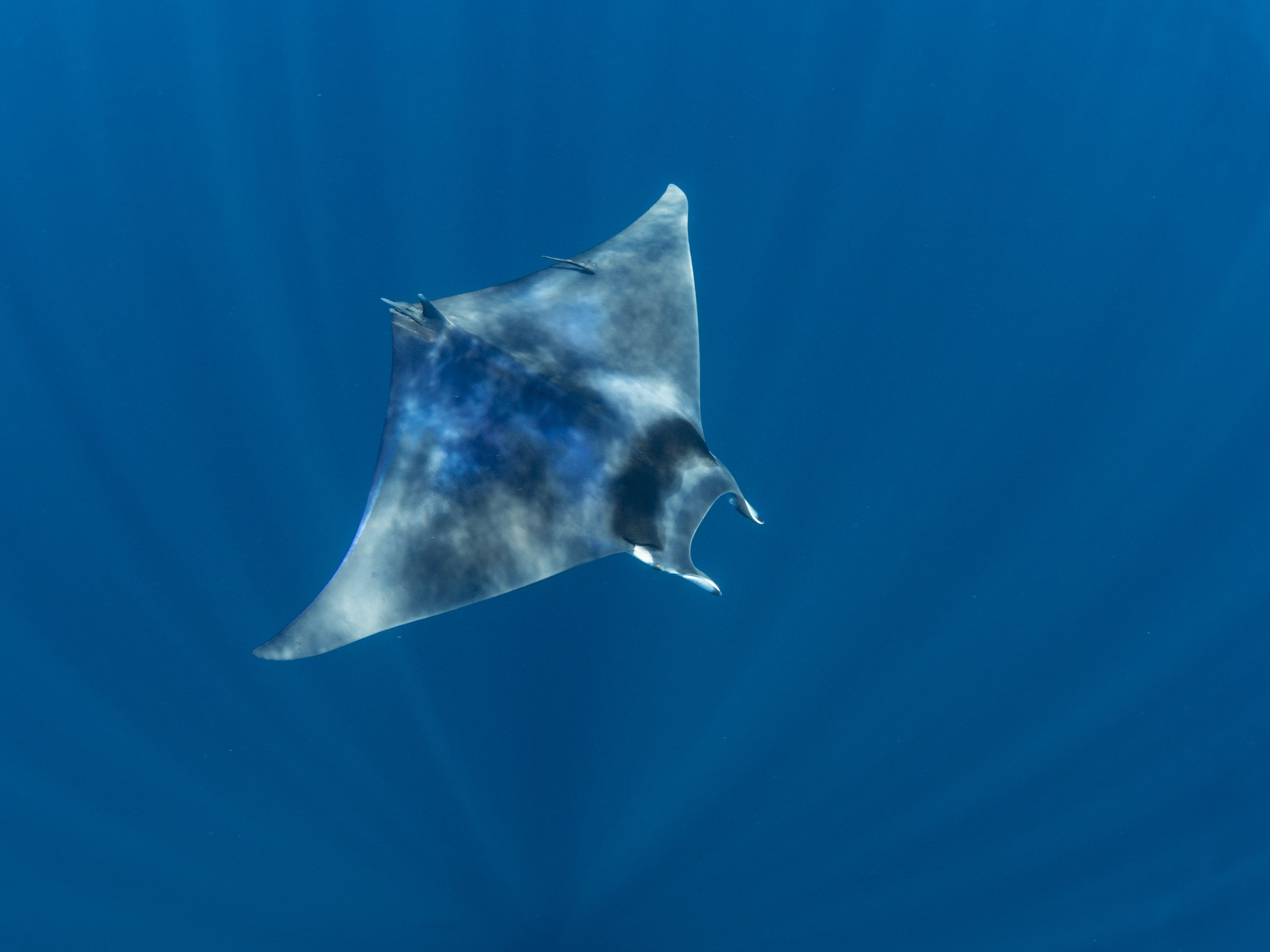
Southern Mozambique has Africa's largest known populations of reef and giant manta rays, and we are working to reverse their steep decline.
Building on two decades of manta and devil ray research in Mozambique, we study how these rays move to find their critical habitats and home ranges, and map the human threats they face to guide our conservation work.
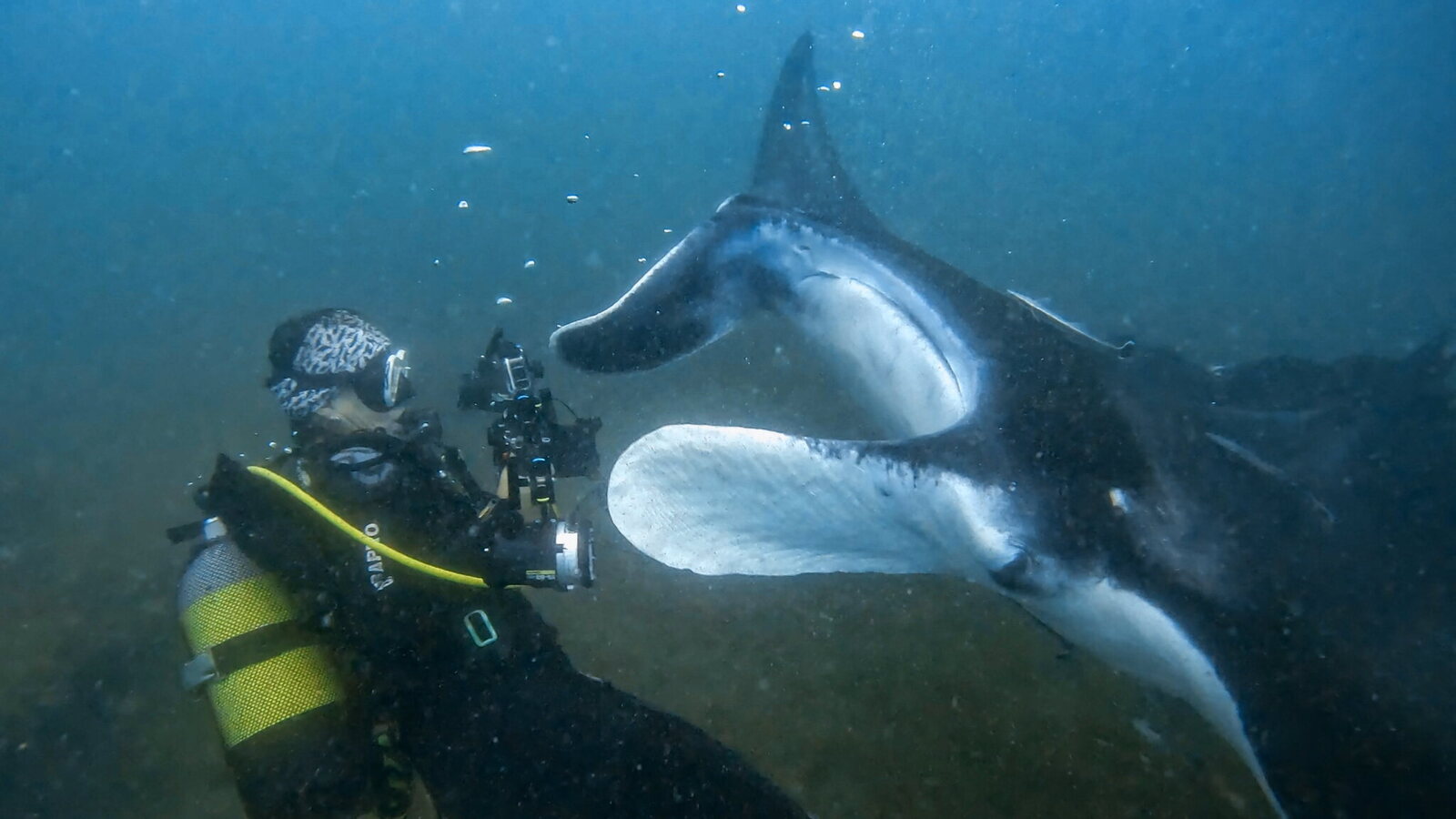
We work with government and management authorities to identify and mitigate threats, protect areas of core habitat, and carry out conservation projects. With satellite research centers and partners along the Mozambican coast, our team manages a province-wide monitoring program for manta and devil rays. Dr. Nakia Cullain leads our manta and devil ray research across Mozambique, including the satellite and acoustic tracking work.
Objectives
- Reverse the declining trend for manta and devil rays in Mozambique.
- Help the national government and the managers of protected areas, such as those in the Bazaruto Seascape, to identify and eliminate threats.
- Protect areas of core habitat and put conservation strategies in place.
- Keep monitoring manta and devil ray populations to refine estimates of their abundance and trends.
- Use telemetry, aerial surveys, and genetic and biochemical analyses to understand their distribution and behavior along the Mozambique coast.
What we've done
- Our research and advocacy were a major factor in the Mozambican government’s decision to give manta and devil rays legal protection in January 2021.
- Built the largest and longest-running manta ray photo-ID databases in Africa.
- Published more than 20 peer-reviewed scientific papers, 2 PhD theses, and 2 master’s theses on manta and devil rays in Mozambique.
- Contributed to the current management plans for several marine protected areas, including the Bazaruto Archipelago National Park, part of the Bazaruto Seascape.
Help protect Mozambique's manta rays
Donations to our Mozambique program fund the fieldwork, community work, and government engagement described on this page.
Our work on manta and devil rays in Mozambique
Africa’s largest manta ray populations
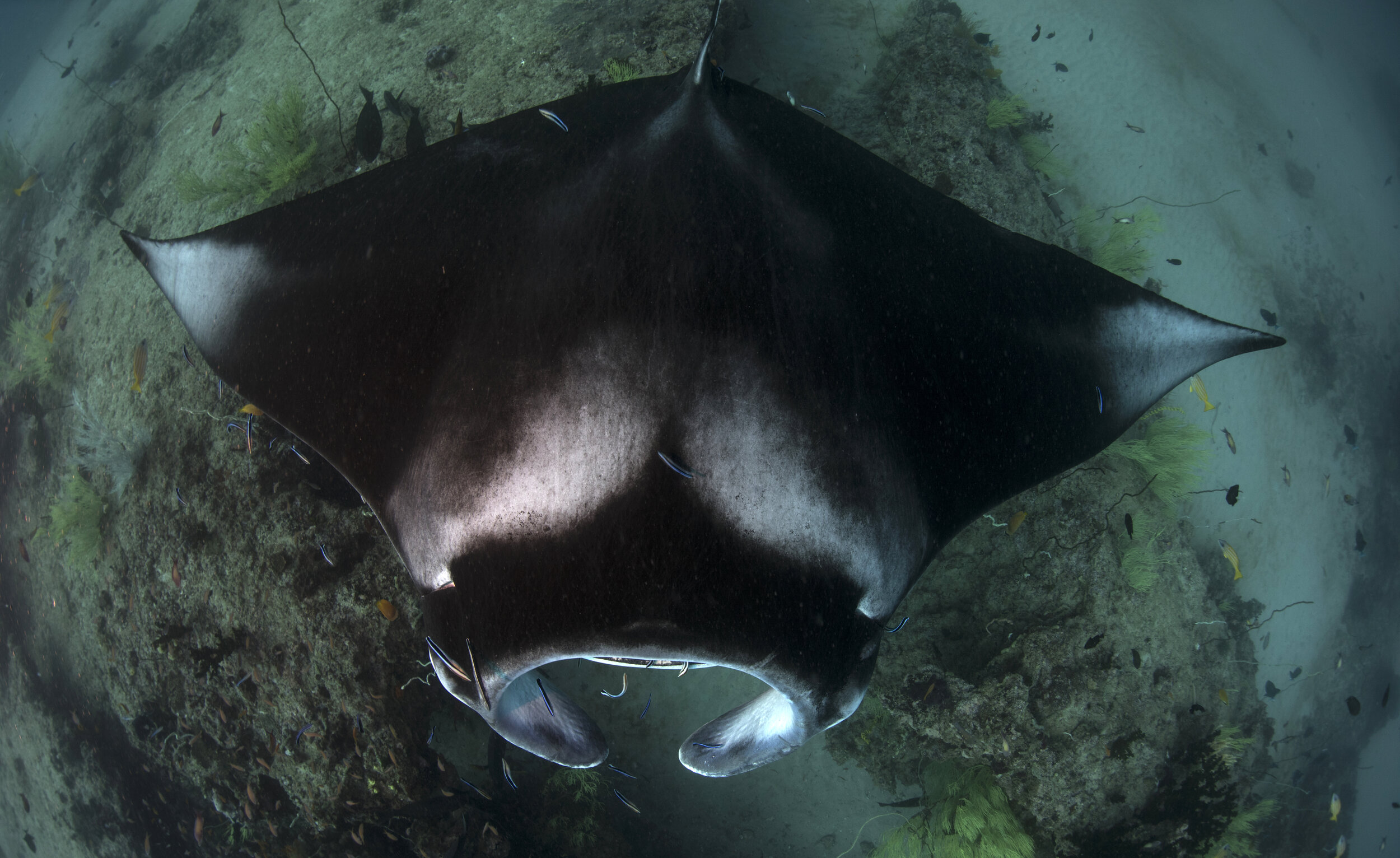
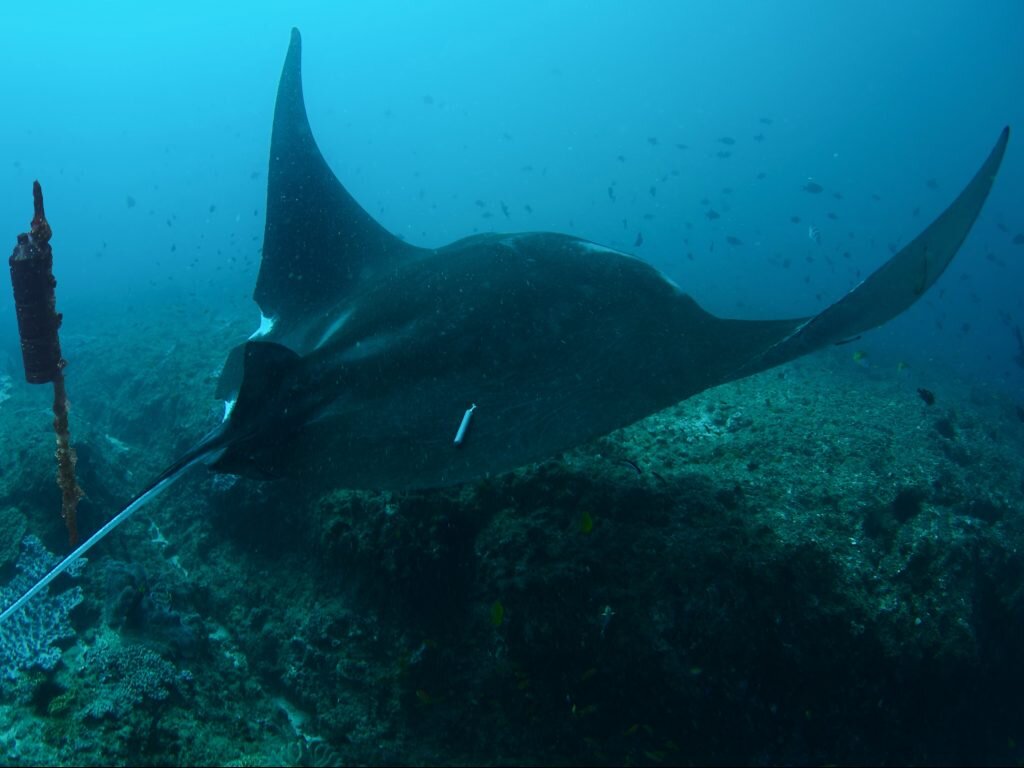
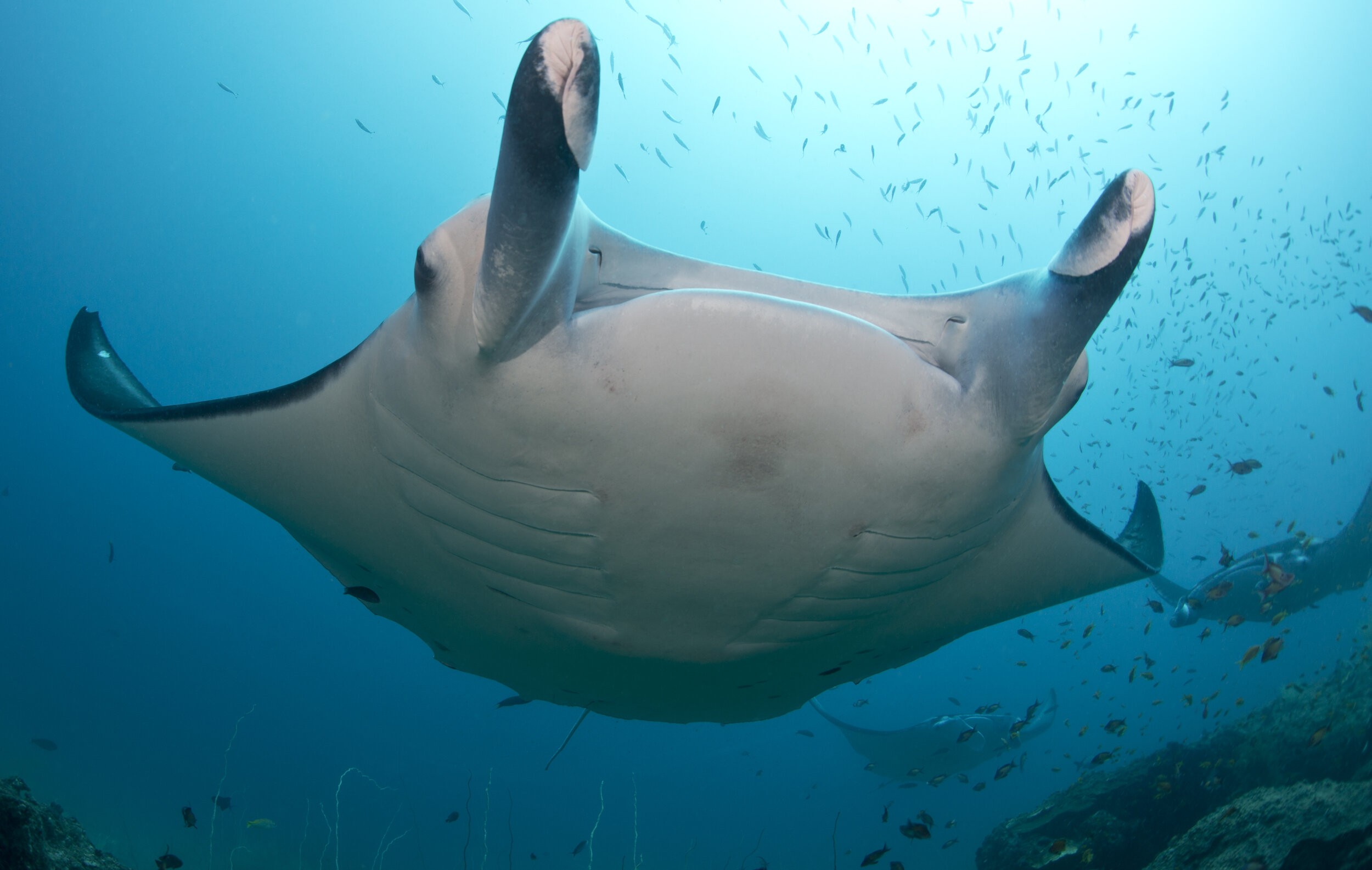
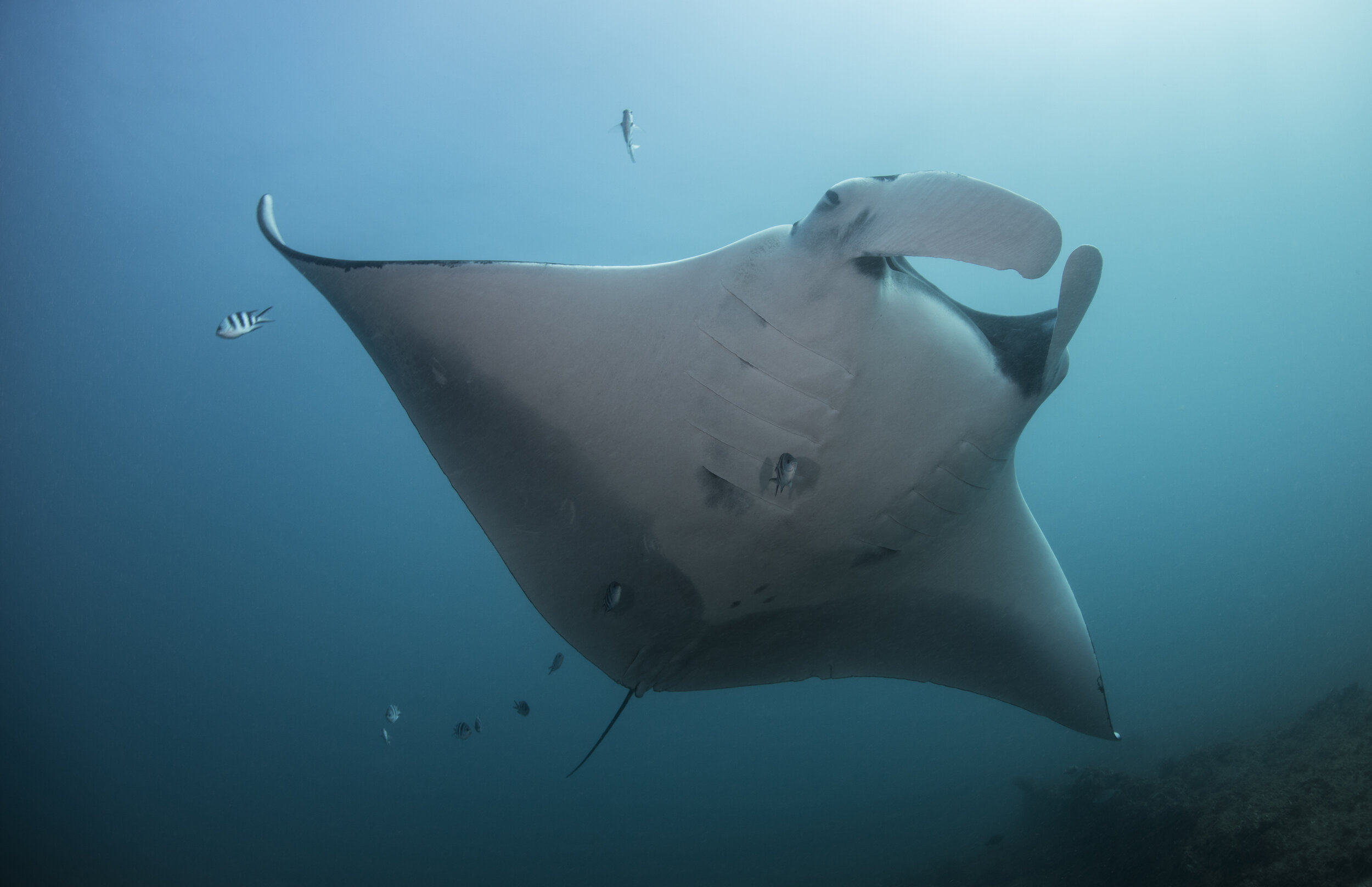
Southern Mozambique is a global center of abundance for manta rays, the largest of the devil ray species (the Mobula genus). Over the last 20 years, we have documented the largest identified populations of both giant manta rays (Mobula birostris) and reef manta rays (M. alfredi) in Africa. Both species gather in the south of the country, with the most sightings along the coast of Inhambane Province.
This coast also provides important breeding, feeding, and cleaning areas for the shortfin devil ray (M. kuhlii), another endangered relative. Our scientists have published extensively on the biology and ecology of manta rays in Mozambique, aiding regional management and the conservation of these species around the world.
Two decades of decline
Two decades of standardized survey data show how severe the declines have been. At Praia do Tofo, sightings of reef manta rays fell by 99%, giant manta rays by 92.5%, and devil rays by 81.3% between 2003 and 2023. These trends held after accounting for water temperature, plankton availability, and other environmental variation, which indicates that the losses are driven by human pressure rather than shifting conditions.
At Závora, sightings of reef manta rays fell by 82.4% over fifteen years, and the rays shifted from being present year-round to gathering there seasonally. Dr. Nakia Cullain oversees the long-term monitoring program at Závora and the analysis of two decades of sightings data.
Caught in fishing nets
With a sharp increase in the use of indiscriminate fishing methods, such as gillnets, unsustainable numbers of manta and devil rays are being caught in Mozambique. Demand for devil ray products conflicts with a valuable marine ecotourism industry, so it is vital to keep identifying and protecting critical habitats and managing the threats along this coast.
We continue to identify critical habitats for these species, where we can then design and carry out targeted conservation work. Dr. Nakia Cullain’s research focuses on how artisanal and industrial fishing affect threatened species, and on turning that evidence into management.
Crossing borders
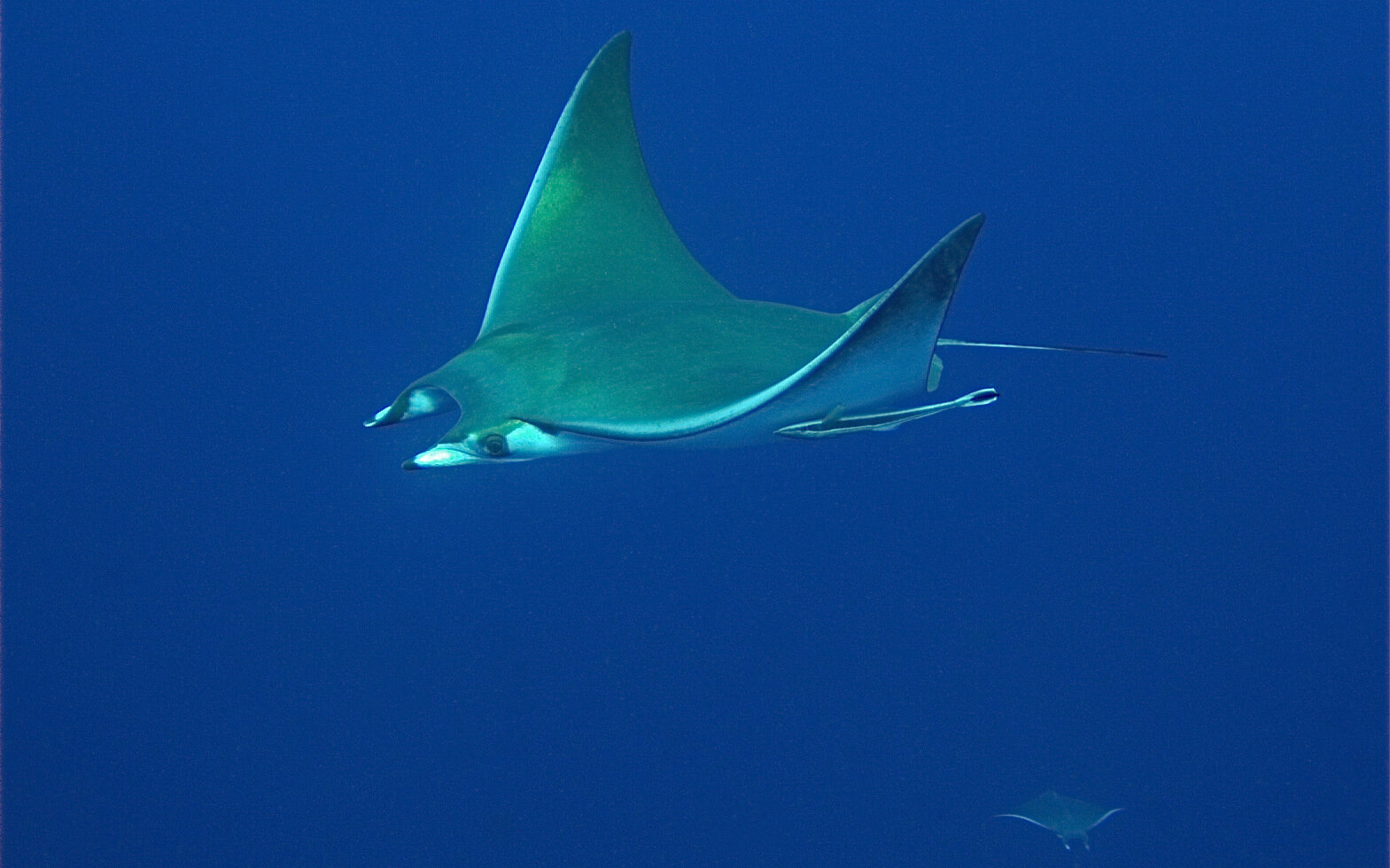
For most of the twenty years we have studied manta rays in Mozambique, they appeared to be a largely local population, moving between cleaning stations along the Inhambane coast but rarely much further. Satellite and acoustic tracking have overturned that picture.
In 2023 we documented the most southerly records of reef manta rays anywhere along the east African coast, extending the species’ known range 140 km (87 miles) south into South Africa and verifying the first transboundary movements for the species. One individual made a round trip of roughly 870 km (540 miles) between Závora and Sodwana Bay.
Acoustic tracking has since recorded the longest movements yet documented for this population, including animals moving from Mozambique into iSimangaliso Wetland Park in South Africa and spending sustained periods there. A manta ray protected in one country and unprotected in the next is only half protected, and these results make the case for managing the southern African population as a single transboundary unit, the basis on which the species is listed under the Convention on Migratory Species.
The cross-border work now has its own page, the African Manta Ray Project, and our southern field site is described at Závora Marine Conservation.
One population along the coast
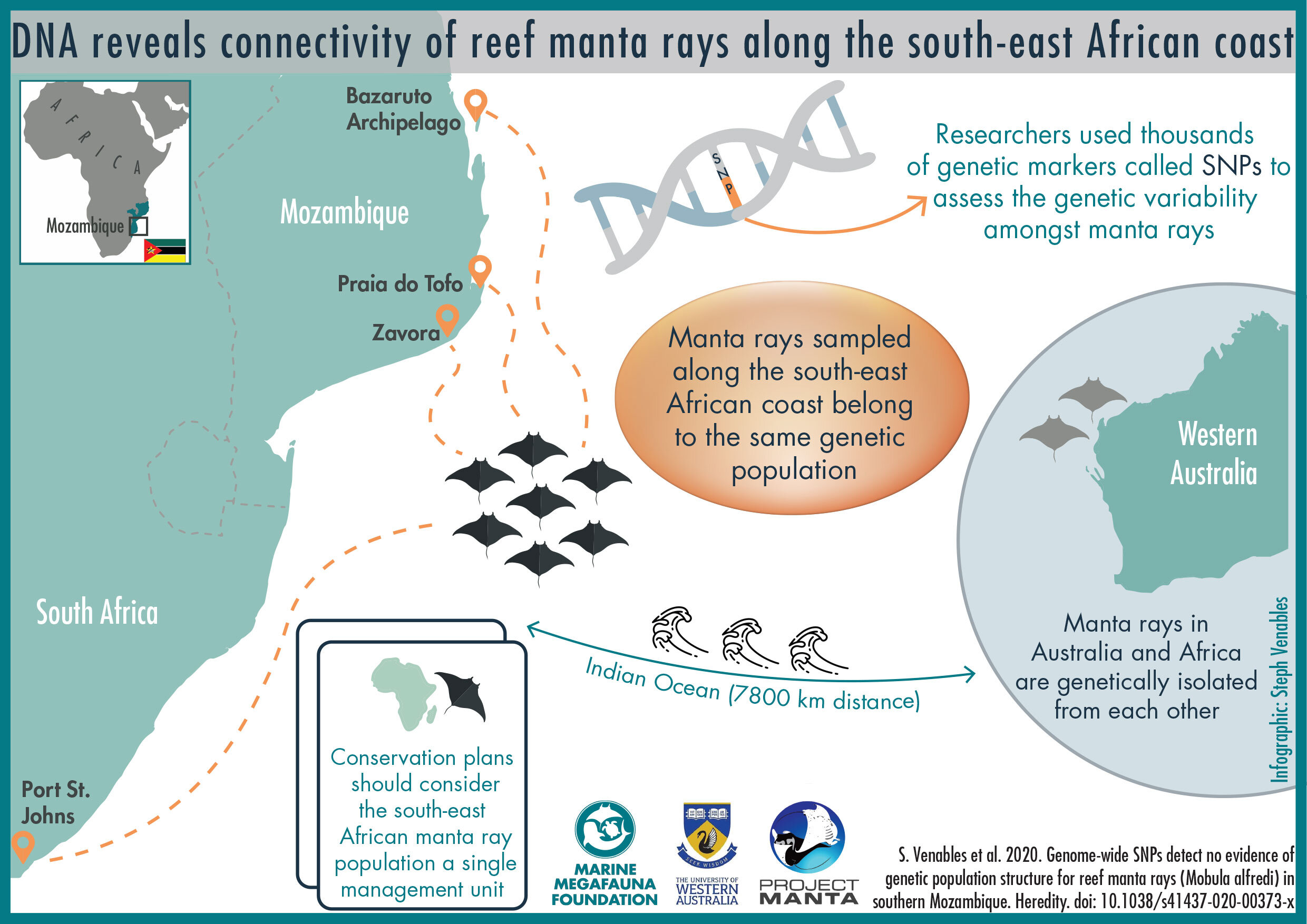
Genetics tells the same story. Using thousands of genetic markers called SNPs, MMF’s Dr. Stephanie Venables and colleagues found no evidence of genetic population structure among reef manta rays in southern Mozambique: the manta rays sampled along the south-east African coast belong to the same genetic population. Conservation plans should therefore treat them as a single management unit. The same study showed that reef manta rays in Australia and Africa are genetically isolated from each other.
Worth more alive
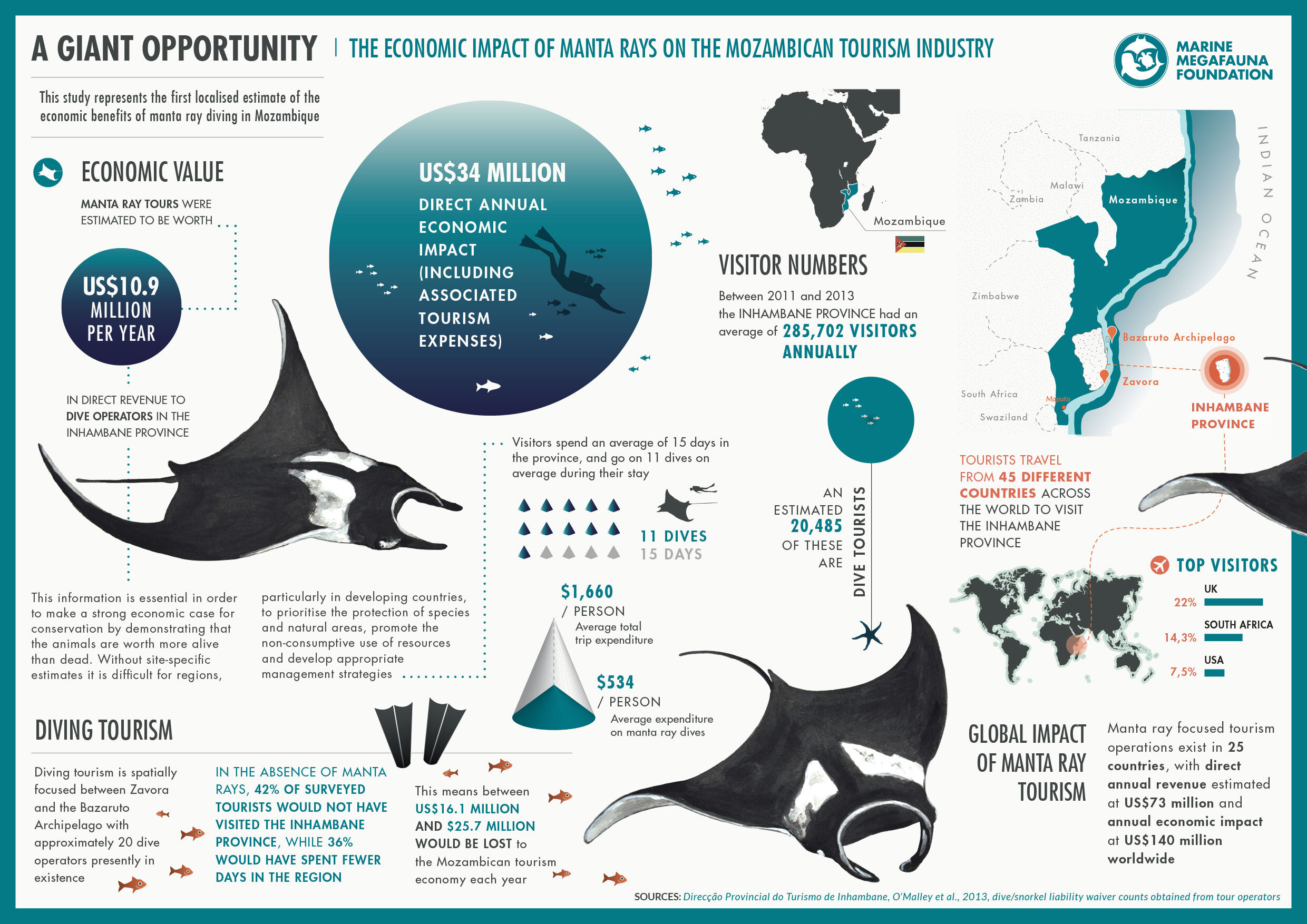
Manta rays are a major draw for divers in Mozambique. In a 2016 study of their economic impact on the Mozambican tourism industry, we estimated that manta ray tours were worth US$10.9 million a year in direct revenue to dive operators in Inhambane Province, a strong incentive for better management and protection.
Mantas of Mozambique
In this talk from our Fauna Friday series, MMF’s Dr. Stephanie Venables introduces the manta rays of Mozambique.
MMF Project Team
 Dr. Nakia Cullain
 Anna Flam
 Dr. Stephanie Venables
Collaborators and Partners

Recent research
- 2026Acoustic telemetry reveals cross-border movements and conservation opportunities for reef manta rays Mobula alfredi in southern Africa
- 2025Declines in sightings and changing visitation patterns of reef manta rays at an important aggregation site in Mozambique
- 2024Killer whale predation on a giant manta ray (Mobula birostris), a sicklefin devil ray (Mobula tarapacana) and a tiger shark (Galeocerdo cuvier) in the Southwest Indian Ocean
- Persistent declines in sightings of manta and devil rays (Mobulidae) at a global hotspot in southern Mozambique
- 2023Southward range extension and transboundary movements of reef manta rays Mobula alfredi along the east African coastline
- 2022Evidence of Závora Bay as a critical site for reef manta rays, Mobula alfredi, in southern Mozambique
- 2020Genome-wide SNPs detect no evidence of genetic population structure for reef manta rays ( Mobula alfredi) in southern Mozambique
- Habitat use and movement patterns of reef manta rays Mobula alfredi in southern Mozambique
In the news
Coverage of this work.
 African Manta Ray Project
 Závora Marine Conservation
 Mozambique Acoustic Telemetry Network
 Madagascar Manta and Devil Rays