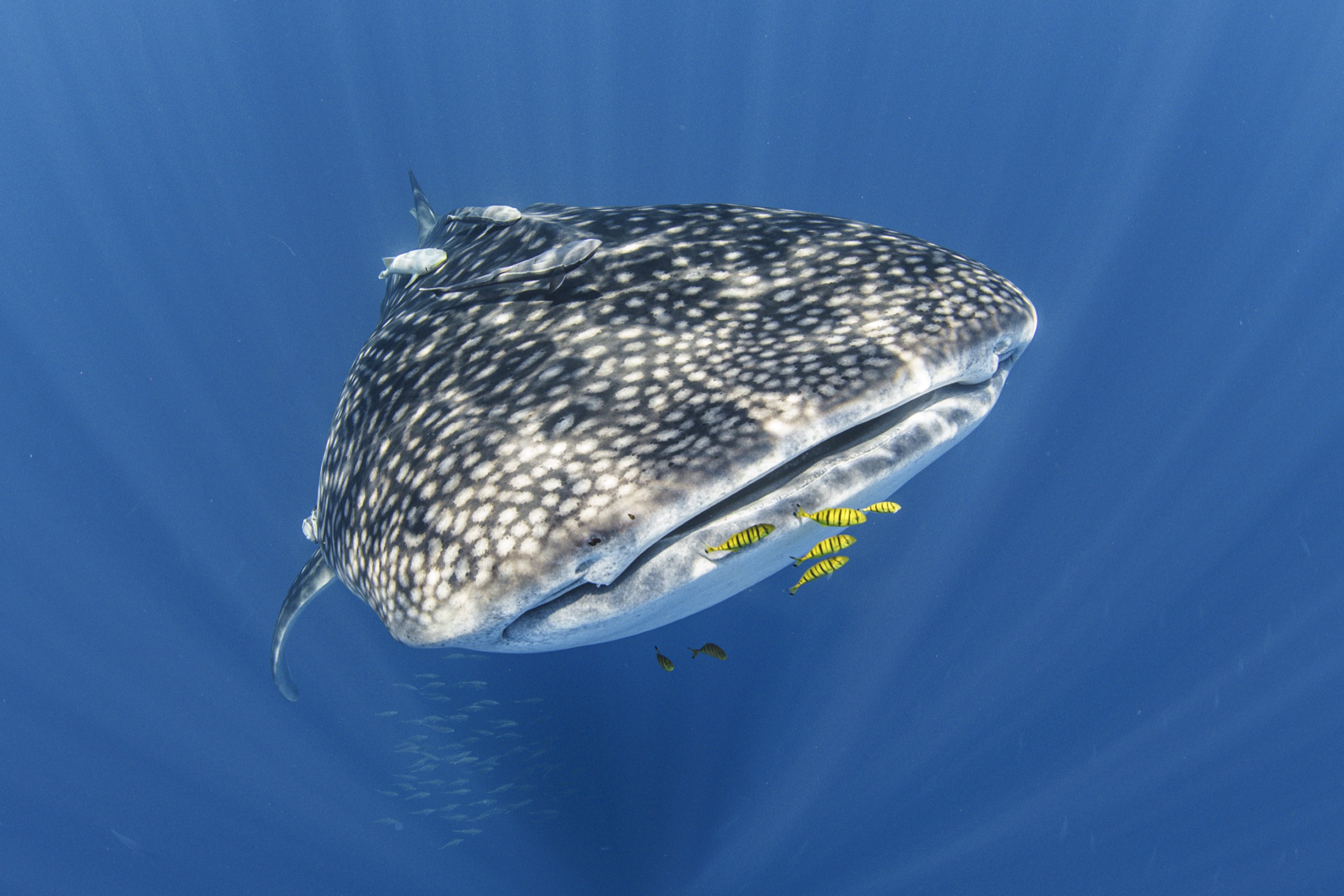
Whale sharks · Global
Global Whale Shark Program
Long-term whale shark research at sites around the world, and the global assessments, treaty proposals, and fisheries science behind the species' international protection, led or co-authored by MMF scientists.


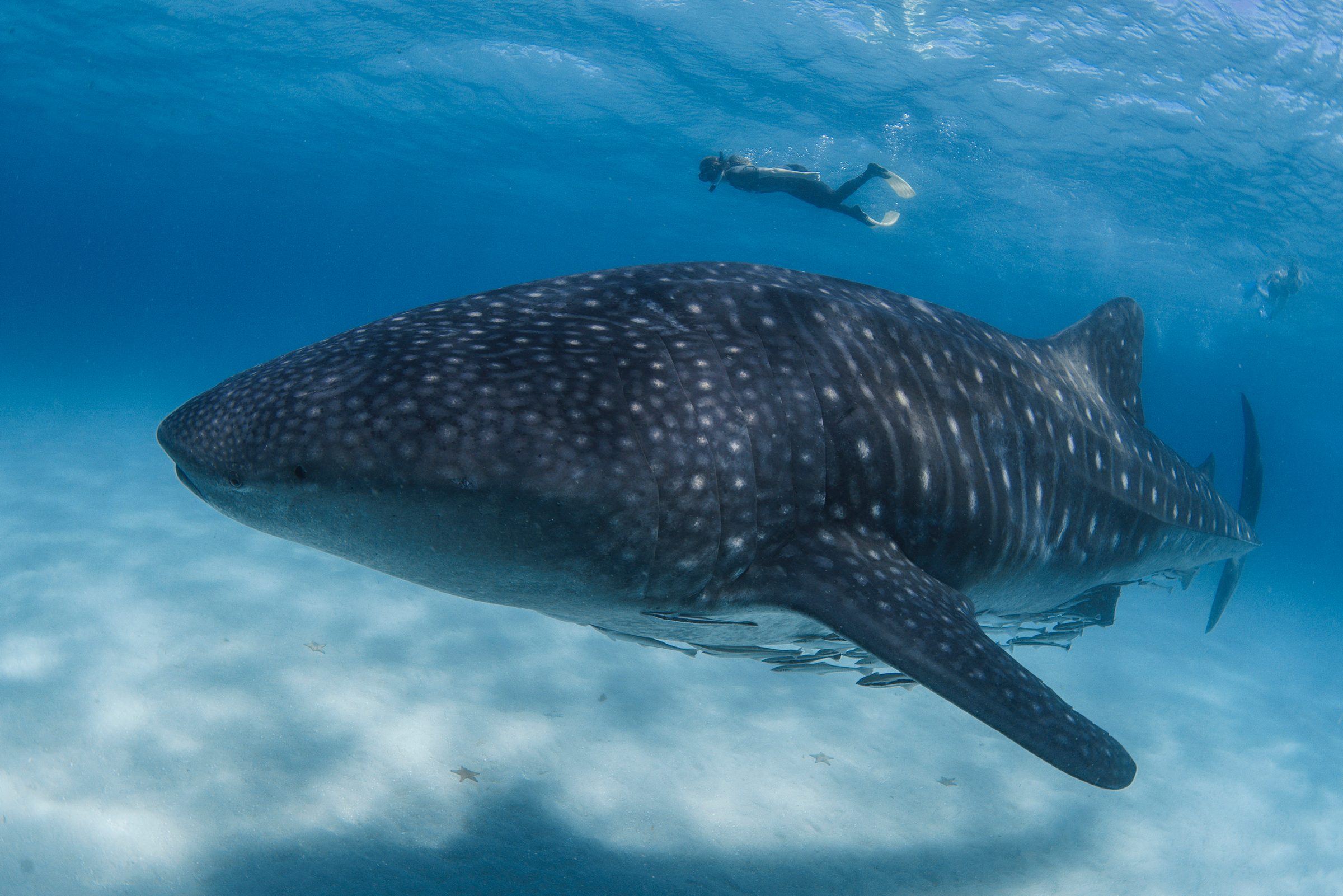
MMF’s Global Whale Shark Program combines long-term field research at aggregation sites in the Atlantic, Indian, and Pacific oceans with the global science that decides how whale sharks are protected. MMF scientists led the 2016 IUCN Red List assessment that listed the species as Endangered, and its 2025 update.
Directed fisheries drove the historic declines that made whale sharks (Rhincodon typus) Endangered. Most of those fisheries have now closed, but whale sharks grow slowly and mature late, so even an unfished population can only increase by an estimated 2 to 5% a year. Recovery will take decades, and threats that did not cause the original collapse, such as ship strikes, bycatch, and pollution, could now prevent it. Our approach follows from that: identify the hotspots whale sharks depend on and why they use them, assess the threats most likely to limit recovery, work with communities, industries, and governments to reduce them, and build monitoring that local teams can sustain.
Objectives
- Monitor whale shark populations at key aggregation sites over the long term, through photo-identification shared on Sharkbook.ai.
- Identify the threats most likely to limit the species’ recovery, and work with communities, industries, and governments to reduce them.
- Keep the whale shark’s global conservation assessments current and grounded in the best available data.
- Provide the scientific case for international protection, and for its implementation by the countries that have signed on.
- Make the science accessible to managers, researchers, and the public.
Our whale shark projects
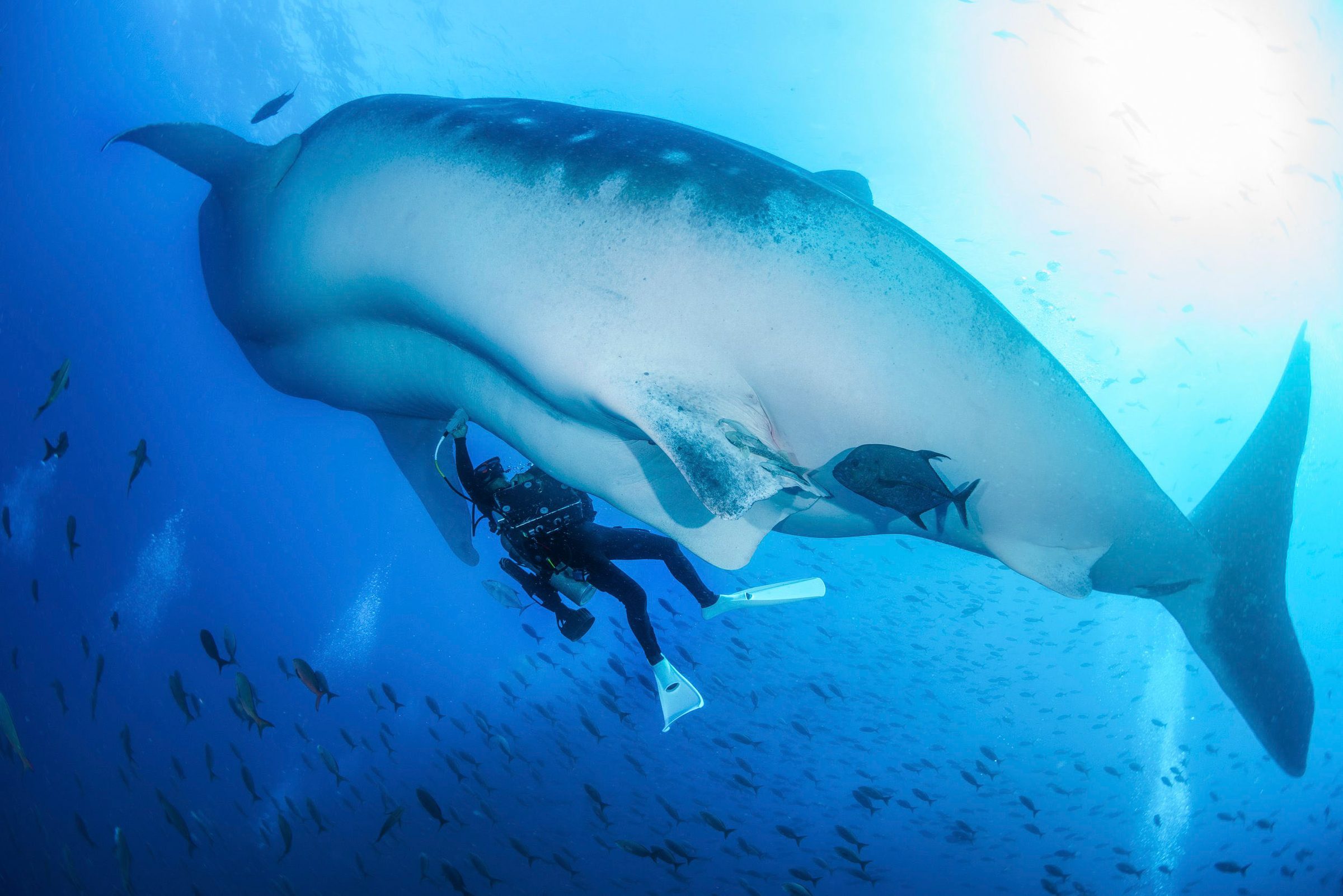
Galapagos Whale Shark Project
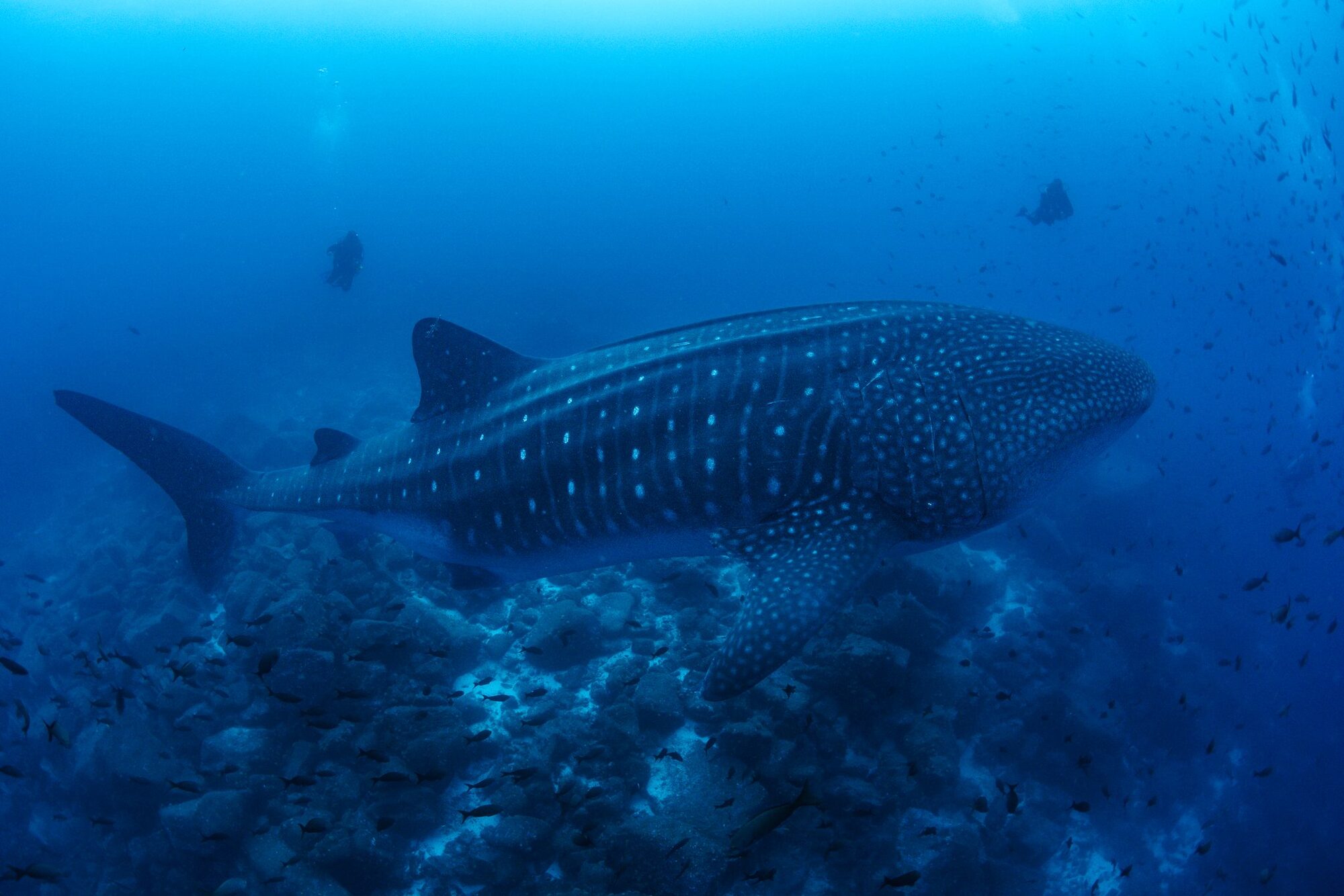
Almost all the whale sharks passing Darwin Island are large adult females, a demographic rarely seen anywhere else.
Led by Galapagos Whale Shark Project, with MMFAbout the project →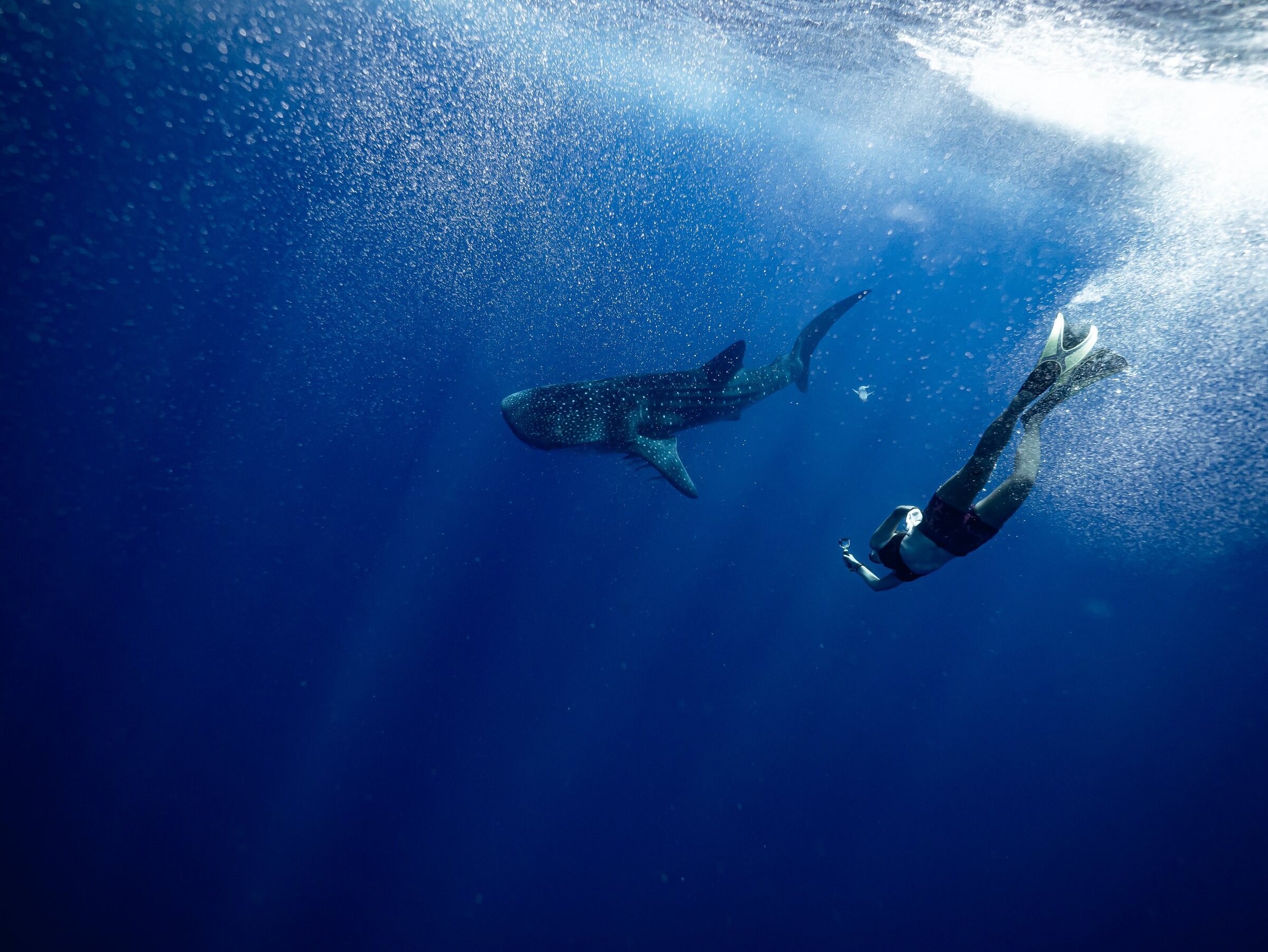
Madagascar Whale Shark Project
Young whale sharks aggregate off Nosy Be from about September to December, and the Madagascar Whale Shark Project has studied and protected them since 2016.
Led by Madagascar Whale Shark Project, with MMFAbout the project →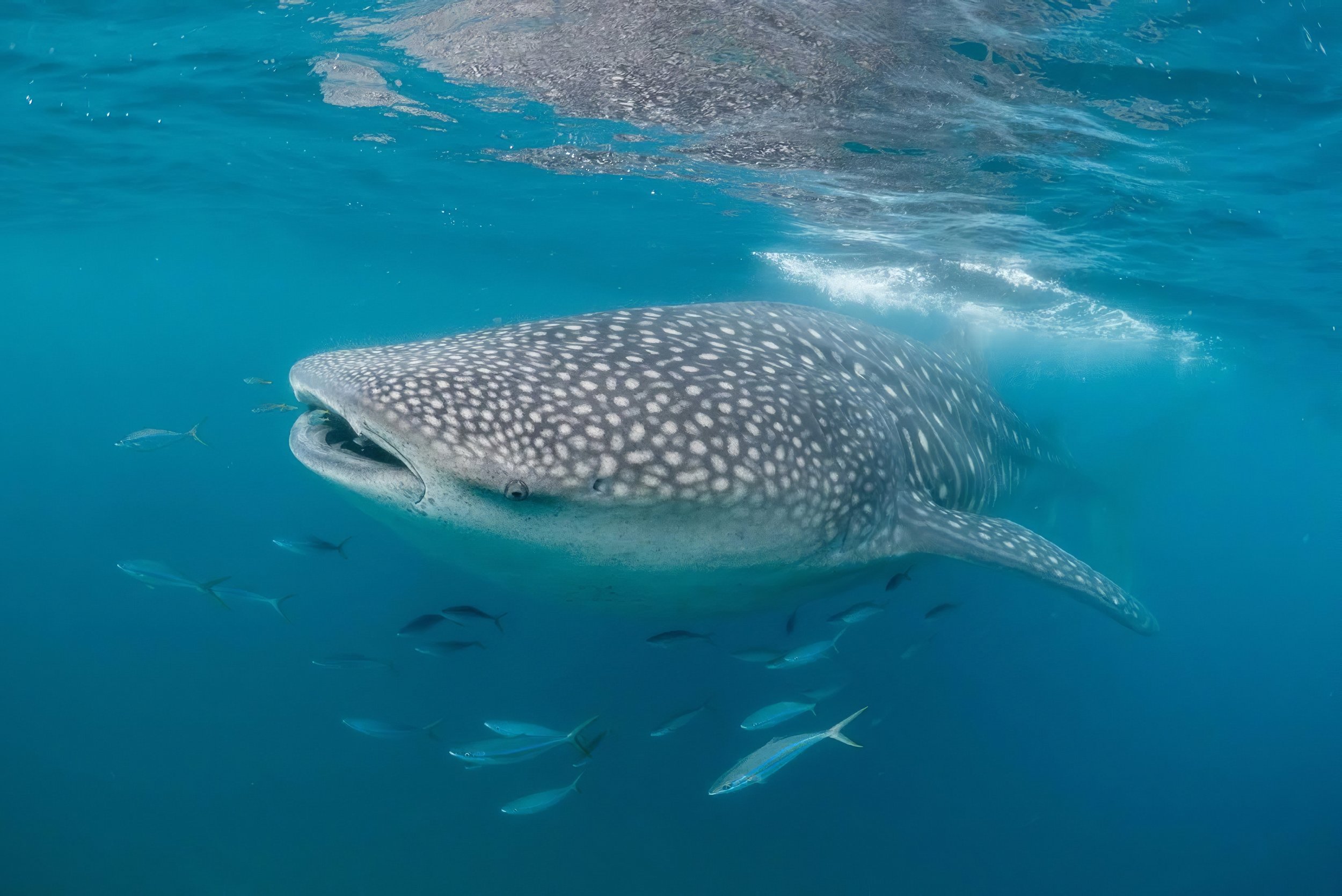
Mozambique Whale Shark Project
Southern Mozambique is one of the world's most important whale shark feeding areas, and we have studied the sharks here since 2005 to understand and protect them.
Led by Dr. Clare PrebbleAbout the project →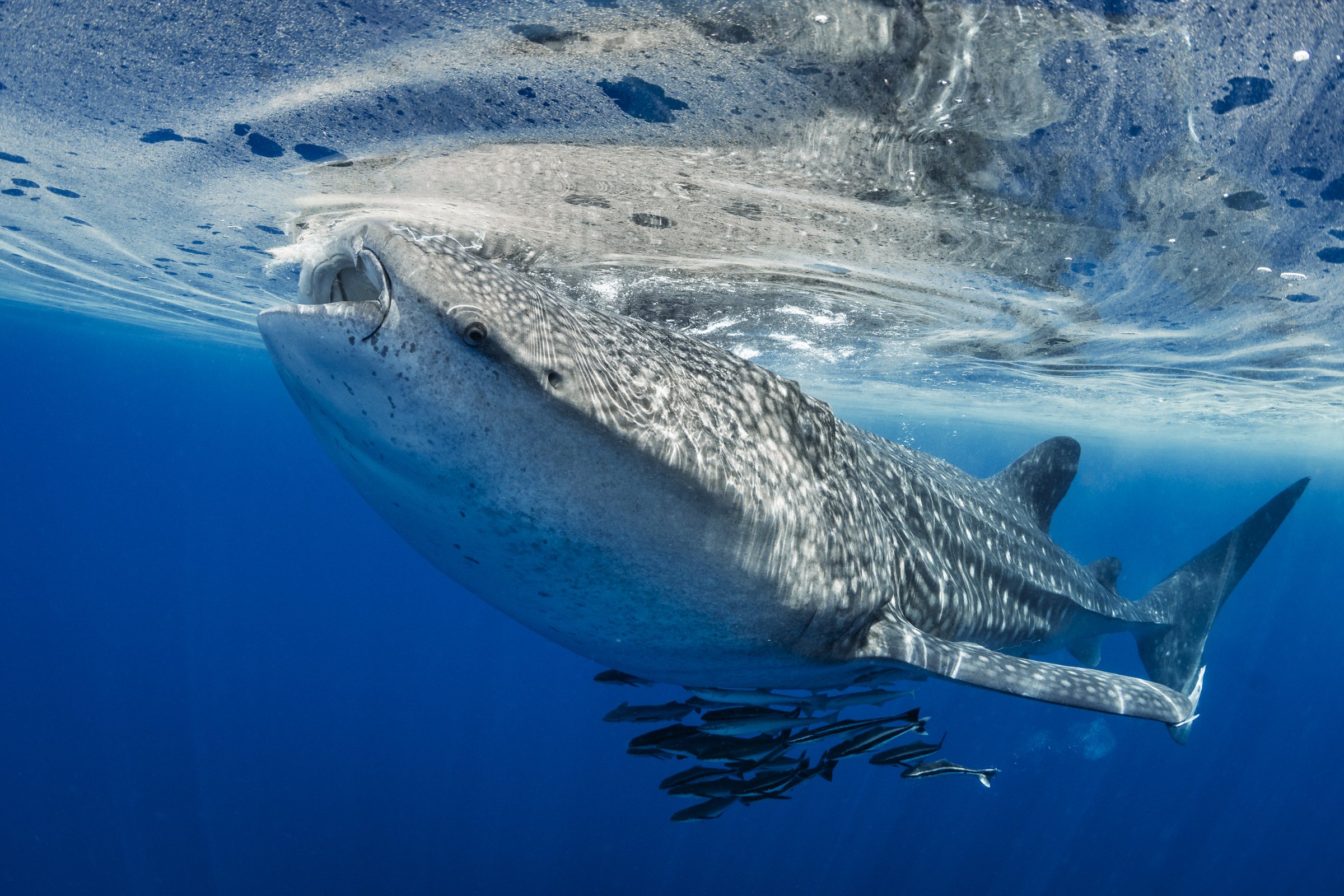
Oman Whale Shark Project
Mapping the Gulf of Oman's whale shark aggregation, documenting the injuries its sharks suffer from vessel strikes and fishing gear, and building the Omani partnerships that can protect them.
Led by Dr. Simon PierceAbout the project →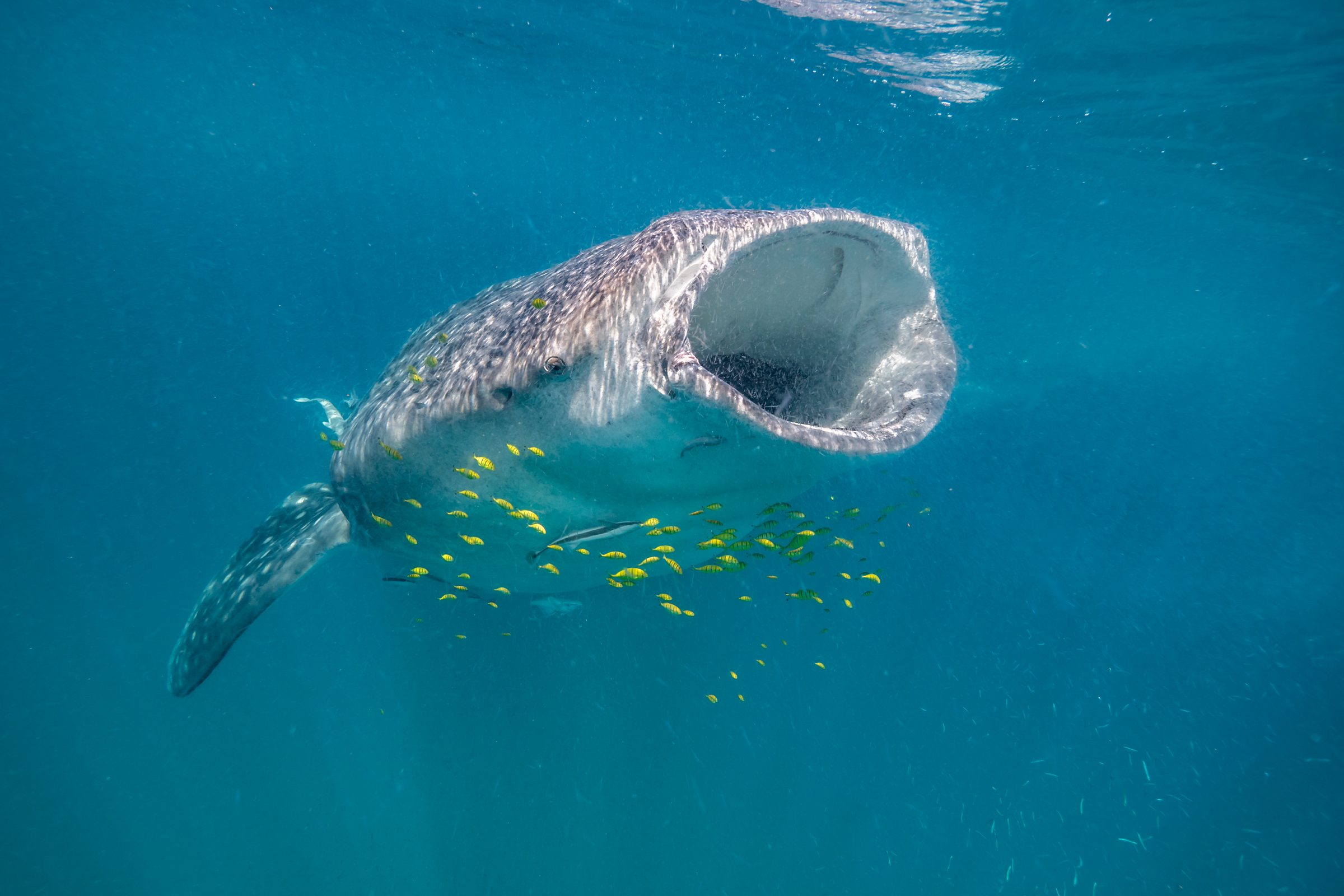
Tanzania Whale Shark Project
The whale sharks off Mafia Island return to the same small stretch of coast year after year, and we have monitored them since 2012 to understand and protect them.
Led by Dr. Chris RohnerAbout the project →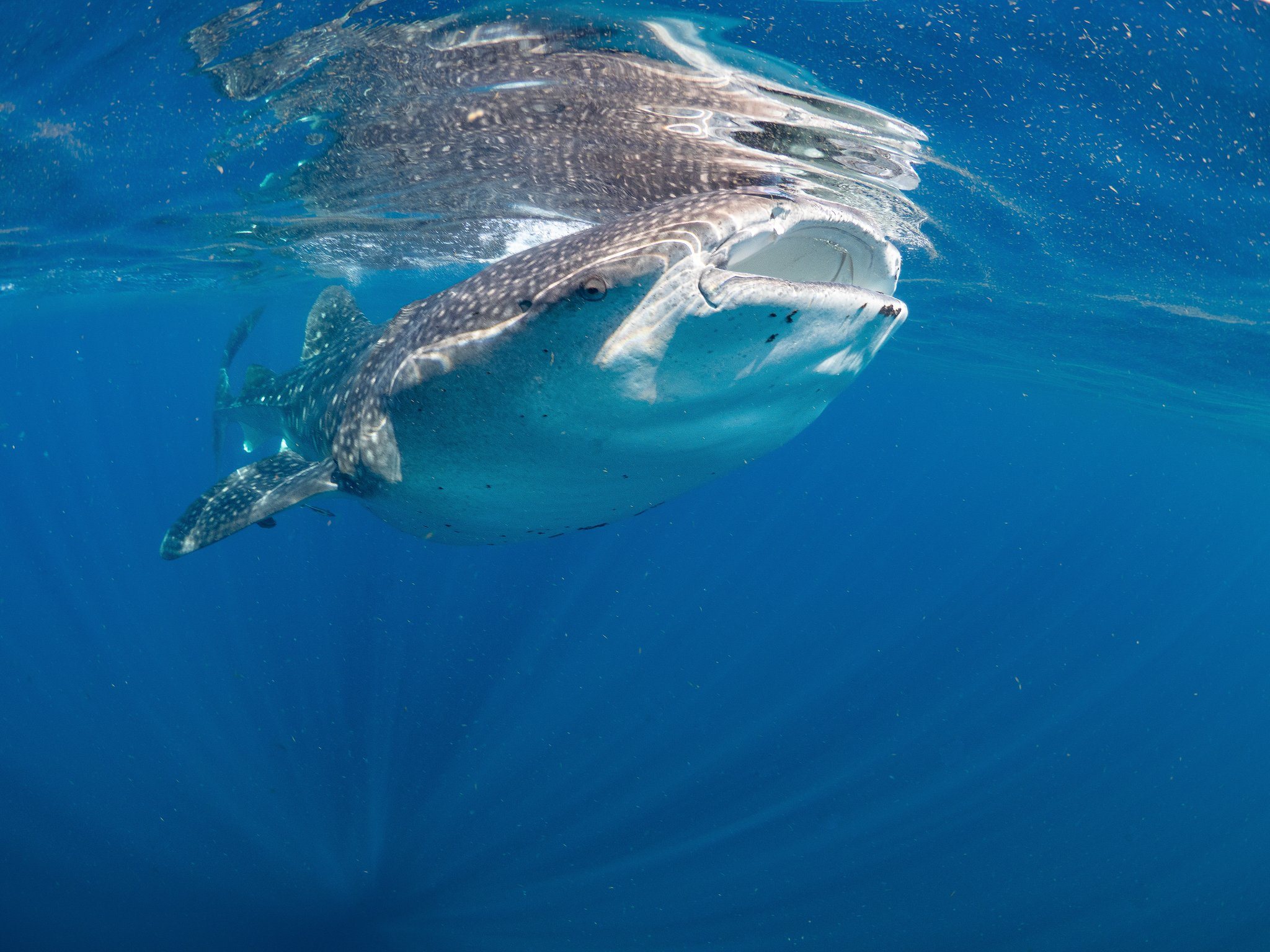
Yucatan Whale Shark Research
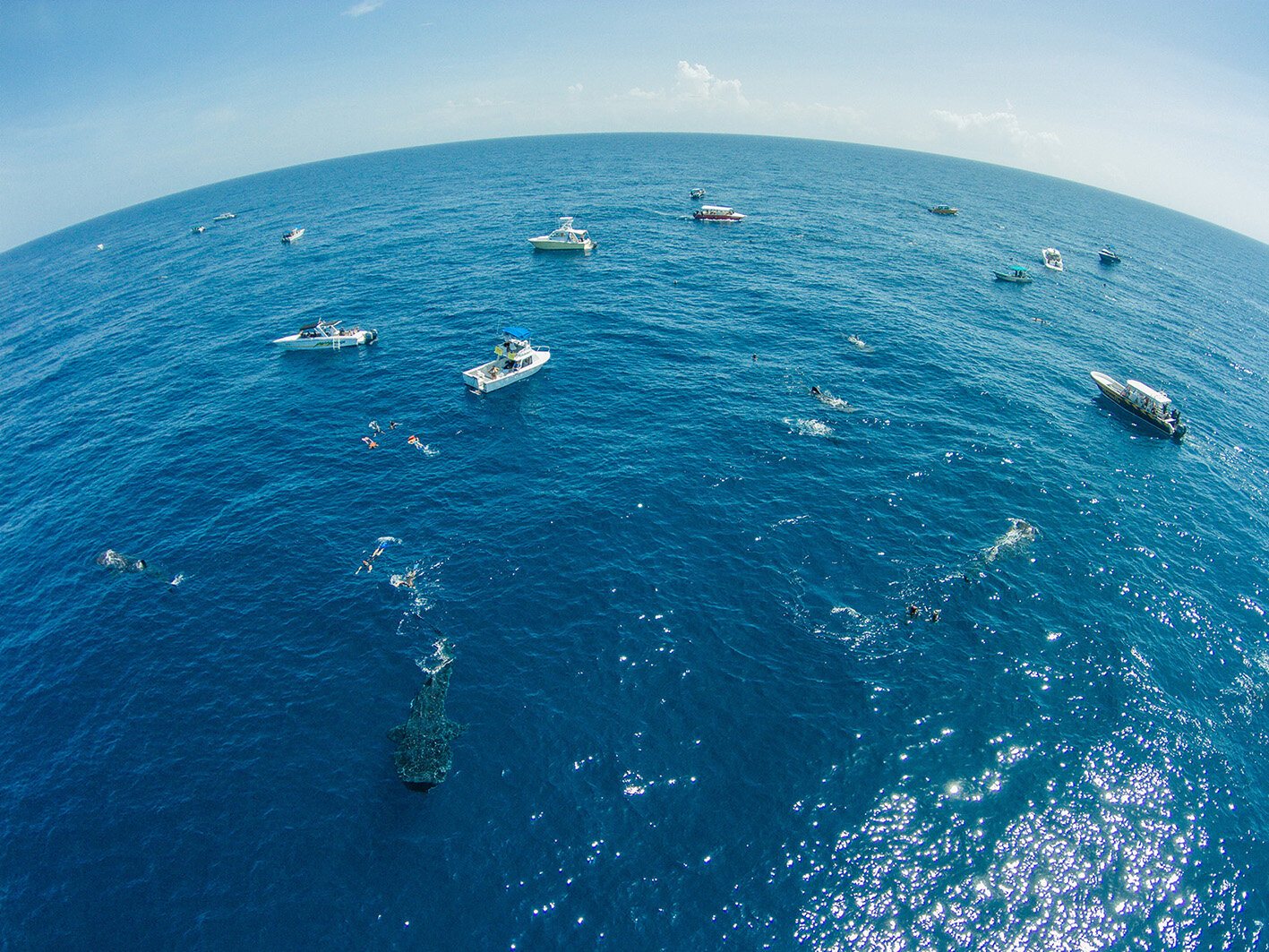
Each summer, hundreds of whale sharks gather off the Yucatan Peninsula to feed, forming the largest aggregation of the species yet recorded.
Led by Ch'ooj Ajauil AC, with MMFAbout the project →Completed projects
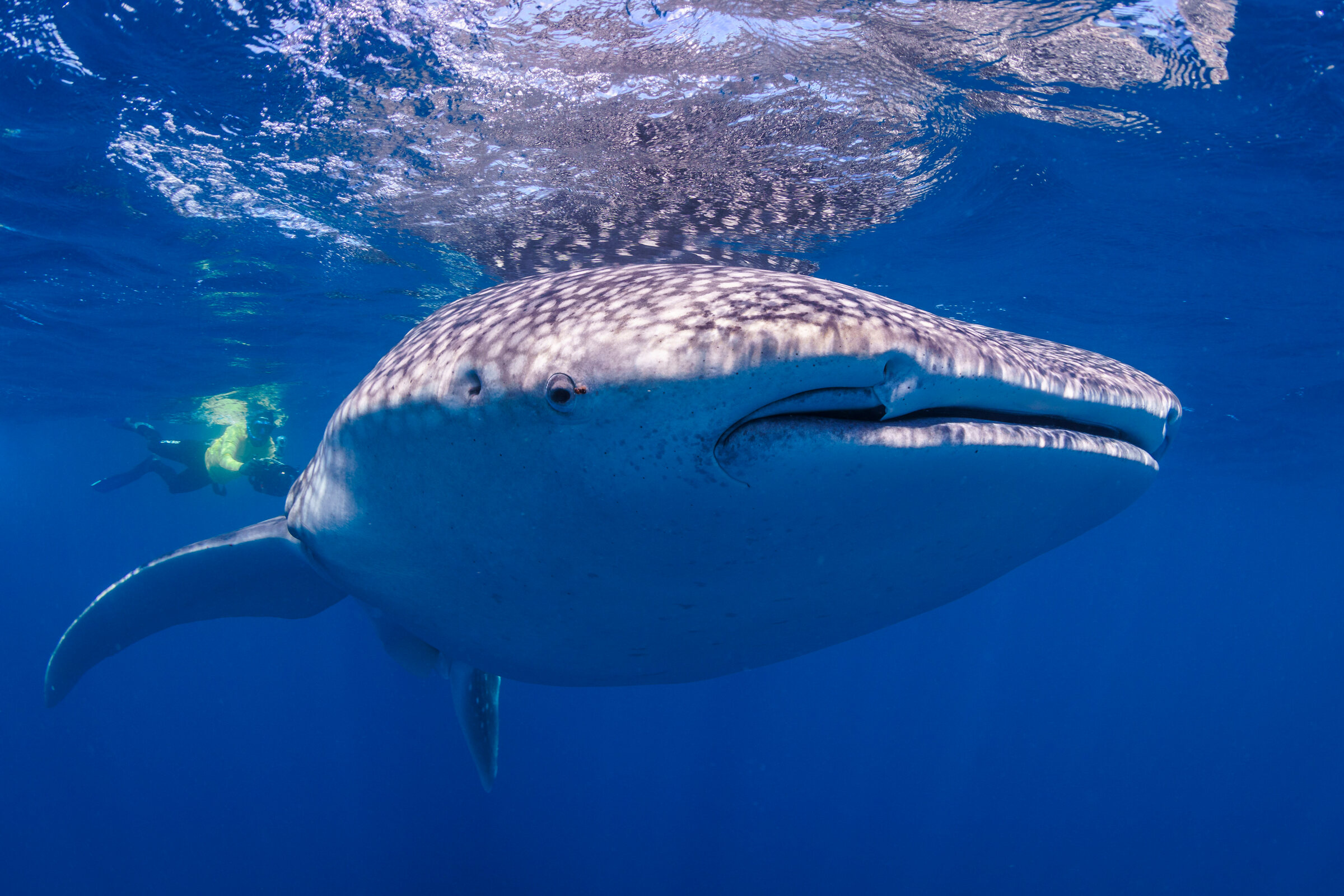 Wreck Bay, far northern Great Barrier Reef, AustraliaCoral Sea Whale Shark ProjectYoung whale sharks aggregate at Wreck Bay each November and December before dispersing across the Coral Sea and beyond.
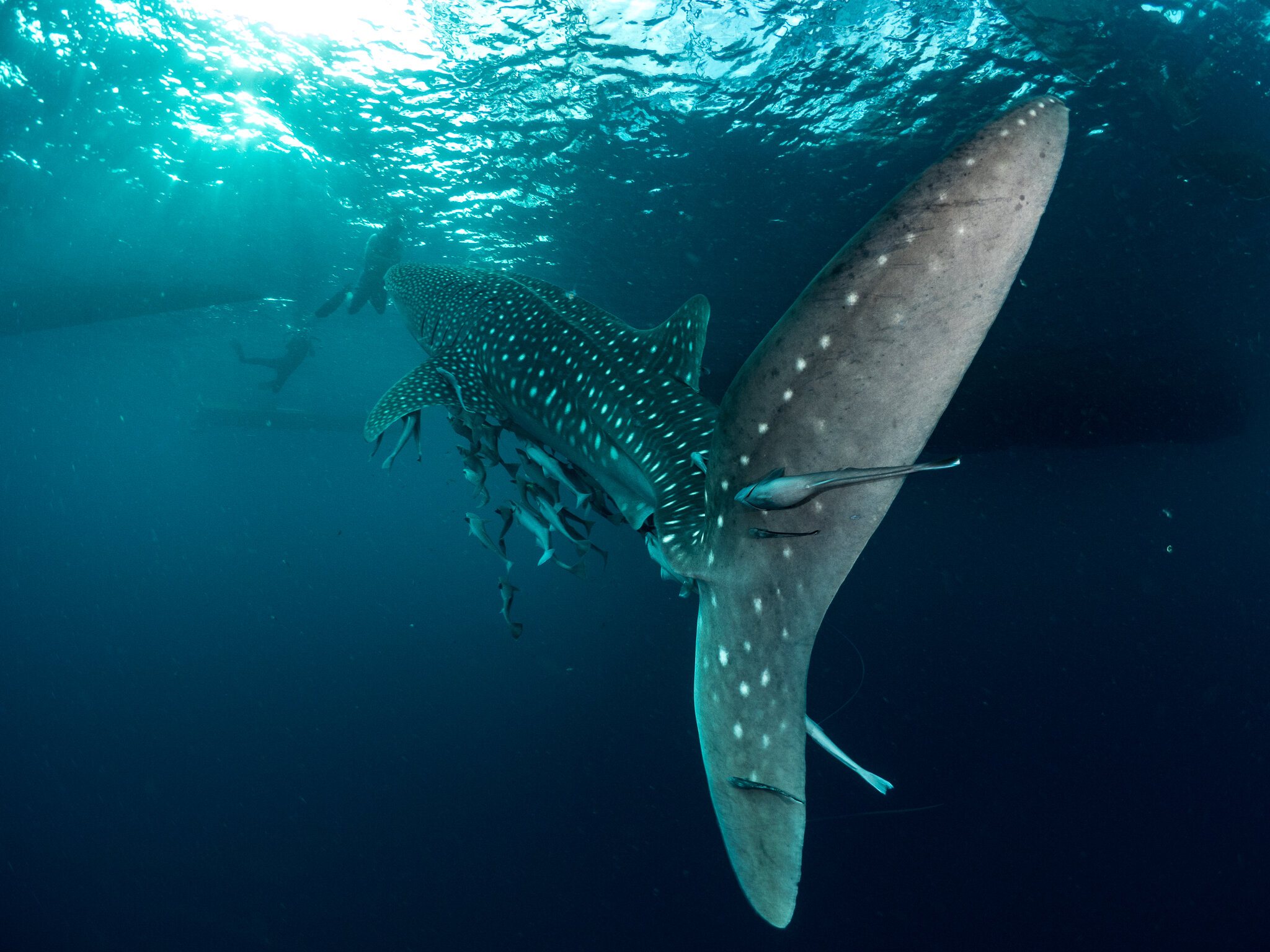 Gulf of California and eastern Pacific, MexicoPacific Mexico Whale Shark TrackingSatellite tags showed that the juvenile whale sharks tracked stayed inside the Gulf of California, while the adults, most of them apparently pregnant females, moved into the open Pacific.
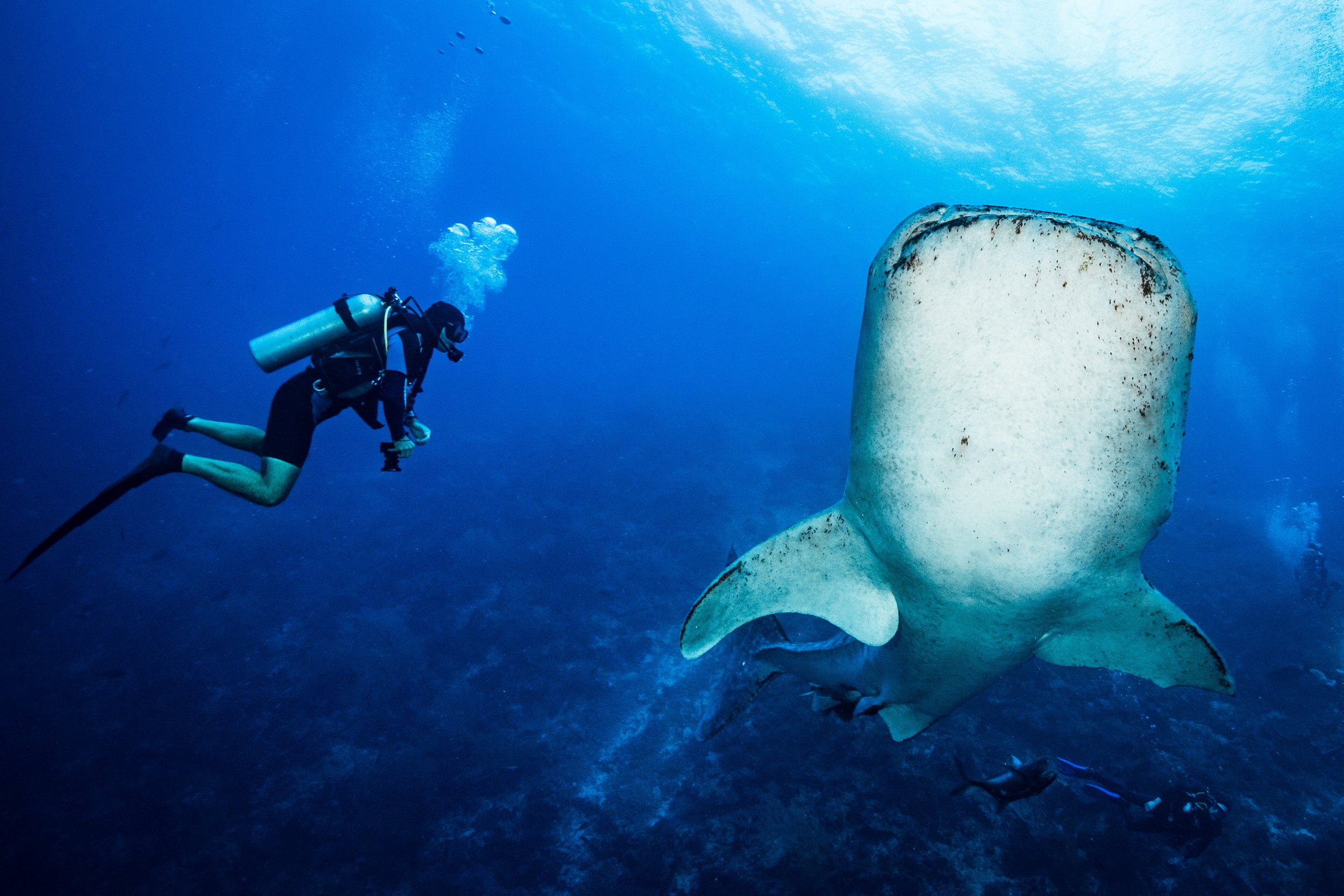 Sulu and Bohol Seas, PhilippinesPhilippines Whale Shark ProjectSatellite tags on 17 young whale sharks showed that they stayed in Philippine waters throughout tracking, yet spent most of their time offshore, over deep water.
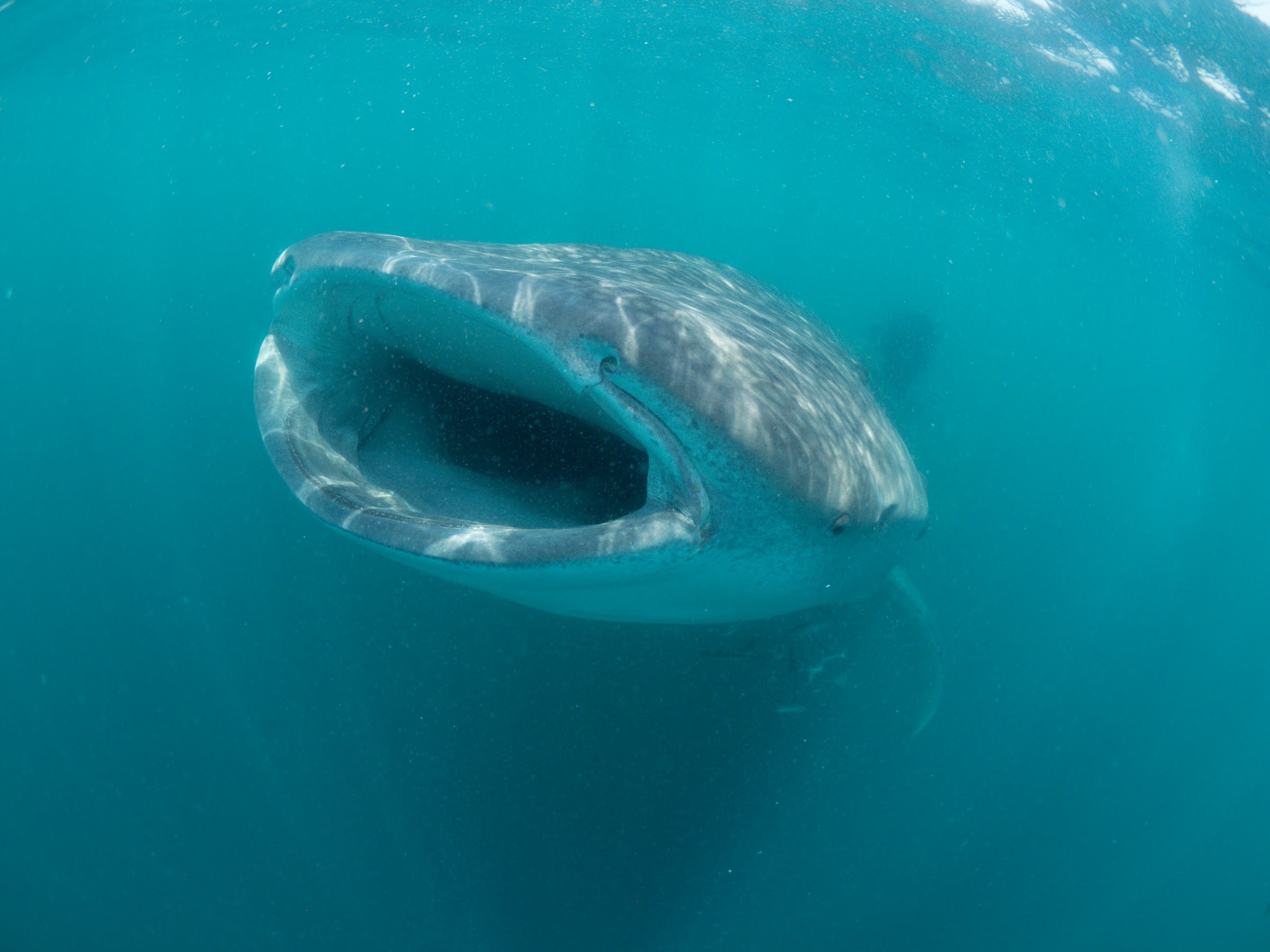 Al Shaheen oil field, Arabian Gulf, QatarQatar Whale Shark ProjectEvery summer, more than a hundred whale sharks at a time aggregate in an offshore oil field in Qatar to feed on the eggs of spawning tuna.
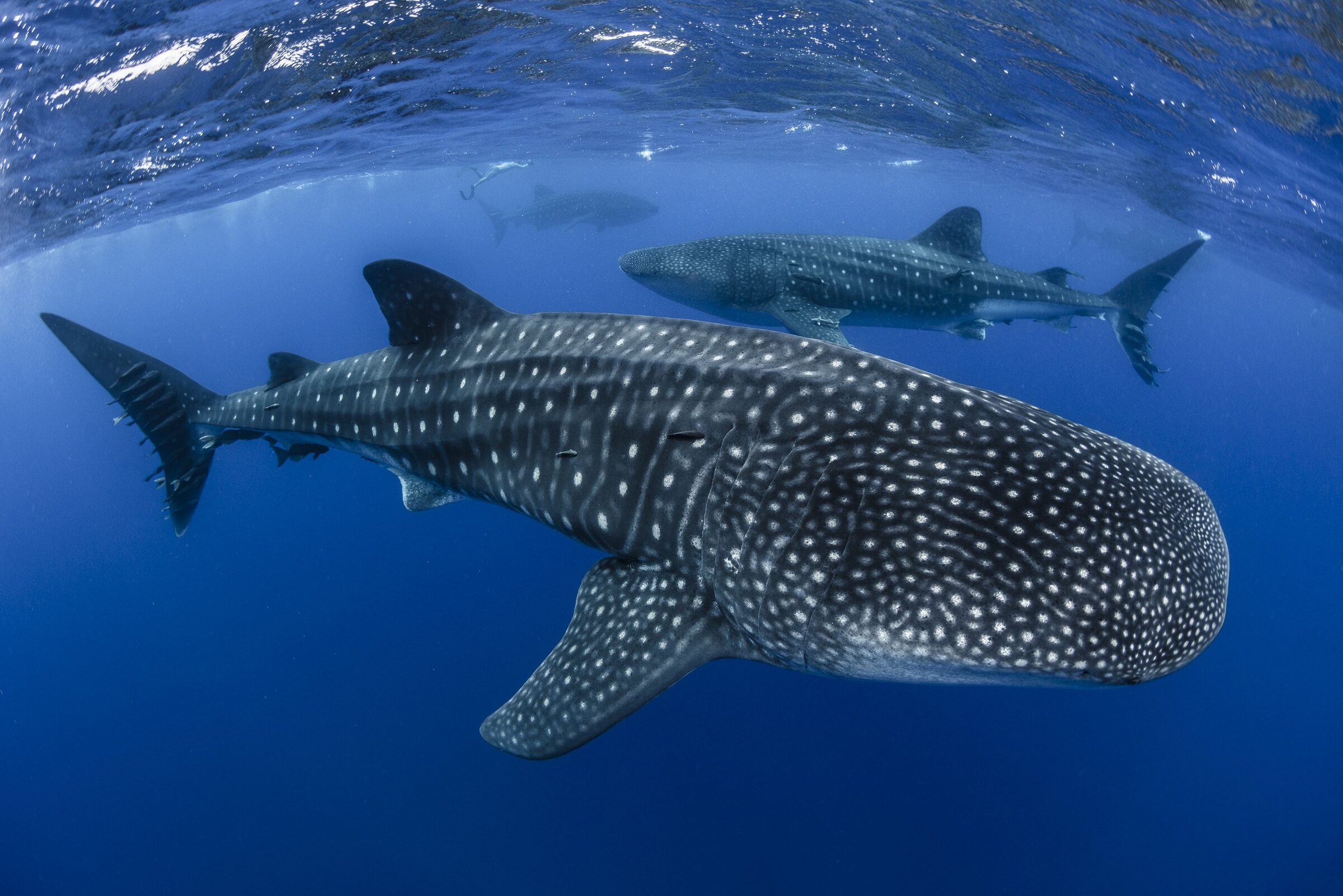 St. Helena, central South AtlanticSt. Helena Whale Shark ProjectThe whale sharks that aggregate around this remote island are mainly adults, with males and females in roughly equal numbers. Two eyewitness accounts from local observers were the first reported sightings of whale sharks mating.
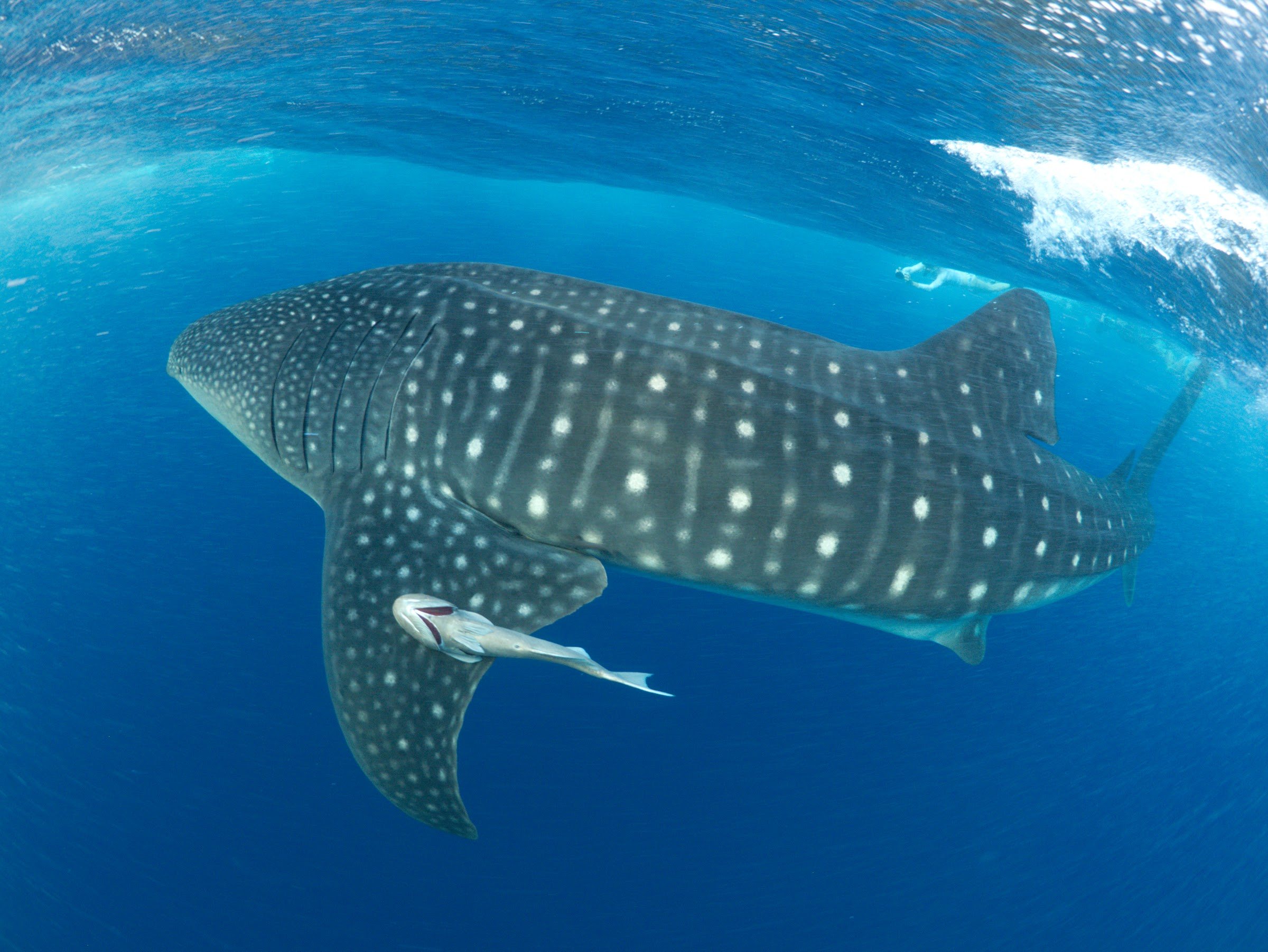 Utila, Bay Islands, HondurasUtila Whale Shark ProjectTwelve years of sightings identified 95 whale sharks at Utila, and later regional work showed that these sharks move between Honduras, Belize, Mexico, and the United States.
What we've done
- Led the IUCN Red List assessments that listed the whale shark as Endangered in 2016 and confirmed that status in 2025 (opens in a new tab), the global benchmark that treaty listings and national laws now rely on.
- Wrote the technical proposal behind the whale shark’s 2017 listing on Appendix I of the Convention on Migratory Species, which obliges its parties to protect the species and its habitat.
- Contributed to the whale shark’s uplisting to Appendix I of the Convention on International Trade in Endangered Species (CITES), adopted in 2025, which bans international commercial trade in the species.
- Helped make the scientific case for national protection of whale sharks and all mobulid rays in Mozambique, in force since 2021.
- Contributed to 11 IUCN Important Shark and Ray Areas for whale sharks, in Mozambique, Tanzania, Madagascar, the Arabian Gulf, Australia, and Thailand.
- Co-authored the global analysis that found 92% of whale sharks’ horizontal space use overlaps with large-vessel traffic (opens in a new tab), putting ship strikes at the center of the species’ conservation, and a 2026 paper recommending a whale shark retention ban to the Indian Ocean Tuna Commission.
- Built long-term monitoring datasets at Tofo Beach, Mozambique, since 2005, and Mafia Island, Tanzania, since 2012, which underpin the Red List assessments and our contributions to Sharkbook.ai.
- Helped inform the 2022 Hermandad Marine Reserve, which extended protection beyond the Galápagos Marine Reserve.
- Led the 2021 IUCN Green Status (opens in a new tab) assessment, which classed whale sharks as Largely Depleted against their unimpacted state.
- Co-edited Whale Sharks: Biology, Ecology, and Conservation (2021), the first scientific textbook on the species.
What's next
- Model long-term abundance trends for the Atlantic population from Yucatán Peninsula data, with our Mexican collaborators.
- Work with coastal communities to reduce gillnet interactions with whale sharks in Mozambique and Tanzania.
- Establish baseline abundance for whale sharks in Oman, and map their overlap with shipping and gillnet fisheries across the Arabian Sea.
- Analyze the long-term Galápagos dataset with the Galápagos Whale Shark Project, which follows a population made up mostly of adult females.
- Support the scientific consideration of a whale shark retention ban through the Indian Ocean Tuna Commission.
- Continue the long-term monitoring at our study sites that feeds future Red List reassessments.
Our work
Long-term monitoring
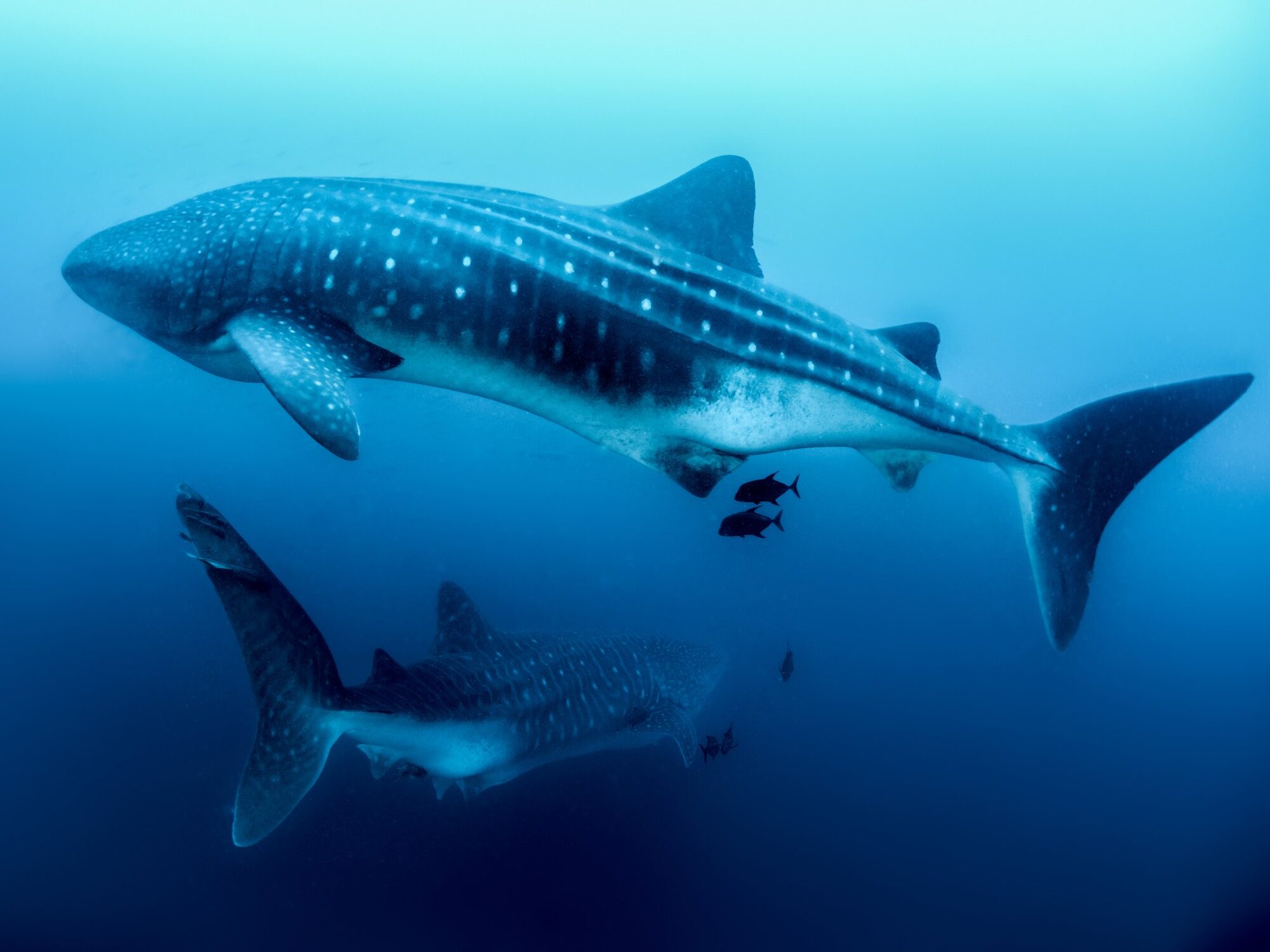
Photo-identification is the backbone of the program. Each whale shark’s pattern of spots behind the gills is unique and stable over time, so a photograph taken by our team, a dive operator, or a visiting diver can identify an individual years later. We contribute these identifications to Sharkbook.ai, Wild Me’s global photo-identification platform, where 15,740 individually identified whale sharks informed the 2025 Red List reassessment. Our longest dataset, from Tofo Beach in Mozambique, recorded an 87% decline in sightings between 2005 and 2019, one of the key trends behind that reassessment. At Mafia Island, Tanzania, in contrast, eight years of data (opens in a new tab) showed a stable population of around 200 sharks with high survival. The same analysis showed that only a change of about 30% could be detected over that period, which is why we keep returning to the same sites year after year.
Tracking and new methods
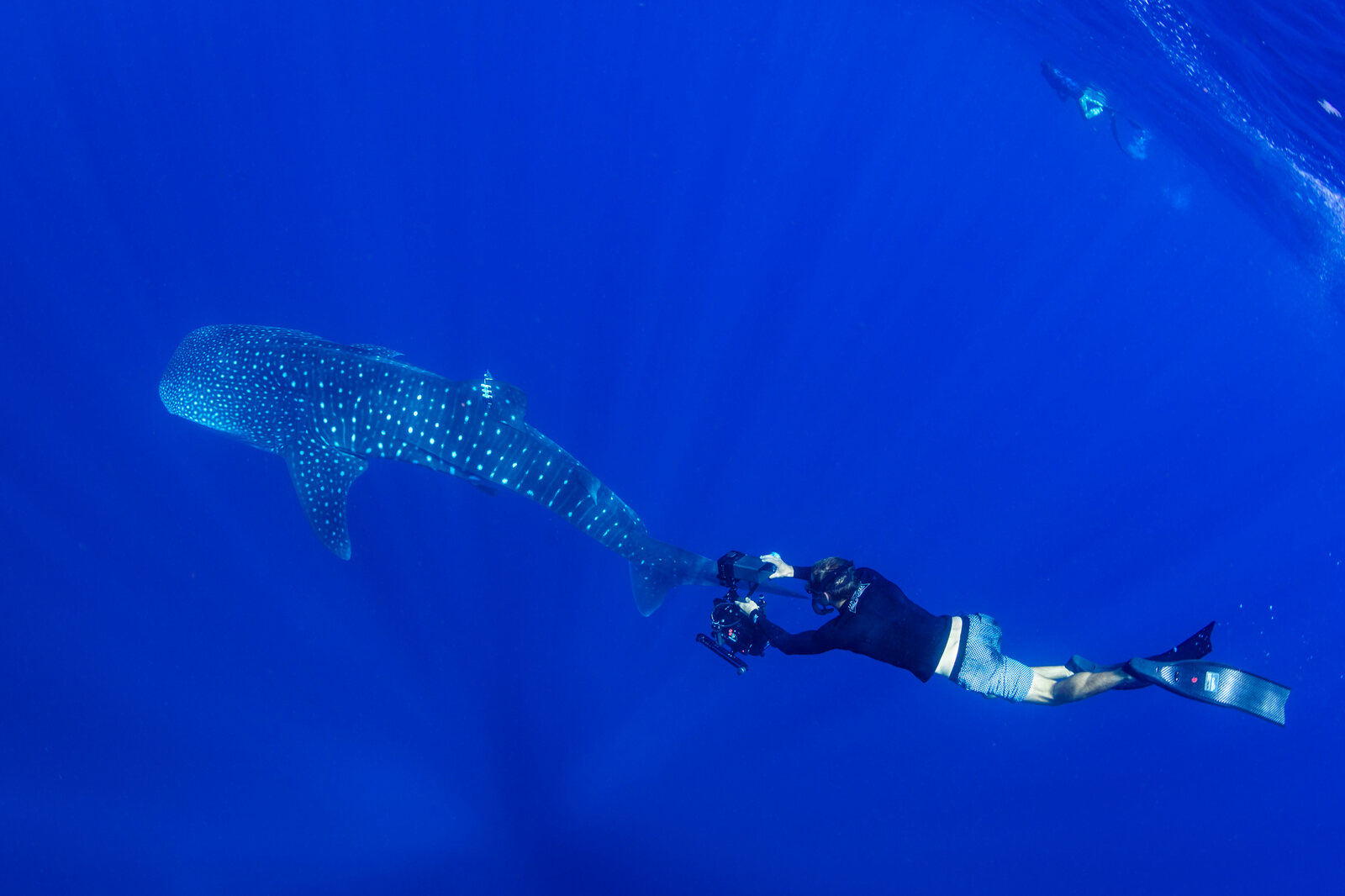
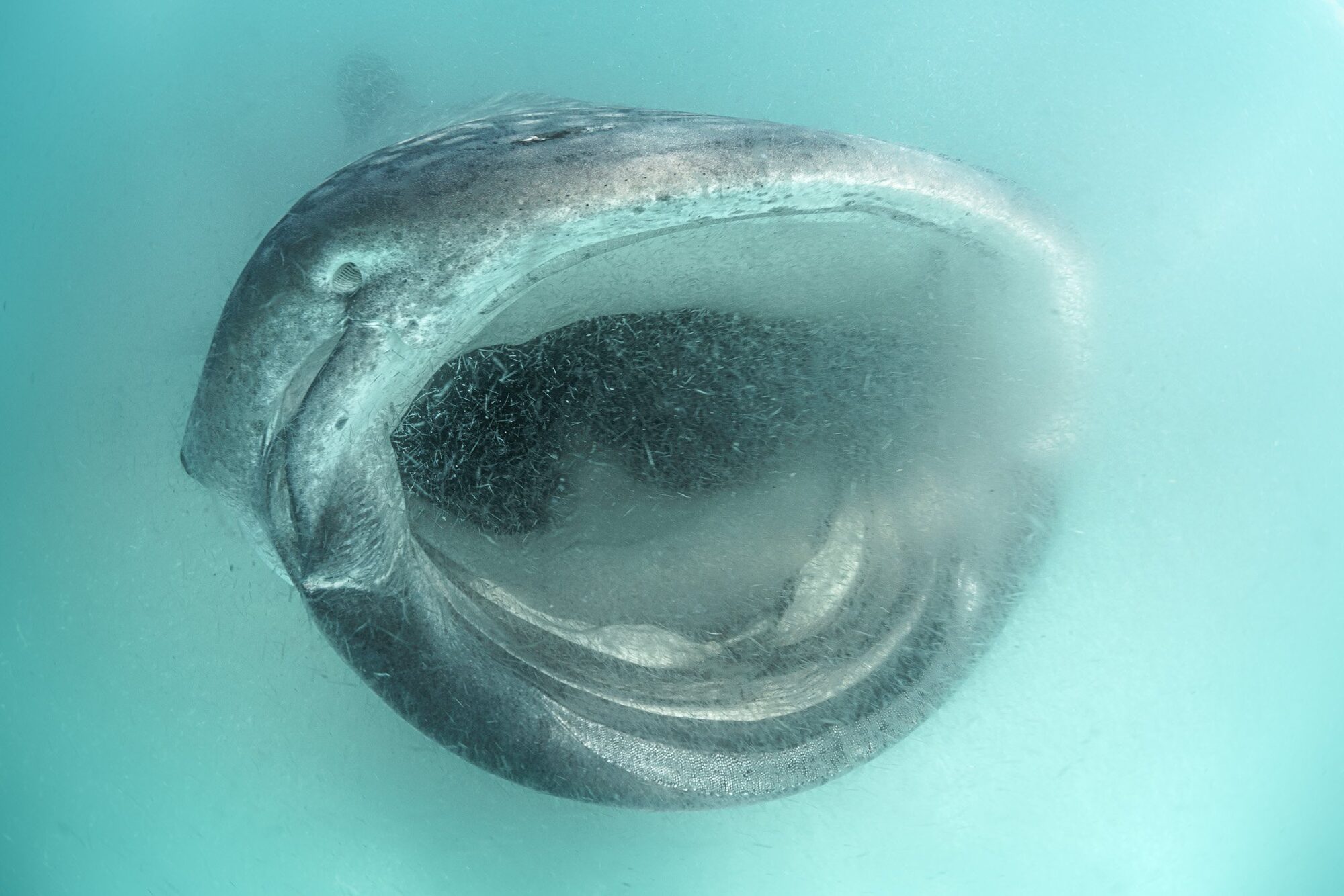
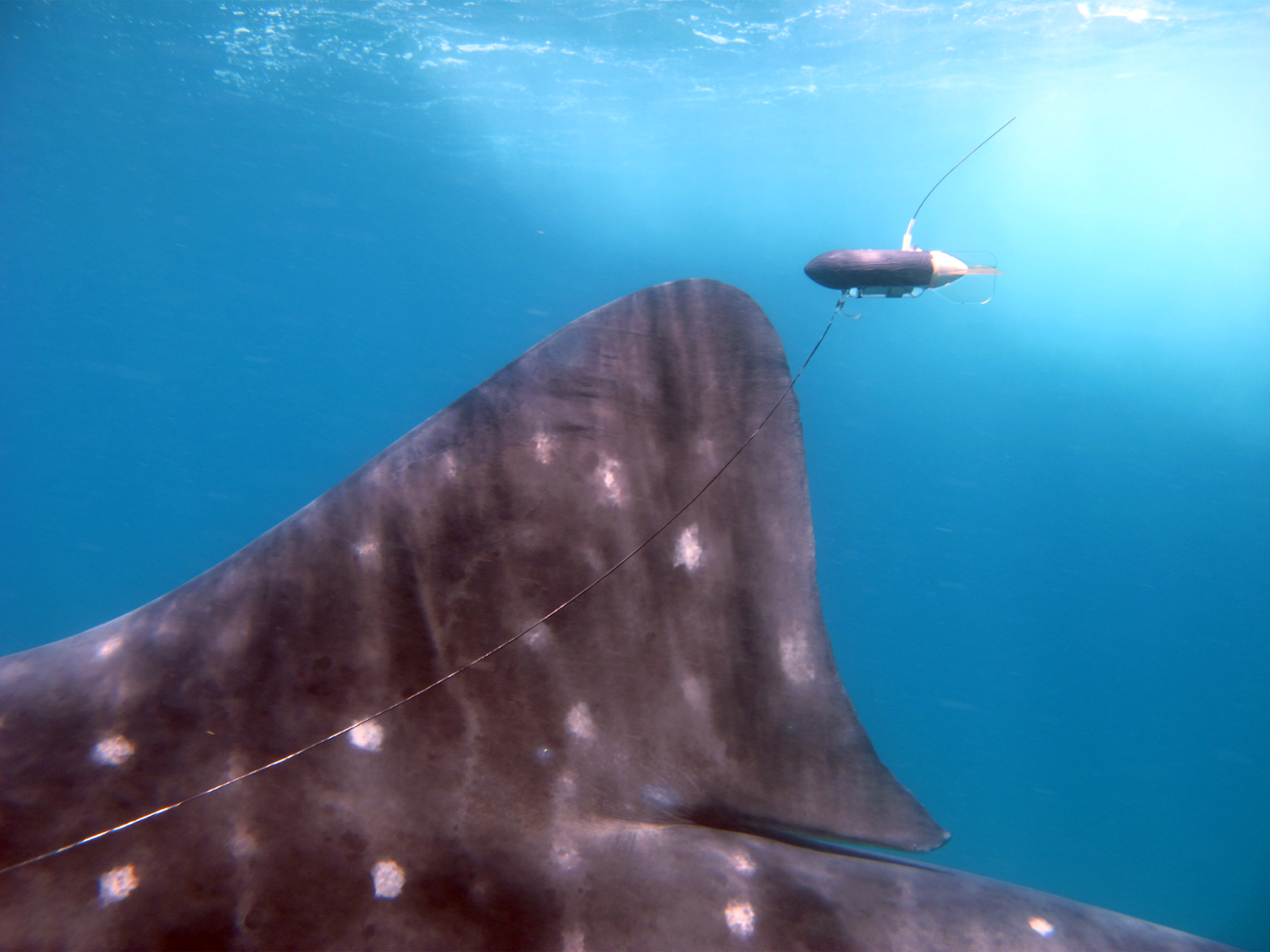
Around that catalog we run laser photogrammetry and stereo-video for size and demography, satellite tags for large-scale movement and diving, acoustic arrays for fine-scale residency, tissue sampling for genetics and stable isotopes, and underwater ultrasound and blood hormones for reproduction. Pooled with partners’ data, our tracking has contributed to global analyses of collision risk with shipping (opens in a new tab) and of how climate change will redistribute whale shark habitat (opens in a new tab), drawing on satellite tracks from 348 whale sharks across all the major ocean basins.
Where the program works
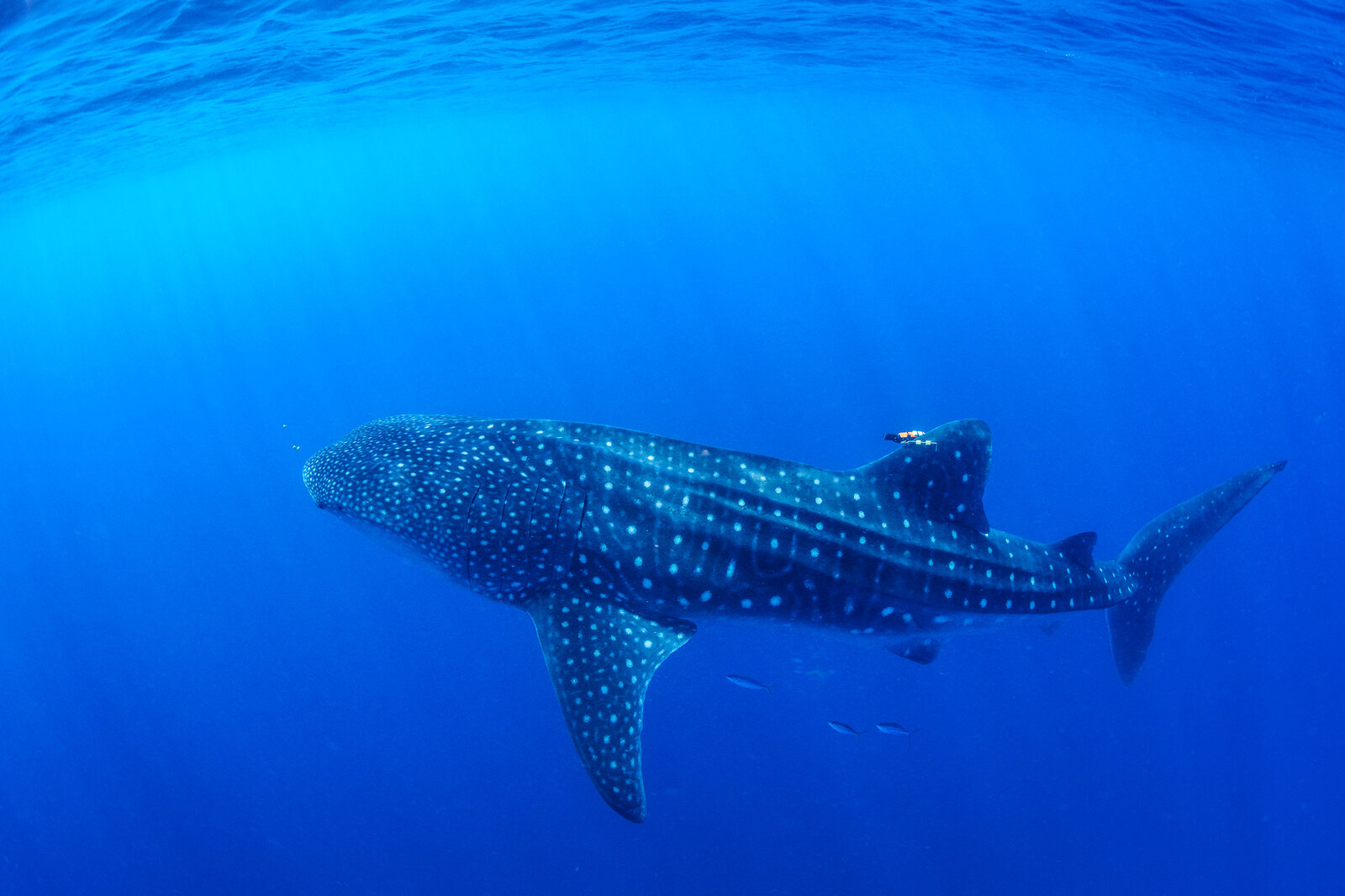
We plan the program around the species’ population units: the Atlantic population, which is largely separate from the rest, and the Indo-Pacific population, divided for management into the Western Indian Ocean, the Arabian Sea, the Asia–Pacific, and the Eastern Pacific. Each needs something different. In the Western Indian Ocean, where large aggregations have declined, we monitor sharks in Mozambique, Tanzania, and Madagascar and work on the threats close to shore. In the Arabian Sea we study the aggregations in Oman and Qatar, where shipping and gillnets overlap with whale shark habitat. The Galápagos matter because the sharks seen there are mostly large adult females, a group largely absent from coastal aggregations. In the Atlantic, the aggregation off Mexico’s Yucatán Peninsula offers the best long-term index of a population inferred to have declined by more than 30%, but with little direct trend data. Our completed studies, listed below, add the Philippines, Australia’s Coral Sea, Honduras, Pacific Mexico, and St Helena.
Red List assessments
The IUCN Red List is the global standard for judging a species’ risk of extinction, and its categories inform national laws and treaty listings. Dr. Simon Pierce led the 2016 global assessment, with Brad Norman, that moved the whale shark from Vulnerable to Endangered. He led the 2025 reassessment (opens in a new tab) with nine co-assessors, including Dr. Chris Rohner. Over three generations, or 120 years, that assessment infers a decline of more than 65% in the Indo-Pacific and of at least 30% in the Atlantic. Because the Indo-Pacific holds an estimated 75% of the global population, the overall reduction is inferred at 50–79%, the population trend is decreasing, and the species remains Endangered. The reassessment also identifies species-level national protection as an important conservation goal in countries including Madagascar, Oman, and Qatar.
International protection
A Red List assessment measures extinction risk; legal protection depends on the measures countries adopt through treaties and national laws. Whale sharks were listed on Appendix II of the Convention on Migratory Species (CMS) in 1999 and, following their classification as Endangered, were added to Appendix I in 2017. Appendix I requires range states that are parties to the convention to prohibit taking (capturing or killing) the species, with limited exceptions. Dr. Simon Pierce wrote the technical proposal for that uplisting, which the Philippines put forward as lead proponent. International trade was regulated under CITES Appendix II from 2003, before whale sharks were moved to Appendix I at the 20th CITES Conference of the Parties in Uzbekistan in late 2025. We contributed to that listing, which has prohibited international commercial trade since March 5, 2026. For the CMS Secretariat, Simon also co-authored the fact sheets Human Impacts on Sharks and Rays (2022) with Ryan Charles, and Chris Rohner co-authored a 2023 report on limiting global ship strikes on whale sharks.
Important habitats
Protection depends on knowing which places matter most. Important Shark and Ray Areas (opens in a new tab) (ISRAs), identified through the IUCN Shark Specialist Group, are discrete habitats that are important for one or more shark or ray species. An ISRA is not a protected area and creates no new rules, but it gives governments and planners an agreed evidence base for where protection would do the most good. Whale sharks are a qualifying species in 80 ISRAs worldwide, and MMF scientists are named contributors to 11 of them, built on our monitoring and tracking: Southern Inhambane Province, Pomene, and Southern Mozambique in Mozambique; Kilindoni Bay at Mafia Island, Tanzania; Nosy Be and Pointe Analalava in Madagascar, with the Madagascar Whale Shark Project; Al Shaheen and the Strait of Hormuz Corridor in the Arabian Gulf, with the Qatar Whale Shark Project; Wreck Bay in Australia; and Eight Mile Rock and Koh Tao in Thailand. Whale sharks also trigger two Key Biodiversity Areas, sites of global significance for biodiversity, at our study sites: Tofo (opens in a new tab) in Mozambique, whose assessment draws on our research, and Tandavandriva–Nosy Be (opens in a new tab) in Madagascar, whose whale shark boundary was mapped from the Madagascar Whale Shark Project’s data.
Protected areas and national laws
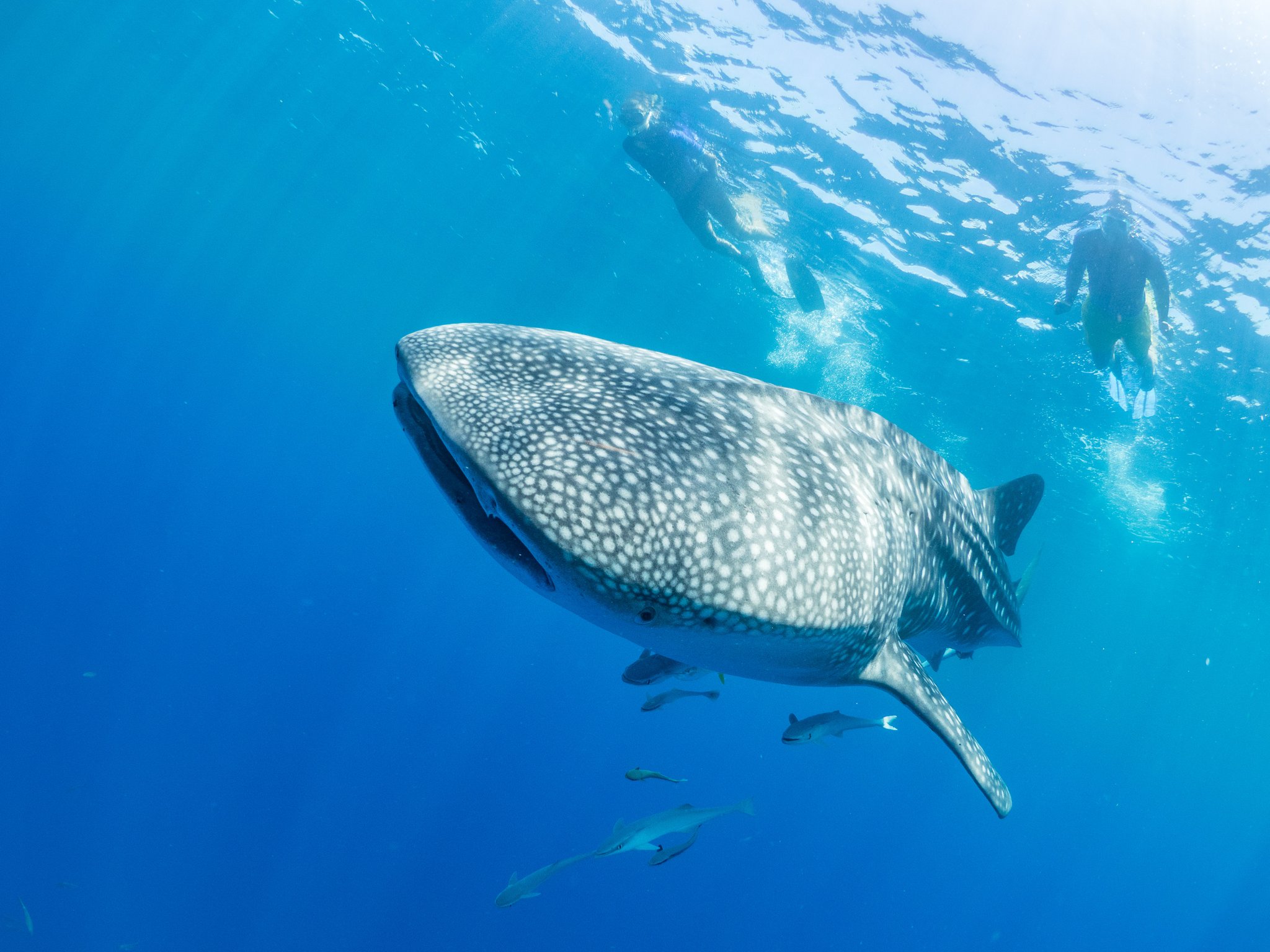
Several of the aggregations we study now sit within protected areas. In Madagascar, the Tandavandriva–Nosy Be marine protected area, initiated by the Wildlife Conservation Society, received temporary protection in March 2026, covering the whale shark feeding corridor that the Madagascar Whale Shark Project’s tracking helped define. In the Galápagos, our research helped inform the 2022 Hermandad Marine Reserve, which extends protection beyond the Galápagos Marine Reserve, and in Mozambique we have contributed to management planning for the Bazaruto Archipelago National Park. Whale sharks are also protected by national law in many of the countries where we work. Mozambique added whale sharks and all mobulid rays to its list of species that may not be caught in its 2020 marine fisheries regulations (Decree 89/2020), a listing our research helped to justify. Tanzania protects whale sharks and their feeding grounds under its Fisheries Regulations 2009, the Philippines has protected them since 1998, St Helena since 2016, and Mexico lists them as threatened. In Madagascar and Kenya, we are working with partners and national authorities on the evidence for species-level protection.
Fisheries bycatch in the Indian Ocean
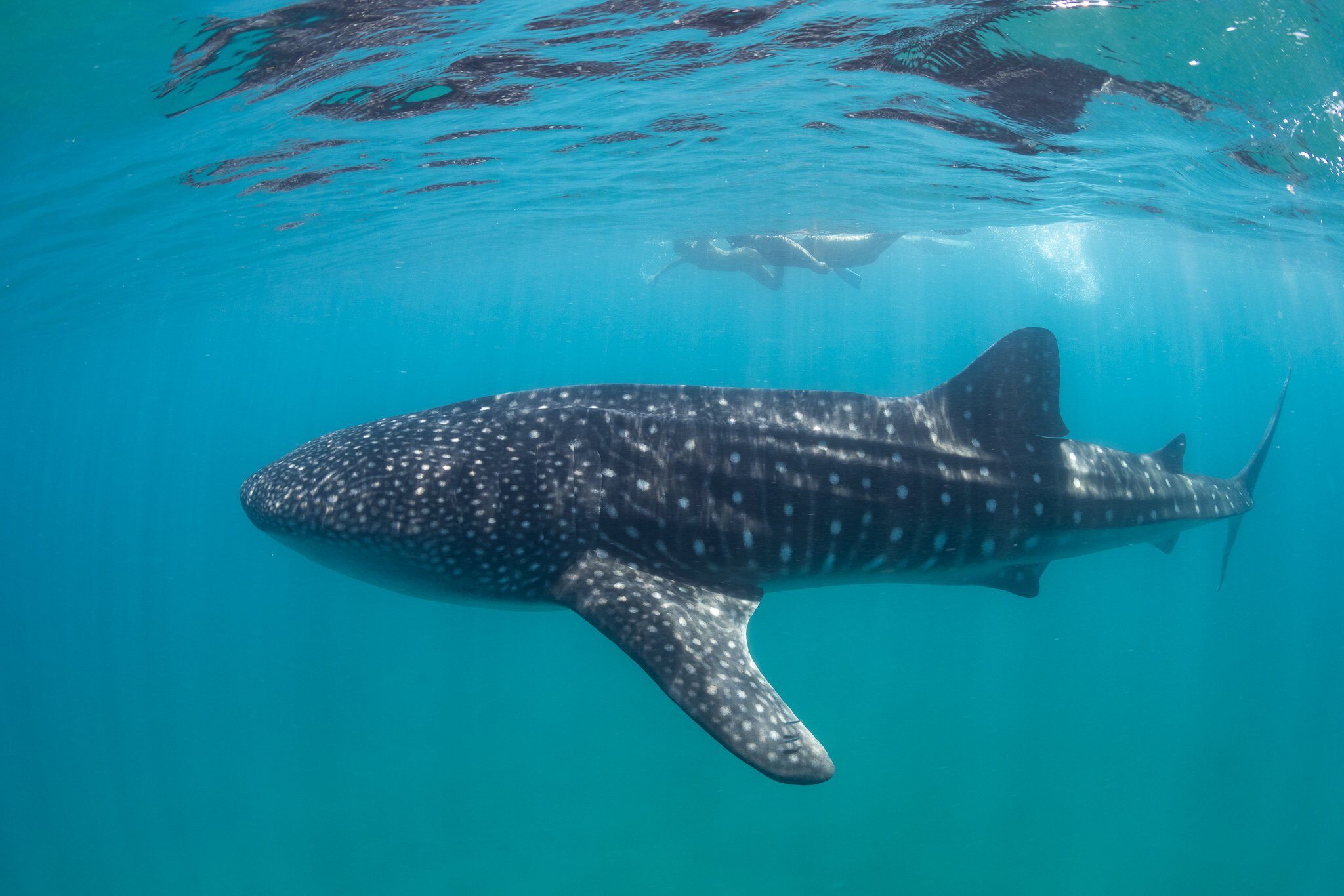
Whale sharks are still caught as bycatch in tuna fisheries. In 2025, the Indian Ocean Tuna Commission, which manages tuna fishing across the Indian Ocean, provisionally adopted a whale shark retention ban under Resolution 25/08, conditional on an explicit recommendation from its Scientific Committee. In 2026, Simon co-authored the paper making that case, Conservation status and life history of whale shark (Rhincodon typus) in the Indian Ocean (opens in a new tab), led by James Bell of the UK’s Centre for Environment, Fisheries and Aquaculture Science. Submitted to the Commission’s Working Party on Ecosystems and Bycatch, the paper recommends that the Scientific Committee explicitly support the retention ban.
Vessel strikes
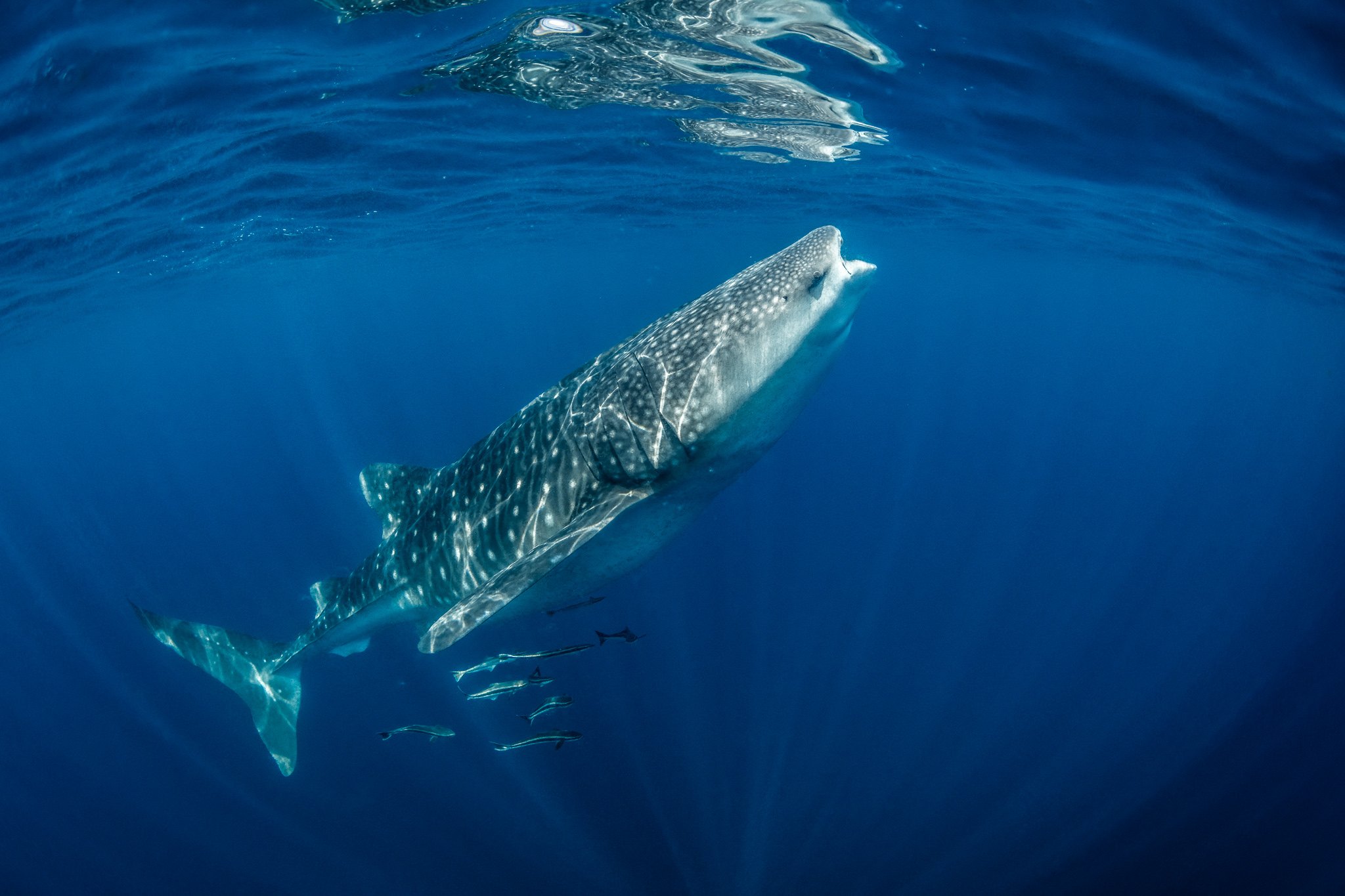
Collisions with large ships are the other major threat to whale sharks, and they leave little trace: direct records of deaths are rare, because whale sharks typically sink if killed. We co-authored a 2022 global analysis of collision-risk hotspots (opens in a new tab) between marine traffic and tracked whale sharks, and a 2024 assessment of priority sites (opens in a new tab) for ship-collision management, with Chris Rohner as second author. We also co-authored a 2024 modeling study (opens in a new tab) projecting that climate-driven shifts in whale shark distribution will increase their exposure to shipping. Because most core habitats are small, the priority-sites analysis estimated that, in its simulations, slowing or rerouting traffic would have potentially minimal impact on industry, which makes this threat a practical one to manage.
MMF Project Team
 Dr. Simon PierceExecutive Director
 Dr. Chris RohnerPrincipal Scientist
 Dr. Clare PrebbleSenior Scientist
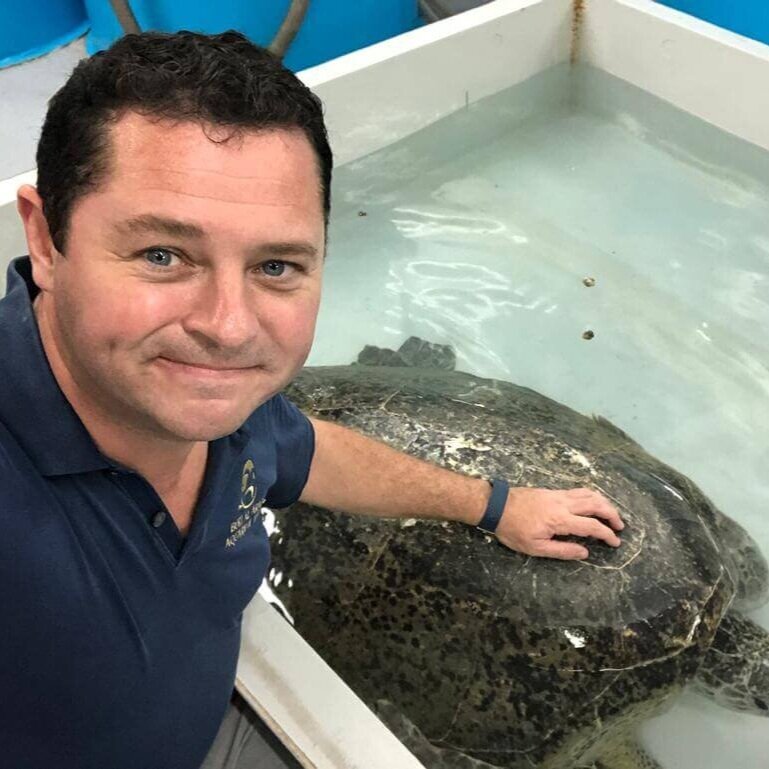 Dr. David RobinsonSundive Research
 Stella DiamantMadagascar Whale Shark Project
 Dr. Alexandra WattsGlobal Whale Shark Program
 Olivia PattersonProject Scientist – Mozambique
 Nilza de CatarinaResearch Manager – Mozambique
 Dr. Stephanie VenablesMMF Mozambique
 Dr. Elitza GermanovWildlife Conservation Society
 Sascha GillesField Specialist – Mozambique
 Jens PaulsenProject Scientist – Tanzania
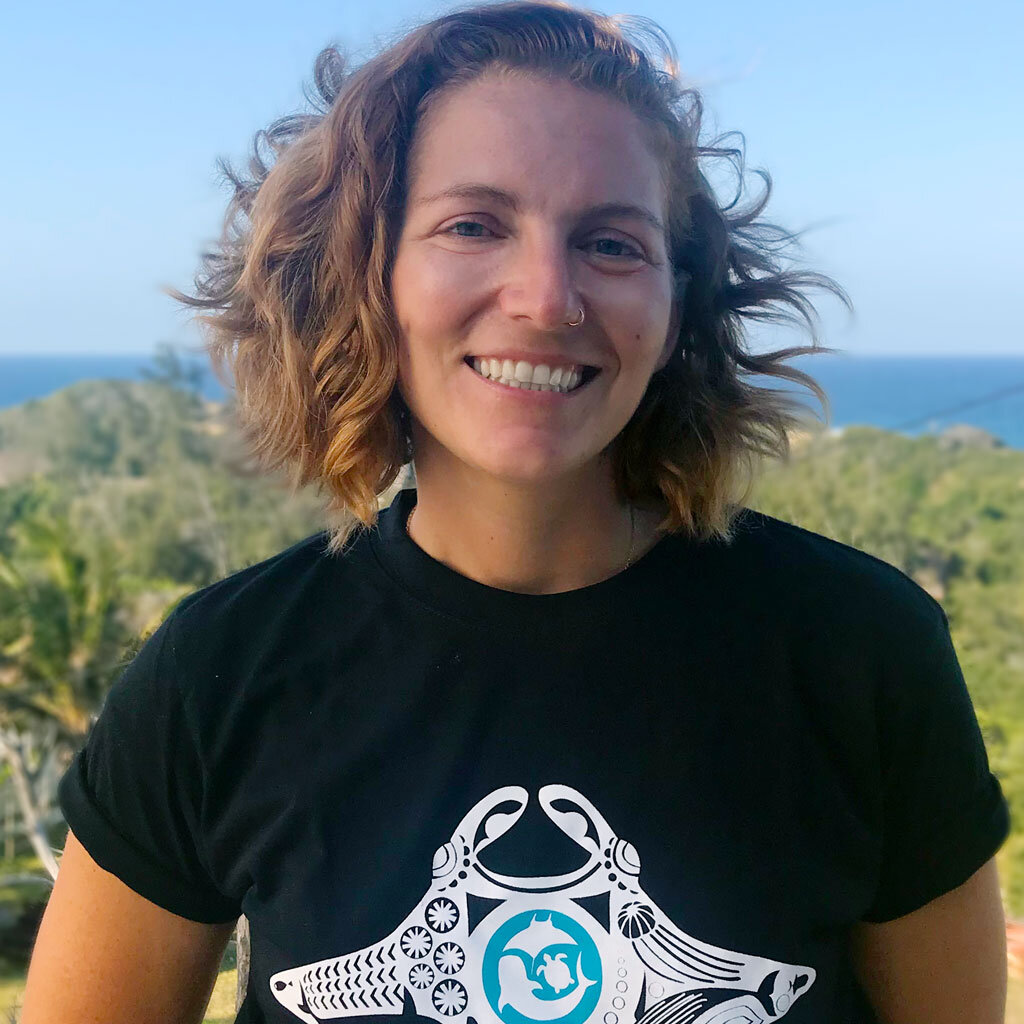 Anna FlamMMF Mozambique
 Lisa-Marie AuditoreProject Scientist – Indonesia
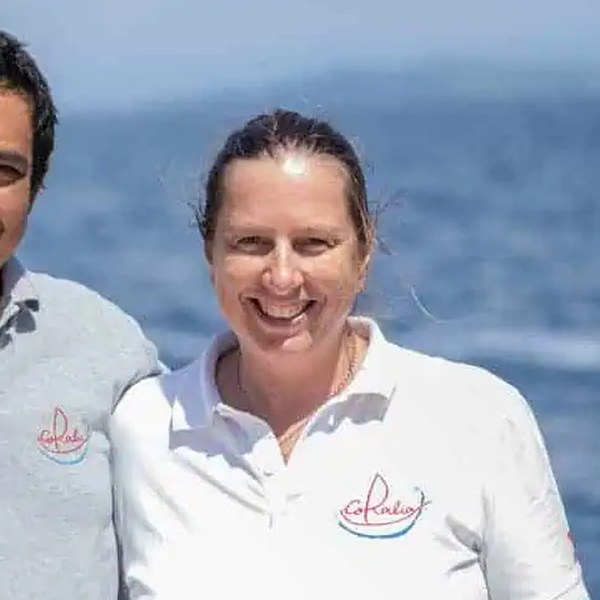 Debbie ArriagaResearch Assistant – Indonesia
 Amanda LuciaResearch Assistant – Indonesia
 Madeleine PierceDigital Operations & AI Advisor
Recent research
- 2026Integrating migratory connectivity data into the conservation of Australian sharks and rays
- Conservation status and life history of whale shark (Rhincodon typus) in the Indian Ocean
- Methods for tagging whale sharks: insights into performance and best practices with a focus on clamp attachments
- No model fits all: Dynamic ensemble species distribution model reveals seasonal patterns of essential habitat use by ocean giants in the southwest Pacific
- Whale sharks do it deeper: Extension of known depth range for Rhincodon typus from satellite telemetry data in the Coral Sea, Australia
- 2025Vulnerability of marine megafauna to global at-sea anthropogenic threats
- A 15-year time series shows major declines in whale sharks in southern Mozambique
- The needle in the haystack: Uncovering the first whale shark (Rhincodon typus) aggregation in the Coral Sea
- Whale shark residency and small-scale movements around oil and gas platforms in Qatar
- Global tracking of marine megafauna space use reveals how to achieve conservation targets
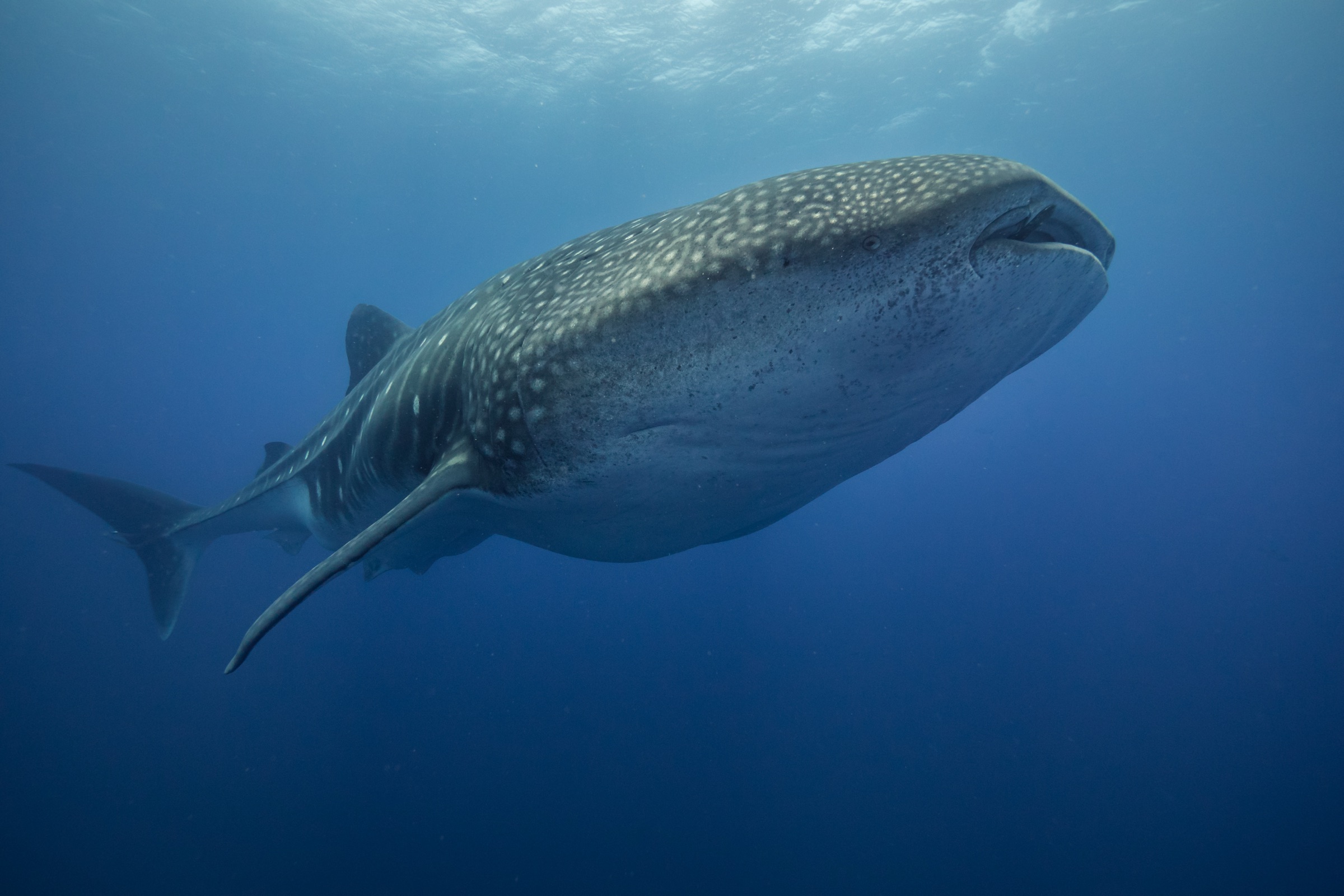


Adopt a whale shark
The world's biggest fish is Endangered. MMF leads or contributes to whale shark research from Mozambique to Oman.
Thank you to everyone who supports the Global Whale Shark Program
Waterlust, Shark Foundation, Aqua-Firma, Nacora, Oak Foundation.
You can also donate stock or cryptocurrency, recommend a grant from your donor-advised fund, or leave a gift in your will.