
Where we work · Since 2012
Indonesia
From Bali's Nusa Penida to Komodo and the Derawan Islands, our Indonesian team studies manta rays and sea turtles, and turns the evidence into protection.
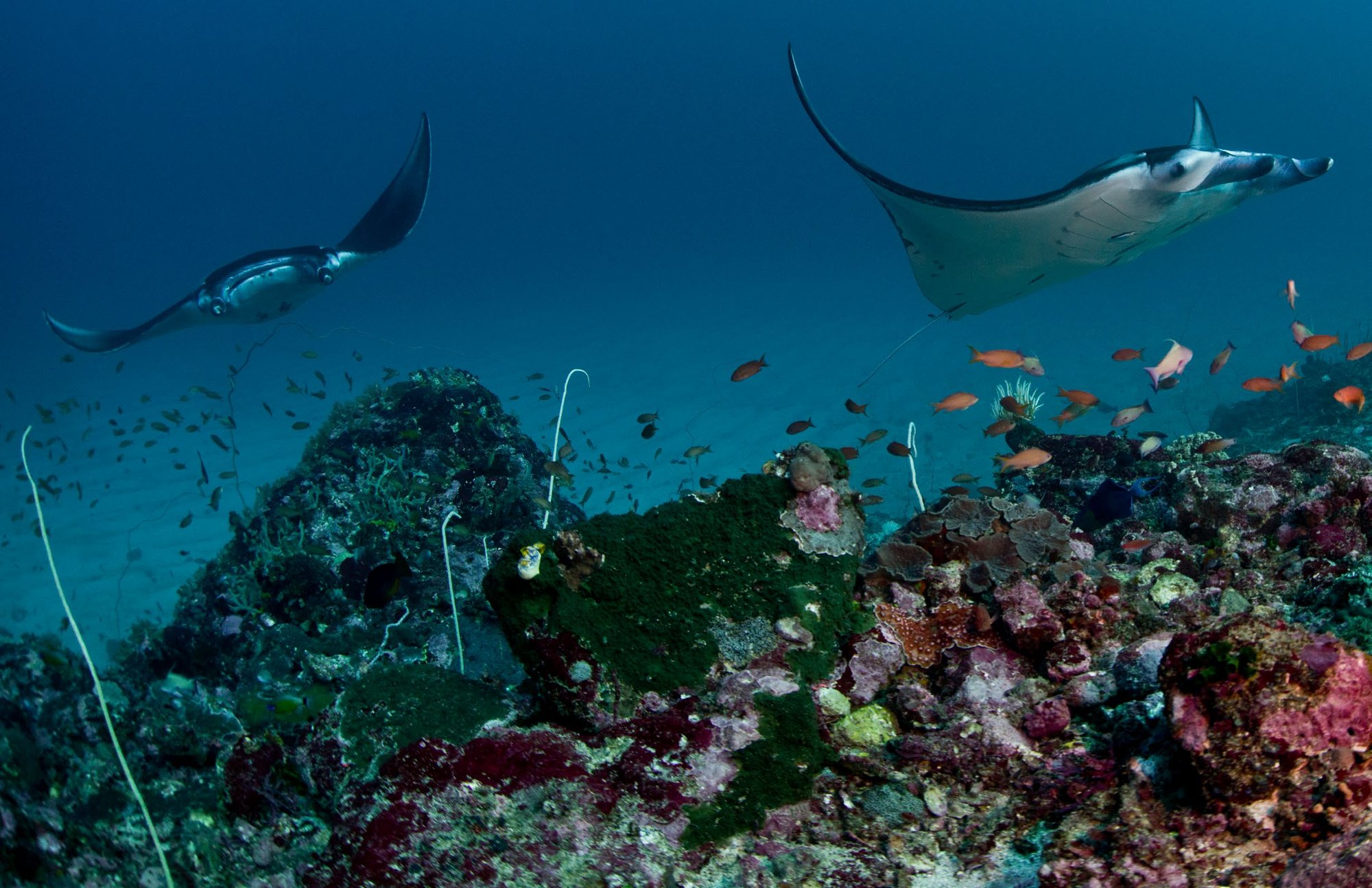
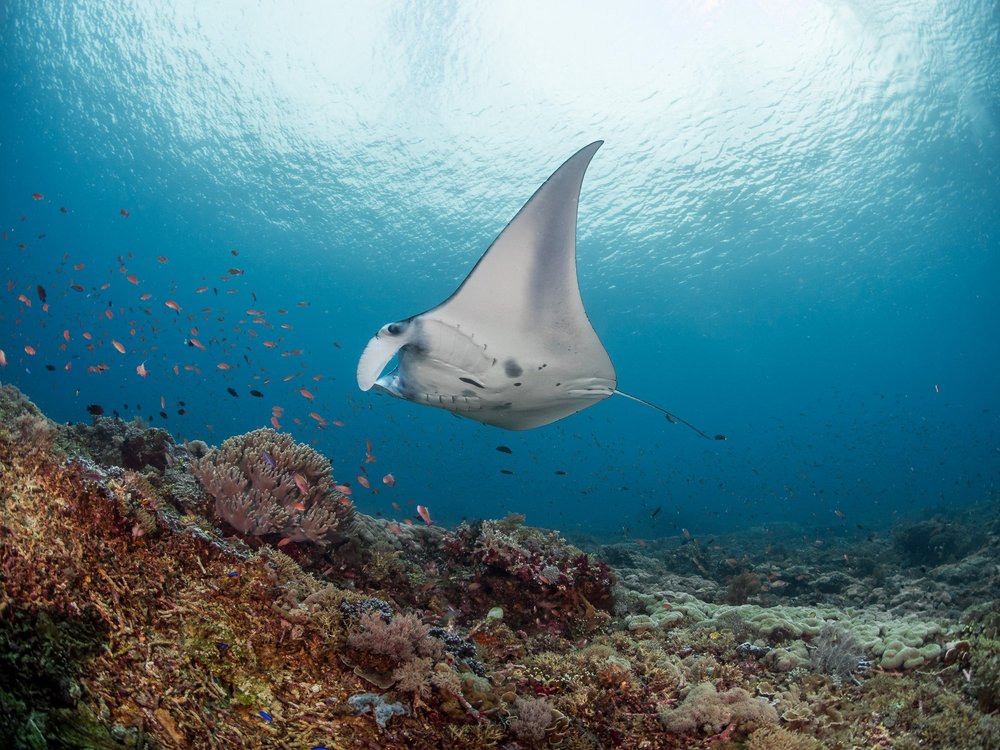
MMF has partnered with Indonesian conservation organizations and universities on marine research across the archipelago since 2012. Our discoveries on manta ray movements, habitat use, social networks, and threats helped lead to Indonesia’s nationwide protection of manta rays in 2014. An eleven-year photo-identification study at Nusa Penida shows that those protections are working: reef manta numbers there more than doubled between 2012 and 2022.
Today our Indonesian team studies manta rays, sea turtles, and the effects of plastic pollution. More than 2,300 individual reef manta rays have been identified across our Indonesian sites. In 2025, we identified over 200 sea turtles at Nusa Penida and a further 255 in the Derawan Islands, recognizing each turtle from the pattern of scales on its face rather than by handling or tagging it.
We have authored more than half a dozen peer-reviewed scientific papers on manta rays in Indonesia and shared them with the governments and marine area managers who protect these animals. Divers also contribute photographs: reef manta images go to MantaMatcher.org and turtle images to Internet of Turtles. Read more about our Manta Ray Project, our Sea Turtle Project, and our Microplastics & Megafauna research.
Our projects in Indonesia
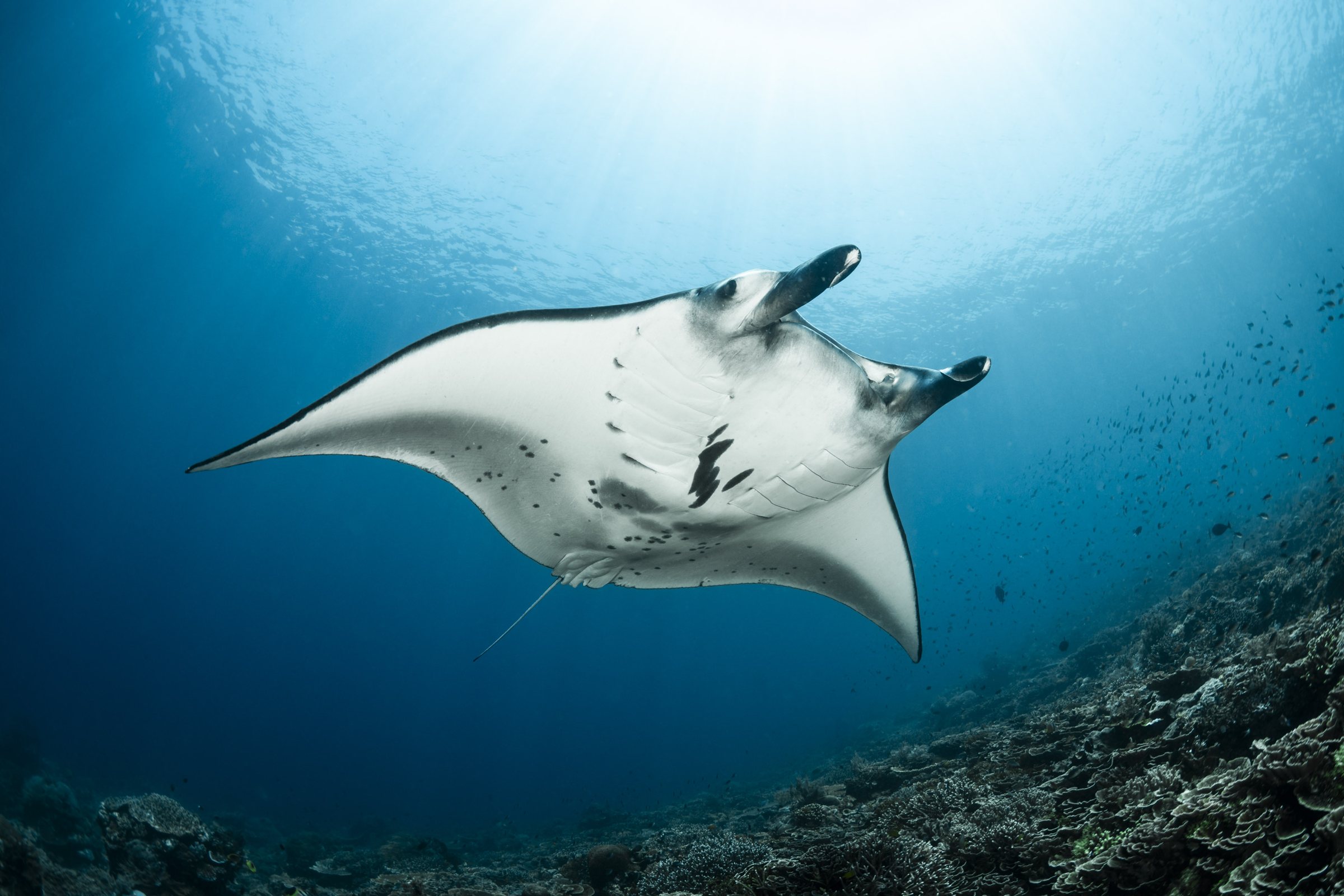
Indonesia Manta Ray Project
We have followed Indonesia's reef manta rays since 2012, and the data helped protect the species nationwide.
2,000+ reef manta rays identified at our Indonesian sitesLed by Janis ArgeswaraAbout the project →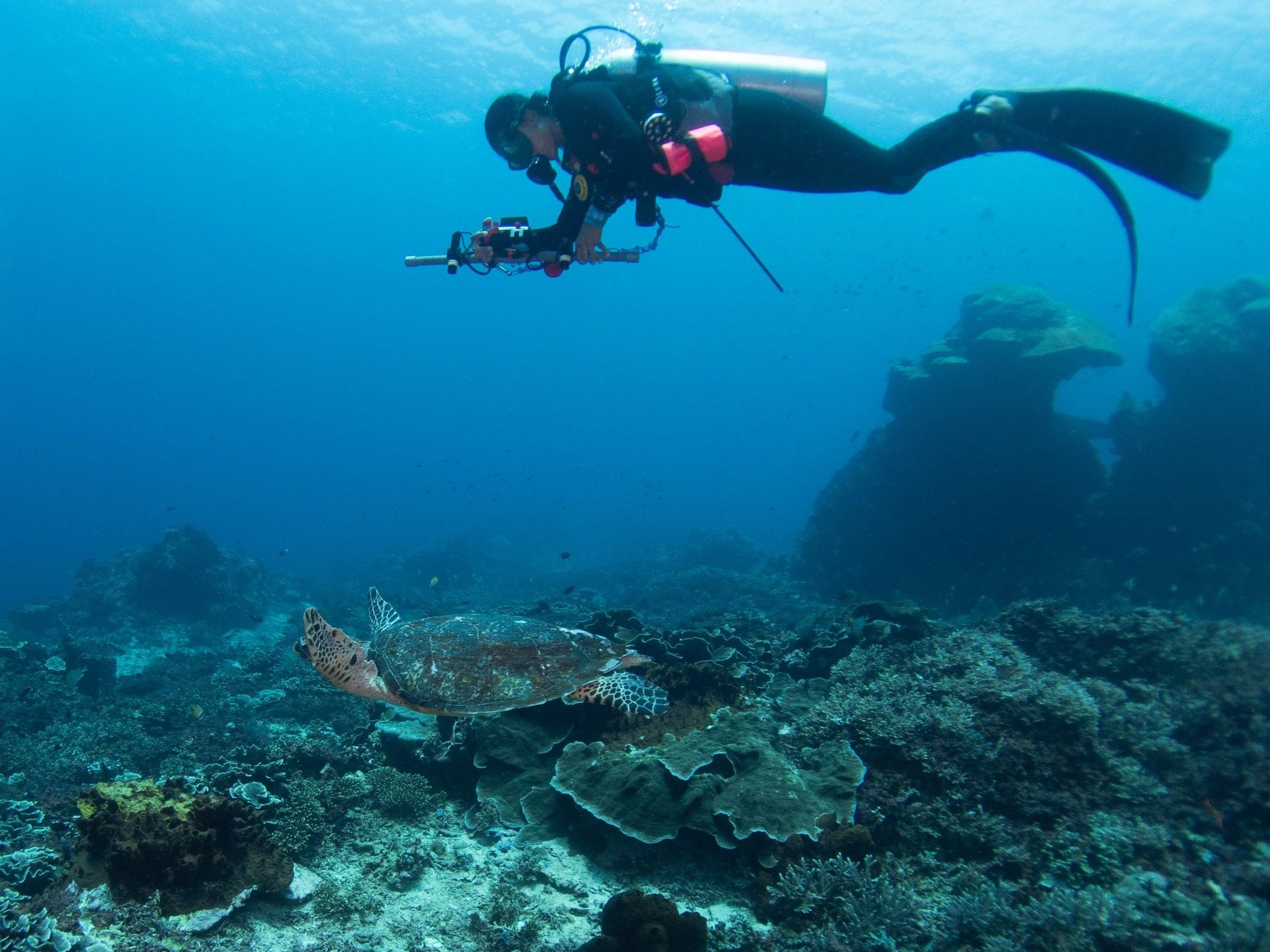
Indonesia Sea Turtle Project
Long-term, non-invasive photo-identification of hawksbill and green turtles at Nusa Penida, expanding to Komodo and the Derawan Islands.
Led by Janis ArgeswaraAbout the project →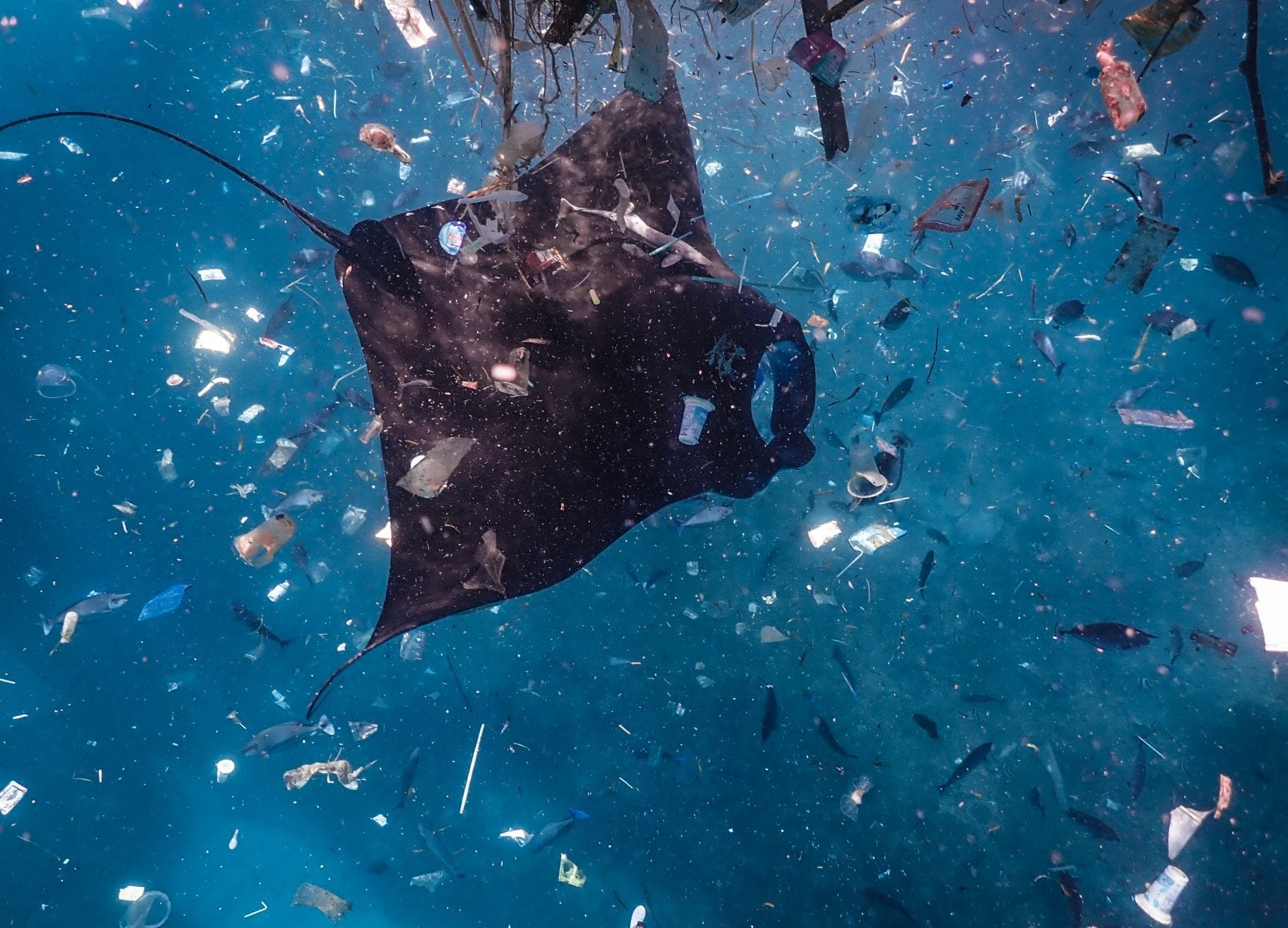
Microplastics & Megafauna
MMF is studying the impacts of marine plastic pollution on manta rays and whale sharks to better understand the risk to these filter-feeders.
Led by Dr. Elitza GermanovAbout the project →Completed projects
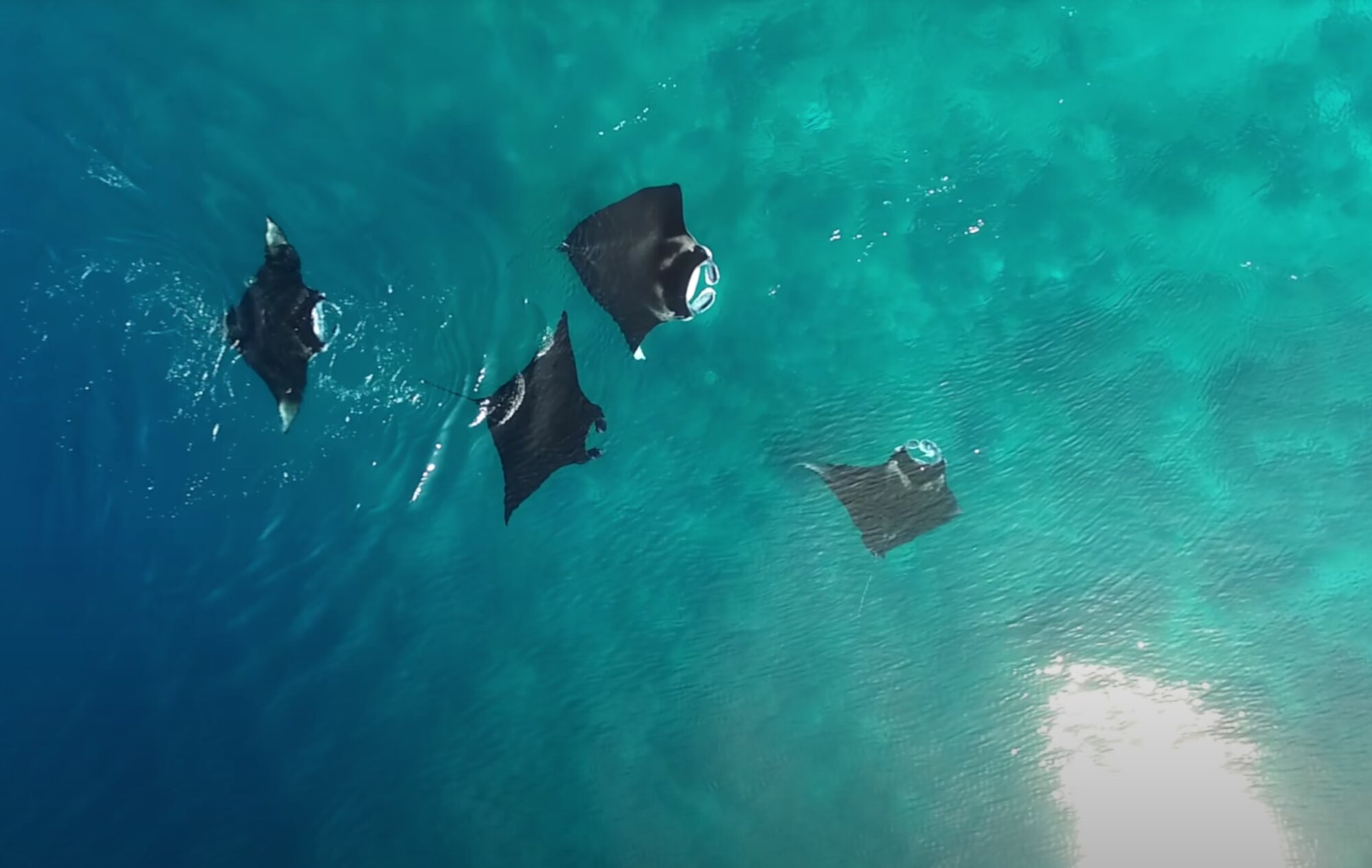 Raja Ampat, West PapuaRaja Ampat Manta RaysFive years of research into reef manta ray social behavior in Raja Ampat Marine Park, covering social networks, cephalic-lobe signals, and shared movements, published 2019–2022.
What we work on
Manta rays and other megafauna range far beyond protected areas, where illegal fishing, bycatch, and entanglement in artisanal lines and nets remain threats. We map where their movement corridors overlap with fishing activity to inform further protection.
Indonesia's waters are rated second in the world for marine debris. We pioneered research into the effects of plastic on manta rays and whale sharks, filter-feeders that are especially prone to ingesting microplastics.
At the busiest manta sites, boat and diver numbers now routinely exceed the available monitoring capacity. We measure interaction pressure at each key site, giving park authorities the evidence to set limits and codes of conduct.
Since 2016, we have run a joint marine science internship program with Udayana University, Bali, training the next generation of Indonesian marine biologists.
Thank you to everyone who supports MMF Indonesia
Idea Wild, Rufford Foundation, Foundation FortUna, Mantahari Oceancare, Sustainable Ocean Alliance, MMF Canada, Udayana University, University of Papua, Yayasan Megafauna Laut, Big Fish Diving, Blue Corner Dive, Coralia Liveaboard, Papua Explorers, SEA Center, Scuba Junkie Dive Resorts.