
Join Marine Megafauna Foundation scientists for eleven nights aboard the new Coralia Dua, diving the richest coral reefs on Earth across Misool and the Dampier Strait — with manta rays, walking sharks, and 100% of profit supporting MMF’s research, education, and conservation work.
Dive Raja Ampat with MMF
We are excited to welcome you aboard this expedition of a lifetime, as we explore the waters of Raja Ampat — home to the richest coral reef ecosystem in the world — during peak manta ray season.
The Raja Ampat Regency covers over 40,000 km2 of land and sea and features more than 1,500 islands, with marine life diversity that surveys suggest is the highest recorded on Earth. More than 600 species of coral and over 1,600 species of fish have been recorded here — 374 fish species were identified during a single 90-minute dive at Cape Kri in the Dampier Strait. You’ll be diving alongside six of the world’s seven marine turtle species and large populations of both manta ray species.
Trip Highlights
-
Dive Raja Ampat in March and April, during peak manta season.
-
Hosted by MMF co-founder, world-renowned shark biologist Dr. Simon J Pierce, and manta ray experts.
-
Cruise on the brand-new Coralia Dua, sister ship of the award-winning Coralia.
-
Get to know MMF’s marine conservation efforts, with a series of evening science presentations.
-
Expert underwater photography guidance and a dedicated full-width camera room.
MMF Mantas in Raja Ampat
Upcoming Departures
Ambon to Raja Ampat crossing: October 21–November 2, 2027 (12 nights)
Master Cabin: US$9,600 per person
Lower Deck Cabin: US$8,400 per person
Reach Raja Ampat the adventurous way — a Banda Sea crossing from Ambon’s famed macro, through remote stopovers, to the world’s richest reefs. Full details on the Banda Sea crossing page.
2028 Trip 1: March 20–31, 2028 (11 nights)
Master Cabin: US$9,350 per person
Lower Deck Cabin: US$8,250 per person
2028 Trip 2: April 2–13, 2028 (11 nights)
Master Cabin: US$9,350 per person
Lower Deck Cabin: US$8,250 per person
Both 2028 expeditions run Sorong to Sorong, covering Misool and the Dampier Strait over 11 nights aboard the new Coralia Dua. National park, port, and fuel fees (US$385 per person for 2028; 2027 fees advised at booking) are paid on board. Booking is confirmed with a 30% deposit, with the balance due 120 days before departure — see our trips terms and conditions. Enquire below for current availability.
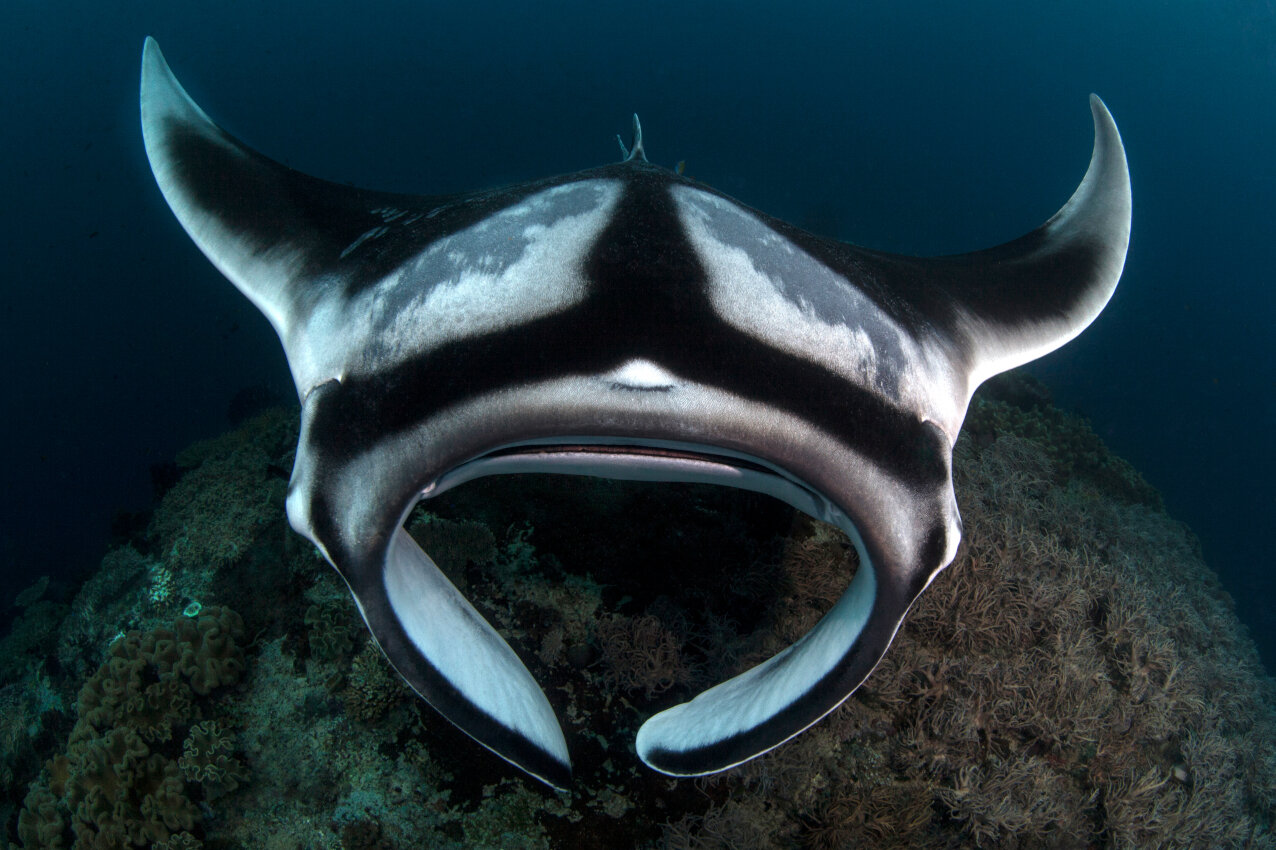
Your guide to the waters of Raja Ampat.
We aim to showcase the diversity of life and ecosystems within these seascapes while heightening your experience with our scientific insights.
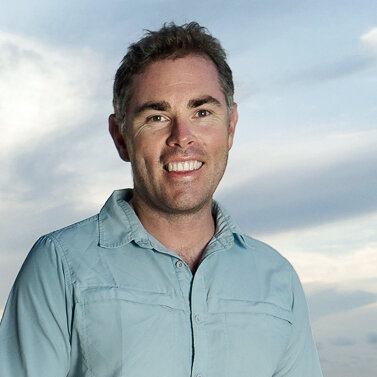
DR. SIMON PIERCE
Dr. Pierce founded MMF’s flagship research program on whale sharks, and is a world expert on the species. Simon works globally on whale shark conservation issues, and led the most recent IUCN Red List assessment of the species. He is also a scientific advisor to the online global whale shark database, and regional co-chair of the IUCN Shark Specialist Group.
Highlights.
Your expedition will start and end in Sorong, and we’ll have access to the best dive sites in the region with ample time to explore.
We’ll visit the best manta cleaning stations and feeding grounds in the area, and have the opportunity to dive at the most exciting locations for other species at famous sites such as Cape Kri, Mayhem, Sawandarek Jetty, Sardine Reef, and Blue Magic.
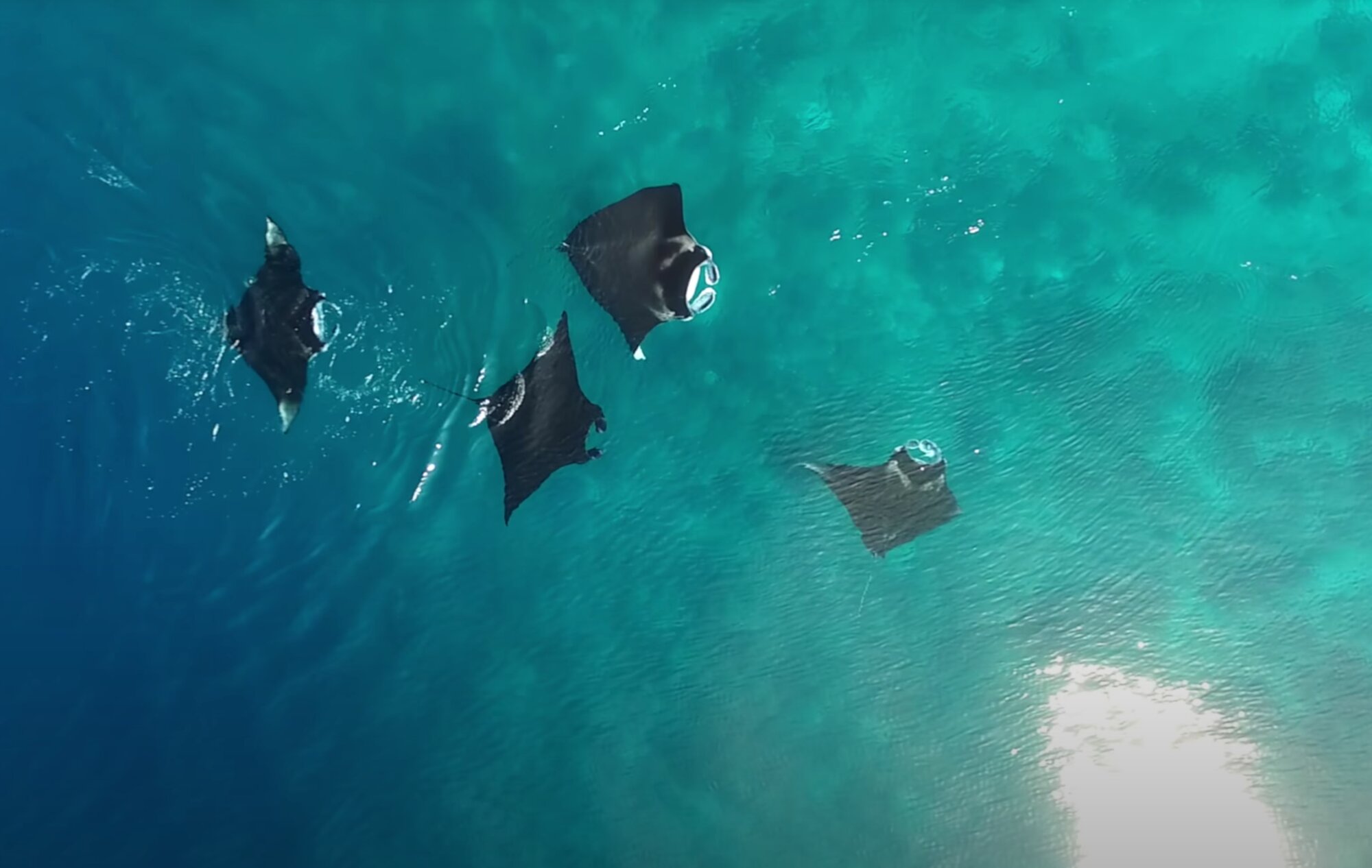
Dampier Strait
The MMF research team has been studying manta rays around the Dampier Strait for over five years. We will seek both reef and giant manta rays as this is the peak season in the region, including the well-known manta aggregation sites of Manta Sandy and Manta Ridge. We’ll visit the best manta cleaning stations and feeding grounds in the area and have the opportunity to dive at the most exciting locations for other species such as Cape Kri, Mayhem, Sawandarek Jetty, Sardine Reef, and Blue Magic — sites where currents meet the reef head-on and predatory fish like reef sharks, giant trevally, and dogtooth tuna hunt huge schools of fusiliers and bigeye jacks. Around Kri, Mansuar, and Arborek, we’ll look for schools of sweetlips, napoleon wrasse, bumphead parrotfish, and the endemic tasselled wobbegong shark.
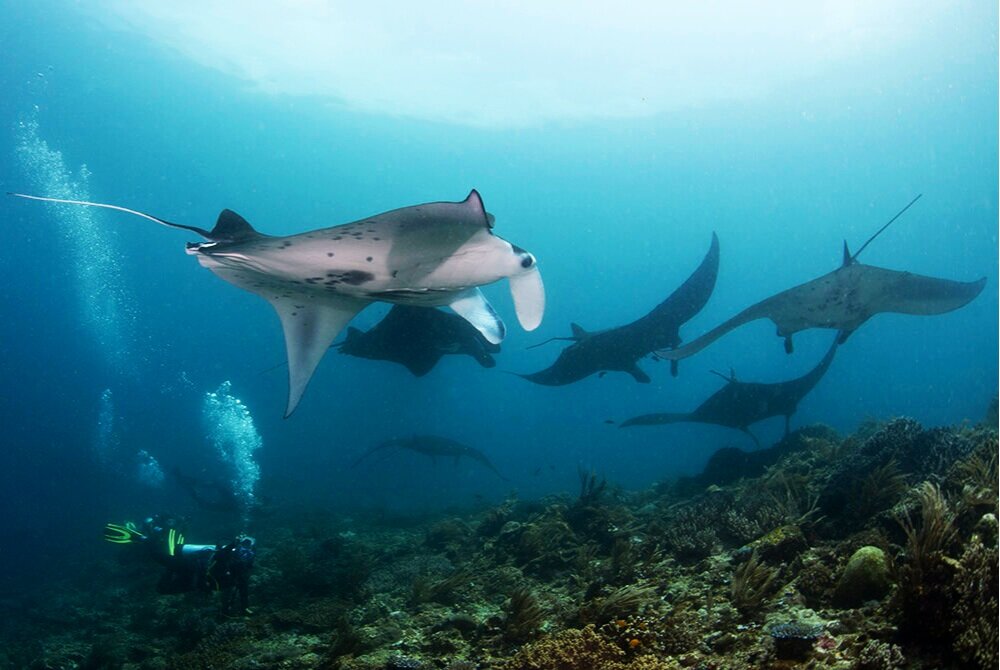
Misool
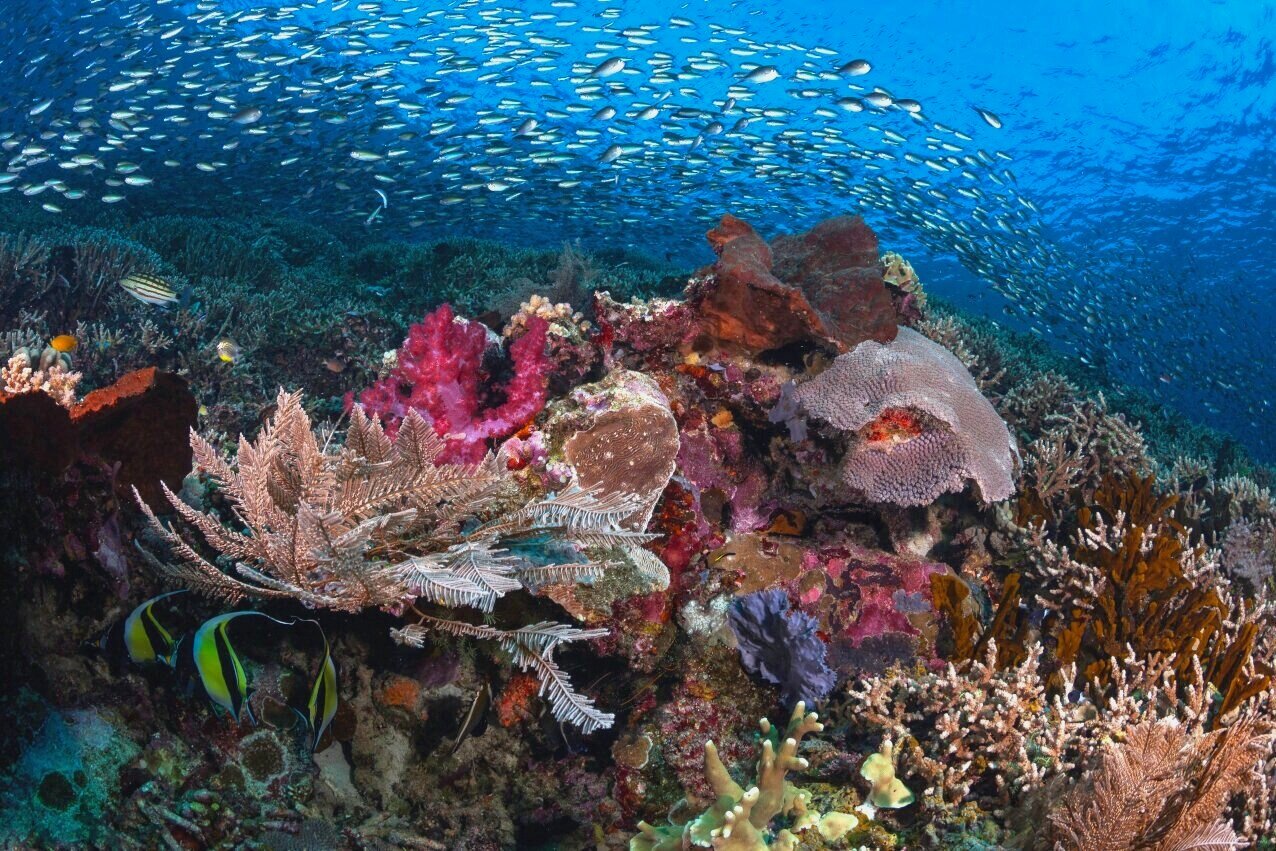
We will then head to the far reaches of Raja Ampat with a visit to the southern sections of Misool. This community-protected region explodes with life, with some of the world’s healthiest and most colorful coral reefs. Here we will seek out reef and giant manta rays at famous sites like Shadow Reef (also known as Magic Mountain), and their smaller relatives, the devil rays. Our eagle-eyed guides will also look for the endemic walking shark — an epaulette shark that “walks” across the reef on its fins — on night dives.
This region has extraordinary pelagic life, including game fish, sharks, gigantic fish schools, and great macro life such as pygmy seahorses and unusual nudibranchs. Misool has an abundance of stunning dive sites, private bays for kayaking and paddle-boarding, and calm anchorages where we can dine under the stars. We like to allow ourselves to linger for several days to dive as much as possible and explore the beautiful area with its iconic karst limestone formations before returning to the Dampier Strait region.
Kawe
While in the north, we will also visit Kawe, diving the famed Eagle Rock and Black Rock, home to even more manta rays, sharks, and game fish. The soft corals bloom in a variety of vibrant colors in this region and the currents support abundant life. We’ll also aim for a world-class night dive at Aljui Bay, where we will hunt for enigmatic critters such as ghost pipefish, epaulette walking sharks, and little-known octopus.
The Coralia Dua
A New Ship from the World’s Best Liveaboard Team
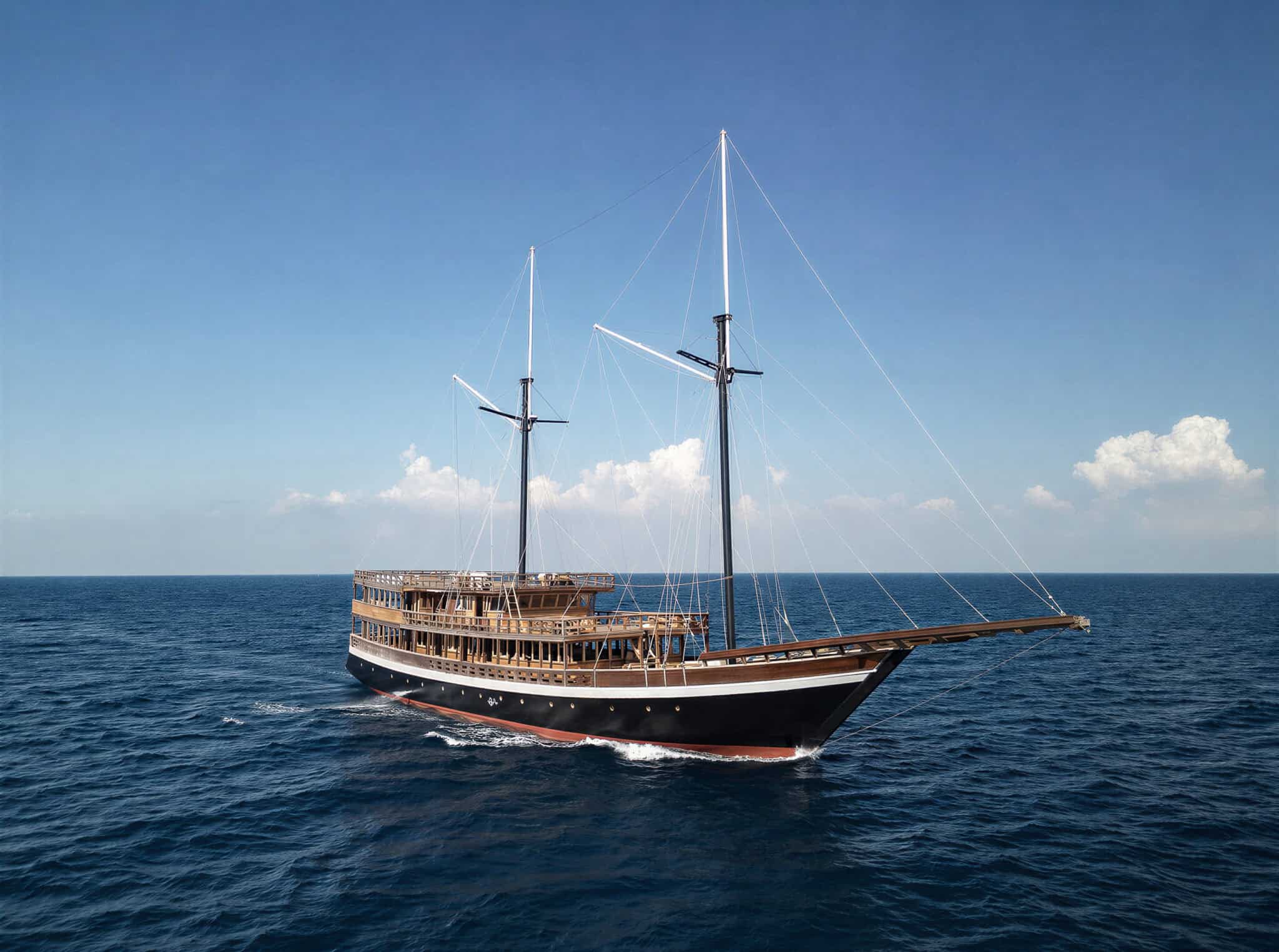
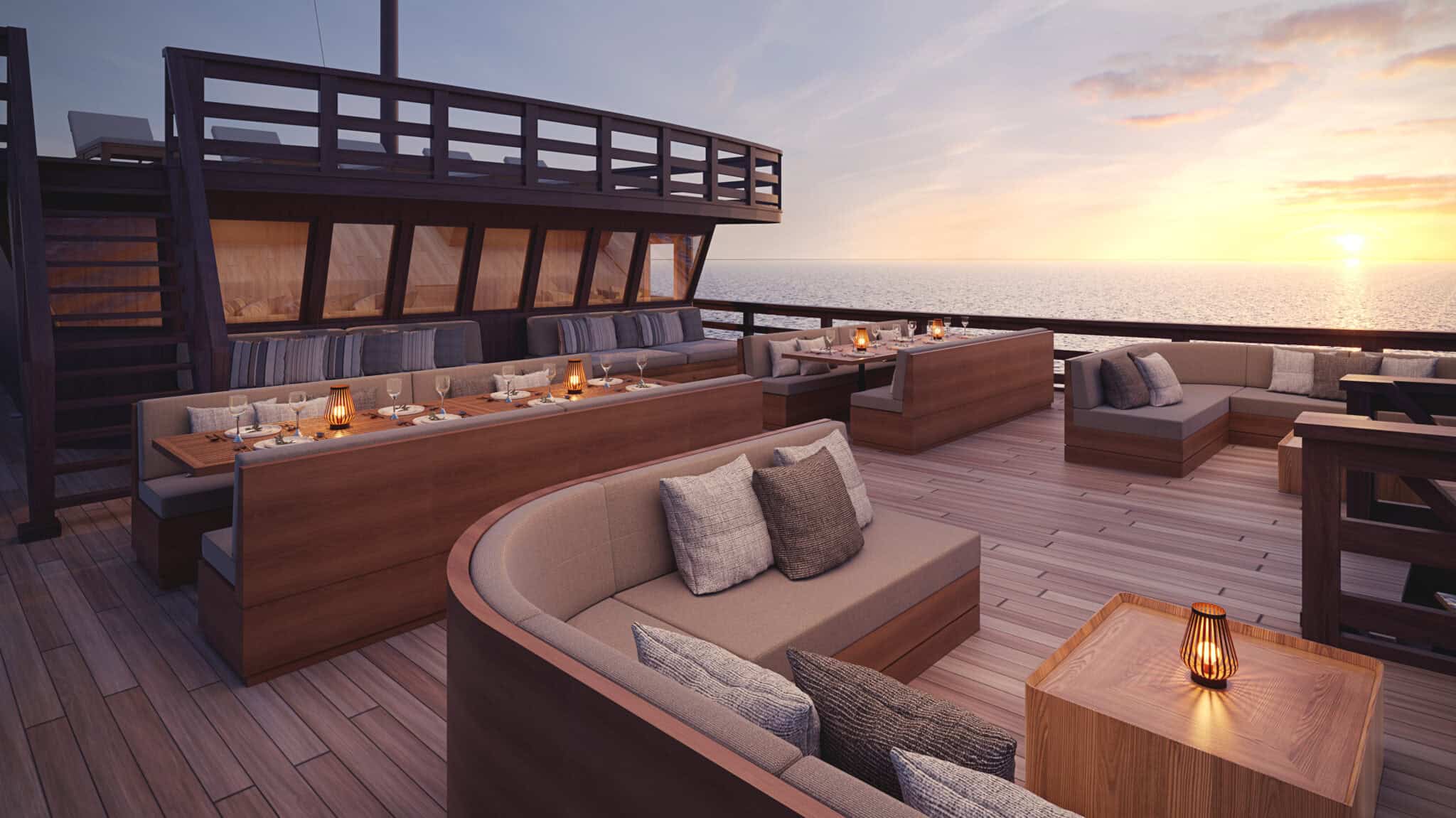
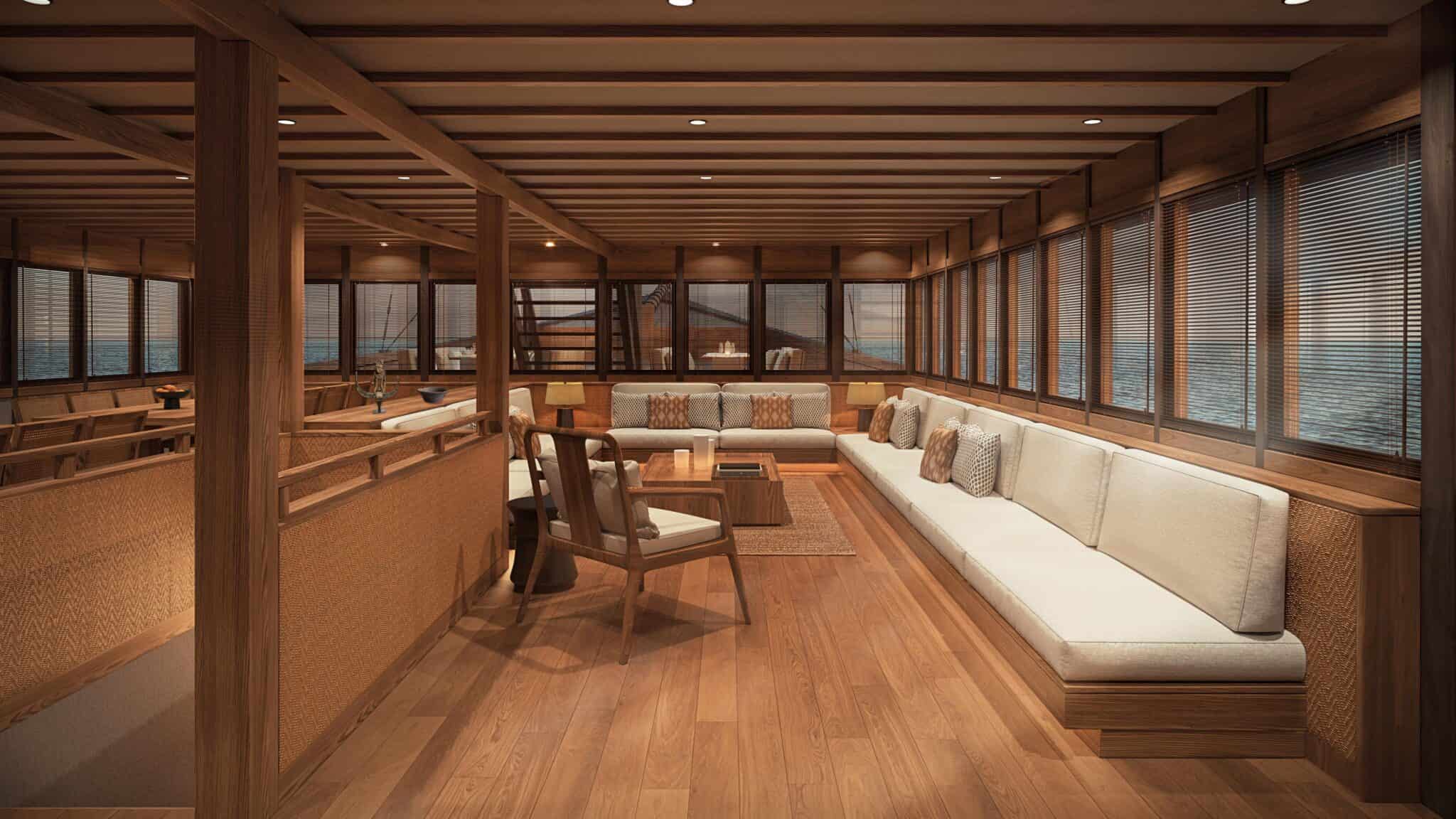
Our 2028 expeditions sail aboard the brand-new Coralia Dua, sister ship of the original Coralia — voted the World’s Best Liveaboard — and run by the same team, with Cruise Directors Debbie and Jerry Arriaga. At 52 meters long and over 10 meters wide, Coralia Dua carries just 16 guests in eight well-appointed cabins: four 35 m² Master Cabins on the main and upper decks, each with a private deck overlooking the ocean, plus Deluxe Double and Deluxe Twin cabins on the lower deck.
Built for divers, she features a full-width camera room with individual workstations, a spacious dive center, free Nitrox, an onboard masseuse, complimentary satellite WiFi, and open-air lounging and dining areas for relaxing between dives — all supported by 21 crew and 2 cruise directors, the warm, attentive service Coralia is known for.
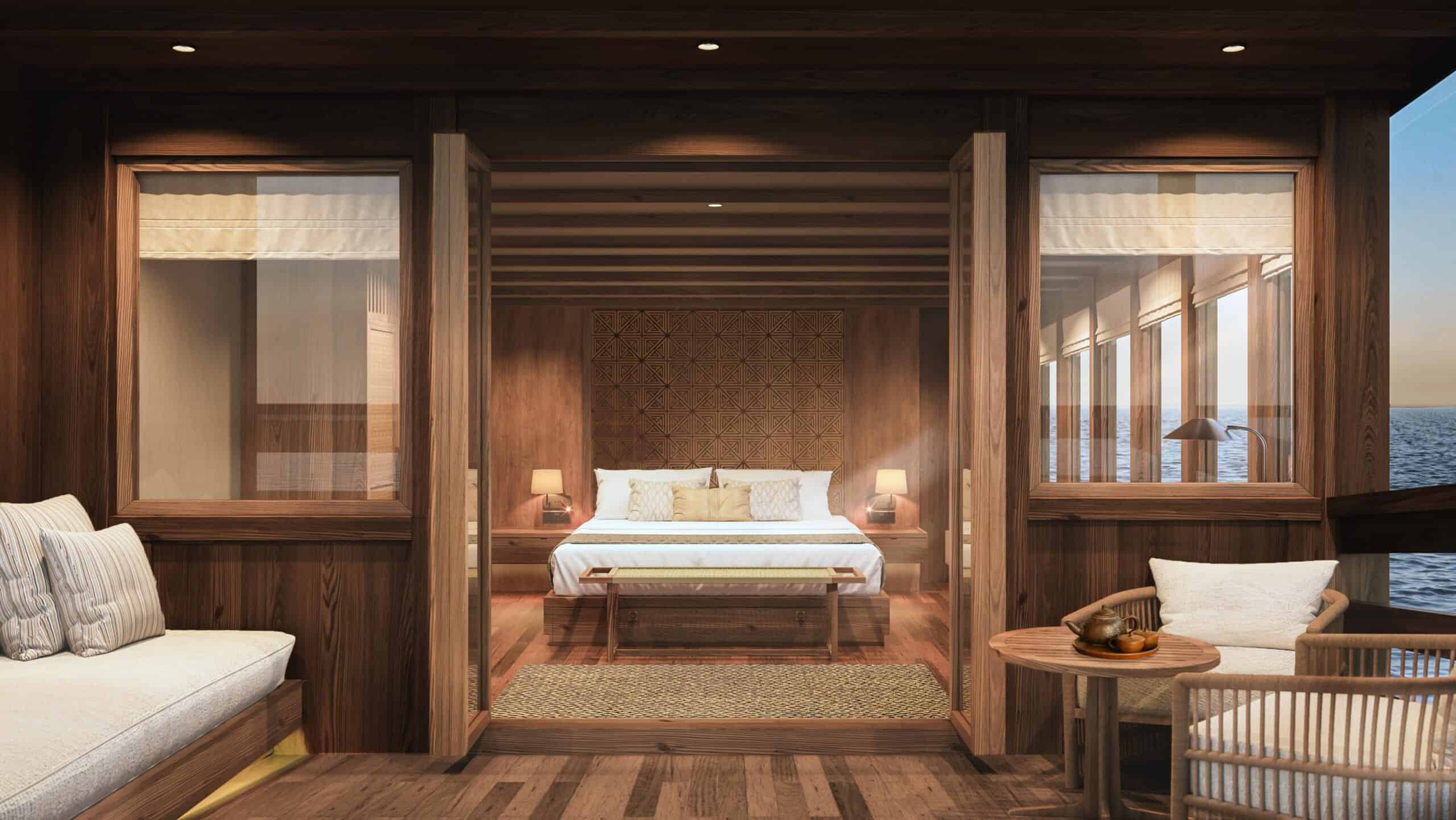
Master Cabin

Deluxe Double Cabin

Deluxe Twin Cabin
Enquire
Open trip dates:
March 20–31, 2028 (11 nights)
April 2–13, 2028 (11 nights)
Prices per person:
Master: $9,350 (4 cabins)
Lower Deck: $8,250 (Double and Twin cabins)
Hosted by Dr Simon J Pierce
-
Inclusions
-
Liveaboard cruise on Coralia Dua
-
Up to four dives a day
-
Complimentary Nitrox
-
Shore excursions according to the program
-
All meals and snacks, every day
-
Hot and cold soft beverage selection
-
Tanks, weights, belts
-
Transfers to and from Sorong airport
-
Presentations from MMF hosts
-
-
Exclusions
-
International or domestic flights
-
Sorong accommodation
-
National park, port, and fuel fees ($385 pp, paid on board)
-
Dive courses
-
Dive gear rental *
-
Alcoholic beverages **
-
On-board massages
-
Laundry
-
Use of on-board satellite phone
-
Encouraged gratuity
-
Travel insurance ***
-
Learning with us on board
Every MMF expedition is led by a working marine scientist, and the science is part of the trip rather than an add-on. Across the voyage your host gives a series of evening presentations — on the animals we're looking for, how they're studied, what the current research actually shows, and the threats these populations face. There's time to ask the questions you never get to ask a researcher in person, and photography guidance for anyone who wants to come home with better images.
Your photographs do real work. Whale sharks and manta rays can be identified individually by their natural markings — the spot patterns on a whale shark's flank, the markings on a manta's underside — the same way a fingerprint identifies a person. Guests are shown how to take an identification shot, and the photographs taken during the trip are contributed to the global photo-identification databases that researchers around the world draw on. Sightings you record become part of the long-term record for that population.
Marine Megafauna Foundation is a registered 501(c)(3) non-profit. Our expeditions exist to bring people into contact with these animals and send them home understanding them — and 100% of the profit supports MMF's research, education, and conservation work.