



Why adopt a hammerhead shark?
Adopt a hammerhead shark and you back MMF's work for one of the most threatened groups of sharks in the sea. The scalloped hammerhead is Critically Endangered on the IUCN Red List, and hammerhead fins are among the most valuable in the shark fin trade, as our hammerhead threats guide explains.
Hammerheads are caught in fisheries from West Africa to Florida, where a survey of shore-based shark anglers counted 309 great hammerheads in their catch over 12 months. A 2026 study led by Dr. Rima Jabado and co-authored by MMF Principal Scientist Dr. Chris Rohner found two Critically Endangered hammerhead species among the sharks and rays brought ashore at two sites in southern Senegal. Hammerheads also have relatively high post-release mortality because of the stress of capture, so releasing a hooked hammerhead does not guarantee that it survives.
Warming water adds pressure. In a case study from Cocos Island, off Costa Rica, based on 27 years of diver sightings, the scalloped hammerhead had the strongest response to temperature change of any species monitored, as our climate change page explains.
Protection can work. After an MMF liveaboard to the Galápagos in 2025, MMF co-founder Dr. Simon Pierce wrote that scalloped hammerheads "are increasing in this marine reserve thanks to applied research, dedicated management, and a lot of conservation work." MMF's work aims to extend that kind of protection to more of the ocean's large animals.
About hammerhead sharks
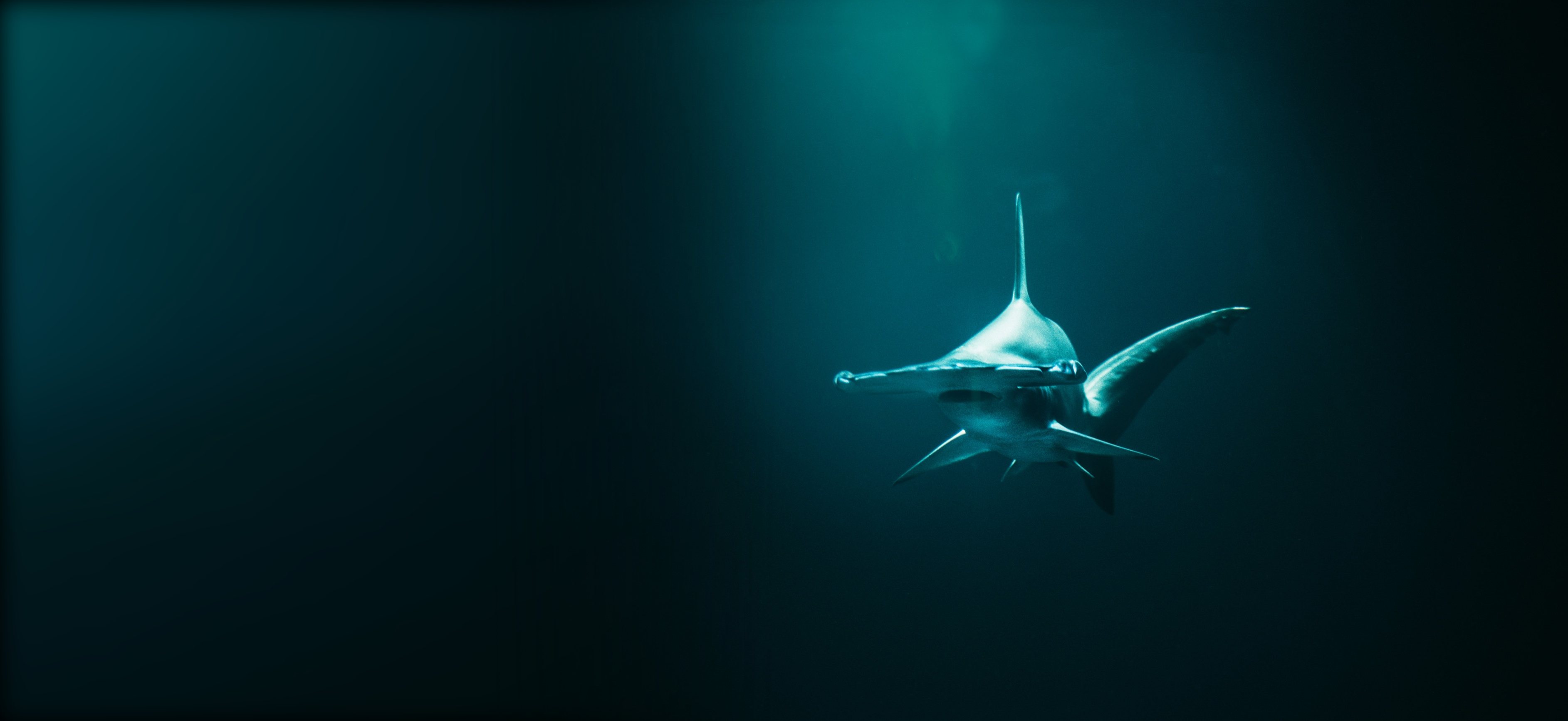
Hammerheads are a family of sharks (Sphyrnidae), most of them in the genus Sphyrna. Among them are two Critically Endangered species: the scalloped hammerhead (Sphyrna lewini), which grows to about 4.2 meters (14 feet), and the great hammerhead (Sphyrna mokarran), which is reported to reach 6.1 meters (20 feet), although 4 meters (13 feet) is more typical.
The flattened, hammer-shaped head sets the nostrils wide apart. Comparing the smell arriving at each side is thought to tell the shark which direction a scent came from.
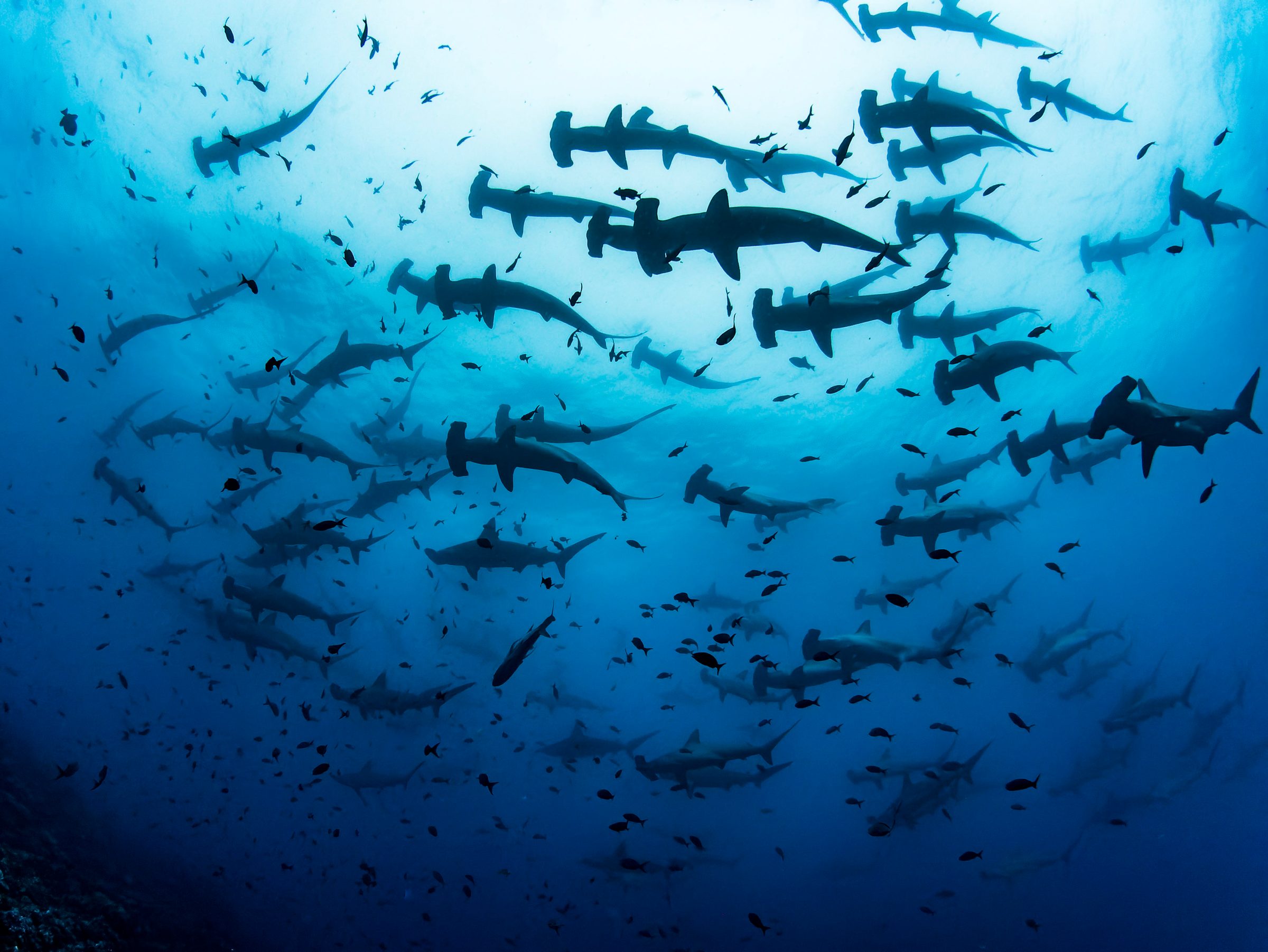
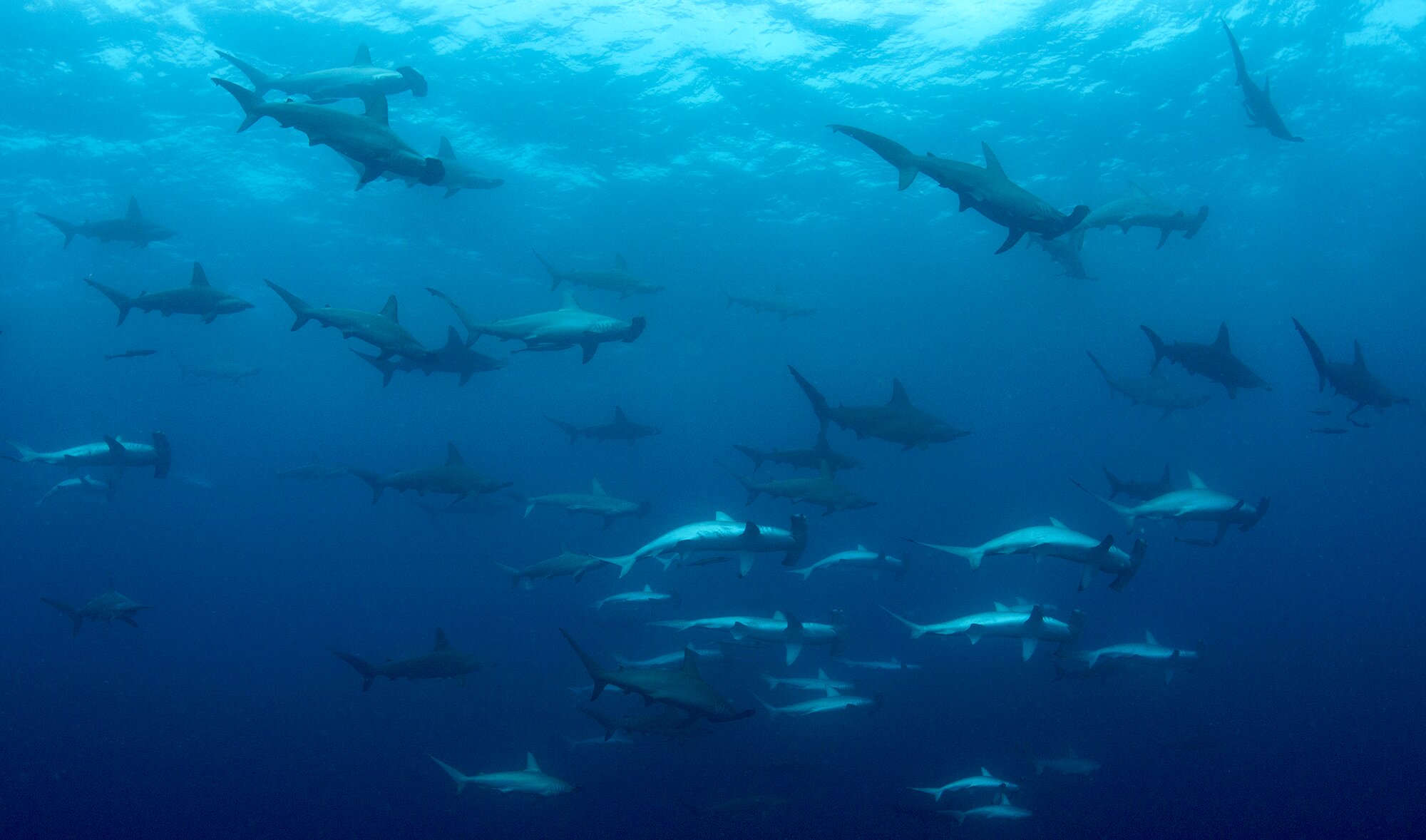
Scalloped hammerheads gather in schools. At Darwin and Wolf islands, in the far north of the Galápagos, a large migratory population schools by day on the upstream side of each island, where the sharks rest in the current, visit cleaning stations, and socialize, before dispersing to forage at night. Newborn and small juvenile scalloped hammerheads use coastal nursery areas.
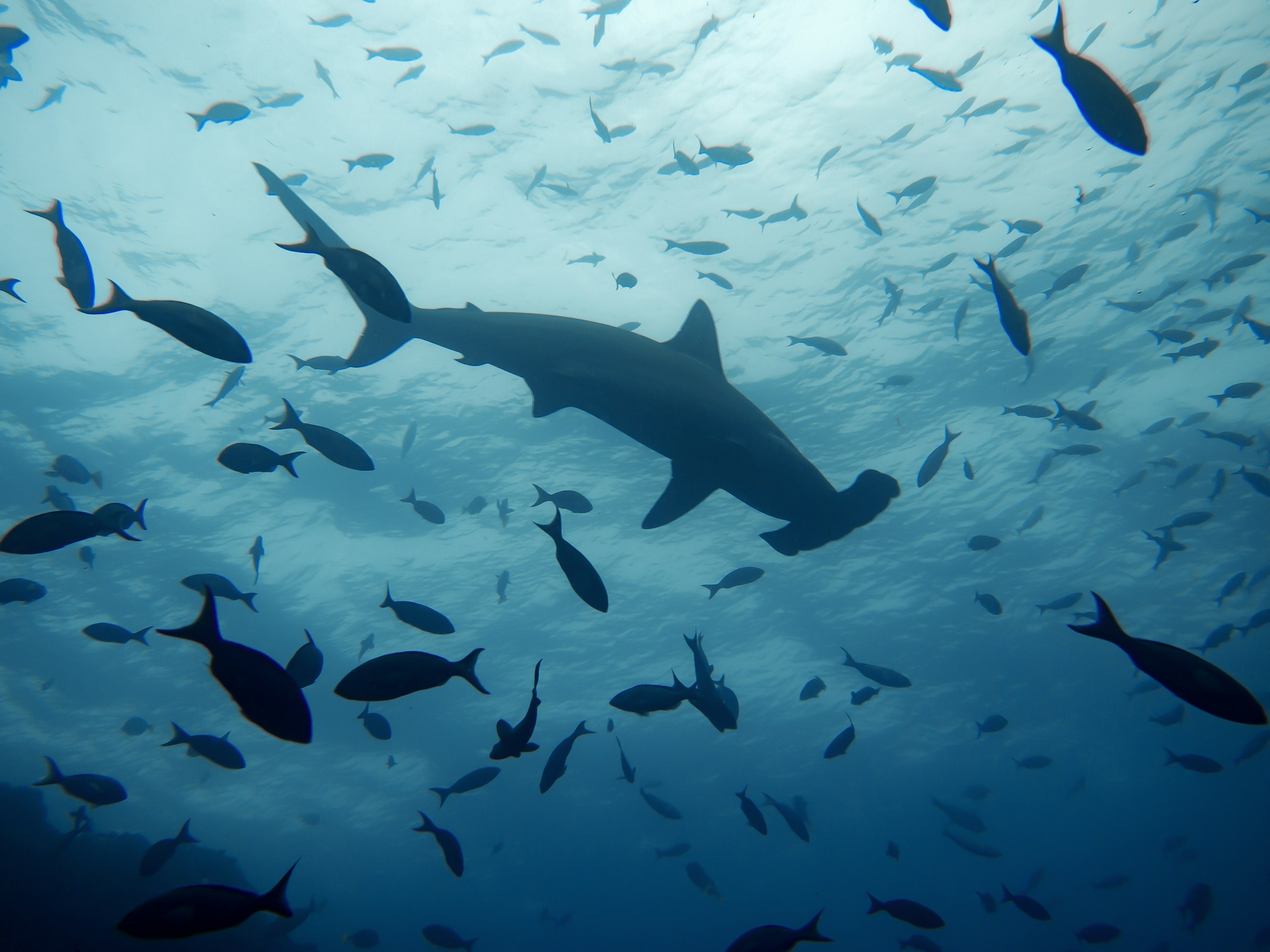
Around divers, scalloped hammerheads are shy and seldom come close, probably because of the noise and bubbles from divers' breathing.
How your hammerhead shark adoption helps
MMF does not run a hammerhead project. Your hammerhead adoption supports MMF's work as a whole, including our Migratory Species Program, which works to remove the threats facing animals that travel between countries. That work reaches hammerheads through the waters they share with the animals we track.
MMF's strategy calls this expanding the halo: once a site is secure, the team follows the animals to the next, using tracking to build networks of protection across each species' range. In the Galápagos, research on whale shark movements by the Galapagos Whale Shark Project, with MMF as a collaborating partner, contributed to the expansion of the marine reserve and to a protected corridor toward Cocos Island, off Costa Rica. MMF's work also helped secure the Hermandad Marine Reserve, a 60,000 km² (23,000 square miles) expansion of Ecuador's marine protection declared in 2022.
That corridor links two places where scalloped hammerheads school, the Galápagos and Cocos Island, and the protected swimway between these World Heritage Areas was created to safeguard the migratory sharks and other species that move between them. As Sofia Green of the Galapagos Whale Shark Project said of protecting that corridor, "It would protect the whale sharks, but also all these other species."
In Mozambique, after the 2021 fishing law protected whale sharks and manta rays, MMF set out to lobby for hammerhead sharks, smalleye stingrays, leopard sharks, and wedgefish to be added. In the Bazaruto Seascape, MMF runs a shark and ray census with baited cameras and environmental DNA, maintains acoustic receivers with partners along about 400 km (250 miles) of coast, and works with the local community fishing council on a protected no-netting area.
Ready to help? A hammerhead shark adoption is $39, with a personalized certificate to download straight after checkout.
Adopt a hammerhead shark · $39