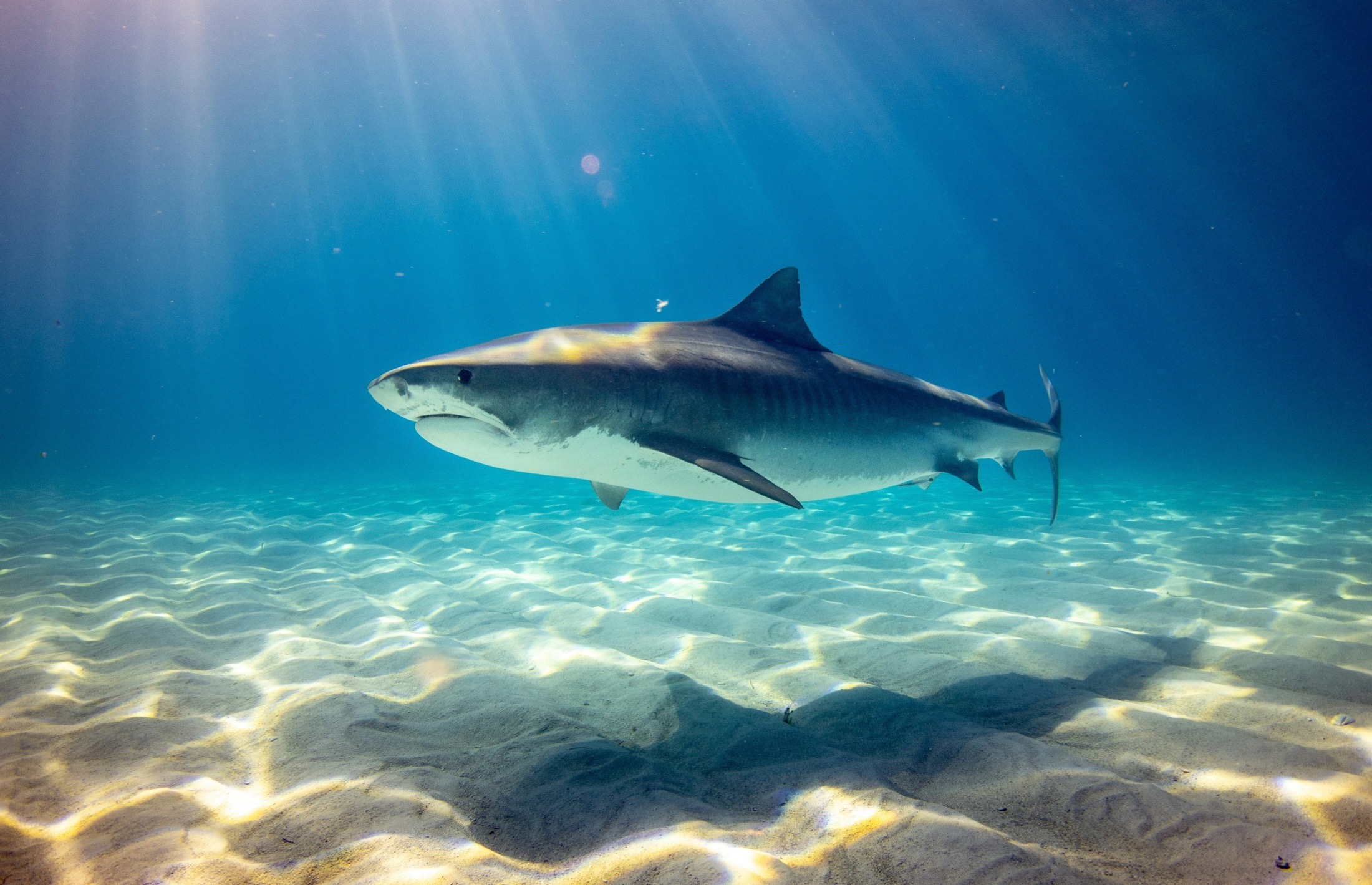
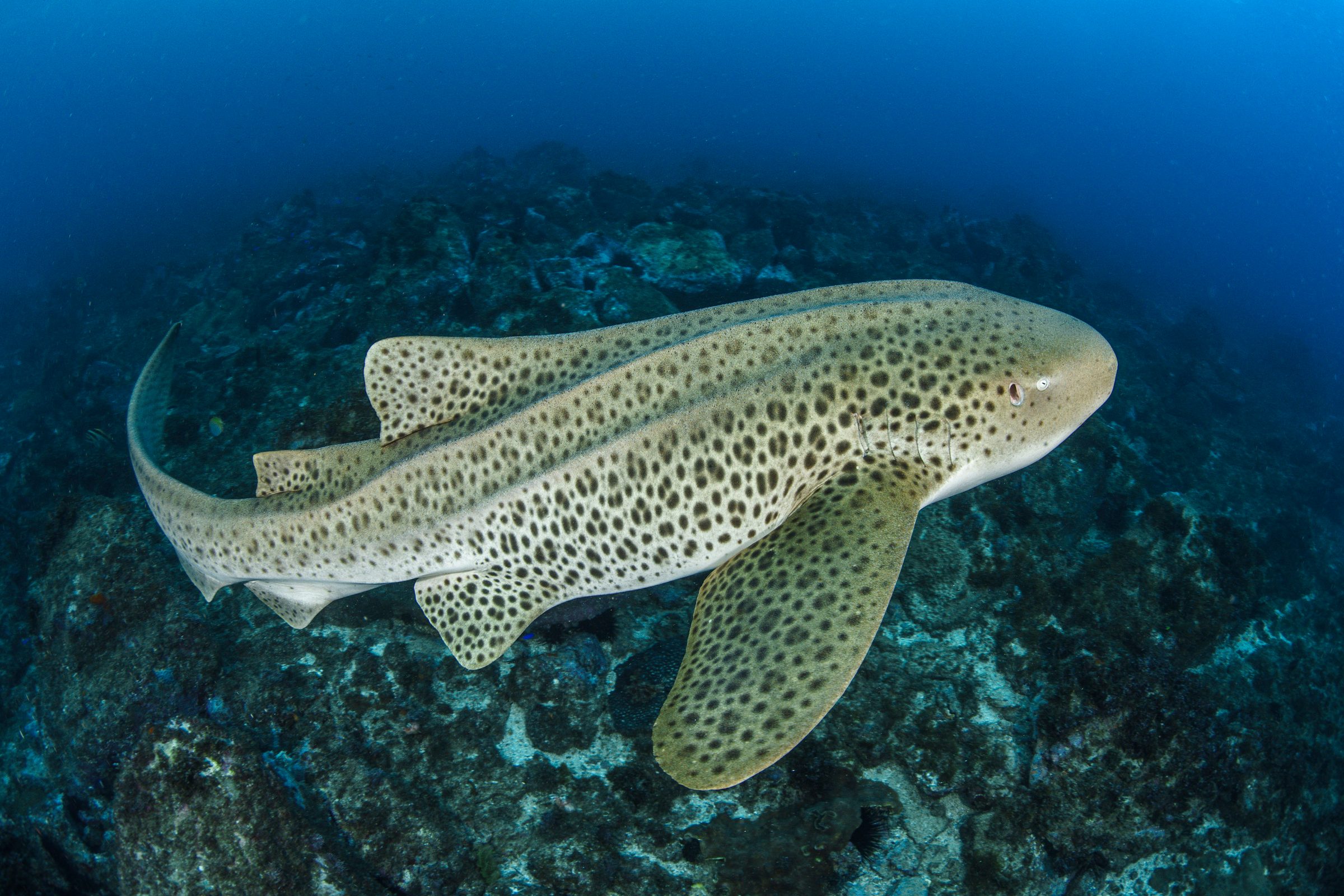




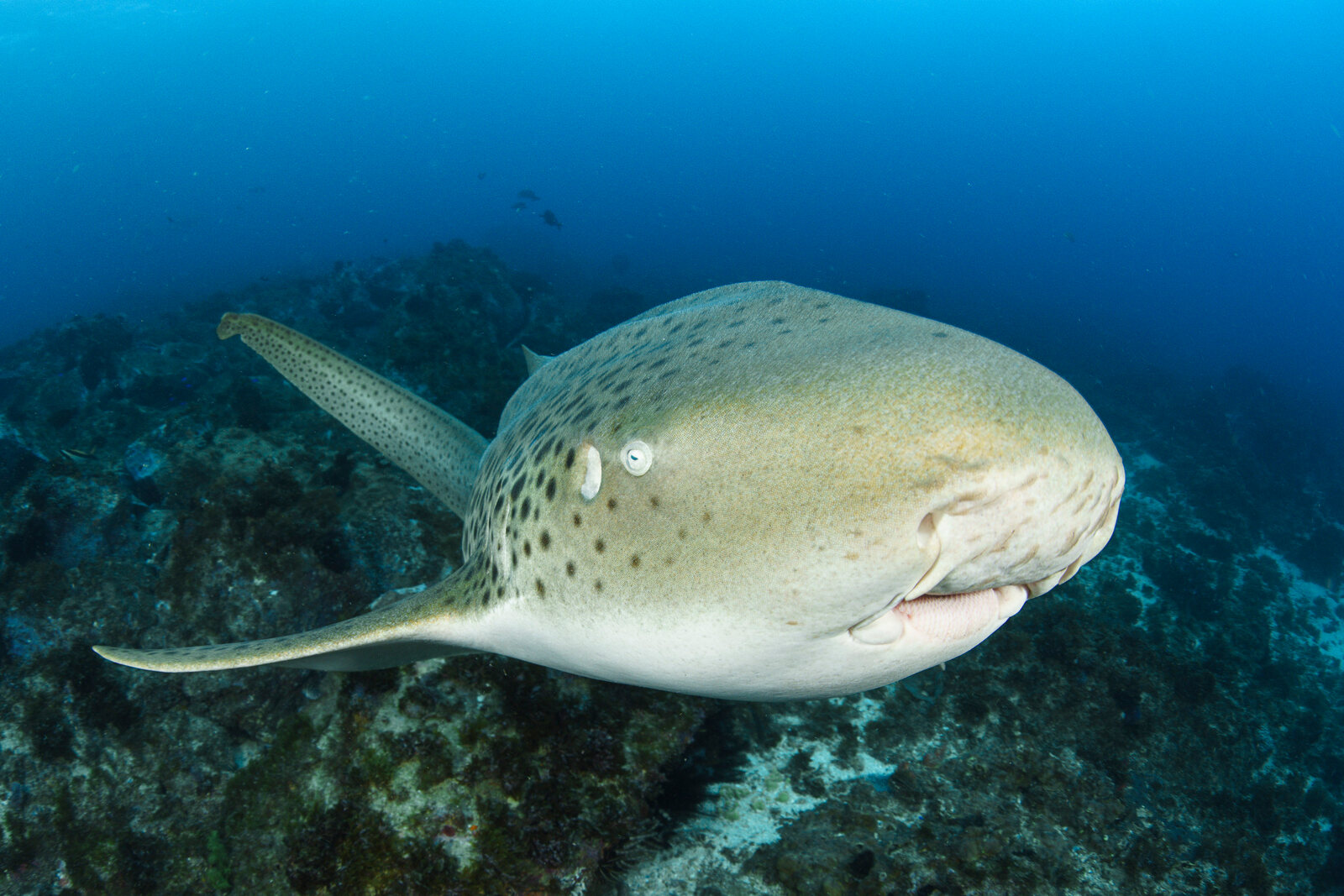
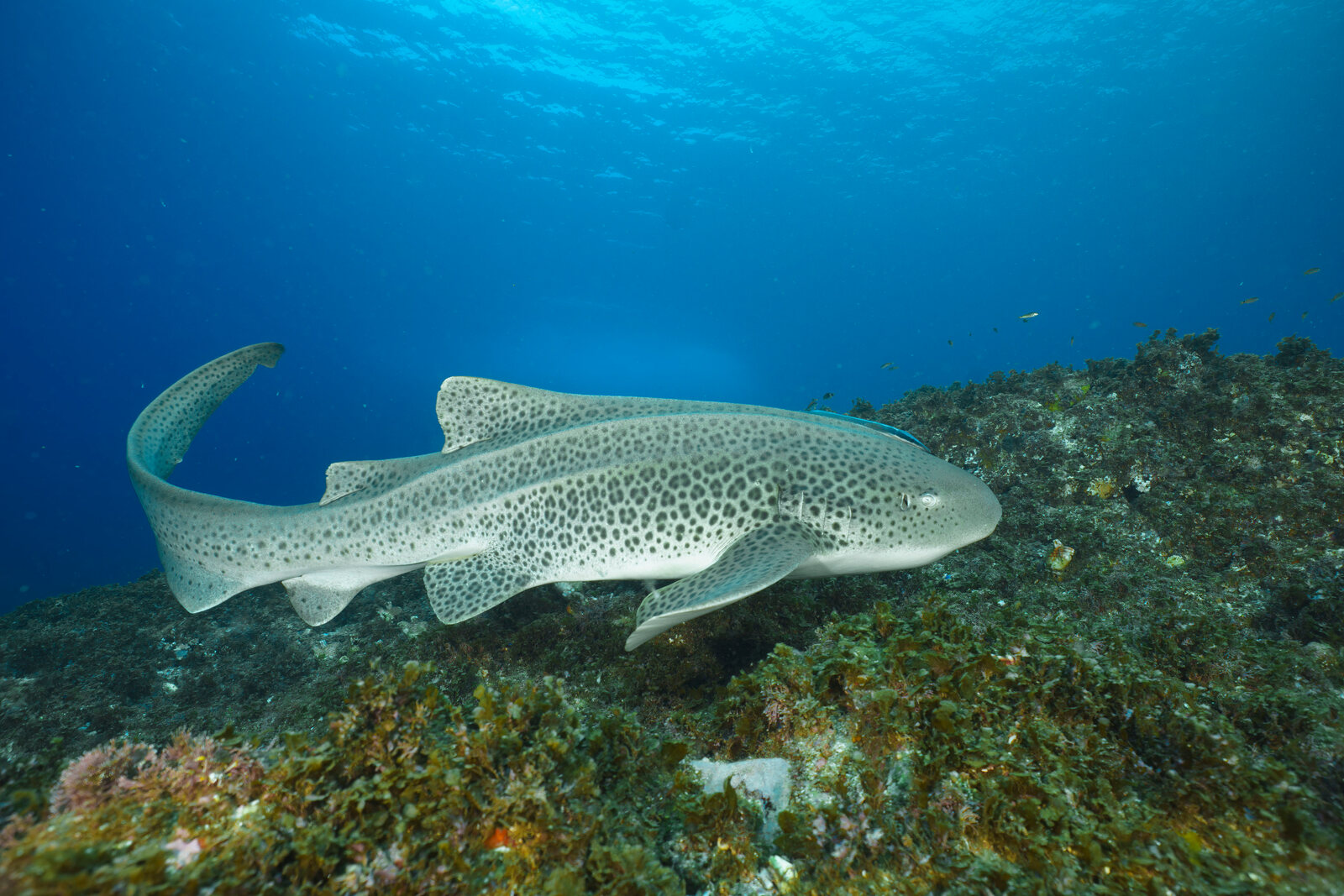
A leopard shark, its dark spots clearly visible, swims over a reef at Julian Rocks, Byron Bay, Australia

Adopt a Leopard Shark

An Endangered reef shark, harmless to people, studied at Byron Bay, Australia, and in southern Mozambique.

Adopt a leopard shark · $39Personalized certificate · Instant download

Your leopard shark adoption

Adopt a leopard shark, an Endangered reef shark that is harmless to people. Your symbolic adoption supports MMF's work, including research from the summer aggregation at Byron Bay, Australia, to the reefs of southern Mozambique.

  • 489leopard sharks identified off Byron Bay by 2025
  • 164leopard sharks identified along Mozambique's Inhambane coast
  • 50+leopard sharks around divers on a good Julian Rocks dive
  • 16 yearsbetween a male's tagging and his Byron resighting

What you'll give

The name stays in your browser and is not stored by MMF. You can change it after checkout.

Plus a gift card with your own message:

  • Birthday gift cardBirthday
  • Valentine's Day gift cardValentine's Day
  • Christmas gift cardChristmas
Dr. Simon Pierce

Signed by the scientist

Every adoption certificate is signed by MMF's Co-Founder & Executive Director.

Dr. Simon PierceCo-Founder & Executive Director, Marine Megafauna Foundation

Why adopt a leopard shark?

Adopt a leopard shark and you back research on a harmless, spotted reef shark that is in trouble across much of its Indo-Pacific range. Leopard sharks live close to the coast and often rest on the bottom, habits that make them an easy target for fishing.

In 2016 the leopard shark was reclassified as globally Endangered on the IUCN Red List because of heavy fishing throughout much of its range. In 2024 the regional population stretching from the Western Indian Ocean to Southeast Asia, which includes Mozambique, was assessed as Critically Endangered. The species is now rare or absent from several reefs it once occupied in parts of Southeast Asia and Indonesia.

Heavy fishing combined with low reproductive rates has driven steep declines. Leopard sharks also gather in specific areas, so when fisheries target those sites, local extinctions can follow quickly. MMF's research identifies the sites these sharks depend on and builds the case for protecting them in advance.
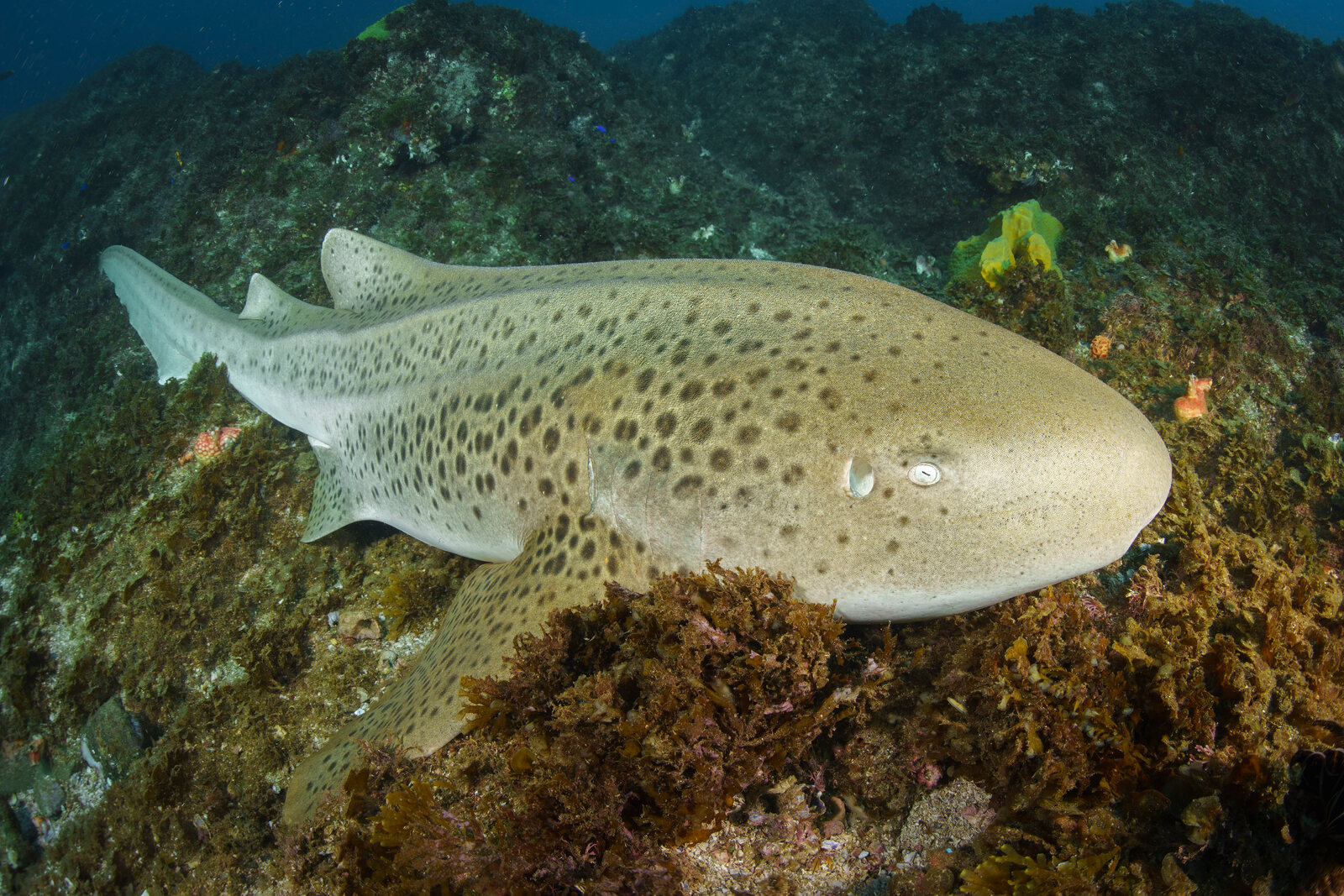
Close view of a leopard shark resting on the reef, showing its spot pattern, at Byron Bay, Australia.

About leopard sharks

The leopard shark (Stegostoma tigrinum) lives throughout the Indian and western Pacific Oceans. In North America it is sometimes known as the zebra shark, partly to avoid confusion with an unrelated Californian shark that is also called a leopard shark.

Both names fit. Leopard sharks are born with vivid dark and light stripes, and Dr. Christine Dudgeon determined that the striped young mimic sea snakes. Within a year or two the stripes break into spots, and the adult pattern then stays stable for many years, so researchers can recognize each shark from a photo of its left side, behind the gills.

Elsewhere, leopard sharks are usually seen alone or in small groups, resting on the bottom during the day. At Julian Rocks off Byron Bay, they swim actively all day, and males follow females, behavior MMF's partners think is a precursor to mating.

  • Size: the leopard sharks identified in southern Mozambique, mostly adults or subadults, averaged 1.64 m (5.4 ft) long.
  • Diet: octopus, fish, crabs, and lobster, held and crushed by teeth made for grasping. They are mainly nocturnal predators and will dig into the reef to reach prey.
  • Lifespan: long thought to be about 25 years, but a male tagged as an adult in 2005 was photographed at Byron Bay 16 years later.
  • Young: juveniles are rarely seen in the wild, and where the females that visit Julian Rocks lay their eggs remains unknown.
How your leopard shark adoption helps

Your leopard shark adoption supports MMF's work as a whole, including research in two places where these sharks gather in numbers. Off Byron Bay, MMF Research Associate Dr. David Robinson founded the Australia Leopard Shark Project in 2019. He runs it through Sundive Research, in partnership with the Cape Byron Marine Park, the University of the Sunshine Coast, and MMF.

Each summer, hundreds of leopard sharks aggregate at Julian Rocks, from around December to May. Divers and snorkelers photograph them, and the project had identified 489 individual sharks by January 2025. The next step is finding out where the sharks go when they leave at the end of each summer.

In southern Mozambique, the Mozambique Leopard Shark Research Project compiled the first photo-identification catalog for leopard sharks in southern Africa. A 2026 study led by Jule Buschmann of the All Out Africa Marine Research Centre and co-authored by MMF's Nilza de Catarina and Anna Flam drew on 9,219 dive surveys along the Inhambane coast, identified 164 sharks, and recorded the first leopard shark courtship in the Western Indian Ocean.

The findings identify priorities for protection. Mozambique's national fisheries regulations protect only leopard sharks under 1.5 m (4.9 ft) long, and the authors recommend extending protection to sharks of all sizes, protecting the reefs north of Tofo, and setting minimum approach distances for divers. MMF scientists were also among the assessors for the 2024 IUCN Red List reassessment, and the team now tracks tagged leopard sharks on an acoustic receiver network across the Bazaruto Seascape.

Ready to help? A leopard shark adoption is $39, with a personalized certificate to download straight after checkout.

Adopt a leopard shark · $39
How it works

  1. 1

    Adopt

    Pay securely in the pop-up. Your receipt arrives by email.

  2. 2

    Add the name

    Type the adoptee's name and see it on the certificate.

  3. 3

    Download and give

    Download the certificate and a gift card, then print or forward them.

Leopard shark adoption FAQs

Are leopard sharks dangerous?

No. MMF's researchers describe the leopard shark as harmless. In Mozambique, however, the sharks moved away from divers in 55% of recorded encounters, and the odds of a shark leaving were about 14 times higher when a diver came within 3 meters (10 feet) than when divers stayed more than 5 meters (16 feet) away. The researchers' advice is therefore to stay more than 5 meters (16 feet) from a resting leopard shark.

Why are leopard sharks also called zebra sharks?

Newborn leopard sharks have vivid alternating dark and light stripes, which is where the name zebra shark comes from. Within a year or two the stripes change into the spots of the adult.

How long do leopard sharks live?

Leopard sharks have been thought to live for about 25 years. A shark tagged at North Stradbroke Island in 2005, when it was already a mature male, was seen at Byron Bay 16 years later, and Dr. David Robinson suspects they live much longer.

Where can you see leopard sharks?

Julian Rocks, about 2.5 km off Byron Bay in Australia, hosts one of the largest known aggregations, with sharks present from around December to May. In southern Mozambique, sightings concentrate on a small cluster of reefs north of Tofo and peak in the southern summer.

What is a symbolic adoption?

A symbolic adoption is a gift to MMF's work as a whole. We use it where it does the most good, and that includes the research and conservation behind the animal you chose. No animal is taken from the wild or sent to you. Your certificate records your support.

What do I receive?

A personalized adoption certificate (PDF) with the name you choose and the date, ready to download as soon as checkout is complete. You can also make a gift card for a birthday, Valentine's Day, or Christmas with your own message. Both are yours to print or send by email.

Can I give an adoption as a gift?

Yes. Type the recipient's name for the certificate and write your message on the gift card. Because everything is digital, it works as a last-minute gift too.

How do I get my certificate?

After checkout you are taken to a page where you type the name and download the certificate. The link to that page is also in your receipt email, so you can come back to it later.

Is my adoption tax-deductible?

Your adoption is tax-deductible in the USA. MMF is a registered 501(c)(3) non-profit conservation organization, and you receive a receipt by email.

Is anything sent by mail?

No. The certificate and card are digital files, so nothing is printed or shipped.

Adopt a Leopard Shark · $39

Secure checkout by Donorbox. As soon as your adoption is complete you can make your certificate and gift card.

Form not loading? Open the secure checkout in a new tab.