
GLOBAL RHINO RAY PROGRAM
RHINO
RAYS.
Shark-like rays of warm, shallow coastal seas, and among the most threatened marine fishes on Earth.
What are rhino rays?
Rhino rays are the shark-like rays of the order Rhinopristiformes, which includes the wedgefishes, giant guitarfishes, guitarfishes, sawfishes, and banjo rays. They have the flattened head of a ray but the tail and dorsal fins of a shark, and many live in warm, shallow coastal water over sand and reef.
Those shallow waters are also fished intensively. As a result, several rhino ray families are now among the most threatened marine fishes on Earth, and MMF's Global Rhino Ray Program brings together our research on them in Mozambique and Florida.
The rhino ray families
Wedgefishes
Rhinidae · Nine of ten species assessed as Critically Endangered (2019)
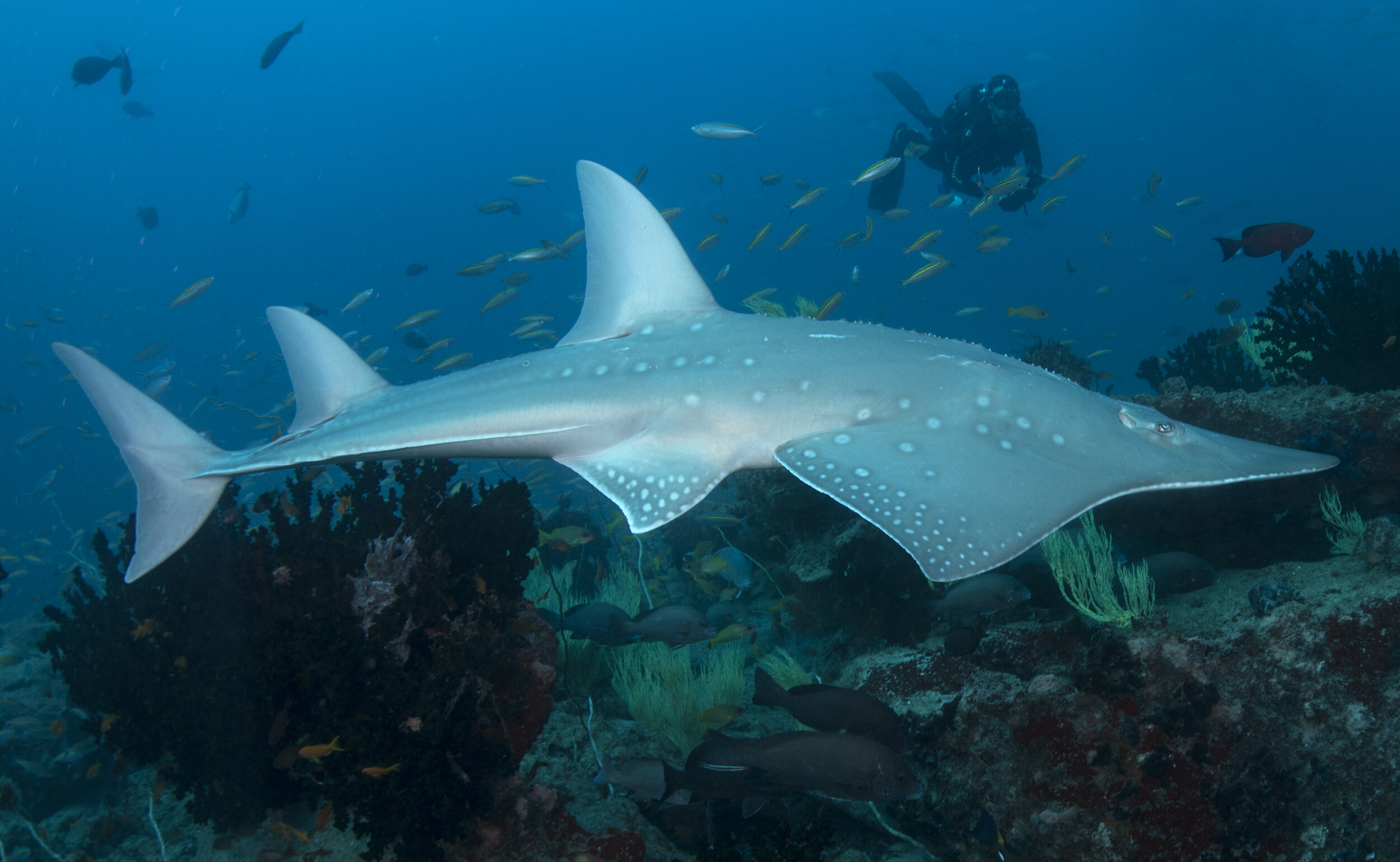
Large rays up to about 3 meters (10 feet) long, including the bowmouth guitarfish, or shark ray. Our work in Mozambique centers on the bottlenose wedgefish (Rhynchobatus australiae).
Giant guitarfishes
Glaucostegidae · All six species assessed as Critically Endangered (2019)
Rays of shallow, soft-bottomed coasts from the Mediterranean and West Africa to Australia, caught for their meat and fins across much of their range.
Guitarfishes
Rhinobatidae · Listed on CITES Appendix II (2022)
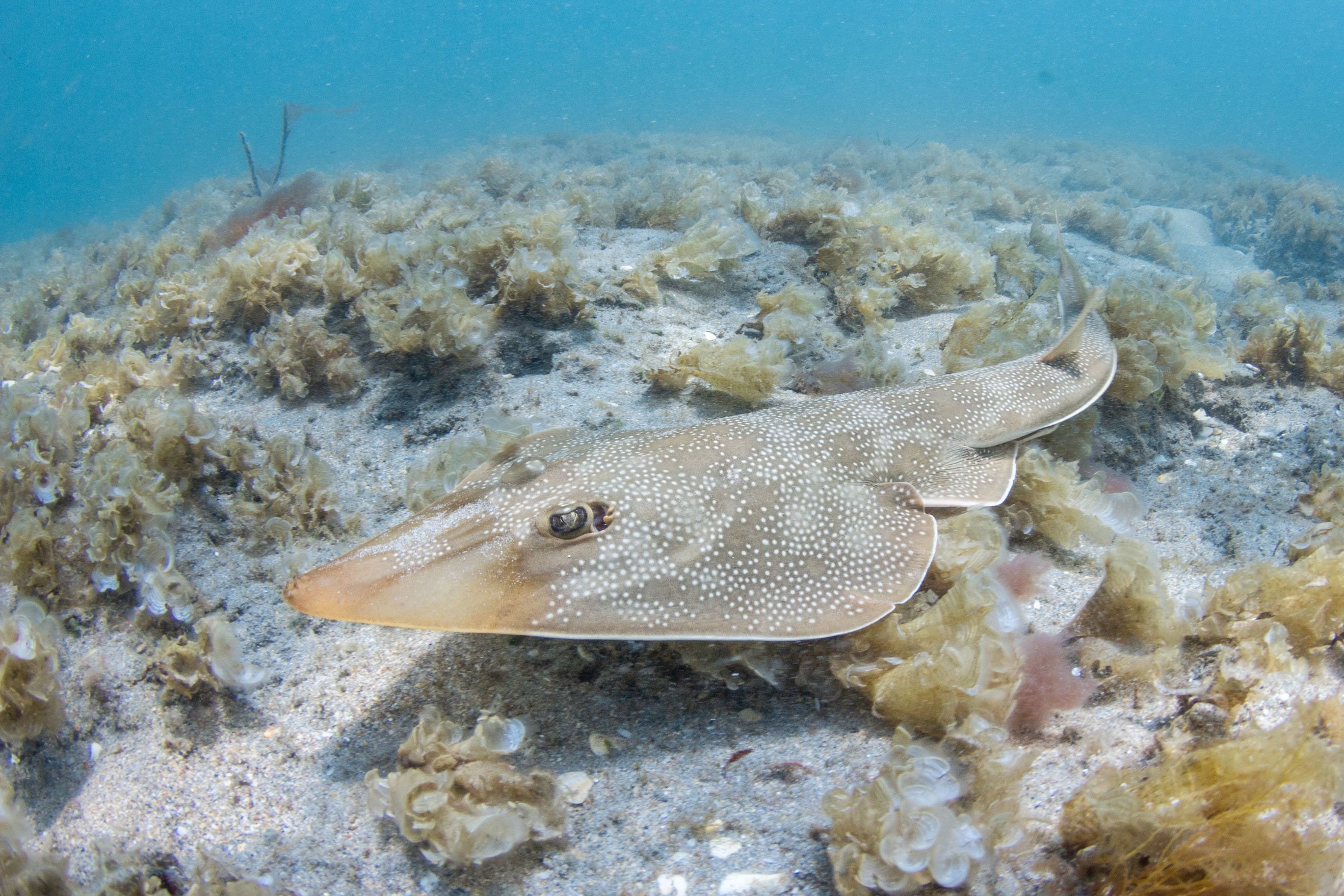
Smaller, flatter rhino rays that rest on sandy bottoms. They include the Atlantic guitarfish (Pseudobatos lentiginosus) we study in Florida.
Sawfishes
Pristidae · All five species assessed as Endangered or Critically Endangered (2013)
The giants of the group, armed with a long, toothed saw that tangles easily in nets. Sawfishes are now functionally extinct across much of their former range.
Why rhino rays are threatened
A global assessment published in 2020 found that 15 of the 16 wedgefish and giant guitarfish species are Critically Endangered. On that evidence, the two families had overtaken the sawfishes as the most imperiled marine fish families in the world (Kyne et al. 2020).
Wedgefishes and giant guitarfishes have a limited capacity to reproduce, and their shallow coastal habitats overlap with some of the most intense and increasing fisheries in the world. They are caught both as targets and as bycatch, and their meat is an important source of food for coastal communities. Their fins add a strong incentive to keep every animal caught: sold as “white” fins, they are among the most valuable in the international shark fin trade.
International protection has followed. All sawfishes are listed on Appendix I of the Convention on International Trade in Endangered Species of Wild Fauna and Flora (CITES), which prohibits international commercial trade. The wedgefishes and giant guitarfishes were added to Appendix II in 2019 and the guitarfishes in 2022, so exports now need permits showing they are legal and will not threaten the species' survival. A trade listing does not stop local catch, though. Recovery depends on knowing where these rays live, feed, and breed, and on fishing communities having both the means and the reason to protect those places.
Our rhino ray projects
Mozambique Rhino Rays Research Project
Bazaruto Seascape to Závora, Mozambique
In southern Mozambique, a center of abundance for wedgefishes and guitarfishes, we combine photo-identification, acoustic and satellite tracking, and work with coastal communities. More than 90 bottlenose wedgefish have been identified from photographs.
Inhassoro Wedgefish Project
Inhassoro district coast, Mozambique
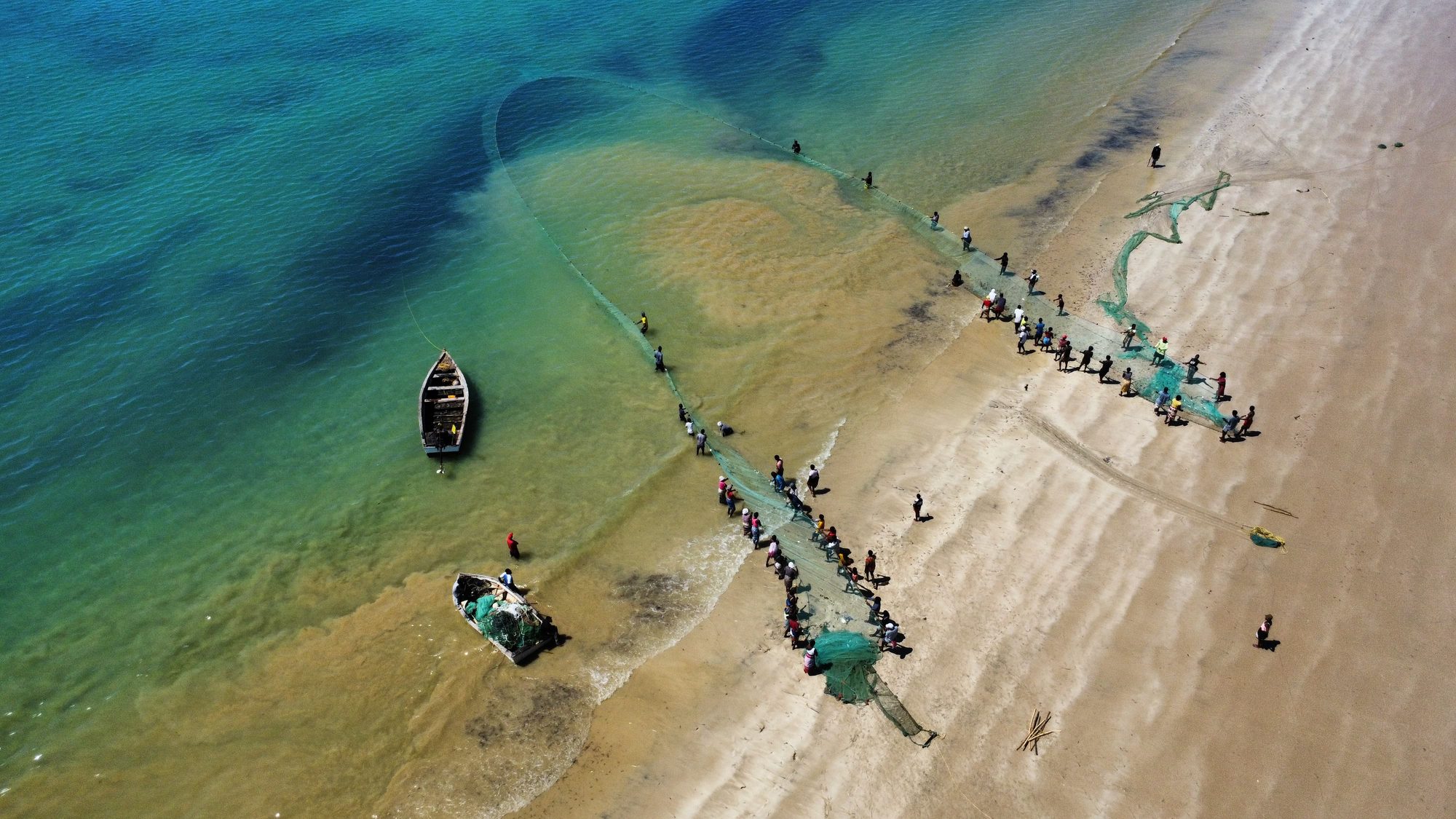
On the unprotected mainland coast of the Bazaruto Seascape, 26 community rangers have recorded wedgefish and guitarfish landings, and their records helped two fishing communities propose no-net and no-take zones.
Atlantic Guitarfish
Florida's Atlantic coast, USA
We have identified more than 200 Atlantic guitarfish from photographs and completed an acoustic tracking study along Florida's Atlantic coast, for a species with almost no published biology.
In Mozambique and Florida, photo-identification lets us recognize individual rays without catching them, building catalogs that underpin research on their movements and habitat use. At Inhassoro, photos of landed wedgefish are matched against the Mozambique catalog.
HELP PROTECT RHINO RAYS.
Your gift supports MMF's research and conservation work, including our rhino ray projects in Mozambique and Florida.