


Why adopt a sea turtle?
When you adopt a sea turtle, you back research that follows turtles where they spend most of their lives: on the reefs and seagrass beds where they feed. Most sea turtle research in Indonesia has focused on nesting beaches, where surveys count the females that come ashore but reveal little about juveniles, males, or the adults that live in the water.
Five of the world's seven sea turtle species are at risk of extinction. Hawksbill turtles are Critically Endangered worldwide, and green turtles are still recovering from decades of overexploitation.
The threats are mostly human. In Indonesia, turtles face egg poaching, illegal harvesting, fisheries entanglement, plastic ingestion, and boat strikes. Experts working in Mozambique ranked accidental capture in commercial trawl fisheries as the top threat to the country's sea turtles. In the Gulf, boat traffic and fishing cause most of the turtle deaths on record.
About sea turtles
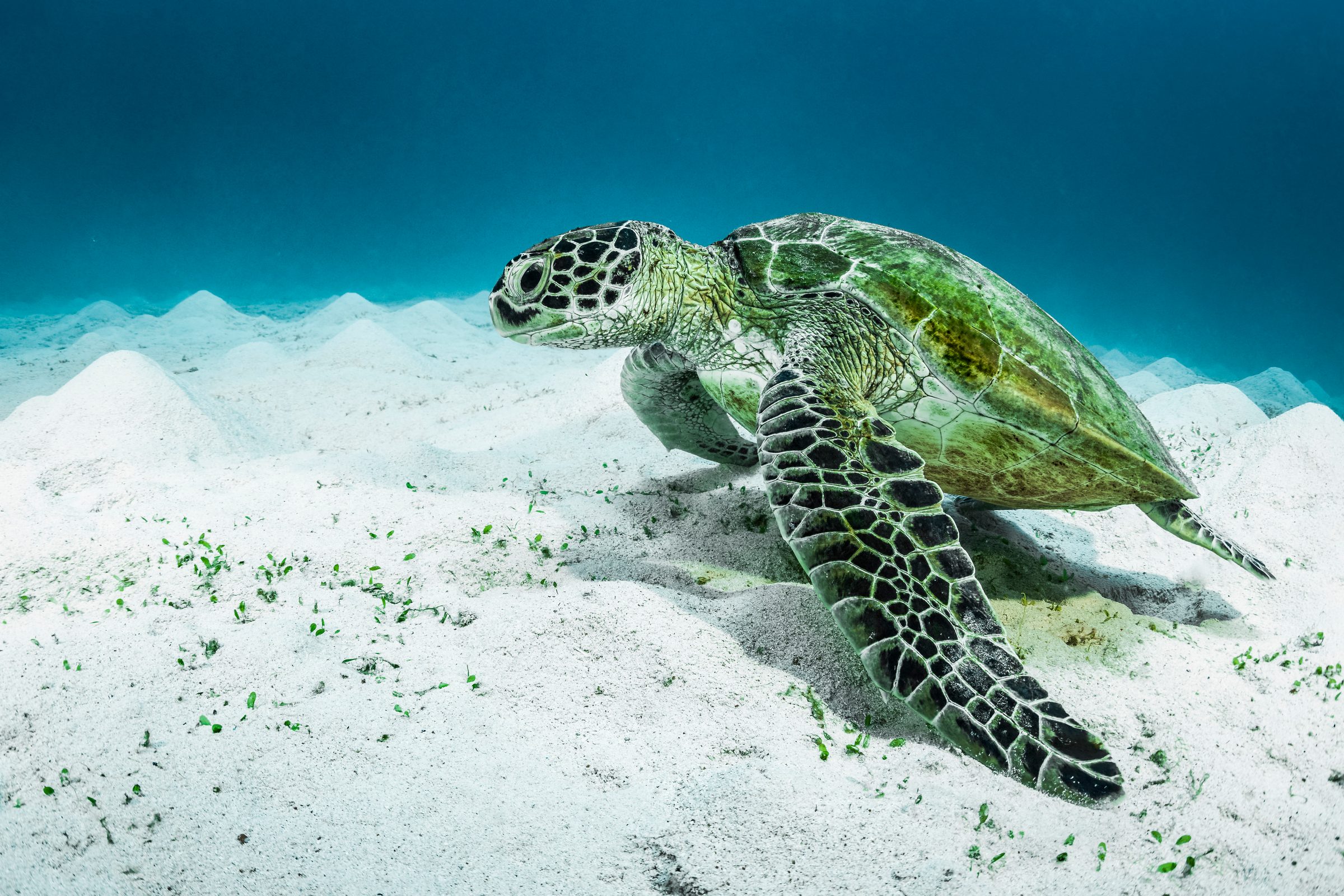
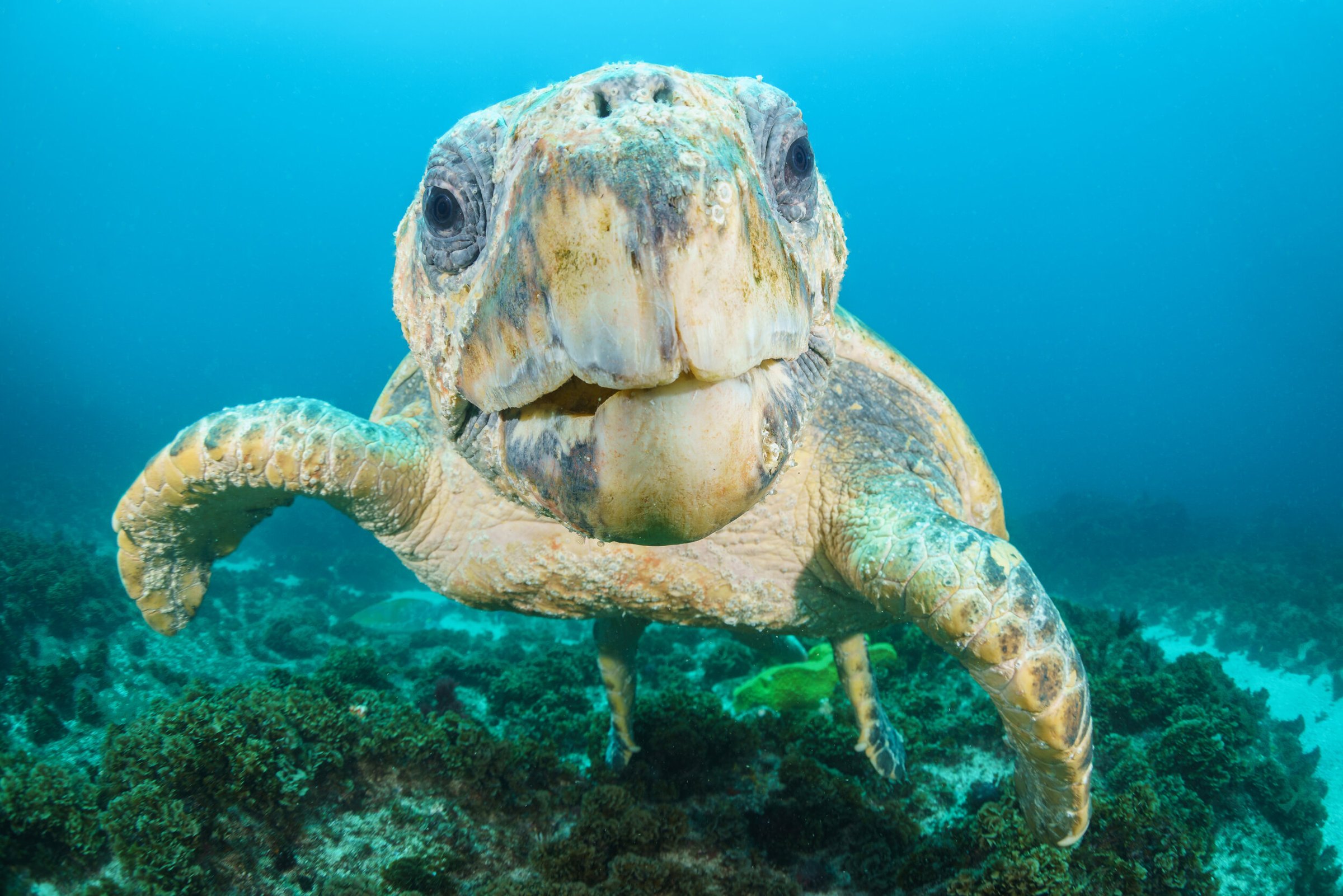
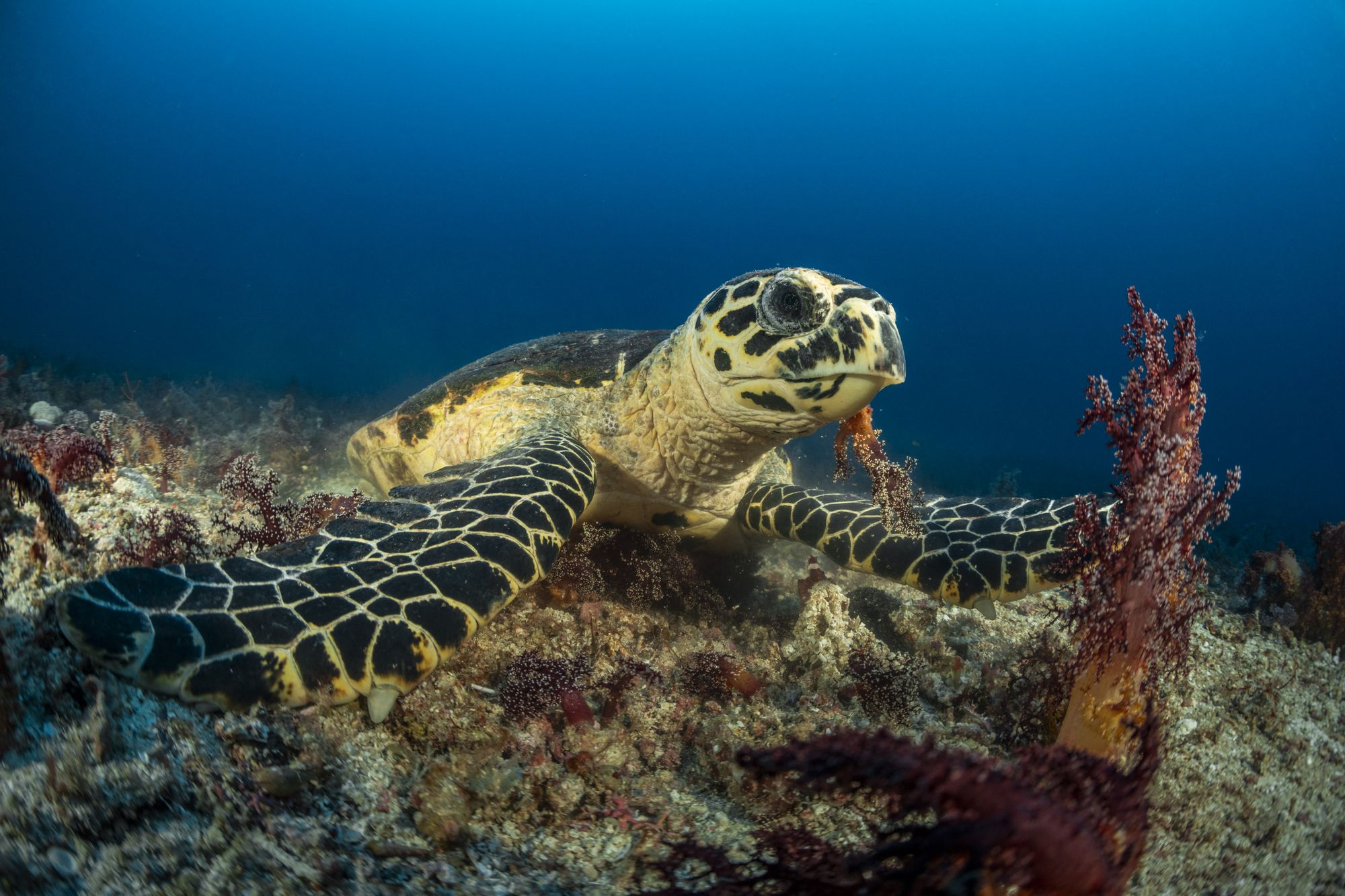
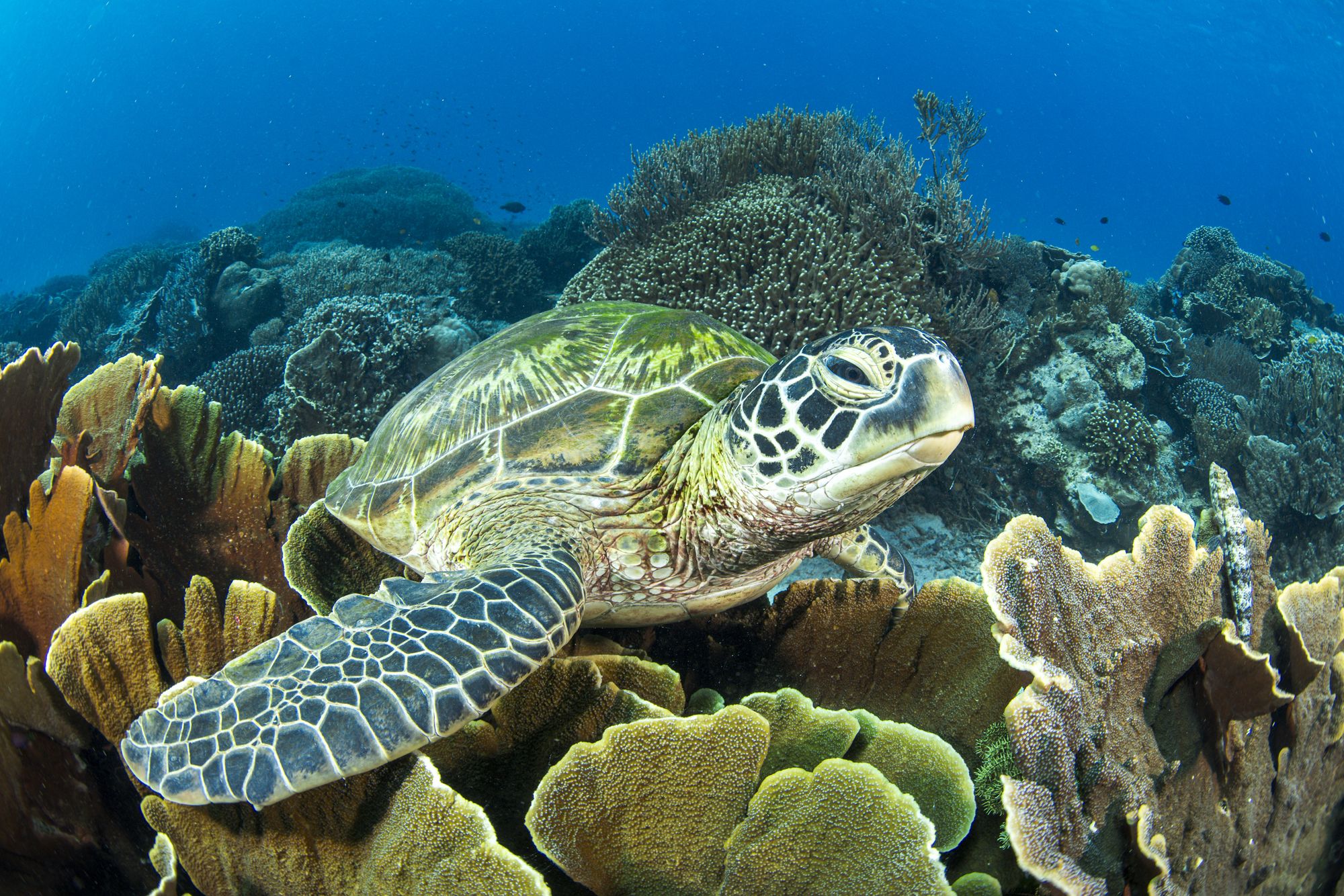
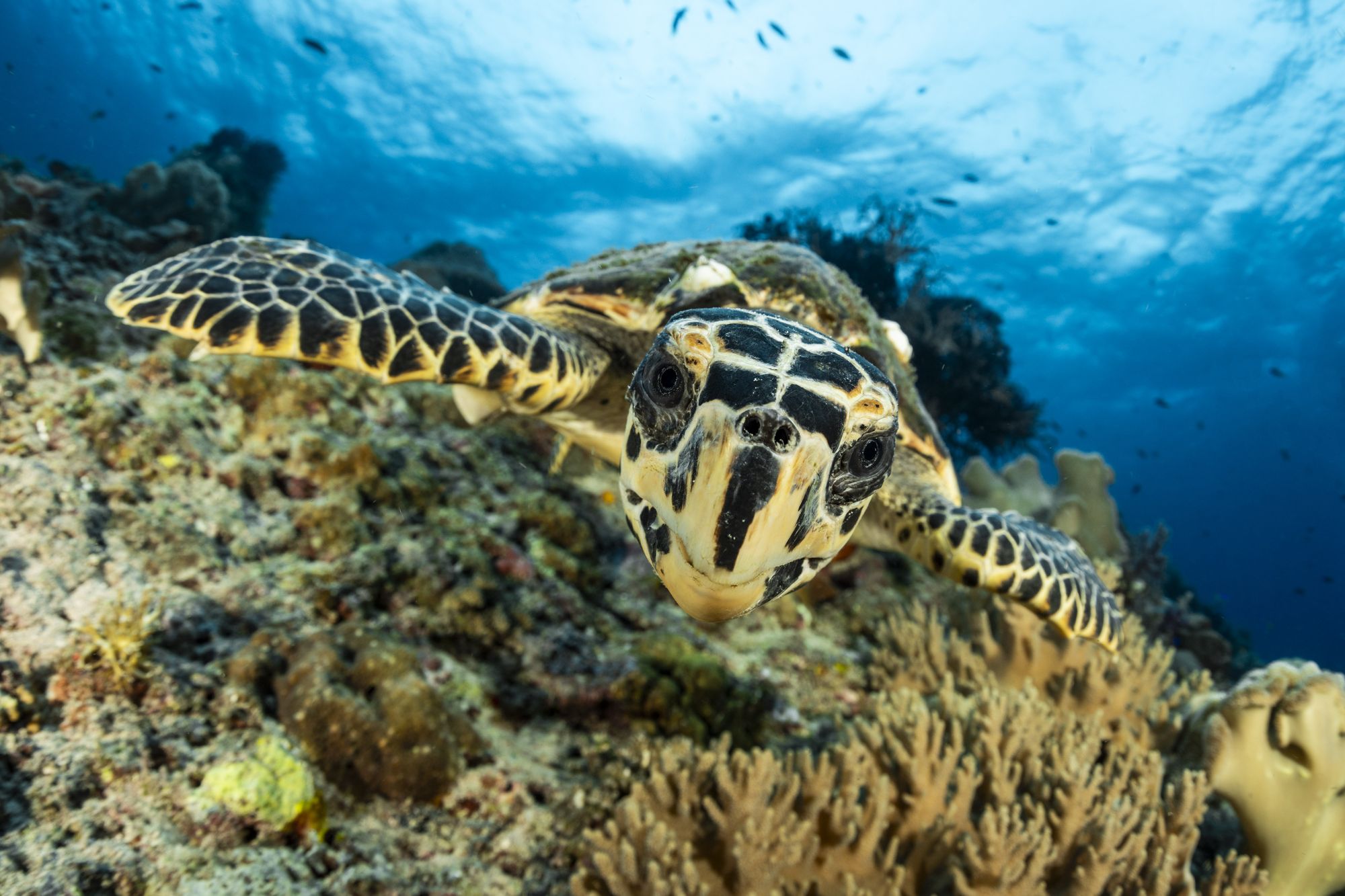
Indonesia is home to six of the world's seven sea turtle species, and five species occur in Mozambique's waters. The turtles MMF teams meet most are hawksbill turtles (Eretmochelys imbricata), green turtles (Chelonia mydas), and, off Mozambique, loggerheads (Caretta caretta).
Hawksbill, green, and loggerhead turtles each carry a unique pattern of scales on the face. A clear photograph of that pattern identifies the individual, so researchers can follow a turtle over years without handling or tagging it.
Those photographs show how long turtles stay. At Nusa Penida, some hawksbills have been resighted over as many as seven years, and most of the green turtles measured there have been juveniles while the hawksbills are predominantly adults. Off Tofo in Mozambique, one young green turtle was photographed on sightings 1,152 days apart.
Sea turtles are cold-blooded and take their body heat from the water around them, so a sudden winter cooling in the shallow Gulf can leave young turtles weak and stranded. Yet in summer, green turtles tracked from the UAE remained in coastal water warmer than 36 °C (97 °F), which suggests they can tolerate very warm seas. Loggerheads tracked from the UAE ranged widely, with one track extending to 5,060 km (3,144 miles), while hawksbills stayed closer to home.
How your sea turtle adoption helps
Your sea turtle adoption supports MMF's work as a whole, including our current turtle work, the Indonesia Sea Turtle Project. Working with divers, snorkelers, and underwater photographers, the team identifies turtles from their faces and adds every sighting to the global Internet of Turtles database.
This symbolic adoption also builds on earlier MMF science. The Mozambique Sea Turtle Project identified 22 green turtles and 42 loggerheads off Tofo from photographs of their faces. In a tracking study led by the Dubai Turtle Rehabilitation Project, MMF scientists helped analyze satellite tracks suggesting that 21 of 26 rehabilitated turtles survived for as long as they were tracked.
- Nusa Penida and East Bali: 374 turtles identified from 2014 to 2026, including more than 300 individual hawksbills in the Nusa Penida MPA.
- Komodo National Park: 308 individual turtles identified from 2016 to 2026, at one of Indonesia's busiest dive destinations.
- Derawan Islands: 344 turtles identified from 2017 to 2026, in one of Indonesia's largest turtle aggregations.
- Measuring without touching: laser photogrammetry sizes turtles in the water to tell their maturity and sex.
- Citizen science: in 2026, 14 dive centers and more than 100 people took part in sea turtle workshops in Karangasem, East Bali.
Next, the Indonesia team plans to publish its long-term study of hawksbill population demographics in the Nusa Penida MPA and to expand its surveys to West Nusa Tenggara.
Ready to help? A sea turtle adoption is $39, with a personalized certificate to download straight after checkout.
Adopt a sea turtle · $39