Annual report 2020
Our 2020 annual report to read on this page, section by section, beside the report's own pages. Every figure is here; the PDF has the full layout.
About the report
- Covers
- 2020
- Published
- 2021, by the Marine Megafauna Foundation
- Length
- 21 pages
- Format
- PDF, 12.8 MB
2020 in figures
2,802
Mini marine conservationists through the MMF curriculum from 2012–20
952
New swimmers trained by MMF from 2012–20
400
New sharks have now been identified from Nosy Be by the Madagascar Whale Shark Project from 2015–20
3,000
Mantas now identified by our Indonesian team from four areas through the country
385
Survey dives along the Inhambane coast
38
Ocean ambassadors have now been trained to promote education and awareness of marine conservation solutions in their own communities in Mozambique
Our three priority regions
Pages 2 to 3 of the report
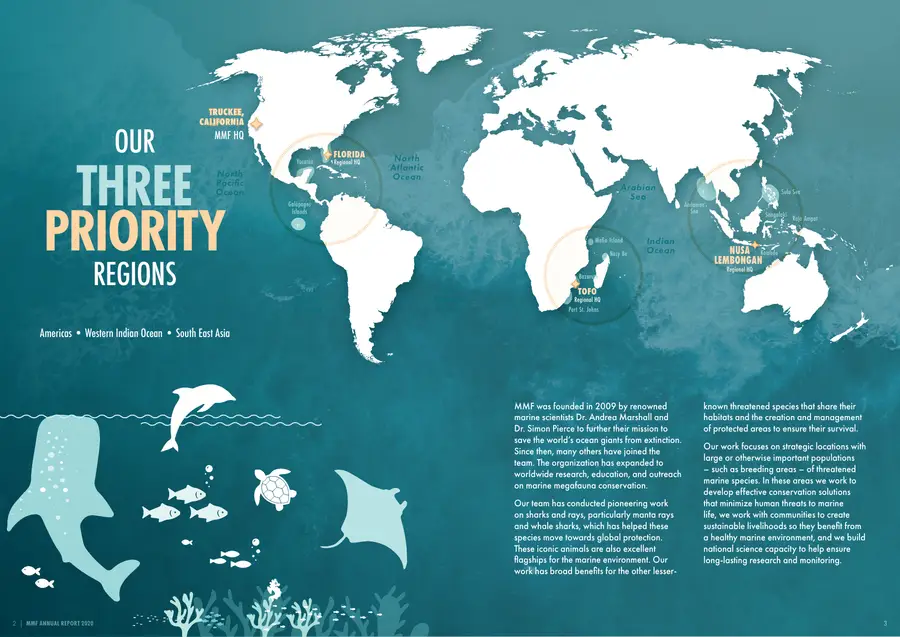
- Americas
- Western Indian Ocean
- South East Asia
Headquarters
- Truckee, California: MMF HQ
- Florida: Regional HQ
- Tofo: Regional HQ
- Nusa Lembongan: Regional HQ
Other sites on the map
- Yucatán
- Galápagos Islands
- Mafia Island
- Nosy Be
- Bazaruto
- Port St. Johns
- Andaman Sea
- Sulu Sea
- Sangalaki
- Raja Ampat
- Komodo
MMF was founded in 2009 by renowned marine scientists Dr. Andrea Marshall and Dr. Simon Pierce to further their mission to save the world’s ocean giants from extinction. Since then, many others have joined the team. The organization has expanded to worldwide research, education, and outreach on marine megafauna conservation.
Our team has conducted pioneering work on sharks and rays, particularly manta rays and whale sharks, which has helped these species move towards global protection. These iconic animals are also excellent flagships for the marine environment. Our work has broad benefits for the other lesser-known threatened species that share their habitats and the creation and management of protected areas to ensure their survival.
Our work focuses on strategic locations with large or otherwise important populations (such as breeding areas) of threatened marine species. In these areas we work to develop effective conservation solutions that minimize human threats to marine life, we work with communities to create sustainable livelihoods so they benefit from a healthy marine environment, and we build national science capacity to help ensure long-lasting research and monitoring.
From our co-founders
Pages 4 to 5 of the report
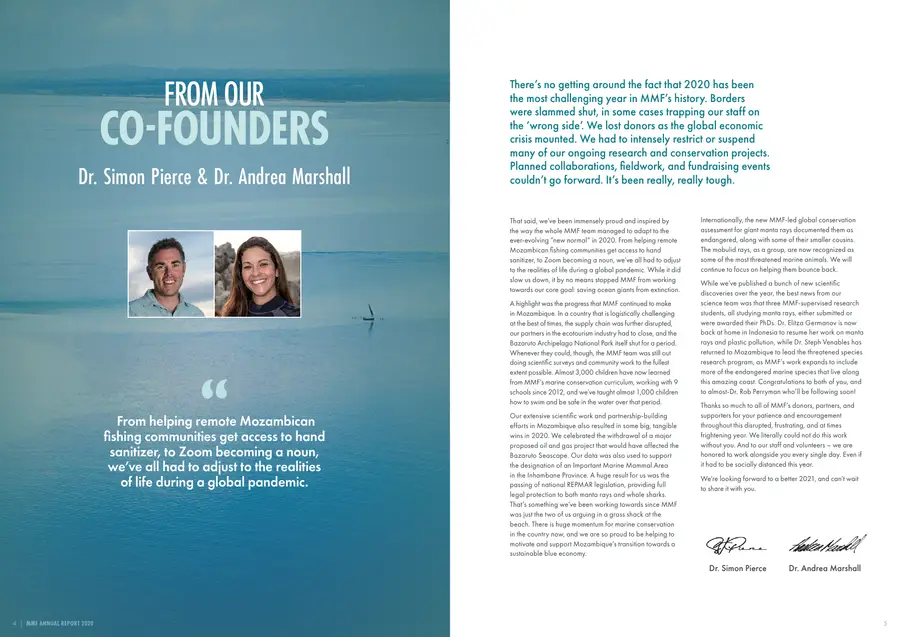
There’s no getting around the fact that 2020 has been the most challenging year in MMF’s history. Borders were slammed shut, in some cases trapping our staff on the ‘wrong side’. We lost donors as the global economic crisis mounted. We had to intensely restrict or suspend many of our ongoing research and conservation projects. Planned collaborations, fieldwork, and fundraising events couldn’t go forward. It’s been really, really tough.
That said, we’ve been immensely proud and inspired by the way the whole MMF team managed to adapt to the ever-evolving “new normal” in 2020. From helping remote Mozambican fishing communities get access to hand sanitizer, to Zoom becoming a noun, we’ve all had to adjust to the realities of life during a global pandemic. While it did slow us down, it by no means stopped MMF from working towards our core goal: saving ocean giants from extinction.
A highlight was the progress that MMF continued to make in Mozambique. In a country that is logistically challenging at the best of times, the supply chain was further disrupted, our partners in the ecotourism industry had to close, and the Bazaruto Archipelago National Park itself shut for a period. Whenever they could, though, the MMF team was still out doing scientific surveys and community work to the fullest extent possible. Almost 3,000 children have now learned from MMF’s marine conservation curriculum, working with 9 schools since 2012, and we’ve taught almost 1,000 children how to swim and be safe in the water over that period.
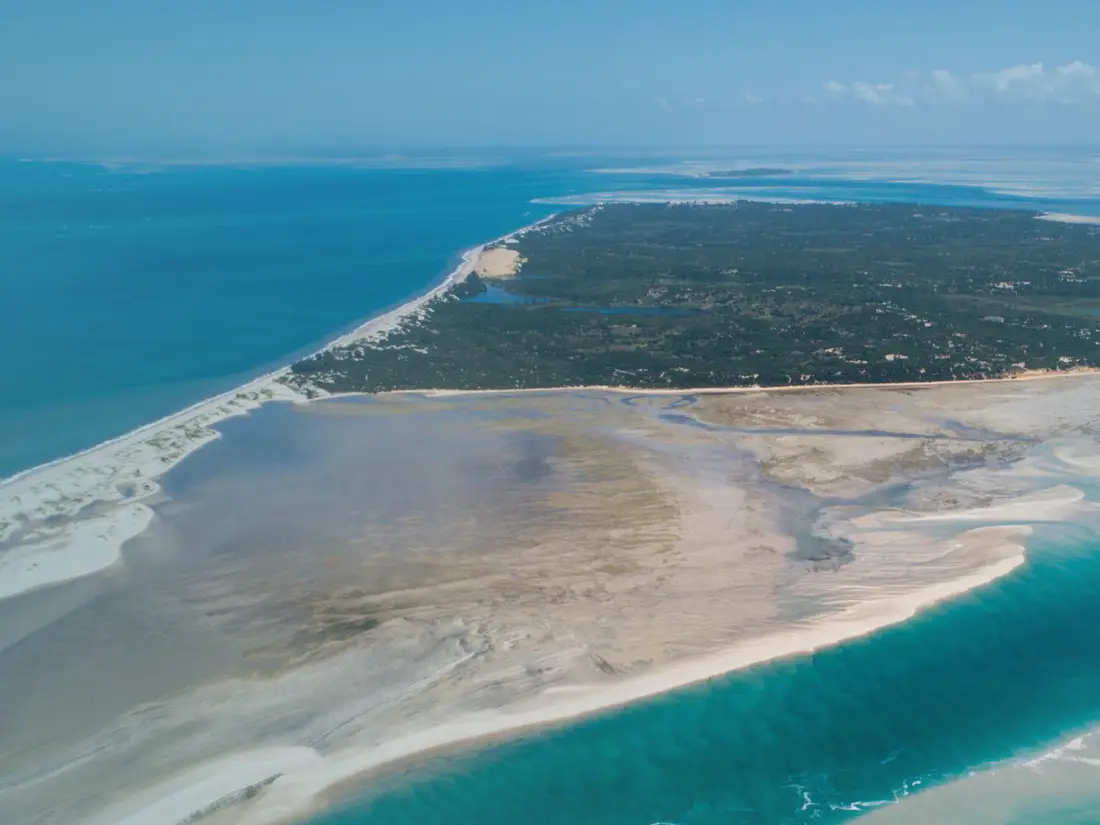
Our extensive scientific work and partnership-building efforts in Mozambique also resulted in some big, tangible wins in 2020. We celebrated the withdrawal of a major proposed oil and gas project that would have affected the Bazaruto Seascape. Our data was also used to support the designation of an Important Marine Mammal Area in the Inhambane Province. A huge result for us was the passing of national REPMAR legislation, providing full legal protection to both manta rays and whale sharks. That’s something we’ve been working towards since MMF was just the two of us arguing in a grass shack at the beach. There is huge momentum for marine conservation in the country now, and we are so proud to be helping to motivate and support Mozambique’s transition towards a sustainable blue economy.
Internationally, the new MMF-led global conservation assessment for giant manta rays documented them as endangered, along with some of their smaller cousins. The mobulid rays, as a group, are now recognized as some of the most threatened marine animals. We will continue to focus on helping them bounce back.
While we’ve published a bunch of new scientific discoveries over the year, the best news from our science team was that three MMF-supervised research students, all studying manta rays, either submitted or were awarded their PhDs. Dr. Elitza Germanov is now back at home in Indonesia to resume her work on manta rays and plastic pollution, while Dr. Steph Venables has returned to Mozambique to lead the threatened species research program, as MMF’s work expands to include more of the endangered marine species that live along this amazing coast. Congratulations to both of you, and to almost-Dr. Rob Perryman who’ll be following soon!
Thanks so much to all of MMF’s donors, partners, and supporters for your patience and encouragement throughout this disrupted, frustrating, and at times frightening year. We literally could not do this work without you. And to our staff and volunteers: we are honored to work alongside you every single day. Even if it had to be socially distanced this year.
We’re looking forward to a better 2021, and can’t wait to share it with you.
Dr. Simon Pierce and Dr. Andrea Marshall
Conservation highlights
Pages 6 to 9 of the report
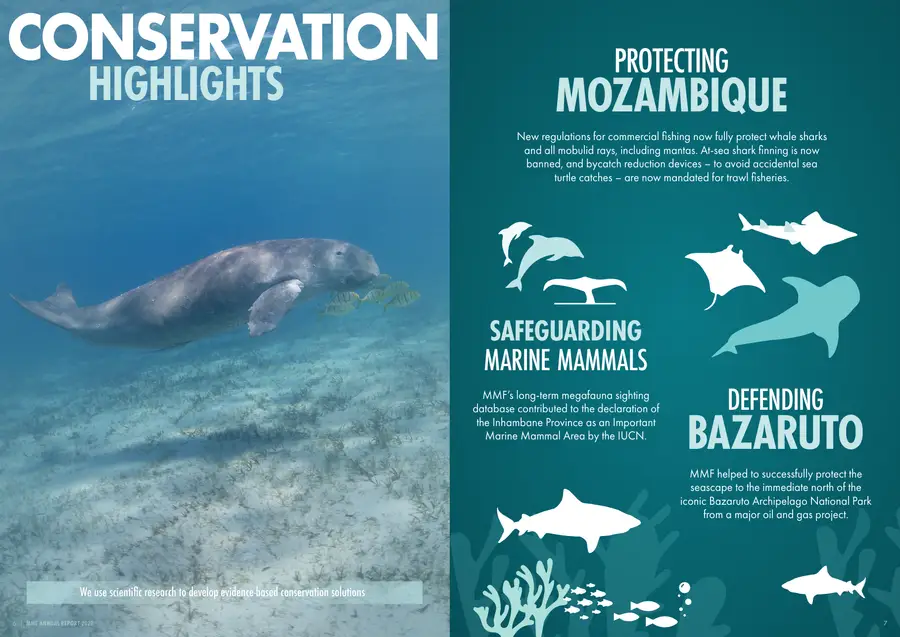
We use scientific research to develop evidence-based conservation solutions
Protecting Mozambique
New regulations for commercial fishing now fully protect whale sharks and all mobulid rays, including mantas. At-sea shark finning is now banned, and bycatch reduction devices (to avoid accidental sea turtle catches) are now mandated for trawl fisheries.
Safeguarding marine mammals
MMF’s long-term megafauna sighting database contributed to the declaration of the Inhambane Province as an Important Marine Mammal Area by the IUCN.
Defending Bazaruto
MMF helped to successfully protect the seascape to the immediate north of the iconic Bazaruto Archipelago National Park from a major oil and gas project.
Mozambique education
Pages 10 to 13 of the report
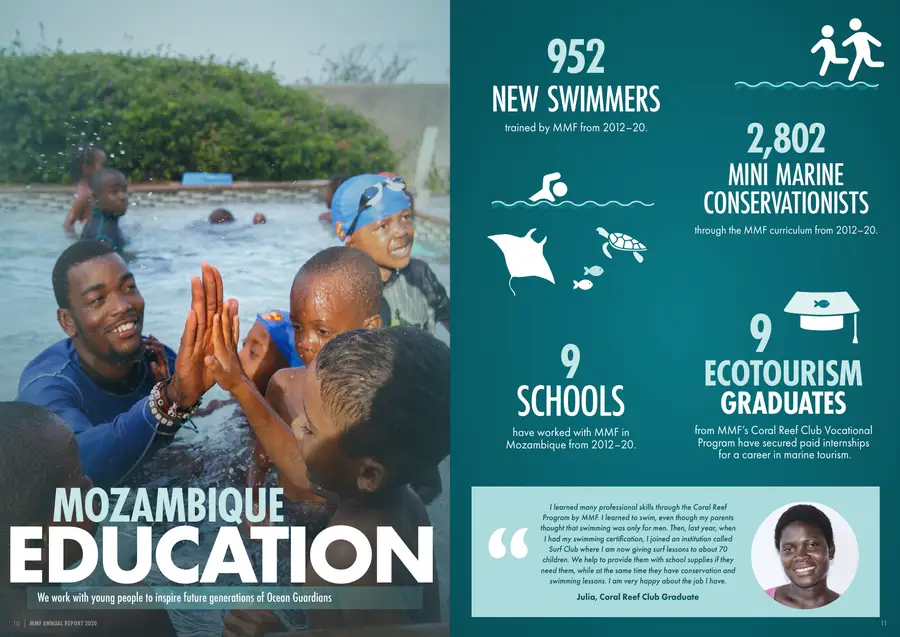
We work with young people to inspire future generations of Ocean Guardians
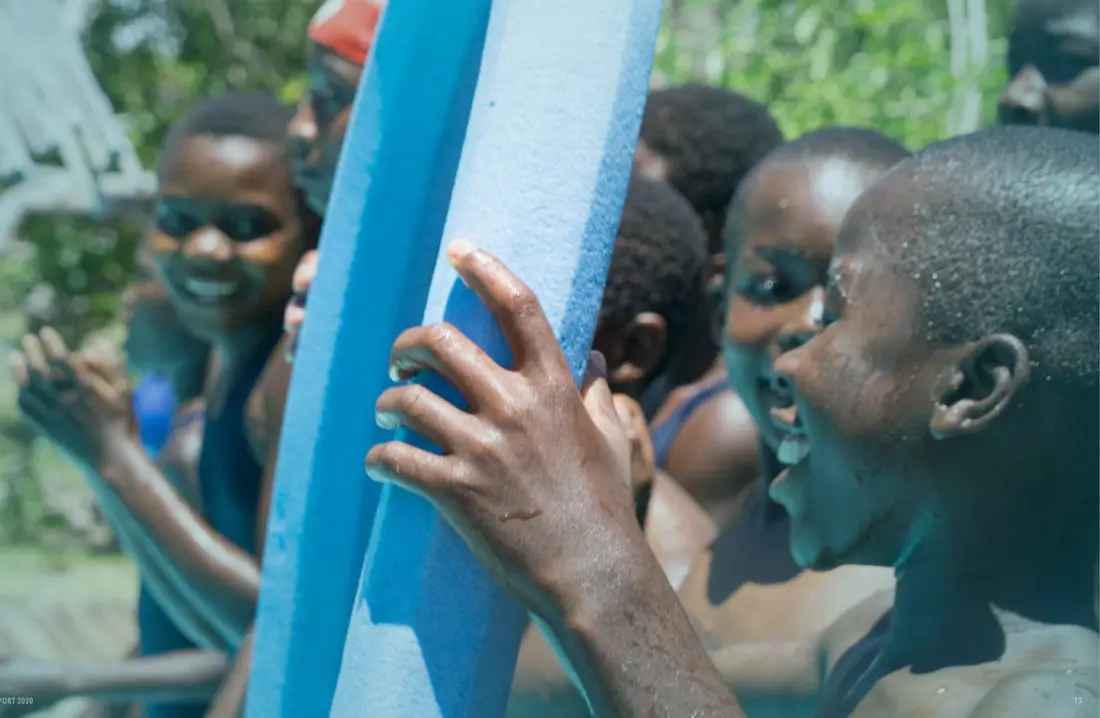
- 952New swimmers trained by MMF from 2012–20
- 2,802Mini marine conservationists through the MMF curriculum from 2012–20
- 9Schools have worked with MMF in Mozambique from 2012–20
- 9Ecotourism graduates from MMF’s Coral Reef Club Vocational Program have secured paid internships for a career in marine tourism
I learned many professional skills through the Coral Reef Program by MMF. I learned to swim, even though my parents thought that swimming was only for men. Then, last year, when I had my swimming certification, I joined an institution called Surf Club where I am now giving surf lessons to about 70 children. We help to provide them with school supplies if they need them, while at the same time they have conservation and swimming lessons. I am very happy about the job I have.
Whale shark research
Pages 14 to 17 of the report
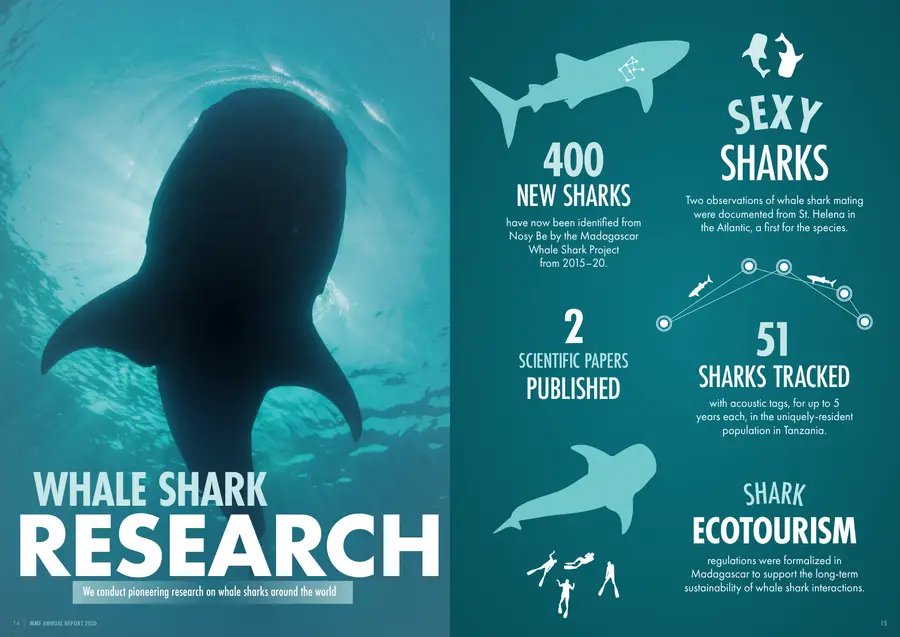
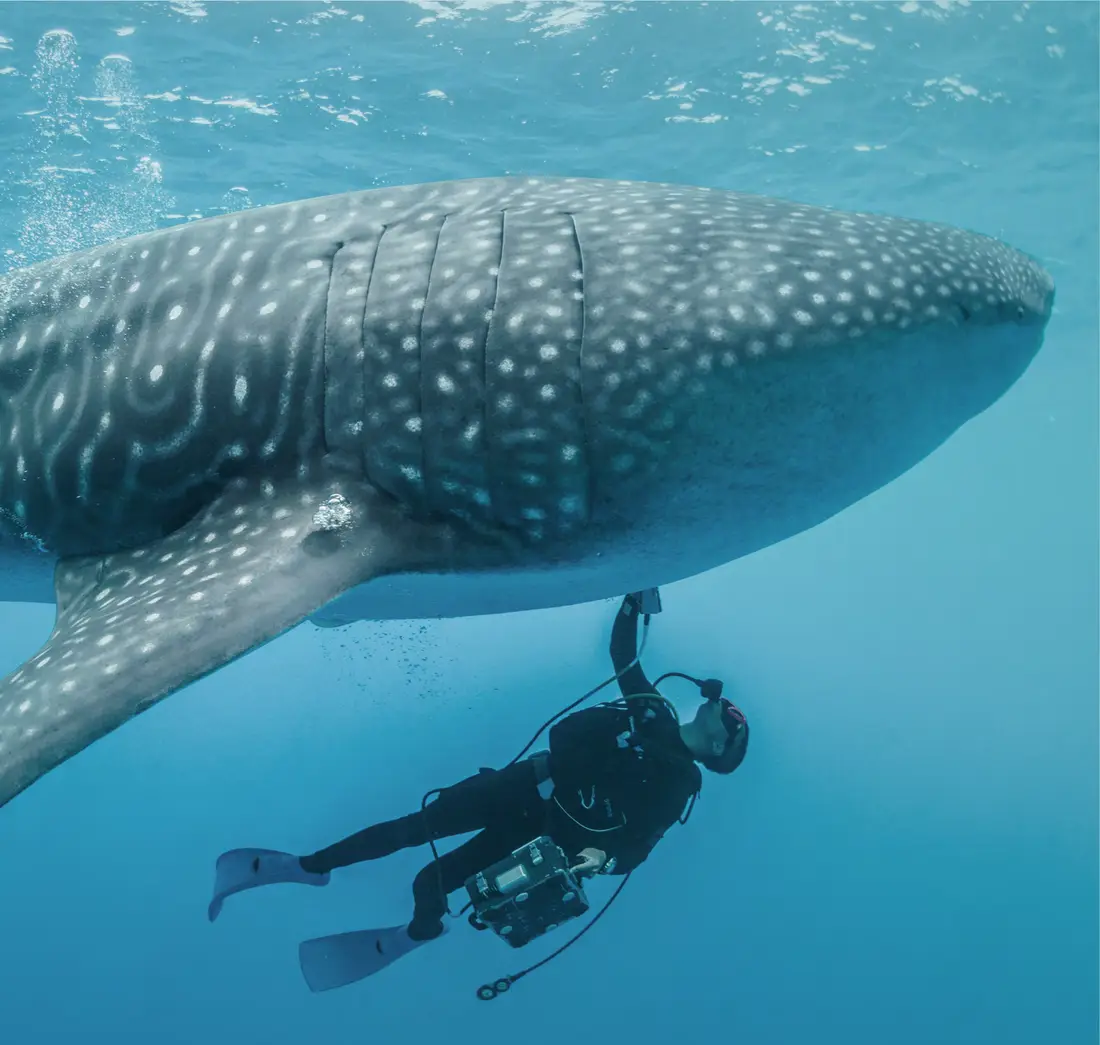
We conduct pioneering research on whale sharks around the world
- 400New sharks have now been identified from Nosy Be by the Madagascar Whale Shark Project from 2015–20
- 2Scientific papers published
- 51Sharks tracked with acoustic tags, for up to 5 years each, in the uniquely-resident population in Tanzania
Sexy sharks
Two observations of whale shark mating were documented from St. Helena in the Atlantic, a first for the species.
Shark ecotourism regulations were formalized in Madagascar to support the long-term sustainability of whale shark interactions.
Manta ray research
Pages 18 to 21 of the report
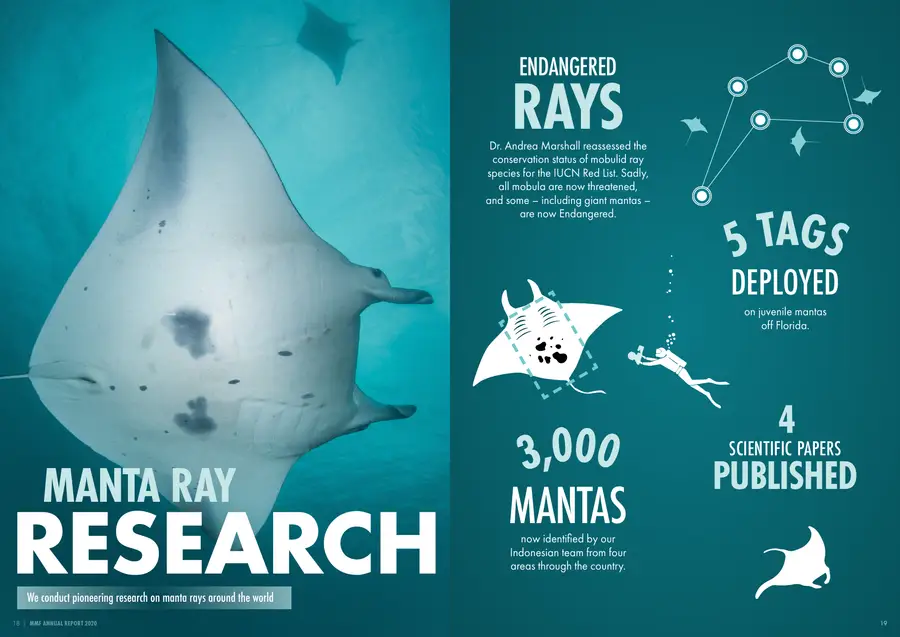
We conduct pioneering research on manta rays around the world
Endangered rays
Dr. Andrea Marshall reassessed the conservation status of mobulid ray species for the IUCN Red List. Sadly, all mobula are now threatened, and some (including giant mantas) are now Endangered.
- 5Tags deployed on juvenile mantas off Florida
- 3,000Mantas now identified by our Indonesian team from four areas through the country
- 4Scientific papers published
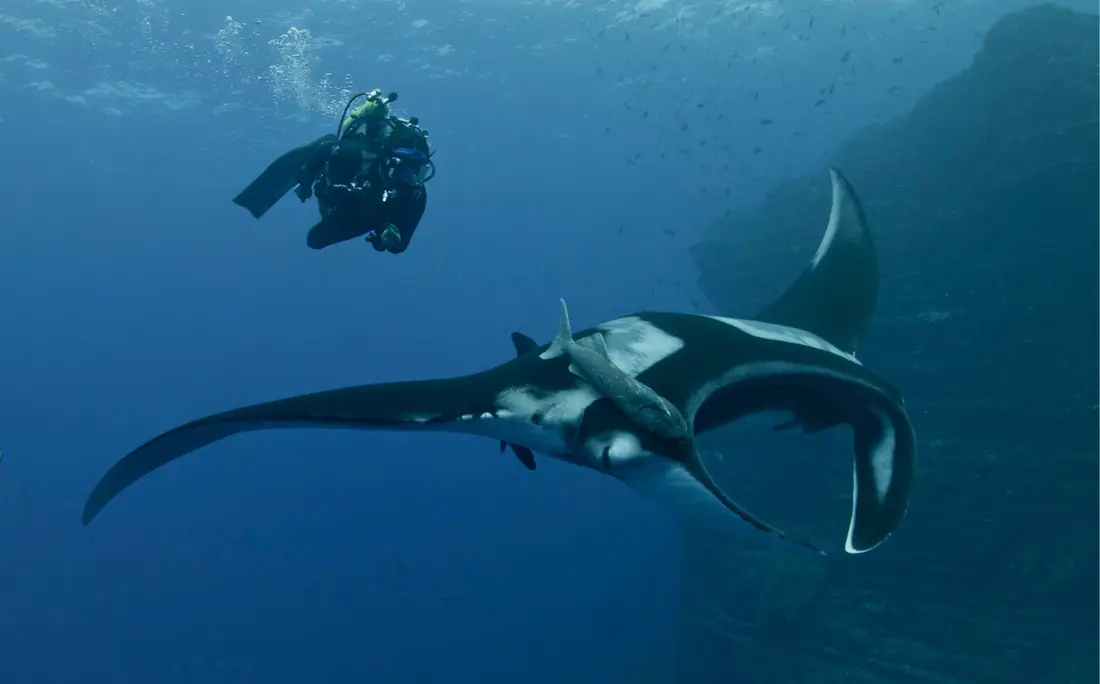
Research in Mozambique
Pages 22 to 25 of the report
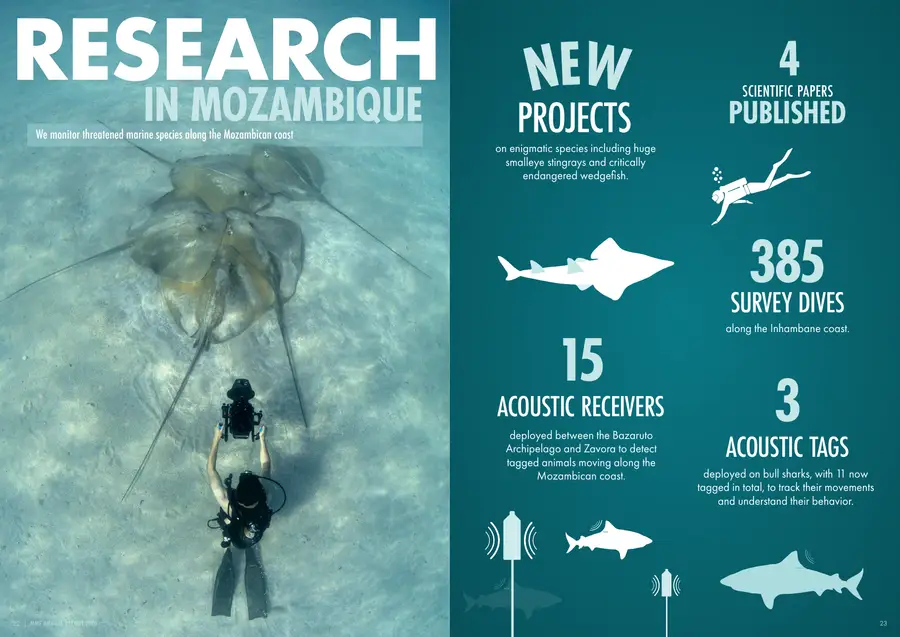
We monitor threatened marine species along the Mozambican coast
New projects on enigmatic species including huge smalleye stingrays and critically endangered wedgefish.
- 4Scientific papers published
- 385Survey dives along the Inhambane coast
- 15Acoustic receivers deployed between the Bazaruto Archipelago and Zavora to detect tagged animals moving along the Mozambican coast
- 3Acoustic tags deployed on bull sharks, with 11 now tagged in total, to track their movements and understand their behavior
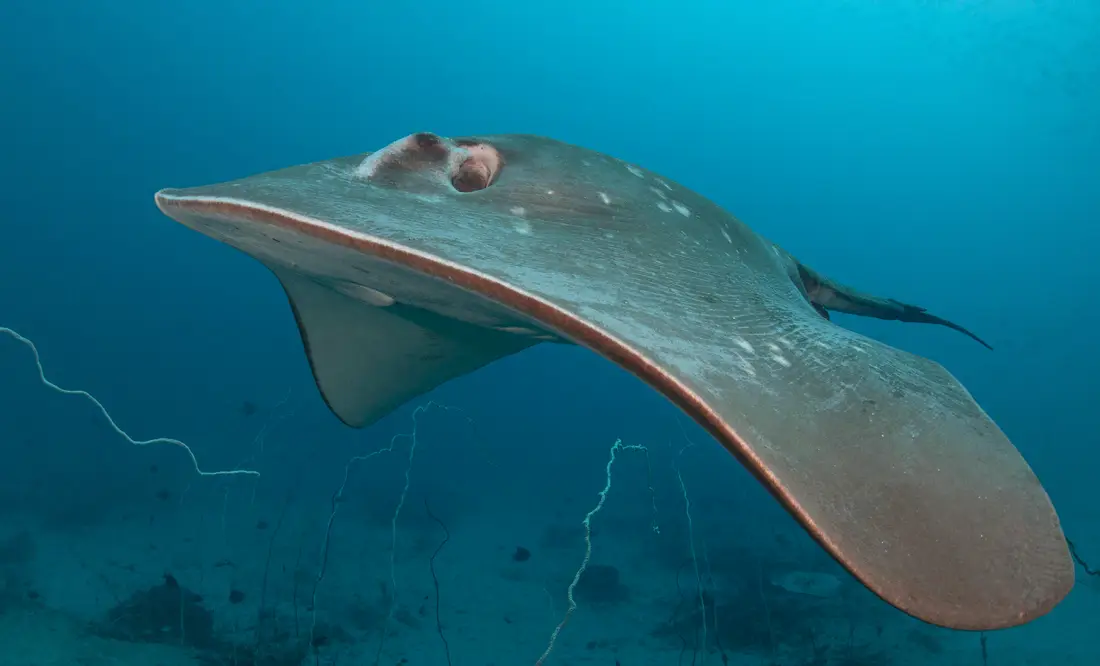
Research output
Pages 26 to 29 of the report
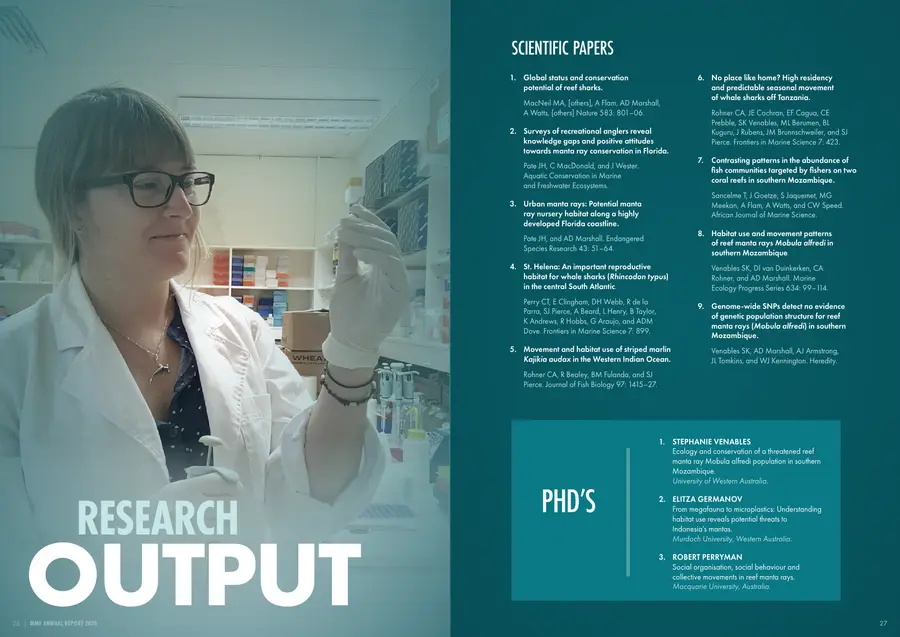
Dr. Elitza Germanov was awarded a PhD in 2020 for her world-leading research on the impacts of microplastics on threatened marine species. Caption on page 28.
Scientific papers
- Global status and conservation potential of reef sharks. MacNeil MA, [others], A Flam, AD Marshall, A Watts, [others] Nature 583: 801–06. doi.org/10.1038/s41586-020-2519-y
- Surveys of recreational anglers reveal knowledge gaps and positive attitudes towards manta ray conservation in Florida. Pate JH, C MacDonald, and J Wester. Aquatic Conservation in Marine and Freshwater Ecosystems. doi.org/10.1002/aqc.3508
- Urban manta rays: Potential manta ray nursery habitat along a highly developed Florida coastline. Pate JH, and AD Marshall. Endangered Species Research 43: 51–64. doi.org/10.3354/esr01054
- St. Helena: An important reproductive habitat for whale sharks (Rhincodon typus) in the central South Atlantic. Perry CT, E Clingham, DH Webb, R de la Parra, SJ Pierce, A Beard, L Henry, B Taylor, K Andrews, R Hobbs, G Araujo, and ADM Dove. Frontiers in Marine Science 7: 899. doi.org/10.3389/fmars.2020.576343
- Movement and habitat use of striped marlin Kajikia audax in the Western Indian Ocean. Rohner CA, R Bealey, BM Fulanda, and SJ Pierce. Journal of Fish Biology 97: 1415–27. doi.org/10.1111/jfb.14508
- No place like home? High residency and predictable seasonal movement of whale sharks off Tanzania. Rohner CA, JE Cochran, EF Cagua, CE Prebble, SK Venables, ML Berumen, BL Kuguru, J Rubens, JM Brunnschweiler, and SJ Pierce. Frontiers in Marine Science 7: 423. doi.org/10.3389/fmars.2020.00423
- Contrasting patterns in the abundance of fish communities targeted by fishers on two coral reefs in southern Mozambique. Sancelme T, J Goetze, S Jaquemet, MG Meekan, A Flam, A Watts, and CW Speed. African Journal of Marine Science. doi.org/10.2989/1814232x.2020.1731597
- Habitat use and movement patterns of reef manta rays Mobula alfredi in southern Mozambique. Venables SK, DI van Duinkerken, CA Rohner, and AD Marshall. Marine Ecology Progress Series 634: 99–114. doi.org/10.3354/meps13178
- Genome-wide SNPs detect no evidence of genetic population structure for reef manta rays (Mobula alfredi) in southern Mozambique. Venables SK, AD Marshall, AJ Armstrong, JL Tomkins, and WJ Kennington. Heredity. doi.org/10.1038/s41437-020-00373-x
PhD’s
- Stephanie Venables: Ecology and conservation of a threatened reef manta ray Mobula alfredi population in southern Mozambique. University of Western Australia.
- Elitza Germanov: From megafauna to microplastics: Understanding habitat use reveals potential threats to Indonesia’s mantas. Murdoch University, Western Australia.
- Robert Perryman: Social organisation, social behaviour and collective movements in reef manta rays. Macquarie University, Australia.
Highlighting outreach
Pages 30 to 31 of the report
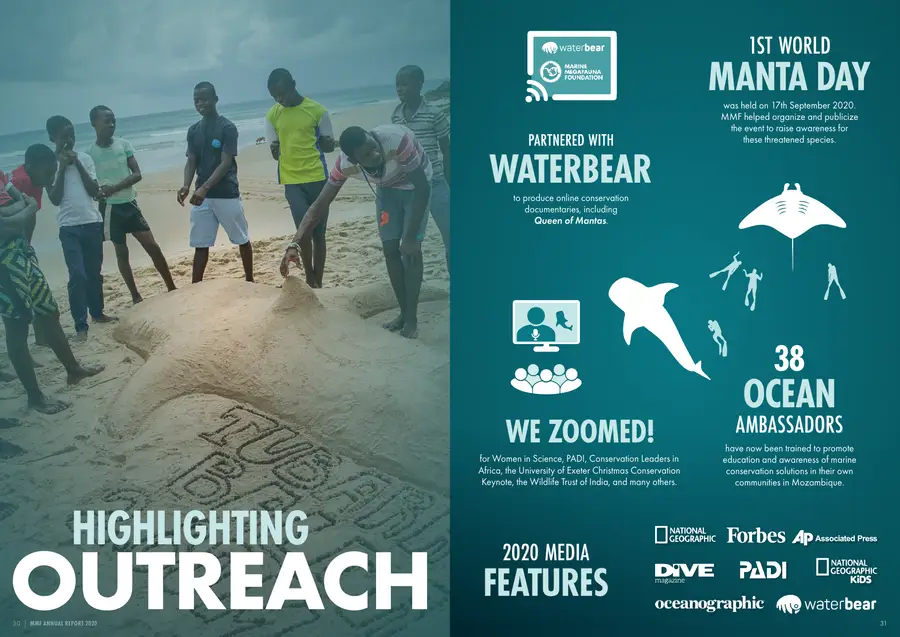
Partnered with Waterbear to produce online conservation documentaries, including Queen of Mantas.
1st World Manta Day was held on 17th September 2020. MMF helped organize and publicize the event to raise awareness for these threatened species.
We zoomed!
For Women in Science, PADI, Conservation Leaders in Africa, the University of Exeter Christmas Conservation Keynote, the Wildlife Trust of India, and many others.
- 38Ocean ambassadors have now been trained to promote education and awareness of marine conservation solutions in their own communities in Mozambique
2020 media features
- National Geographic
- Forbes
- Associated Press
- DIVE Magazine
- PADI
- National Geographic Kids
- Oceanographic
- Waterbear
Financial summary
Pages 32 to 33 of the report
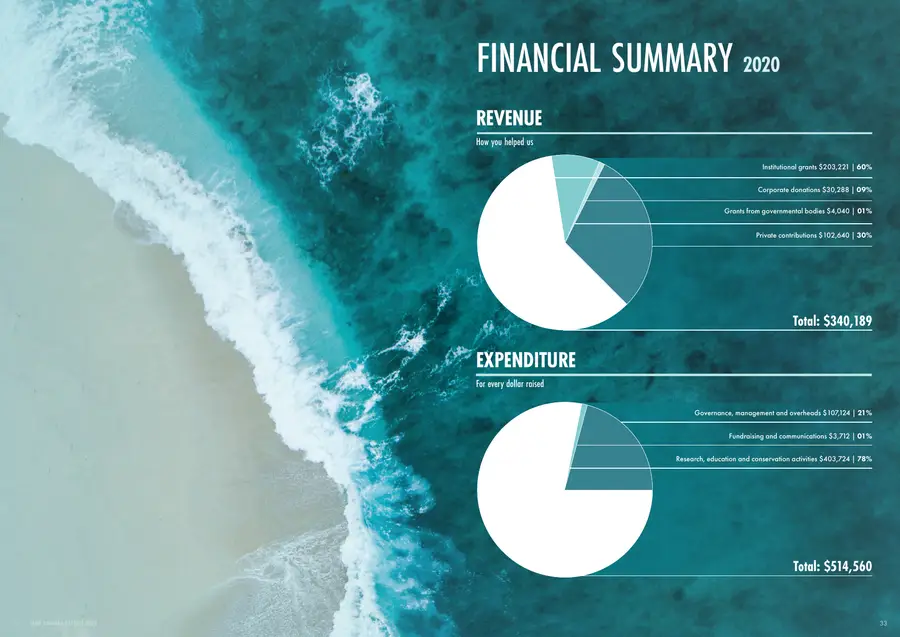
| 2020 | Share | |
|---|---|---|
| Institutional grants | $203,221 | 60% |
| Corporate donations | $30,288 | 09% |
| Grants from governmental bodies | $4,040 | 01% |
| Private contributions | $102,640 | 30% |
| Total | $340,189 |
| 2020 | Share | |
|---|---|---|
| Governance, management and overheads | $107,124 | 21% |
| Fundraising and communications | $3,712 | 01% |
| Research, education and conservation activities | $403,724 | 78% |
| Total | $514,560 |
Special thanks
Pages 34 to 35 of the report
Your help and support through a challenging year has meant we could keep researching threatened ocean giants, training the next generation of conservationists, and protecting marine ecosystems. Our work would not be possible without you. Thank you, so much.
Donors & funders
- Andrea Scheuerer, Help for Mozambique
- Aqua-Firma
- Blue Action Fund
- Bournemouth University
- Conservation, Food & Health Foundation
- CSIRO Australia
- David & Carol Myers Foundation
- Detour Sunglasses
- Disney Conservation Fund
- Elasmocean
- Elstad Family Charitable Fund
- European Outdoor Conservation Associatoon
- Fondation Prince Albert II de Monaco
- Fortuna Foundation
- Fondation Ensemble
- Georgia Aquarium
- Global Youth Climate Network
- Idea Wild
- Innovators for the Future
- Izele Small Grant Scheme
- Kansas City Zoo
- Magdakine Swimwear
- Mantahari Oceancare (Tim Noack)
- Marion Charity Fund
- Meraki Bracelets
- Milkywire
- Mohammed Bin Zayad Species Conservation Fund
- National Marine Aquarium
- Ocean Park Conservation Foundation
- Ocean Wildlife Project e.V.
- Optik Tannek
- Our Children’s Earth Foundation (Tiffany & Ivy)
- PADI Foundation
- Planeterra
- Ray of Hope Expeditions
- Robson & Robertson Foundation
- San Francisco Foundation
- Scuba Pro France
- Scuba Pro South Africa
- Sea Morgens
- Seaquelle Swimwear
- Shark Conservation Fund
- Shark Foundation
- SharkProject International
- Stanley Foundation
- Sustainable Ocean Alliance
- Töpfer GmbH
- Turing Foundation
- US Ambassador’s Special Self-Help Fund (SSH)
- Waterbear
- Waterlust
- Windrush Trust
- Zoomarine
Supporters
- Albatroz
- Bahia Mar
- Baia Sonambula
- Big Blue Vilanculos
- Big Fish Diving
- Blue Corner Dive
- Casa de Comer
- Casa na Praia
- Coralia Liveaboard
- Dathonga
- Diversity Diving
- Hotel Tofo Mar
- Liquid Dive Adventures
- Mozambeat Motel
- Papua Explorers
- Peri Peri Divers
- Pestana Bazaruto
- Scuba Junkie
- Tofo Scuba
- Uber Scuba
- Vilanculos Beach Lodge
- Whale Shark Lodge, Mafia Island
- World Diving
- Zavora Lodge
The report also thanks individual supporters by name; that list is in the PDF.
Healthy ecosystems are more resilient to climate change
Pages 36 to 37 of the report
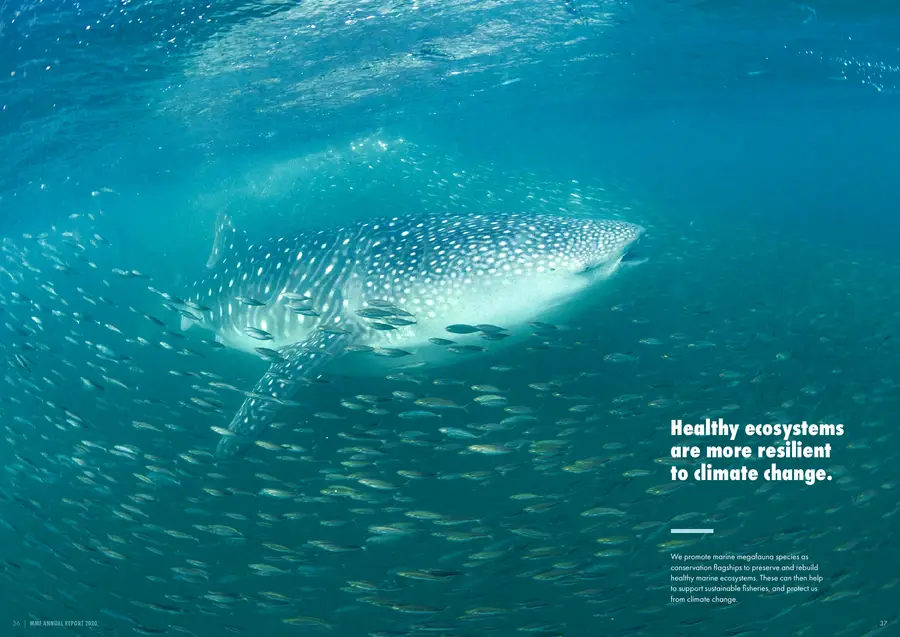
We promote marine megafauna species as conservation flagships to preserve and rebuild healthy marine ecosystems. These can then help to support sustainable fisheries, and protect us from climate change.
About this report
© Marine Megafauna Foundation, 2021
This report, along with other information about MMF, is available online at www.marinemegafauna.org
11260 Donner Pass Rd, #256 Truckee, CA 96161, USA
Centro de Investigação Científica Megafauna Marinha, Associação Megafauna Marinha, Praia do Tofo, Inhambane, Mozambique
MMF is a tax-exempt non-profit charitable organization under section 501(c)(3) of the US tax code (Tax ID #46-0645082).
All contributions are tax-deductible in accordance with US tax law.
The Associação Megafauna Marinha is also a registered not-for-profit association in Mozambique.