
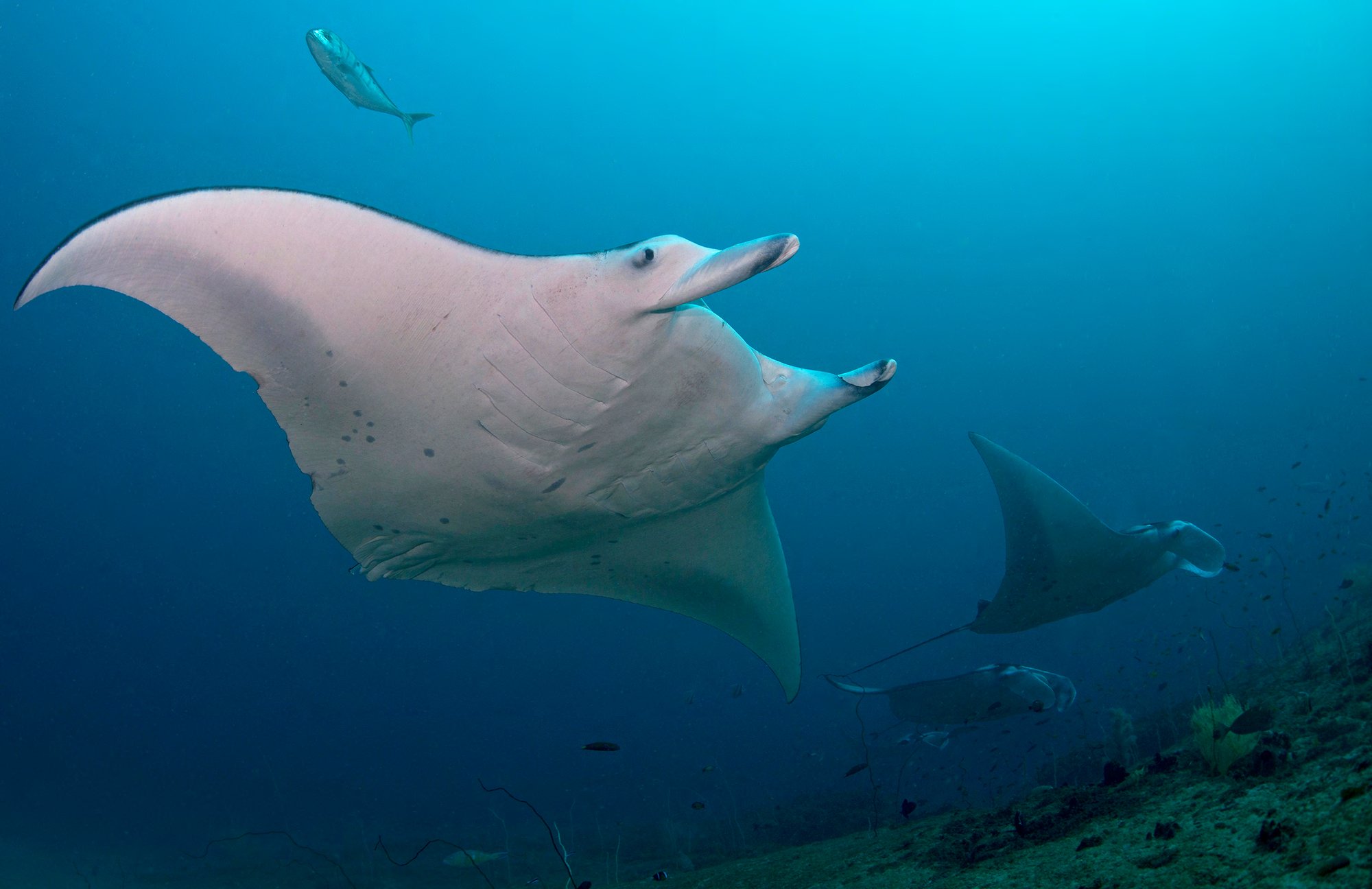
Investigating manta ray migrations using genomics.
By Dr. Stephanie Venables, Senior Scientist. Photography by Andrea Marshall and Lauren Peel.
Until recently, scientific studies on manta rays have focused on photo-identification and tagging to answer questions such as “how big is this population?” or “how far do individuals travel?” There’s good reason for that – these techniques are useful. However, both rely on us being able to study individual rays underwater. Recently, MMF has been developing new tools that enable us to ‘work remotely’ with far-flung manta populations.
Genetic and genomic techniques give us the means to investigate how manta populations are connected through time. For those of you who are new to these terms, genetics refers to the study of specific genes, which sometimes have a known function, within a species’ DNA. Genomics, which has become more popular as computational power has increased, is where we examine a much larger number of genes (we’re talking thousands here) throughout the genome.
Mantas in Mozambique
MMF scientists have been studying manta rays in Mozambique since Andrea Marshall started her PhD research on this population in 2003. The work that she and others have conducted with photo-ID and electronic tags has suggested that individual mantas usually prefer certain areas along the Mozambican coast, often not moving far over time. However, as reef manta rays are fast swimmers that are definitely capable of long-distance movements, we thought that this was a good topic to revisit using some of the latest genomic techniques. These give us insights into movements over generations of mantas, not just months or years in the lives of certain individuals.
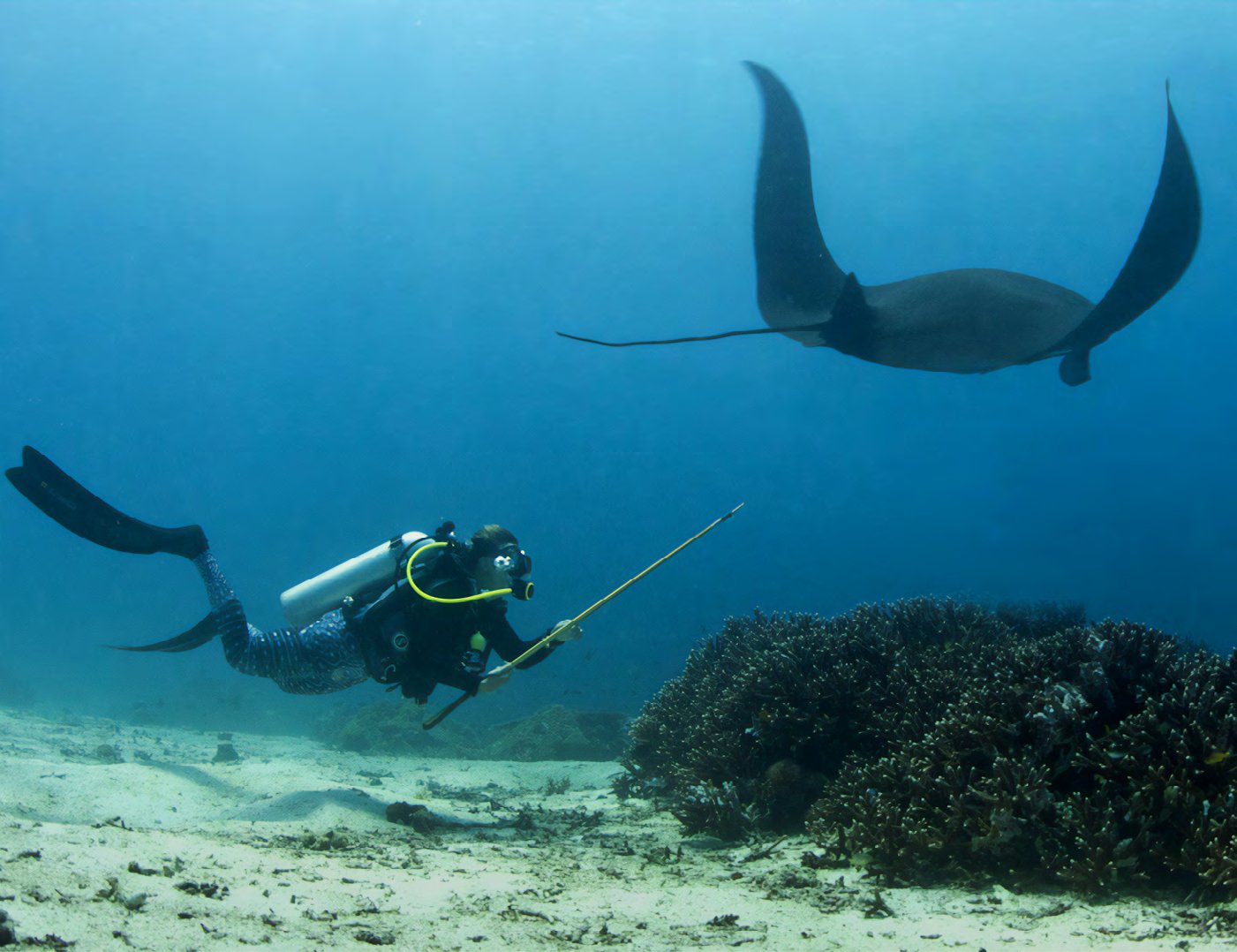
Tiny skin samples from 120 wild manta rays provided the DNA for the study.
Our research team collected tiny skin samples from 120 wild manta rays at different sites along the southeast African coast, from the Bazaruto Archipelago in Mozambique south to Port St Johns in South Africa. We extracted the DNA from these samples and sequenced thousands of genetic markers known as Single Nucleotide Polymorphisms (or simply, SNPs).
Our broad aim was to crunch this massive dataset to determine whether the mantas along this coast are a single breeding population. We found relatively low genetic variability between the individuals, even those found over 1,200 km apart, indicating that they all belong to the same population. The one manta ray sampled in South Africa was genetically linked to the larger Mozambican population.
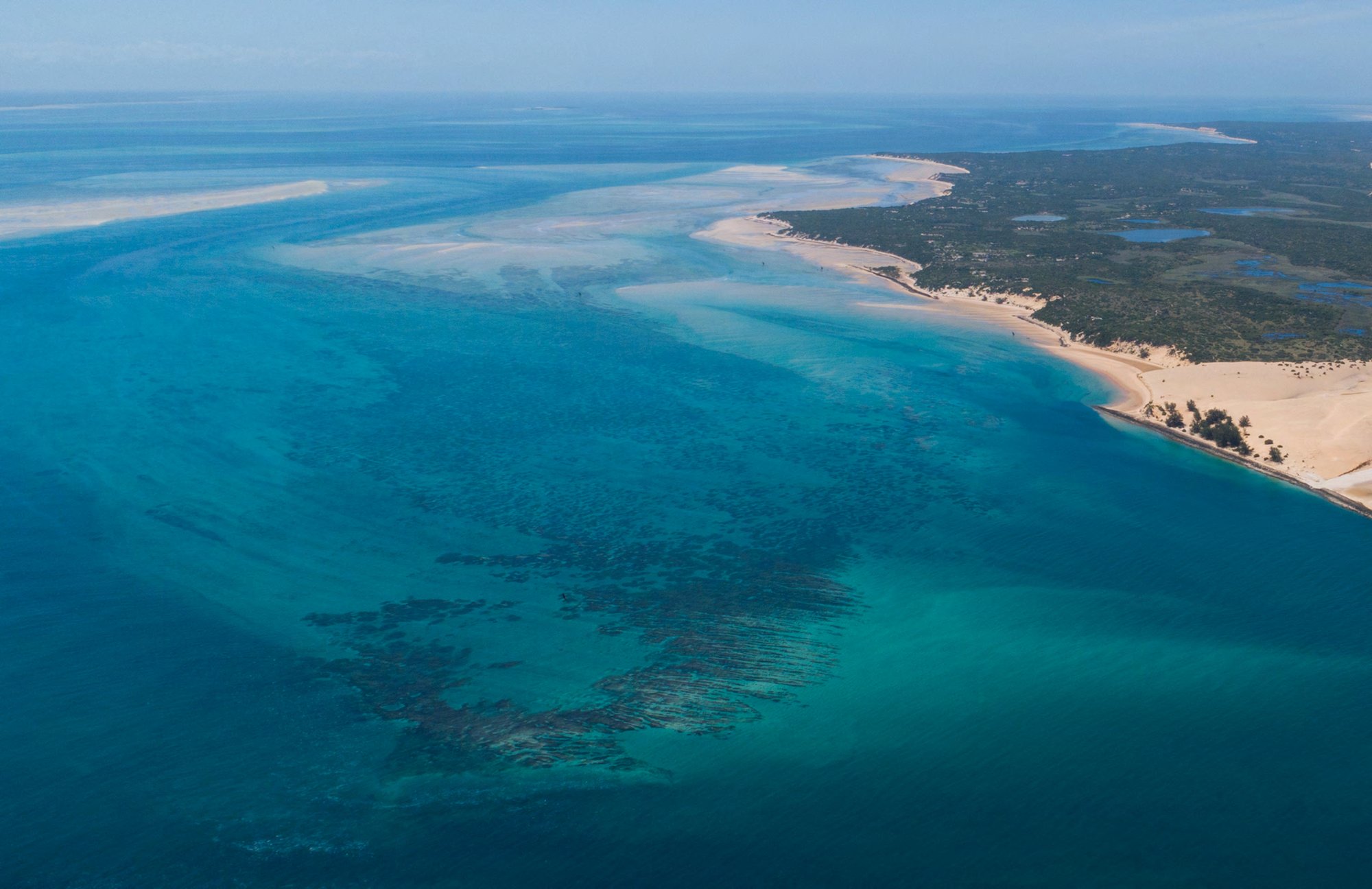
Mozambique and South Africa share manta rays along their contiguous coast.
International conservation
The resulting study was the first population-level genomics study on reef manta rays to be published in the scientific literature, and was also my favorite chapter from my PhD thesis! The implications of our findings are particularly important here in the Inhambane Province of Mozambique, where we have witnessed a decline in reef manta ray sightings of over 90%.
Andrea and the MMF team worked hard to get reef manta rays listed on the UN Convention for Migratory Species in 2014. This treaty provides a global platform for the conservation of migratory animals, on land or underwater, and provides a foundation for internationally coordinated conservation measures throughout a species’ migratory range. This study provides evidence that confirms Mozambique and South Africa share manta rays along their contiguous coast. A joint management plan will benefit both countries.

Reef manta ray sightings in Inhambane Province have declined by more than 90%.
How far do mantas swim?
The major decline of reef manta rays in Mozambique presents the scary scenario that the species could go completely extinct in the near future. Of course, that is far less likely if the manta rays can repopulate from other areas. To understand just how far these highly mobile rays might travel, we extended the study out to Western Australian reef manta rays, collaborating with our friends at Project Manta in Australia to analyze more manta genomes.
Turns out, the African mantas aren’t traveling Down Under – or vice versa. We found a high level of genetic differentiation between the two locations. Manta rays are not crossing the deep Indian Ocean basin. However, this non-result is useful information too.
Understanding broad-scale connectivity in the Indian Ocean gives us some insight into how reef manta rays are likely to be connected in other areas. In southeast Africa, mantas show high genetic connectivity along a continuous coastline, but limited gene flow across a large, deep body of water. In locations where genetic studies are yet to be completed, these results provide a useful starting point to guide protection measures. We can’t assume that local populations can be saved by mantas moving in from other areas, particularly where they are separated geographically.
Studies like this help us define what is known as management units – essentially drawing a line around distinct breeding populations, so they can each be treated separately. Like we do for electoral districts… but hopefully with fewer arguments. There’s a lot more work to do before we can allocate mantas to different populations within the Indian Ocean, but it’s great to have this paper out as a start towards that goal.
This article was originally published in Ocean Giants, MMF’s magazine, Issue #02 (May 2021). Download the full issue as a PDF. Read more about this work on our Mozambique manta rays project page.