
In 2025, 15 community fisheries inspectors from Tofo, Barra, and Rocha, in Mozambique’s Inhambane Province, were officially accredited. That gives them a recognized legal role in enforcing fishing rules along their coast. They patrol the beaches alongside the Coastal Police, 30 of whose officers were trained to identify protected marine species and apply the country’s fisheries law.
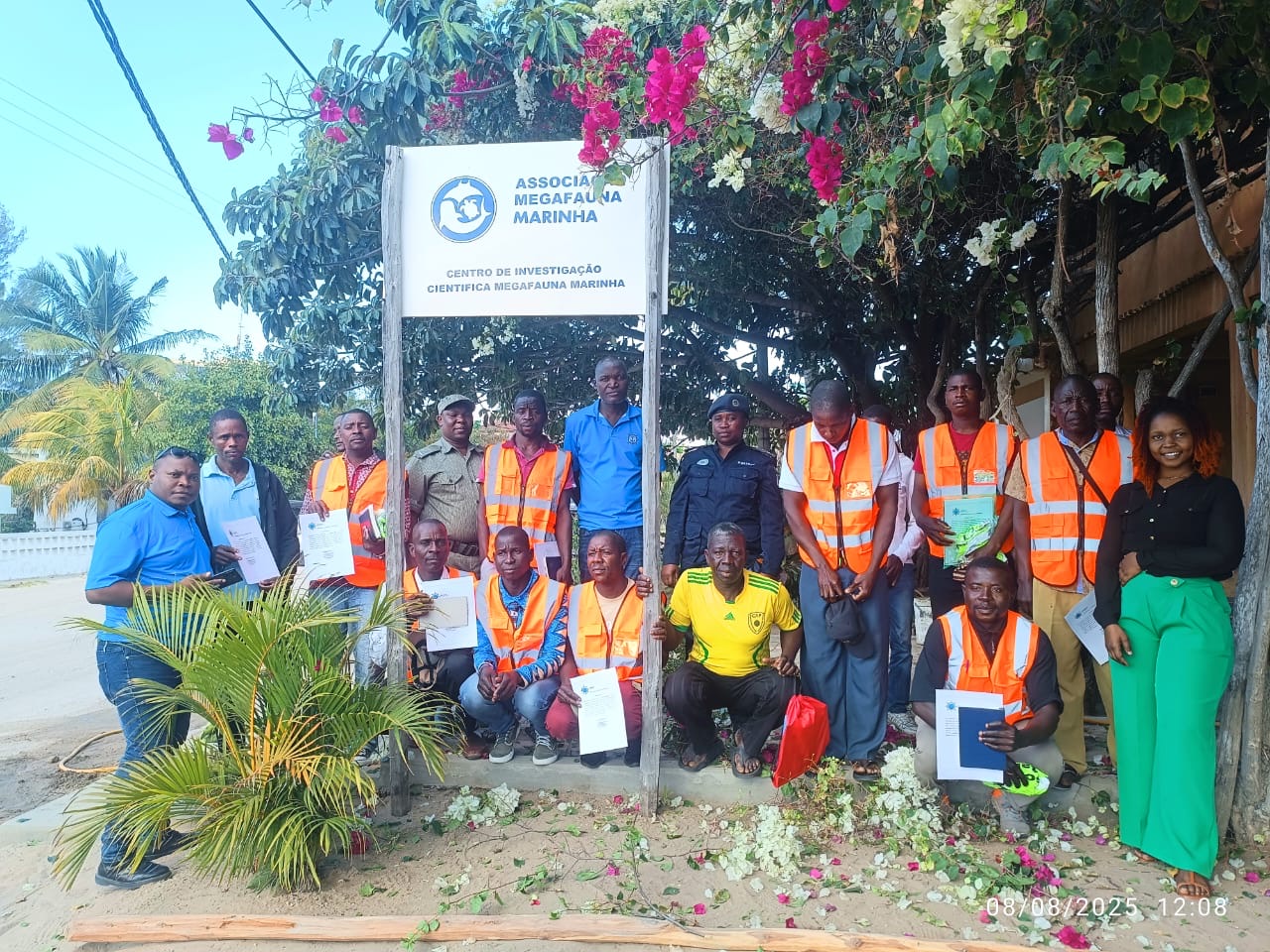
The accreditation session for community fisheries inspectors.
Police and communities, trained together
In 2025, MMF trained 30 officers of Mozambique’s Coastal, Lake and River Police (the Coastal Police). They learned to identify the marine species protected by law under Decree No. 89/2020 and to apply the country’s fisheries and environmental law. Fifteen inspectors from the Community Fisheries Councils of Tofo, Barra, and Rocha, the local councils that help manage fishing, took the same course. So did the president of the Union of Community Fisheries Councils. Training officers and community inspectors side by side supports a model in which communities and government manage local fishing together.
At the end of the course, participants were formally certified through a partnership with the Mozambique Oceanographic Institute. More than 53 people attended the event. They included representatives of the National Fisheries Administration, the National Institute for Fisheries and Aquaculture Development, and the Provincial Directorate of Agriculture and Fisheries. Several nongovernmental conservation organizations also took part.
MMF also equipped the Coastal Police, with particular support for the Tofo sub-station, and the 15 community inspectors for their patrols. The kit included identification guides and posters of legally protected species, high-power binoculars, megaphones, water canteens, clipboards, and notebooks. Laminated copies of the Marine and Fisheries Regulations let patrols check the law on the spot.
Officially accredited
The 15 community inspectors were officially accredited in partnership with the Maritime Administration, the District Services for Economic Activities, and the Coastal Police. Accreditation confirms their legal role in enforcing fishing rules along the coast, and makes looking after local fish stocks a responsibility the community shares.
By the end of 2025, the Coastal Police and the community inspectors were patrolling together in Tofo, Barra, and Rocha. They keep a closer watch on key fishing areas and the places where fishers bring their catch ashore.
A quad bike for the beach
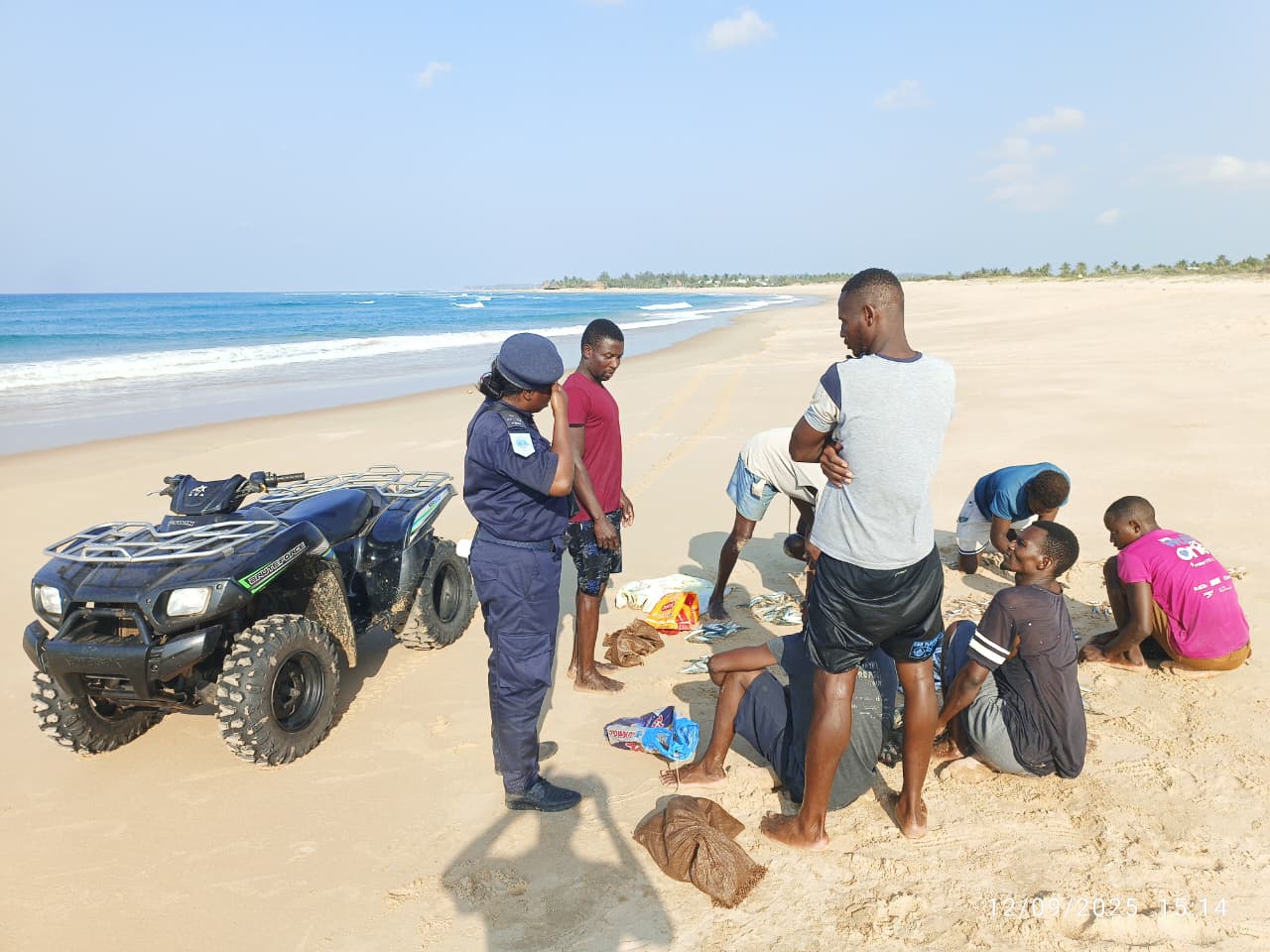
The Coastal Police in action.
MMF donated an all-terrain quad bike to the Tofo Coastal Police, along with 105 liters (28 gallons) of fuel in monthly allocations to keep patrols running. The bike reaches stretches of coast that were hard to get to before, and the Coastal Police can now respond quickly when something is reported.
It has already proved useful beyond patrols. During a shipwreck on Tofo Beach, the quad bike carried equipment and people for the rescue effort on land. Its towing capacity also lets the Coastal Police haul abandoned fishing nets and other illegal fishing gear off the coastline.
Signs where the catch comes ashore
Three posters showing protected marine species, including those fishers may not catch, were put up at the landing sites on Tofo, Barra, and Rocha beaches. They were installed in partnership with the Maritime Administration and the National Fisheries Administration, with the knowledge and endorsement of local leaders and the Community Fisheries Councils. Fishers and inspectors can check the rules right where the catch is landed.
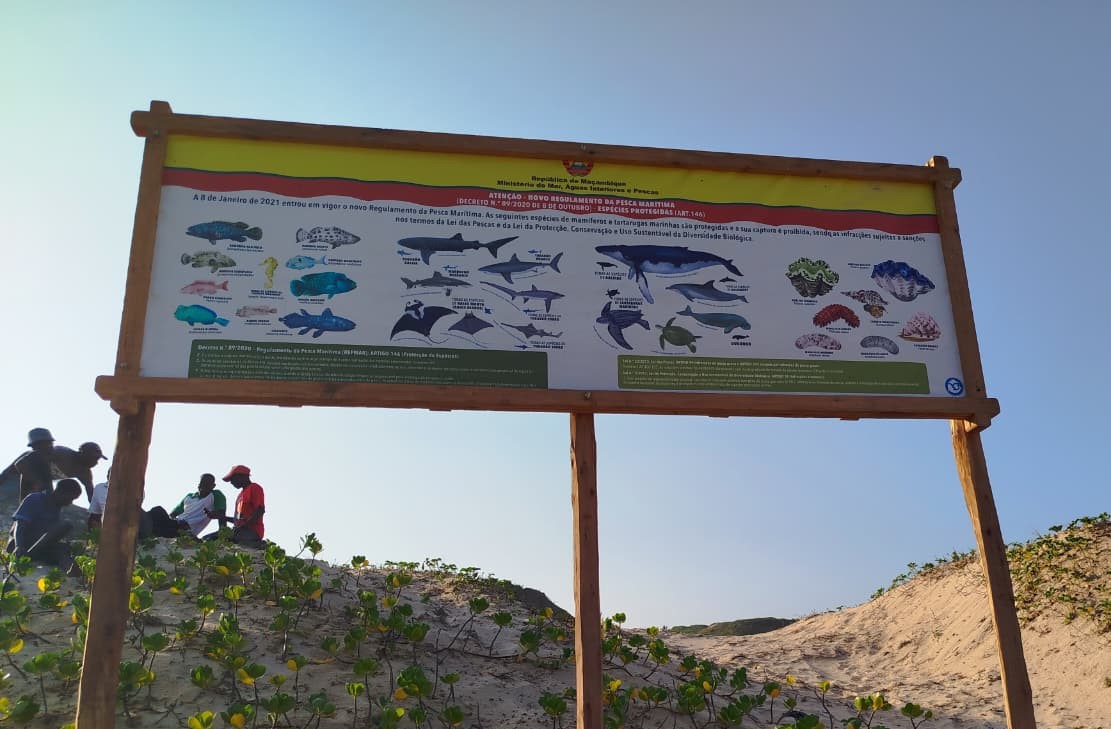
One of the new signs showing protected species where fishers land their catch.
This work is part of MMF’s Sustainable Seas program, which also supports new livelihoods for fishing families in the same communities. For more of the year’s highlights, see our 2025 recap.
Thank you to the Embassy of Ireland for supporting this work through the Sustainable Seas and Communities project.
To learn more, visit our Sustainable Seas page and our work in Mozambique, or make a donation to support community-led conservation in Mozambique.