
MOZAMBIQUE
SUSTAINABLE SEAS PROGRAM
OVERVIEW
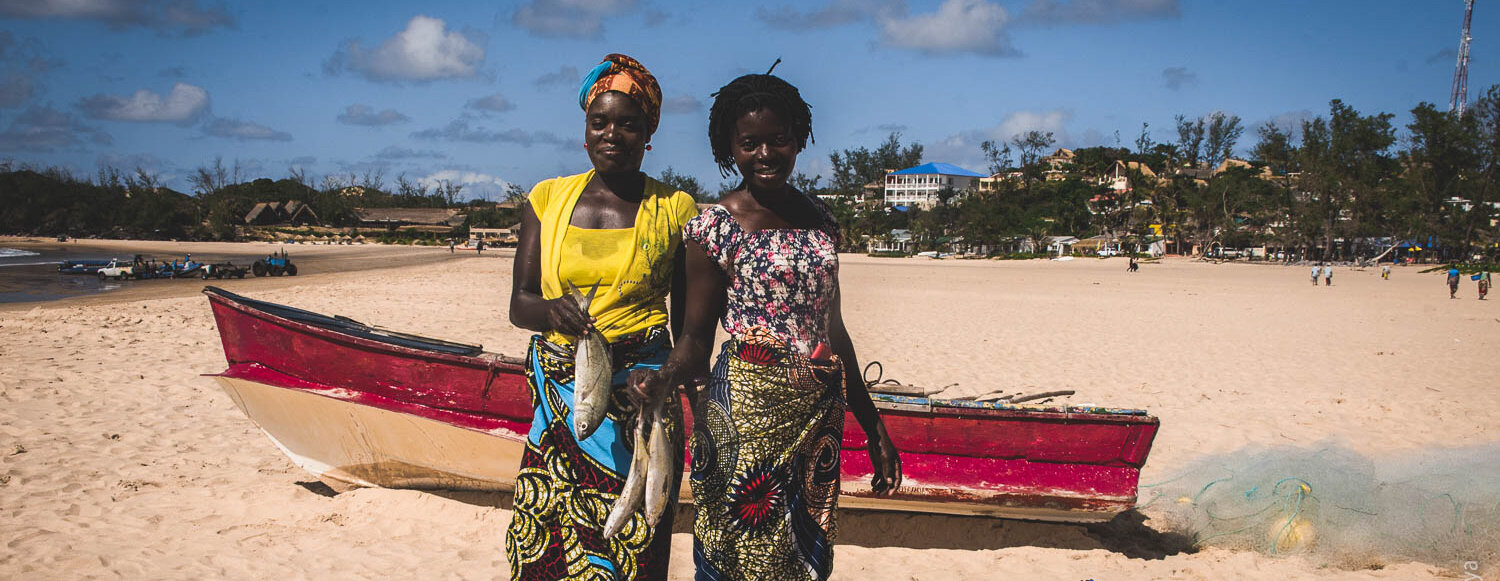
Sustainable Seas helps fishing communities on Mozambique’s Inhambane coast look after their own fishing grounds. Since 2015, MMF has worked with community fisheries councils, local leaders, and government partners to help families keep fishing while protecting threatened marine life.
Inhambane Province is a global hotspot for more than 30 threatened species of sharks and rays, including manta rays and whale sharks. Fishing supplies around 40% of the animal protein Mozambicans eat, and many coastal families depend on it. Communities themselves have raised concerns about gill nets set on reefs and in fish breeding areas. We train local conservation leaders and support community fisheries councils. We also work with fisheries authorities and help fishing families develop other sources of income. Today the program focuses on community education, helping fishers bring their concerns to government, and supporting fisheries enforcement.
KEY SUCCESSES TO DATE
-
90 Ocean Ambassadors, local conservation leaders working in seven communities across four coastal districts: Tofo, Barra and Rocha (Inhambane), Morrungulo (Massinga), Vuka and Fequete (Inhassoro) and, since 2025, Závora (Inharrime). In 2025 they gave 140 community talks, reaching 5,867 people, about 40% of them fishers, and collected 1,114.7 kilograms (2,457.5 pounds) of plastic waste from the beaches.
-
Communities and government around one table. The Ocean Ambassadors’ 2025 annual advocacy meeting in Inhambane City brought together more than 100 people, including provincial government partners, fishers, and community leaders, to discuss putting the rules for community-managed fishing areas into practice.
-
15 community fisheries inspectors accredited. In 2025, inspectors from the Community Fisheries Councils of Tofo, Barra, and Rocha were officially accredited in partnership with the Maritime Administration, the District Services for Economic Activities, and the Coastal Police. They trained alongside 30 Coastal Police officers in identifying protected marine species and applying fisheries law, and by the end of 2025 were patrolling the beaches together with the police.
-
Equipment for coastal patrols. We equipped the Coastal Police and the community inspectors and donated an all-terrain quad bike, with fuel, to the Tofo Coastal Police. Signs showing protected marine species now stand at the landing sites on Tofo, Barra, and Rocha beaches, installed with the Maritime Administration and the National Fisheries Administration.
-
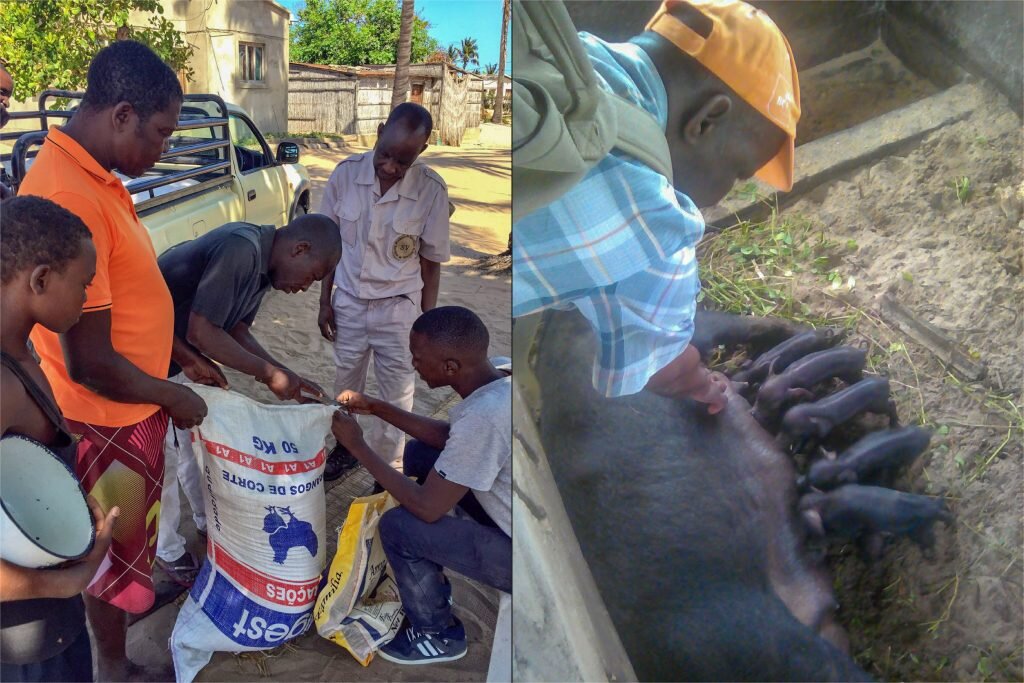
New livelihoods for 33 fishing families. In 2025 we set up a garden in Tofo that raises fish and vegetables together, supporting 11 families and the first of its kind in Inhambane District. An 800-square-meter (8,600-square-foot) greenhouse in Rocha supports 12 families, and an egg cooperative in Barra supports ten, with its hens laying more than 10,800 eggs in the last three months of 2025.
-
Saving together. At the end of 2025, 206 people were saving in 10 village savings and loan groups, 67% of them women, with accumulated savings of 1,237,265 meticais (Mozambique’s currency).
-
A community-managed reef closure in Barra. With government support, the Barra Community Fisheries Council closed a reef to fishing for six months, from August 2021 to February 2022.
-
A community center for Morrungulo. By the end of 2025, a new center for Ocean Ambassador talks, Ocean Guardians activities, and community meetings in Morrungulo was nearing completion.
MMF project team
- Martinho SaideProject leader
- Elton TivaneJunior Conservation Project Manager
- Joaquim dos SantosJunior Conservation Project Manager
- Avelino ChauAmbassador Program Manager – Tofo
- James PattersonField Specialist – Mozambique
With thanks to our supporters & partners
- Embassy of IrelandSupporter
- Prince Albert II of Monaco FoundationSupporter
- Fondation EnsembleSupporter
- Turing FoundationSupporter
- Born Free FoundationSupporter
From 2019 to 2022, WCS Mozambique provided technical support for monitoring and enforcement in the community-managed areas. Our government partners include the Maritime Administration, the National Fisheries Administration, the District Services for Economic Activities, and the Coastal Police.
With thanks to the Embassy of Ireland for supporting this work. We also thank the Prince Albert II of Monaco Foundation, Fondation Ensemble and Turing Foundation for supporting earlier phases, and the Born Free Foundation for funding the program’s first years.
SUPPORT THIS WORK
Support our work with fishing communities in Mozambique.
This work is made possible by the organizations above and by MMF’s individual donors and grant-makers, who fund the fieldwork, analysis and conservation action behind it. Thank you.
Partner with MMF →How the program works
Community-managed fishing areas
We work with Community Fisheries Councils, which represent local fishers, advise the provincial and national government, and help manage local fishing grounds. Mozambique’s 2020 fisheries regulations created a framework for community-managed fishing areas, including areas closed to fishing. We support the councils with training and meetings, have helped them with legal registration and exchange visits to other fishing communities, and help them work with district and provincial authorities. In Barra, the council closed a reef to fishing for six months in 2021 and 2022.
Ocean Ambassadors
Ocean Ambassadors are local conservation leaders, including fishers and council members. The program began with 12 ambassadors in 2017. They give talks in local languages, lead beach cleanups, take part in local radio programs, and bring community concerns to government meetings. Across our community programs, we aim for half of participants to be women.
Enforcement, with the authorities
We support training and provide equipment for community fisheries inspectors and Coastal Police officers. The inspectors were accredited in partnership with the Maritime Administration, the District Services for Economic Activities, and the Coastal Police, and by the end of 2025 inspectors and police were patrolling together in Tofo, Barra, and Rocha.
New livelihoods
Other sources of income help families rely less on fishing. Village savings and loan groups help families save and borrow. A garden raising fish and vegetables in Tofo, a greenhouse in Rocha, and an egg cooperative in Barra provide food and income, and we help young adults find vocational training for jobs beyond fishing.
WHERE WE WORK
The program works in seven communities in four districts of Inhambane Province: Tofo, Barra and Rocha (Inhambane District), Morrungulo (Massinga), Vuka and Fequete (Inhassoro) and, since 2025, Závora (Inharrime), where MMF also runs a research center. We also run our Ocean Guardians education program in several of these communities.
Read more in Genaye Domenico’s 2021 Ocean Giants article, Creating Ocean Ambassadors.
Follow our journey.
Get involved
Fund this project
MMF’s research and conservation work is funded by grants, partnerships and individual donors. Gifts made through this form support MMF’s research and conservation work, including this project.
To discuss a larger gift, a grant, or a corporate partnership for this project, email [email protected]. Find out more about philanthropy and corporate partnerships with MMF.
MMF is a registered 501(c)(3) non-profit in the USA. Donations are tax-deductible to the extent allowed by law.