In 2025, three new projects gave 33 fishing families in Mozambique’s Inhambane Province ways to earn a living on land. They are a fish-and-vegetable farm in Tofo, a greenhouse in Rocha, and an egg cooperative in Barra. Alongside them, 206 people, two-thirds of them women, are saving together in village savings and loan groups.
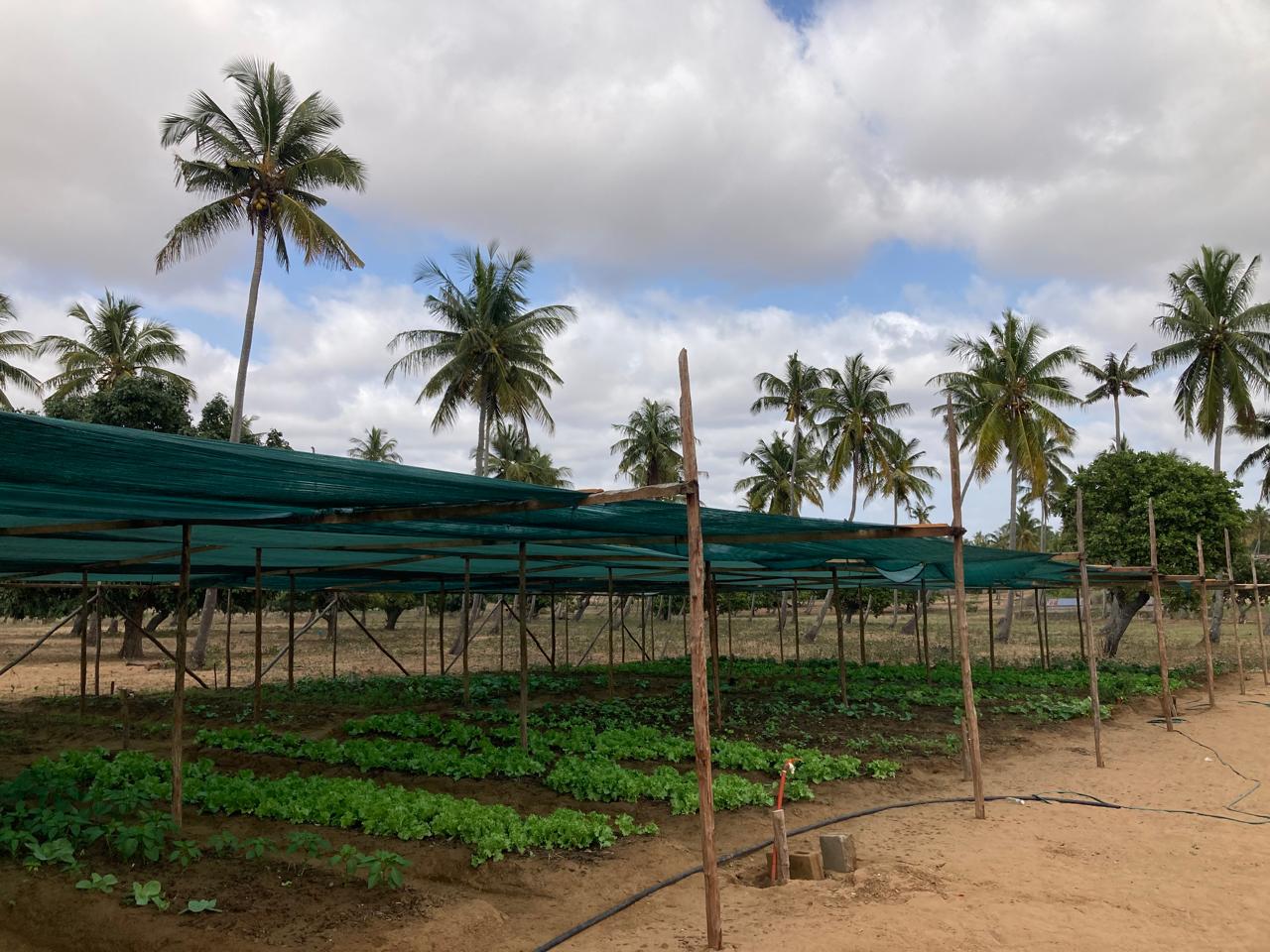
The community greenhouse in Rocha.
Why livelihoods matter for the ocean
Fish stocks can’t be protected without asking how the families who depend on them will earn a living. Along this coast, households rely almost entirely on small-scale fishing. As marine resources decline and fishing grounds are fished too heavily, those families become more vulnerable, and the pressure on the ocean grows with them. A second income on land can ease that pressure and help families move, step by step, toward more reliable ways to earn a living.
In 2025, MMF’s Sustainable Seas program set up three projects with fishing families in Tofo, Barra, and Rocha. Together they benefit 33 families.
Fish and vegetables in Tofo
In Tofo, an aquaponic garden raises fish and vegetables together in a single system, the first of its kind in Inhambane District. Eleven families run it. About 90% of these households are led by women.
The system was stocked with 1,000 fish and is expected to produce about 150 kilograms (330 pounds) of fish. The vegetable side had a slower start, as nutrient shortages held back crop growth, so the team adjusted the system and brought in more specialist support. District government agencies have been invited to provide ongoing technical advice, and the families have been trained to run the system day to day.
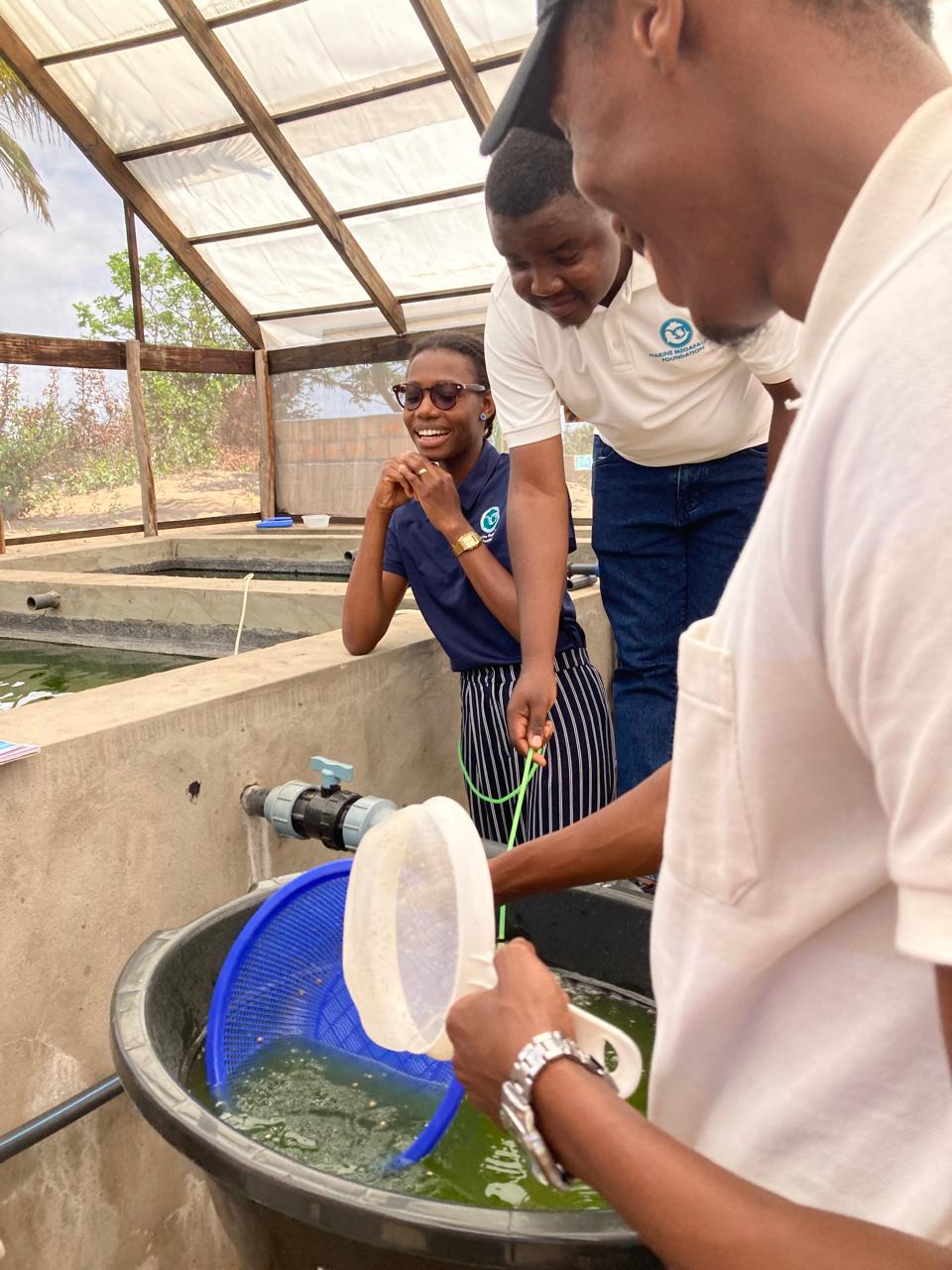
The fish-and-vegetable garden in Tofo.
A year-round greenhouse in Rocha
In Rocha, 12 fishing families grow vegetables in an 800-square-meter (8,600-square-foot) greenhouse with 32 planting beds. Growing under cover means crops can be produced all year, with the aim of giving the families a steadier, more predictable income. As a trial, the greenhouse is testing a range of crops, from lettuce, carrots, and tomatoes to peppers, eggplant, and banana plants, to find the ones that sell best locally.
MMF provided the watering system, tools, and a well with a raised water tank. That water also serves the families’ homes, a primary school, and a health center when they need it. Electricity was close to being connected at the end of 2025. It will also serve neighboring communities and the Community Fisheries Councils, which help manage local fishing.
An egg cooperative in Barra
In Barra, 10 fishing families run an egg cooperative together. Its permanent concrete henhouse has two sections for the hens and one for storing feed and eggs. The 120 laying hens are expected to produce more than 64,800 eggs over their laying life. In the last three months of 2025 alone, they laid more than 10,800 eggs.
Egg sales earned about 95,000 meticais (Mozambique’s currency) after paying for feed and veterinary care and setting money aside to replace the flock. That profit was shared among the 10 families. The families manage the cooperative themselves, with technical support from MMF. Their own written rules set out how it is run, how the money is accounted for, and how benefits are shared. The project is also bringing a well and electricity that will serve the Barra Community Fisheries Council and the surrounding community.
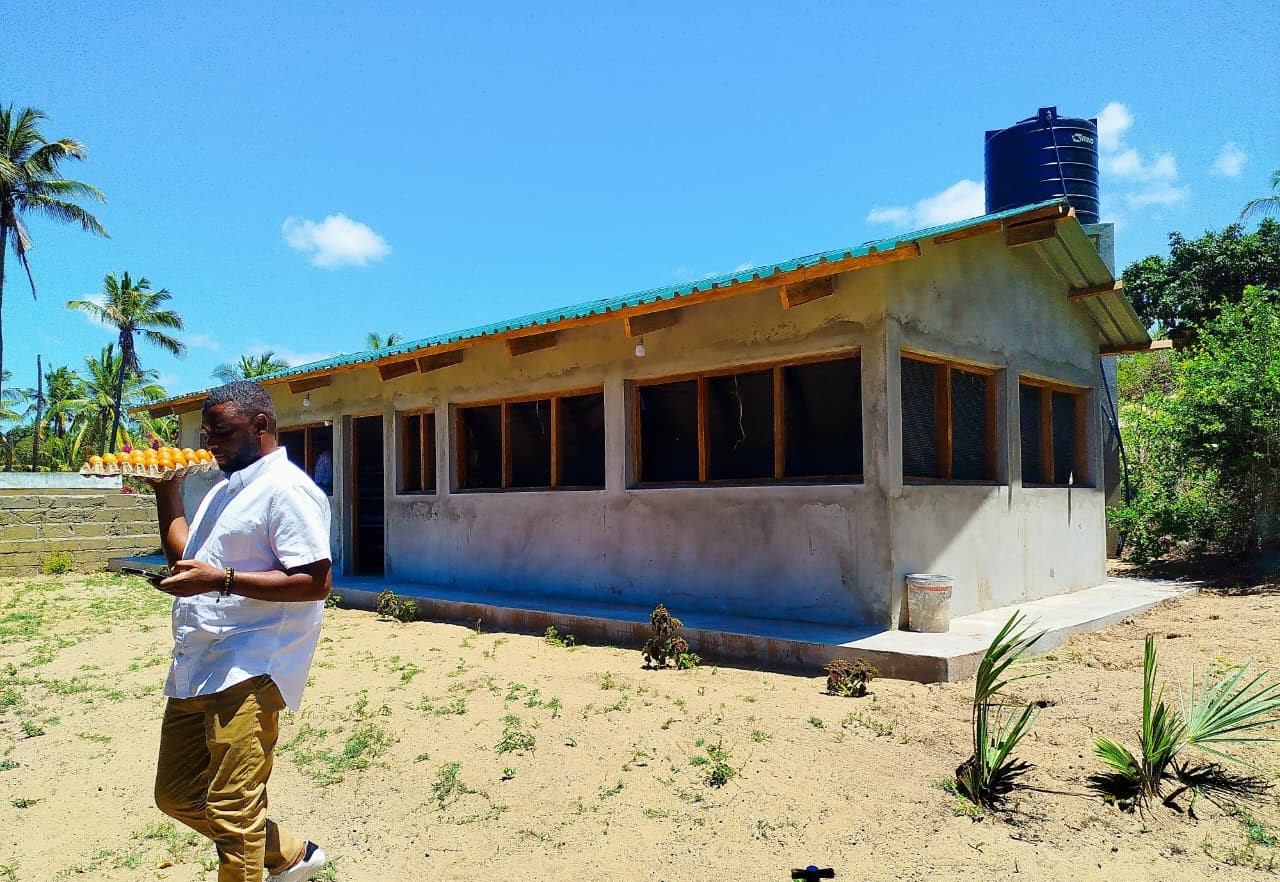
The egg cooperative’s henhouse in Barra.
Saving together
In village savings and loan groups, members pool their savings, manage the money as a group, and can borrow from it. At the end of 2025, MMF supported 10 groups with 206 active members, 67% of them women. Their accumulated savings had reached 1,237,265 meticais.
In Barra, the Gwapanana group was revived and had 12 members at the end of 2025, all of them Ocean Ambassadors, community conservation leaders trained by MMF. When another group, Unidos Somos Pescadores (“United We Are Fishers”), closed, it shared 550,110 meticais in savings among its members.
These projects sit alongside MMF’s work with fishing families elsewhere on the coast, such as the community farm at Nhamanhate near the Bazaruto Archipelago. The same Sustainable Seas program also trains and equips community fisheries inspectors in Tofo, Barra, and Rocha.
Thank you to the Embassy of Ireland for supporting this work through the Sustainable Seas and Communities project.
To learn more, visit our Sustainable Seas page and our work in Mozambique, or make a donation to support fishing families and the ocean they depend on.