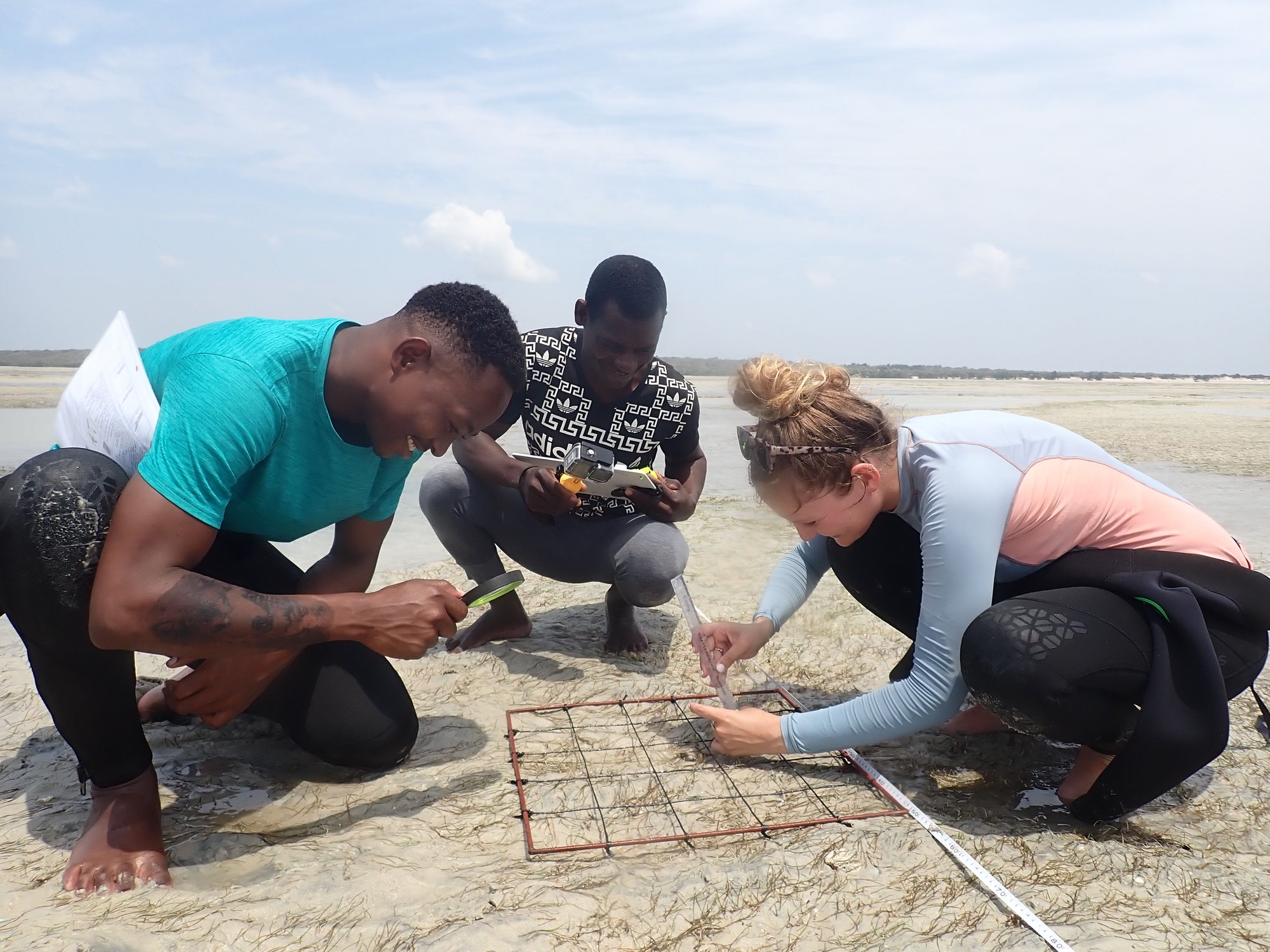
A Seagrass-Watch survey team measures and photographs seagrass cover in the shallows of the Bazaruto Seascape. Photo: Marine Megafauna Foundation
By Anne Paylor
In the shallow seagrass meadows of Mozambique’s Bazaruto archipelago region lives East Africa’s last viable population of dugongs – large, gentle marine mammals often known as “sea cows.” Entirely dependent on healthy seagrass ecosystems, these elusive animals are increasingly under threat as their habitats come under pressure. Now, a community-driven initiative led by the Marine Megafauna Foundation (MMF) is helping to secure their future, while also supporting local fishing communities to develop more sustainable livelihoods.
Coastal development, climate change, and destructive fishing practices are all contributing to the destruction of seagrass habitats, with severe weather events eroding coastal sand dunes and burying seagrass beds. But not only is erosion of seagrass flats threatening the dugongs, it is also contributing to the depletion of fish stocks on which the local fishers have traditionally depended to feed their families.
This is forcing fishing communities to take their small boats further out to sea, risking what can often be dangerous conditions in their hunt for fish.
In the absence of viable alternatives, many fishers rely on drag- and gill-nets – methods that are restricted along much of Mozambique’s coastline for several months each year and can harm the fragile marine ecosystems they rely on, for many rural households they remain one of the only ways to secure a daily catch.
Drag nets are hauled through the shallows from the beach to sweep up fish, while gill nets are set in the water column to trap fish by their gills. However, these methods are far from surgical; they frequently ensnare non-target species. Local communities report that air breathing animals, such as turtles and dugongs, often become entangled and drown before the nets are retrieved. Even more critical is the impact on wedgefish – rare, shark-like rays that are now among the most threatened marine species globally. Wedgefish currently lack legal protection in Mozambique; as a result, these “critically endangered” rays are frequently kept and eaten when caught. The risk to all these species is compounded by gillnets illegally left overnight, which is precisely when dugongs and wedgefish are most active in the shallow seagrass flats. With fish stocks dwindling and livelihoods under pressure, the opportunistic consumption of both protected and rare species is on the rise.
In a bid to stop this downward spiral, MMF has spent the last four years working with local fishing communities to develop alternative livelihoods on land. This shift alleviates the strain on marine ecosystems, enabling endangered species like the dugong and wedgefish to thrive while giving depleted fish stocks the chance to replenish.
As the initial implementation phase of the project draws to a close, the project is being recognized by the International Union for the Conservation of Nature (IUCN) as a model for other fishing communities where marine destruction and erosion is threatening livelihoods and the survival of protected marine species.
Working closely with local and regional governments and NGOs, as well as national and international conservation organizations including African Parks, the Bazaruto Archipelago National Park, and Seagrass-Watch among others, the MMF project “Building Local Capacity for Community-based Conservation of Threatened Marine Megafauna in the Bazaruto Seascape, Mozambique” has been funded by Swiss-based biodiversity conservation specialist Foundation Segré. The project is built on three main pillars of activity:
- Alternative Livelihoods
- Community Engagement and Youth Conservation Education
- Research and Monitoring of Priority Areas
Together, these efforts aim to reduce fishing pressure in critical dugong habitats while building local stewardship of marine ecosystems.
The Machamba Project: farming as an alternative livelihood
Perhaps the largest and most significant of these efforts has been the creation of a machamba, or cooperative community farm, in the village of Nhamanhate.
This fishing community has traditionally been heavily dependent on fishing grounds that overlap with important dugong seagrass habitats that fall outside formal protection.
Working with Agriservi, a locally based non-profit agriculture company in Mozambique, MMF has established a machamba that now provides a functional alternative livelihood for 30 families from Nhamanhate.
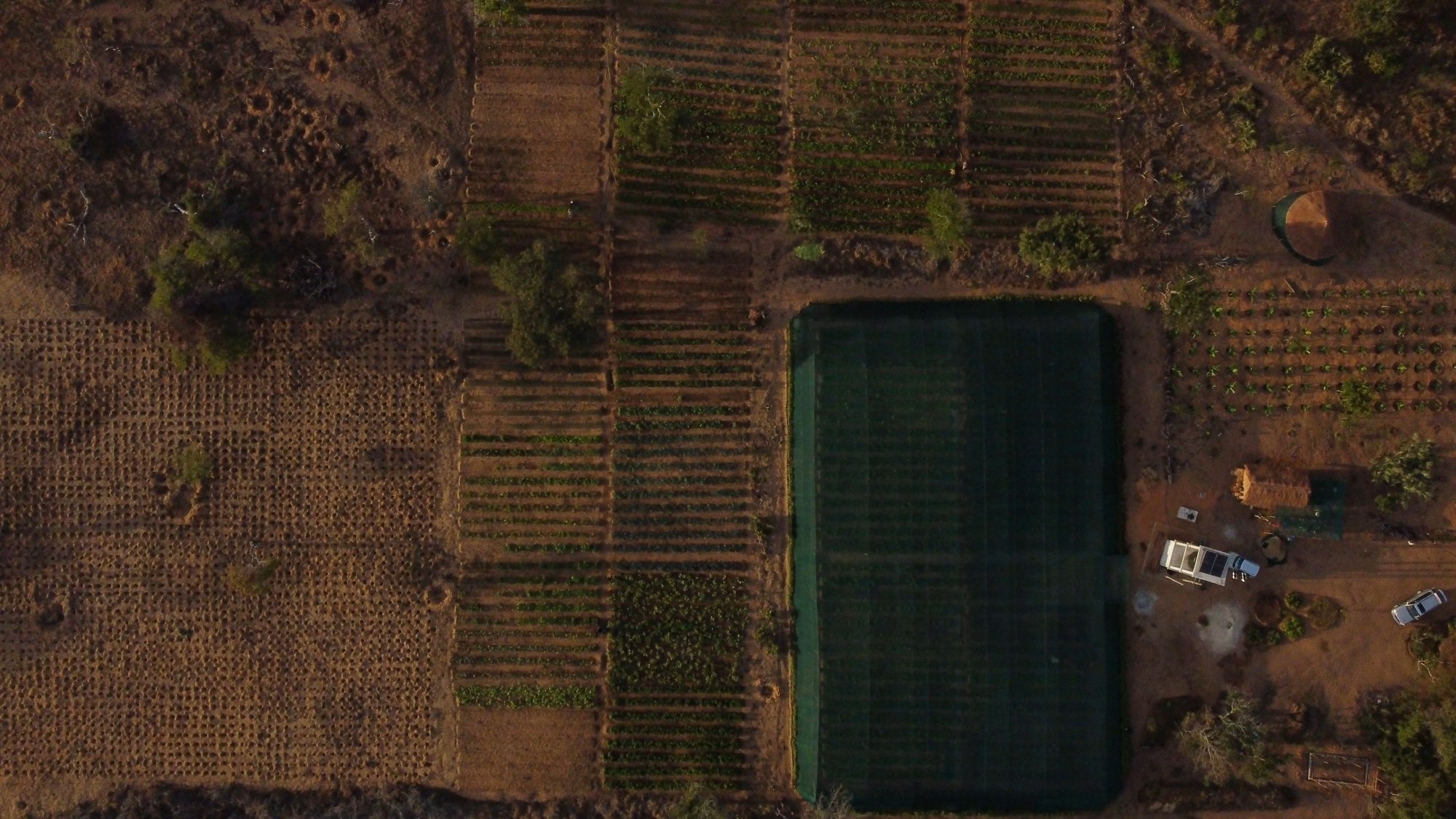
An aerial view of the Nhamanhate machamba, the cooperative community farm giving 30 fishing families an alternative livelihood. Photo: Marine Megafauna Foundation
The project is culminating under the leadership of MMF’s Mozambique Conservation Team Lead Olivia Patterson, who said: “The Alternative Livelihood program in Nhamanhate has already exceeded expectations, supporting 30 fisher families to transition away from fishing and significantly reducing local fishing pressure. However, the very factors that underpin this success also present challenges for long-term sustainability once MMF reduces direct oversight.”
The machamba initiative has been carefully tailored to the local environment, with a diverse mix of crops to spread risk and to position itself as a one-stop solution for buyers. The project involved acquiring land, obtaining necessary government approvals, drilling a bore hole, creating the cooperative, installing a hammer mill, and extensive training in both land management and crop cultivation, as well as financial literacy and risk mitigation for the fishermen turned farmers.
For people who have conventionally lived a hand-to-mouth existence - as many of Mozambique’s rural communities do - with a mindset focused on immediate rewards, the concept of investment for future profit, for example, was a key challenge that has and will continue to test the long-term success of the project. Training therefore has focused on such fundamental commercial concepts as reinvestment of profits and the need for discipline, techniques for profit sharing, cash-flow planning for ongoing operations, and basic bookkeeping and records.
“The beneficiaries have taken to agriculture extremely quickly and the future proofing of the project in the form of rigorous training from both a practical and business perspective is on track,” said Patterson. “It has also prompted an unanticipated revolution in gender roles within the community of Nhamanhate. While farming has traditionally been seen as women’s work in the local area and across the country, the fishermen of Nhamanhate have shown great willingness to transition away from the destructive fishing practices they have relied on for generations and to turn their full attention to farming.”
The machamba has been exceeding sales projections, selling locally grown fruit and vegetables, as well as eggs and livestock feed, to local businesses and the regional tourism industry, reducing reliance on imported produce. And although it has yet to turn a profit, that is anticipated in the near future. Patterson said that MMF was hoping to raise additional funding to help with soil improvement and other infrastructure costs.
“In addition, the project has become a huge source of pride,” said Patterson. “The machamba is now fully up and running, with strong monitoring systems in place, and has already helped reduce local fishing pressure by at least 3,000 man-days in the process. Its success has attracted wide attention from NGOs and government representatives.”
Vuka-Life Eco Tours
Another element of the Alternative Livelihood initiative was the establishment of a community-based ecotourism initiative in the remote coastal village of Vuka. MMF collaborated with 12 local women from fisher families to create and operate the ‘Vuka-Life’ eco-tour from July 2024. Initial response looked promising with positive feedback from both tourists and stakeholders. However, political unrest associated with elections in the country later that year reduced overall tourism in the Inhassoro region. In addition, the relatively narrow visitor profile in the region meant the project did not generate sufficient demand to sustain the model. It is believed however, that the model has since been adapted in another important dugong area so may still be contributing indirectly to reducing fishing pressure in Mozambique.
“While this initiative was not sustained in Inhassoro, the lessons learned will inform the design of future alternative livelihood models in contexts with stronger tourism markets,” Patterson said.
Youth Conservation Lessons
A vital cornerstone of the dugong initiative, and indeed all of MMF’s work in Mozambique, is fostering awareness and stewardship among schoolchildren. For the dugong initiative, MMF developed project-specific Youth Conservation Lessons for local schools focusing on marine conservation, dugongs, wedgefish, and seagrass beds. Key features include a targeted children’s book about dugongs, and virtual reality experiences.
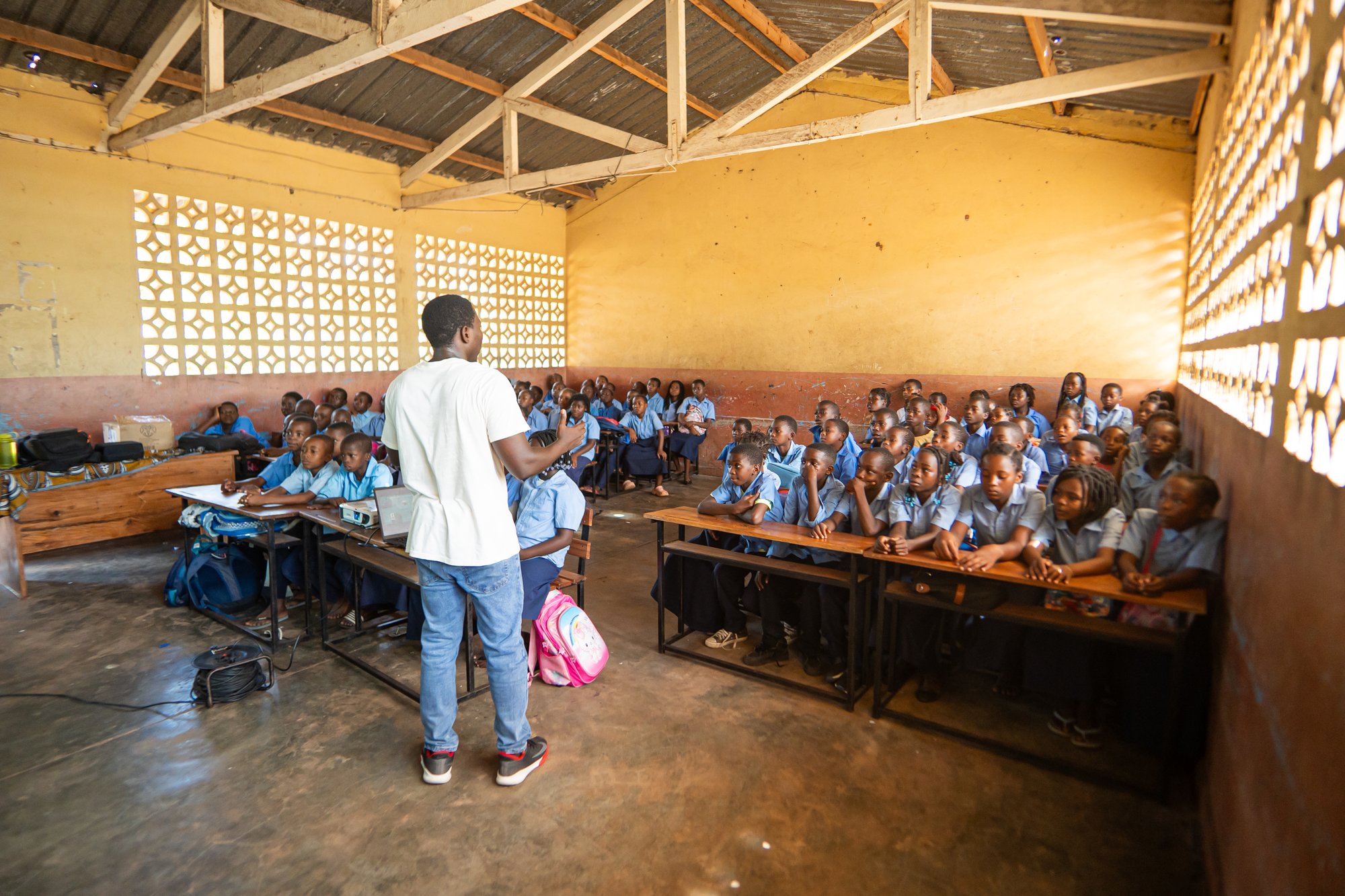
A Youth Conservation Lesson under way at a local school in the Bazaruto Seascape. Photo: Marine Megafauna Foundation
MMF has thus far distributed more than 1,350 copies of Dr. Ruth Leeney’s book Os Dugongos do Arquipélago do Bazaruto in a bid to help children recognize the global importance of their coastline and foster a sense of guardianship over their natural heritage.
In addition, over 2,000 school children and other community members have enjoyed a VR immersive experience, allowing them to see - mostly for the first time - underwater ecosystems such as seagrass meadows, dugongs, wedgefish, and manta rays.
“The immersive experience provides a vivid and interactive way to connect with marine life that would otherwise remain invisible to them, helping to foster deep emotional connections and long-term conservation awareness,” Patterson said.
Dugong and seagrass themed lessons have now been given to 1,835 students, doubling the initial target of 900.
Community-Led Monitoring and Scientific Research
Alongside education and livelihoods, the project has also expanded scientific research and monitoring across the region.
A key component of this work is the involvement of local community operators to find and photograph focal species within the target region, and in particular to strengthen wedgefish data collection. The use of Baited Remote Underwater Video Systems (BRUVs) has detected fewer wedgefish than expected (likely due to their nocturnal behavior), but there has been an increase in wedgefish landings observed at Inhassoro fish market.
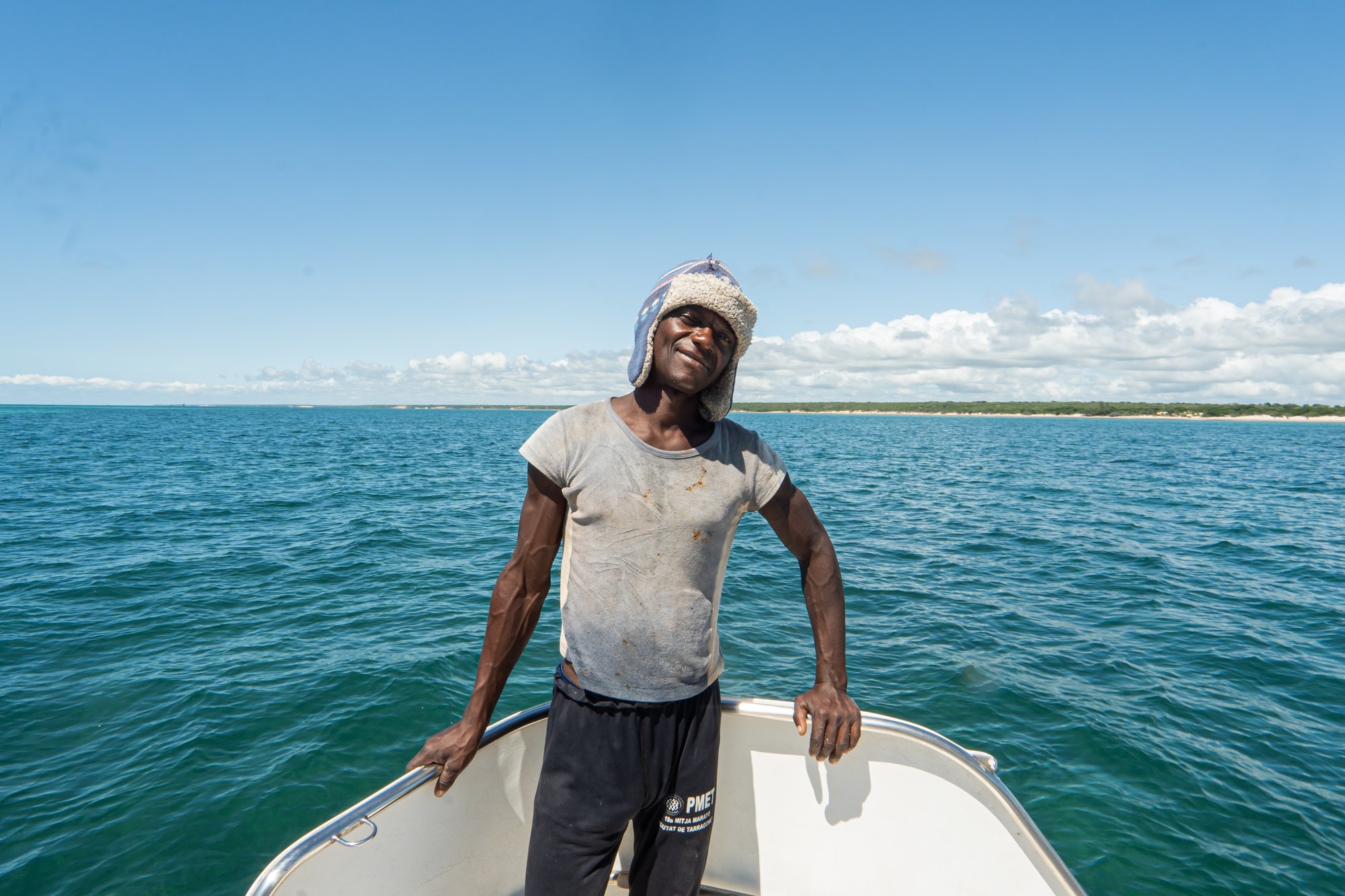
A community operator aboard a monitoring boat in the Bazaruto Seascape. Local operators support wedgefish and dugong data collection along the coastline. Photo: Marine Megafauna Foundation
So MMF has trained 26 rangers from the local community fishing councils (CCPs) to collect standardized fisheries landings data, strengthening local monitoring capacity along an under-regulated 43 km stretch of priority coastline.
Workshops were held for the 26 CCP rangers across six priority wedgefish sites, and they have been equipped with smartphones, tape measures, and tailored field materials to document wedgefish landings. The smart phones enable photographic evidence, verification of species ID, and communication of sightings and fisheries landings of focal species to MMF. The tape measures are used to record body lengths to support population and size structure assessments. An incentive scheme has also been introduced to ensure consistent data reporting.
In addition, MMF has worked closely with Seagrass-Watch technical advisors to produce the first detailed map of seagrass in this unregulated region — a critical step for identifying and protecting dugong and wedgefish habitats.
To date, the team has mapped 92 km² of seagrass habitat, conducted 22 drone survey flights to document dugong presence and movements, and established quarterly Seagrass Watch monitoring assessments across priority sites.
Community operators actively support all fieldwork, helping to build local capacity for long term monitoring.
Building Community Stewardship
Community engagement remains central to the project’s success.
MMF has hosted three annual Dugong and Seagrass Festivals in the region to help strengthen community engagement and collective responsibility for local marine ecosystems, produced a mini documentary featuring community-generated media, and trained 25 strong community leaders to be ‘Ocean Ambassadors.’ These ambassadors give marine conservation-themed presentations to their communities, helping to disseminate important conservation messages and spreading marine conservation education and awareness.
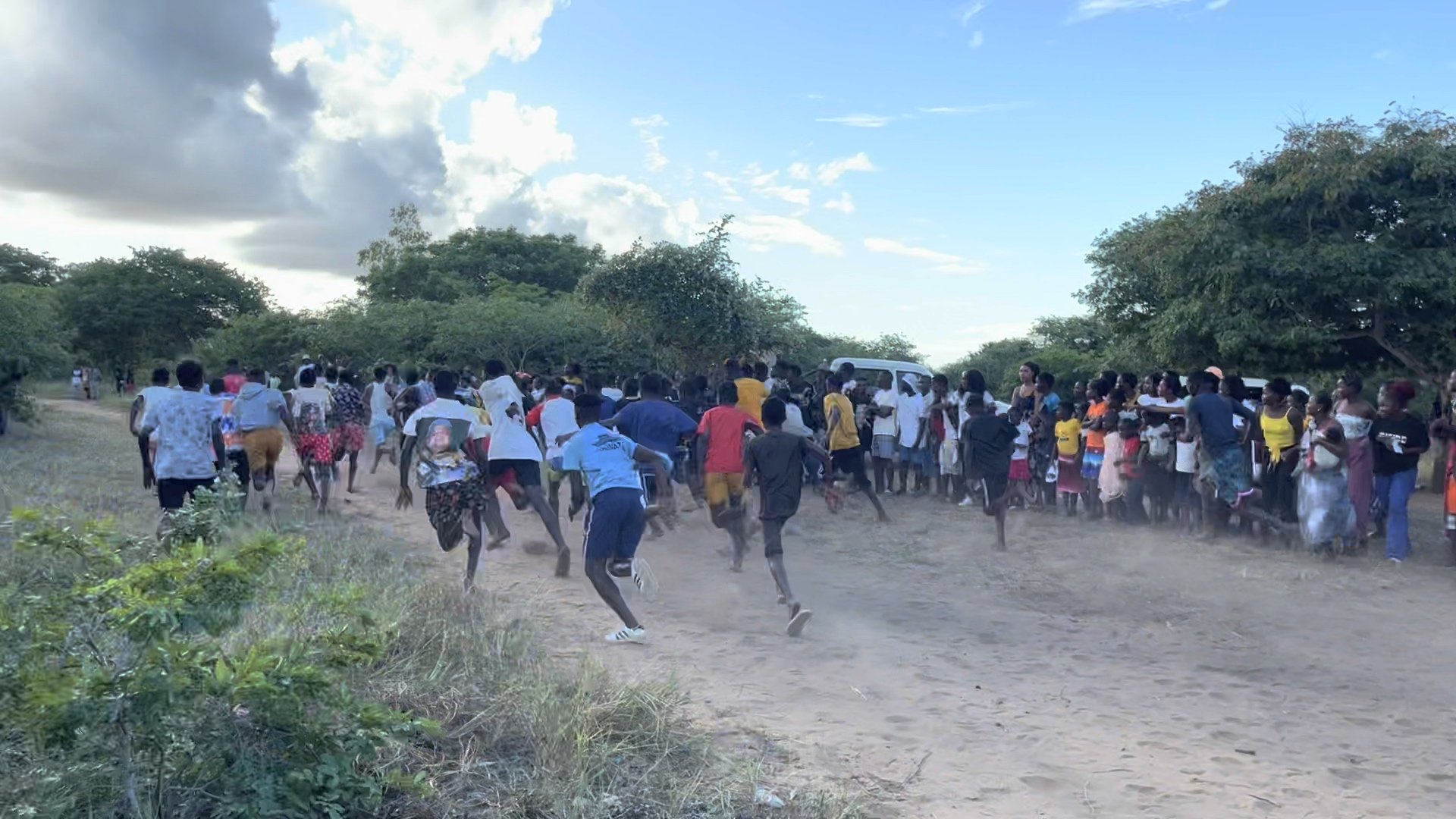
Community members take part in the third annual Dugong and Seagrass Festival. Photo: Marine Megafauna Foundation
Looking Ahead
The project is gaining recognition at both national and regional levels. In 2025, the team presented its approach at Mozambique’s Marine Biodiversity Conference (CBM), led by the Foundation for the Conservation of Biodiversity (BIOFUND), and previously co-hosted a dedicated dugong session at the Western Indian Ocean Marine Science Association (WIOMSA) conference.
Within Mozambique, the farming project has attracted national media attention and visits from government leaders – highlighting its potential as a model for linking marine conservation with sustainable livelihoods.
Alongside these successes on land, MMF is continuing to work with communities to establish two Local Marine Managed Areas (LMMAs), enabling them to take ownership of their marine resources and protect critical dugong habitats. These areas are being shaped through collaborative workshops with government, scientists, and local fishers, building a shared understanding and commitment to long-term coastal stewardship.
Building on this momentum, MMF will return to the fourth annual BIOFUND conference which will be held in Beira, Mozambique in June 2026. The theme of this year’s conference is “Challenges 2026,” and aims to create synergies with various marine and coastal conservation initiatives in the country, encourage knowledge sharing from local communities and other key actors, and to inspire young Mozambicans.
For Patterson, the long-term vision remains clear.
“Protecting dugongs ultimately means protecting the seagrass ecosystems they depend on, and supporting the communities who manage and rely on those same habitats,” she says. “When local people become partners in conservation, we create solutions that can endure far beyond the lifetime of a single project.”
In Mozambique’s Bazaruto Seascape, that partnership may be the key to securing a future for the Western Indian Ocean’s last remaining population of dugongs.
Watch the project documentary.
Read more about the science behind seagrass monitoring at Seagrass-Watch Mozambique, or learn about MMF’s wider work in the region on the Bazaruto Seascape Marine Conservation project page.
This project was funded by Foundation Segré.