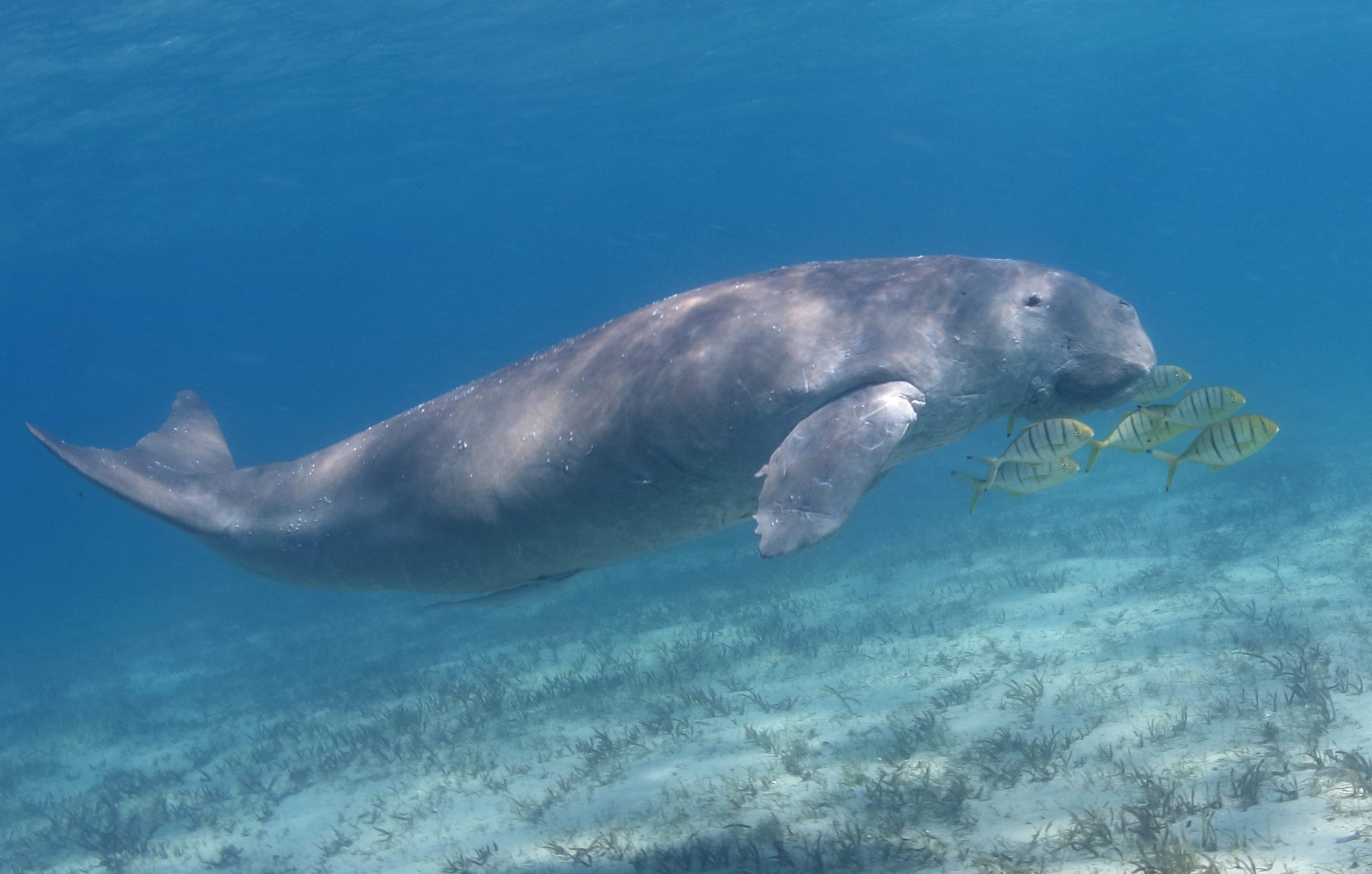




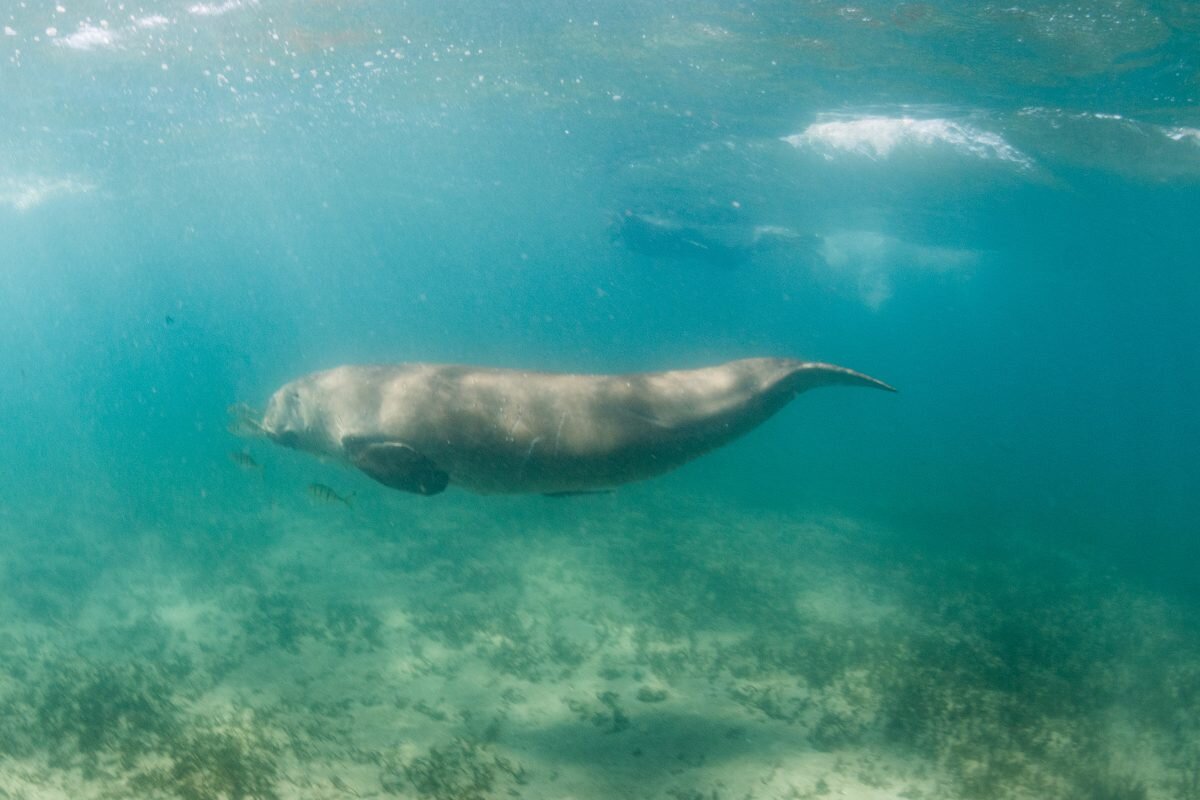
A dugong swims over a seagrass meadow in Mozambique, with small yellow-striped fish swimming beside it.

Adopt a Dugong

The western Indian Ocean's last viable dugong population, and the Mozambique seagrass meadows MMF works with communities to protect.

Adopt a dugong · $39Personalized certificate · Instant download

Your dugong adoption

Adopt a dugong for someone who loves the ocean. This symbolic adoption comes with a personalized certificate and supports MMF's work, including our dugong research and conservation in Mozambique's Bazaruto Seascape, home to the last viable dugong population in the western Indian Ocean.

  • 92 km²of unprotected coastline mapped for seagrass
  • 45dugong sightings recorded by community monitors
  • 3,000+fishing days taken out of priority conservation areas
  • 1,835students reached with dugong and seagrass lessons

What you'll give

The name stays in your browser and is not stored by MMF. You can change it after checkout.

Plus a gift card with your own message:

  • Birthday gift cardBirthday
  • Valentine's Day gift cardValentine's Day
  • Christmas gift cardChristmas
Dr. Simon Pierce

Signed by the scientist

Every adoption certificate is signed by MMF's Co-Founder & Executive Director.

Dr. Simon PierceCo-Founder & Executive Director, Marine Megafauna Foundation

Why adopt a dugong?

Dugongs are large marine mammals that live almost entirely on seagrass. When you adopt a dugong through the Marine Megafauna Foundation (MMF), you back the people working to protect the last viable dugong population in the western Indian Ocean, in Mozambique's Bazaruto Seascape.

Dugongs were once found along much of the east African coast, and they have disappeared from most of it. The East African subpopulation is now assessed as Critically Endangered on the IUCN Red List, a reassessment led by our partners at Bazaruto Archipelago National Park with contributions from MMF.

The national park protects part of their range, but the seagrass meadows extend well beyond its boundary into the Inhassoro and Govuro districts, where there is no formal protection at all. MMF works on that unprotected coast, where the animals face three main pressures:

  • Gill nets and drag nets, used widely along this coast. Nets left out overnight are the greatest risk to animals that feed on shallow seagrass flats after dark.
  • Drowning in nets. Local communities report that air-breathing animals such as dugongs often become entangled and drown before the nets are retrieved.
  • Lost seagrass. Coastal erosion, severe weather, and development are burying the seagrass beds dugongs depend on.
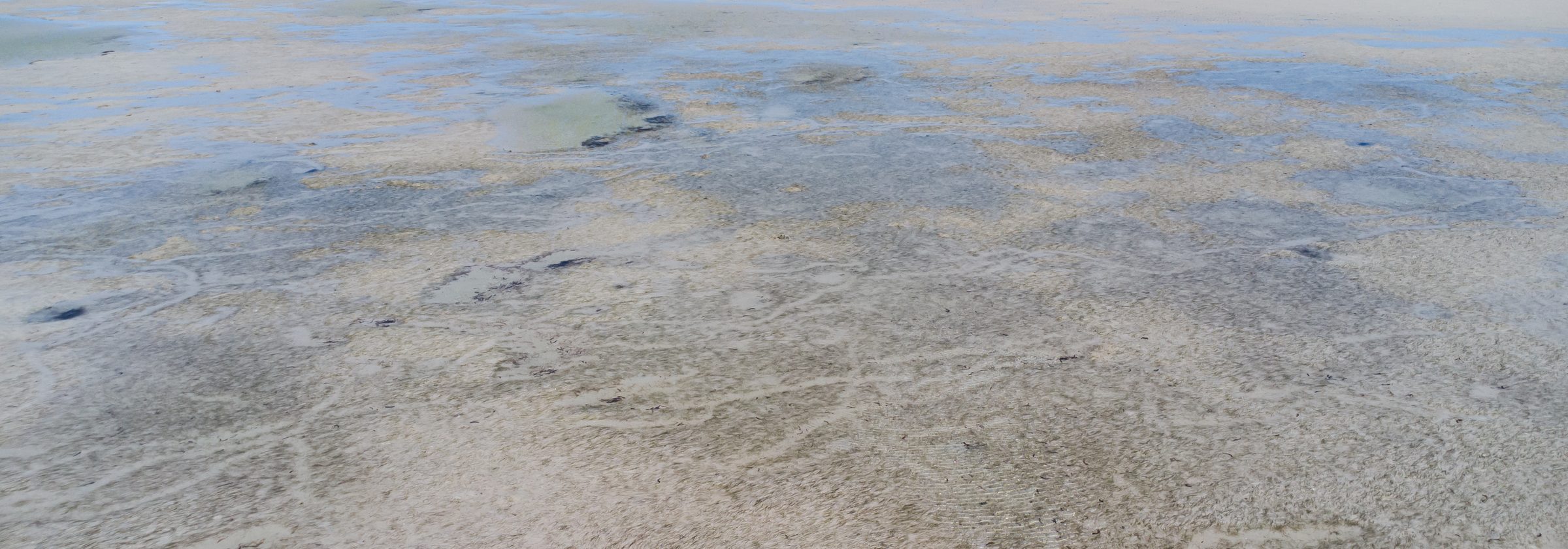
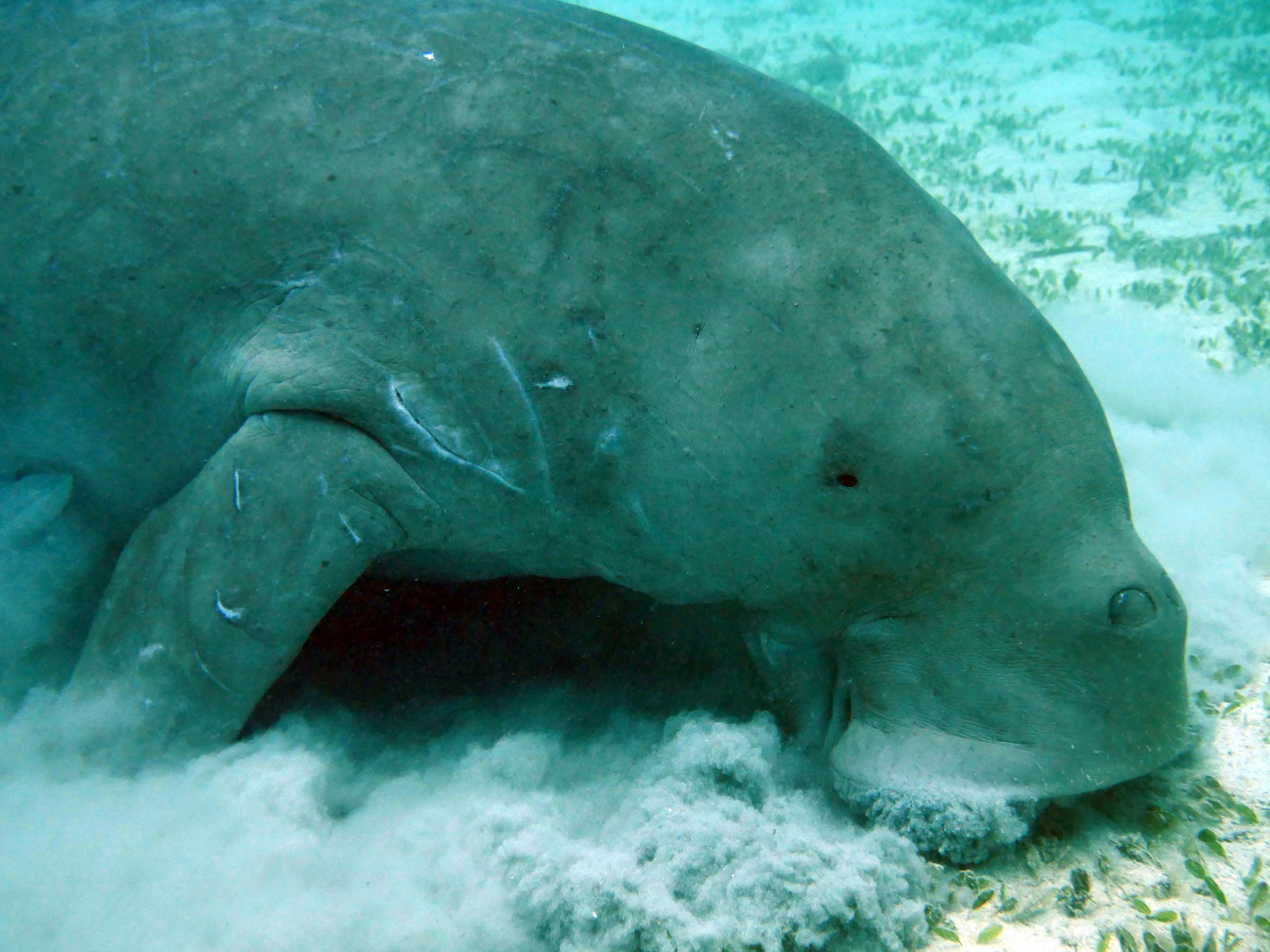
Dugong feeding trails cutting through exposed seagrass at low tide near Inhassoro, Mozambique.

About dugongs

The dugong (Dugong dugon) is a large marine mammal often known as the "sea cow." It is entirely dependent on healthy seagrass ecosystems, so a dugong population can only be as secure as the meadows it grazes.

Dugongs are elusive. Fishers in the Bazaruto Seascape had long reported that dugongs there feed mainly at night, and MMF's drone surveys supported them: no dugongs were seen from the air during daytime flights. What the animals leave behind is easier to spot. At low tide near Inhassoro, their feeding trails cut through the exposed seagrass meadows.

In Mozambique, dugongs are now found in a very limited area. Bazaruto Archipelago National Park, created in 1971 as one of Mozambique's first Marine Protected Areas, covers 1,430 km² (550 square miles) and is mandated to protect them. The same seagrass beds are also nursery habitat for the fish that coastal communities depend on, so protecting dugong habitat helps people too.
How your dugong adoption helps

Your dugong adoption supports MMF's work as a whole, including our research and conservation work on dugongs in Mozambique and the Dugong & Seagrass Conservation project led by Olivia Patterson. Between 2022 and 2026, MMF worked with the communities on the coast north of the national park to map where the seagrass grows, which animals use it, and what it would take for the families who fish there to protect it. The project:

  • Produced the first detailed seagrass maps for the region, covering 92 square kilometers (36 square miles) of unprotected coastline, from satellite imagery, drop-camera checks, and on-foot surveys.
  • Brought Inhassoro into the global Seagrass-Watch monitoring network, with quarterly surveys on permanent transects in priority dugong feeding grounds.
  • Documented 45 dugong sightings through community-led monitoring, confirming that dugongs still use these unprotected waters.
  • Supported two communities in proposing their own locally managed marine areas in critical dugong habitat.
  • Helped fishing families in Nhamanhate move from nets to a cooperative farm, reducing fishing effort in priority conservation areas by more than 3,000 fishing days.
  • Reached 1,835 students in six schools with dugong and seagrass lessons, and held three annual Dugong and Seagrass Festivals.

Next, MMF aims to keep the quarterly seagrass surveys and community dugong monitoring running, see the two proposed marine areas through government, and extend protection beyond the park's current boundary. Read the full story in Saving the Western Indian Ocean's last viable population of dugongs.

Ready to help? A dugong adoption is $39, with a personalized certificate to download straight after checkout.

Adopt a dugong · $39
How it works

  1. 1

    Adopt

    Pay securely in the pop-up. Your receipt arrives by email.

  2. 2

    Add the name

    Type the adoptee's name and see it on the certificate.

  3. 3

    Download and give

    Download the certificate and a gift card, then print or forward them.

Dugong adoption FAQs

Is a dugong a sea cow?

Yes. Dugongs are large marine mammals often known as "sea cows," and they graze almost entirely on seagrass.

What do dugongs eat?

Dugongs live almost entirely on seagrass. In Mozambique's Bazaruto Seascape they feed mainly at night on shallow seagrass flats, and their feeding trails show in the meadows at low tide.

Are dugongs endangered?

The East African dugong subpopulation is assessed as Critically Endangered on the IUCN Red List. Dugongs have disappeared from most of the east African coast they once occupied.

Where do dugongs live in Africa?

In Mozambique, dugongs are now found in a very limited area. The Bazaruto Seascape, including Bazaruto Archipelago National Park and the seagrass meadows north of it toward Inhassoro, holds the last viable population in the western Indian Ocean.

What is a symbolic adoption?

A symbolic adoption is a gift to MMF's work as a whole. We use it where it does the most good, and that includes the research and conservation behind the animal you chose. No animal is taken from the wild or sent to you. Your certificate records your support.

What do I receive?

A personalized adoption certificate (PDF) with the name you choose and the date, ready to download as soon as checkout is complete. You can also make a gift card for a birthday, Valentine's Day, or Christmas with your own message. Both are yours to print or send by email.

Can I give an adoption as a gift?

Yes. Type the recipient's name for the certificate and write your message on the gift card. Because everything is digital, it works as a last-minute gift too.

How do I get my certificate?

After checkout you are taken to a page where you type the name and download the certificate. The link to that page is also in your receipt email, so you can come back to it later.

Is my adoption tax-deductible?

Your adoption is tax-deductible in the USA. MMF is a registered 501(c)(3) non-profit conservation organization, and you receive a receipt by email.

Is anything sent by mail?

No. The certificate and card are digital files, so nothing is printed or shipped.

Adopt a Dugong · $39

Secure checkout by Donorbox. As soon as your adoption is complete you can make your certificate and gift card.

Form not loading? Open the secure checkout in a new tab.