
Mozambique · Since 2022
Dugong & Seagrass Conservation
Mapping the unprotected seagrass meadows of the Bazaruto Seascape, monitoring the dugongs that feed on them, and working with fishing communities to protect them.
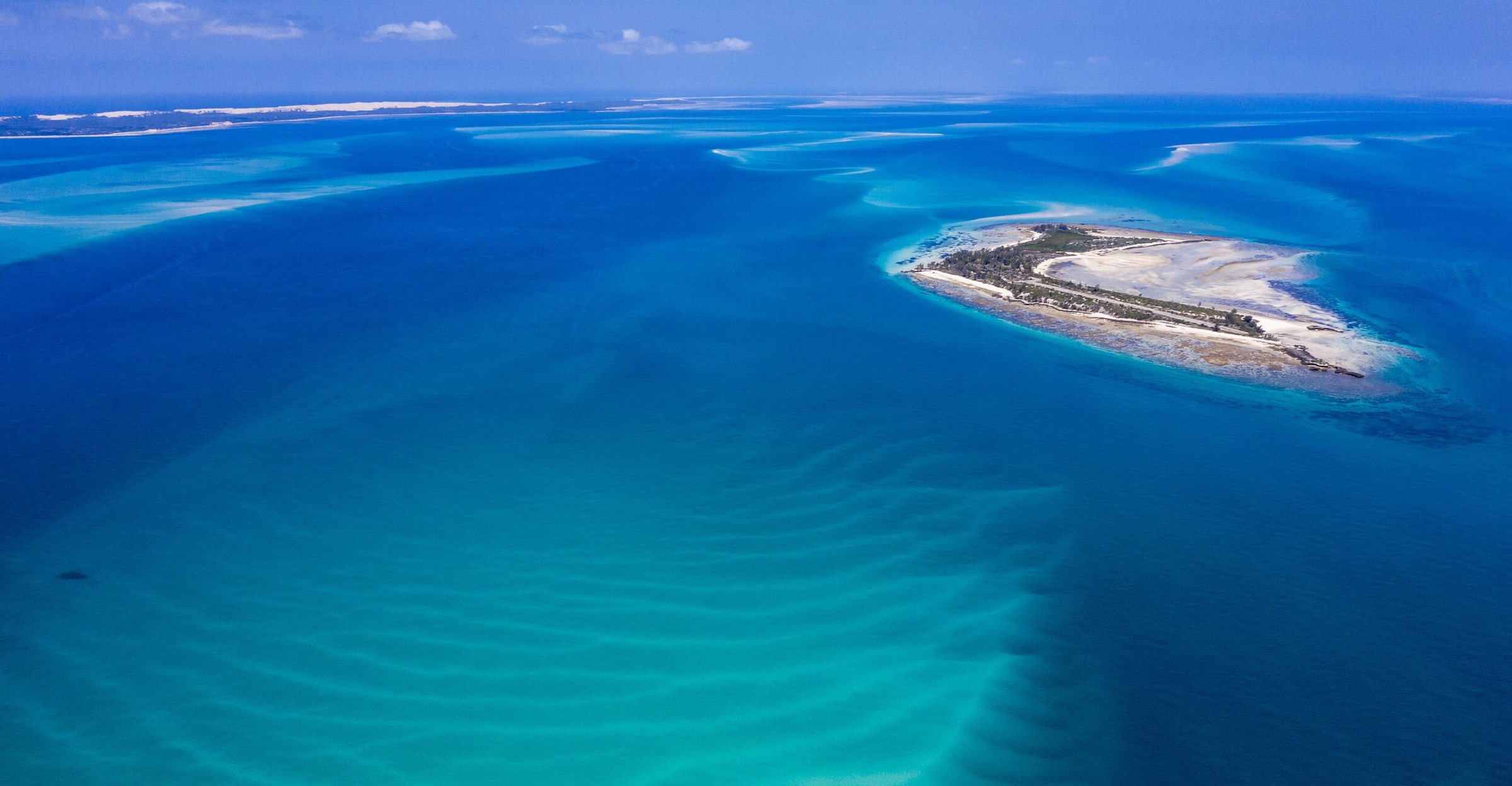
The Bazaruto Seascape holds the last viable dugong population in the western Indian Ocean. Much of the seagrass those dugongs depend on lies outside the national park, along an unprotected stretch of coast running north toward Inhassoro, and until recently nobody had mapped it.
Dugongs (Dugong dugon) are the ocean’s only herbivorous marine mammals, and they live almost entirely on seagrass. Once found along much of the east African coast, they have disappeared from most of it. The Bazaruto Seascape holds the last viable population in the western Indian Ocean, and the East African subpopulation is now assessed as Critically Endangered.
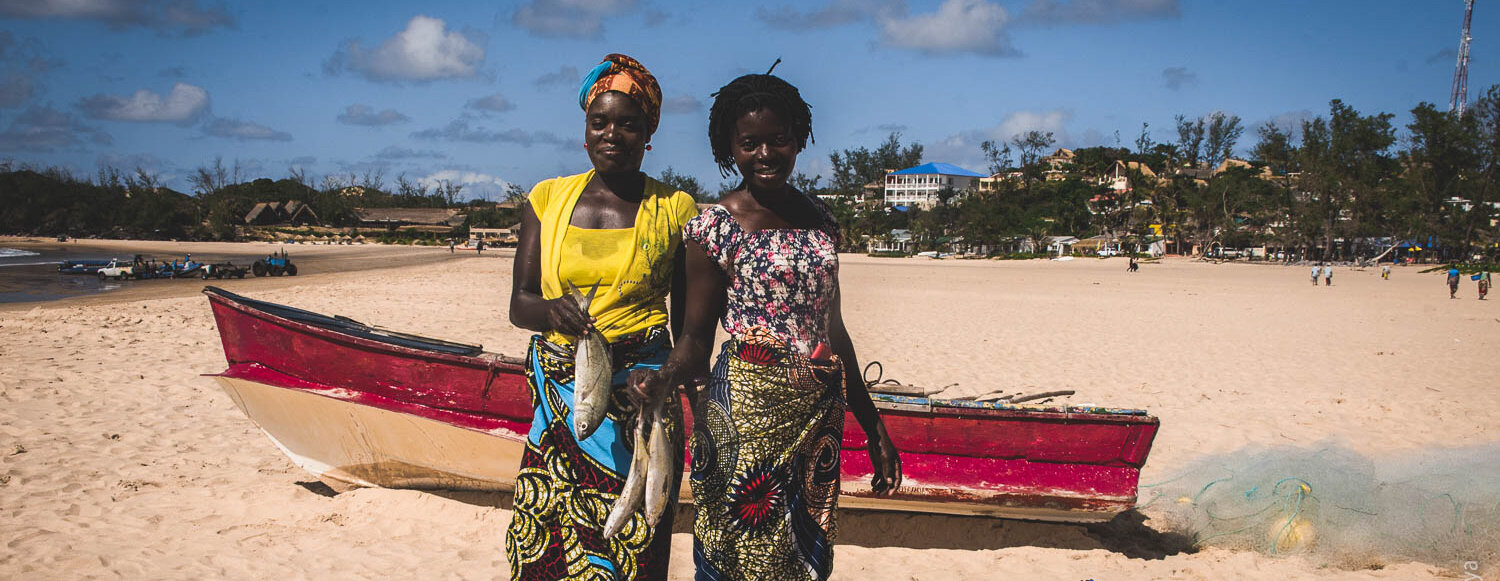
The dugongs’ problem is a habitat problem. Bazaruto Archipelago National Park protects part of their range, but the seagrass meadows extend well beyond the park boundary into the Inhassoro and Govuro districts, where there is no formal protection at all. Gill nets and drag nets are used widely along this coast, and nets left out overnight are the greatest risk to animals that feed on shallow seagrass flats after dark. Coastal erosion, severe weather, and development are burying seagrass beds that are also nursery habitat for the fish those same communities depend on.
Between 2022 and 2026, MMF worked with the communities living along that coastline to find out where the seagrass is, which animals use it, and what it would take for the families who fish there to protect it.
Objectives
- Map the seagrass meadows west of the national park and establish permanent monitoring of the priority dugong feeding grounds.
- Document which animals use these meadows, dugongs first, with community-led monitoring and remote cameras.
- Work with the fishing communities on locally managed marine areas in critical dugong habitat.
- Give fishing families a viable alternative to netting in those areas.
- Bring the evidence to district and national government as the case for extending protection outside of the park boundary.
What we've done
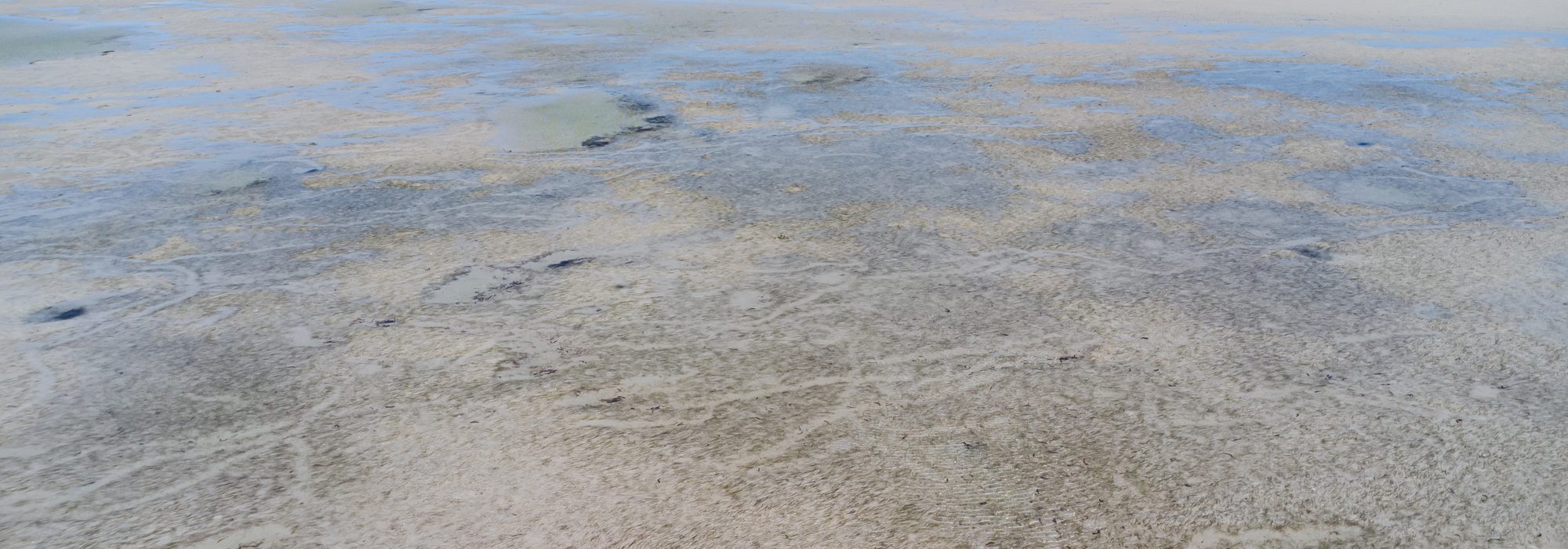
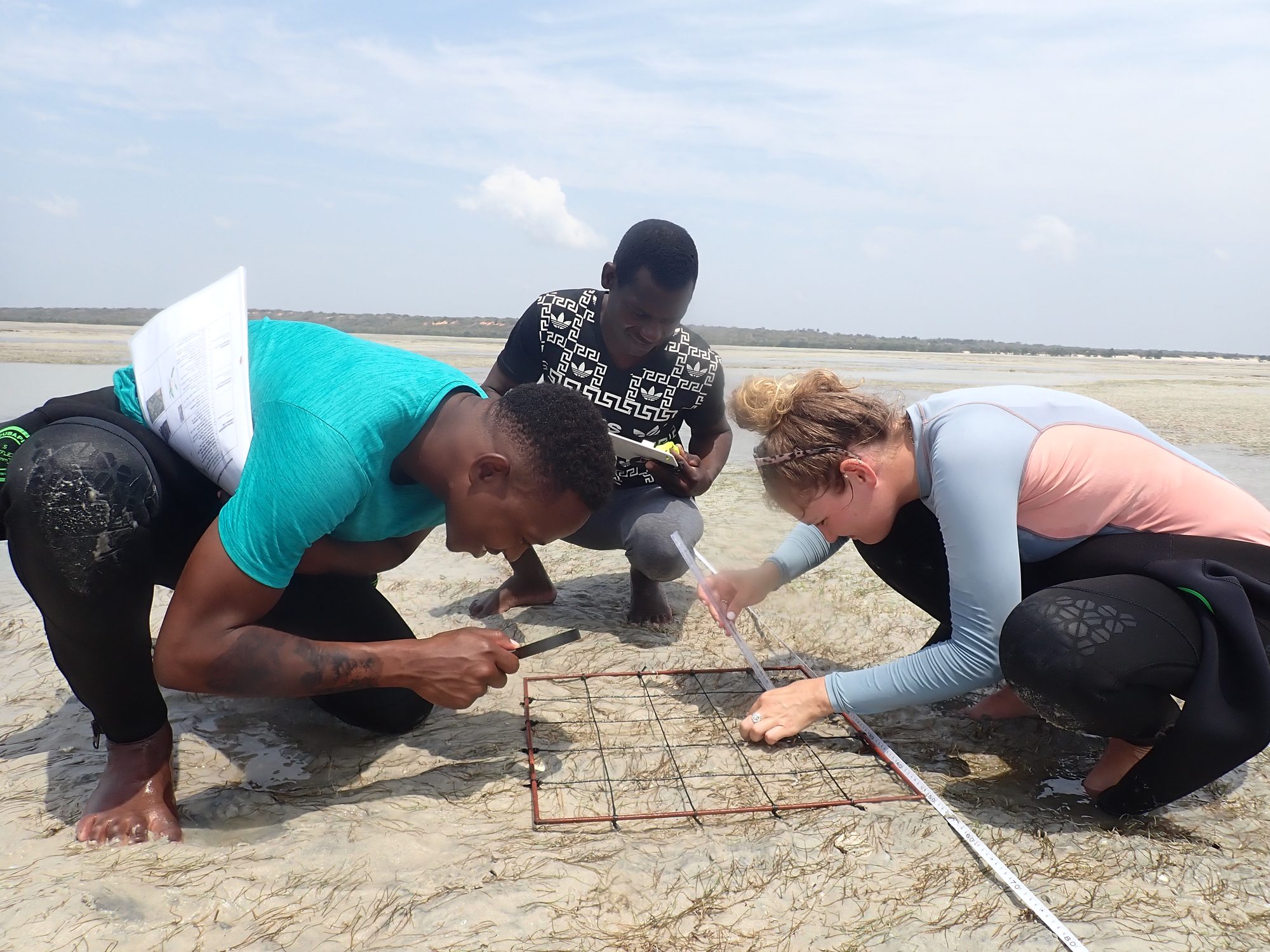
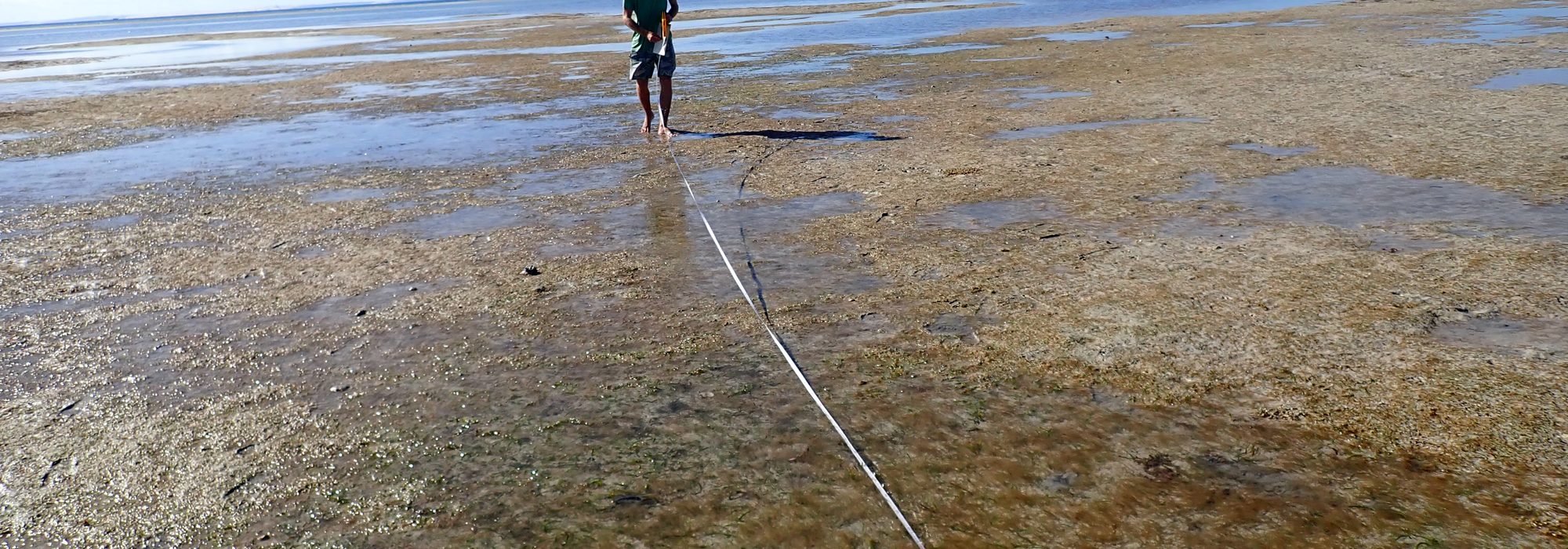
- Produced the first detailed seagrass maps for this region, covering 92 square kilometers (36 square miles) of unprotected coastline, by combining satellite imagery with drop-camera checks and on-foot surveys of the intertidal flats.
- Brought Inhassoro into the global Seagrass-Watch monitoring network, with quarterly surveys on permanent transects in priority dugong feeding grounds.
- Documented 45 dugong sightings through community-led monitoring, confirming that dugongs continue to use these unprotected waters.
- Supported two communities in proposing their own locally managed marine areas in critical dugong habitat, both now moving through the government process; one community proposed a larger protected zone than we had suggested.
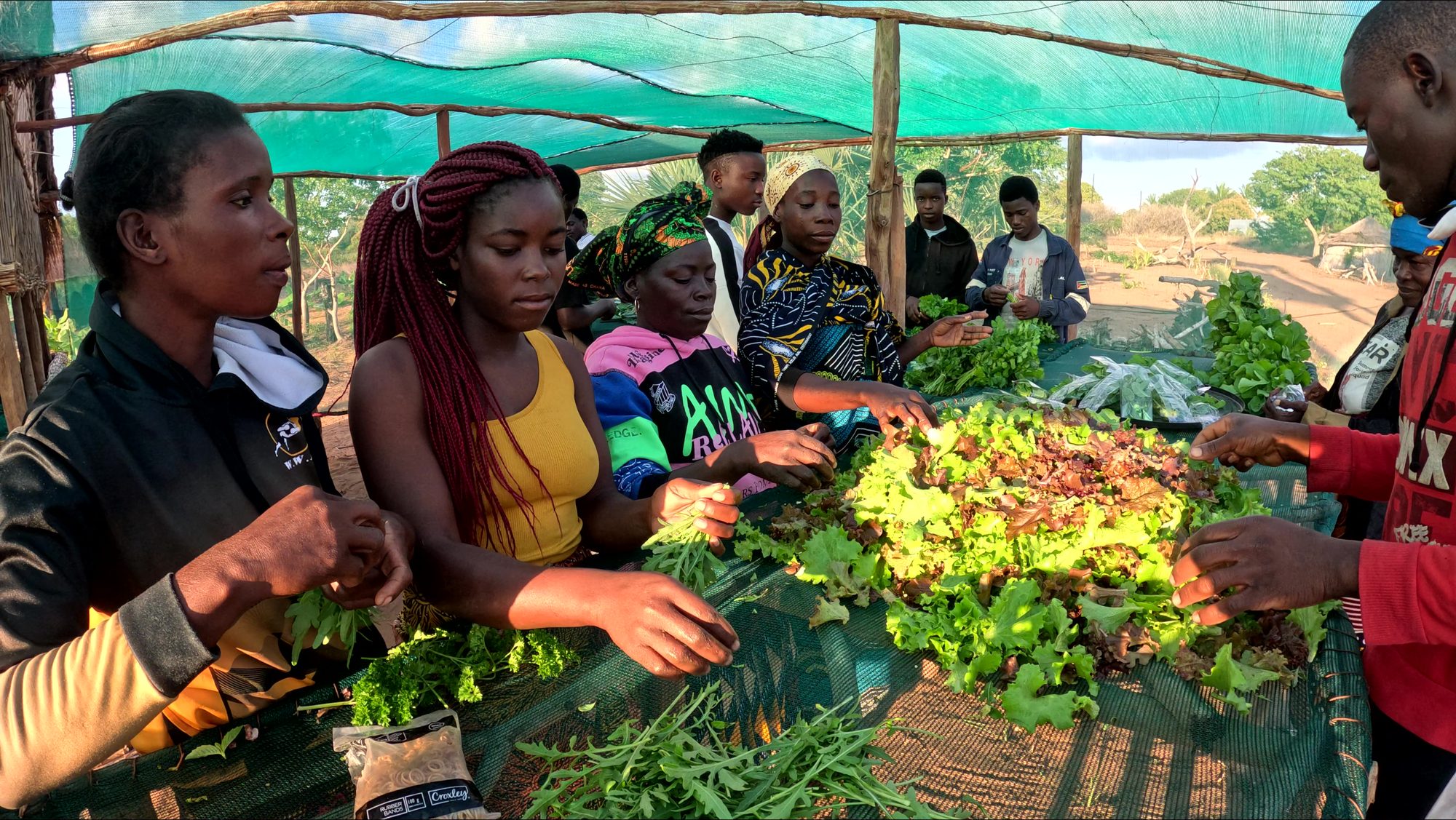
- Moved 22 fishing households in Nhamanhate into a cooperative farm that supplies local lodges and caterers, reducing fishing effort in priority conservation areas by more than 3,000 fishing days.
- Ran 36 research expeditions with community operators, 112 baited remote camera deployments (around 10,000 minutes of footage), and 22 drone surveys with James Cook University; megafauna appeared in more than a quarter of the camera drops, and one drone flight counted more than 50 sea turtles in 0.6 square kilometers (0.2 square miles).
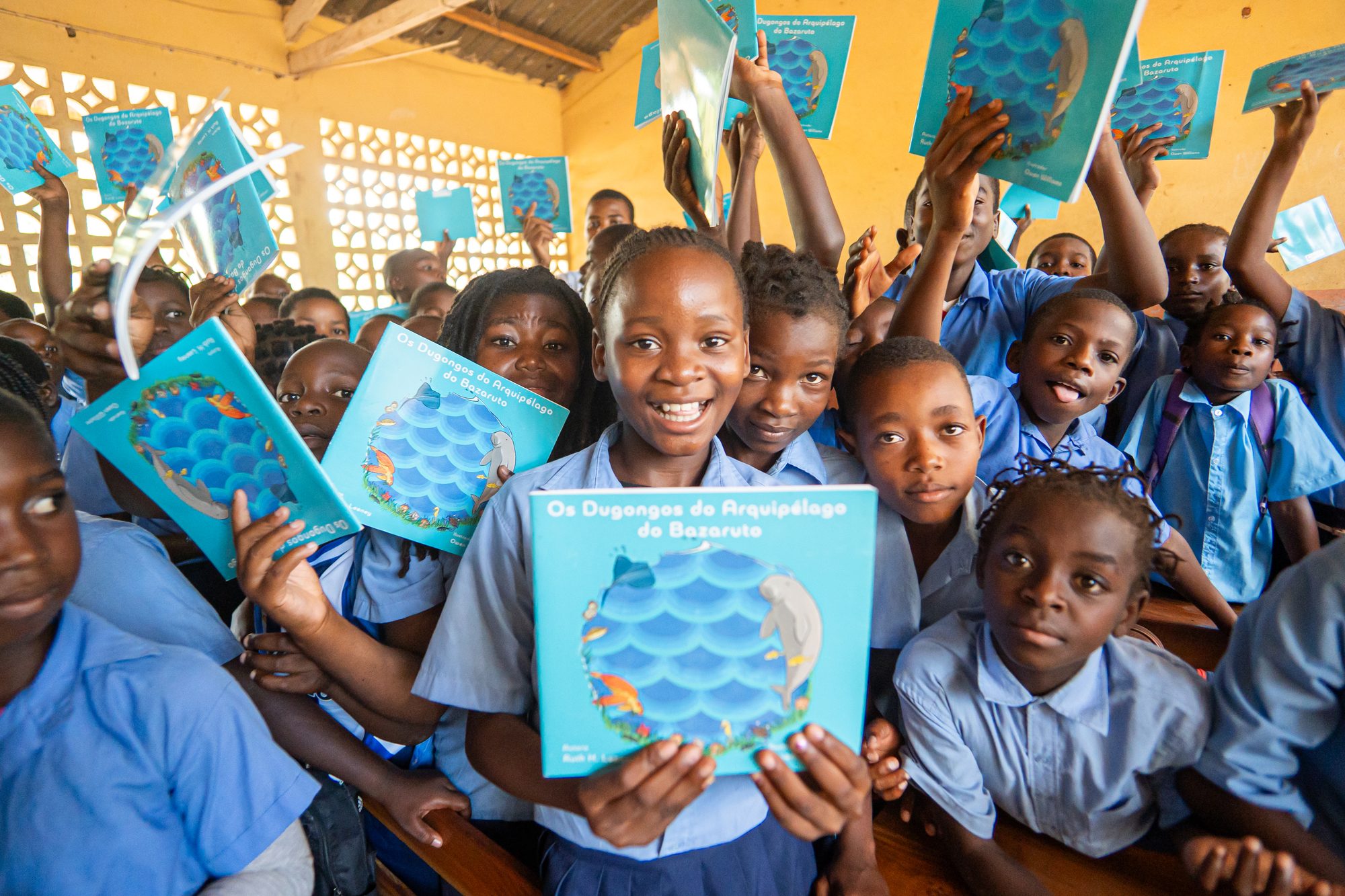
- Reached 1,835 students in six schools with dugong and seagrass lessons, distributed 1,500 copies of Dr. Ruth Leeney’s Portuguese-language book Os Dugongos do Arquipélago do Bazaruto, and gave 2,028 people a virtual reality view of the reefs and seagrass beds on their own doorstep.
- Held three annual Dugong and Seagrass Festivals (the last drawing more than 1,000 people), gathered the knowledge of 195 fishers, and convened a 42-person policy workshop of government, scientists, conservation organizations, and community leaders to agree on management recommendations.
- Contributed to the reassessment of the East African dugong subpopulation as Critically Endangered, led by our partners at Bazaruto Archipelago National Park.
What's next
- Keep the quarterly Seagrass-Watch surveys and community dugong monitoring running.
- See the two proposed locally managed marine areas through the government process.
- Extend protection beyond the national park’s current boundary, across the seagrass meadows the last dugongs in the western Indian Ocean actually use.
Support dugong and seagrass conservation in Mozambique
Protecting the last dugongs in the western Indian Ocean depends on long-term monitoring and on the communities who live alongside them. Your gift funds the seagrass surveys, the community rangers, and the work with fishing families that makes protection possible.
Our work on dugongs and seagrass in Mozambique
Mapping what nobody had mapped
You cannot protect a habitat whose extent you do not know. Working with Seagrass-Watch, we produced the first detailed maps of seagrass distribution across 92 square kilometers (36 square miles) of unprotected coastline, combining Sentinel-2 satellite imagery with field validation: drop-camera checks in subtidal areas and on-foot surveys of the intertidal flats at spring tides. In total we completed 296 ground-truthing spot-checks, recording seagrass cover, species composition, and sediment type at each point. These maps show where seagrass grows, help predict dugong feeding grounds, and will inform conservation and management decisions for years to come. The drone work produced a useful negative alongside a striking turtle count: no dugongs were seen from the air during daytime flights, which supports what local fishers had long been telling us, that dugongs here feed mainly at night.
A farm instead of a net
Asking a fishing family to stop fishing in the places that still hold fish is only reasonable if there is something else for them to do. In the village of Nhamanhate, 22 fishing households moved into a cooperative farm, a semi-commercial operation growing produce for local lodges and catering businesses, with poultry and eggs and a composting system that feeds back into the crops. Since mid-2025 it has generated over 1 million meticais in revenue, with profits reinvested into expansion, and members trained in bookkeeping, cash-flow planning, and profit sharing. Farming in this part of Mozambique has traditionally been women’s work, while fishing is generally seen as men’s work, but the fishermen of Nhamanhate chose to set down their nets and join them, sparking an unanticipated shift in gender roles. Some of the men now earn more from the farm than they ever did from fishing.
Ecotourism from the community up
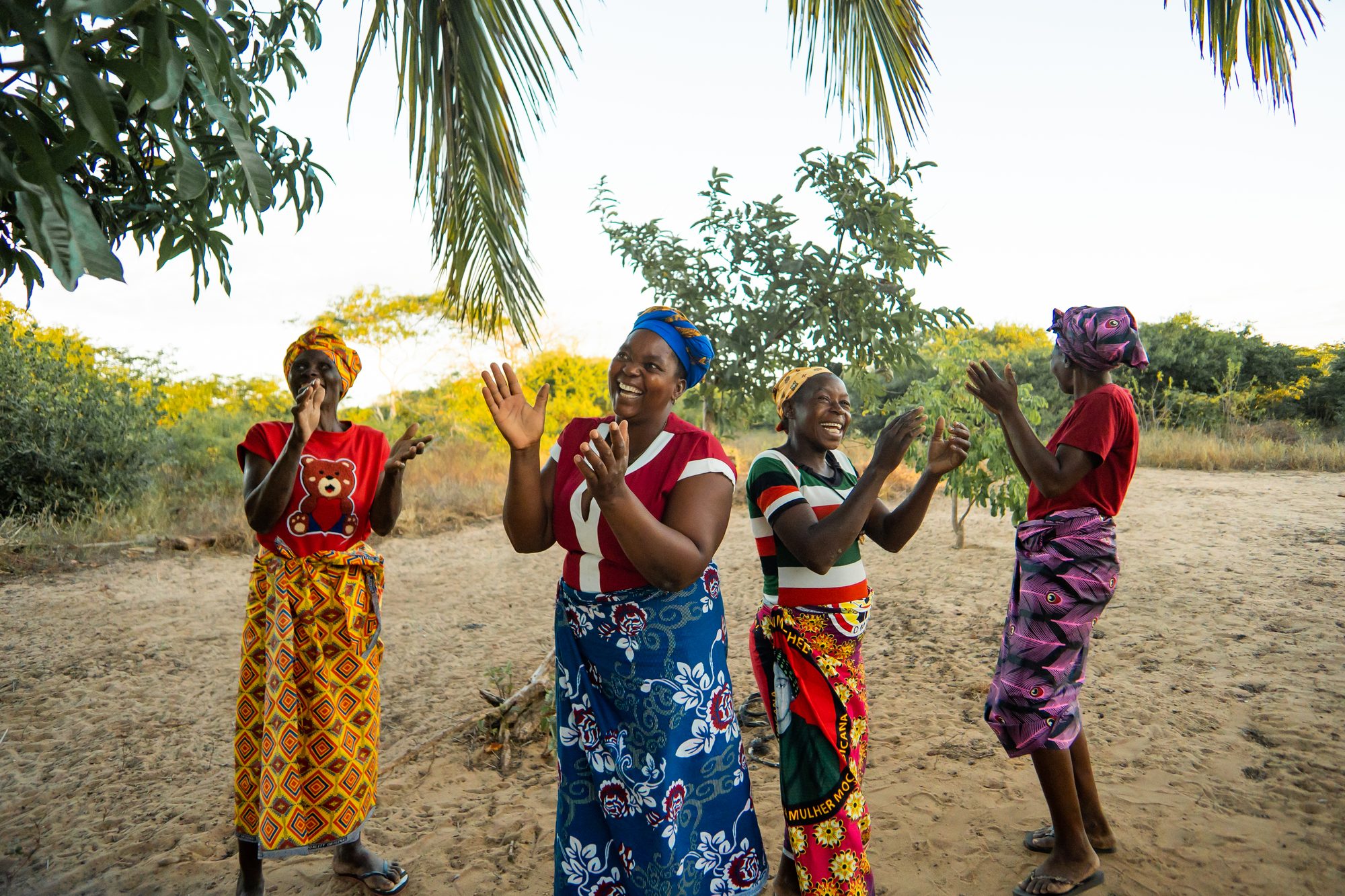
In the coastal village of Vuca, where families depend on fishing in priority dugong habitat, MMF worked with 12 women from fisher families to develop an alternative: Inhassoro Life, a community-led ecotour that gives visitors a first-hand experience of village life, with local culture and livelihoods, traditional meals, music, and games. The tour received positive feedback from tourists and stakeholders from its launch. Discussions are now under way with a lodge in the region about a partnership that could provide a more consistent flow of visitors and a sustainable income for the families involved, a promising next step for an initiative that shows protecting the coastline and building a livelihood from it can go hand in hand.
Learning, and being heard
Conservation education ran through the whole project: school lessons, the dugong book in Portuguese, virtual reality screenings, two participatory media exhibitions of community-made work in Vuca and Nhamanhate, and a 17-minute documentary built partly from community footage that has been screened at national and policy-level events in Mozambique. The policy workshop that closed the project brought district government, fisheries, planning, education, maritime, and law enforcement officials together with scientists, conservation organizations, and community leaders to review the findings and agree on what happens next.
MMF Project Team
 Olivia Patterson
 Elton Tivane
Collaborators and Partners


 Bazaruto Seascape Marine Conservation
 Sustainable Seas
 Mozambique Rhino Rays Research Project