
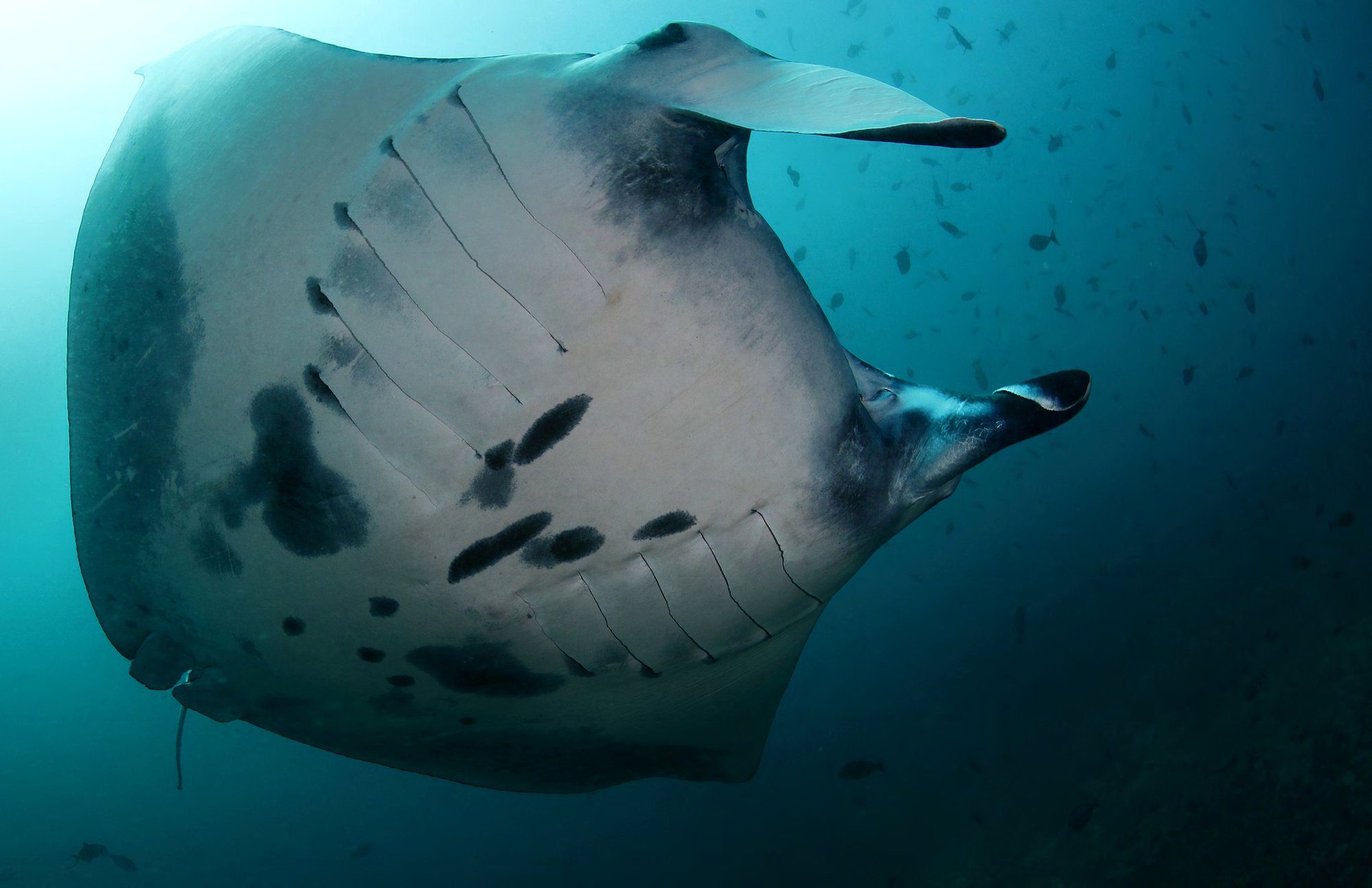
Understanding manta social behaviors.
By Dr. Andrea Marshall, Co-founder and Principal Scientist, and Robert Perryman, PhD Candidate, Macquarie University / MMF. Photography by Andrea Marshall and Robert Perryman.
Reef manta rays are social animals. Our previous work in the Raja Ampat region of Indonesia has indicated that manta rays have preferred social associations with other individual manta rays that can persist for at least a few months. Understanding what this means in practice – do they maintain ‘friendships’? – could offer deep insights into their ecology and long-term conservation needs.
We’ve recently published a study that takes a further step on this journey. Unlike marine mammals, or people, manta rays are not known to communicate through vocalizations. However, people often ‘talk with their hands’ when making noise is difficult – such as divers underwater, or quite literally when using sign language. We wanted to investigate if manta rays might be using their paddle-like cephalic fins (lobes) on either side of their head to signal to one another.
Cleaning stations as a social hub
It takes a lot of data to tease out genuine ‘manta chat’ from random fin movement, so we created a collaborative study group including scientists from MMF, the University of Cape Town, Macquarie University, and the University of Papua. We focused on video observations from ‘cleaning stations’. These are areas on the reef where resident fish make their living by checking over other fish and removing any parasites and damaged or dead tissue they find. The cleaner fish get an easy meal, while the cleanees benefit from the regular health checkup.
Mantas regularly visit these cleaning stations, sometimes for hours at a time. A side benefit for them is the chance to interact socially with other mantas, including courtship and mating opportunities.
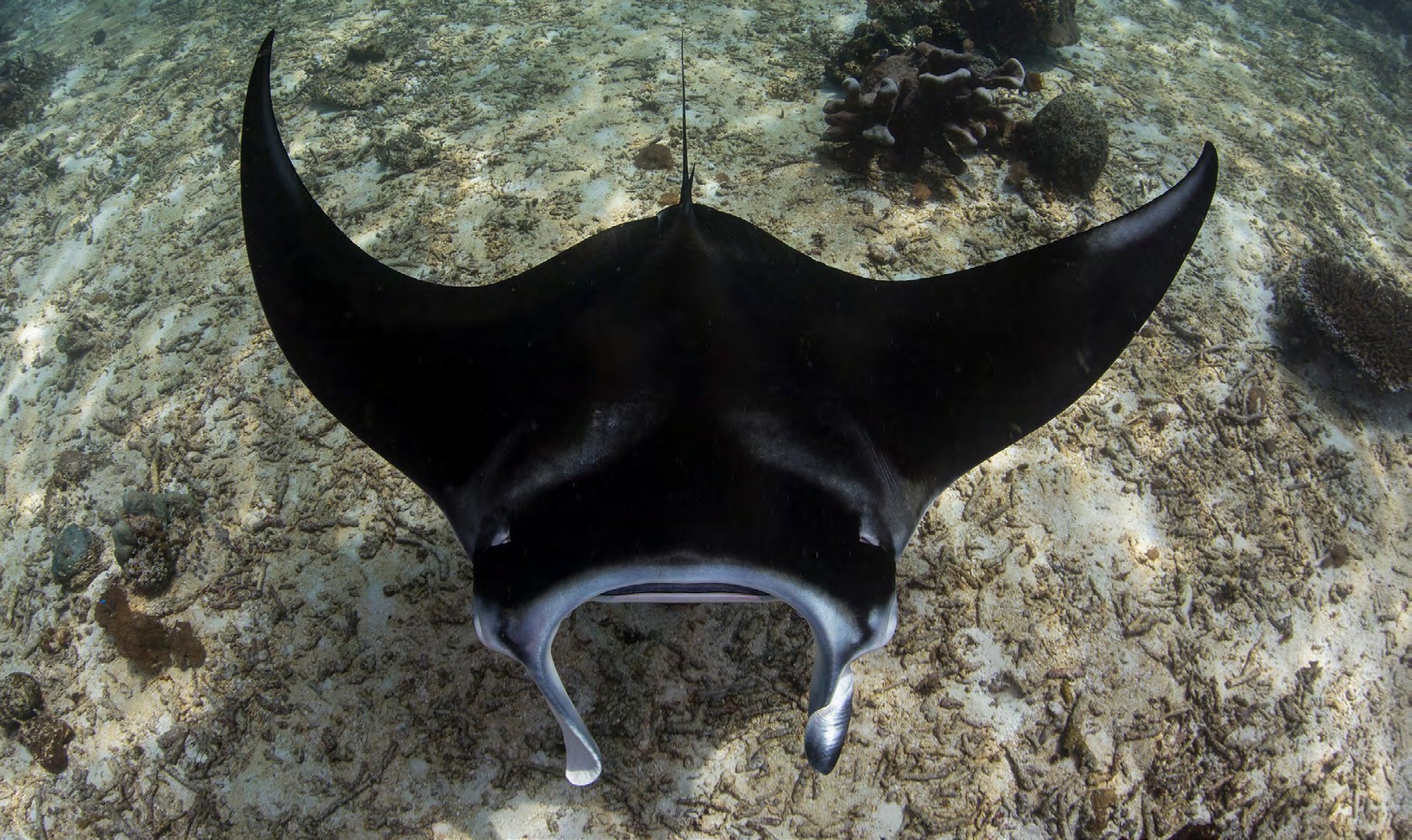
Manta rays regularly visit cleaning stations, sometimes for hours at a time.
To conduct this research, Rob waited at two high-use cleaning stations in Raja Ampat for reef mantas to turn up. When they did, he followed one reef manta ray underwater, filming that individual continuously so that we could later work through the footage to record all their behaviors. Almost 10,000 events later, we have some results to share!
Cephalic lobes tell the story?
Manta rays move their cephalic lobes in specific and interesting ways during social interactions. Certain movements, such as small flicks of the lobe tips, were performed more frequently when rays were facing another individual. Tight rolling of the lobes was associated with being followed by others. Some lobe movement types were made more frequently when interacting with cleaner fish, and might be useful for attracting their attention.
It’s always been difficult for us to understand communication in other species, particularly those such as manta rays that are so obviously different to us. It seems likely, though, that they use ‘gestures’ to interact with other mantas, and other species, in a fairly sophisticated way.
Michelle Carpenter, who co-authored this study as part of her PhD research at the University of Cape Town, notes, “the one finding that stuck out to me was that they were always moving their cephalic lobes when approaching a stimulus – another manta, a human diver, or a cleaner fish. This provides an argument that mantas are sensing their local environment with their cephalic lobes. Manta rays are incredibly complex creatures and animal behavior is a tough subject, which makes these things hard to confirm.”
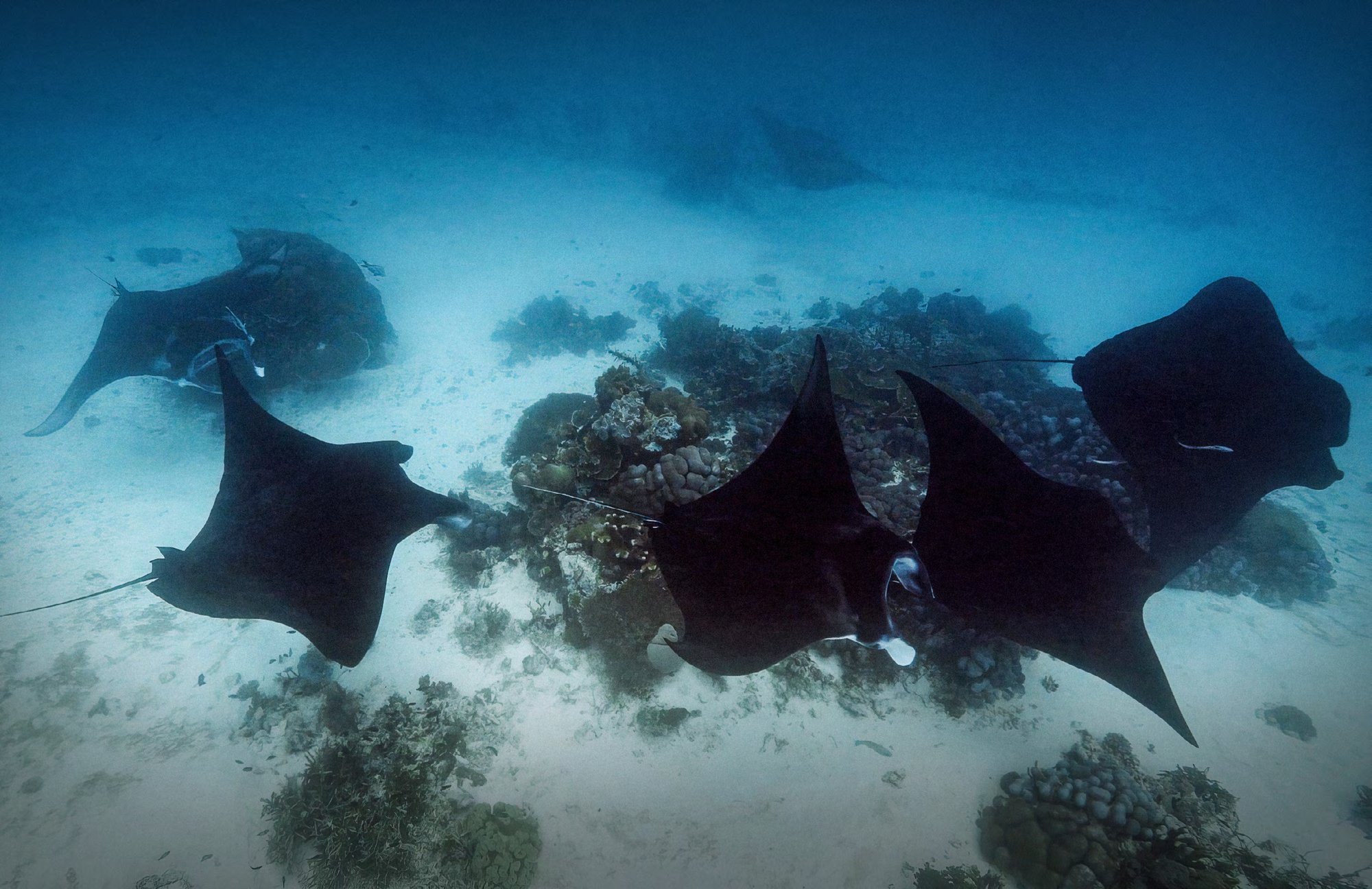
Manta rays move their paddle-like cephalic lobes in specific ways during social interactions.
Looking forward
These results add to the growing evidence that manta rays are fundamentally a social species, which is crucial knowledge for conservation.
To enable detailed records of manta behavioral interactions, we’ve created the first manta behavior recording methods (developed in BORIS software) to analyze their interactions in an unbiased and transferrable way. That will be very useful for us, and others, as we continue to investigate manta ray social lives.
Manta rays have been protected in Indonesia since 2014, but artisanal fishing remains a threat to their recovery. There is still little public awareness of the species, or the help they’ll need to rebuild depleted populations. We hope that, as we explore the social nature of manta rays, we will help to broaden support and public enthusiasm for their management and protection – in Indonesia, and around the world.
Collecting information about manta ray social interactions at cleaning stations, which are often popular dive sites, is also important for the development of ecotourism. Manta rays need the space and opportunity to not just maintain good health through regular visits to these sites, but to interact with one another without disturbance. These are fascinating, complex animals, and we’re only just starting to understand their lives.
This article was originally published in Ocean Giants, MMF’s magazine, Issue #02 (May 2021). Download the full issue as a PDF.