
Large spotted whiprays along Africa’s east coast are notoriously difficult to identify. A new genetic study confirms that at least two distinct species occur in the Western Indian Ocean, that both live side by side in Mozambique, and that their spot patterns are not a reliable guide to which is which.
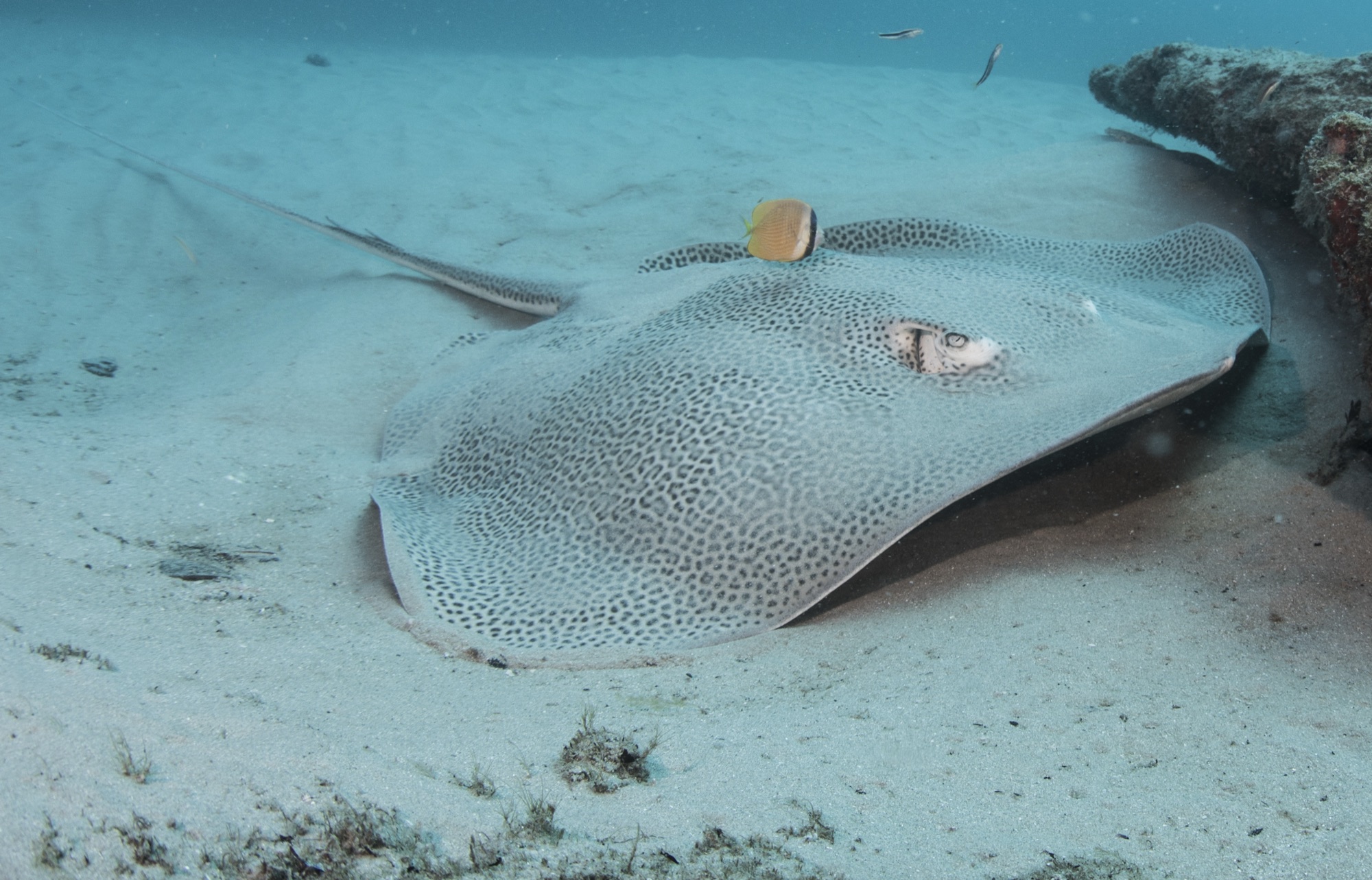
A large spotted whipray resting on the sand.
A difficult group to name
Whiprays of the genus Himantura are large, bottom-dwelling stingrays with long, whip-like tails. They inhabit coastal waters and estuaries from East Africa to the East China Sea, where fishing and habitat degradation threaten their populations, and most species in the genus are listed as Endangered on the IUCN Red List. Identifying them, however, relies mainly on their color patterns and body shape, which vary between individuals and as a ray grows. As a result, whiprays are frequently misidentified, both in the field and in the catch records used to manage fisheries.
Sampling and genetic analysis
The study, published in Marine Biodiversity, was led by Karla Redelinghuys of Stellenbosch University in South Africa. Its co-authors include researchers from the Wildlife Conservation Society, the Oceanographic Research Institute, and King Abdullah University of Science and Technology, along with MMF Research Associate Dr. Stephanie Venables and MMF’s Dr. Andrea Marshall.
The team analyzed samples from 93 whiprays collected between 2018 and 2024 in South Africa, Mozambique, Tanzania, Saudi Arabia’s Red Sea coast, and Qatar. MMF facilitated sample collection in Mozambique, where most samples were taken by divers from free-swimming rays. The researchers sequenced three mitochondrial genes (DNA inherited through the mother and widely used to distinguish species) and compared them with published sequences from the wider Indian Ocean and western Pacific. Five separate analytical methods then sorted the sequences into genetically distinct groups, and a group was accepted only where at least three of the methods agreed.
Two species overlap in Mozambique
Across all three genes, the whiprays sampled for the study fell consistently into two groups, separated by genetic distances (the proportion of DNA sequence that differs) of more than 10%, large enough to indicate two distinct species. One group occurred in South Africa, Mozambique, and the Red Sea, and the authors provisionally identify it as the leopard whipray (Himantura leoparda). The other occurred in Tanzania, Mozambique, the Red Sea, and Qatar, and is provisionally identified as the reticulate whipray (Himantura uarnak). The names remain provisional because few type specimens (the reference specimens that anchor scientific names) have been genetically sequenced, and the validity of a replacement type specimen designated for the reticulate whipray is still debated among taxonomists.
In Mozambique, both species were found at sites in the far south, near the border with South Africa, and around 500 kilometers (310 miles) to the north, in the Bazaruto Archipelago and at San Sebastian, with no apparent geographic divide between them. The authors describe Mozambique as a contact zone between the two species, a pattern that has also been reported for Critically Endangered wedgefishes.
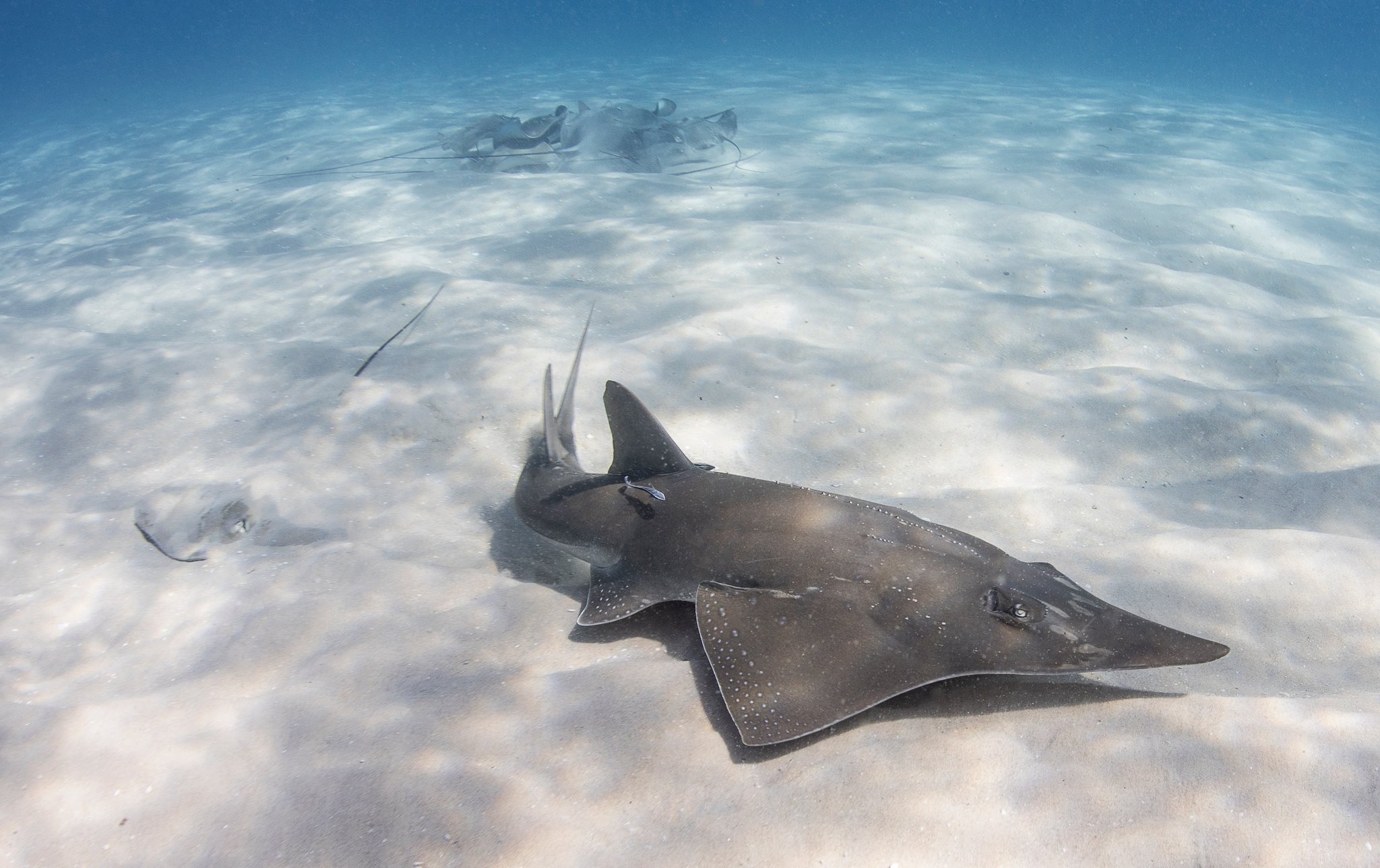
A wedgefish in the shallows of the Bazaruto Archipelago, with whiprays resting behind it.
Spot patterns and database errors
The study also shows that the spot patterns on a whipray’s back cannot reliably separate the two species. Two large adult females from South Africa, both more than 1 meter (3.3 feet) across and identified in the field as different species because of their distinct spotting, belonged to the same genetic group. In contrast, rays that looked alike and were both identified as reticulate whiprays fell into different groups. One ray from Tanzania carried three different spot patterns on a single animal.
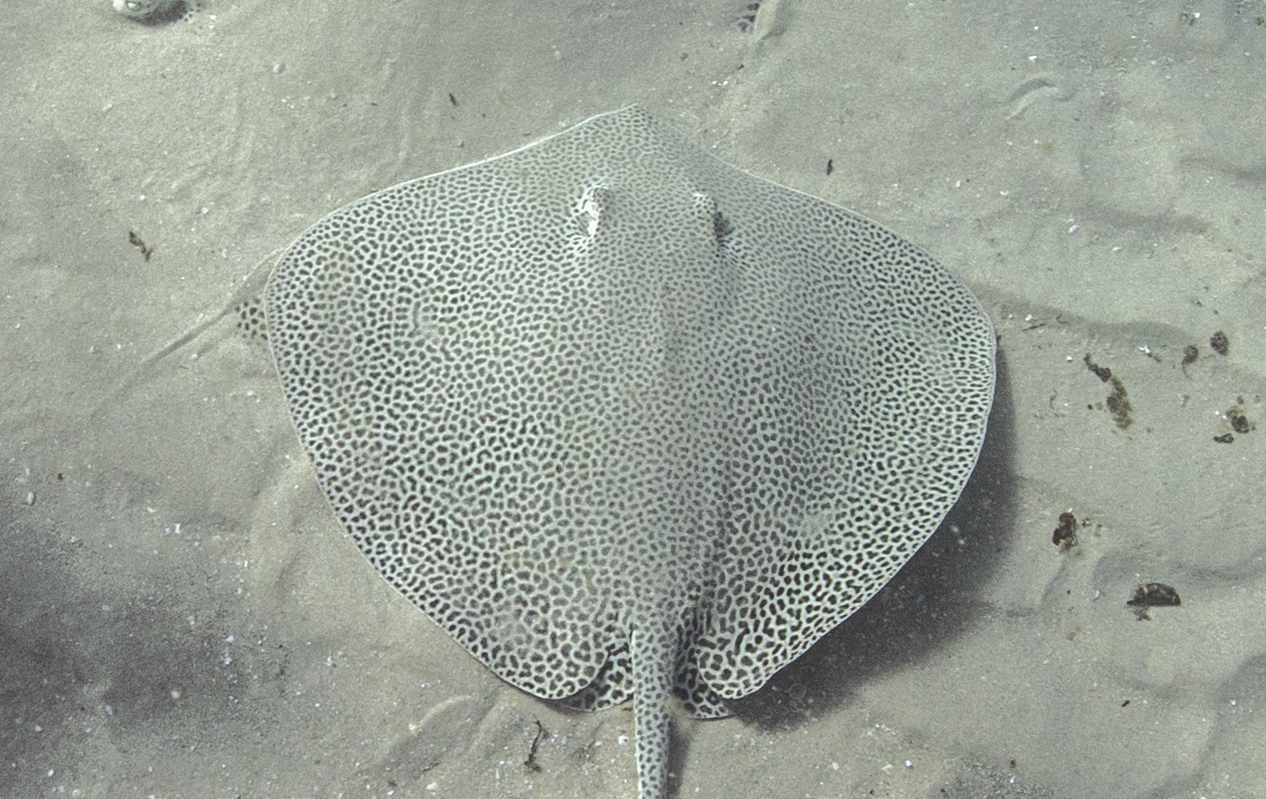
A whipray identified in the field as a reticulate whipray, sampled for genetic analysis in 2022. Spotting like this cannot reliably tell the two species apart.
Public DNA databases add to the confusion. The same genetic lineage appears in them under three different species names. For instance, the published mitochondrial genome of a leopard whipray is labeled as a reticulate whipray on GenBank, a widely used public DNA database. Errors of this kind carry through into later studies and, ultimately, into catch reporting.
Conservation implications
Until the two species can be named with confidence and reliably identified in the field, the authors recommend managing the Western Indian Ocean whiprays as a single conservation unit, while studying each species’ life history, habitat use, and vulnerability separately. This precautionary approach is intended to protect both species while avoiding the errors that misidentification introduces into fisheries monitoring. Leopard whiprays predominate in South Africa and reticulate whiprays in Tanzania, which suggests that the two countries may need different priorities. However, the authors single out Mozambique, where the species overlap, as a region that warrants particular attention.
The study builds on the same team’s complete mitochondrial genomes of both species, published earlier this year. For future research, the authors recommend sequencing the leopard whipray holotype (the specimen used to describe the species) held at CSIRO, adding nuclear DNA markers, sampling under-represented areas such as Kenya and Somalia, and identifying physical features that allow reliable identification in the field.
The study was supported by the National Research Foundation of South Africa and the Wildlife Conservation Society. In Mozambique, the Vilanculos Coastal Wildlife Sanctuary, Bazaruto Archipelago National Park, African Parks, the National Administration of Conservation Areas (ANAC), and the Oceanographic Institute of Mozambique (InOM) provided research permits and field support. Read the full study (open access). Learn more about MMF’s shark and ray research in Mozambique, or make a donation to support new research on the region’s rays.