
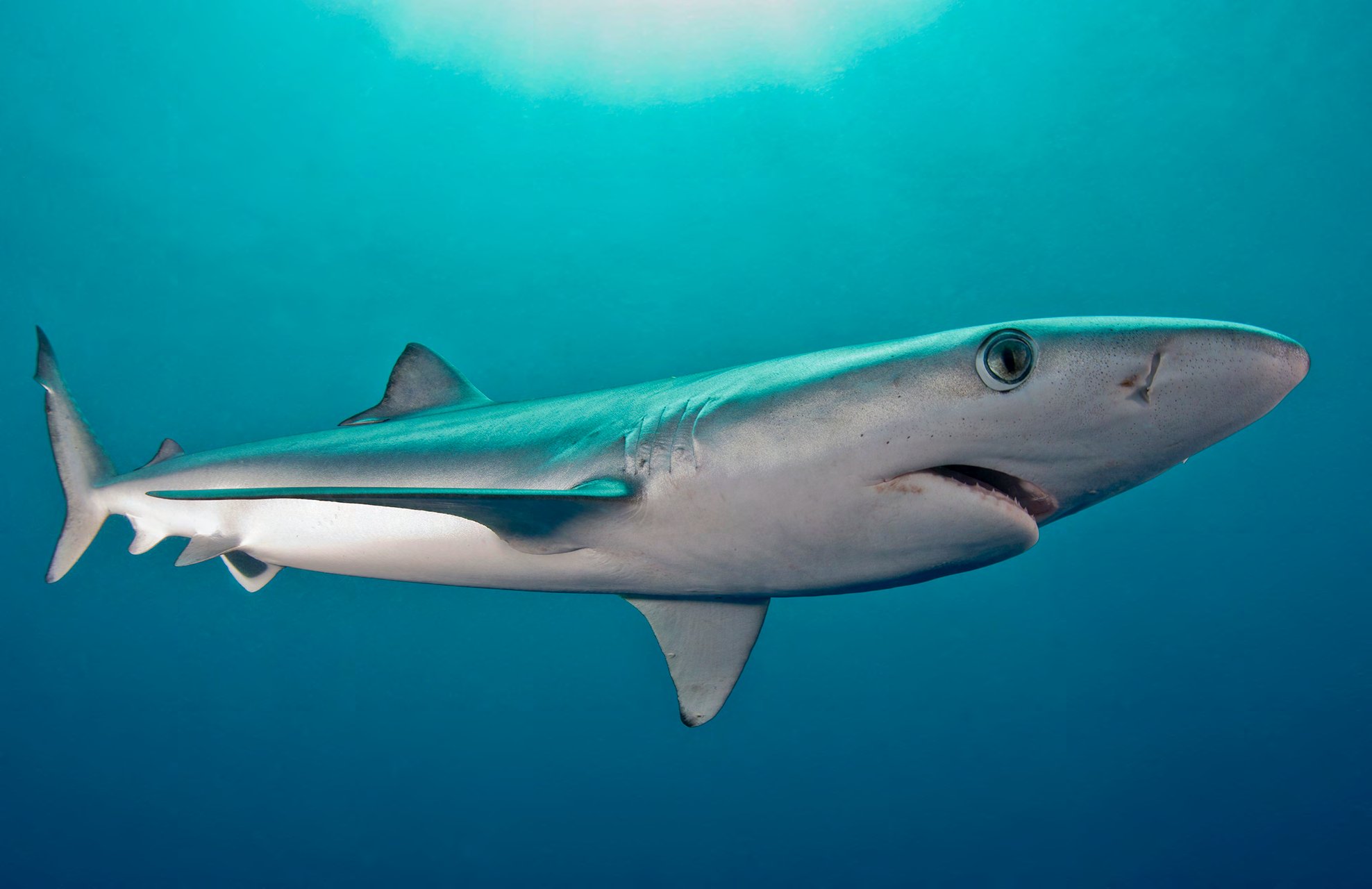
Oceanic sharks and rays suffer long-term declines.
By Dr. Andrea Marshall and Dr. Simon Pierce, Co-founders and Principal Scientists. Photography by Andrea Marshall, Simon Pierce, and MMF contributors.
The phrase “there’s plenty more fish in the sea” needs to be retired. Our recent work on open ocean sharks and rays has shown that this simply isn’t the case – and we’ll all need to press for better fisheries management and more protected areas to turn that around.
Andrea has recently co-authored a devastating new study, published in the eminent scientific journal Nature, that has documented an alarming decline in oceanic shark and ray populations – 71% since 1970 – primarily due to overfishing.
That study builds on work that several MMF scientists co-authored in 2019, also published in Nature, that tracked whale shark and other oceanic shark movements in relation to the global fishing fleet. In that study, we found that open ocean sharks have few refuges from fishing pressure in international waters, despite this habitat covering about half of the Earth’s surface. Even for protected species, 64% of their high-use areas overlapped with longline fisheries.
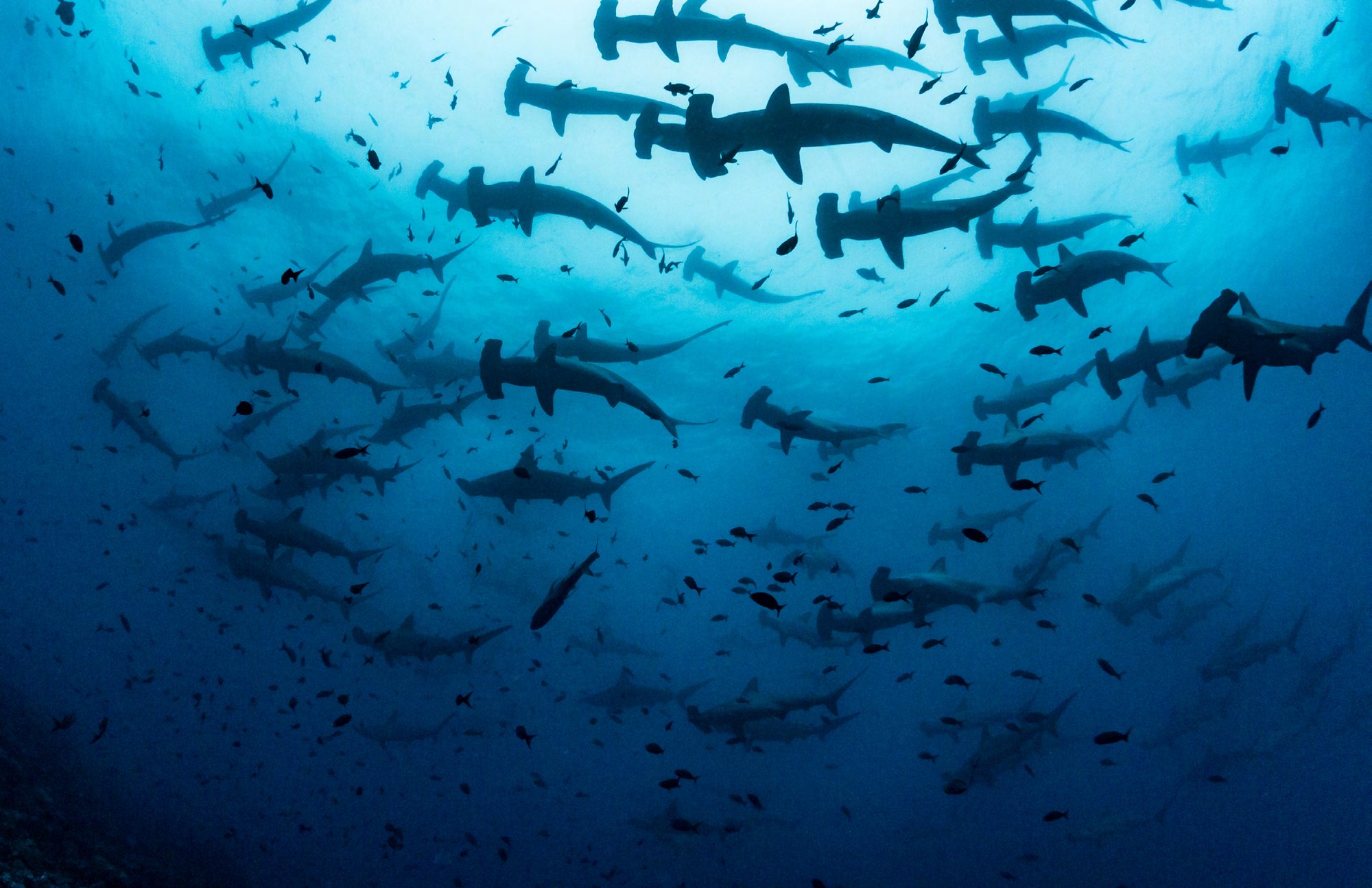
Whale sharks are among the oceanic species now threatened with global extinction.
Threatened with extinction
This newer study confirms our fears that high fishing pressure has led to many open ocean sharks and ray species facing a high risk of extinction.
Led by the Global Shark Trends Project (GSTP), the paper synthesized global research to assess the extinction risk for the 31 oceanic sharks and rays. Three-quarters of these iconic species, including giant manta rays and whale sharks, are now threatened with global extinction. Half (16 of the 31) were assessed as critically endangered, with estimated declines of over 80%.
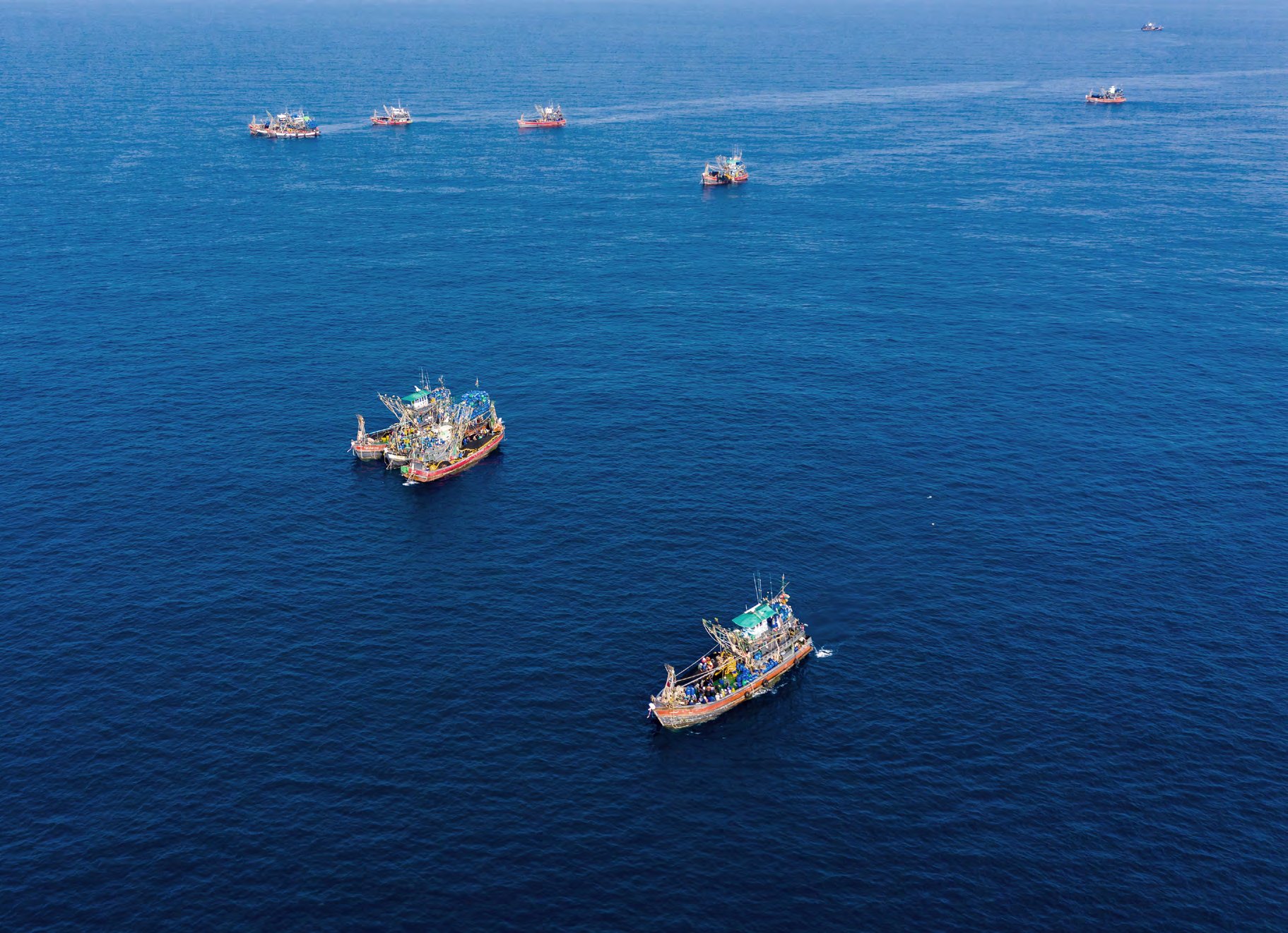
Fishing pressure has doubled since 1970, and catches have tripled.
Fishing has been assessed as the most important threat to all of these species. Fishing pressure has doubled since 1970, and catches have tripled, with an 18x increase in a metric known as Relative Fishing Pressure: the level of exploitation relative to the number of fish left to catch.
These declines point to increasingly unhealthy open ocean ecosystems, which impacts all of us.
Rays at risk
Andrea contributed monitoring data to this study from MMFs 20-year mobulid ray (mantas and devil rays) research in southern Mozambique. Sightings in this region, previously one of the world’s hotspots for these species, declined more than 90% from 2003 to 2016.
Again, the biggest threat to this population has come from fisheries. This decline sounds bad on paper, but watching it happen – with more and more manta rays that we ‘know’ disappearing – has been a nightmare.
These results have been a big part of the impetus for the Ocean Ambassadors conservation program, which Genaye describes in another article. Thankfully, at least the manta rays are also now legally protected.
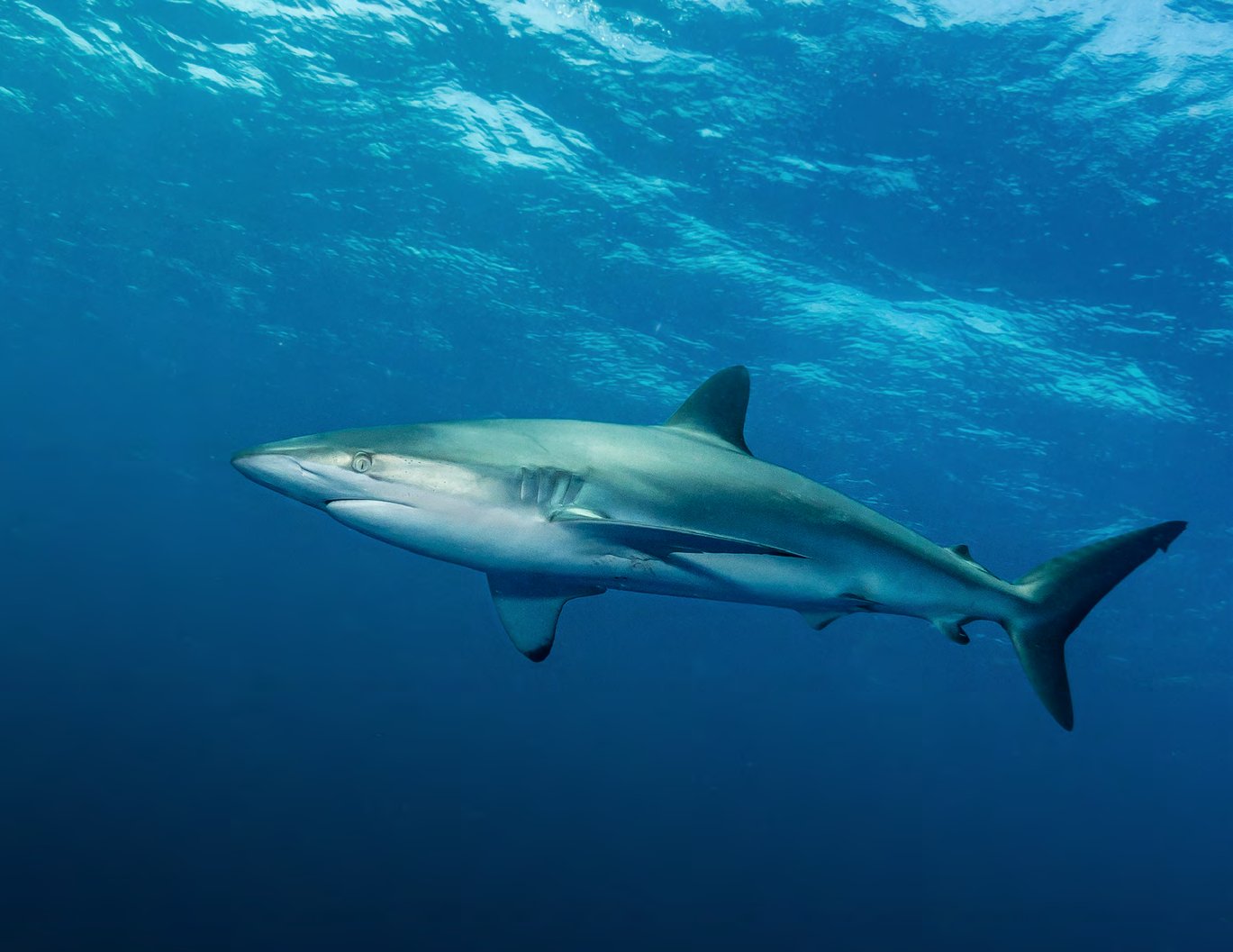
Mobulid ray sightings in southern Mozambique declined by more than 90% between 2003 and 2016.
Rebuilding populations
The open ocean is vital to our wellbeing, regulating much of the global climate, but it’s not a habitat that many of us are familiar with – it’s out of sight, and out of mind. Outside national waters, there are also fewer management tools for avoiding overfishing.
Ultimately, more of the open ocean needs to be closed to fisheries. Less than 3% of the open ocean is fully protected right now, whereas the best science suggests that 30% needs to be the goal for the long-term sustainability of fisheries. Many countries, including recently the US, have adopted 30% as their national goal for marine protection. The next step is to expand this to international waters, to help safeguard our own futures.
This article was originally published in Ocean Giants, MMF’s magazine, Issue #02 (May 2021). Download the full issue as a PDF.