
Mozambique
Mozambique Rhino Rays Research Project
Mozambique is a center of abundance for rhino rays, the world's most threatened group of marine fishes, and we are collecting the data needed to protect them.
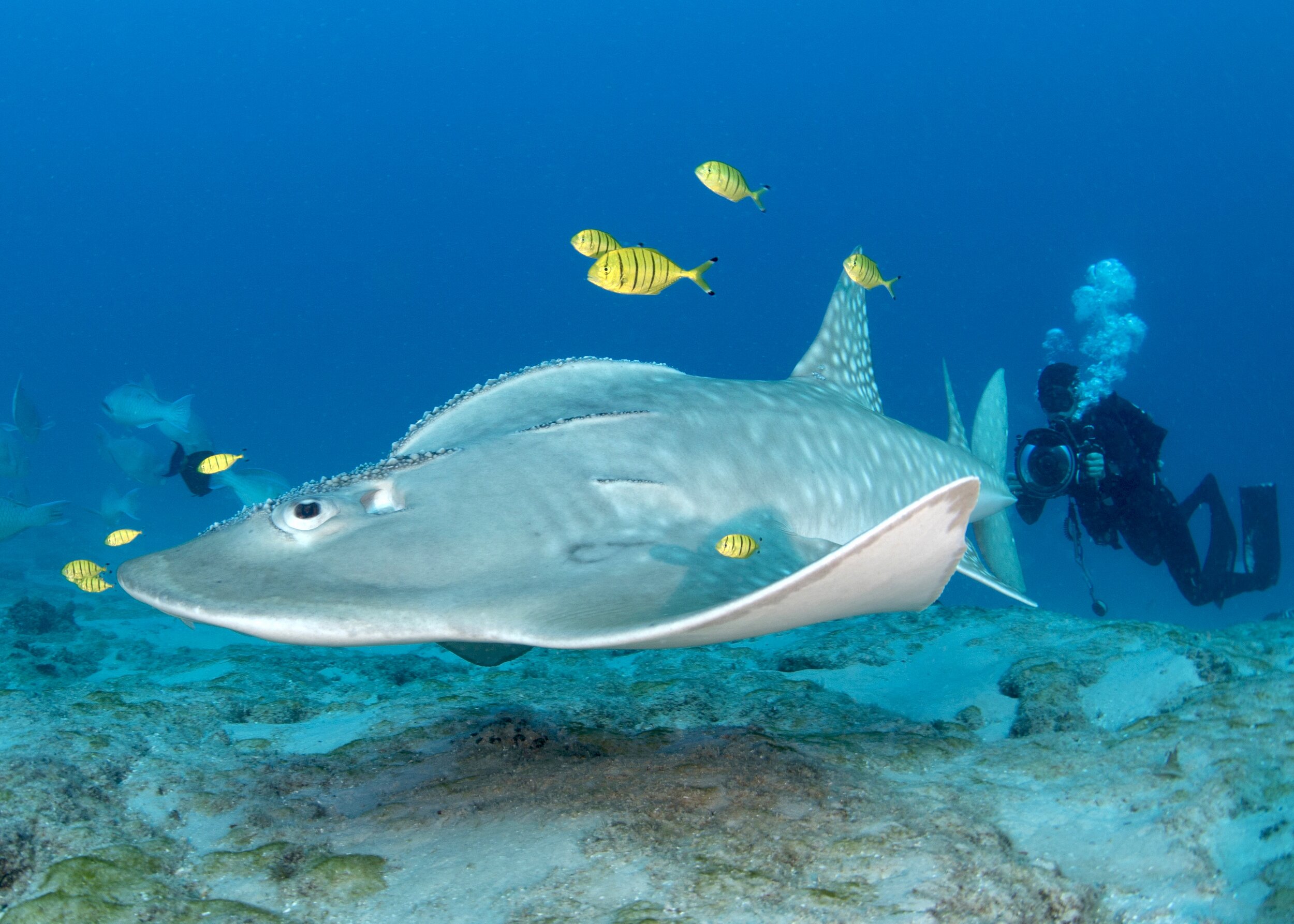
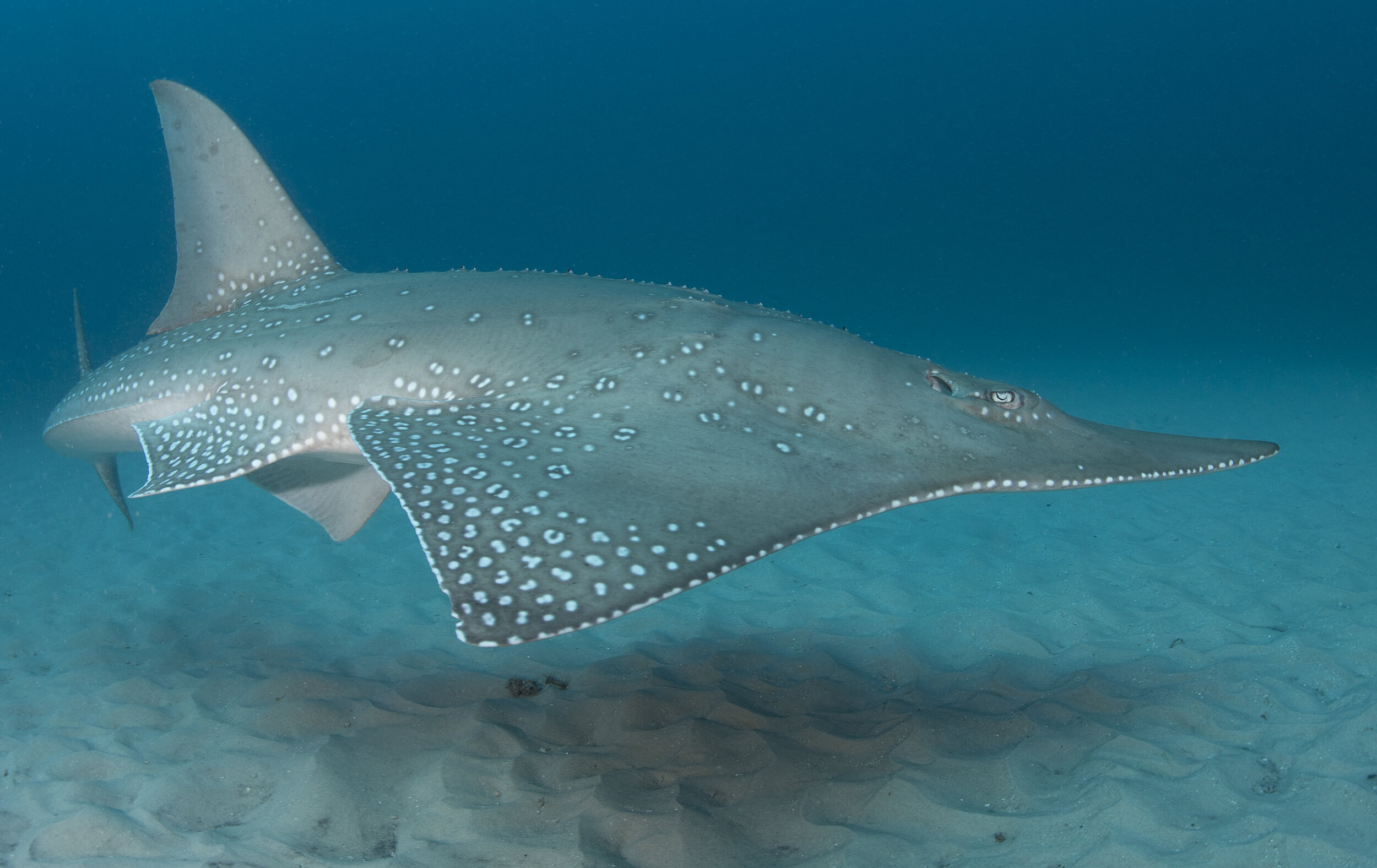
Rhino rays – the shark rays, guitarfishes, and wedgefishes – were recently identified as the world’s most threatened group of marine fishes, and Mozambique is a center of abundance for these spectacular rays.
Extensive targeting by fisheries has driven dramatic population declines. Our research therefore focuses on collecting the data required to build a science-based conservation strategy for these critically endangered rays in Mozambique.
Objectives
- Collect the data needed to develop and inform science-based conservation management plans for guitarfish and wedgefish in southern Mozambique.
- Monitor rhino rays visually and photographically at their aggregation sites.
- Document their movements through satellite and acoustic tracking.
- Collect tissue samples and measurements for taxonomic studies.
What we've done
- Compiled a rhino ray sightings dataset spanning more than 20 years in Inhambane Province, including presence/absence records, photographic IDs, and behavioral data.
- Identified a number of wedgefish aggregation sites from the Bazaruto Seascape to Závora through exploratory diving and remote underwater cameras, including estuary systems that appear to serve as nursery areas.
- Built a photo-identification catalog of more than 90 individually identified bottlenose wedgefish (Rhynchobatus australiae), one of the largest catalogs for this critically endangered species anywhere in its range.
- Confirmed through acoustic tracking that bottlenose wedgefish live in the Bazaruto Seascape year-round, establishing it as essential habitat for the species in the western Indian Ocean.
- Collected tissue biopsies to build a sample library for genetic studies of taxonomy and population connectivity.
- Fitted bottlenose wedgefish with acoustic and satellite tags since 2023, in a project with Santuário Bravio de Vilanculos funded by the Shark Conservation Fund. In May 2025 the team tagged nine more in the sanctuary’s Linene estuary, more than doubling the number carrying acoustic tags, and installed two underwater listening stations at the estuary mouth to record their movements.
- Helped establish a protected no-netting area around critical wedgefish habitat in the Bazaruto Seascape, backed by a ranger camp, patrol boats, and a community catch-monitoring program run with local fishers.
What's next
- Publish the results of the wedgefish tracking study; we will share them here once they are out.
- Work toward the proposed extension of the no-netting zone, which has regulatory support from Mozambique’s Maritime Administration.
- Expand the work to new sites along the Inhambane coast.
Help protect Mozambique's rhino rays
Your gift to our Mozambique program funds the fieldwork, community work, and government engagement behind this project.
Our work on rhino rays in Mozambique
The world’s most threatened marine fishes
Rhino rays, which include the guitarfishes and wedgefishes, were recently identified as the world’s most threatened marine fishes, with populations experiencing severe declines on a global scale. Low reproductive rates hinder population recovery and add to their extinction risk, while the high value of their fins and meat drives excessive, unregulated fishing throughout their range. Compounding the problem, a lack of focused research, even on the taxonomy of these species, hinders the development of effective conservation strategies.
The listing of 15 rhino ray species as Critically Endangered by the IUCN in 2019 sparked a global call for research to better understand this lesser-studied group, and specifically to inform conservation strategies that can prevent further decline. Biological and ecological knowledge of these rays is still lacking and, as a consequence, few management plans exist to protect declining populations worldwide.
Rhino rays in Mozambique
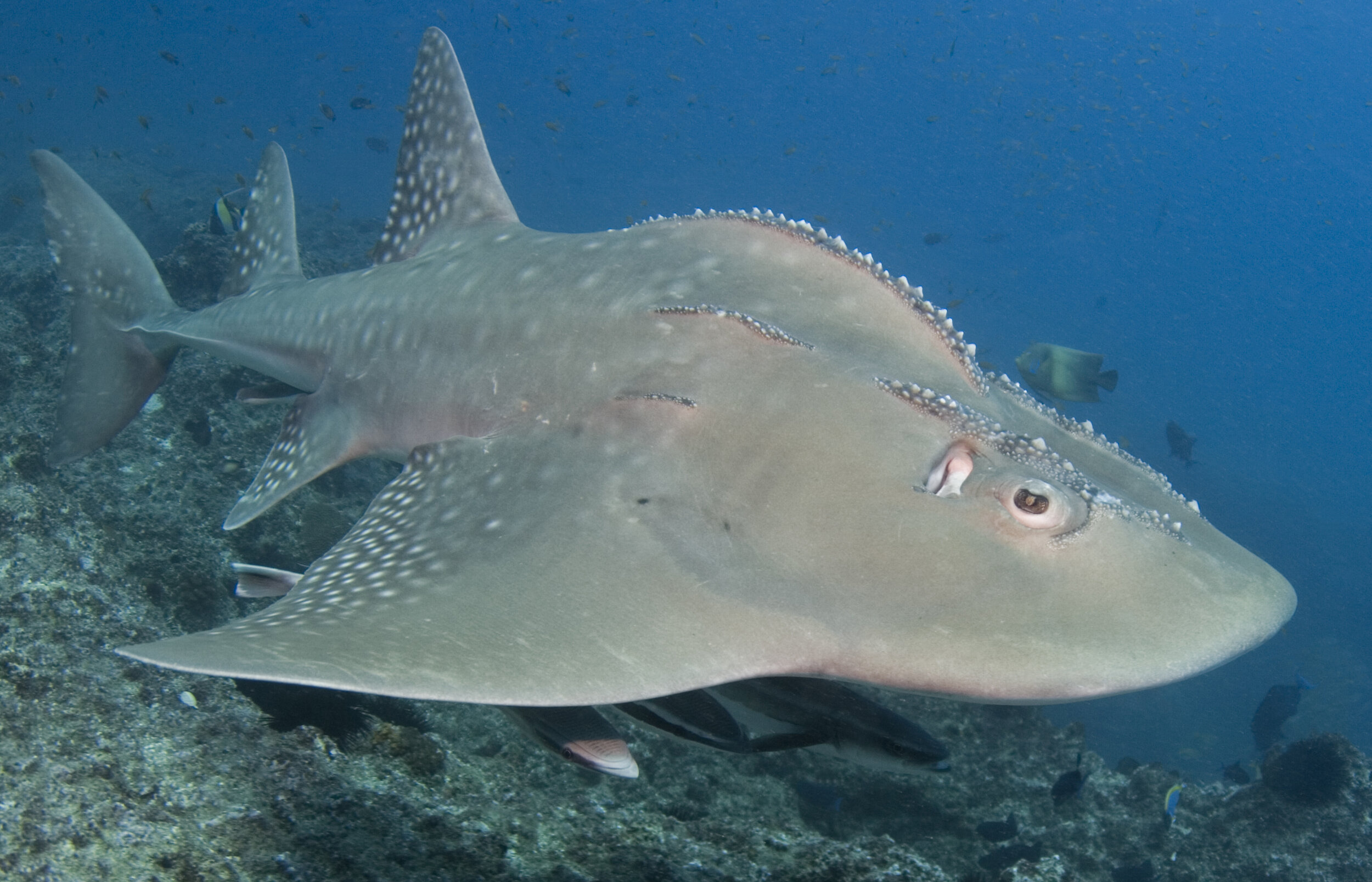
Inhambane Province is an important habitat for rhino rays in southeast Africa. At least three wedgefish species, the bowmouth guitarfish (Rhina ancylostoma), the bottlenose wedgefish (Rhynchobatus australiae), and the white-spotted wedgefish (R. djiddensis), as well as one guitarfish, the grey-spotted guitarfish (Acroteriobatus leucospilus), live in its coastal waters. Fishing pressure from gillnetting, longlining, and targeted capture has increased substantially in the past decade, a major threat to these already vulnerable species. Yet there has been little direct research on this group in southern Mozambique, or elsewhere in southern Africa, so their distribution, habitat preferences, movements, and baseline abundance remain unknown.
Our rhino ray program is designed to rapidly collect high-priority information on guitarfishes and wedgefishes in southern Mozambique and to develop a science-based conservation strategy for them in a region with many human threats. MMF’s Dr. Clare Prebble leads our rhino ray fieldwork in Mozambique, coordinating the acoustic tagging program, dive surveys, and the expansion of the work to new sites along the Inhambane coast.
Findings to date
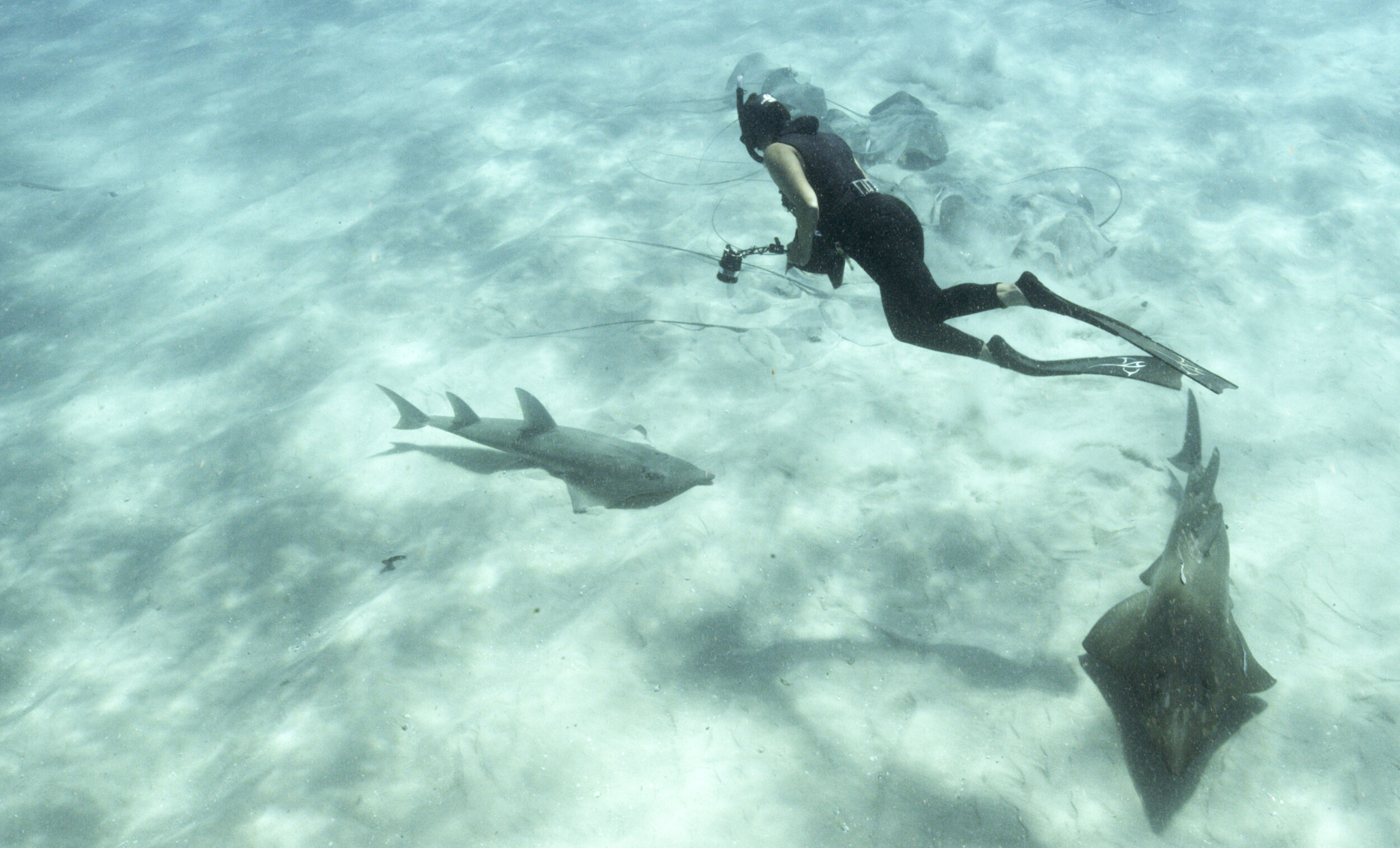
Since 2023, MMF has been tagging bottlenose wedgefish with acoustic transmitters and tracking them on a network of underwater listening stations spanning roughly 400 km (250 miles) of the southern Mozambican coast. The picture that has emerged is of a species far more closely tied to this coastline than anyone expected.
Tagged wedgefish are detected on the array year-round, remaining along this coastline rather than passing through. We will share fuller results once they are published.
Juvenile wedgefish have also been recorded at estuary sites within the seascape, evidence that these estuaries function as nursery areas and, therefore, a strong argument for protecting them.
Alongside the tracking work, our photo-identification catalog has grown to more than 90 individually identified bottlenose wedgefish, and tissue samples collected during fieldwork are contributing to genetic studies of a group whose taxonomy in southern Africa is still unresolved. We also contribute acoustic tracking data on bowmouth guitarfish to Shark Ray 360, an international research consortium led by Shedd Aquarium that is compiling movement data from across the species’ range; ours is one of the few East African datasets available for this critically endangered ray. Dr. Ryan Daly of South Africa’s Oceanographic Research Institute collaborates on the project.
Turning research into protection
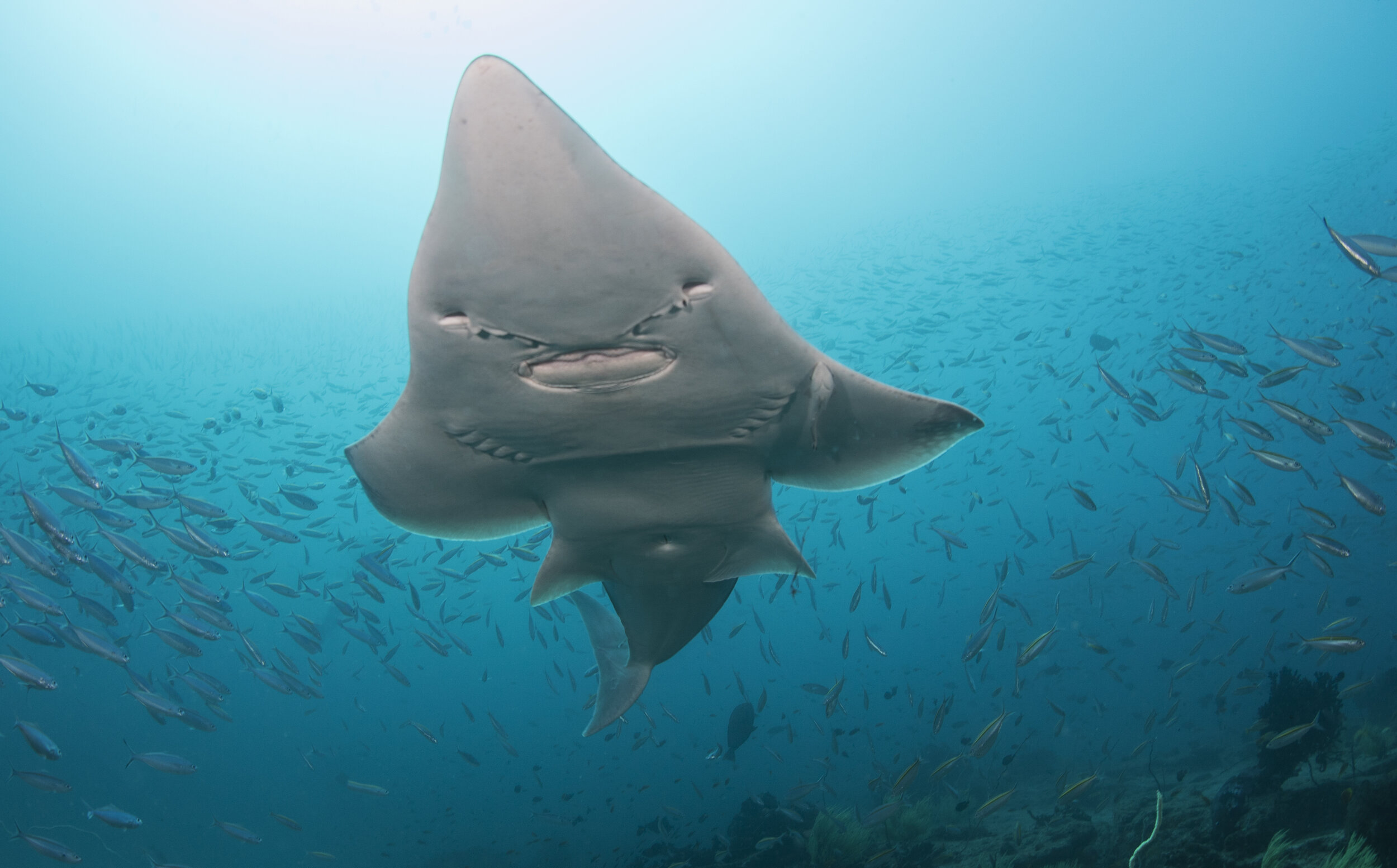
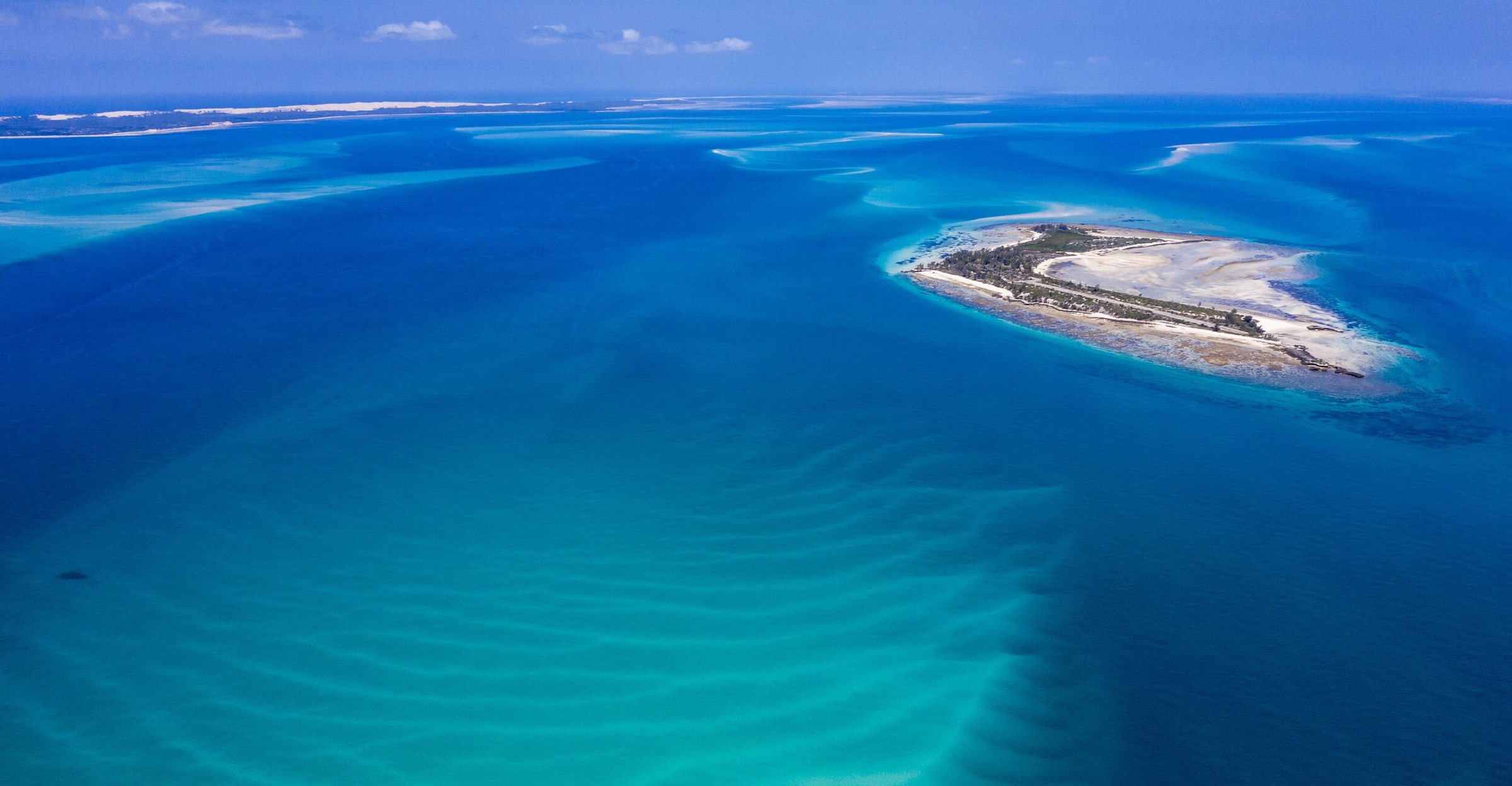
Working with Santuário Bravio de Vilanculos and the Chingonguene community fishing council, we have used our wedgefish data to define and establish a protected no-netting area around critical habitat in the Bazaruto Seascape.
Mozambique’s Maritime Administration has provided regulatory support for a proposed extension of the no-netting zone. The protected area is backed by practical enforcement capacity: patrol boats, trained rangers, and a ranger camp completed in 2024 that now serves as a base for MMF field officers. Rangers and community fishing council members have been trained in species identification, data recording, and fisheries management, and run a catch-monitoring program that records what is being landed along this stretch of coast.
Community work has progressed in parallel. Since late 2025, MMF, the community fishing council, and Mozambique’s Maritime Administration have been jointly training fishers in selective deep-sea handline fishing as an alternative to netting. Marine conservation education in Chingonguene, including structured school lessons, virtual-reality ocean experiences, World Oceans Day events, and beach cleanups, reached more than 700 people during 2024 and 2025, including 22 marine megafauna talks.
 Dr. Stephanie Venables
 Dr. Clare Prebble
 Nilza de Catarina
 Mozambique Acoustic Telemetry Network
 Mozambique Elasmobranch Diversity Research Project
 Bazaruto Seascape Marine Conservation
 Mozambique Smalleye Stingray Research Project