
Where we work
Honduras
At Utila, twelve years of photographs identified 95 whale sharks, and showed that these sharks also visit Belize and Mexico.
Utila, a small island at the southern end of the Mesoamerican Barrier Reef, is one of the few places in the Caribbean where whale sharks (Rhincodon typus) can be seen in any month of the year. Working with Utila Whale Shark Research, we analyzed more than a decade of sightings and identified 95 individual whale sharks; the results were published in the Journal of Fish Biology in 2013.
Between 2011 and 2013, Dr. Simon Pierce ran whale shark research weeks on the island with Deep Blue Resort. Utila’s sightings subsequently contributed to a 2017 study of whale shark movements across the western Atlantic, which showed that the sharks often move between Honduras, Belize, and Mexico. The study is now complete: read more about our Utila Whale Shark Project.
Completed projects
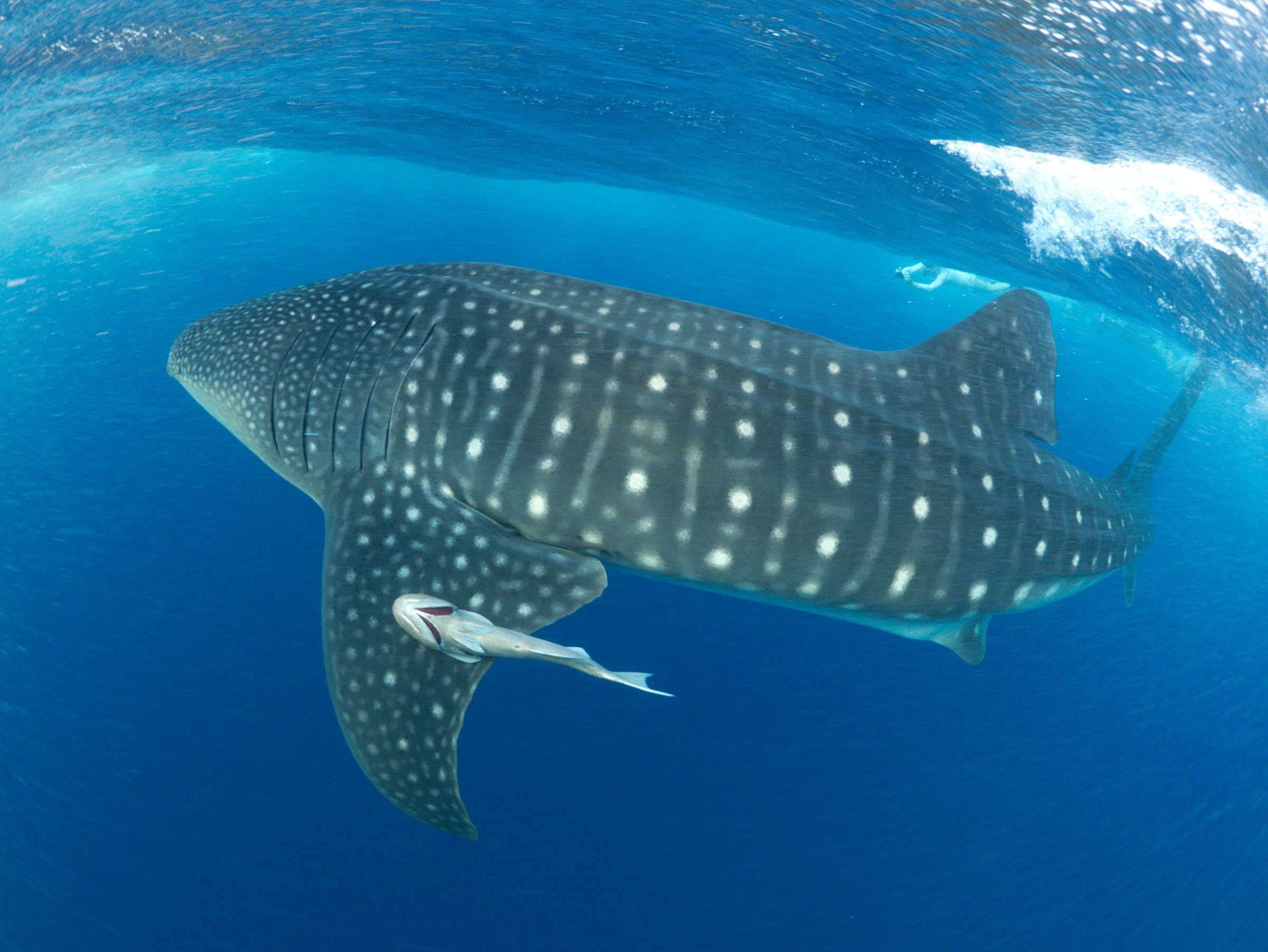 Utila, Bay Islands, HondurasUtila Whale Shark ProjectTwelve years of photographs identified 95 whale sharks at Utila and showed that they belong to a single population that ranges across the western Caribbean.
What we work on
Snorkelers on boat surveys photographed each shark's spot pattern, allowing us to distinguish 95 individual whale sharks. Most were juveniles in transit, with a residency of about 12 days.
Sharks seen at Utila also visit Belize and Mexico, and two traveled 1,600 km (990 miles) or more to the US Gulf coast. We recommended that Honduras, Belize, and Mexico manage them as a single population.
Three of Utila's sharks carried large propeller scars. The study suggested restricting the speed and access of large vessels where the sharks feed, along with a code of conduct for whale shark tourism.