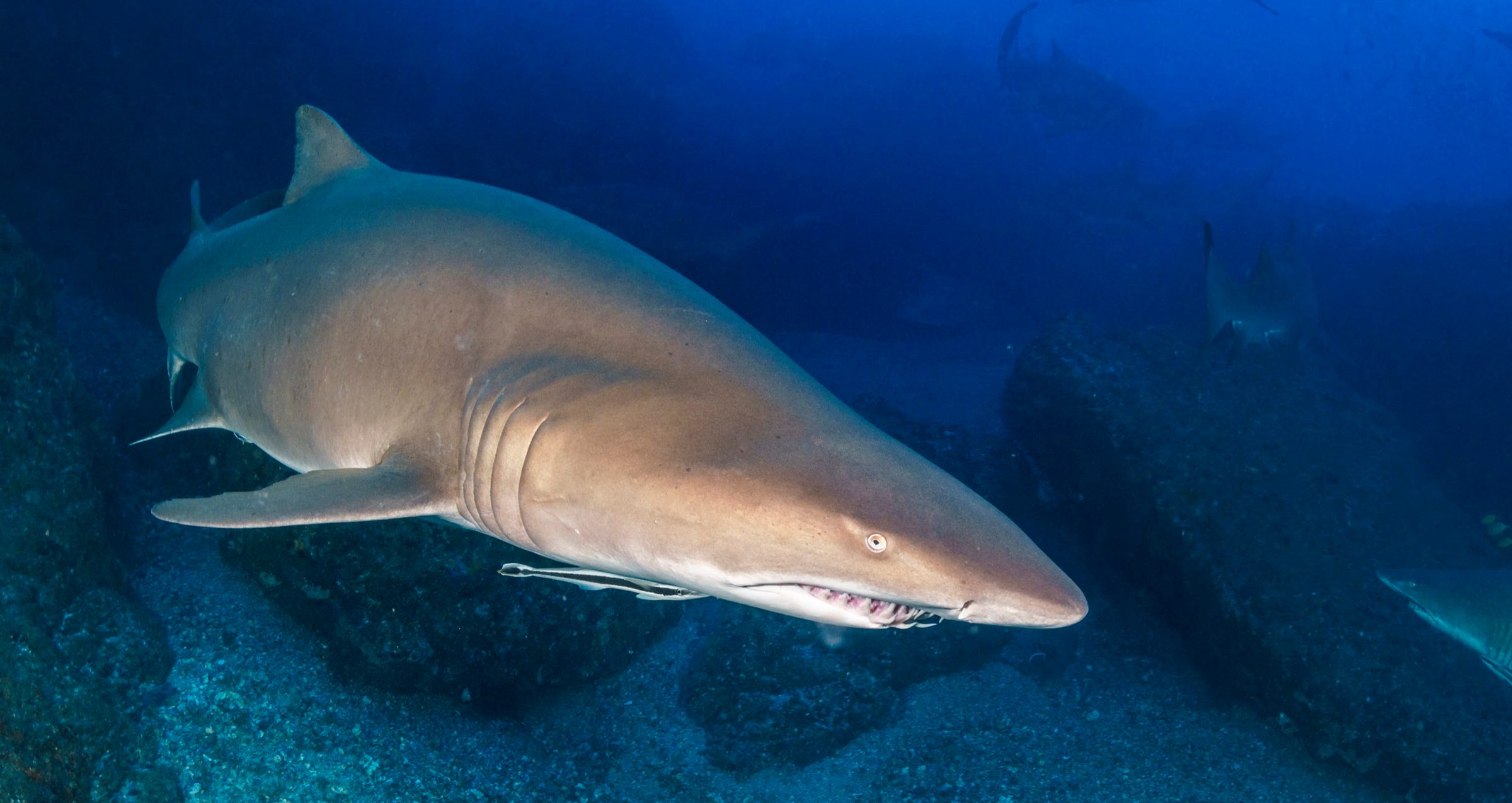




Why adopt a grey nurse shark?
Adopt a grey nurse shark and you back research on a shark in serious trouble. Grey nurse sharks (Carcharias taurus), known as sand tigers in the USA, are listed as Critically Endangered on the IUCN Red List.
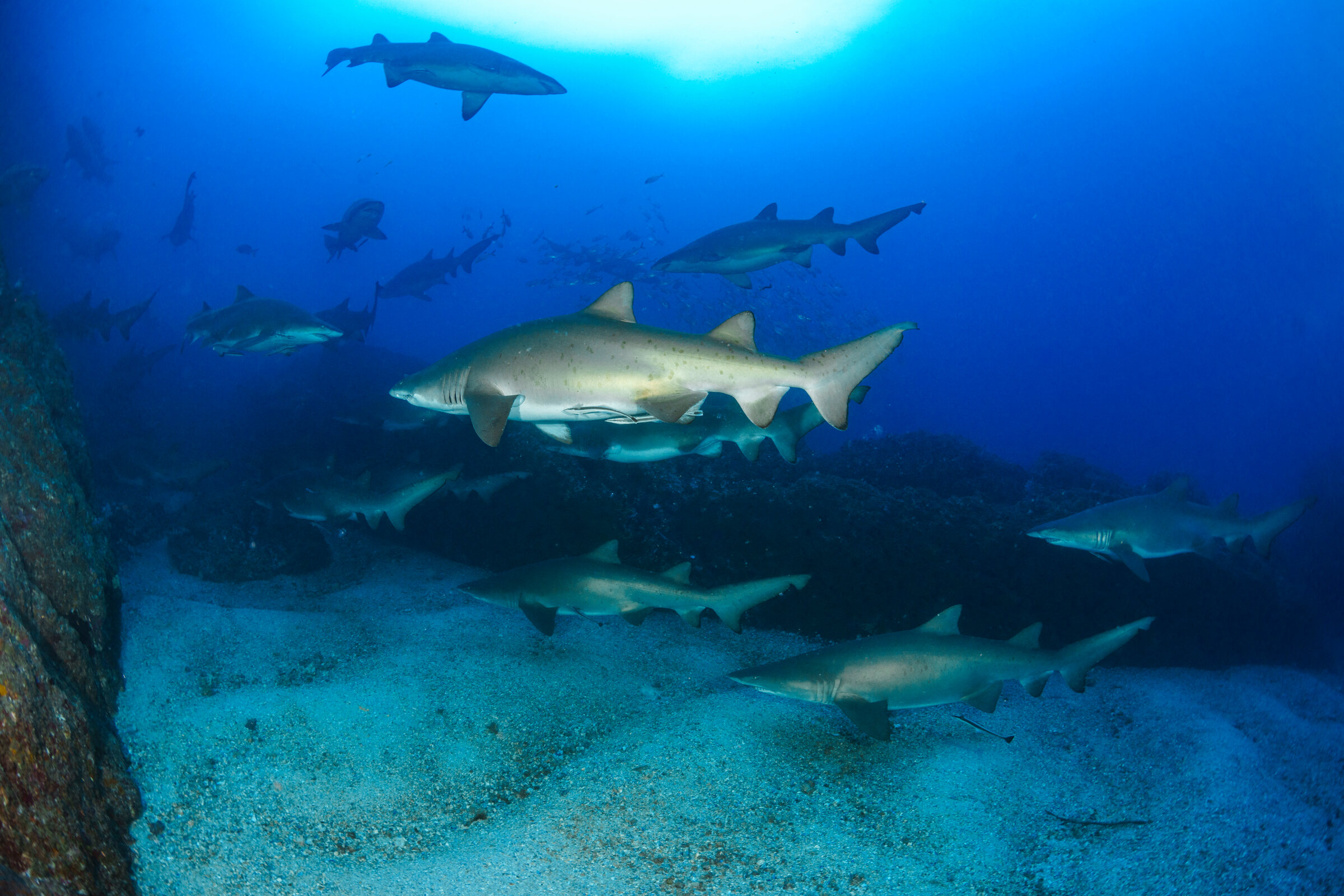
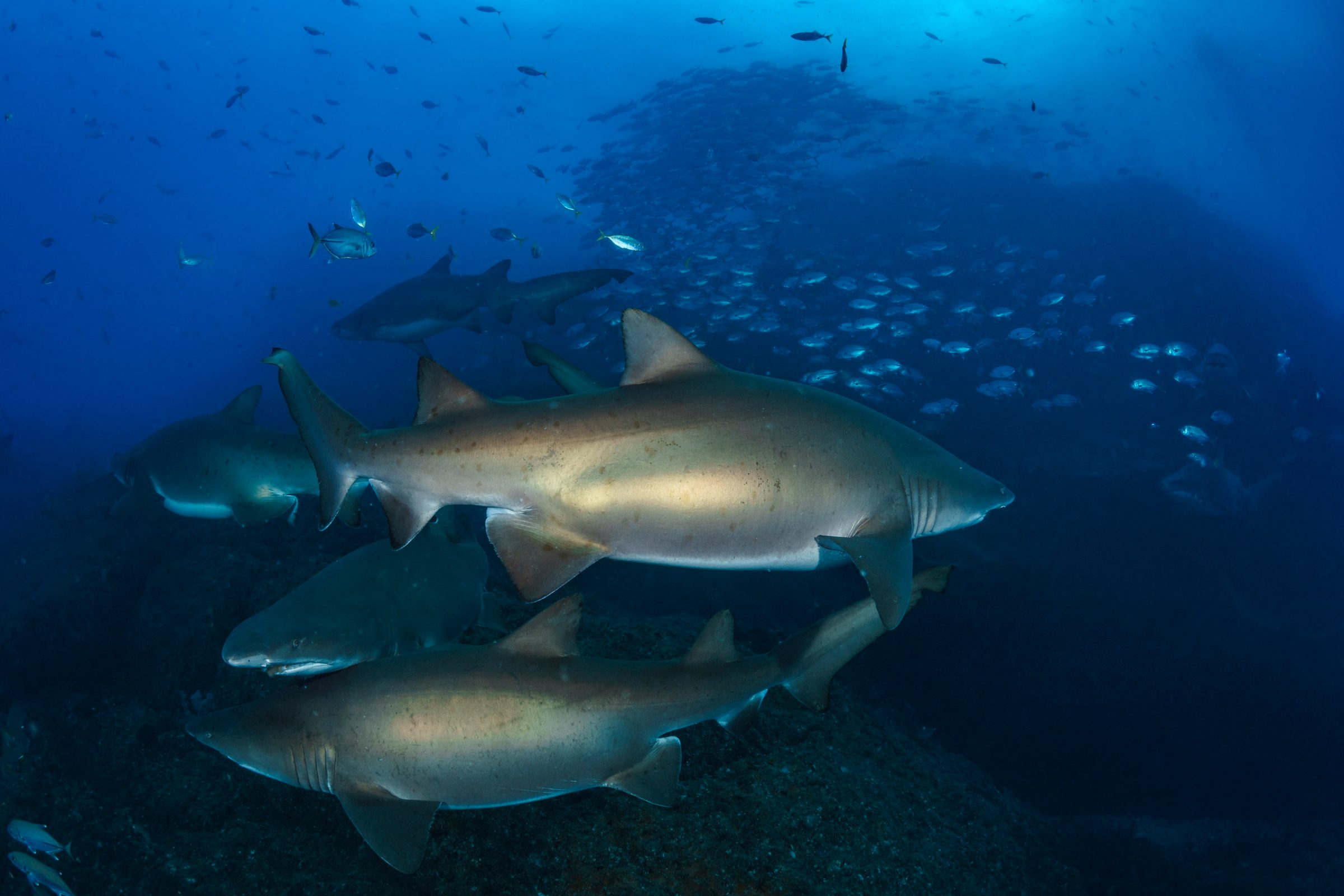
Along Australia's east coast, much depends on a single site. Wolf Rock, in southeast Queensland, is the only known gestation site for the species in eastern Australia, where pregnant females aggregate while their pups develop. That makes it a key place to watch the population.
Grey nurse sharks are one of the species MMF has chosen to focus on: endangered, threatened, or poorly known animals for which a small team of specialists can change the outcome. Over the five years of its current strategy, MMF intends to work toward effective protection for grey nurse sharks in Australia. Each adoption, whether for yourself or as a gift, supports that goal.
About grey nurse sharks
The grey nurse shark and the sand tiger are the same species, Carcharias taurus: sand tiger is the name used in the USA.
Sand tigers have an unusual start in life: their embryos eat their own siblings inside the uterus. In eastern Australia, the pregnant females gather at Wolf Rock while their pups develop.
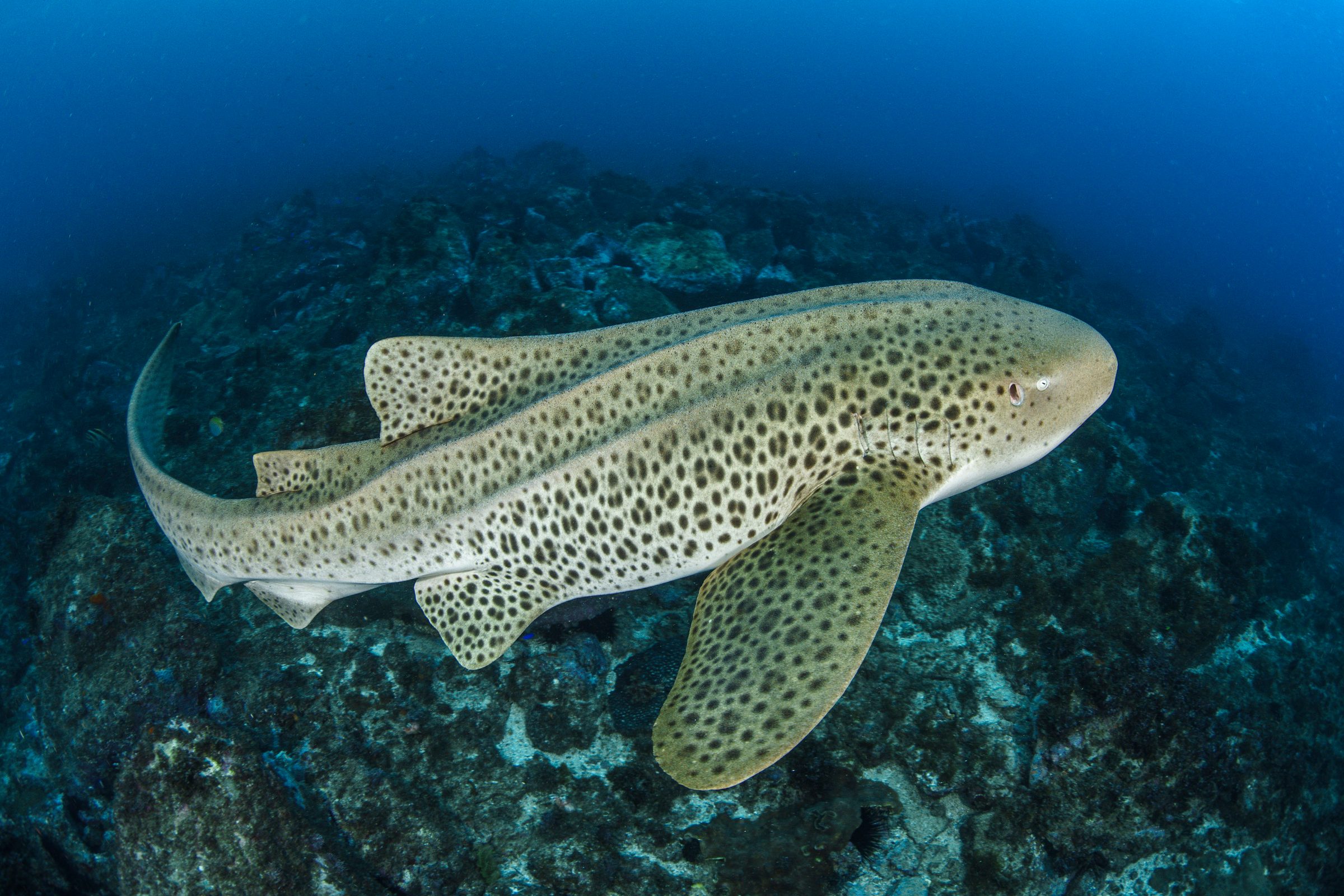
Individual grey nurse sharks can be recognized from photographs of their natural markings, so researchers can follow the same sharks for years without capturing or tagging them. The Wolf Rock surveys have documented long-term resightings, including one shark first recorded more than 20 years earlier.
How your grey nurse shark adoption helps
Your grey nurse shark adoption supports MMF's work as a whole, including our contribution to grey nurse shark monitoring in eastern Australia. The Grey Nurse Shark Project is led by the University of the Sunshine Coast, and Dr. Simon Pierce leads MMF's part in it. He is an Adjunct Fellow at the University of the Sunshine Coast and Research Manager for Spot A Shark.
Simon has been leading photo-identification surveys of grey nurse sharks at Wolf Rock, in collaboration with the University of the Sunshine Coast. The surveys are part of a wider effort to identify grey nurse sharks along the length of the east coast, with help from MMF's partners at Sundive Research. By 2025, the east-coast catalog held more than 2,000 individual sharks, likely a significant proportion of the population.
Simon is also a scientific advisor to Sharkbook.ai, the global shark photo-monitoring database. He has been working with Spot A Shark, the University of the Sunshine Coast, and the Queensland Government to add grey nurse sharks to the platform, which has enhanced its AI models for identifying the species. AI-assisted matching lets researchers monitor individual sharks over time, a long-term record that can track how the population is doing.
Divers help too. If you dive with grey nurse sharks in Australia, your photos could contribute to this work through Spot A Shark. Read more about MMF's work in Australia.
Ready to help? A grey nurse shark adoption is $39, with a personalized certificate to download straight after checkout.
Adopt a grey nurse shark · $39