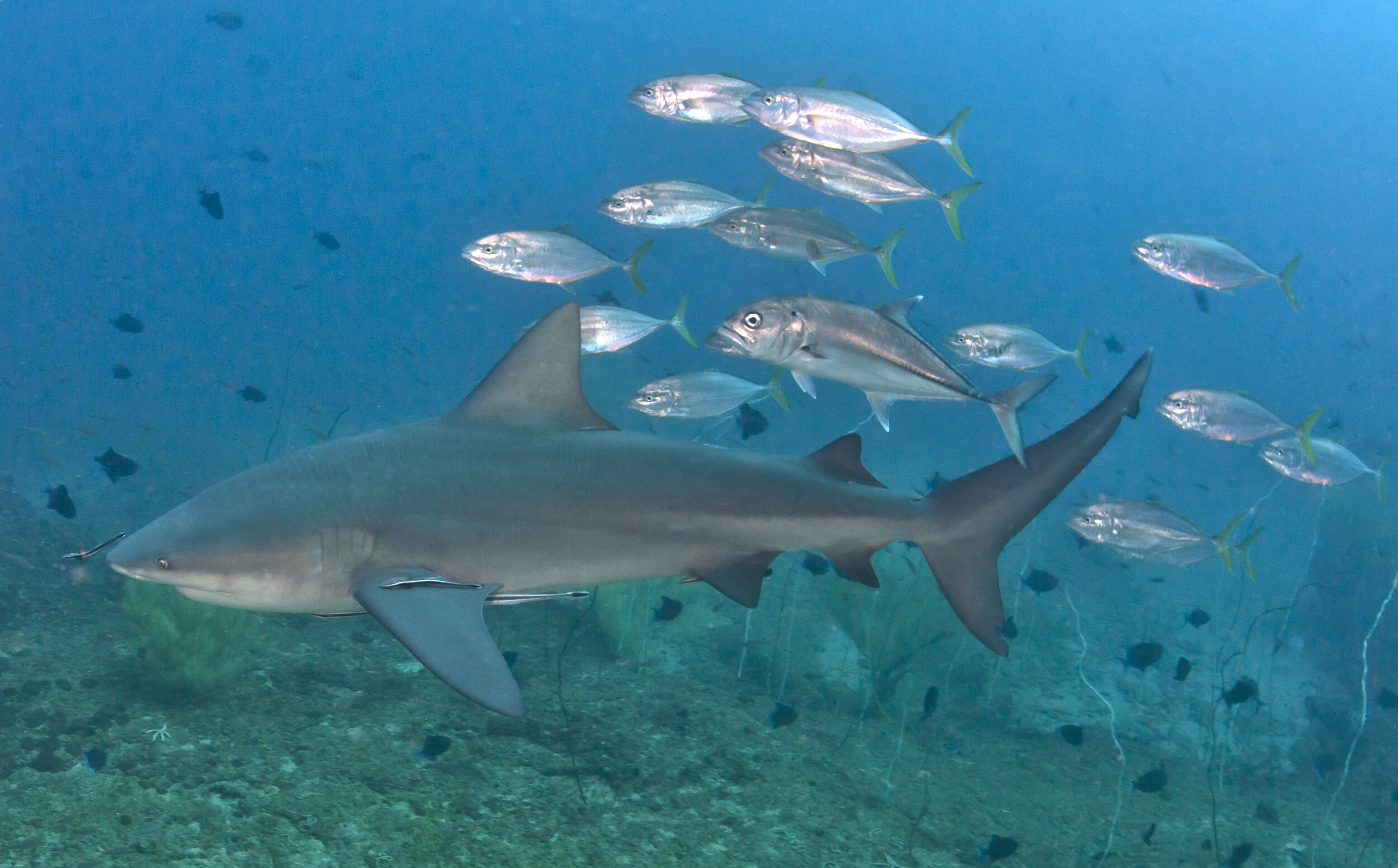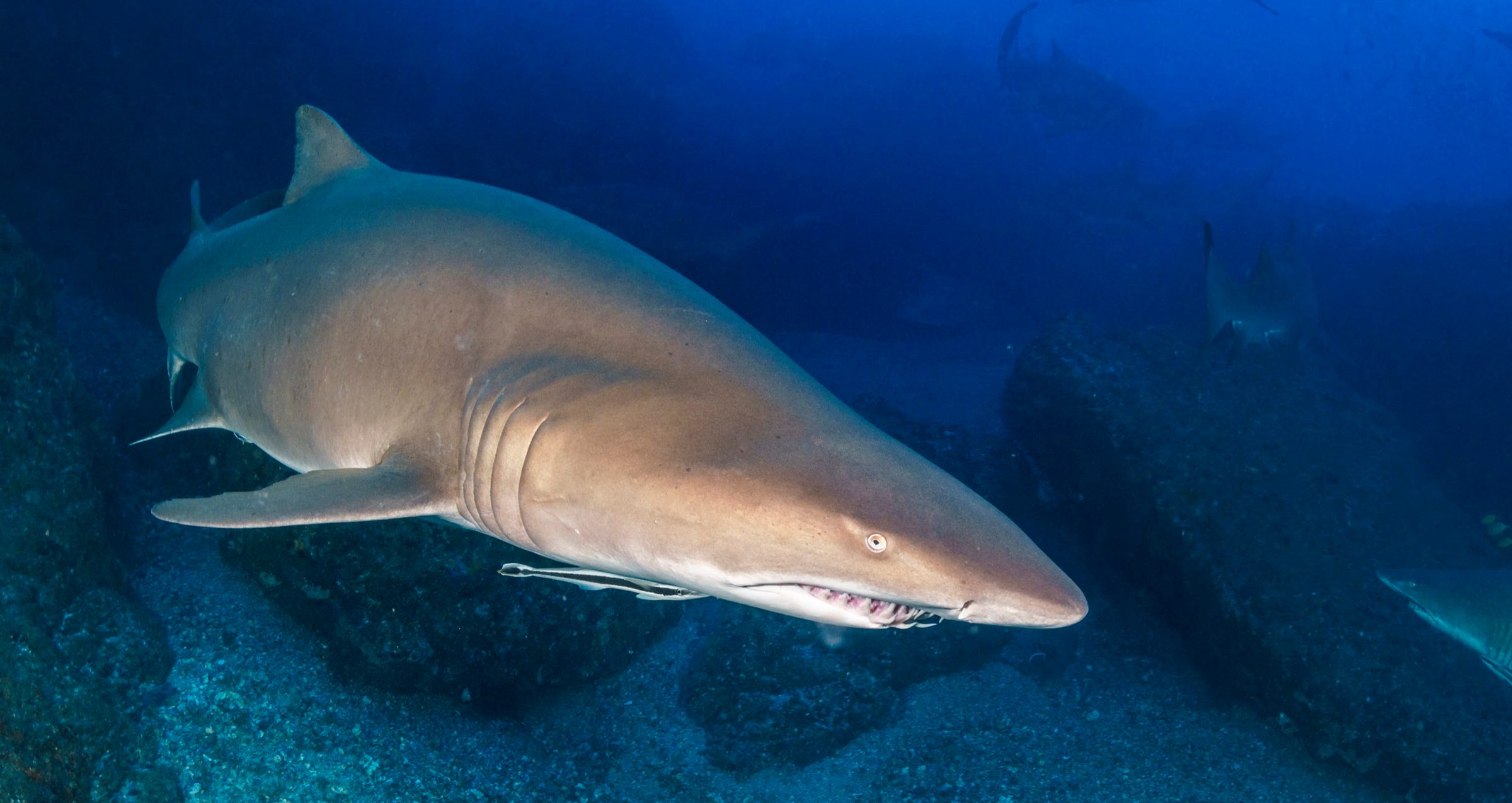
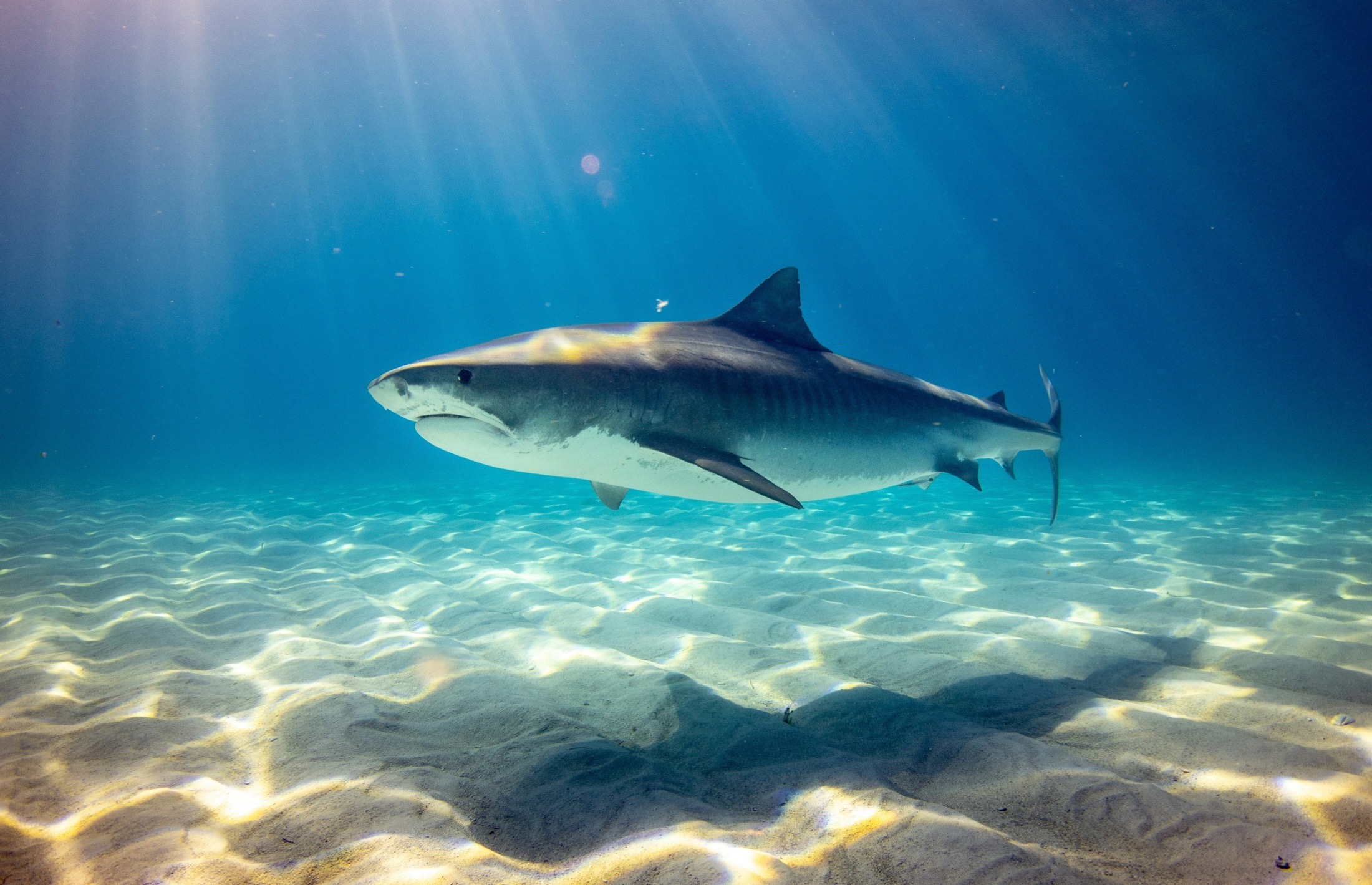




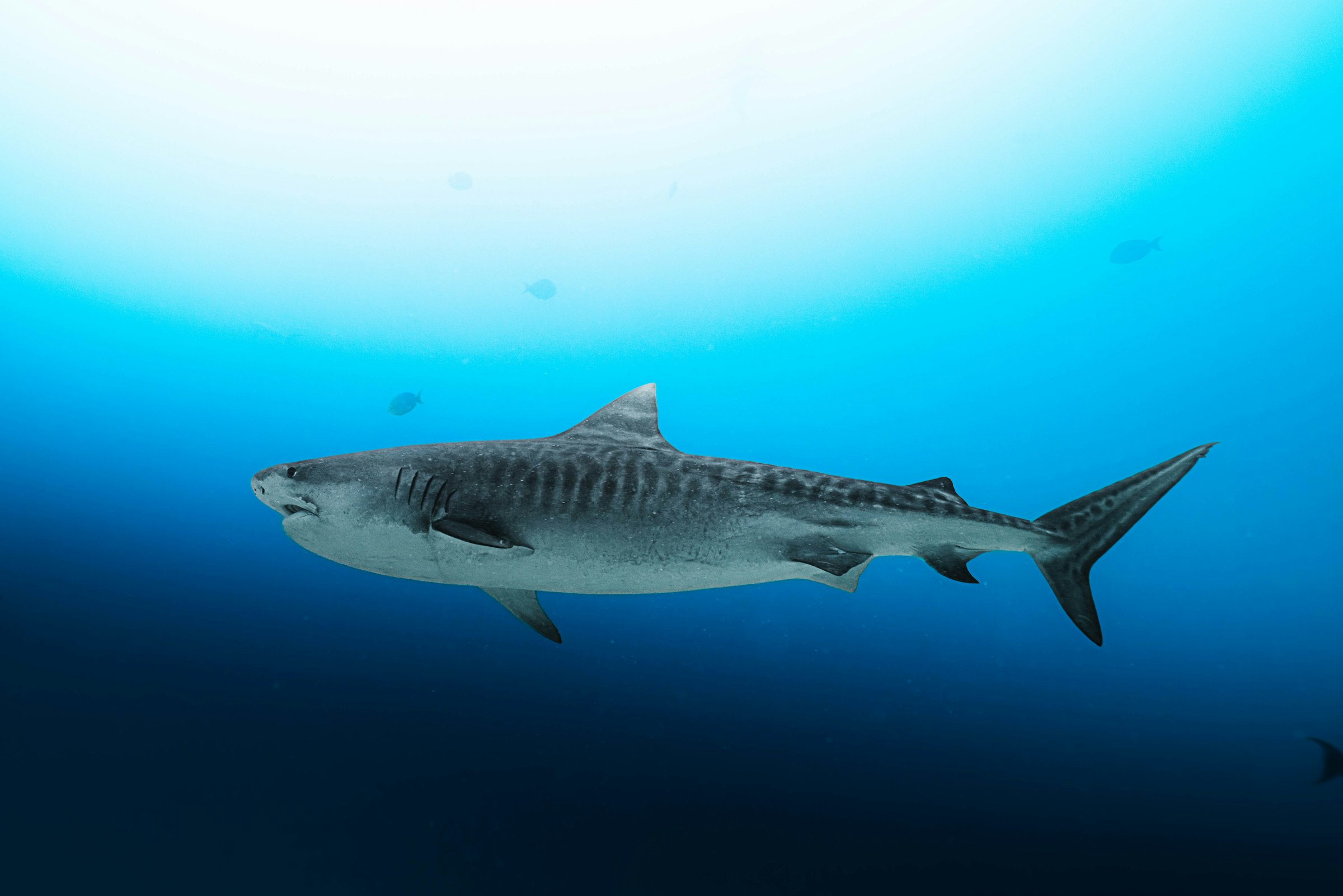
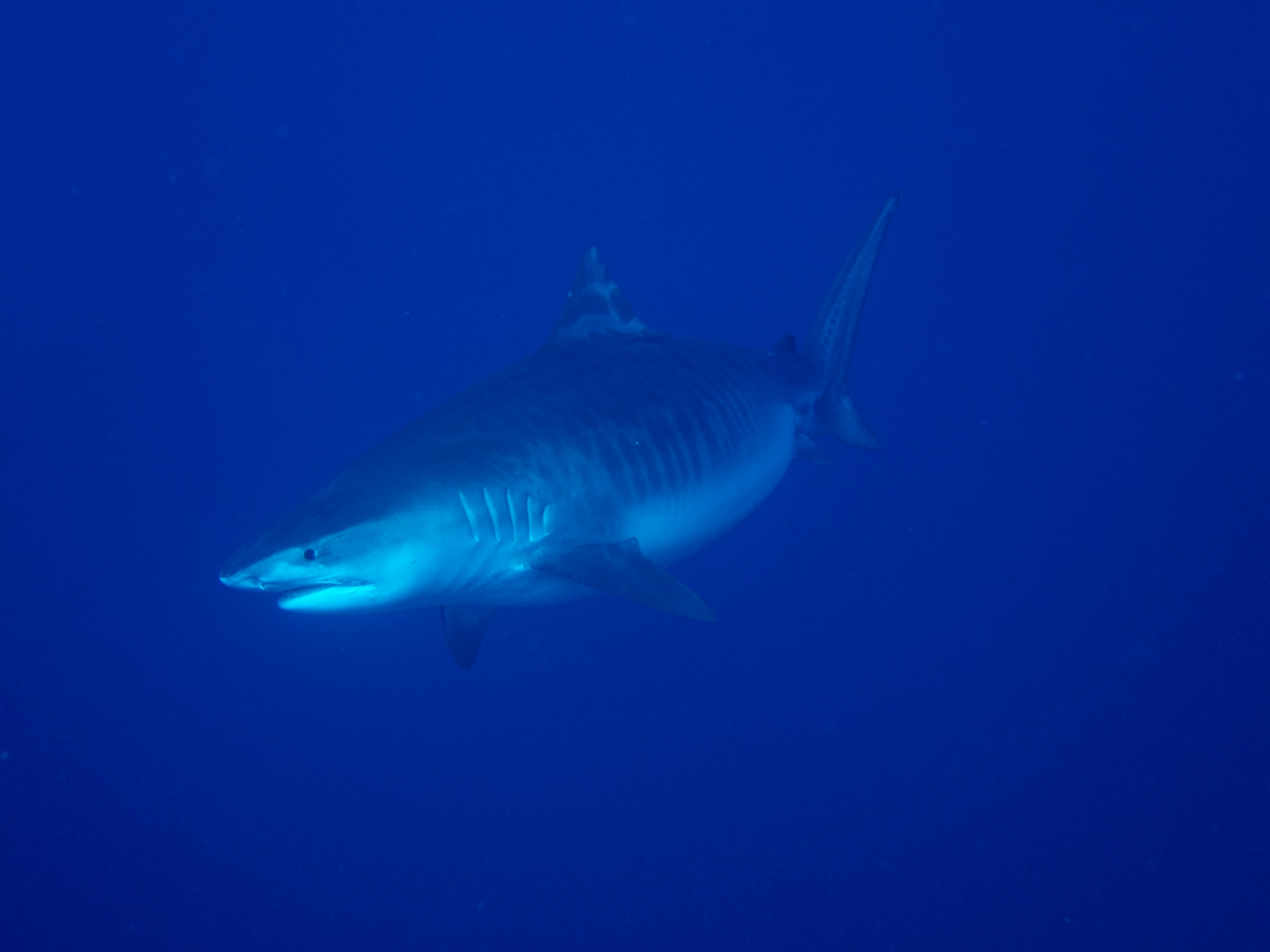
Why adopt a tiger shark?
Adopt a tiger shark and you support MMF's work in one of the places these sharks pass through: the Bazaruto Seascape of southern Mozambique, part of a shared acoustic receiver network that detects tiger sharks tagged by partner organizations.
Tiger sharks (Galeocerdo cuvier) cross national borders. In a regional tracking study led by Dr. Ryan Daly of South Africa's Oceanographic Research Institute and co-authored by MMF's Dr. Stephanie Venables, 94% of the tracked tiger sharks crossed between South Africa and Mozambique. In a separate review led by Diego Bezerra of the University of Queensland and co-authored by MMF's Dr. Chris Rohner and Dr. Simon Pierce, tiger shark movements linked Australia with six other countries and territories, including New Zealand and South Africa.
Tiger sharks are not listed under the Convention on Migratory Species, and the review's authors consider these movements strong evidence for listing them, which would require signatory countries to cooperate on their management.
Along the Mozambican coast, shark catches have risen by up to 220% in recent years, and many sharks and rays are caught as bycatch in non-selective gear such as gillnets. MMF's monitoring and protection work in the Bazaruto Seascape responds to that pressure.
About tiger sharks
MMF does not run a tiger shark project, so what we know of the species in our study areas comes from partners' tagging and from our wider shark and ray research. In Mozambique, tiger sharks tagged by partner organizations carry acoustic tags that the shared receiver network detects.
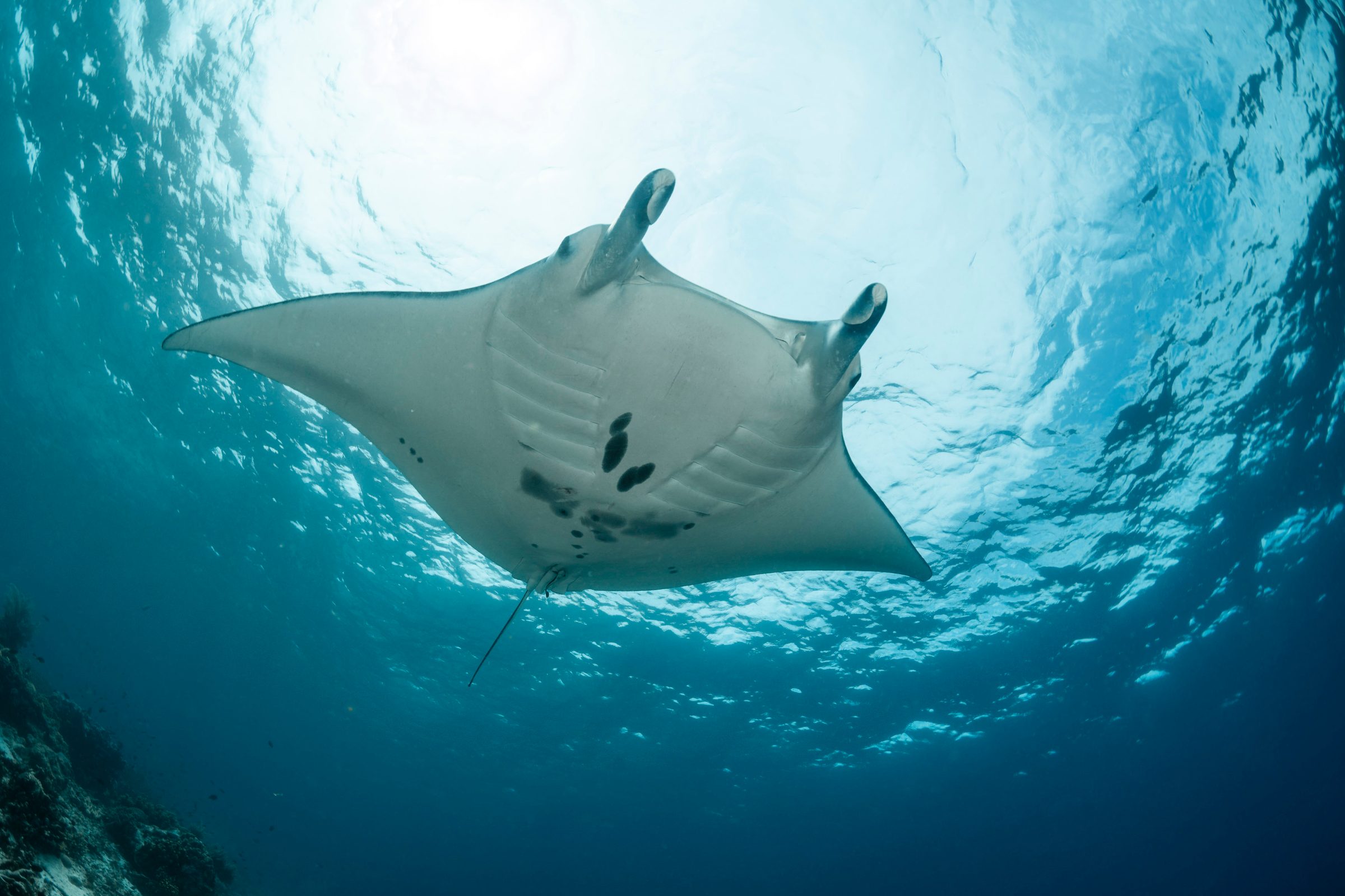
- Predator: in an MMF study of reef manta rays off southern Mozambique, 76% of 371 identified mantas carried shark-bite injuries, and bull and tiger sharks were suggested as the main attackers.
- Prey: a 2024 study led by Maeva Terrapon and co-authored by MMF's Dr. Stephanie Venables documented killer whales preying on a tiger shark in the southwest Indian Ocean.
- On the move: as the ocean warms, tiger sharks are being caught off Canada in the north and Tasmania, Australia, in the south.
- Elsewhere: surveys by LAMAVE, the Tubbataha Management Office, and MMF at Tubbataha Reefs Natural Park in the Philippines recorded tiger sharks among 15 shark and ray species.
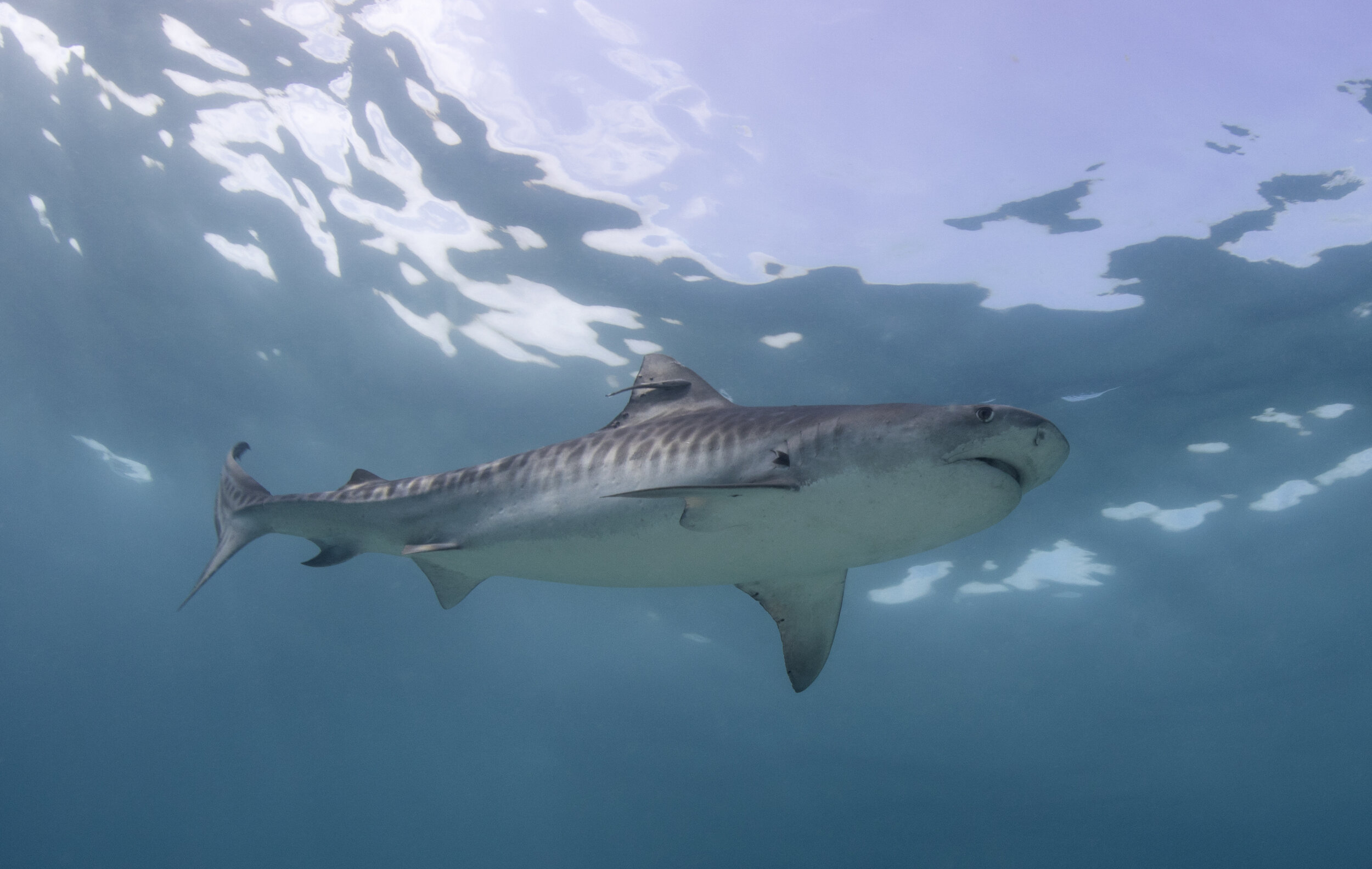
How your tiger shark adoption helps
MMF does not run a tiger shark project. Your tiger shark adoption supports MMF's work as a whole, including our Migratory Species Program, which follows animals like these across borders, and our shark and ray work in the Bazaruto Seascape, where tiger sharks tagged by our partners are detected on the receiver network we share.
The acoustic receiver network MMF shares with partners runs about 400 kilometers (250 miles) from Závora to the northern end of Bazaruto Island. Together with South Africa's network it monitors about 2,300 kilometers (1,400 miles) of coast, so an animal tagged in one country can be detected in the other. Some receivers are more than ten years old and starting to fail, and expanding the network is part of MMF's plan for 2026 to 2031.
That evidence feeds protection. MMF's sightings, aerial survey, and tagging data helped secure recognition of two IUCN Important Shark and Ray Areas covering Bazaruto Archipelago National Park and The Sanctuary (Santuário Bravio de Vilanculos) in 2023. With The Sanctuary and the local community fishing council, MMF is working to establish a no-netting area around critical rhino ray habitat, backed by patrol boats and trained rangers, and since late 2025 local fishers have been training in selective handline fishing.
The shark and ray census has built a list of 31 species for Inhambane Province and completed 158 baited camera deployments in the Bazaruto Seascape in 2025. On shore, Ocean Guardians runs at six sites from Tofo to Vilankulo, and Sustainable Seas helps fishing communities manage their own fishing grounds.
Ready to help? A tiger shark adoption is $39, with a personalized certificate to download straight after checkout.
Adopt a tiger shark · $39