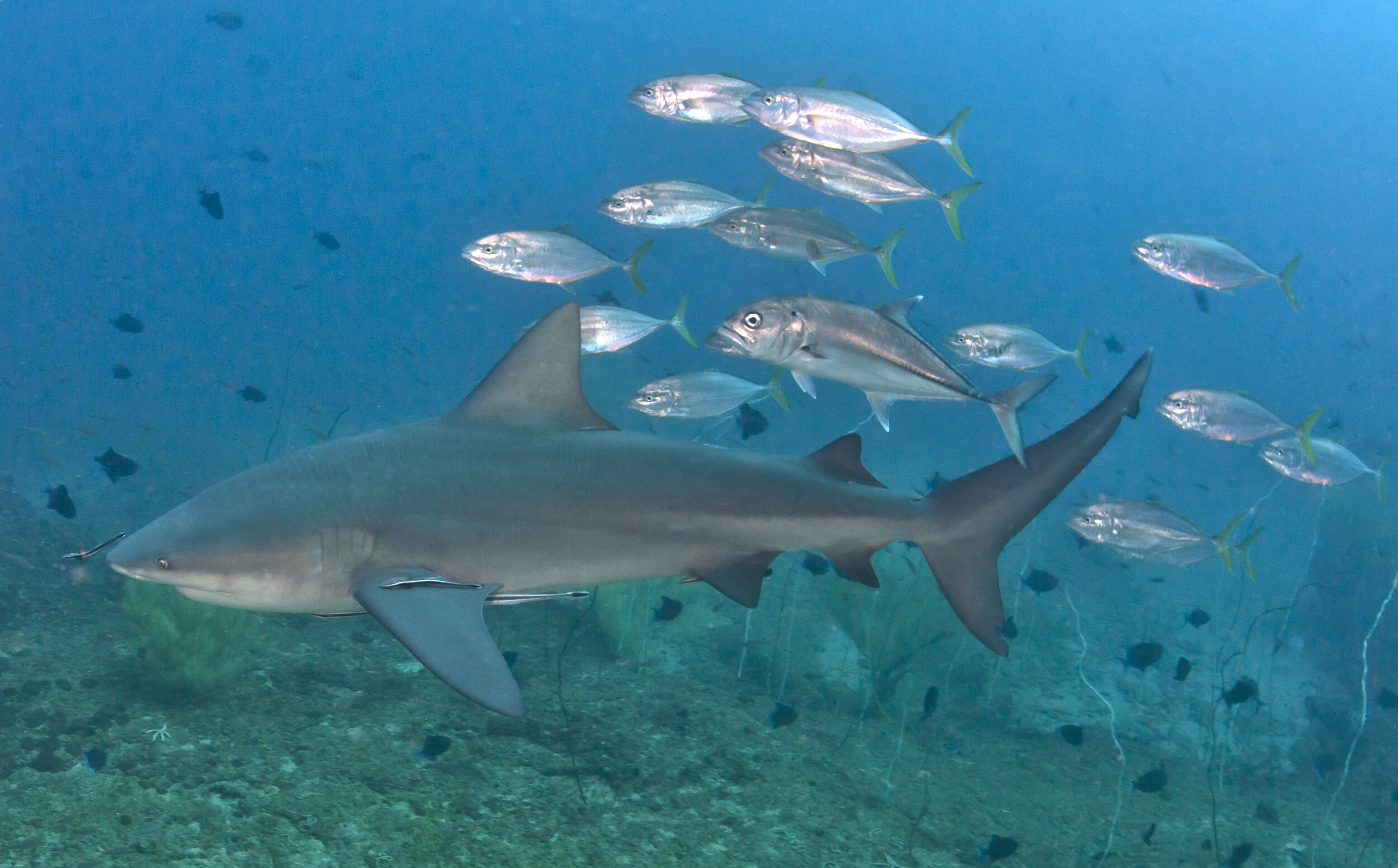




Why adopt a bull shark?
Adopt a bull shark and you back research on one of the few sharks that can live in both saltwater and freshwater. Researchers have recorded bull sharks far up the Amazon and the Mississippi, and in Lake Nicaragua. In southern Africa they are known as Zambezi sharks, after the river they swim up.
They also travel far. In 2025, a team led by Dr. Ryan Daly of the Oceanographic Research Institute, with MMF's Dr. Stephanie Venables, documented a female bull shark moving from Mozambique around the southern tip of Africa to the Nigerian coast, more than 7,000 kilometers (4,350 miles) away, the first documented movement of the species between ocean basins.
That range puts them in harm's way. Bull sharks are listed as Vulnerable on the IUCN Red List, and fisheries assessments show that shark catches in Mozambique have increased by up to 220% in recent years. In some areas bull sharks make up as much as 17.3% of total shark catches, and their movements between rivers and the sea leave them especially exposed to seine nets and gillnets.
They are also slow to mature, and they rely on sensitive habitats such as estuaries, mangroves, and shallow bays. In Mozambique, interactions with people have caused deaths, and resentment and persecution in some communities make the species harder to protect. Tracking studies such as ours provide the evidence that protection depends on.
About bull sharks
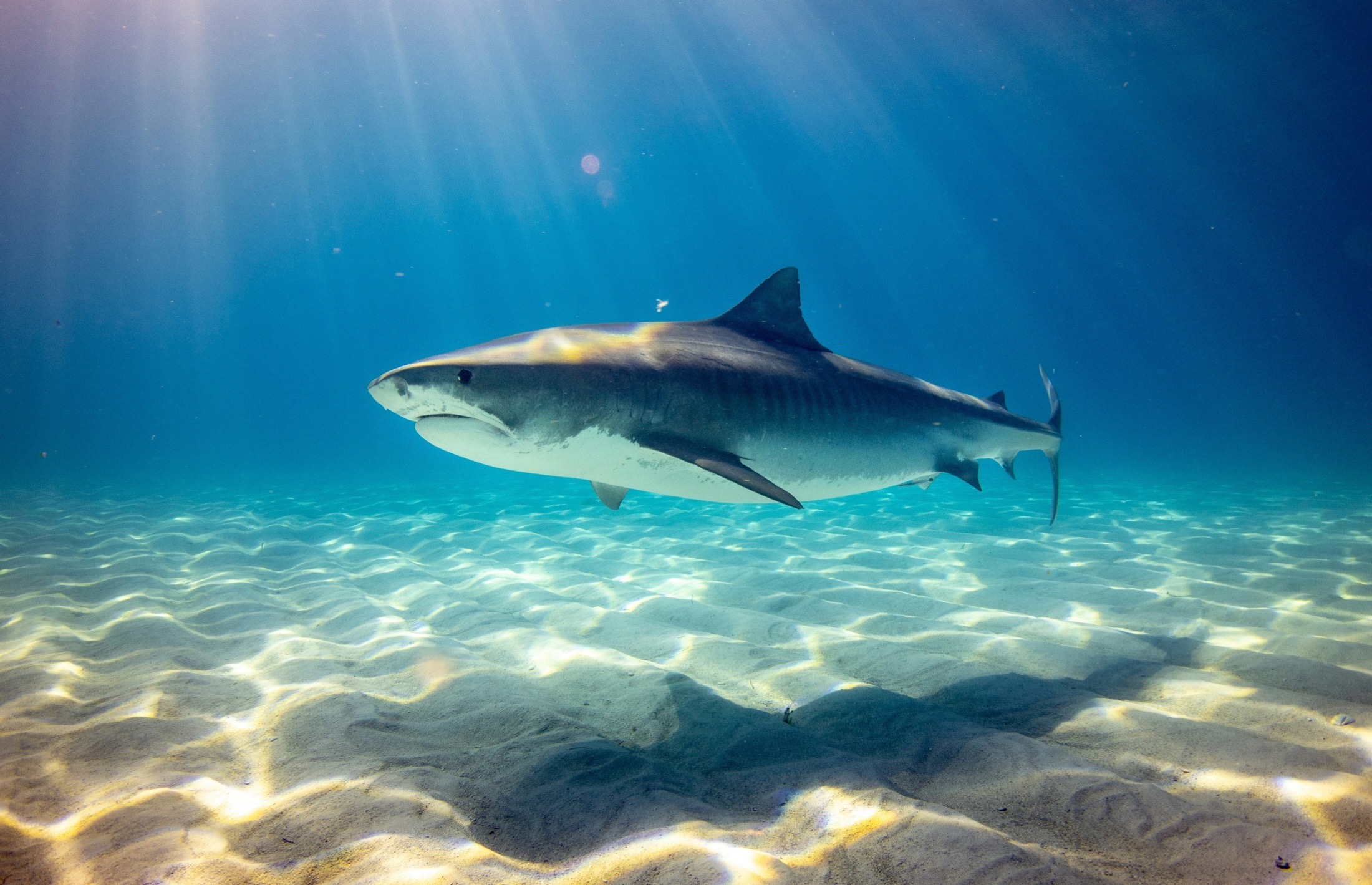
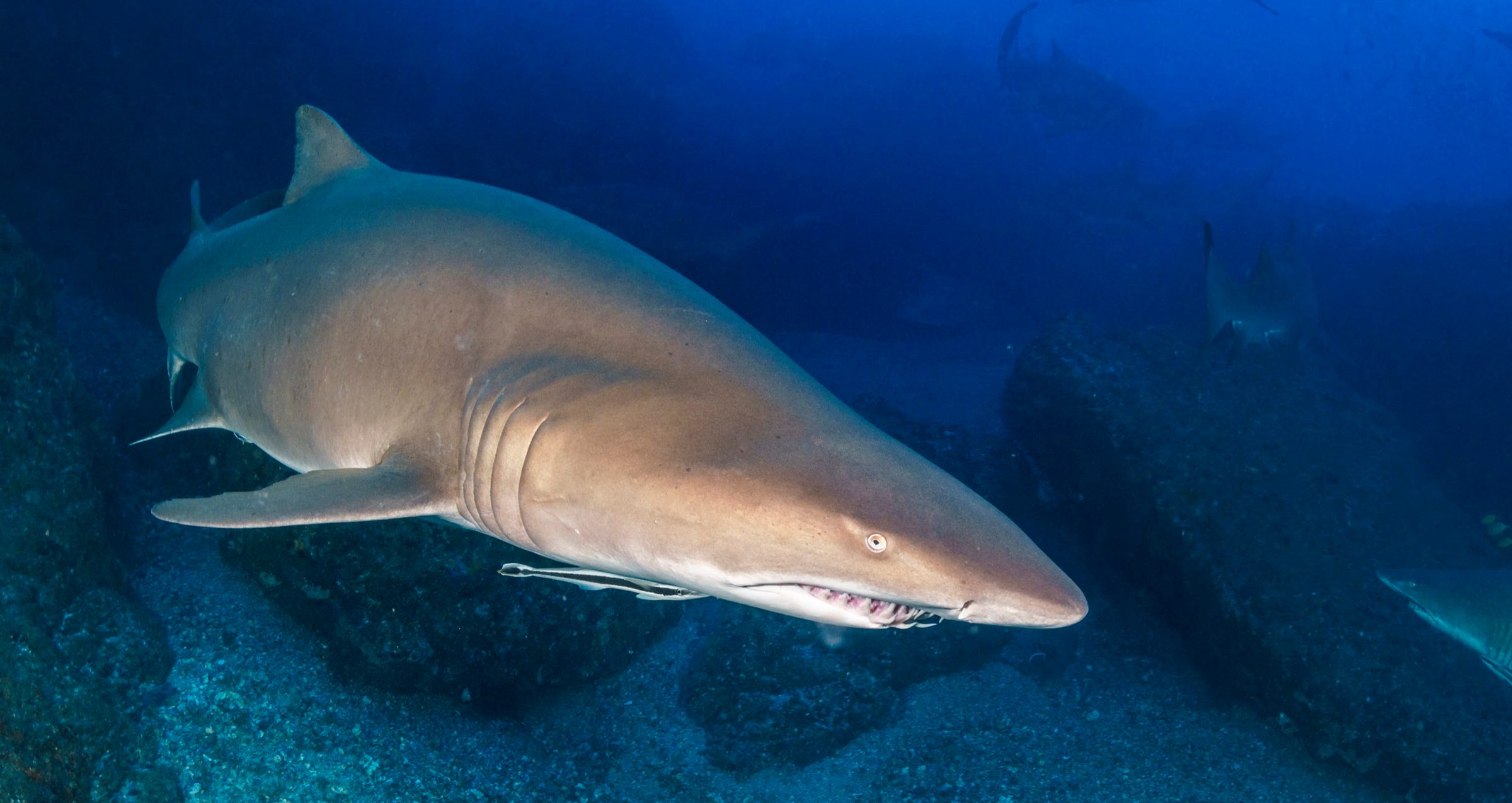
The bull shark (Carcharhinus leucas) is short, thick-bodied, blunt-nosed, and heavy for its length. It lives in warm coastal waters of the tropical and subtropical Atlantic, Indian, and Pacific Oceans, plus the rivers and estuaries that drain into them, and favors shallow, often murky inshore water.
Bull sharks are euryhaline: their rectal gland and kidneys adjust the salts and urea in their blood, so they can move between the sea, brackish estuaries, and freshwater.
- Size: adults are usually 2 to 3 meters (7 to 10 feet) long, and females grow larger than males.
- Diet: bony fish, rays, and other sharks, including smaller bull sharks.
- Young: bull sharks give birth to live young, in litters of roughly one to thirteen pups, in estuaries and river mouths. Females return to the region where they were born to give birth.
- Lifespan: the oldest bull sharks aged on South Africa's east coast were in their early thirties, and captive animals suggest a maximum age beyond 50.
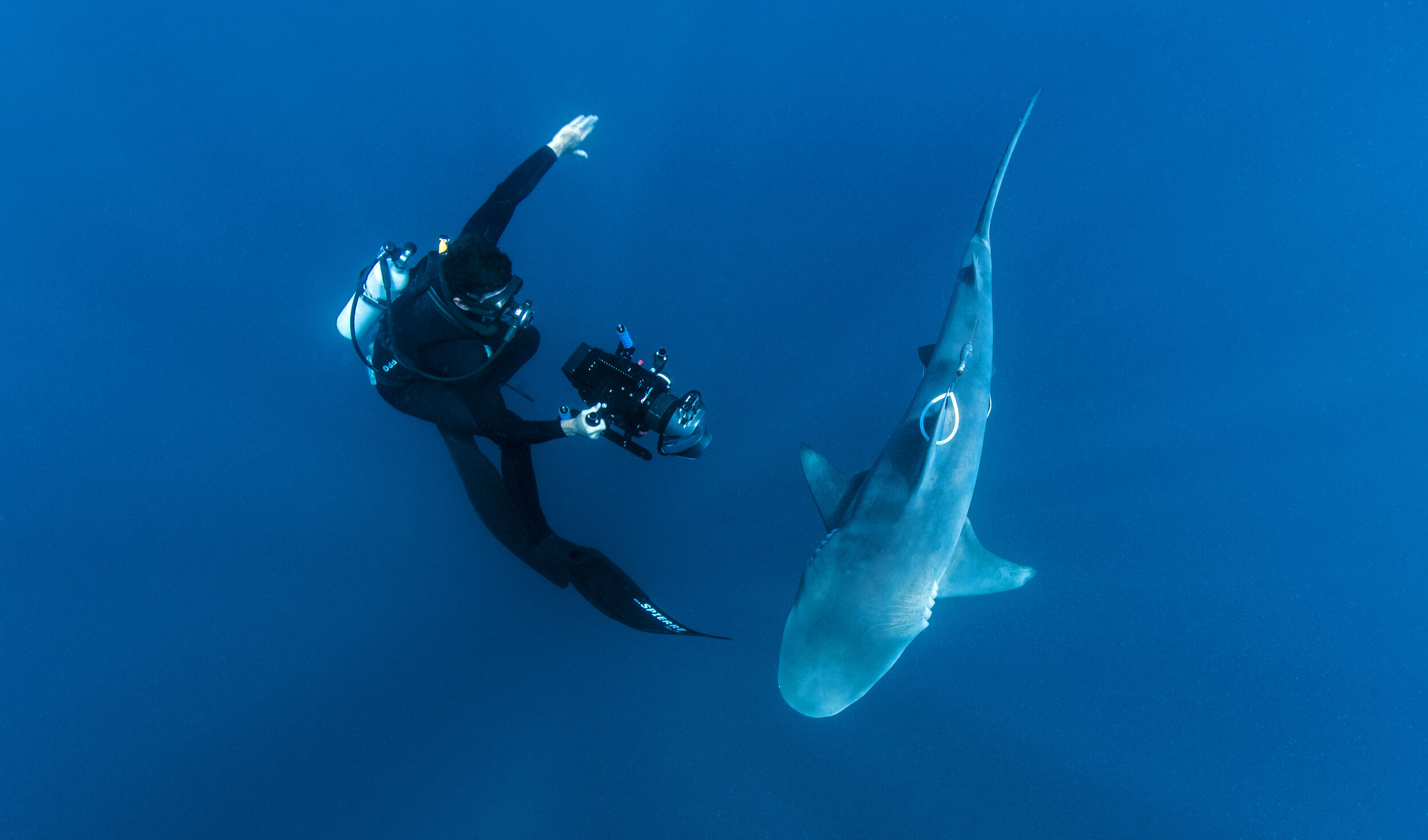
- Telling them apart: at Bazaruto, each tagged shark carries an acoustic tag that sends out its own code. MMF co-founder Dr. Andrea Marshall, who began diving there in 2006, also built a sighting and photo-identification dataset for bull sharks from her research dives.
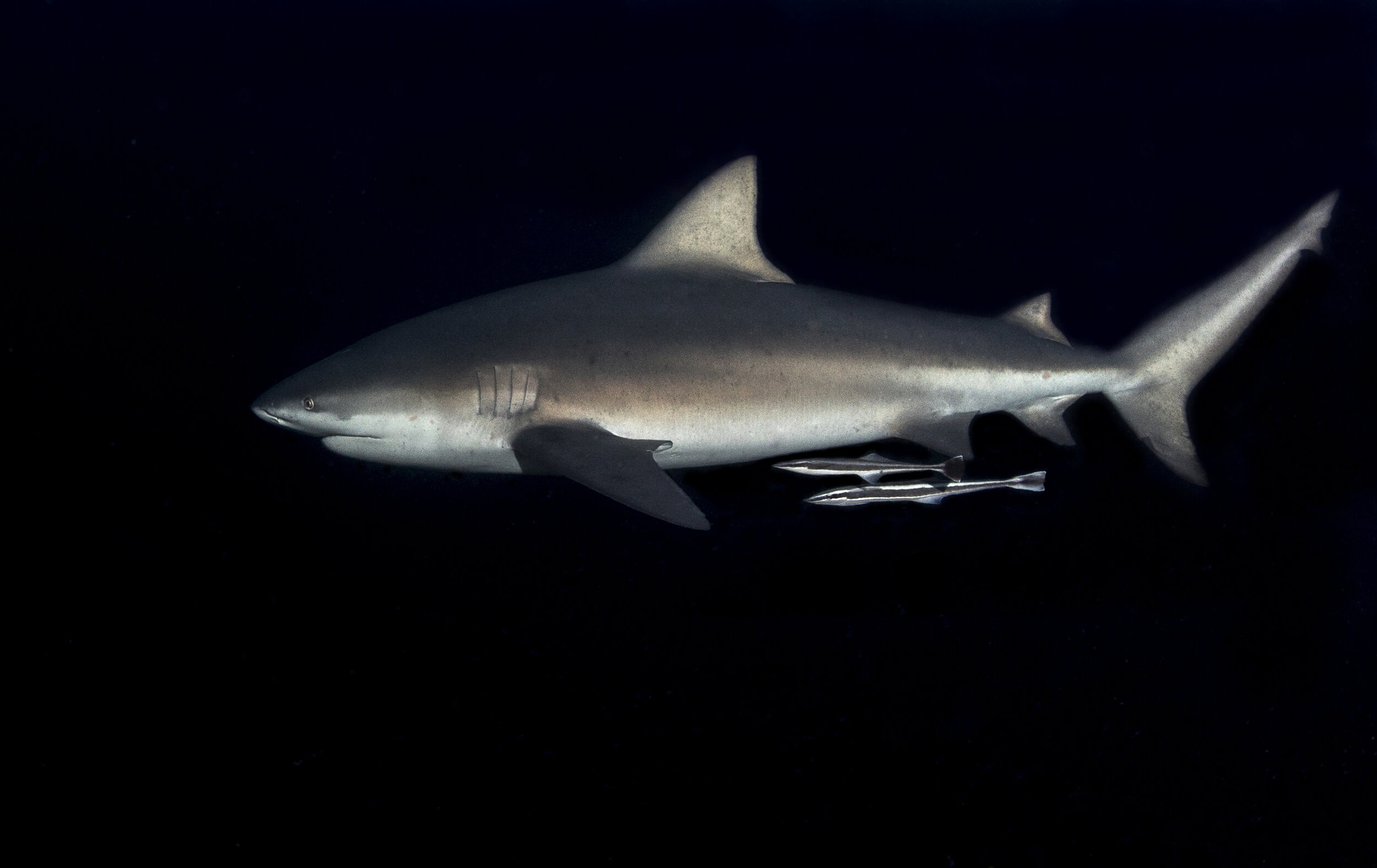
How your bull shark adoption helps
Your bull shark adoption supports MMF's work as a whole, including our work in Mozambique's Bazaruto Seascape. The Mozambique Bull Shark Research Project, led by Dr. Stephanie Venables, combined acoustic and satellite tags with tissue sampling for genetic and stable isotope analyses, and tracked 38 bull sharks on the seascape's receivers.
The tracking found two kinds of shark sharing the same reefs. Residents, mostly mature females, were detected year-round. Visitors tagged elsewhere, from South Africa's Breede River to Ponta do Ouro in southern Mozambique, used the same reefs, but most of their visits were short: 81% lasted less than five days.
A 2026 study led by Dr. Venables estimated that 82% of the areas the Bazaruto sharks used most lie inside Bazaruto Archipelago National Park and The Sanctuary (Santuário Bravio de Vilanculos), while important reefs sit just outside. Receiver coverage was greater inside the protected areas, so the figure is a guide. The authors recommend extending both protected areas seaward, restricting gillnets around key reefs, and joint bull shark management between Mozambique and South Africa.
The dedicated bull shark project is now complete, but the acoustic receiver network that heard these sharks keeps listening along about 400 kilometers (250 miles) of Mozambican coast, and shares data with South Africa. Some receivers are more than ten years old and starting to fail, so replacing them is a priority. Bull sharks were also among the animals recorded during the 2025 fieldwork of MMF's shark and ray census.
Ready to help? A bull shark adoption is $39, with a personalized certificate to download straight after checkout.
Adopt a bull shark · $39