
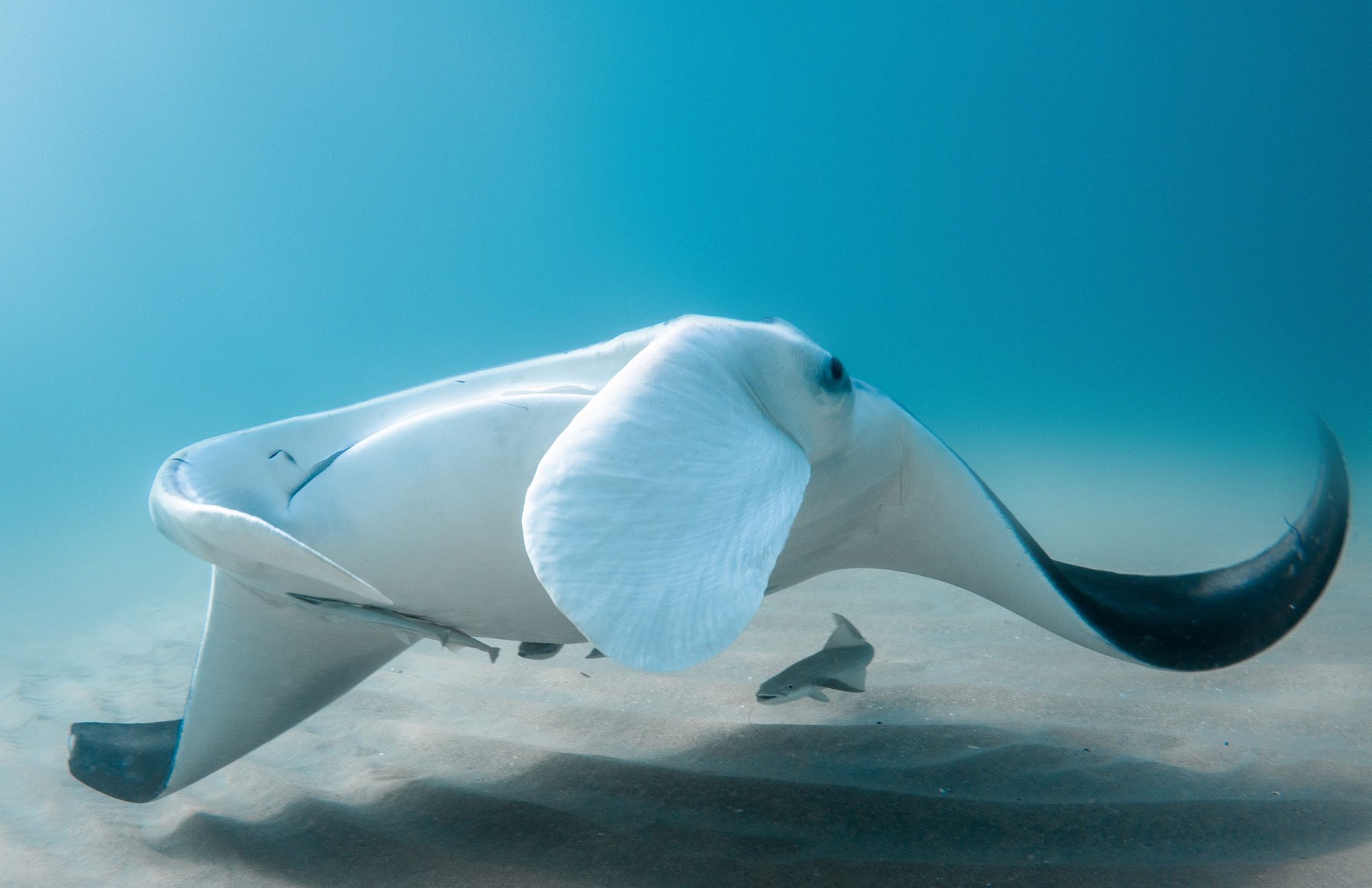
Close approach by a friendly juvenile manta ray.
Jessica Pate is the founder of the Florida Manta Project, based in Florida USA, and MMF’s US Country Manager. – Simon Pierce
How the project began
I first moved to Florida after university to study sea turtles. That meant getting up at the crack of dawn, jumping on an ATV, and driving up and down the beach all day to count turtle nesting tracks from the night before. I was out on the beach all the time for that job. While I was driving the ATV down the beach, sometimes I’d look over and see a manta swimming by in very, very shallow water. I used to bring my fins and my mask along on the ATV and try to swim out to them. I never was successful.
I talked to all the scientists I knew, and no one knew anything about them, so I convinced a friend of mine to take me out on his boat. We went out and found one, the first manta I was ever able to swim with. She flipped upside down and hovered underneath me for five minutes, checking me out. I didn’t know it was even possible to have an interaction like that. I freaked out and could barely take a photo, even though I had my camera in my hand the whole time. After that, I just thought ‘mantas are awesome, I want to study these animals’.
That took a while to figure out. It definitely didn’t go directly from me seeing my first manta, to starting a research project. There were about seven years in between. After doing the turtle research, I went to grad school, where I tried to convince my advisor (who was an expert on sea turtles) to let me do a manta ray project. It just didn’t work out. Then, after grad school, I worked on a sailboat for a year and sailed across the Atlantic. I came back to Florida afterward to work on sea turtles again.
That whole time, the manta project was always in the back of my mind. Before I could get it started, though, we had to find out if there were even enough mantas here for a viable study. I’d only seen a handful; maybe I’d just gotten lucky. So, back in 2016, my boyfriend and I rented a boat on our days off work and went out searching. We found them on about 50% of our surveys that first summer. So it was like, check, we can find them, even though we were just driving around looking for black spots in the ocean.
I’d talked to Andrea back when I was first working on the project idea for grad school, and she’d offered to help me out. So I got back in touch with her again, years later, to say, ‘hey, it’s me again. I found some mantas.’ She was still super interested, and I was able to start the Florida Manta Project to study this never-before-researched population of manta rays.
We have two study areas in Florida now: one in southeastern Florida, where we have a population of juvenile manta rays, and one a bit further north at Cape Canaveral where adult manta rays pass through in the springtime. I still find it so improbable that such a large charismatic species, which people travel halfway around the world to see, was here waiting for us to find.
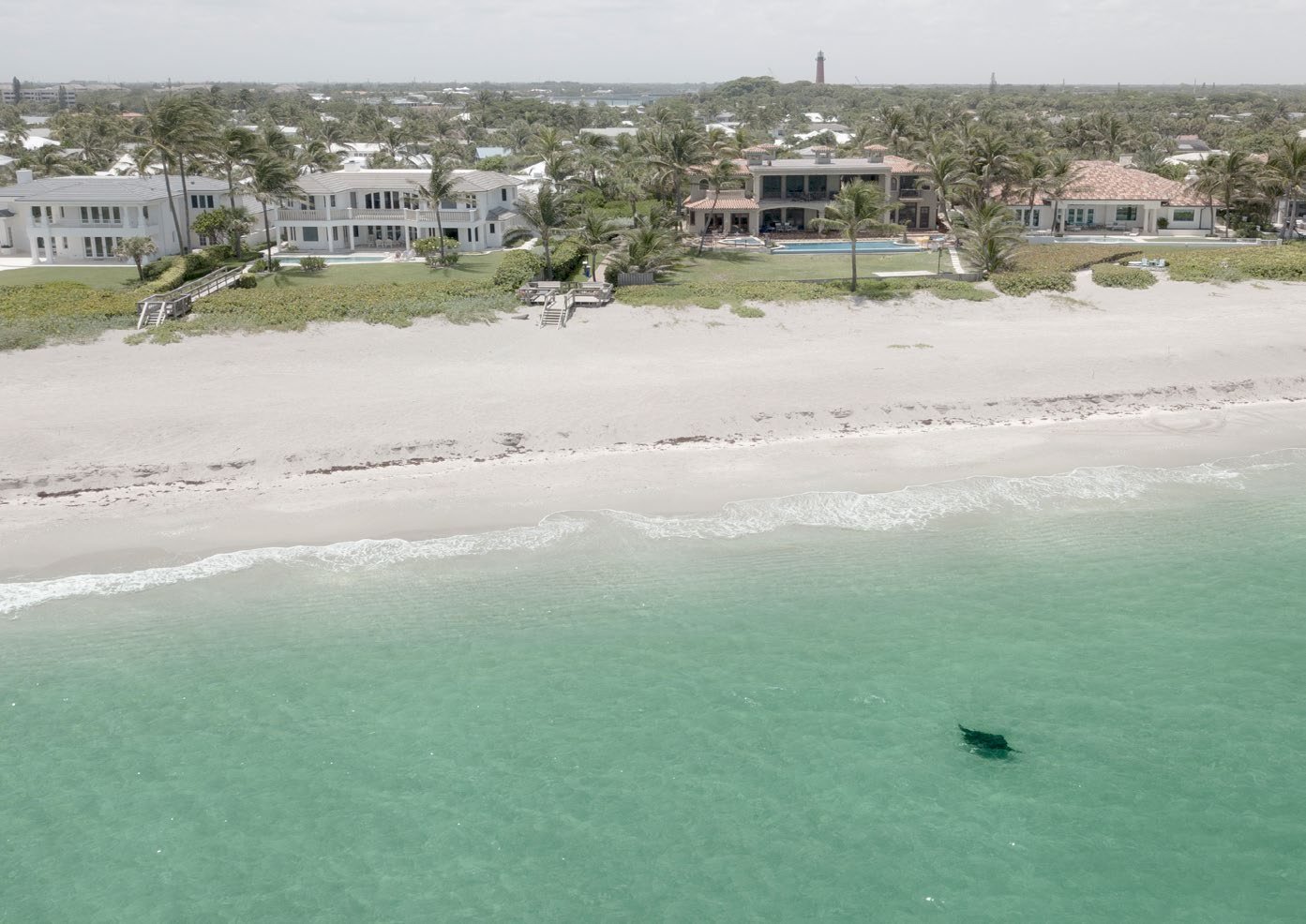
A manta ray cruising off the beach.
A manta nursery?
In south Florida, it’s exclusively juvenile manta rays. When I first learned how big mantas are when they’re born, I was completely shocked. We do a lot of outreach and education work now, so I talk to anglers all the time. They’re like, ‘we saw a manta, it was so big.’ I’ll reply, ‘it was a baby’. And they say, ‘No, you don’t understand, it was really big – it was five feet across.’ They’re blown away when I tell them that yes, that’s how big manta rays are when they’re born!
In other places, divers normally see manta rays while they’re at cleaning stations on reefs. Here, divers hardly ever see manta rays at all. You’re more likely to see a manta while walking down the beach than you are when diving on the reef.
The mantas particularly like some of the areas around inlets. Most of the inlets are man-made, created for boats to access the ocean. There are probably a lot of nutrients that flow out to sea from these inlets. We see the mantas feeding on the seaward side of the inlets on the outgoing tide. They’ll sit inside the inlets too, probably resting in the current flow, taking a little breather. Of course, there may be observer bias to seeing mantas in clear shallow water because that is the easiest place to spot them. That’s why we use acoustic and satellite telemetry as well.
This region is potentially a nursery habitat for manta rays. In scientific terms, there are three criteria that have to be met for us to formally call it a nursery. First, the habitat has to be used across years and, second, individuals have a tendency to remain over time. We re-sight about 50% of manta individuals, and we’ve seen juvenile mantas using the same area over multiple years now. Through photo-identification, we can also see that the same individuals are present across years in some cases – we’ve seen one male over four seasons, and he was a juvenile that whole time.
Third, there have to be more juvenile mantas here than in other areas. That criterion is harder to establish, even though we exclusively see juveniles in our study area. We have a giant coastline to monitor, not just a little island system, and we know from satellite tagging studies that the juvenile mantas do move along the entire coast. We think they prefer certain areas along the east coast, such as our study area here in southeast Florida, but that third criterion is the one we’re still trying to figure out.
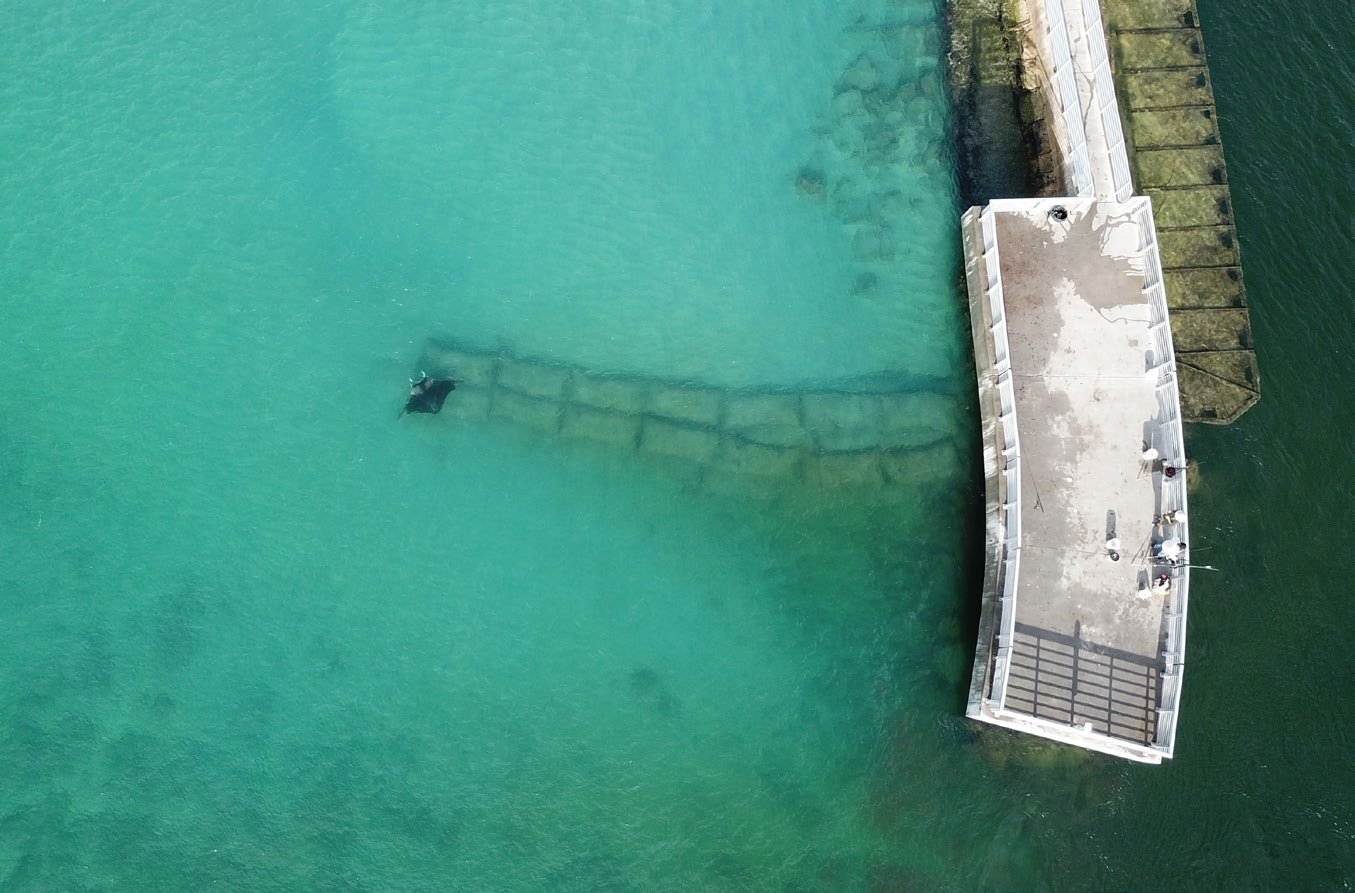
Drone view of a juvenile manta in the shallows.
Mantas in the murk
Our second study site is up near Cape Canaveral on the central Florida coast. We’ve just finished our second year of research up there. It’s the hardest field research I’ve done in my life. Five-foot (1.52 m) visibility is good there. It’s hard to even see the mantas in the water, and keeping up with them is extremely difficult, even using a drone for support. As they descend they completely disappear into the murk. There are fishing boats around everywhere, and the mantas are there at the time of year when the weather is at its worst. It makes for some ‘interesting’ conditions. We try to time fieldwork for when the mantas are there, and during a weather window, but that’s hard to coordinate.
There are so many mantas up there though; probably hundreds. We’ve counted up to 60 on one aerial survey. Our tracking work has shown that juvenile mantas swim through that area, but most of the mantas we’ve seen there are adults. The individuals we’ve tagged and gotten measurements on have been about 4.5 m across. Tagging has been the priority so far, and we managed to deploy four tags this year. We’re always trying to get an ID shot for each individual with a satellite tag, and then take a genetic sample from the manta. We were out for a couple of weeks and got 14 ID shots, which we were pretty proud of.
I’m hoping to be able to look at the genetic connectivity between the two areas of the coast, to see if the mantas are related, but it’s going to take me a while to get enough samples. It’s all just so much more difficult up there. Trying to get all this information from the same animal, and to get all the data as perfect as I want, has turned out to be rather ambitious.
Eyes in the sky
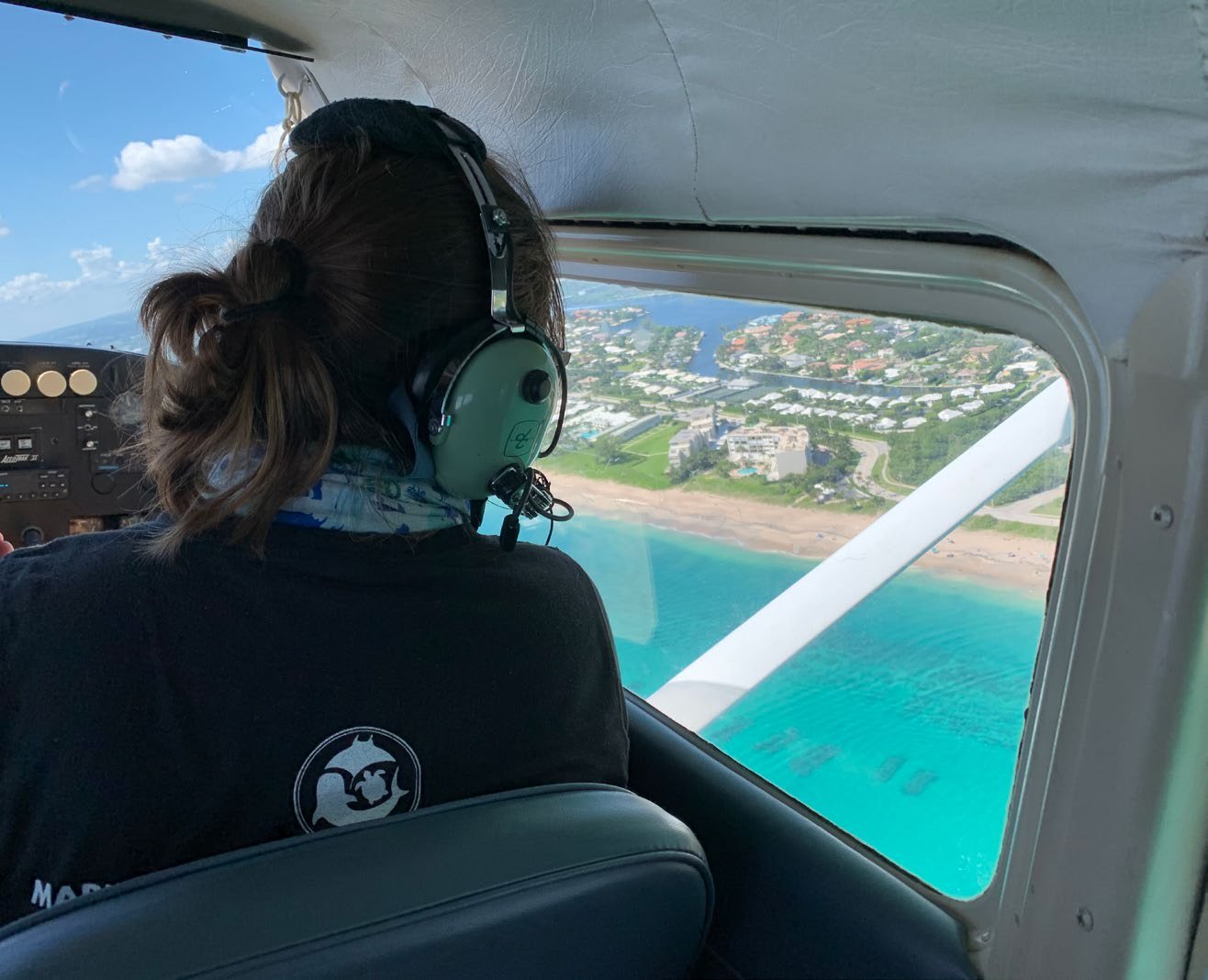
Using drones in our research has been a huge advance. I can barely believe we were able to work without them for so long. For the first 3–4 years, we were just looking out for black dots. It was so much more difficult. Now, we routinely use drones to locate mantas – it gives us a much wider field of view. We can’t do that everywhere along the coast, as there are international airports close to the beach, but it’s super useful.
That overhead view enables us to look more closely at their behaviors, too. They swim quite differently when they’re just traveling from place to place compared to when they’re feeding. Off the beach, they’ll drag their cephalic fins along the seafloor to stir zooplankton out of the sediment. We often see them feeding just below the surface too, and their resting behavior in the inlets is different again.
We’re analyzing some new data right now, from our fieldwork up in central Florida with adult mantas, where they feed on the surface with their backs out of the water – the fishermen call it “barging”. They’re moving so slowly, pushing against the water to feed, that their kinematics are actually similar to the resting behavior we see in the juveniles. It’ll be interesting to look at the energetics of these different behaviors, particularly in conjunction with the plankton sampling we’ve been doing recently.
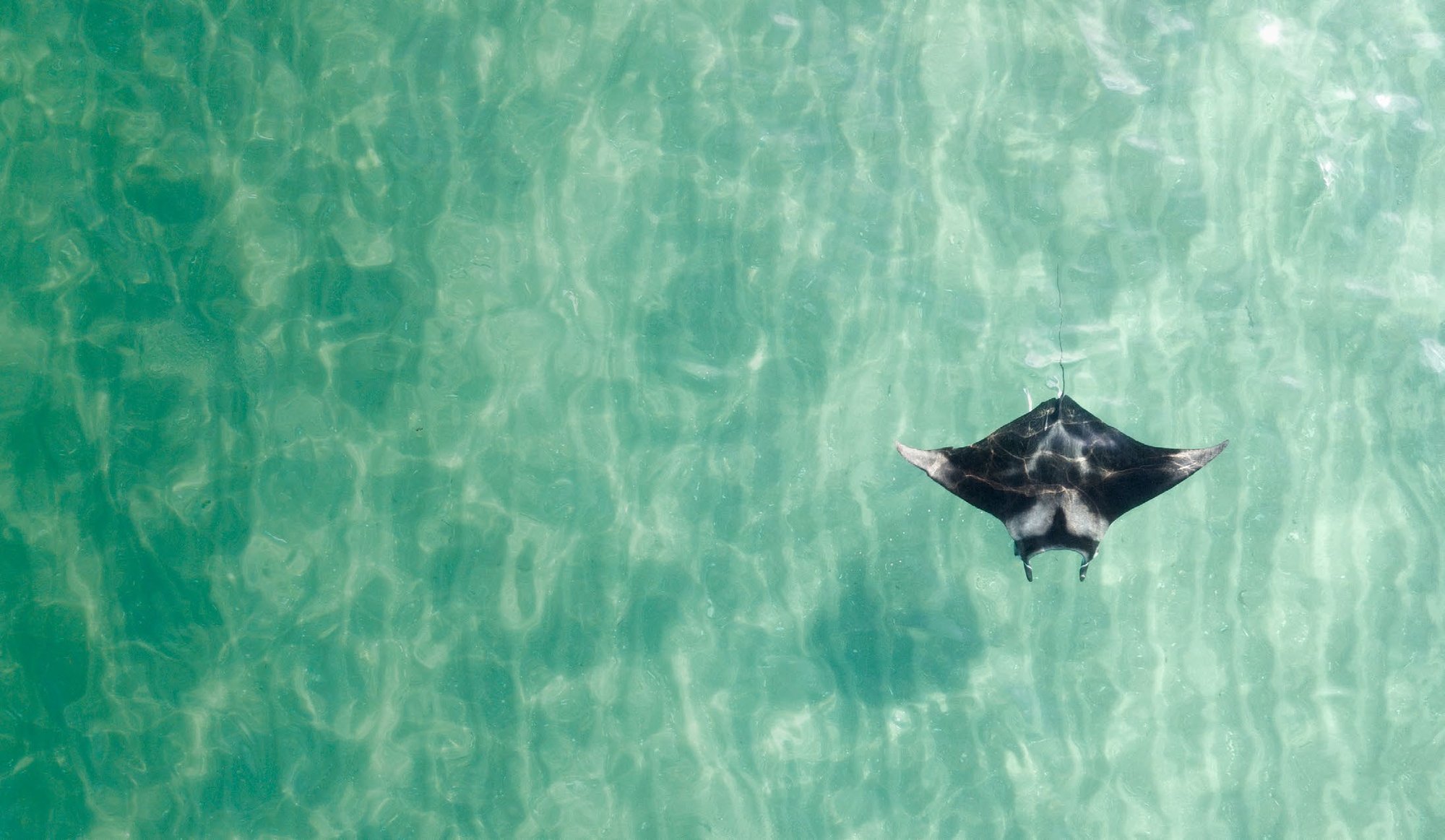
Drone view of a cruising manta ray.
Human impacts
We see conservation issues in both study areas. Because the juvenile mantas feed around the inlets, and rest in the current outflows, they often get hit by boats motoring through. We’ve even seen it happen. Lots of mantas have fresh injuries from propellers, and our data are probably only the tip of the iceberg – a big underestimate of the true incidence – because we only see the survivors. Superficial boat strikes heal up really quickly too, which makes injuries hard to track.
I’m curious to know why the mantas don’t appear to be more bothered by the boats. They’ll be resting in the inlet, and the boats drive right over them. I am interested in learning more about manta hearing, because they must be living in such a noisy environment in south Florida.
Juvenile mantas get entangled in fishing gear as well. About a quarter of our mantas have been entangled in fishing line at some point. Most of those have had multiple fishing line entanglements. The first step to mitigate this was to figure out exactly how these interactions are occurring.
Juvenile manta with embedded fishing lure.
We interviewed about 200 recreational anglers, focusing on the people that fish off piers, jetties, and other structures. We found out that, in general, they know what a manta is, but they don’t know anything else about them. They don’t know if they’re protected or endangered; they just think mantas are cool and beautiful.
Over half said they don’t do anything if they see them while fishing, they just sit and watch them. That was key information for us, because – and we have plenty of videos of this happening – if they leave the line set, and the manta swims into it, the mantas often get accidentally hooked. Typically the line will break, and the mantas end up with this long trailing line. Then, as they’re looping around while feeding, they can become fully entangled.
We even found one manta with an entire fishing pole still attached to it. My intern got in, she pulled up all the line, and the fishing pole was still there at the other end. Someone probably wasn’t watching their gear, and when the manta swam into the line it pulled their whole fishing pole off the pier.
Now, we’re encouraging the anglers to keep an eye out when they’re fishing, and if they see a manta to reel in their lines. They don’t want to hook manta rays, they don’t want to lose their tackle, and they certainly don’t want to lose their rod and reel. We’ve got signs up at fishing piers now to inform anglers about what to do if they see a manta, and how to report their sightings for science.
Up at Cape Canaveral, there’s a very different fishing community. There’s a whole recreational fishery that’s based around manta rays that has become super popular over the past 10 years. People go out and look for mantas because cobia travel along with them, and they want to fish for the cobia.
We’re doing a study right now, talking to experienced anglers – mostly fishing guides who have been fishing for decades – to find out how that fishery has changed, and the problems associated with it. They’ve described some mantas as swimming ‘Christmas trees’, with rows of jigs down the front of their pectoral fins. Some of them have said that you used to go up to a manta and see 20 cobia around them, and now you’re lucky to find one.
There are so many interesting questions to ask around that fishery. I really like working with the anglers, they’re super interested and want to help. There are so many boats out there though, it’s just insanity, with people zooming about amongst breaching mantas.
Education
Everybody we talk to over here, when I tell them I study manta rays, they think I’m talking about manatees. About 90% of the time, they’re like ‘I love manatees!’ And I also love manatees. Manatees are great. But that’s not what I’m studying. People just don’t know what manta rays are.
I figured that one of the best ways to raise awareness would be to teach the kids, and have them come home and educate their parents. We have lesson plans for schools, where kids can pretend to be a manta, they can feed, count the plankton they ate, and also count the plastics that they ended up ingesting accidentally.
I actually just wrote a children’s book about a Florida manta ray who lost one of his fin tips, based on a real Florida manta ray we’ve named Kevin. Kevin is trying to keep up with the other mantas, and he visits all of the Florida ecosystems. The book will be published this year. Our goal is to get the book in as many schools as possible so that people become more familiar with the species.
One of my end goals is for manta rays to be as iconic in Florida as sea turtles and manatees are. These animals are instantly recognizable, everyone knows that those animals are protected, and they usually know some facts about them as well. I’d love for the manta rays to be considered that way too.
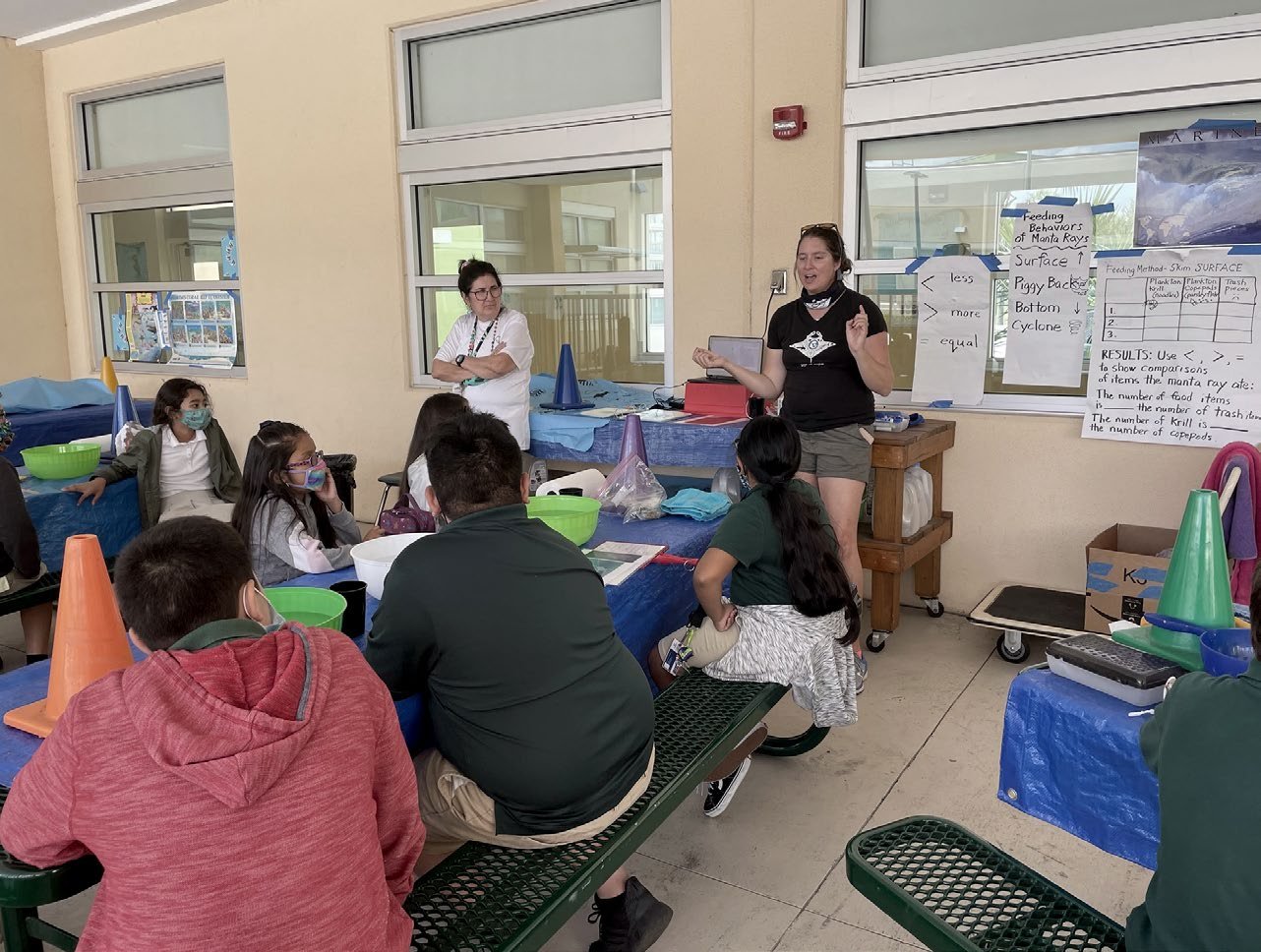
Jessica teaching a class about manta ray ecology and conservation.
This article was originally published in Ocean Giants, MMF’s magazine, Issue #05 (Summer 2022). Download the full issue as a PDF. Read more about this work on our Florida Manta Project page.