
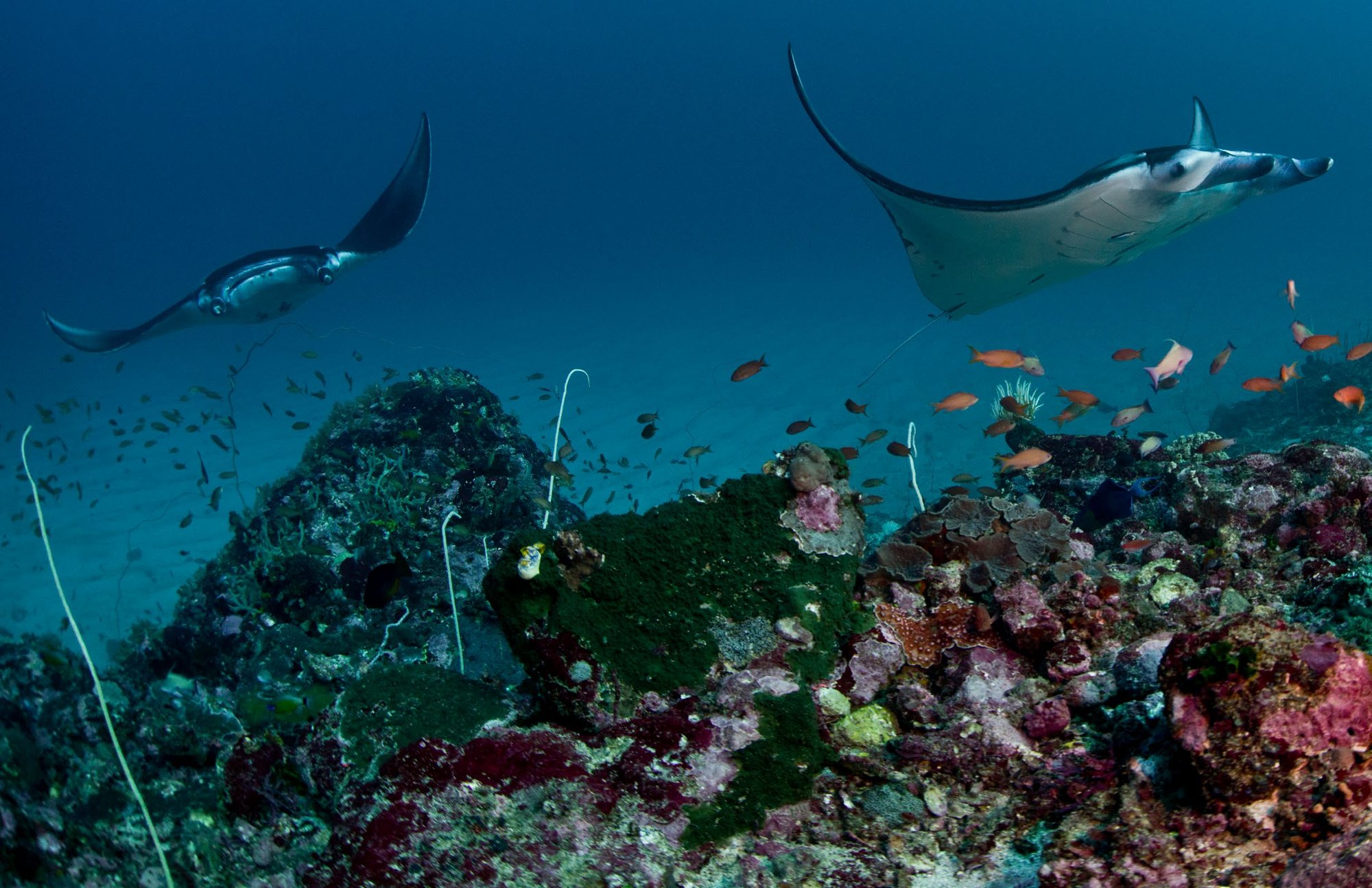
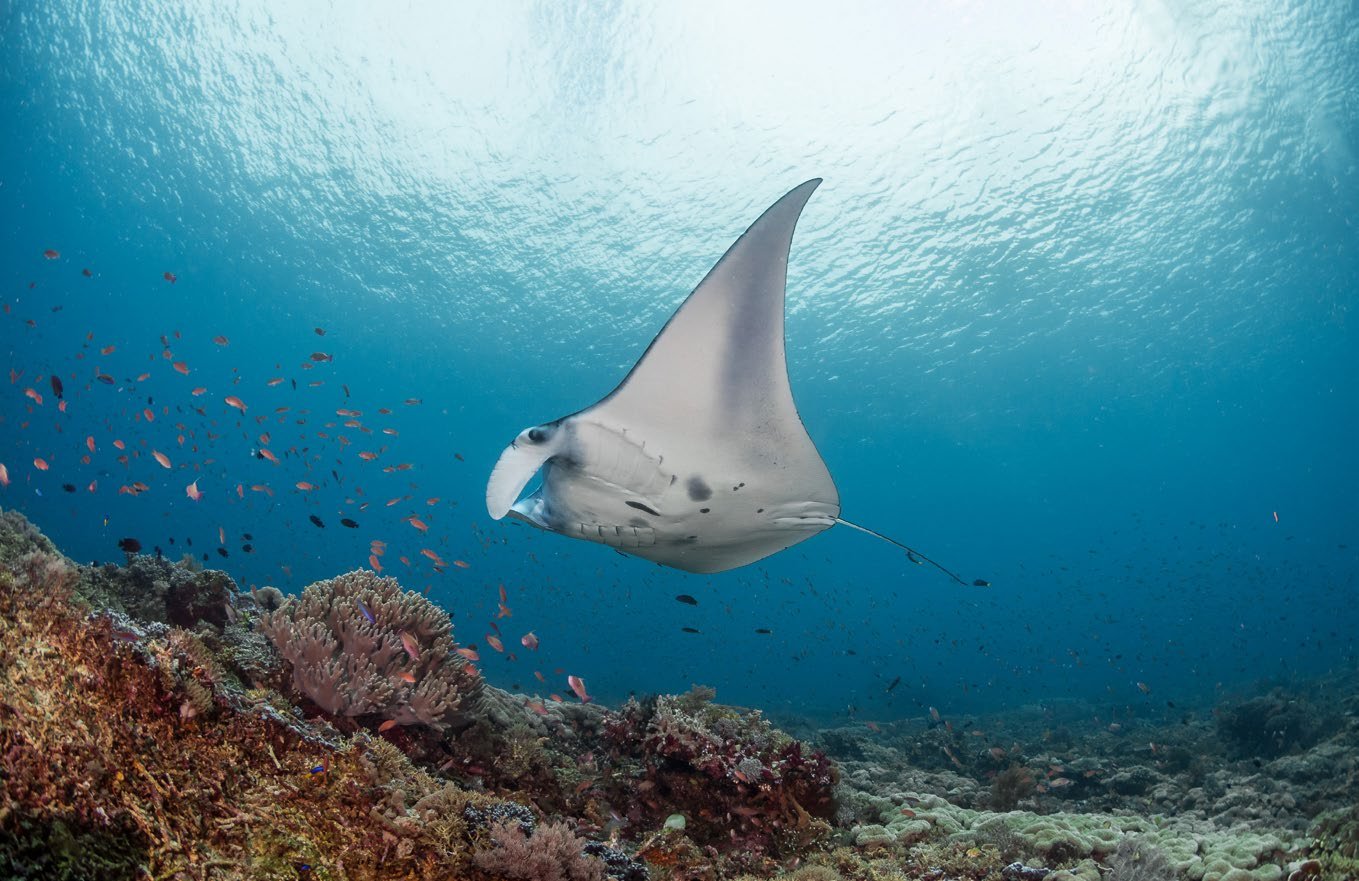
Mantas on a cleaning station.
Dr. Elitza (Ellie) Germanov, a Senior Scientist at MMF, is a world expert on manta rays and ocean pollution. She’s been working as a dive guide then manta researcher in Komodo National Park for years now, and recently published a major new scientific study on manta ecology in Komodo. – Simon Pierce
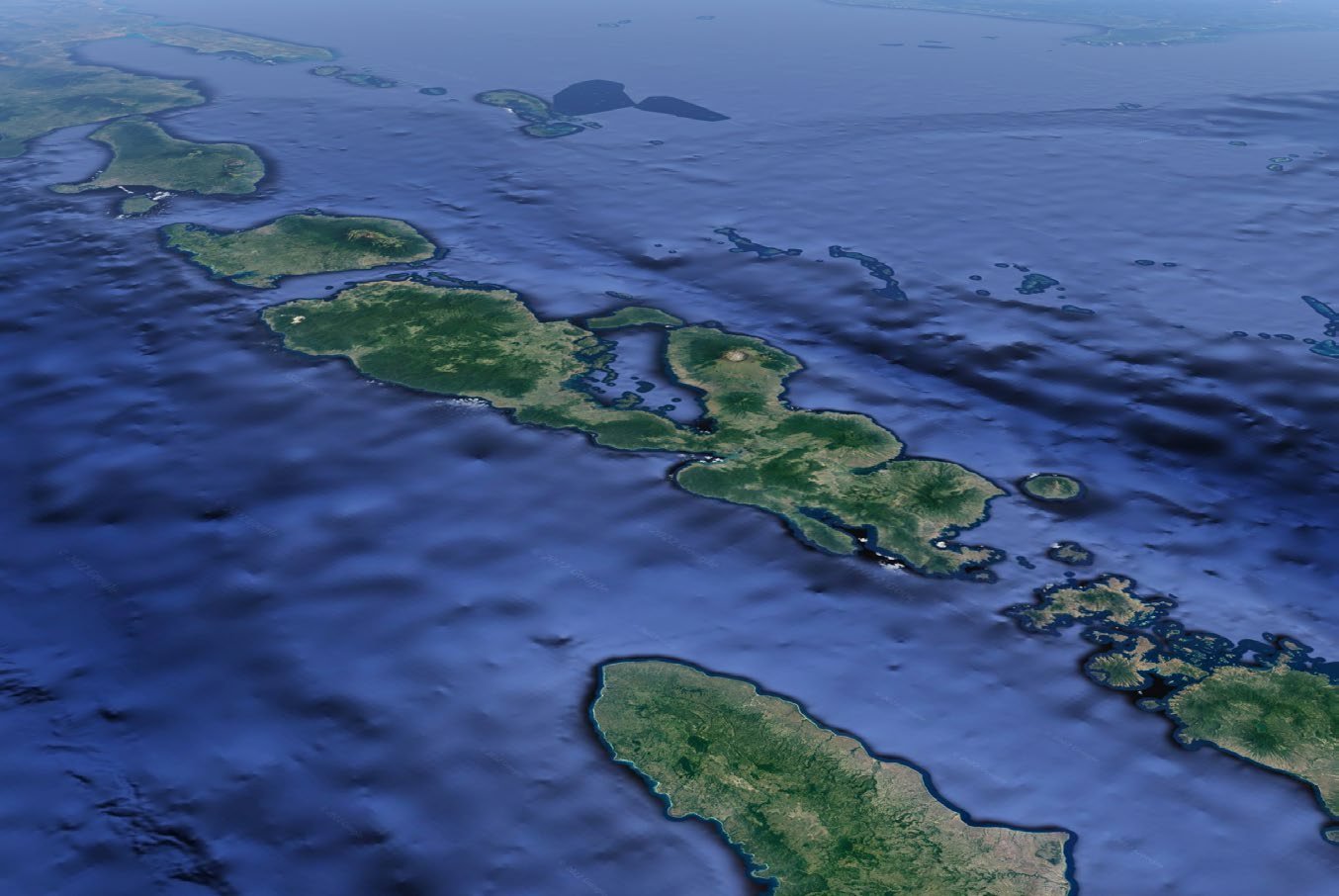
It’s my pleasure to talk to Dr. Elitza Germanov once again. Elitza manages MMF’s Indonesian country program, and also completed her PhD on manta rays, including the manta rays of Komodo. She’s just published a wonderful, foundational new paper on Komodo mantas, so I thought this was a good time to have a chat about what is going on there. So thank you, Elitza.
It’s always great to chat with you, Simon.
Likewise. When did you first see a Komodo manta ray? (Probably a good place to start.)
Yeah. So, Komodo actually started my love affair with mantas. It wasn’t the first time I saw a manta, but I definitely had a memorable first manta encounter in Komodo. I was on a bit of a sabbatical, or a career break, from my former studies in microbiology and immunology. I’d gone to Southeast Asia to do my Divemaster course. After I completed that, I booked a once-in-a-lifetime liveaboard to Komodo, a pretty budget-style liveaboard in the off-season. There was just myself, my now husband, and two other divers. And we chanced upon what appeared to be a massive feeding aggregation of mantas.
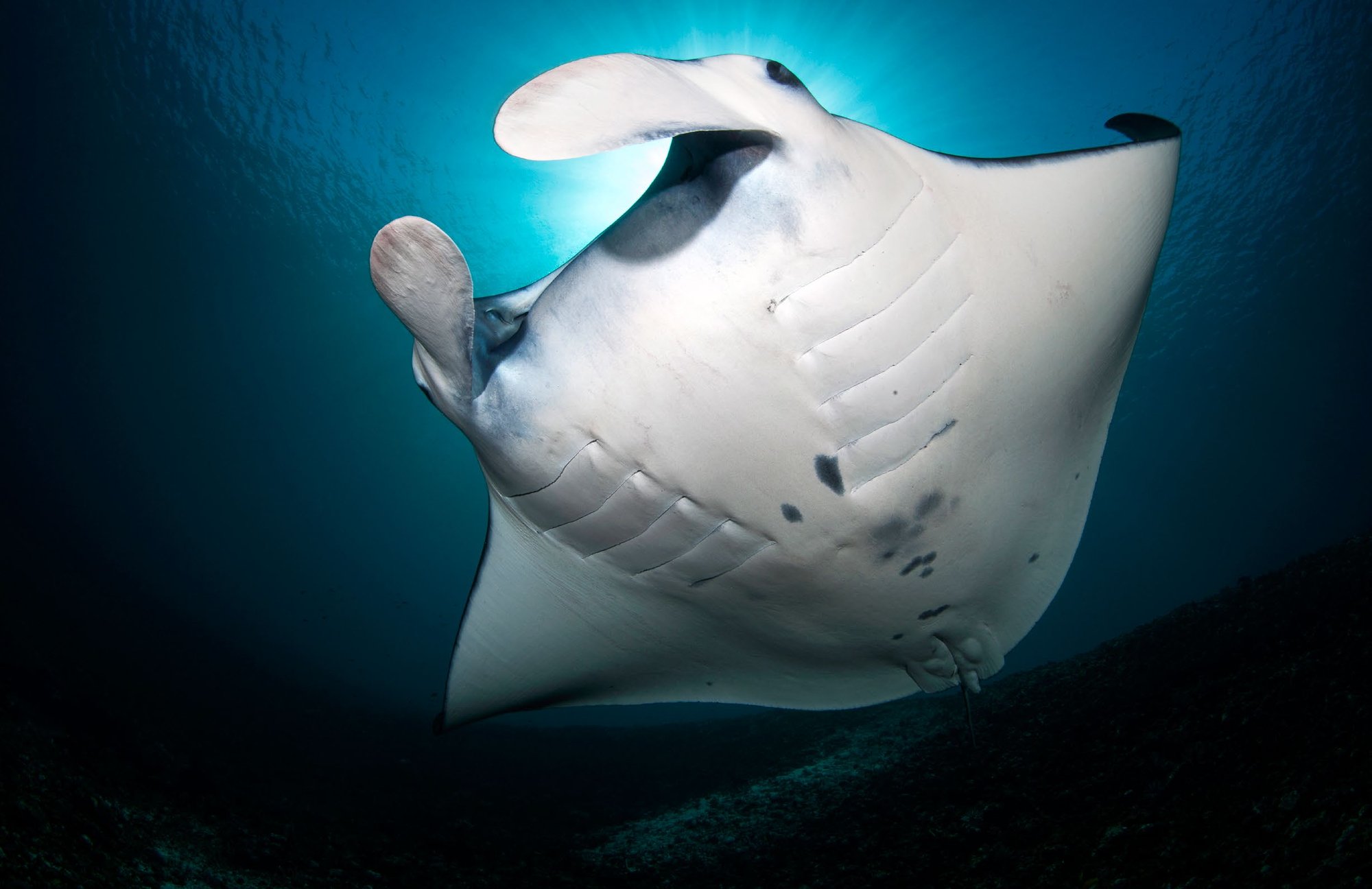
I didn’t know much about mantas then, just that they were big and that they were plankton-devouring filter feeders, so they weren’t dangerous. So I had no qualms about getting in the water amidst them all, and I was an amateur photographer so I was snapping away. It was only a while afterward that I found out manta rays have individual patterns on their bellies. Because a lot of them were feeding near the surface, a lot of my photos had actually captured their undersides as they rolled. So I came home with over 40 of these identification photos without even meaning to.
Manta showing the spots on its belly.
I got interested in mantas because of this experience and found out that, actually, these photos are gold. I uploaded them all onto the online database for mantas, MantaMatcher. So that’s how it all started, and I was so fascinated after my time in Komodo that trip that I decided to find a job so I could work there. I applied to the few dive centers that were operating there at the time and got hired by one called Dive Komodo. I worked there for over three years. I had a supportive boss who saw that I was keen on the mantas, and allowed me to bring a camera when the conditions were okay so I could continue to collect identification photos, and also to spend time activating the local community to do the same – encouraging people from the other dive centers, as well as the customers that joined our boat. So I basically started a citizen science project.
I like that attitude, “Yeah I did this once-in-a-lifetime thing, it was really cool, so how can I do this all the time?”
Yeah. It’s pretty much how that worked.
So you got that rolling; when did it evolve into a more formal research project?
A few other serendipitous things happened along the way. I got a chance to meet a dive center owner, Tim Birkett, who owns the Big Fish dive center in Nusa Lembongan, within the Nusa Penida Marine Protected Area. He was like, “Oh, you should meet my friends, Peter Bassett and Helen Mitchell; they’re also really keen on mantas, and they’ve been collecting manta bellies too.” This was around 2012 or 2013, when manta rays were still actively being fished in Indonesia. In fact, Indonesia was in the top three countries for manta and mobulid trade worldwide.
We were each collecting these photos, which was helpful information for both Komodo and Nusa Penida, but we thought, “Why don’t we start comparing our different data sets to see if we find some of the same mantas.” I mean, the distance between the two areas is about 450 kilometers, so it wasn’t unimaginable that mantas were traveling between the two, and we knew that there were significant fisheries that were happening in between.
Curious Komodo manta ray. Photo by Jerry Arriaga.
I had less than a hundred mantas in my database at that stage, but right away we identified three matches with the Nusa Penida mantas. That was important evidence for movement that a lot of the organizations working towards manta protection in the country needed, so we presented it to them, and they told us it was key information – the government knew that they wanted to protect mantas, but they weren’t sure whether they needed to do a full nationwide ban on their fisheries, or whether it’d be enough to set up protected areas in places that were known to be important for manta rays. Seeing that they were ranging between these two established protected areas helped to push the government to fully protect the species in 2014. So that was the first little success that came out of the citizen science story.
Through working on this research, I met Dr. Andrea Marshall from MMF, and I expressed my hope that I might turn this into more than a passion project. I wanted to do more for mantas, and potentially even continue my studies. She took me under her wing, and I enrolled in a PhD program looking at mantas in Komodo and Nusa Penida: their ecology, their habitat use, and the threats that they are facing. This once-in-a-lifetime opportunity rolled into a career path.
Awesome. You mentioned, “Yeah, it was a little success to have” there. It was a pretty major success to get at that stage of the game! Of course, that’s what we most want to achieve, to make our work impactful, so it was amazing to start with a result like that. That’s genuinely made life a lot better for the mantas.
Yeah. It was good. Still a favorite story.
It’s a good one. So, have you seen much ongoing connectivity between the two protected areas?
Our manta database is sitting at about 1300 individuals now, even though we’ve had limited ability to survey over the past two years because of the COVID-related reduction in tourism – these programs really depend on our partnerships with dive centers for us to get on the water. Even as the database grows, it still seems that it’s about 1% of mantas making these movements. I’m unsure whether it’s because not many swim that distance, whether we aren’t surveying enough, or perhaps they aren’t always going the full distance.
Other research studies have used satellite tags and shown that they move along the coast between Bali and Komodo. There’s a large island called Sumbawa in between, and the mantas tend to go there from both Bali or Komodo, so it’s very likely that there are other aggregation sites along that coast. Just because the mantas are not constantly coming all the way over here to Nusa Penida doesn’t mean that their habitat range is constrained to those two areas.
Well, that will be a fun area to explore. Do divers see many mantas along the Sumbawa coast?
A few more dive operators started popping up around Sumbawa from 2019, and low and behold I started getting submissions of IDs from those areas. So yeah, it’s definitely something that I can follow up on; there are likely other aggregation sites that are not well known, or rarely visited.
So, in contrast, Komodo is one of the older national parks in Indonesia, is that right?
Yeah, it was initially set up in the 1980s to protect the Komodo dragons. I think the marine part of it came a couple of years later. There was a big difference in how it was managed from the late 90s and early 2000s, when very active patrols began, and there’s been good documentation of the reduction of destructive fishing practices like bomb fishing, so coral cover has improved since then.
Do you think the park might have helped to buffer the impacts of those manta fisheries you mentioned?
I believe so. There are a number of restrictions on the type of fishing gear that’s allowed to be used in the park. So even if illegal fishing still occurs, it will be at a lower rate, because there are more eyes on the water to report it. We do see about 5% of Komodo’s mantas still having some evidence of contact with fishing gear, but it’s not necessarily happening in the park; it could be happening outside. I think that not having gill net fishing, and having avoided fishing on sites where we know they aggregate, definitely will have helped.
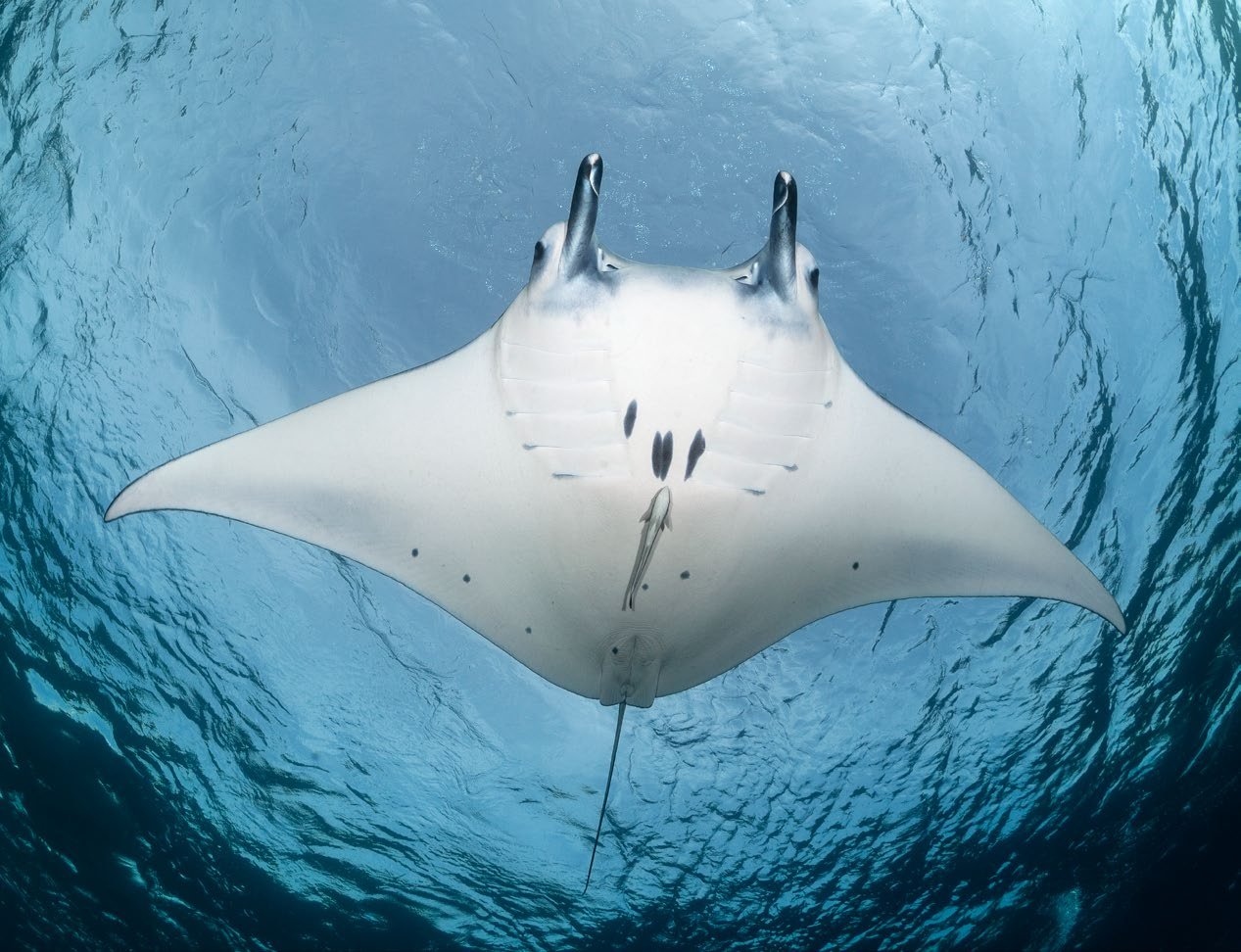
Manta ray at the surface. Photo by Debbie Arriaga.
Having dived there for a long time yourself – and also working with dive professionals that might have been there for longer – is there any local perception of population increase, decrease, or stability over time?
That’s a good question. I don’t recall anyone saying, “Oh, there used to be more mantas before”, or anything like that. But there are some other sites, which are rarely visited these days for whatever reason. Maybe because they require more advanced divers, or maybe because they are a little further away than other sites. For example, there’s an island just outside of the Komodo National Park, Gili Banta, which was at one point proposed to be within the park. I’ve heard from some of the long-term operators that there used to be, and hopefully still are, pretty reliable aggregations for mantas there. But it’s not in the park and, unfortunately, it serves as a jump-off point for fishing in the waters around the park. So that’s one of the areas where it’d be good to do further surveys and see whether these aggregations are still intact, and perhaps to find out whether there’d be interest in including this area in the Komodo National Park to add an extra level of protection.
If it does turn out to still be an important area for mantas, that would be a strong justification for expansion – mantas have become quite an iconic species at the park now, haven’t they?
Oh yeah, for sure. It’s one of the top sites in Indonesia to see reef manta rays. It brings in a lot of blue economy money to the area.
And you can see them either diving or snorkeling over there?
And all year round, pretty much.
As you mentioned before, COVID obviously restricted the number of tourists that were allowed to enter the country, as well as people traveling in general over the past couple of years. So less data were coming in, and there were fewer eyes on the water as an informal patrol service. But, also, there were fewer tourists in the water. How do you weigh up the benefits and potential negatives of tourism in your mind?
Yeah. I’m part of WhatsApp chats between the community members, and I’ve seen posts of fishing activity happening in the park; I guess there has been less budget for patrols. It seems that some of the fishing activities became a bit bolder and went to sites where they normally wouldn’t fish; not necessarily manta sites, but reef sites where we do sometimes see mantas. Some very iconic sites in Komodo have been fished over the past year or so. That’s one of the negatives of not having eyes on the water.
But, on the other hand, tourism had significantly increased over the past 10 years. Over four years of our direct monitoring, there was a 30–35% increase in boats at some of these sites, and it was becoming unsustainable. You could tell that the encounters we were having were shorter, that mantas were visibly bothered. They weren’t their usual curious selves; they were in a hurry to go. So whether that’s because of more boat noise, or the disruption of having all those divers in the water, especially around the cleaning stations, it’s hard to say.
In other parts of the world, there have been studies showing that snorkeling with mantas can disturb their natural feeding behaviors, and can cause more avoidance behavior from the mantas. That’s all eating into their energy reserves. If a preferred habitat is no longer able to provide the food, the nourishment they need, or allow for other important activities like courtship and mating, then maybe mantas will have to move to lower-quality habitats. For a species that’s slow to reproduce, and still threatened with extinction, any extra pressure is something that we need to consider.
The Komodo National Park staff had realized this already, and they did some carrying capacity studies in the years leading up to 2019. Some limits were placed on one of the most famous sites for mantas, called Karang Makassar or Makassar Reef, a shallow rubble reef with several coral bommies over which you can see mantas rays cleaning. It’s usually done as a drift dive, and it’s quite a large area, over a kilometer long. They’ve placed a limit on the number of boats that can use that site per day now, and the number of divers. Whether those limits are sufficient is yet to be seen, because these regulations came into effect in September 2019, and things have been disrupted by COVID through the 2020–21 seasons.
I hope that this study that we put out recently, which details this increase in tourism, and also the importance of these sites for manta rays, will encourage buy-in from the operators. Hopefully, it’ll allow them to see that these are important areas and that, as their livelihood depends on healthy manta ray populations, then it’s a good idea to have these limitations in place, even if they might seem inconvenient at first.
Manta tourism.
Yeah, for sure. And certainly with mantas, I’ve always found that if you’ve got unbothered mantas, then they are likely to approach people more. Which-
Gives better experiences.
Exactly. It always feels a lot better to have the animal approach you, rather than have people chase them, as mantas can swim a lot faster than divers. So, if you don’t just want to see their tail, then it’s good to let them come to you.
And a lot of that is in the hands of the operators, to provide good briefings to their guests about how to have the best manta encounter, which is good for the manta and for the divers themselves, as it will result in much better and longer encounters.
Did you identify other sites in the park that are disproportionately important to the mantas?
Definitely. We surveyed over 30 different sites, and four really stood out as places where you can regularly see mantas. None of them were a real surprise, as dive operators know these sites and specifically go to them to show mantas to their guests. But it was incredible to see how many mantas actually use these sites, and how the sites are used slightly differently. It seems individual mantas have their preferred areas, while different sites are preferred at various times, or by different demographic groups or age classes.
So is it the same mantas that are moving around, or different mantas doing different stuff in different places?
If you start digging into the mantas’ sighting records, you see that some mantas are only seen in a specific place. We call them the homebodies. Others, the jetsetters, often move around, even to Nusa Penida and back. So there are definitely some individual-level differences; whether that’s due to social structure, age, or other factors is still an open question.
Are you seeing much evidence of breeding activity within the park?
Totally. I was on a trip with Andrea a couple of years ago and saw some really cool mating trains. So basically, when mantas are trying to reproduce, the females make the males compete. You have these trains of sometimes 15 males chasing the females – or the females may be encouraging the males to chase them, we’re not really sure exactly how it works. She becomes very acrobatic, with very quick changes in direction and turns, and the males have to keep up. I guess the last man(ta) standing gets the trophy, and gets to mate with her. When you’re actually witnessing this, it’s simultaneously frantic and beautiful. We’ve seen that happening in at least three sites.
You mentioned earlier that about 5% of the mantas have fishing-related injuries at this point. Is fishing still a significant threat to the mantas?
5% is lower than some other locations. For example, in Florida, I think it’s over 30% of mantas that have some fishing-related injury, or are swimming around with embedded fishing hooks and things like that. Mantas have a soft cartilaginous skeleton so, when these lines get entangled around their cephalic lobes, which are used for feeding, or around their fin tips, which is where a lot of their propulsion comes from, they can be sliced off. That inhibits their feeding or swimming, forcing them to work harder and expend more energy to get the same result. That’s energy that could have been used for reproduction, which is what helps their populations rebound. Relating it to Nusa Penida, there we have about 13% of the mantas bearing injuries. So the Komodo mantas are faring better.
Assuming that the park can get a handle on the tourism, then, it sounds like the protection from 2014 should be effective at helping the population to recover?
I hope so. I’m optimistic.
That’s always a good place to be. So moving on then from this epic paper, what are your next steps for research?
We need population and abundance estimates next, so I’ve already started prepping the dataset, and I’m learning how to do the modeling. There are lots of Greek letters involved, but I’m up for the challenge. And there are people within MMF that already know how to run these analyses, so I’ll be leaning on them for sure.
That’s fantastic. You were saying there might be a few places outside the park that are important to mantas as well. Have you got any exploring planned?
Yes. There’s a resort on Sumbawa that dives at Gili Banta, that island that I mentioned earlier, so we’re heading there in November to see what we might find. The idea is to try this trip at a couple of different times of the year. If we find some mantas there, we’ll be able to see if we’ve identified them in Komodo or Nusa Penida.
We still don’t know much about where the young mantas are either. There’s one site in the north, Cauldron, where we see smaller mantas. We know from Nusa Penida that site use, over there at least, is quite segregated between age classes. At one site, Manta Bay, we see a lot of younger mantas, and males as well, which are smaller than the females, using the same area. At another site, Manta Point, we rarely see juveniles. That’s what is going on in Komodo too, where there are three main cleaning station sites. We see juveniles there once in a while, but most are adults, but then at Cauldron we have some smaller mantas. There should be more of them around than we’ve seen so far, perhaps in other bays in the northern part of Komodo or nearby islands.
It’d be nice to find a few more of the babies, if they are more in the area, since Manta Bay has proven to be such a great study site.
Exactly. And in Penida, we are doing some follow-up studies, with Janis Argeswara leading a project to look at reproductive ecology: identifying when mantas are mating, when pregnancies can be seen, and the percentage of the mantas that are pregnant. She’s also looking at the younger mantas to find out if they were born within the last year or not. To do that, you need a good measurement, so we’ve been piloting a methodology called stereo photogrammetry, where we sync two cameras and calculate manta size based on the discrepancy in the images. Once Janis gets that up and running, it might be something that we can take to Komodo and elsewhere to really dig into manta demographics.
So people should check in with you after November to see if you’ve got trip number two planned.
Yeah. The first one’s full, so that’s great – I had a really supportive group of people who wanted to help make it happen, because it was a dream that I had. Then COVID poured cold water over it but, finally, we’ll get there this year.
Well, thank you very much for joining me again, and for explaining your research to everyone.
Thanks Simon, it’s always a pleasure. Bye everyone.
This article was originally published in Ocean Giants, MMF’s magazine, Issue #06 (Winter 2022). Download the full issue as a PDF.