
Indonesia · Global Manta Ray Program · Since 2012
Indonesia Manta Ray Project
We have followed Indonesia's reef manta rays since 2012, and the data helped protect the species nationwide.
Indonesia holds some of the largest reef manta ray aggregations on Earth. We have followed them since 2012 at three sites, Nusa Penida, Komodo, and Sangalaki, identifying more than 2,000 individual manta rays and producing the data that helped protect the species nationwide.
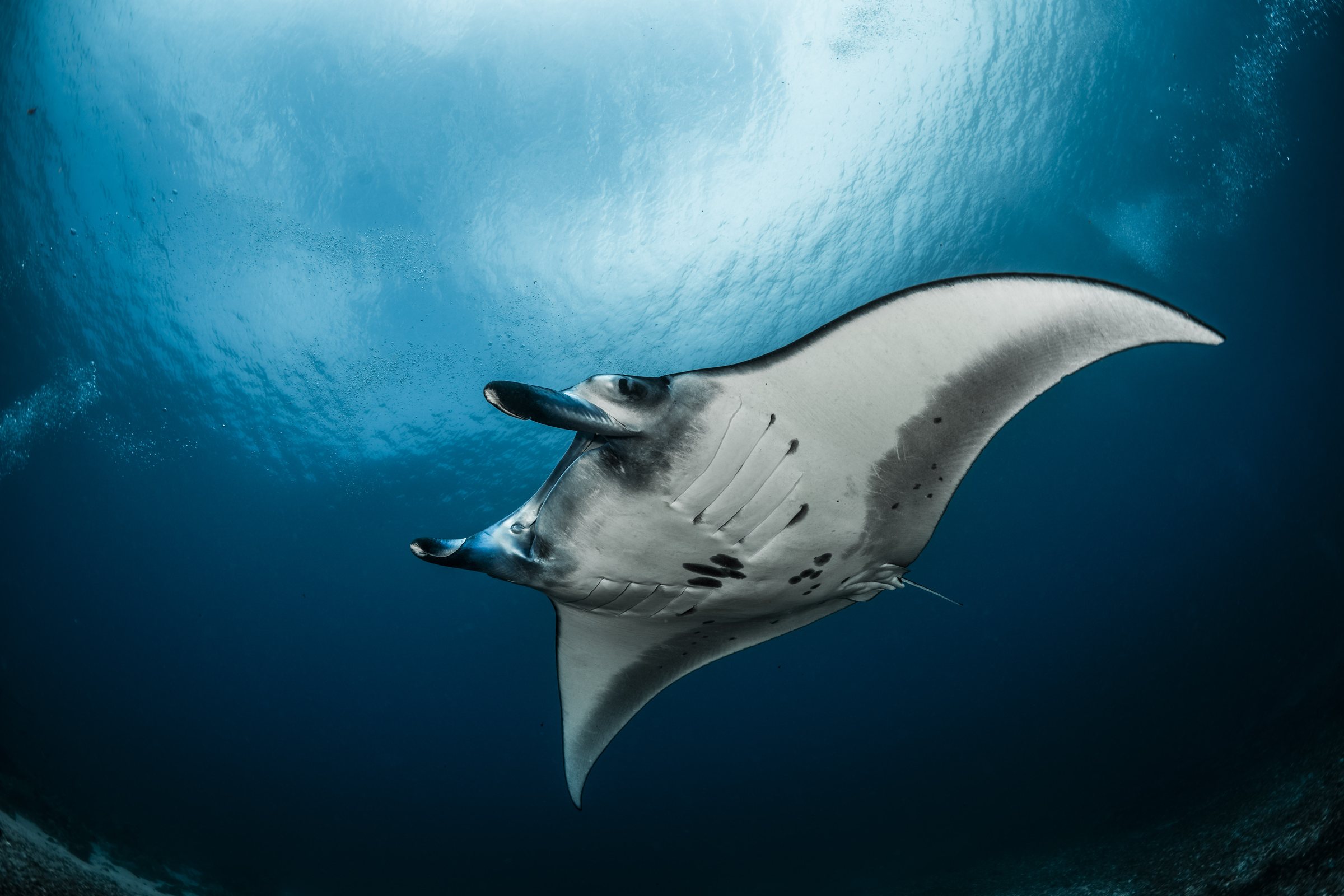
MMF’s work on reef manta rays (Mobula alfredi) in Indonesia began in 2012 as a citizen science partnership with dive centers at Nusa Penida and Komodo, collecting photographs of the unique spot patterns on each animal’s underside. When the two catalogs were compared, the same individuals turned up at both sites, 450 kilometers (280 miles) apart. That evidence that manta rays could not be protected one site at a time contributed to Indonesia’s national ban on manta ray fishing in 2014, which protected the species across the country’s entire exclusive economic zone.
Today the program is run by MMF’s Indonesian affiliate, Yayasan Megafauna Laut, from its base at Nusa Penida, with a network of more than 40 partner dive centers across Bali, Komodo, the Derawan Islands, and Raja Ampat. The three study sites do different jobs. Nusa Penida is our longest-running site and the place where a population recovery has now been measured. Komodo holds one of the largest documented reef manta ray populations in Indonesia and the management story that followed our carrying-capacity work. Sangalaki, in the Derawan Islands of East Kalimantan, is the newest: a site with almost no baseline data, facing a tourism surge as Indonesia’s new capital is built nearby.
In 2026 the program moved from photographs to tracking. With acoustic receivers on loan from the Ocean Tracking Network, we began tagging reef manta rays at Nusa Penida in September 2026, the first step in a receiver network across the Lesser Sunda Islands from Bali to Komodo, alongside surveys along the Lombok and Sumbawa coasts to find the nursery areas that lie outside any protected boundary.
Objectives
- Keep the long-term photo-identification catalogs at Nusa Penida, Komodo, and Sangalaki growing, and share them across Indonesia so movements between sites are detected.
- Map how reef manta rays move between Bali, Lombok, Sumbawa, and Komodo with an acoustic telemetry network, and locate the nursery areas that lie outside protected areas.
- Turn the evidence into management: site-specific limits on boat and diver numbers, codes of conduct in the water, and protection for the places the animals actually use.
- Build the population baseline at Sangalaki before East Kalimantan’s tourism grows, so that management gets ahead of the pressure rather than following it.
- Train Indonesian scientists to lead this work.
What we've done
- Began acoustic tagging of reef manta rays at Nusa Penida in September 2026, with a workshop for Indonesian partners and funders, as the first stage of a Bali-to-Komodo receiver network.
- Published the first population estimates for Nusa Penida in 2025, built from eleven years of photo-identification: numbers rose from about 170 manta rays in 2012 to about 447 in 2022, with high annual survival, and nearly 80% of individuals were seen more than once, the highest resighting rate documented for any manta ray aggregation in the Indo-Pacific. The most likely explanation is that the 2014 protections are working.
- Relaunched field research in the Derawan Islands in May 2025, after a six-year gap, with a site manager and research assistant recruited for the program; the first season recorded 255 new sea turtles and frequent leopard sharks.
- Led the successful proposal, through the IUCN Shark Specialist Group, to recognize the Derawan Islands MPA as an Important Shark and Ray Area in 2024.
- Published the Komodo population study in 2022: 1,085 individual manta rays identified, strong loyalty to particular sites even 5 kilometers (3 miles) apart, courtship confined to three core sites, and a northern site used mainly by immature animals that meets several of the criteria for a nursery.
- Completed a carrying-capacity study at Komodo in 2019 that led directly to limits on boat and diver numbers at Karang Makassar, the park’s busiest manta ray site.
- Showed in 2019 that the two manta ray sites at Nusa Penida serve different roles, a male-dominated feeding ground and an adult cleaning and courtship station, and recommended that they be managed differently.
- Identified more than 800 individual manta rays at Nusa Penida and more than 1,200 at Komodo, with eleven individuals recorded at both.
What's next
- Survey the Lombok and Sumbawa coasts in October 2026 for manta ray nursery habitat, and return to Komodo in November 2026, including the reports of oceanic manta rays (Mobula birostris) south of the park.
- Extend the acoustic receiver network through the Lesser Sundas and report the first movement tracks.
- Run the second Sangalaki field season and report the results to the East Kalimantan authorities, in Bahasa Indonesia, as the basis for tourism guidelines in the Derawan Islands MPA.
- Publish a decade of observations on the reproductive ecology of the Nusa Penida population.
- Work with the Komodo National Park Authority on enforcement of the existing limits, and with the Nusa Penida MPA authority on vessel limits and codes of conduct at the two manta ray sites.
Support manta ray research in Indonesia
Your gift funds survey days at Nusa Penida, Komodo, and Sangalaki, the acoustic tags and receivers that will show how Indonesia's manta rays move, and the training of the Indonesian scientists who will run this work for decades.
Our work on manta rays in Indonesia
Nusa Penida: where Indonesia’s protections have been shown to work
The Nusa Penida MPA, off the southeast coast of Bali, sits beside the Lombok Strait, and the upwelling it drives brings the plankton that manta rays come to feed on. Two shallow sites on the southwest coast, between about 7 and 25 meters (23 and 82 feet) deep, are used in strikingly different ways. Manta Bay is a feeding ground dominated by males, where immature animals are the most frequently sighted group and which may function as a nursery. Manta Point is a cleaning station used mainly by adults, and the only place where we regularly observe courtship. Around 44% of individuals move between the two, but each site holds its own community that returns year after year.
Both sites are among Bali’s busiest dive and snorkel destinations. That tourism gives living manta rays enormous local value, but it concentrates on exactly the places where the animals feed, are cleaned, and court. We present our findings to dive centers in Bali and snorkel operators on Nusa Penida and Nusa Lembongan, in English and Bahasa Indonesia, and we are working with the community and the MPA authority on the evidence needed to set defensible limits.
The research has moved from counting to measuring. Pregnancy and mating scars are temporary, so many female manta rays cannot be classified as mature or immature by eye. We now use stereo-photogrammetry, a paired-camera rig that measures an animal’s body size from about ten seconds of video without contact, to follow the reproductive cycle of the population directly.
Komodo National Park: several populations in one park
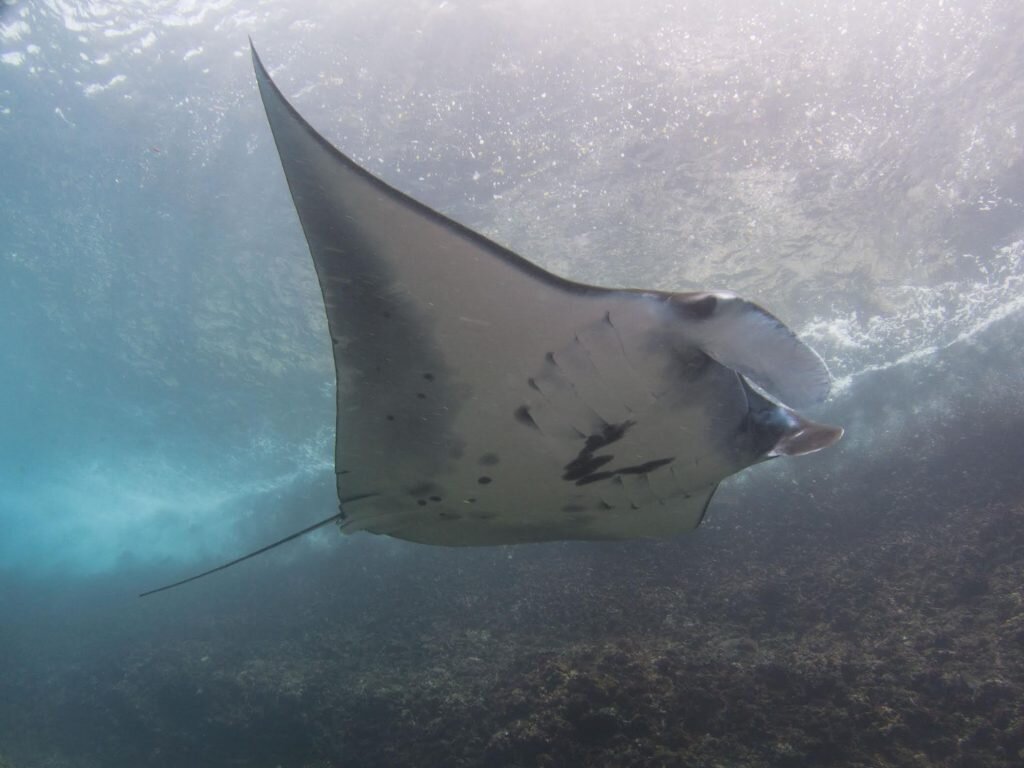
Komodo National Park, in East Nusa Tenggara, is a UNESCO World Heritage site best known for the lizard that gives it its name. Underwater it is one of the most important places in Indonesia for reef manta rays. Our published analysis shows that Komodo’s manta rays are not one group but several: mature animals dominate three core sites, where cleaning is the most common behavior and where all observed courtship takes place, while a fourth site in the north is used far more by immature animals and may be a nursery. Unusually for the species, females here were more mobile than males.
Diving with manta rays is central to Komodo’s tourism economy, and that revenue helps fund the park. Between 2014 and 2017 the number of dive boats per survey at the central sites rose by 34%, and visitor numbers have kept climbing. Because each site is used for a specific purpose, crowding interrupts a different essential behavior at each place. Our carrying-capacity study produced the boat and diver limits now in force at Karang Makassar, and our current work with park management focuses on enforcing them, on codes of conduct in the water, and on finding the nursery areas that lie beyond the park’s boundaries.
Sangalaki and the Derawan Islands: a baseline before the boom
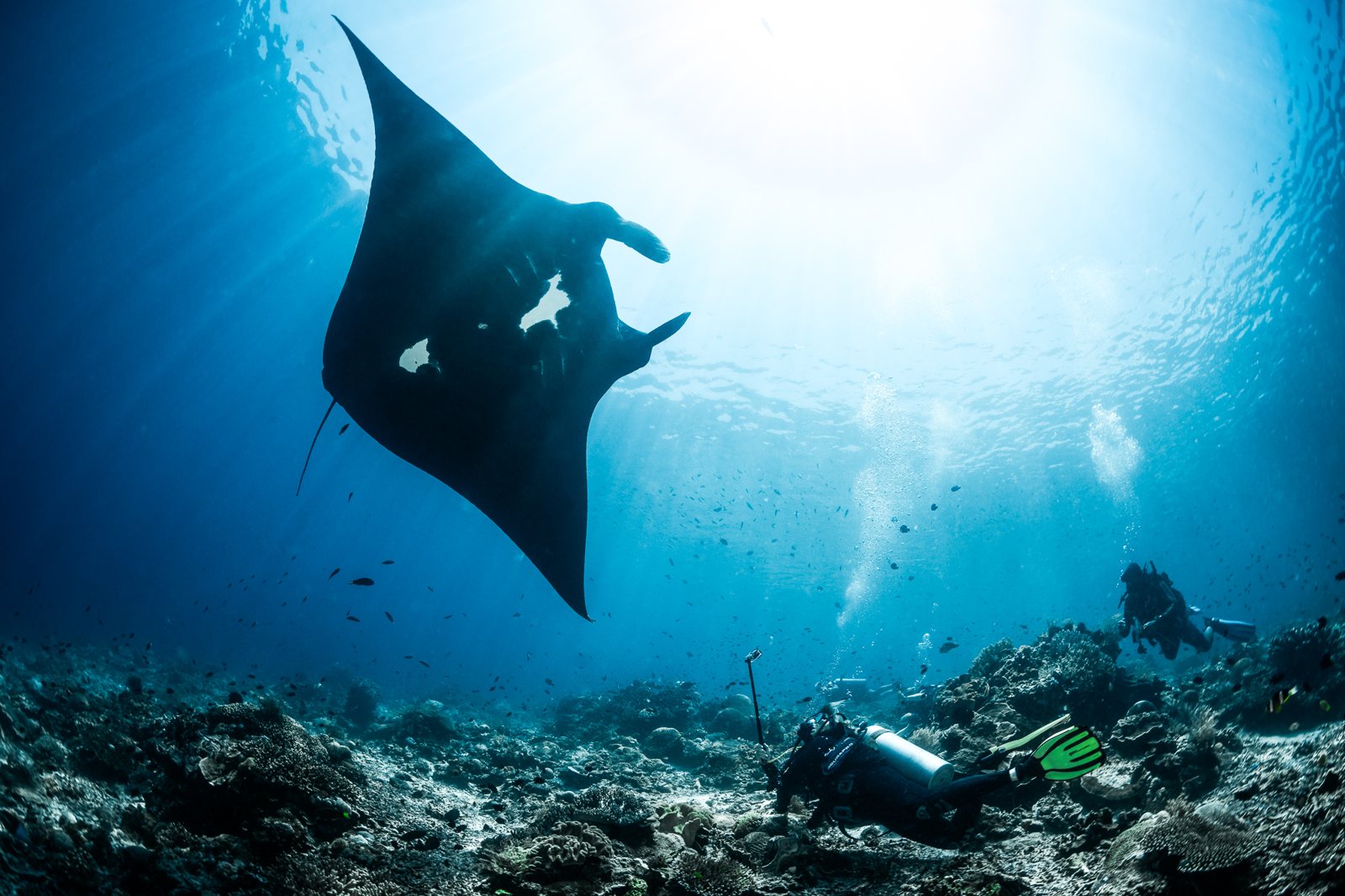
Sangalaki Island, in the Derawan Islands of East Kalimantan, hosts the only documented reef manta ray aggregation in the region. We ran seasonal monitoring there from 2017 to 2019, but the pandemic ended the work before it could be completed, and for several years one of the most important sites in the region had almost no one watching it. Two things changed that. In 2024 the Derawan Islands MPA was recognized as an Important Shark and Ray Area, following a proposal MMF led. And Indonesia is building its new capital city, Ibu Kota Nusantara, in East Kalimantan, with a surge in tourism and boat traffic expected to follow.
We relaunched the field program in May 2025, built around partnerships with local dive centers and boat operators, with a target of at least 70 dive days a year. Every manta ray encountered is photographed and measured, injuries from boats and fishing gear are recorded, and the records are shared regionally so that we can test whether Sangalaki’s manta rays are connected to the populations at Nusa Penida and Komodo. Presentations and workshops for operators, schools, universities, and government agencies, including virtual reality ocean experiences for students who have never dived, make the case for protection locally, and interns and research assistants are recruited from universities in Kalimantan.
A tracking network across the Lesser Sundas
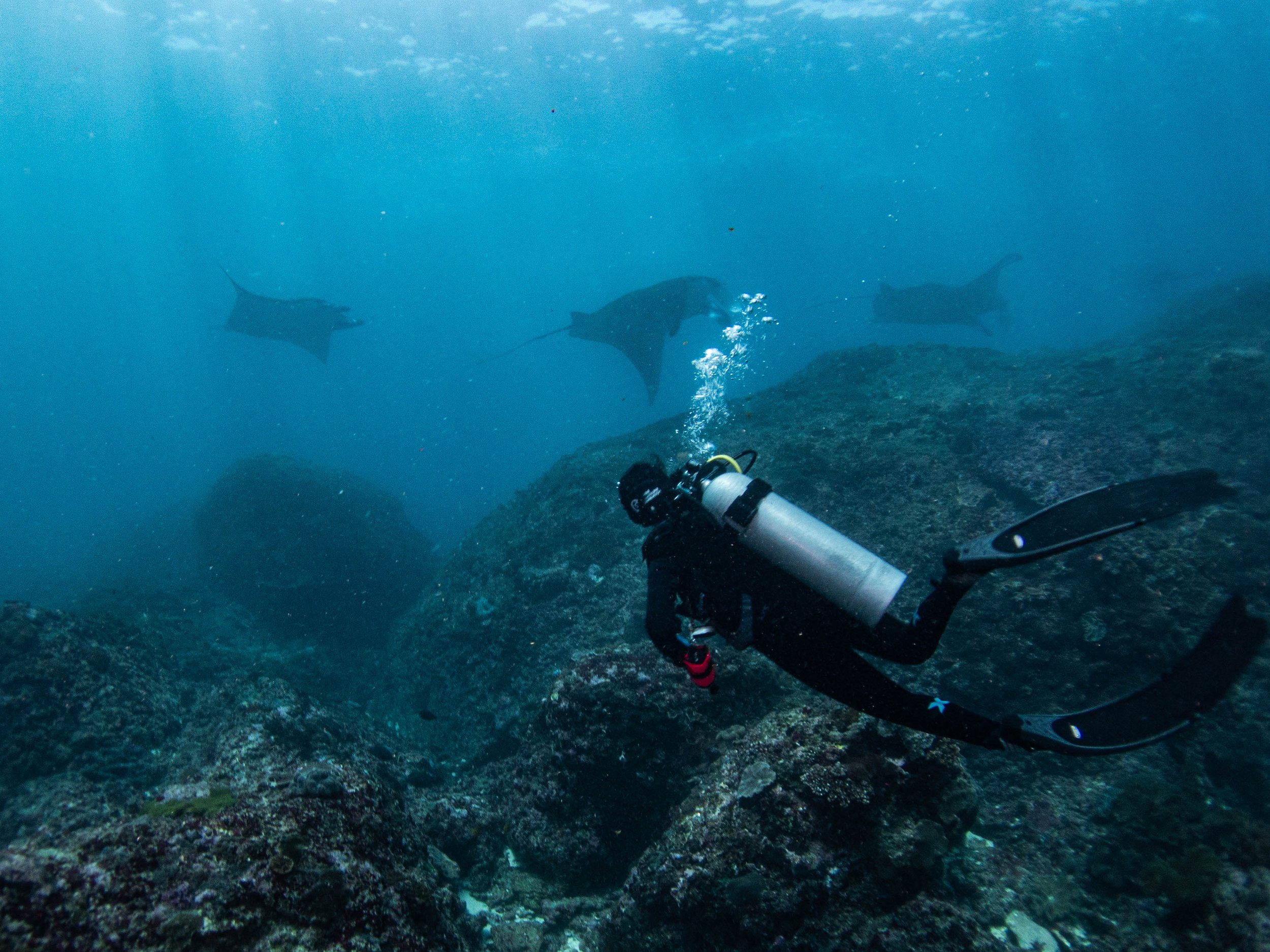
Photographs tell us who is where; they cannot tell us how the animals get there. In September 2026 we began fitting reef manta rays at Nusa Penida with acoustic transmitters, small tags that are detected whenever the animal passes a receiver moored on the seabed. The receiver network, built with equipment on loan from the Ocean Tracking Network and in collaboration with Dr. Edy Setyawan of the University of Auckland, will run across the islands between Bali and Komodo. It will show whether the manta rays of Nusa Penida and Komodo are one population moving through a chain of parks and fisheries, and where along the Lombok and Sumbawa coasts the young animals grow up.
Building Indonesian capacity
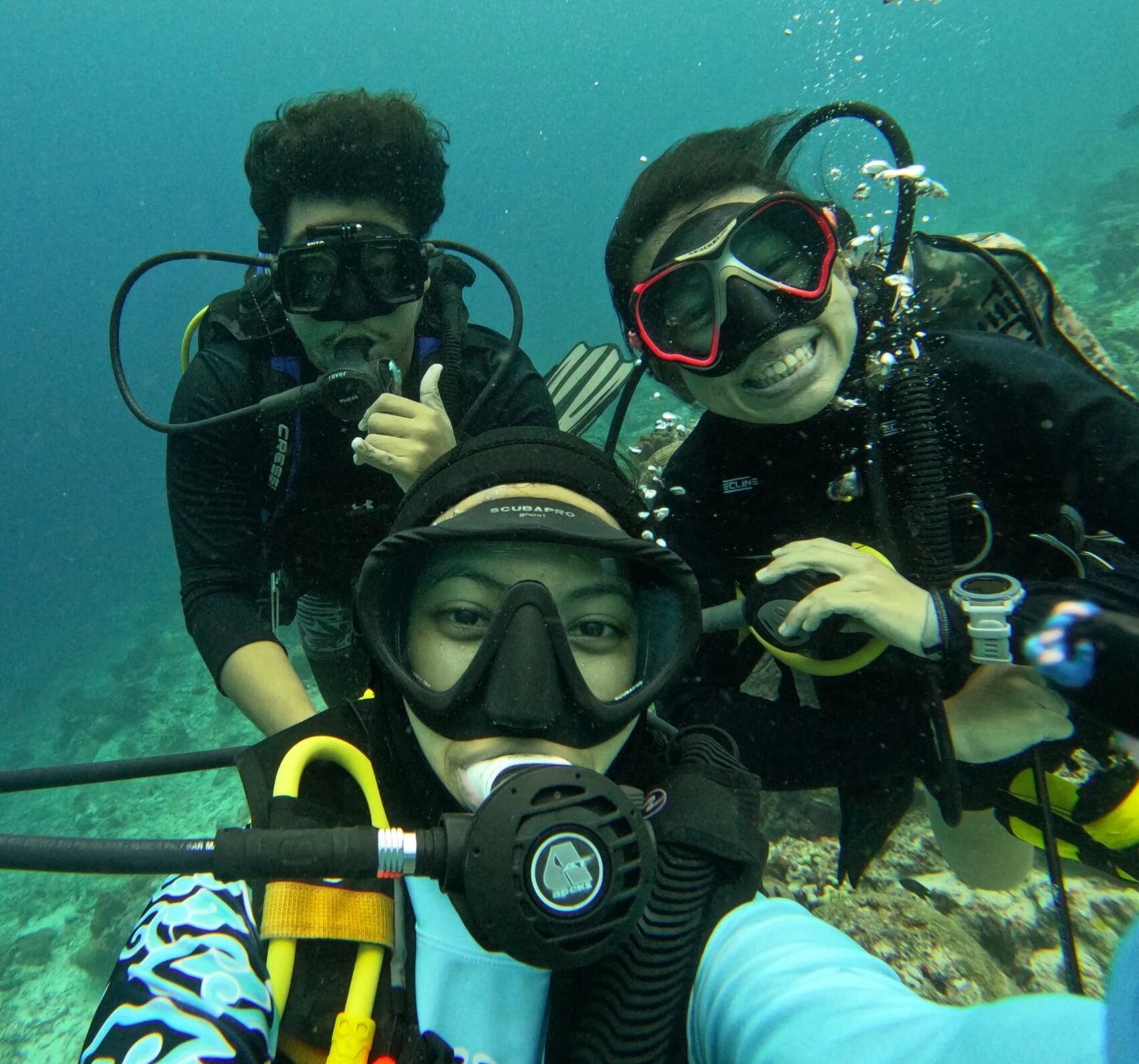
The program trains Indonesian research assistants and interns in photo-identification, photogrammetry, and science communication. Two recent research assistants from Nusa Penida, Ariq Trisarjono and Gabriela Nathania Harywanto, have gone on to postgraduate study in the UK and Australia. In the Derawan Islands the team is recruited from East Kalimantan, on the principle that the people best placed to monitor the MPA over the coming decades already live there.
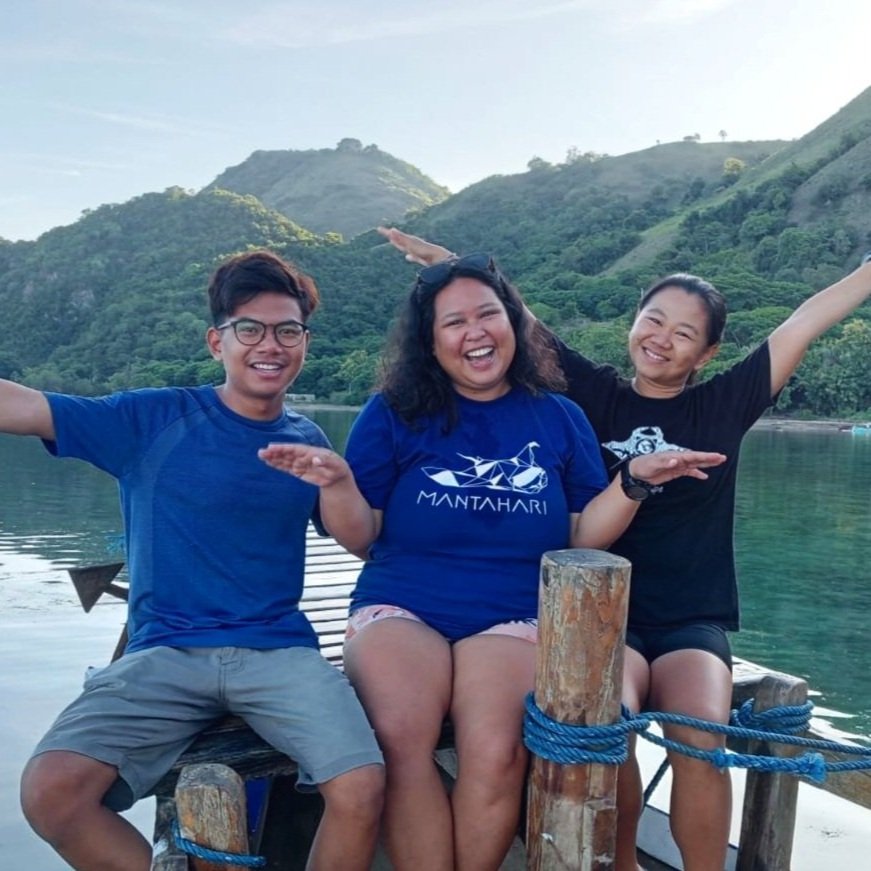
MMF Project Team
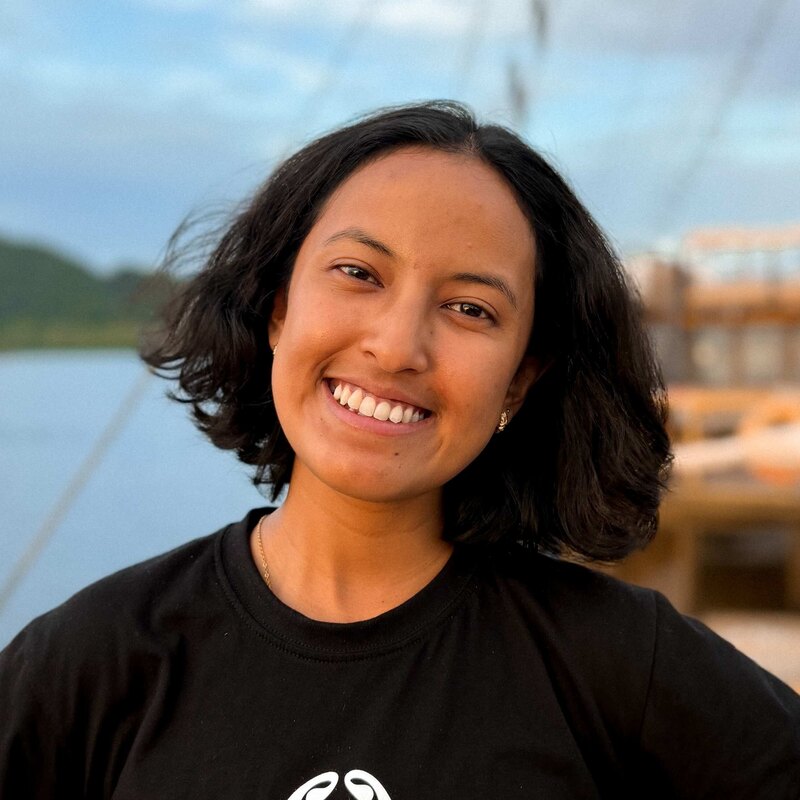 Janis Argeswara
 Dr. Elitza Germanov
 Ariq Trisarjono
Collaborators and Partners
Recent research
- 2025Estimating the abundance and population trends of reef manta rays (Mobula alfredi) in Nusa Penida, Bali, Indonesia
- 2022Residency, movement patterns, behavior and demographics of reef manta rays in Komodo National Park
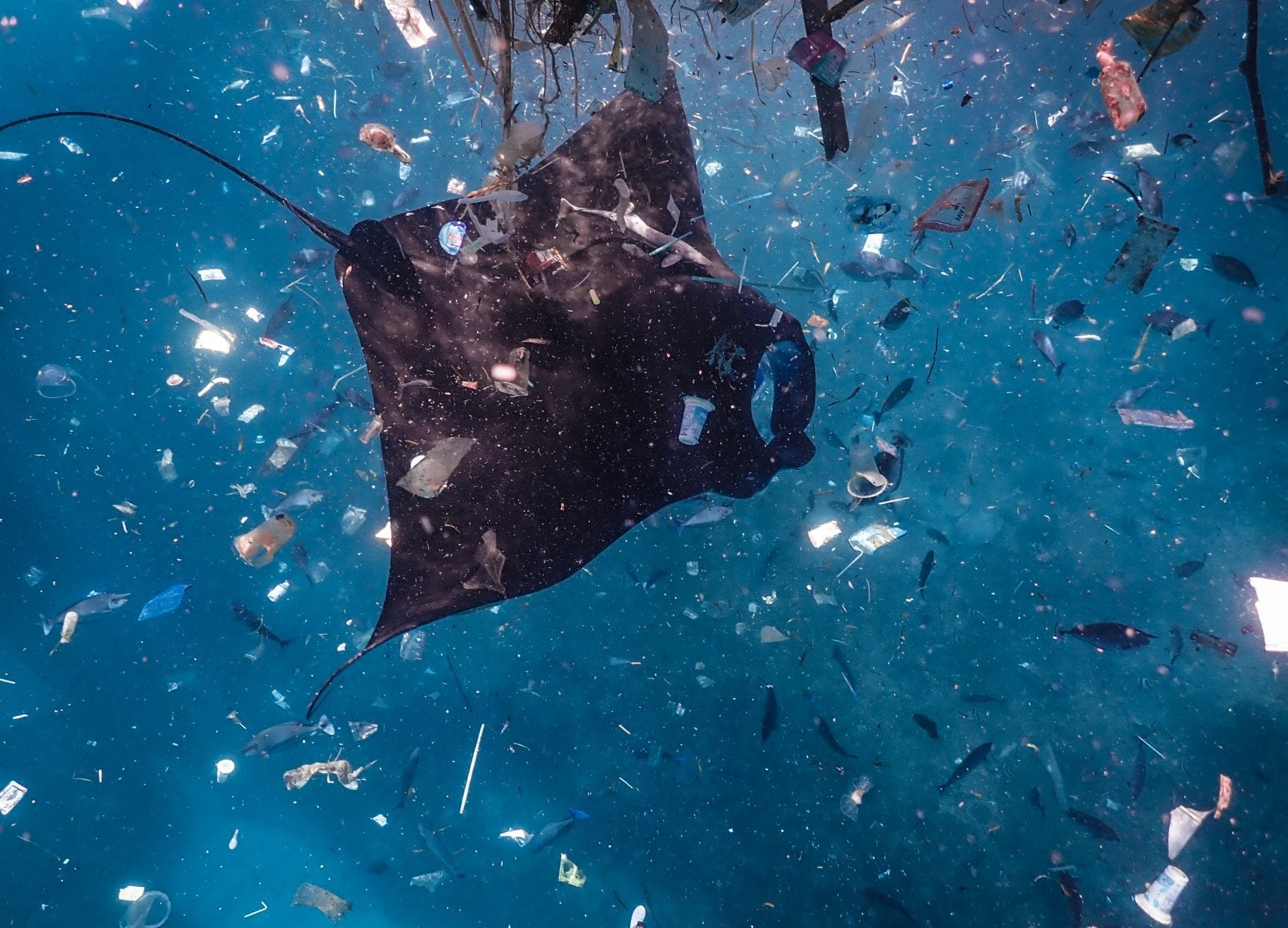
- 2021What's in the soup? Visual characterization and polymer analysis of microplastics from an Indonesian manta ray feeding ground
- 2019Microplastics on the menu: plastics pollute Indonesian manta ray and whale shark feeding grounds
- It’s not all black and white: investigating colour polymorphism in manta rays across Indo-Pacific populations
- Contrasting habitat use and population dynamics of reef manta rays within the Nusa Penida marine protected area, Indonesia
- 2018Microplastics: No small problem for filter-feeding megafauna
- 2014Running the gauntlet: regional movement patterns of Manta alfredi through a complex of parks and fisheries
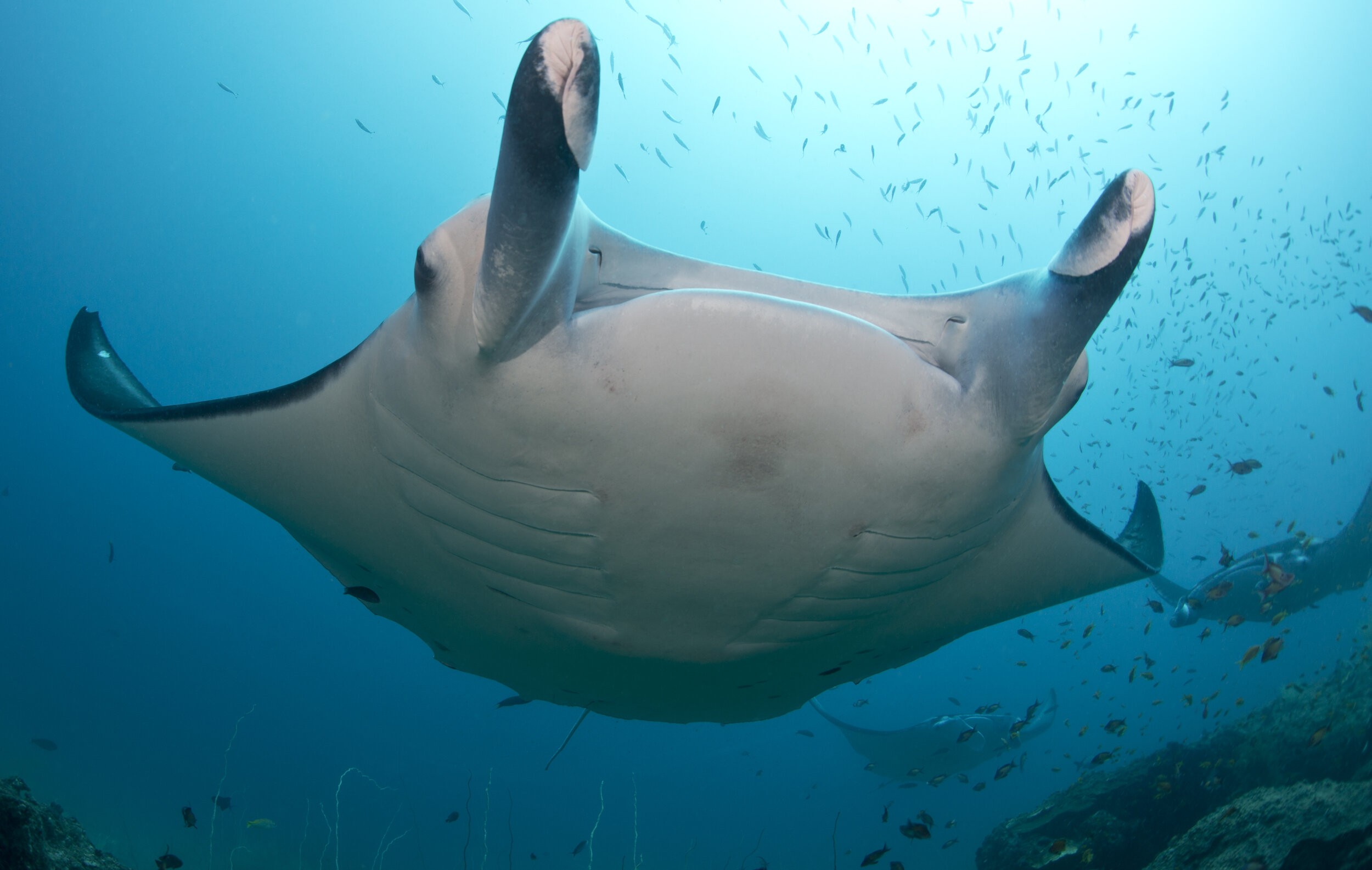 African Manta Ray Project
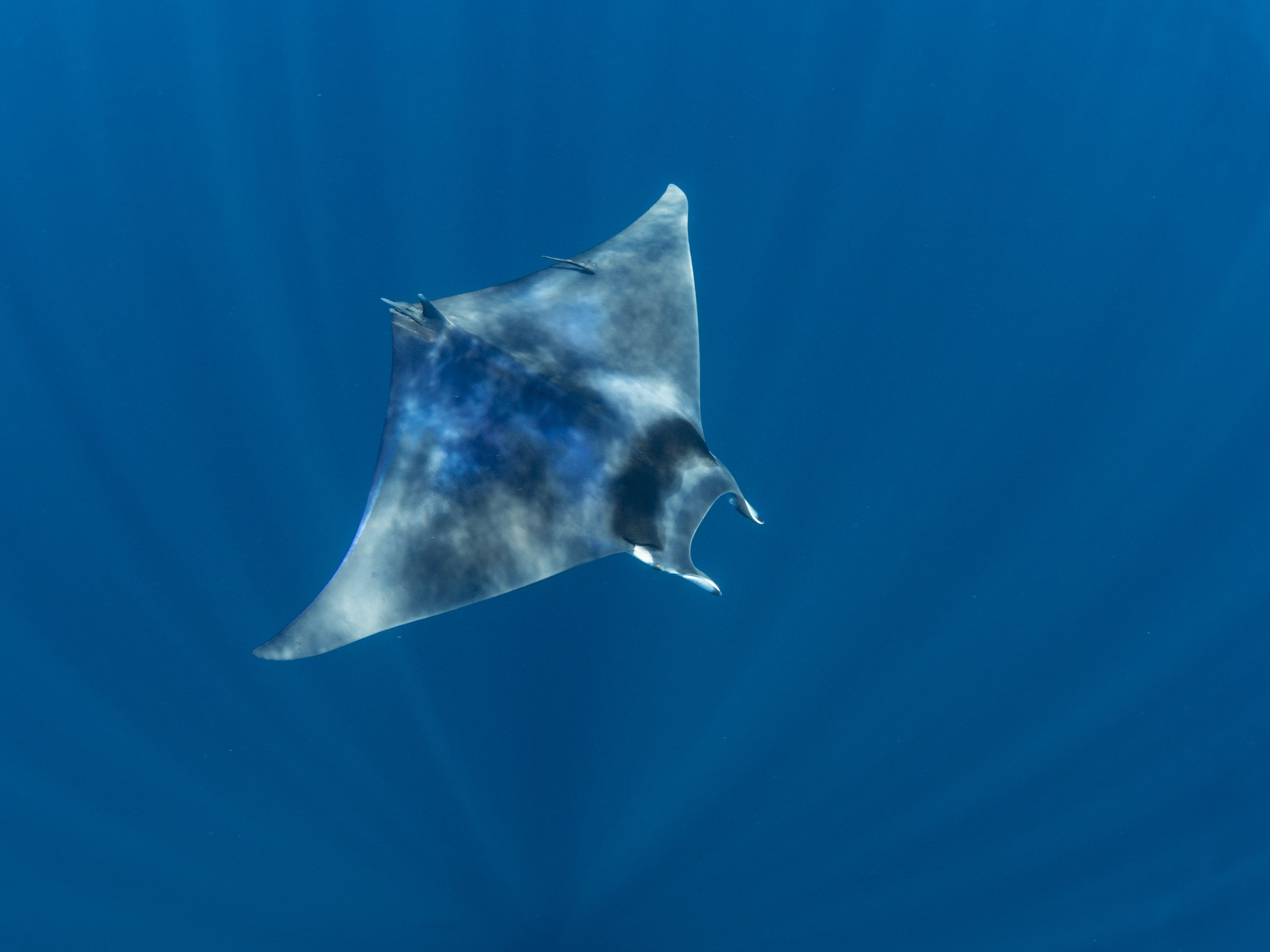 Madagascar Manta and Devil Rays
 Mayotte Manta Ray Project
 Microplastics & Megafauna