
Indonesia · Global Manta Ray Program · Since 2026
The Lesser Sunda Seascape Tracking Network
The first step toward an acoustic telemetry network stretching from Bali to Komodo National Park, built to show how reef manta rays move between Indonesia's aggregation sites.
Our photographs show that reef manta rays travel between Bali and Komodo. The Lesser Sunda Seascape Tracking Network is designed to show how they make the journey, and which places along the way they depend on.
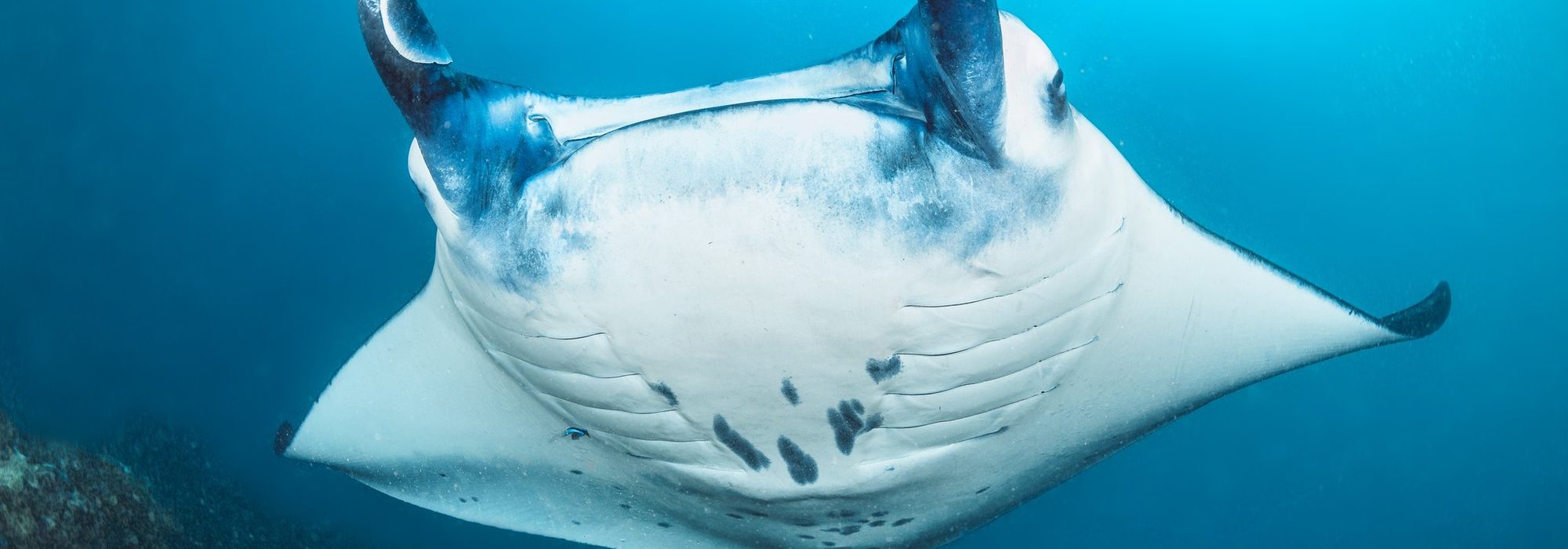
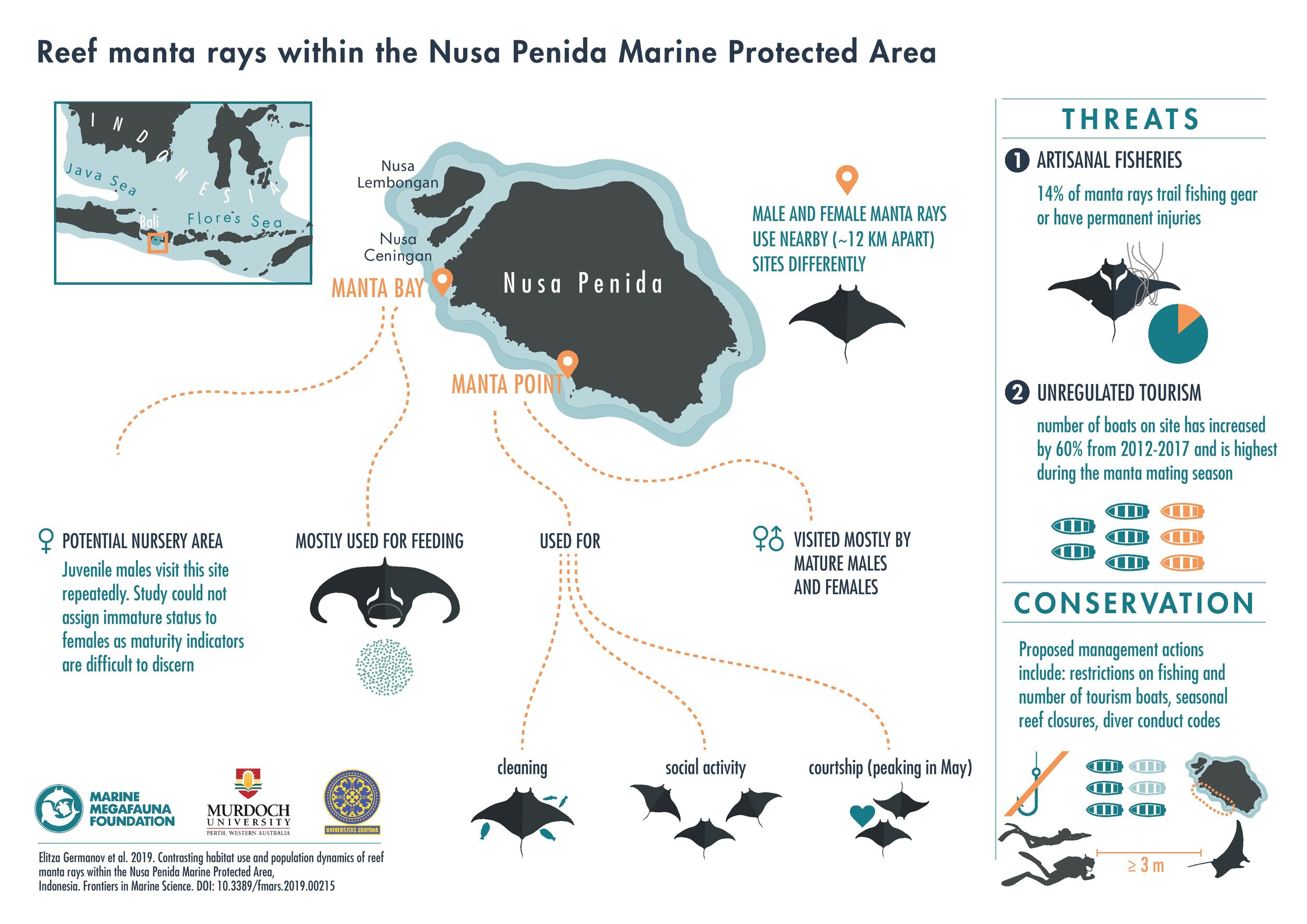
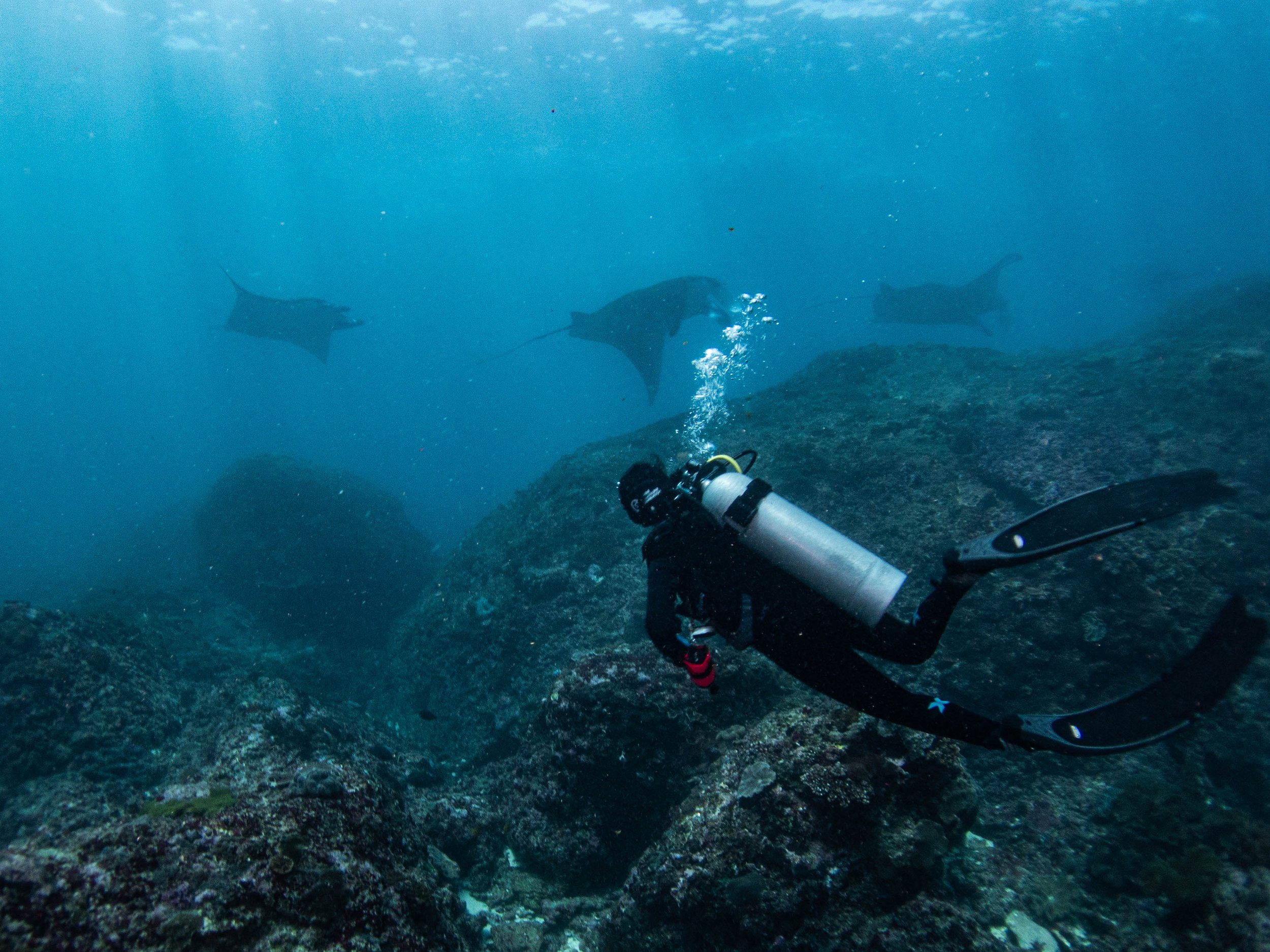
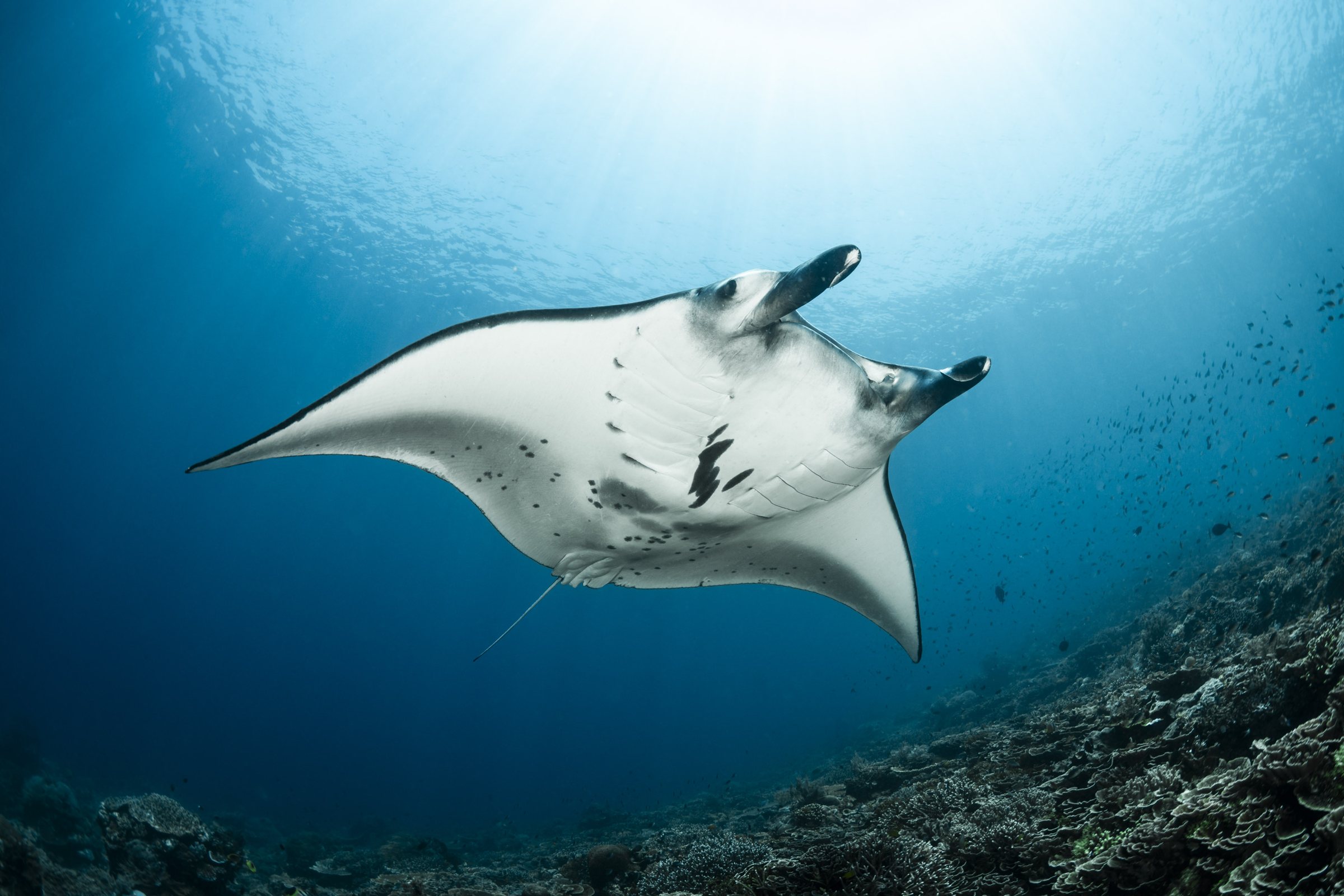
For more than a decade, the Indonesia Manta Ray Project has identified individual reef manta rays (Mobula alfredi) from the unique spot patterns on their bellies. We have now identified more than 900 at Nusa Penida and more than 1,300 in Komodo National Park, and some of the same individuals have been photographed at both sites, 450 kilometers (280 miles) apart. Photographs tell us who is where; they cannot tell us how the animals get there, or which habitats they use in between.
In September 2026, our Indonesia team launched the Lesser Sunda Seascape Tracking Network, the first step toward an acoustic telemetry network stretching from Bali to Komodo. Reef manta rays are fitted with small acoustic transmitters that are logged when the animal comes within range of a receiver moored on the seabed. Over time, those detections will help show how individual mantas move between aggregation sites, and could reveal critical habitats between Nusa Penida and Komodo that are not yet protected.
Objectives
- Show how individual manta rays move between aggregation sites, adding to our photo-identification records from Nusa Penida and Komodo.
- Fill data gaps in West Nusa Tenggara, where we still know very little about manta ray presence.
- Find new critical habitats and aggregation sites between Nusa Penida and Komodo.
- Support management that protects manta rays across their whole range, not just at individual sites.
What we've done
- Surveyed southwest Lombok and west Sumbawa with our partners at Mantahari Oceancare to scout locations for the network.
- Met the West Nusa Tenggara provincial Department of Marine Affairs and Fisheries to discuss research permits and lay the groundwork for a partnership.
- Launched the network with a workshop hosted by MMF, with materials from Elasmobranch Institute Indonesia, for government officials, local NGOs, and fellow scientists.
- Began tagging reef manta rays at Nusa Penida, using 10 acoustic receivers on loan from the Ocean Tracking Network.
What's next
- Extend the receiver network through Lombok, Sumbawa, and Komodo.
- Invite dive operators across Bali, Lombok, Sumbawa, and Komodo to support the network.
Help track Indonesia's manta rays
Your gift funds the tagging, receiver servicing, and field surveys that will show how reef manta rays move across the Lesser Sunda Seascape.
Our work tracking manta rays across the Lesser Sundas
Why track manta rays across the seascape
Our long-term photo-identification research has already shown that manta rays travel along the Lesser Sunda Seascape corridor. Photo-identification, however, depends on someone being in the water with a camera, so it leaves gaps between the places where the animals are photographed. West Nusa Tenggara, between Bali and Komodo, is visited by the same manta rays seen at both ends, yet we still know very little about what they do there. Acoustic telemetry will add stronger evidence of how the animals use this route, and the details needed for management at the scale of the whole seascape.
Launching the network
The network builds on MMF’s role in regional planning for the Lesser Sunda Seascape, where Country Manager Janis Argeswara has shared our manta ray data at regional workshops. We launched it with a workshop hosted by MMF. Dr. Edy Setyawan and Muhammad Izuan of Elasmobranch Institute Indonesia shared their expertise on animal movement science and the tracking instruments we use, and Janis introduced attendees to manta rays and the story behind the project. The workshop and our surveys were funded by a Tropical Forest and Coral Reef Conservation Act (TFCCA) grant, Mantahari Oceancare co-funded the surveys, and Blue Corner Dive & Conservation and Aquaman Snorkeling provided logistics.

Black Star, one of the first
Black Star, a male black (melanistic) reef manta ray first identified at Nusa Penida in 2011, is one of our longest-known residents, and has been adopted by our friends at Blue Corner Dive since 2016. In September 2026, he became one of the first manta rays tagged for the network. Whenever Black Star swims within range of one of our receivers, his visit is logged. Over time, his record will show how he uses Nusa Penida, and whether he travels further across the Lesser Sunda Seascape.
 Janis Argeswara
 Calvin Muliawan

 Indonesia Manta Ray Project
 Education and Outreach
 Indonesia Sea Turtle Project