
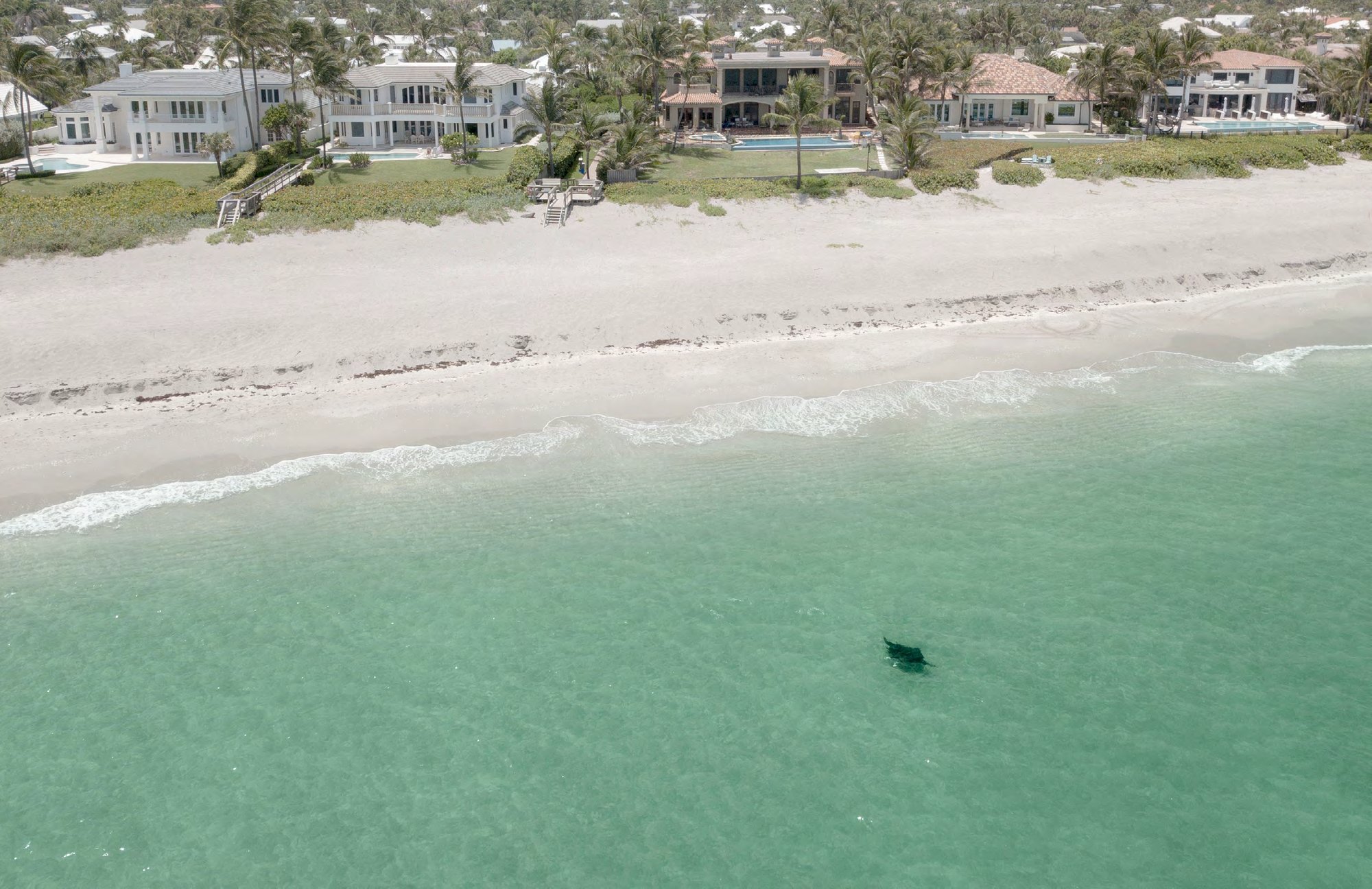
A juvenile manta ray in the shallows off southeastern Florida.
A potential nursery ground for manta rays may be under threat off southeastern Florida. Photography by Jessica Pate and Bryant Turffs.
THE FIRST STUDY ON MANTA RAYS off the coast of Florida, published by Endangered Species Research, has discovered a potential urban nursery ground for manta rays.
Juvenile manta rays are regularly sighted in the shallow waters along Florida’s coastline. This is the first time a nursery habitat has been discovered in such a highly developed urban environment.
Conducted over a four year period, the study revealed that almost all mantas sighted were juveniles. Individuals use the habitat throughout and between years, both of which are key definitions of a nursery ground.
“Manta rays are rarely seen by divers on Florida’s reefs and most divers are surprised to learn that we have a potential manta nursery ground along our coast,” said the lead author of the study, Jessica Pate from MMF. “In many places, manta rays are seen at remote cleaning stations within coral reefs systems or feeding offshore. Here in Florida, we regularly see manta rays swimming in 5 ft of water over the sand in front of multi-million dollar mansions, high rise hotels, and apartment blocks. They rest in man-made inlets and feed at the mouths of inlets which have heavy boat traffic.”
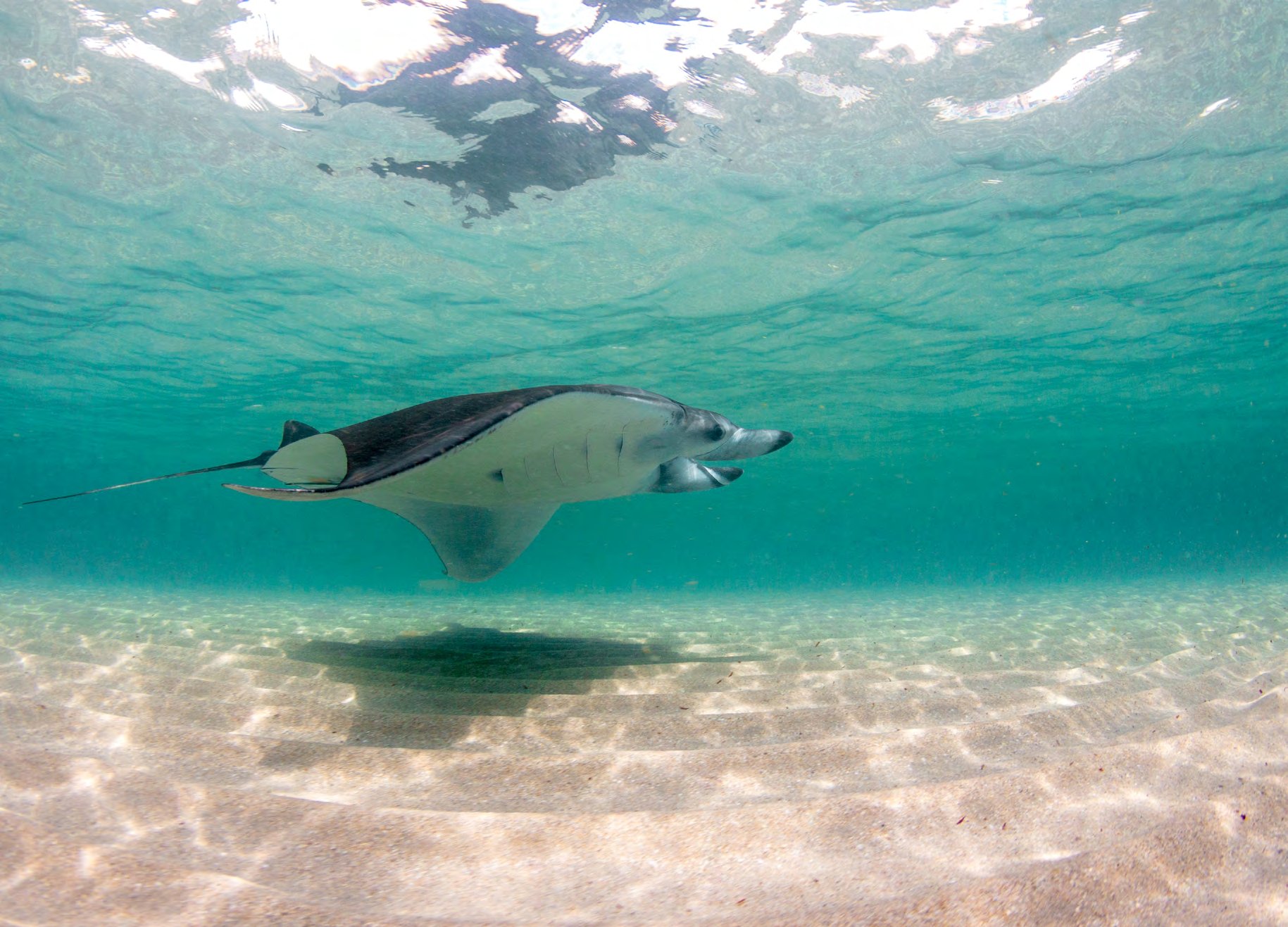
Mantas feed and rest within metres of one of the most developed coastlines in the United States.
Four years of study
Researchers from MMF conducted surveys between 2016–19 to better understand the manta rays found in Florida’s waters. Across 175 boat-based surveys, the team reported 150 manta ray encounters and identified 59 individual manta rays (which were added to the online global manta ray database: https://www.mantamatcher.org/). Almost all of the manta rays sighted were juveniles (98%) and 42% of manta rays were observed more than once.
“Very few nursery habitats for manta rays have been identified, and this is the first to be found in such an urban environment,” explains Dr. Andrea Marshall, co-founder and a Principal Scientist at MMF. “We were immediately concerned for the safety of these small juveniles who appear to use the highly populated coastline of southeastern Florida during the first years of their lives. They face so many threats in this area, intense boat traffic, recreational fishing, raw sewage, and toxic algal blooms. The list goes on and on.”
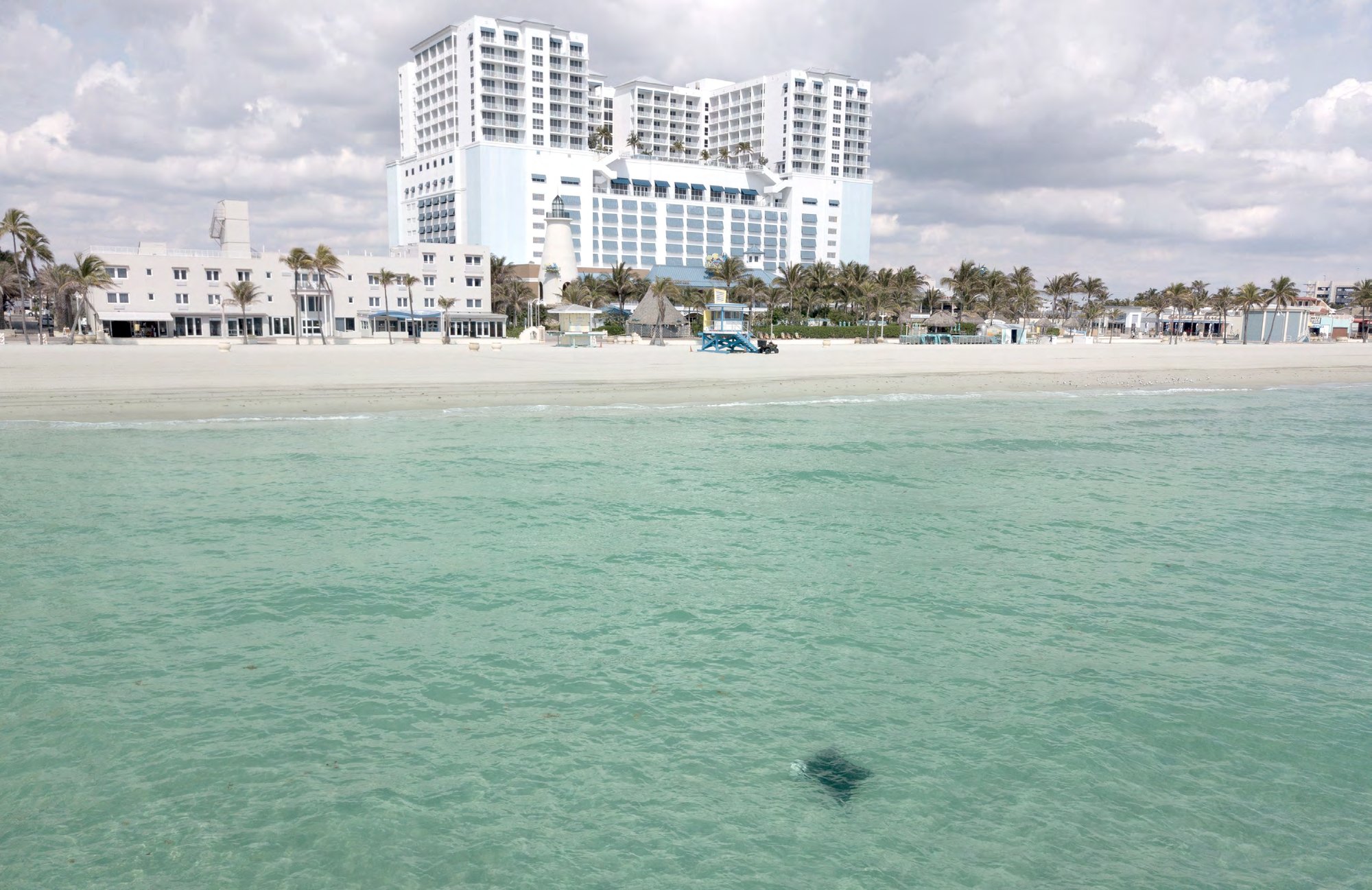
Almost all of the mantas identified off Florida were juveniles.
A key observation from the study is the frequent anthropogenic impacts experienced by the mantas along this coastline, particularly fishing line entanglement and vessel strikes. Of the manta rays observed, 27% of the individuals were entangled in fishing line, and many of these mantas experienced multiple entanglements. Vessel strikes were also evident, with 30% of manta ray injuries clearly caused by a boat propeller. The study also documented rapid wound healing, with deep propeller injuries completely closing within just a few weeks. That means injuries are likely to be underestimated in this population.
A new species of manta?
The population of manta rays in Florida is comprised of the potential new third species of manta that is yet to be formally described. Scientists from MMF are currently working on deepening our understanding of this species.
“Manta rays are highly vulnerable and we know very little about this presumed new species,” said Dr. Andrea Marshall, who originally discovered the presence of this probable new manta ray species off Mexico in 2010.
“It is tragic to think that the Floridian population, one of the largest we currently know about, is subject to so many anthropogenic pressures. This project was designed to rapidly assess more about Florida’s mantas so that better management plans can be developed.”
As the survey area for the study only covered a small portion of the Florida coastline, the full extent of the nursery habitat is still unknown. MMF’s future research will use satellite and acoustic telemetry, aerial surveys, and plankton tows to understand the physical and biological features of the potential nursery habitat. MMF’s researchers are currently developing education materials aimed at helping fishermen and boaters understand the situation, which in turn will hopefully reduce these harmful impacts on manta rays.
This research was made possible by generous funding from the Kansas City Zoo, Brevard Zoo Quarters for Conservation Grant, Our Children’s Earth Foundation, and the Zoos and Aquariums Committing to Conservation Grant. Many wonderful volunteers also contributed their time and skills to make this research possible!
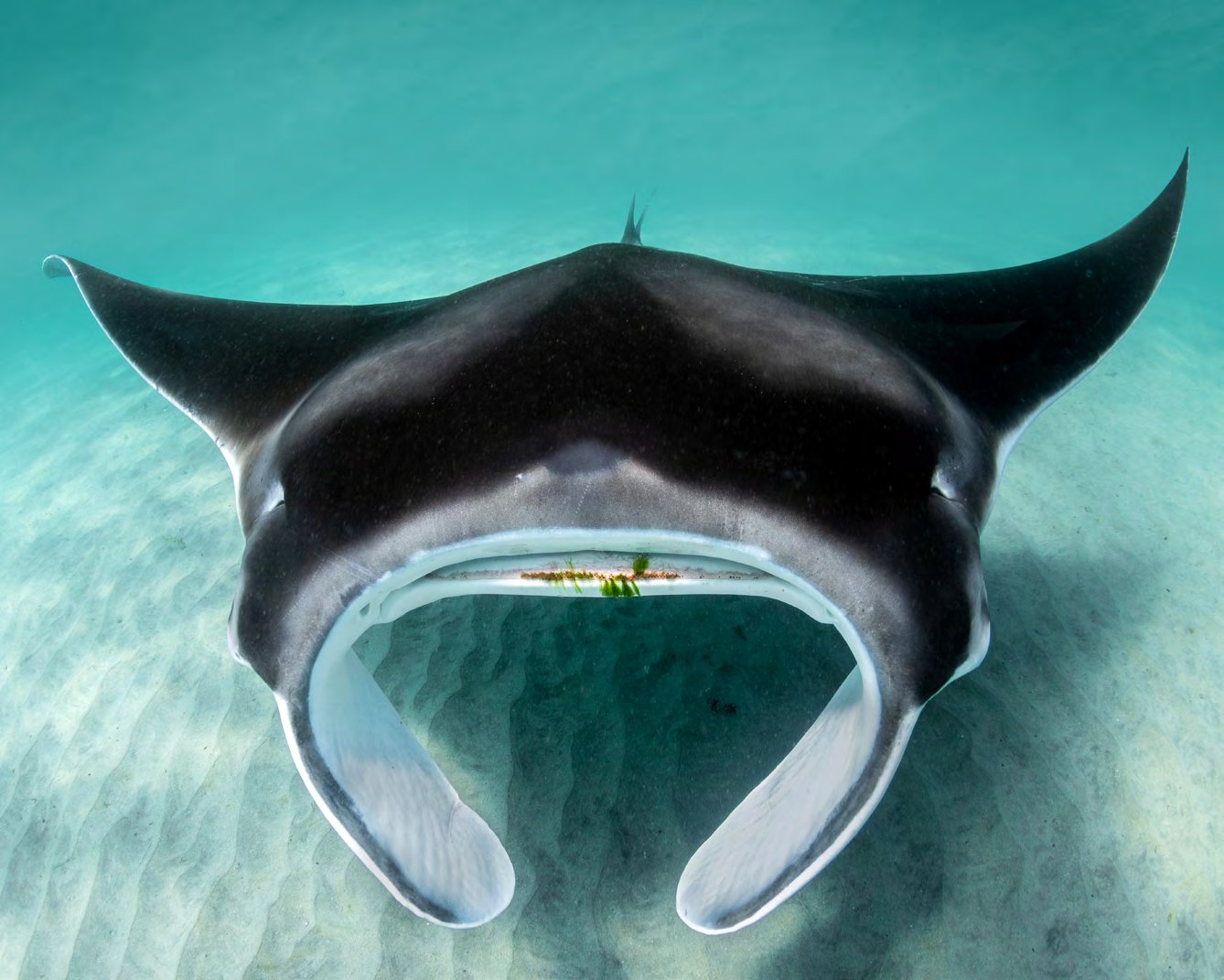
Fishing line entanglement and boat strikes are frequent along this coastline.
This article was originally published in Ocean Giants, MMF’s magazine, Issue #01 (January 2021). Download the full issue as a PDF. Read more about this work on our Florida Manta Project page.