
Fifteen years of surveys off Praia do Tofo, Mozambique, show an 87% decline in whale shark sightings. The estimated number of sharks using the area fell by 89% over the same period.
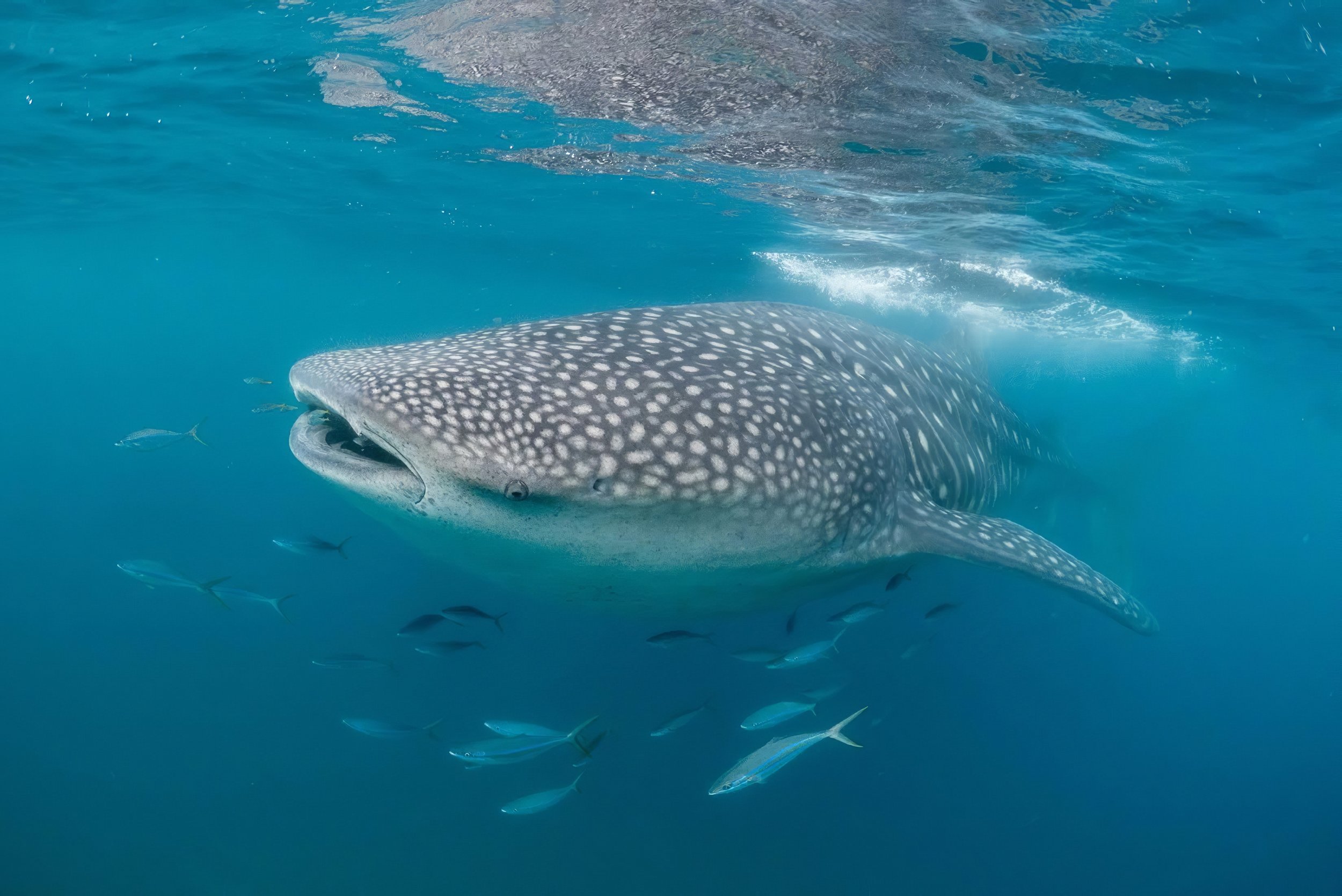
Recognizing individual whale sharks
Whale sharks (Rhincodon typus) are listed as Endangered on the IUCN Red List. Each one has a unique pattern of spots behind its gills, so a good photograph can identify an individual shark, much as a fingerprint identifies a person.
From 2005 to 2019, scientists and trained volunteers from MMF and All Out Africa photographed whale sharks during boat surveys off Praia do Tofo. Over 1,628 survey days they identified 706 individual sharks, most of them young sharks not yet fully grown. That makes Tofo one of the largest known whale shark gathering sites, and the survey one of the longest monitoring records for the species.
The study, published in Aquatic Conservation: Marine and Freshwater Ecosystems, was led by MMF’s Lisa-Marie Auditore as part of her thesis at the University of Cape Town. Its 18 authors include MMF scientists and partners from All Out Africa and other institutions.
A decline confirmed in two ways
The team analyzed the data in two complementary ways. The first modeled the number of whale sharks seen each survey day while accounting for conditions such as surface water temperature and tides. The second used capture–mark–recapture models. These estimate how many sharks are using an area from the pattern of first sightings and later re-sightings of known individuals, which are identified from photographs rather than physically caught.
Both reached the same conclusion. Sightings fell by 87% between 2005 and 2019. On the best possible survey day, the model’s predicted count fell from 34 sharks to 5. The estimated number of sharks using the area each season fell by 89% over the study, from 526 to 56. The decline was steeper for females (92%) than for males (81%), and steepest for the largest sharks, those 7 meters (23 feet) and longer, which fell by 99%.
The two methods agree, and the environmental conditions the team measured did not explain the drop. Together, the results give strong evidence that far fewer whale sharks were using the waters off Tofo by the end of the study.
What could be causing it
The study did not identify a single cause. The sharks do not appear to have simply moved to the nearest other known gathering sites in Madagascar or Tanzania. Interviews with local fishers, fish traders, and community leaders also suggest few whale sharks are caught along this stretch of coast. The authors point to threats farther afield as priorities for research. These include collisions with large ships where the sharks’ movements overlap busy shipping routes, fishing farther offshore in the Mozambique Channel, and possible shifts in where the sharks feed.
Protection and the next steps
There has been progress on protection. Whale sharks were declared a protected species in Mozambique in 2020. The whale sharks also helped the Tofo coast gain international recognition as a Key Biodiversity Area and an Important Shark and Ray Area. The authors call for work to understand where the sharks go, reduce the threats they face, and protect this Endangered species.
Our Mozambique Whale Shark Project continues the long-term monitoring that made this result possible. A year-round whale shark tourism industry at Tofo is also an important part of the local economy.
This work was supported by Waterlust, the Shark Foundation, Aqua-Firma, Rufford Small Grants, and Nacora.
Read the open-access study, learn more about the whale shark, or adopt a whale shark to support our whale shark research.