
Mozambique · Global Whale Shark Program · Since 2005
Mozambique Whale Shark Project
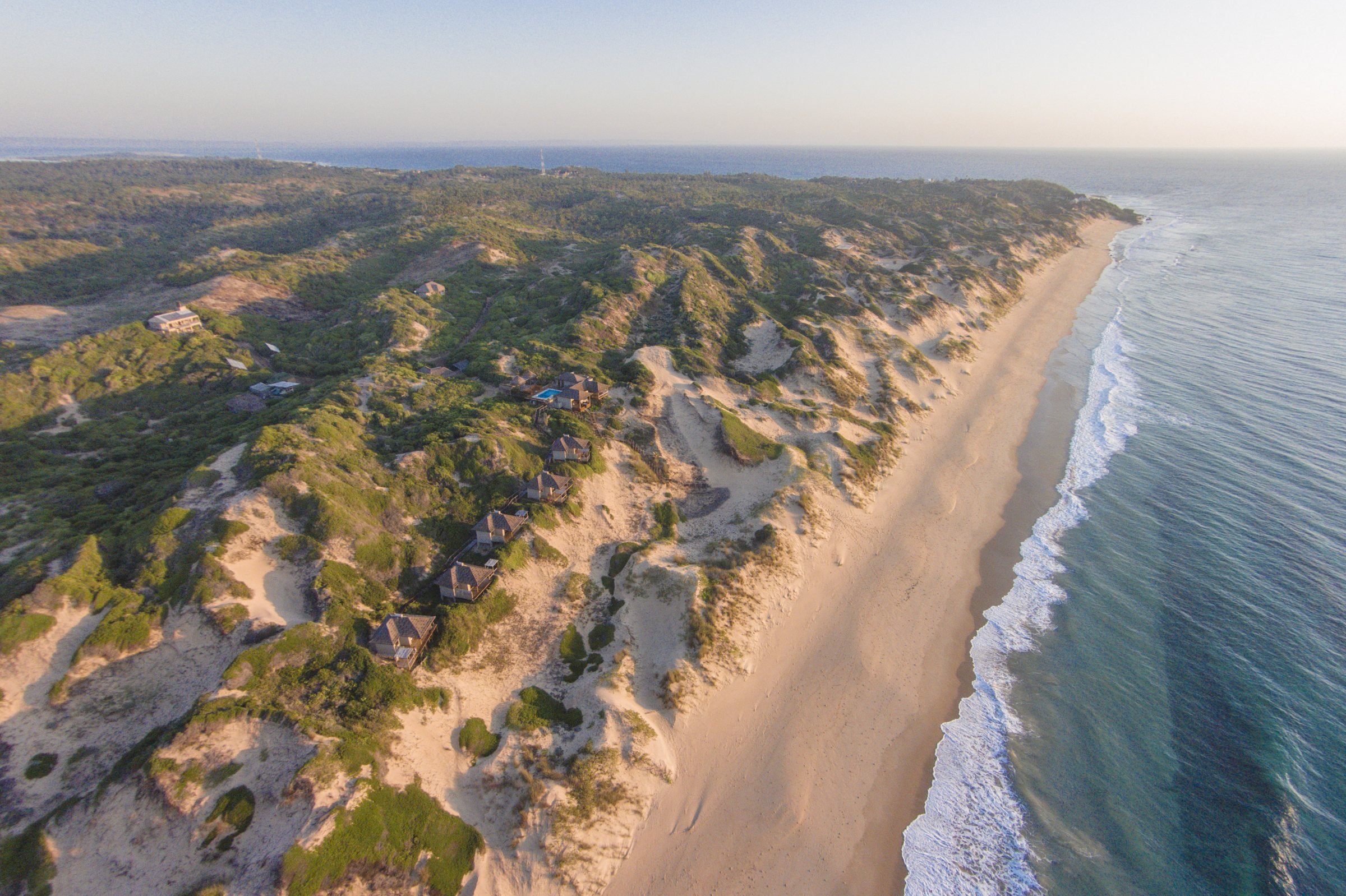
Southern Mozambique is one of the world's most important whale shark feeding areas, and we have studied the sharks here since 2005 to understand and protect them.
Southern Mozambique is a global center of abundance for whale sharks (Rhincodon typus), the world’s largest fish, and one of the world’s most important whale shark feeding areas.
Since 2005, we have documented the largest identified populations of these endangered giants in Africa. The most sightings are recorded along the coast of Inhambane Province, an important feeding area for juvenile whale sharks. Our now-global whale shark research began here, and that early work in Inhambane Province pioneered many of the research techniques now in routine use around the world. In 2021, the species received full legislative protection in Mozambique.
Objectives
- Monitor Mozambique’s whale shark populations.
- Develop sustainable shark ecotourism.
- Identify and address the species’ conservation needs.
What we've done
- Our extensive research and lobbying in Mozambique was a major factor in the legal protection of whale sharks by the Mozambican government in January 2021.
- Our researchers led four proposals for IUCN Important Shark & Ray Areas in southern Mozambique, recognized in 2023 and spanning Závora, Tofo Beach, Pomene, and the Bazaruto Seascape.
- Our whale shark photo-identification databases are the largest and longest-running in Africa.
- Our researchers have authored more than 20 peer-reviewed scientific papers, two PhD theses, and an MSc thesis on whale sharks in Mozambique.
- We have contributed to the current management plans for several marine protected areas, including the Bazaruto Archipelago National Park.
What's next
- Continue population monitoring and threat assessment, so that our conservation efforts support the recovery of the regional whale shark population.
- Once export permits are in place, include tissue samples from Mozambique in a multi-site study of whale shark diet at feeding areas across the Indian Ocean. The study measures chemical signatures in amino acids, the building blocks of proteins, to determine an animal’s position in its food web. With support from the British Ecological Society, MMF’s Dr. Clare Prebble trained in the method in 2025 at CSIRO, Australia’s national science agency, in Hobart.
Help Mozambique's whale sharks recover
Donations to the Global Whale Shark Program fund the fieldwork, community work, and government engagement described on this page, and sustain our long-term monitoring of Mozambique's whale sharks.
Our work on whale sharks in Mozambique
Identity and movements
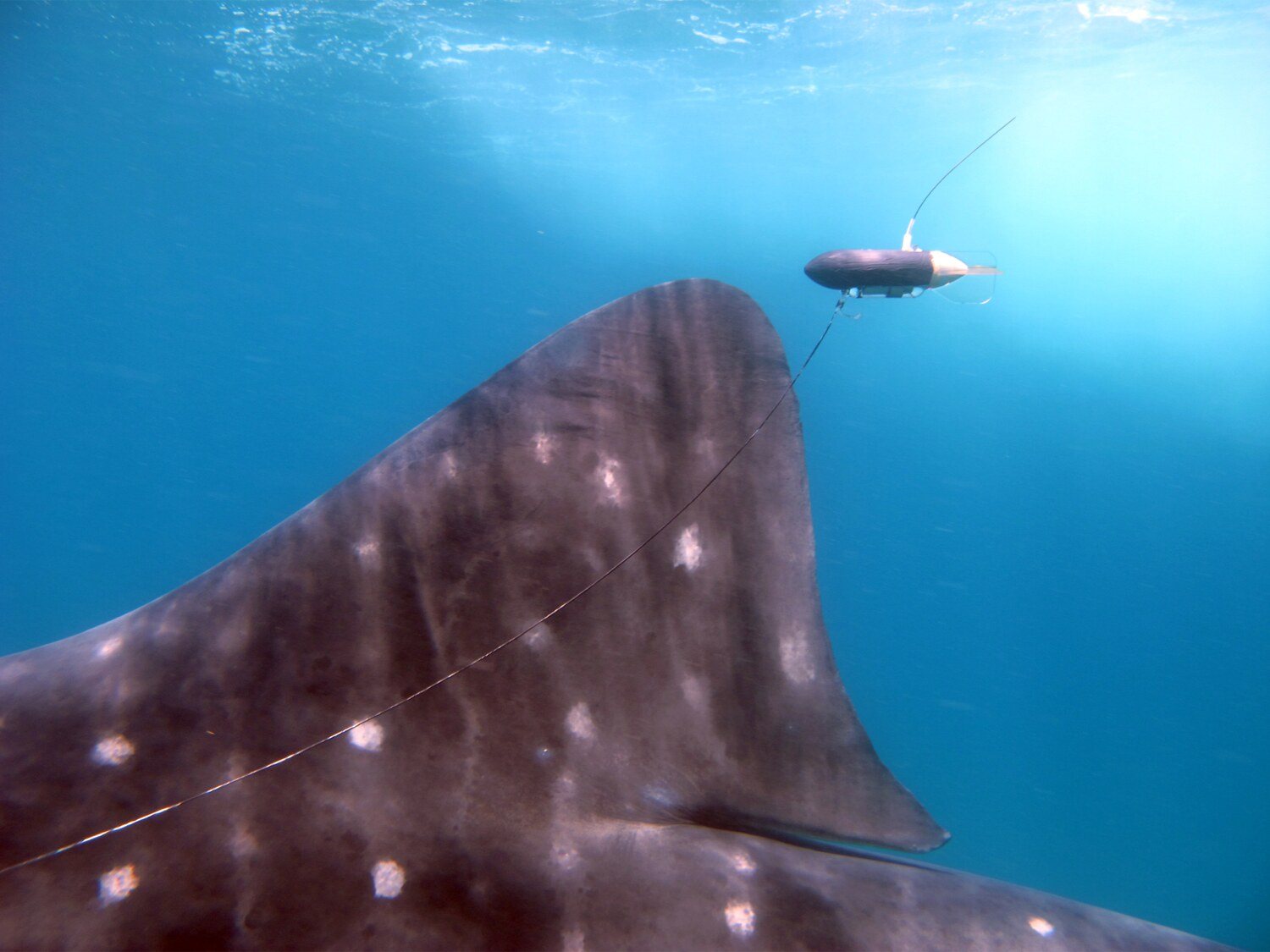
Photo-identification has recorded about 800 individual whale sharks in Mozambican waters, some of which have been resighted in South Africa and, to the north, in Tanzania. Our satellite-tracking work has shown that whale sharks preferentially use the productive coastal waters from the Bazaruto Seascape south to Závora, with some individuals returning for many years to this important feeding area. In 2025, two whale sharks sighted during our shark and ray surveys off the San Sebastian Peninsula, north of Tofo, matched individuals already recorded at Tofo.
A steep decline off Tofo
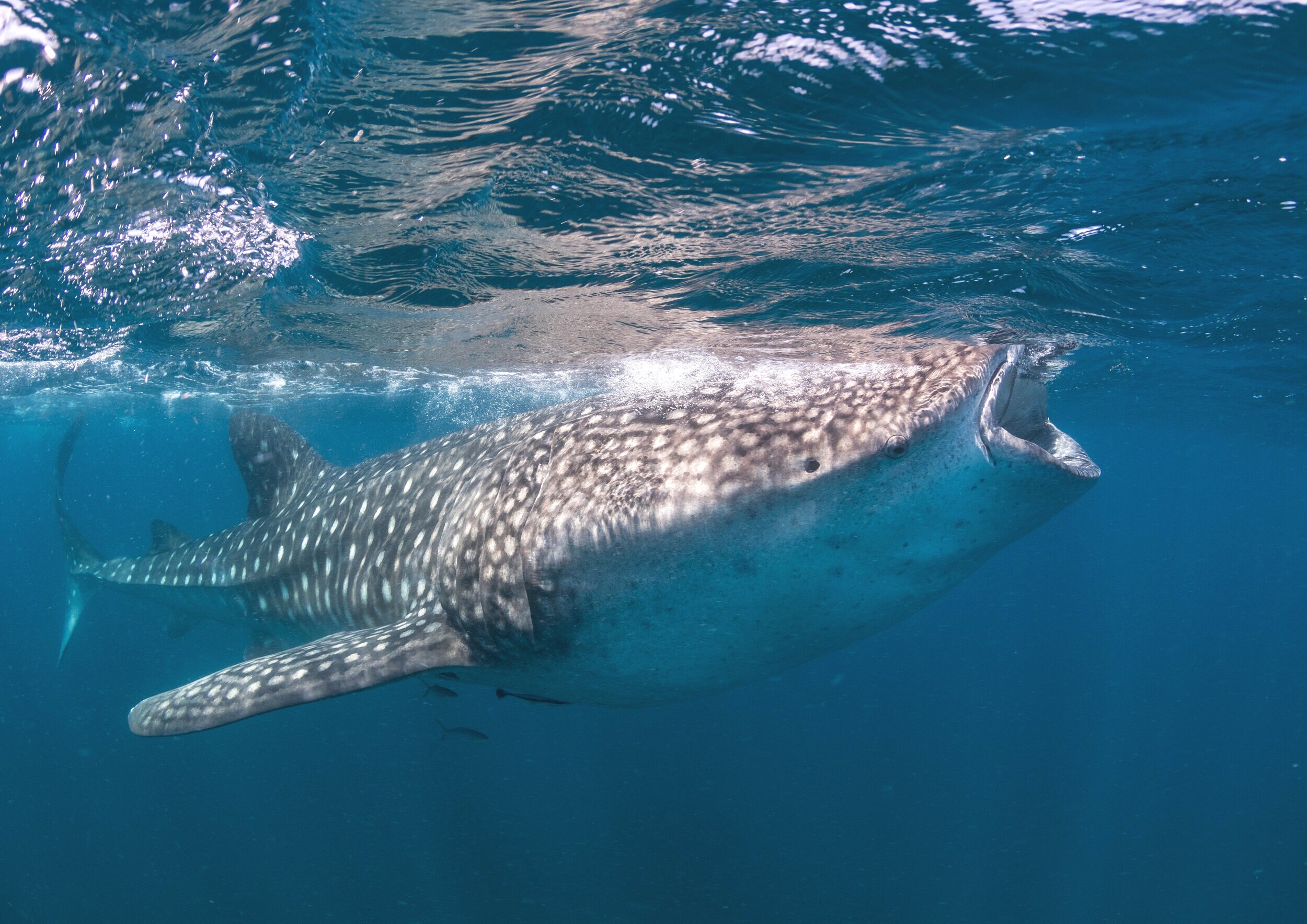
Whale shark sightings declined substantially over the course of MMF’s work on the species, highlighting the urgent need for conservation assessment and planning. In 2025, our team published the full 15-year picture: monitoring 706 individual whale sharks off Praia do Tofo between 2005 and 2019, we documented an 87% decline in sightings and an 89% reduction in abundance, among the steepest declines recorded at any major whale shark aggregation worldwide. Larger sharks declined most sharply, and females declined faster than males.
National and international protection
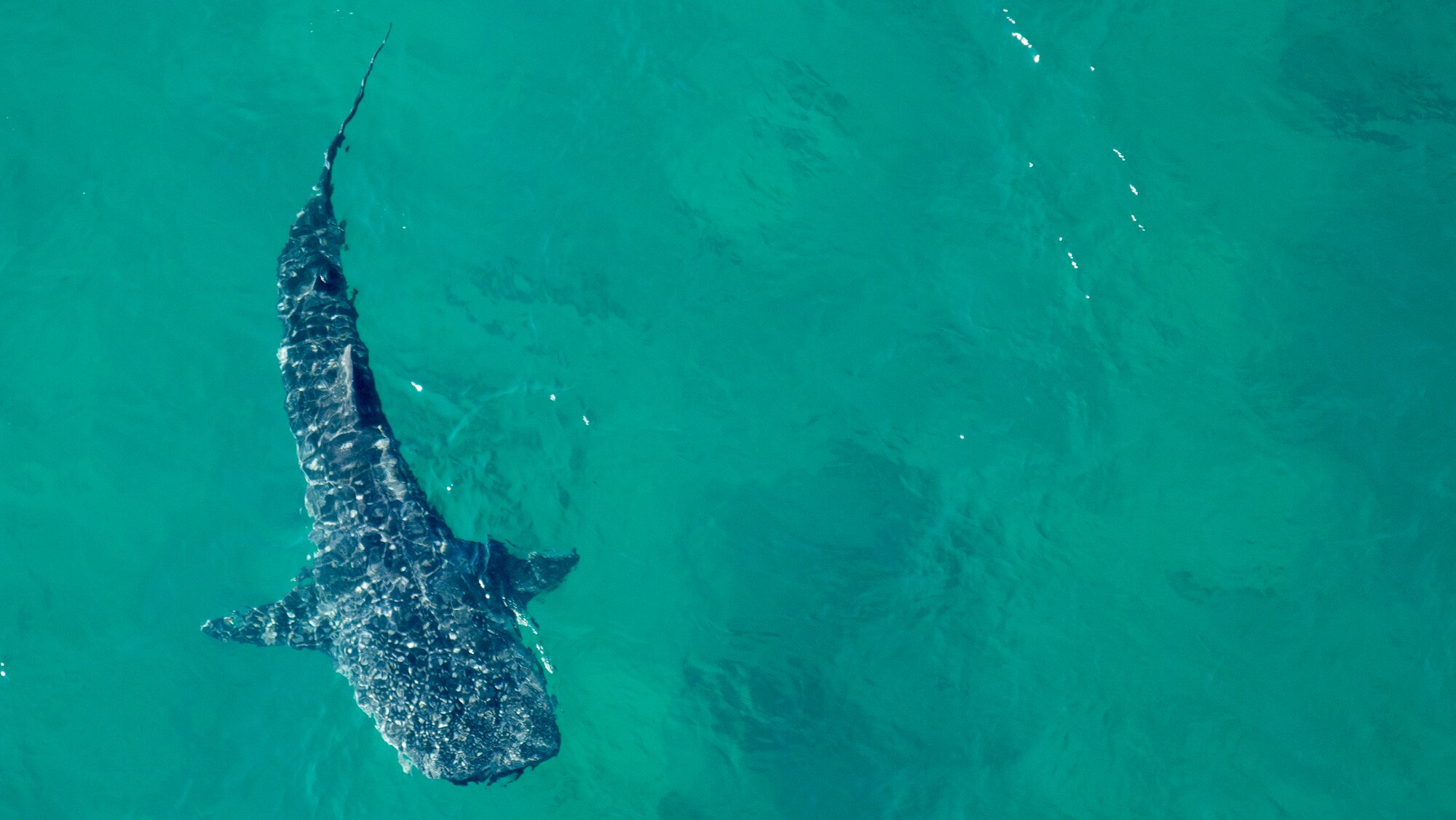
Our findings have directly informed conservation assessment and planning. The global listing of the whale shark as an Endangered species on the IUCN Red List was based partly on our Mozambique research, and we led the subsequent technical proposal that successfully uplisted whale sharks to Appendix I on the UN Convention on Migratory Species, conferring a responsibility on range states to fully protect the species and its important habitats. Whale sharks received full legislative protection in Mozambique in 2021.
In November 2025, at the 20th Conference of the Parties to CITES, whale sharks were moved from Appendix II to Appendix I: a full ban on international commercial trade, and the highest protection the convention offers. The listing entered into force on 5 March 2026. Our long-term science and Red List work form part of the evidence base behind it.
MMF Project Team
 Dr. Clare Prebble
 Dr. Simon Pierce
 Dr. Chris Rohner
 Olivia Patterson
 Nilza de Catarina
Collaborators and Partners
Recent research
- 2025A 15-year time series shows major declines in whale sharks in southern Mozambique
- 2022Improving sightings-derived residency estimation for whale shark aggregations: A novel metric applied to a global data set
- 2021Regional variation in anthropogenic threats to Indian Ocean whale sharks
- 2018Limited latitudinal ranging of juvenile whale sharks in the Western Indian Ocean suggests the existence of regional management units
- Satellite tagging highlights the importance of productive Mozambican coastal waters to the ecology and conservation of whale sharks
- 2017iDNA at Sea: Recovery of whale shark (Rhincodon typus) mitochondrial DNA sequences from the whale shark copepod (Pandarus rhincodonicus) confirms global population structure
- Undersea constellations: The global biology of an endangered marine megavertebrate further informed through citizen science
- 2016The ecological connectivity of whale shark aggregations in the Indian Ocean: A photo-identification approach
In the news
Coverage of this work.
 Coral Sea Whale Shark Project
 Galapagos Whale Shark Project
 Madagascar Whale Shark Project
 Microplastics & Megafauna