
Where we work · Since 2024
Oman
Off Muscat and the Daymaniyat Islands, we are mapping one of the Arabian Sea's whale shark aggregations and working with Omani partners to protect it.
The Arabian Sea holds some of the largest whale shark (Rhincodon typus) aggregations on Earth, and some of the most heavily impacted. MMF’s work in Oman began in 2024. In June 2025 we ran the first dedicated whale shark field season in Omani waters, photo-identifying 30 sharks and deploying nine satellite tags, the first ever placed on whale sharks here. Half of the sharks we identified carried injuries from boat strikes.
Our Oman Whale Shark Project builds on the Sharkwatch Arabia citizen-science network, which has recorded whale sharks in the region since 2010. Its catalog now holds 319 whale sharks identified in Oman’s waters, and new individuals are identified every year; the population using these waters is therefore larger still.
Whale sharks have no legal protection in Oman. Working with government agencies, Sultan Qaboos University, the Environment Society of Oman, and local dive operators, we map the sharks’ movements, help people using these waters reduce injuries from boats and fishing gear, and build the evidence for national protection.
Our projects in Oman
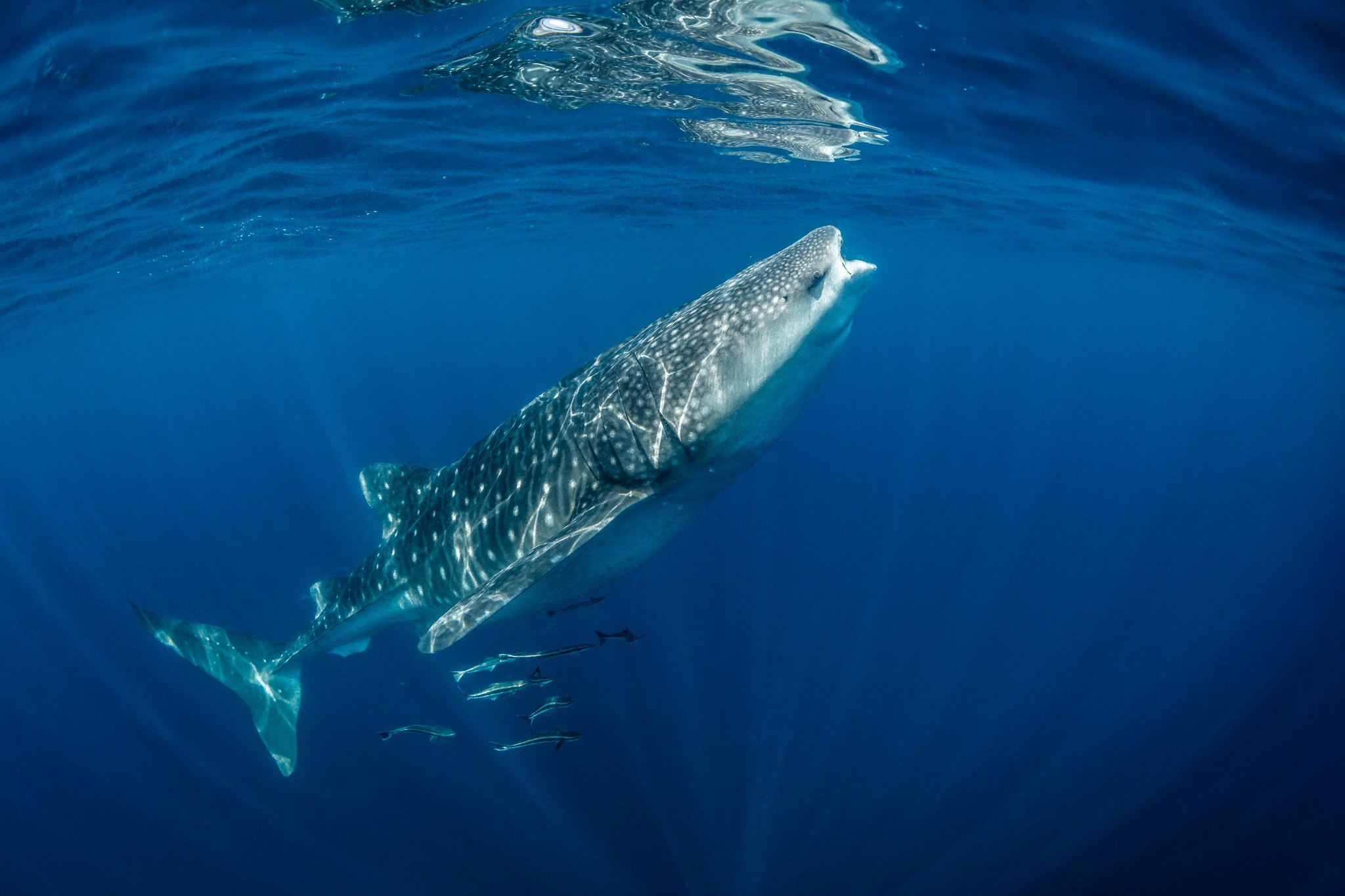
Oman Whale Shark Project
Mapping the Gulf of Oman's whale shark aggregation, documenting the vessel strikes and fishing gear that injure many of its sharks, and building the Omani partnerships that can protect them.
319 whale sharks identified in Oman's watersLed by Dr. Simon PierceAbout the project →What we work on
Half of the sharks we identified in 2025 carried boat-strike injuries. We map where sharks and vessel traffic overlap, and are building agreement on voluntary speed reductions and adjusted vessel routes.
A tenth of the sharks carried fishing-gear scars, and some fishers drive their boats at whale sharks to catch the cobia that accompany them. We are planning a workshop with the Ministry of Agriculture, Fisheries and Water Resources on safer ways to fish around the sharks.
Our satellite tags, which record depth, temperature, and position for months, complement the sightings record. Together, these data show which sites matter most and when, providing the evidence needed for protection that follows the sharks.
Ministry staff joined our research vessel for three field days, and tissue samples from ten sharks are stored at Sultan Qaboos University. Our goal is for Omani researchers to lead the monitoring program.
Thank you to everyone who supports our work in Oman
Atlantis Atlas Project, Georgia Aquarium, Ministry of Agriculture, Fisheries and Water Resources, Environment Authority of Oman, Sultan Qaboos University, Environment Society of Oman, One Ocean, Oman Sail, Daymaniat Shells, Bait El Bahar, Sharkwatch Arabia.