
Oman · Global Whale Shark Program · Since 2024
Oman Whale Shark Project
Mapping the Gulf of Oman's whale shark aggregation, documenting the vessel strikes and fishing gear that injure many of its sharks, and building the Omani partnerships that can protect them.
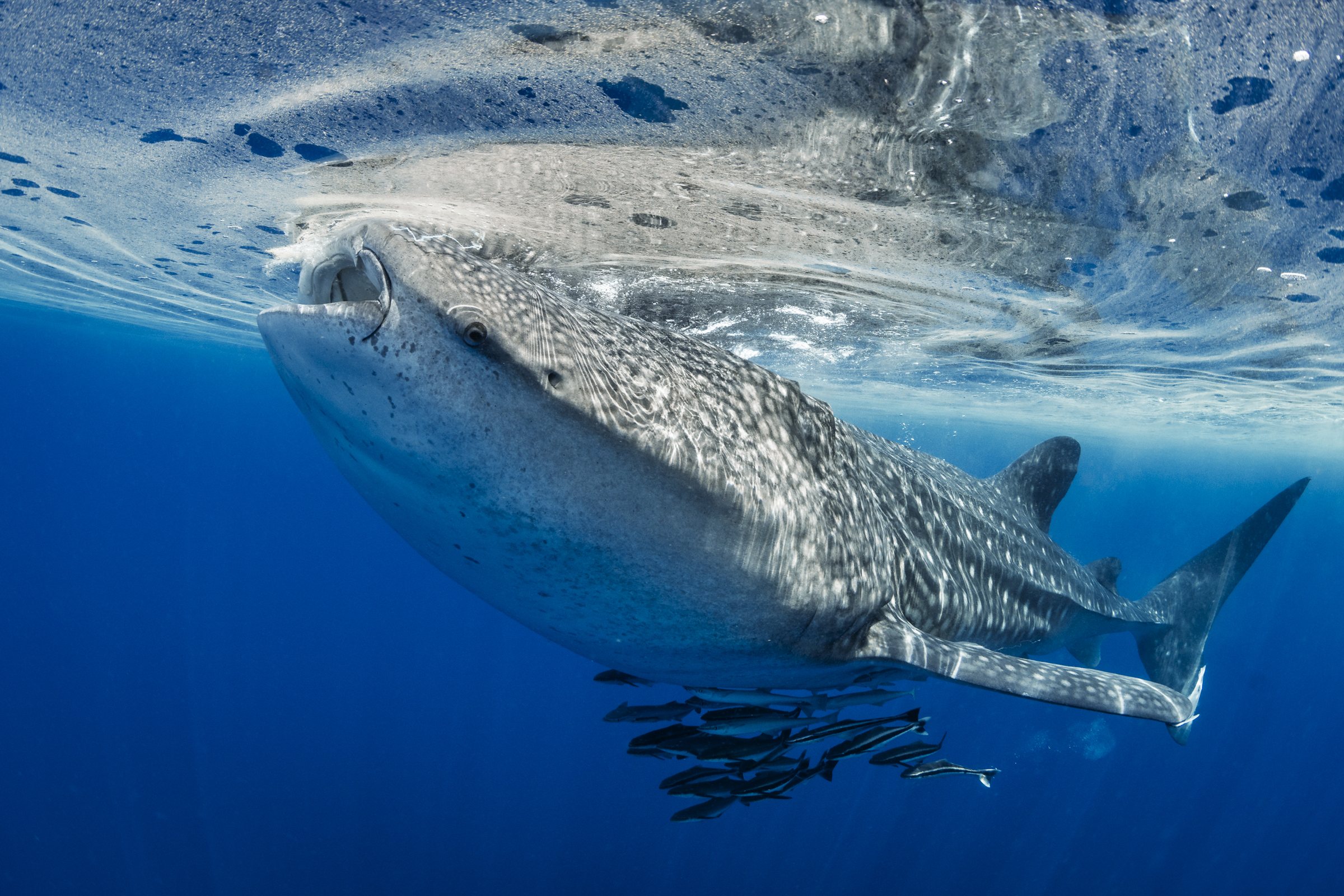
The Arabian Sea holds some of the largest whale shark aggregations on Earth, and some of the most heavily impacted. Off Muscat, half of the sharks we identified in 2025 carried injuries from boats, and national legal protection for the species is a goal of our work in Oman.
MMF’s Oman program began in 2024, building on the Sharkwatch Arabia citizen-science network that has documented whale sharks in the region since 2010. We ran the first dedicated whale shark field season in Omani waters in June 2025, working from Al Mouj Marina in Muscat with local dive operators. We now combine that fieldwork with a growing network of divers, operators, researchers, and government partners to map the aggregation, understand its threats, and work toward protection.
Objectives
- Map the Muscat and Daymaniyat Islands aggregation and quantify its threats: seasonal extent, demographics, residency, and where sharks and vessel traffic overlap.
- Engage the people on the water, from fishers to tour operators, so that simple changes in practice reduce injuries to sharks.
- Build national research capacity, so Omani researchers at Sultan Qaboos University and in government agencies lead the monitoring program.
- Progress toward national legal protection for whale sharks in Oman, starting with consensus on speed limits, vessel routes, and safe-release protocols.
What we've done
- Reactivated and expanded the Sharkwatch Arabia network across Oman and the UAE, linked to the Sharkbook.ai identification database. The catalog now holds 319 whale sharks identified in Oman’s waters.
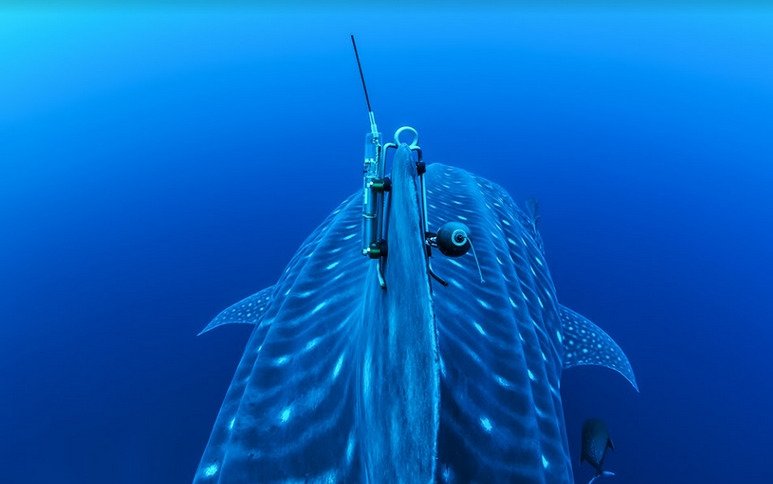
- Completed the first dedicated whale shark field season in Oman in June 2025: 19 days at sea from Muscat, 30 sharks photo-identified, and nine satellite tags deployed, the first ever placed on whale sharks in Omani waters.
- Documented boat-strike injuries on half the sharks we identified in 2025 and fishing-gear scars on a tenth, a very high rate compared with other whale shark aggregations.
- Ran a workshop with the Ministry of Agriculture, Fisheries and Water Resources, whose staff then joined the research vessel for three field days, and a public presentation with the Environment Society of Oman that recruited new citizen-science contributors.
- Briefed tour operators working around Muscat and the Daymaniyat Islands on whale shark biology and our findings, and on the code of conduct being developed by One Ocean, the Environment Society of Oman, and partners.
- Collected small tissue samples (biopsies) from ten sharks, now stored at Sultan Qaboos University for future genetic and diet studies.
- Built an operator WhatsApp network that now functions as a real-time threat-detection channel, alerting the community to injured or entangled sharks within hours.
- Presented Oman as an active whale shark research site for the first time at Sharks International 2026.
What's next
- Publish the satellite-tracking analysis of the nine tagged sharks, and a comparison with David Robinson’s Qatar tracking data.
- Deliver a whale shark conservation workshop and training with the Environment Authority of Oman, and a fisher-engagement workshop with the Ministry of Agriculture, Fisheries and Water Resources focused on safer ways to fish for cobia around whale sharks.
- Train Omani researchers at Sultan Qaboos University, with a PhD on Oman whale sharks as the goal.
- Return for a dedicated field season with real-time, fin-mounted satellite tags.
- Build stakeholder agreement on voluntary speed reductions, adjusted vessel routes, and safe-release protocols as the foundation for national protection.
Support whale shark research in Oman
A satellite tag records where a shark spends the next six months, and a field season puts the team in the water with the sharks. Sponsor a tag, or give to the program.
Our work in Oman
Population assessment
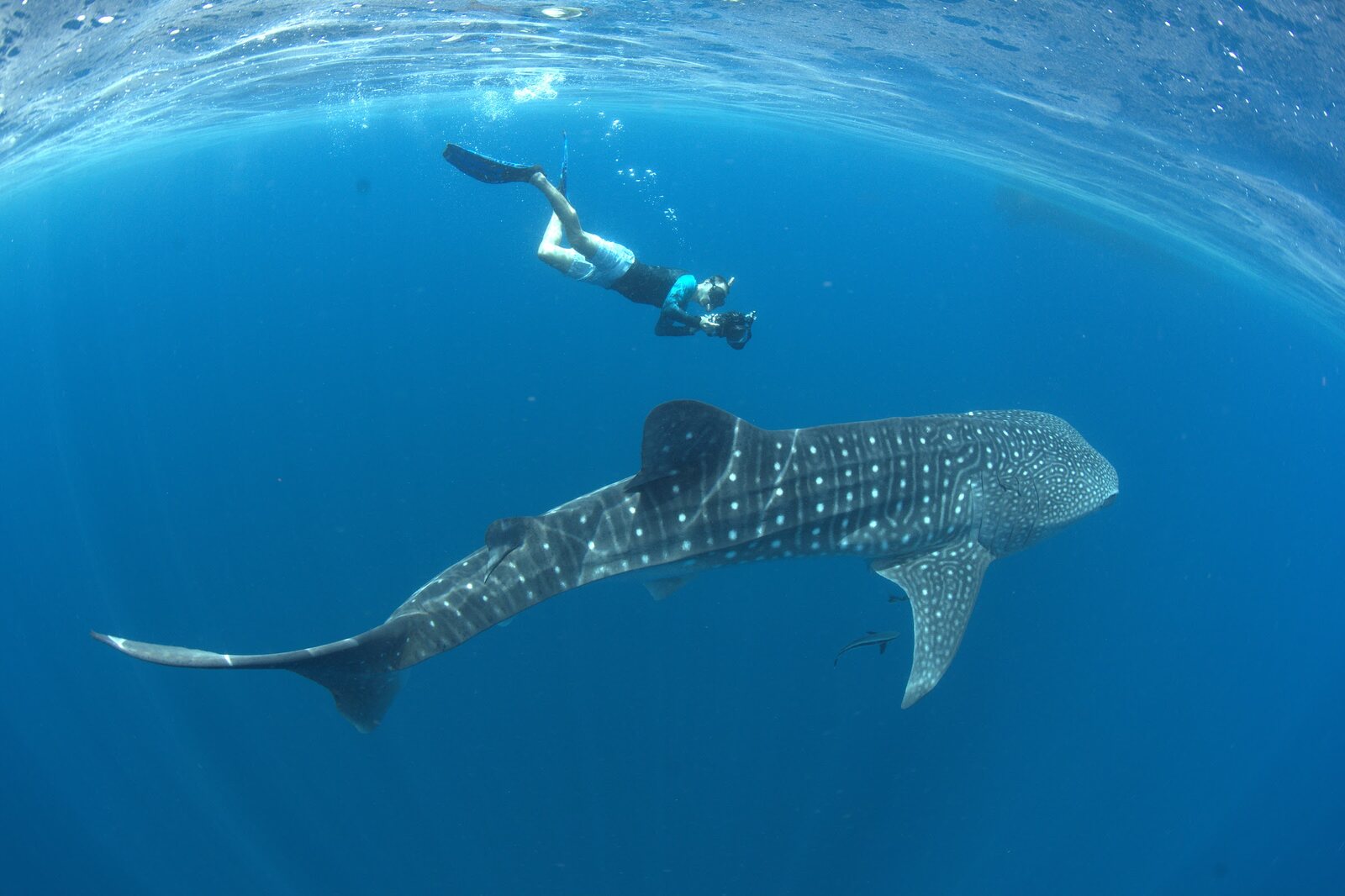
Photo-identification, based on the unique spot pattern behind each shark’s gills, now adds around thirty new sharks a year to the regional catalog, up from five a year in 2007. The discovery curve shows no sign of leveling off; the population using Omani waters is therefore substantially larger than the 319 sharks identified so far. All 30 sharks we encountered in 2025 were juveniles of four to seven meters (13 to 23 feet), and 22 of the 27 whose sex we could determine were male. The catalog also documents sharks moving between Musandam and Fujairah on the UAE coast. The next step is the first population estimate for the Gulf of Oman aggregation.
Habitat protection
The Muscat and Daymaniyat Islands aggregation lies beside the Daymaniyat Islands Nature Reserve; whale sharks themselves, however, have no legal protection in Oman. Combined with the sightings record, our satellite tags, which record depth, temperature, and position for months before releasing and transmitting their data, show which sites matter most and when. That is the evidence the Environment Authority needs for protection that follows the sharks rather than the map.
Threats
Of the 30 sharks identified in 2025, half bore vessel-strike injuries and a tenth carried fishing-gear scars. Tourist boats overlap directly with the aggregation, and fishers sometimes steer straight at whale sharks to catch the cobia that swim with them. Offshore, meanwhile, the regional drift-gillnet fleet is one of the largest in the world. Overlaying the sharks’ movements on the distribution of boats and nets shows where risk is concentrated, and therefore where a change would help most.
Sharkwatch Arabia in Qatar
A short film on the Sharkwatch Arabia team’s earlier work in Qatar.
MMF Project Team
 Dr. Simon Pierce
 Dr. David Robinson
 Dr. Chris Rohner
Collaborators and Partners








Recent research
- 2022Diving into the vertical dimension of elasmobranch movement ecology
- Improving sightings-derived residency estimation for whale shark aggregations: A novel metric applied to a global data set
- Global collision-risk hotspots of marine traffic and the world’s largest fish, the whale shark
- 2021Regional variation in anthropogenic threats to Indian Ocean whale sharks
- 2019Global spatial risk assessment of sharks under the footprint of fisheries
- 2018Limited latitudinal ranging of juvenile whale sharks in the Western Indian Ocean suggests the existence of regional management units
- 2017Undersea constellations: The global biology of an endangered marine megavertebrate further informed through citizen science
- 2016Population structure, abundance and movement of whale sharks in the Arabian Gulf and Gulf of Oman
In the news
Coverage of this work.
 Coral Sea Whale Shark Project
 Galapagos Whale Shark Project
 Madagascar Whale Shark Project
 Microplastics & Megafauna