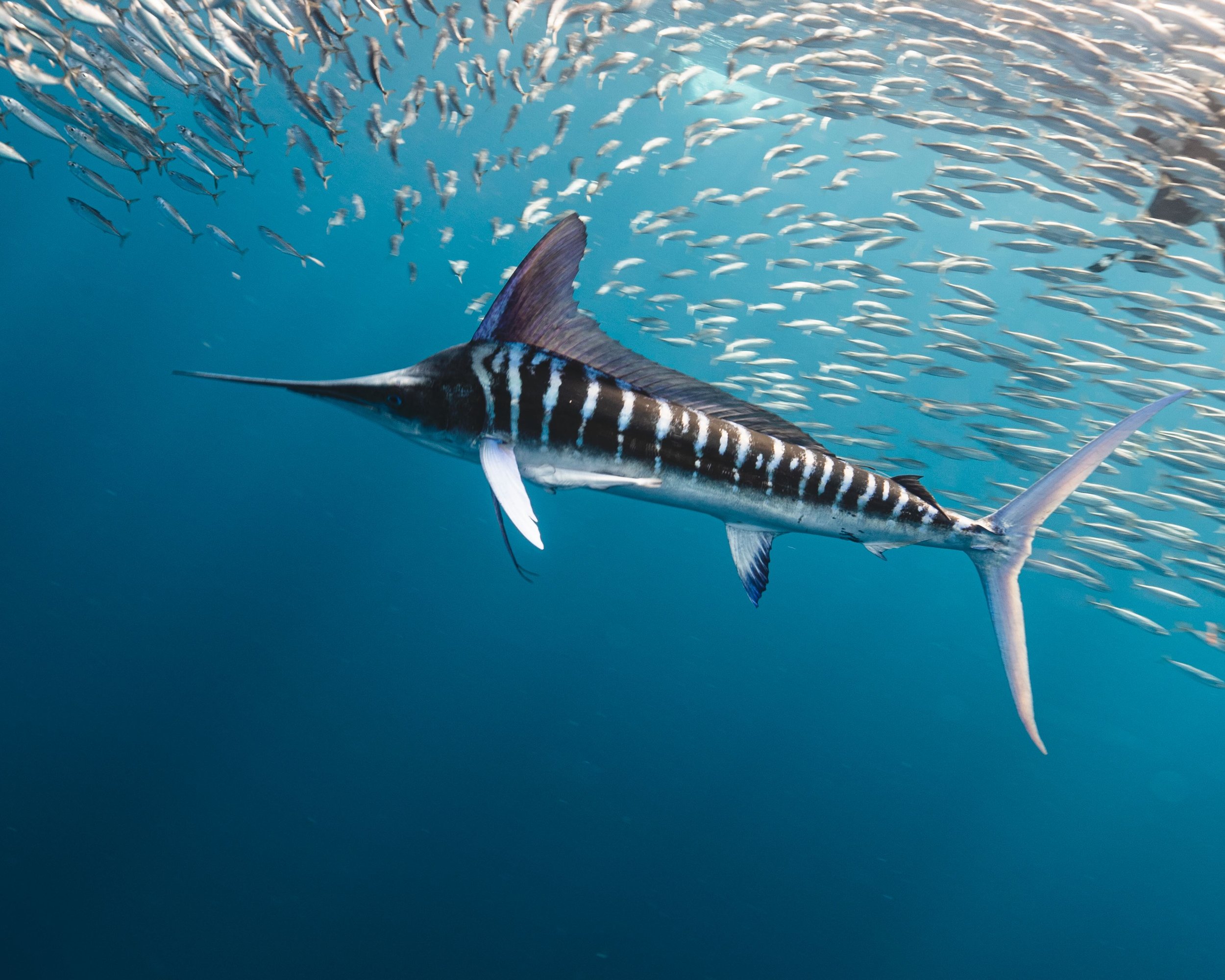




Why adopt a marlin?
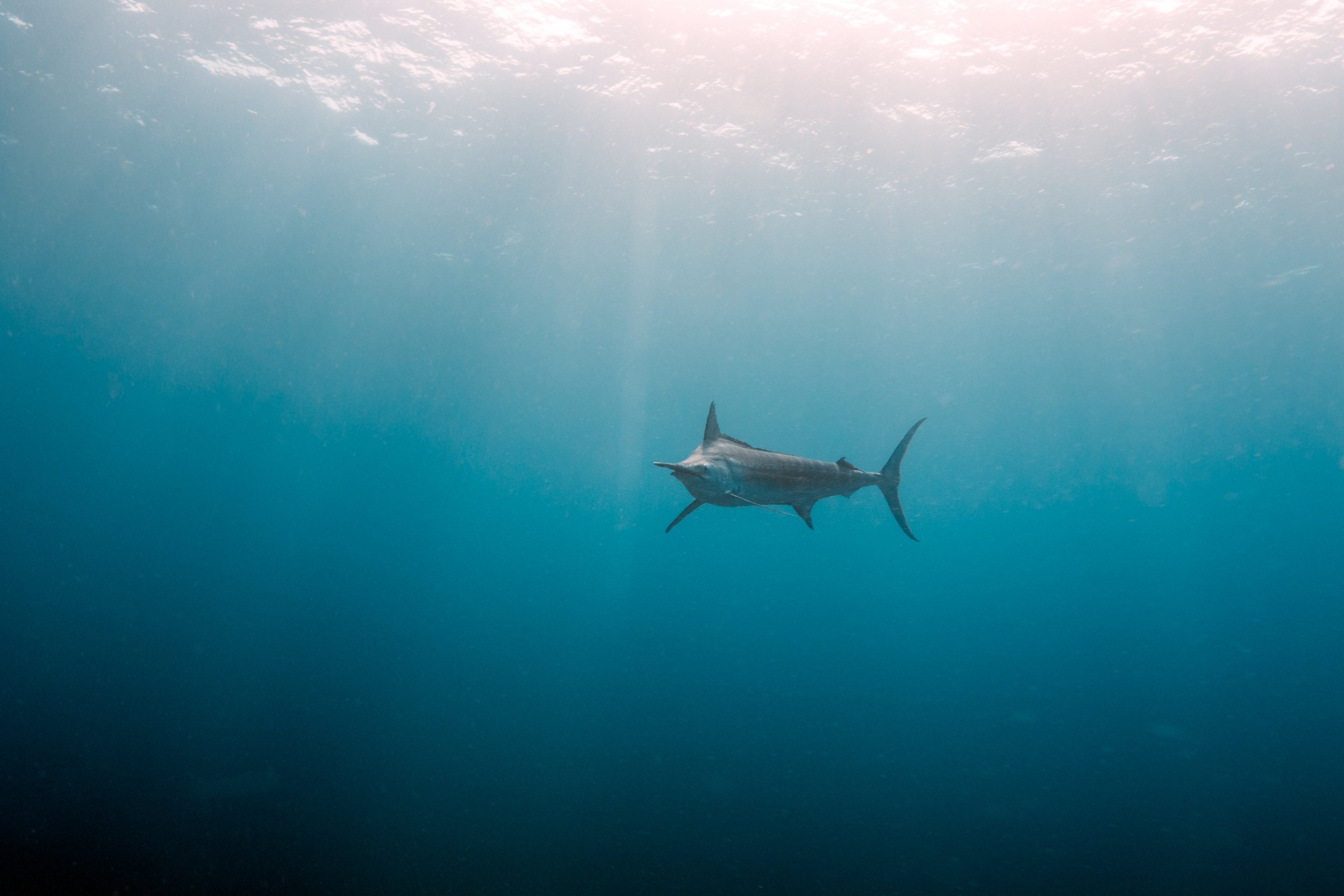
Black marlin are one of the largest bony fishes in the world, with females weighing over 700 kg (1,500 lb). Striped marlin are oceanic speedsters whose stripes light up when they hunt. Both are fast, wide-ranging predators of the open ocean, and MMF's tracking research shows where they go.
Marlin are under growing pressure. Commercial catches in the Indian Ocean have increased tenfold since the 1990s for some marlin species, yet so little is known about how black marlin move there that few management measures of any kind have been put in place.
Our tracking showed that marlin spend more than half of their time in depths fished by drift gillnets, and almost all of their time within reach of longlines. Off Mozambique, deep-freeze longliners have been highlighted as a developing fishing industry to watch.
Marlin matter to people on the coast too. Black marlin support livelihoods and food security through artisanal fisheries, and catch-and-release sport fishing for marlin makes significant contributions to Mozambique's tourism industry.
About marlin
Our research covers two species, the black marlin (Istiompax indica) and the striped marlin (Kajikia audax), and your adoption supports MMF's work, including our current black marlin work in Mozambique. Marlin are billfish, among the fastest swimmers in the sea, reaching speeds of over 30 km (19 miles) an hour in short bursts.
Marlin hunt oceanic fish and squid, and they dive to find them. Tagged marlin dived to more than 460 m (1,510 ft), into water as cold as 10.2 °C (50.4 °F). Marlin are cold-blooded, but a special circulation routes warm blood from their swimming muscles past their eyes and brain, so they can keep hunting at depth.
The two species hunt differently. Striped marlin often chase squid in deep water, then warm up at the surface before hunting again. Black marlin mostly stay in the warmer surface layer, probably hunting fish, and about a third of them dive particularly deep at dawn and dusk, seemingly to intercept prey that rise toward the surface at sunset.
They also cover huge distances. Striped marlin tagged off Kenya traveled about 48 km (30 miles) a day, and one swam 9,187 km (5,709 miles) in six months. Black marlin locations spanned more than 5,500 km (3,400 miles), from Oman to Mozambique, which suggests that black marlin throughout the western Indian Ocean could belong to a single stock.
How your marlin adoption helps
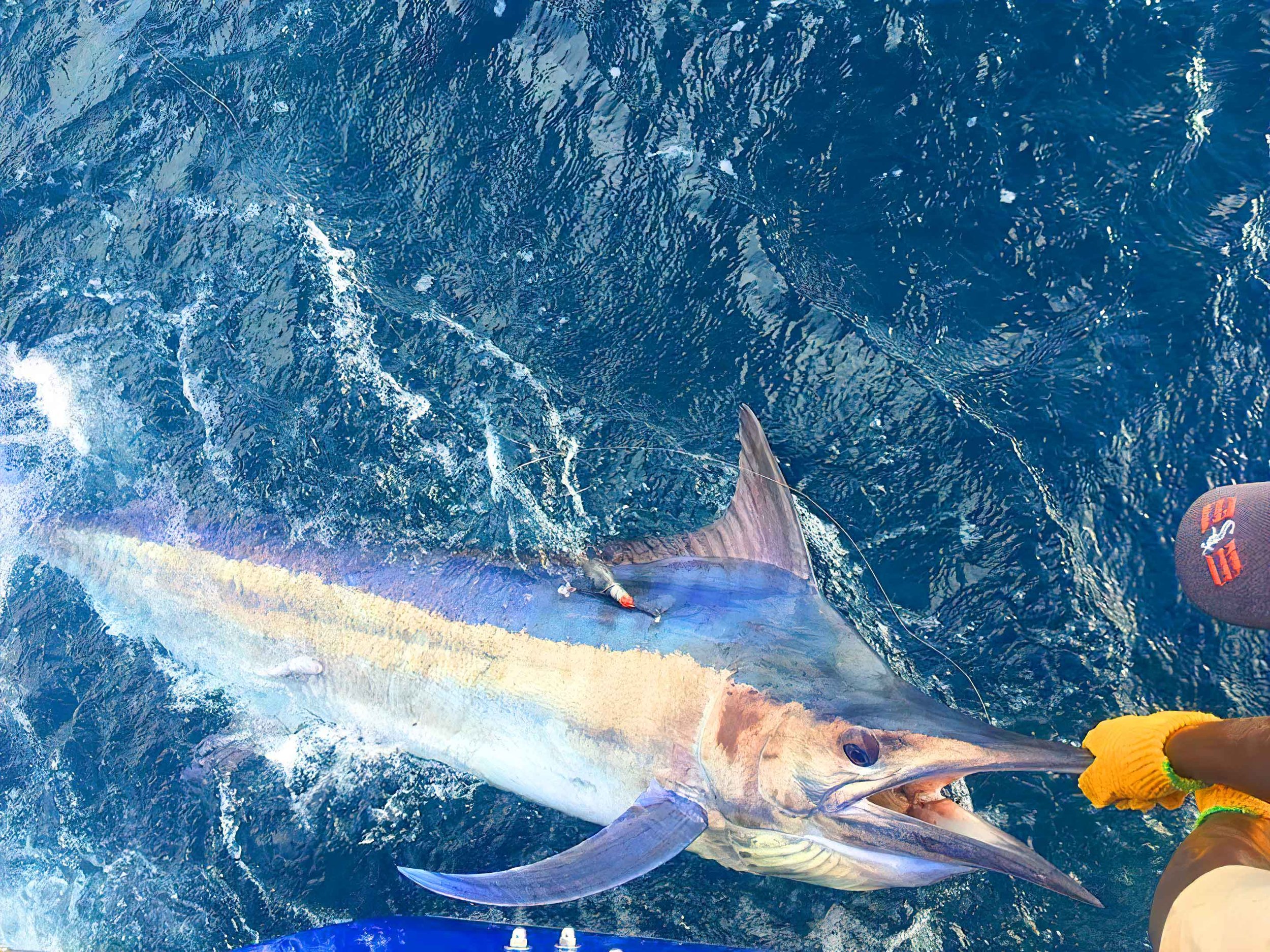
Your marlin adoption supports MMF's work as a whole, including our Mozambique Marlin Research Project, led by MMF's Dr. Clare Prebble with Dr. Chris Rohner. The Bazaruto Seascape is one of the few places in the world where very large adult black marlin are caught, and large, potentially egg-bearing females appear there almost exclusively from October to December. If the area proves to be a spawning ground, it would be the first identified for black marlin in the western Indian Ocean.
That project's fieldwork includes:
- Satellite tags. Since October 2022, we have completed four field seasons with four expert boat captains and fitted 12 black marlin, weighing roughly 140 to 410 kg (300 to 900 lb), with pop-up satellite tags. Each tag costs $5,000 and records depth, temperature, and light level every few seconds.
- Genetics and spawning. Tissue samples collected during tagging are building a genetic library for black marlin in Mozambique, and larval tows (plankton-net sampling for marlin larvae) will help test whether the Bazaruto Seascape is a spawning ground.
- Data for managers. The project aims to provide data on how marlin populations connect, and on their genetic structure, to the Indian Ocean Tuna Commission, Mozambican institutions, and the IUCN Tuna and Billfish Specialist Group.
- Kenya. The work builds on our Kenya Marlin Project, where sport-fishing crews fitted 98 satellite tags between 2015 and 2019, the first satellite tracking of either species in the Indian Ocean. Its papers recommend species-specific catch limits, circle hooks, and seasonal closures to surface longlining in marlin hotspots.
Ready to help? A marlin adoption is $39, with a personalized certificate to download straight after checkout.
Adopt a marlin · $39