
Kenya · Since 2015
Kenya Marlin Project
Sport-fishing crews in Kenya fitted 98 satellite tags to black and striped marlin, and the tracks showed fish ranging thousands of kilometers across the western Indian Ocean.
Black marlin (Istiompax indica) and striped marlin (Kajikia audax) are fast, wide-ranging predators of the open ocean, yet little was known about their movements in the Indian Ocean. Working with Kenya’s sport fishers, we conducted the first satellite-tracking study of either species in the region.
The project began when marlin sport fishers in Kenya, concerned that so little was known about these fish, approached MMF and funded satellite tags for the marlin they caught and released. Led by Dr. Chris Rohner, with Dr. Simon Pierce, the study was run in the field by Roy Bealey of Pelagic Fisheries Consulting and Dr. Bernerd Fulanda of Pwani University in Kilifi. Skippers and crews tagged the fish off Watamu, Shimoni, and Mombasa, and we analyzed the tracks and published the results in three papers. (Top photo: Julia Bahlsen.)
What we've done
- Between December 2015 and March 2019, worked with Kenyan sport-fishing crews to fit 98 pop-up satellite tags: 49 on striped marlin and 49 on black marlin, all caught and released.
- Tracked the movements of 40 striped marlin and 34 black marlin, and compared their tracks with ocean temperature and productivity.
- Analyzed the diving behavior of 34 black marlin and 39 striped marlin, and how their depth use overlaps with gillnet and longline fisheries.
- Published the results in the Journal of Fish Biology in 2020 and 2021, and in Marine Ecology Progress Series in 2022.
Support our marlin research
This study is complete. Your gift supports our current black marlin research in Mozambique, which builds on what we learned in Kenya.
What the study found
Tagging with Kenya’s sport-fishing fleet
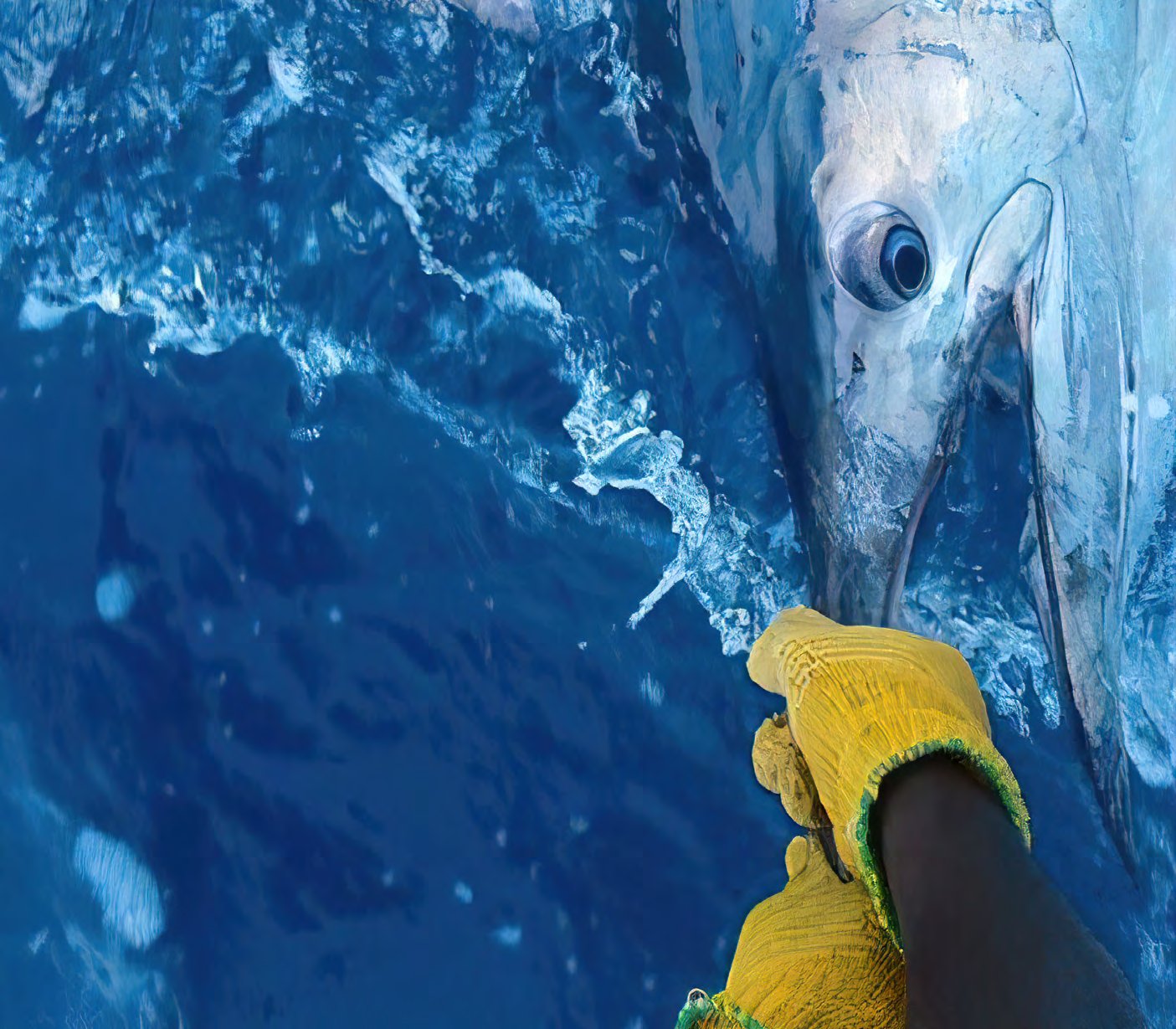
Kenya’s coast supports more than 30 recreational billfish boats in the peak season, and sport fishing for marlin is typically catch-and-release. Experienced skippers, trained crew, and scientists fitted the tags while each fish remained in the water, then released it. Striped marlin were tagged mostly off Watamu, 25–45 km (16–28 miles) offshore, with others off Shimoni on the south coast and Mombasa. Black marlin, in contrast, were all tagged off Watamu, most within 40 km (25 miles) of shore, both in the main December–March season and in a shorter August–September season. Each tag was programmed to detach after up to six months, then float to the surface and transmit its data by satellite. (Photo: Roy Bealey.)
Seasonal movements of striped marlin
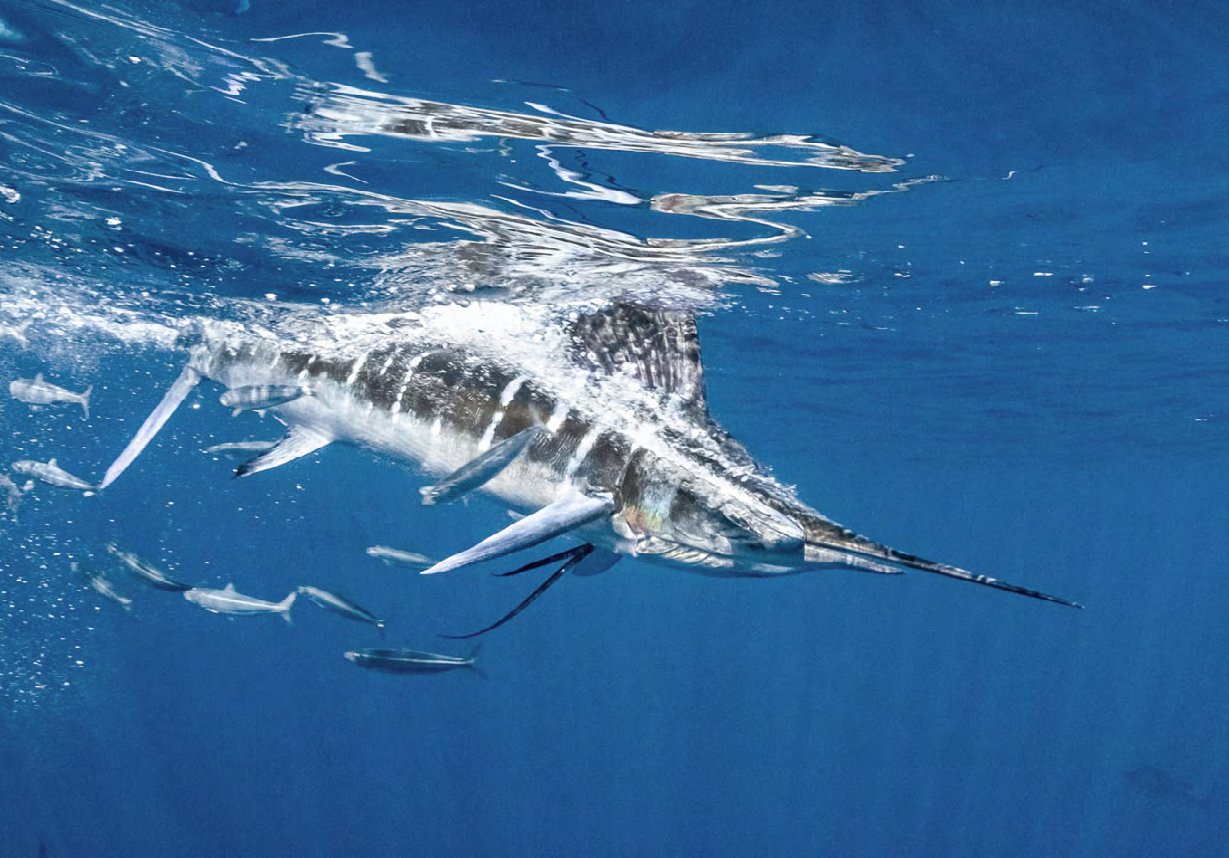
Striped marlin were highly mobile, covering about 48 km (30 miles) a day, and one fish swam 9,187 km (5,709 miles) in six months. They moved north and east, never south of Kenya and Tanzania: to the Gulf of Aden and the Arabian Sea, around the island of Socotra, past the Seychelles, and, in one case, as far as the Maldives. The same fish used two seasonal hotspots, off Kenya and southern Somalia from December to March, then around the Horn of Africa and Socotra from April to August, following the monsoon and the productive water it brings. They remained in warm surface water, spending three-quarters of their surface time at 28–30 °C (82–86 °F). (Photo: Henley Spiers.)
Black marlin movements and survival
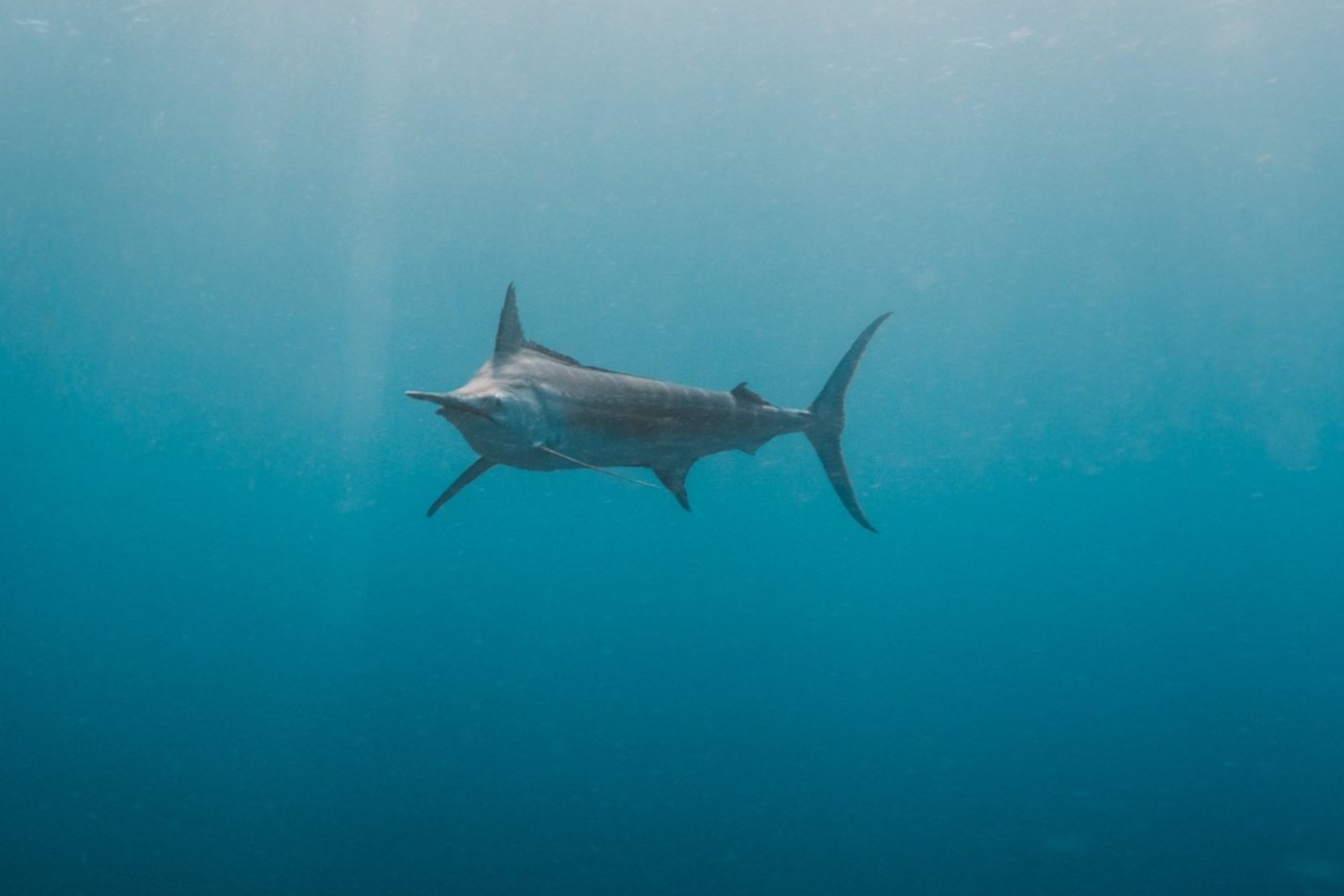
Black marlin occur off Kenya twice a year, and fish tagged in both seasons behaved alike, moving north to Somalia, the Horn of Africa, and Oman from May. The tagged fish traveled about 57 km (35 miles) a day; one reached the Gulf of Oman, 8,200 km (5,100 miles) over 184 days, while another swam south past Madagascar into the Mozambique Channel. Unlike striped marlin, they favored cooler, more productive water closer to the coast. Their locations spanned more than 5,500 km (3,400 miles), which suggests that black marlin in the western Indian Ocean form a single population. The tags also suggest that black marlin are more vulnerable to capture and release than striped marlin: about a third of tagged black marlin appear to have died soon after release, compared with about 4% of striped marlin, although none of the 11 fish of 100 kg (220 lb) or more died.
Diving behavior
Both species spent much of their time near the surface, but dived to more than 460 m (1,510 ft), into water as cold as 10.2 °C (50.4 °F). Striped marlin spent half of their time in the top 5 m (16 ft), compared with a third for black marlin, yet dived deep more often, and most dived deeper by day. About a third of black marlin dived deepest at dawn and dusk. In addition to about 50 km (30 miles) of horizontal travel each day, a marlin could move up to 14 km (9 miles) vertically in a day. The tags also recorded two marlin leaping clear of the water to dislodge their tags, the first time this behavior has been documented in billfish.
Implications for fisheries
Kenyan marlin regularly reached the commercial fishing grounds of the northwest Indian Ocean; as a result, catches there affect the fish available to Kenya’s artisanal and recreational fishers. Marlin also spent more than half of their time in depths fished by drift gillnets, and almost all of their time within reach of longlines. The papers therefore recommend managing marlin in the western Indian Ocean as a distinct stock, setting species-specific catch limits, using circle hooks, considering seasonal closures to surface longlining in the marlin hotspots off the Horn of Africa and Kenya, and limiting the growth of fishing capacity.
 Dr. Chris Rohner
 Dr. Simon Pierce
 Dr. Clare Prebble
 Mozambique Marlin Research Project