
The Atlantic pygmy devil ray is Endangered, easily mistaken for other devil rays, and little studied. A new study draws on records from more than 300 rays to show how to identify the species, map where it lives, and document the risks it faces from coastal fishing.
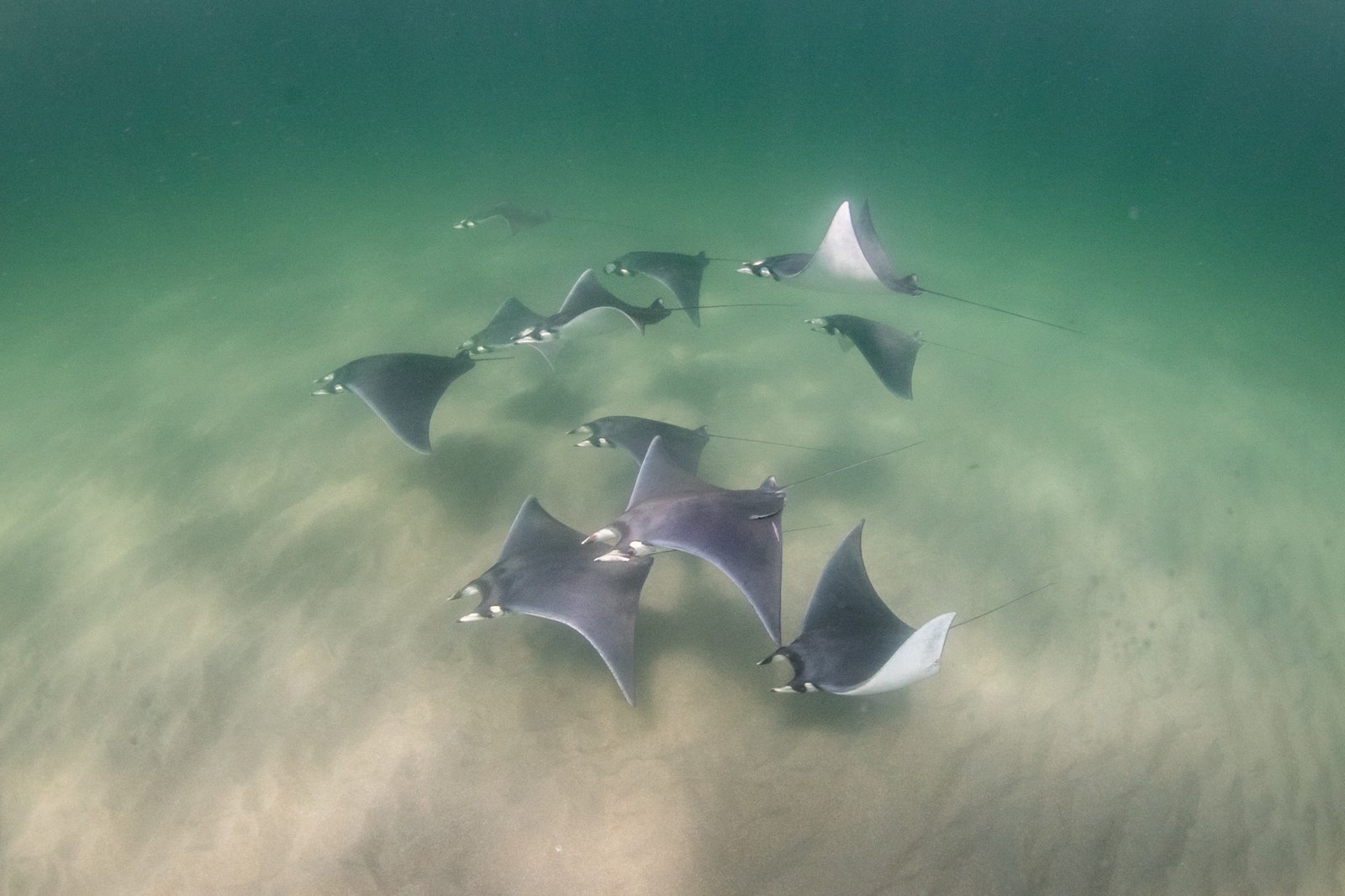
A school of Atlantic pygmy devil rays off south Florida.
A small ray that is hard to pin down
The Atlantic pygmy devil ray (Mobula hypostoma) is found only in the Atlantic Ocean and is listed as Endangered on the IUCN Red List. It is often confused with other devil rays, and basic facts about how it grows and reproduces are still poorly understood. Until now, the species also lacked a well-preserved reference specimen for its scientific name.
What the study did
Atlantine Boggio-Pasqua of Aix-Marseille University led the study, with MMF Senior Scientist and US Country Manager Jessica Pate among its 36 authors. The findings appear in Aquatic Conservation: Marine and Freshwater Ecosystems.
The team designated a new reference specimen for the species, called a neotype: an adult female caught by fishers off Panama’s Caribbean coast and now held at the University of Panama. The findings also support treating rays from the eastern Atlantic, once named Mobula rochebrunei, as the same species.
Field and aquarium records from more than 300 rays showed how weight relates to body width, the size at which the rays mature, and differences in teeth between males and females.
Life in the shallows
These rays depend heavily on shallow coastal waters and estuaries, where rivers meet the sea. They gather, feed, and mate there. Groups of 4 to 20 rays are typical, and up to 130 have been recorded together in northwestern Florida, where schools of young rays feed together in the surf zone. Along the beaches of western Florida, rays feed on dense patches of tiny mysid shrimp. Off Isla Mujeres, Mexico, adults have been recorded following one another in courtship trains. In western Florida, 41% of the rays examined had injuries attributed to shark bites.
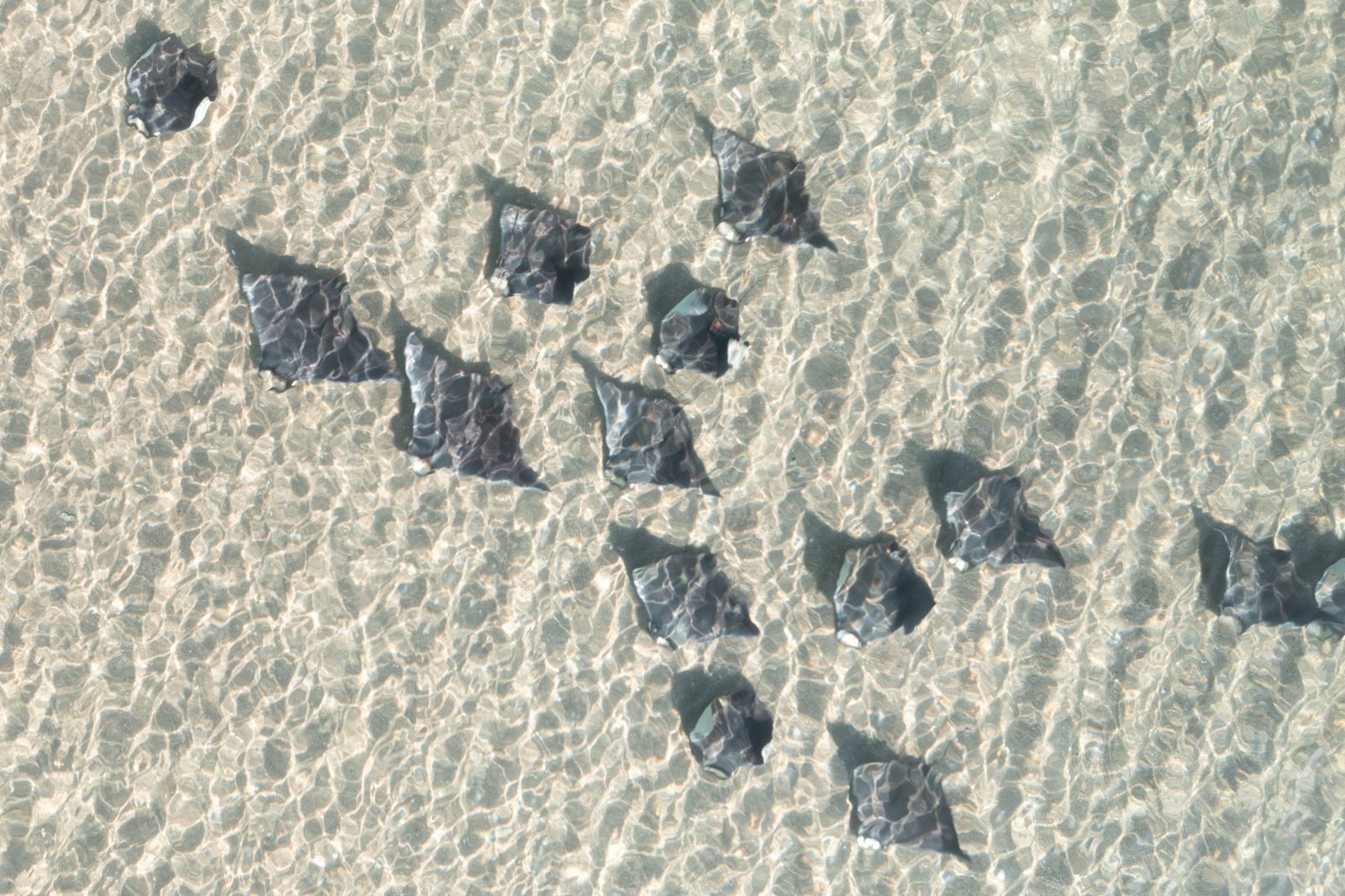
Atlantic pygmy devil rays over shallow sand off south Florida, seen from the air.
Those shallow-water habits also put the rays within reach of coastal fishing nets. The authors document catches of many rays at once, with up to 31 caught in a single trawl.
A bigger map
Verified sightings pushed the known range north from North Carolina to Virginia and Delaware, where all records came from summer and early fall. Social media and citizen science records added 10 Caribbean countries and territories where the species had not been reported before. Jessica confirmed the species in Flower Garden Banks National Marine Sanctuary, off Texas, in July 2023.
In the eastern Atlantic, the species has been confirmed in Senegal, Cameroon, Gabon, and the Republic of the Congo, while reports from several other West African countries remain unconfirmed. The authors suspect it has disappeared from parts of its former range in Senegal.
Why it matters
The species is protected in Florida, Mexico, Brazil, Belize, the Dominican Republic, and Gabon, and in November 2025 all manta and devil rays were moved to Appendix I of CITES, which bans international commercial trade in them. Protection and research remain limited elsewhere, particularly off West and Central Africa. The authors recommend seasonal fishing closures and protected areas at key coastal sites, limits on nets set close to shore, and handling methods that let caught rays be released quickly. The study’s identification tools and updated map also give the IUCN better information for a future reassessment of the species.
This work was supported by the Manta Trust, African Marine Mammal Conservation, the National Geographic Society, the Save Our Seas Foundation, the Mote Scientific Foundation, Georgia Aquarium, the Nausicaá Endowment Fund, the Disney Conservation Fund, the Wildlife Conservation Congo Programme, and the US Army Medical Research and Materiel Command. To learn more about devil rays in the western Atlantic, visit our Atlantic Mobula Rays project page, or support the Florida Manta Project. If you photograph a devil ray, please send it to [email protected].