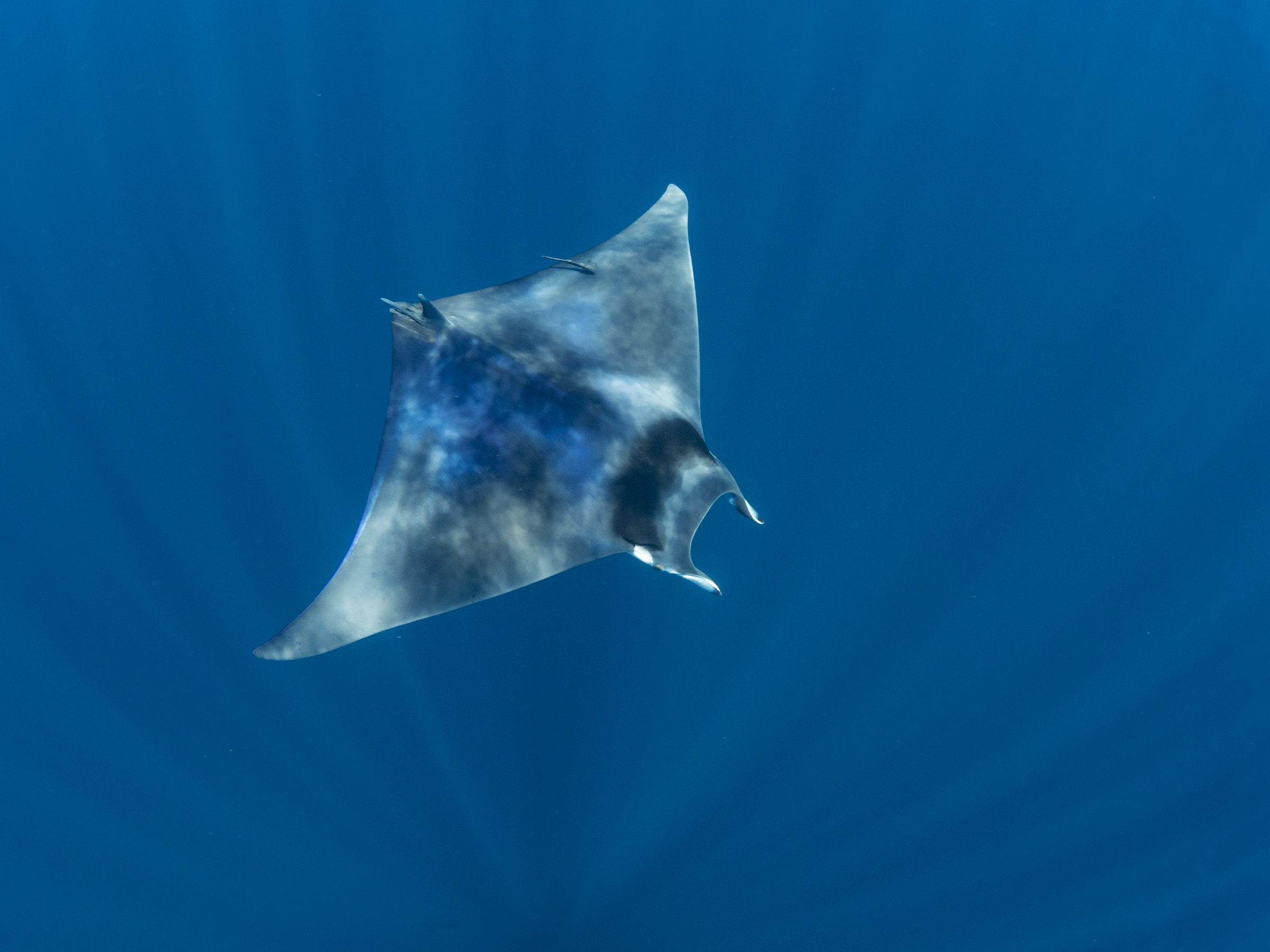




Why adopt a devil ray?
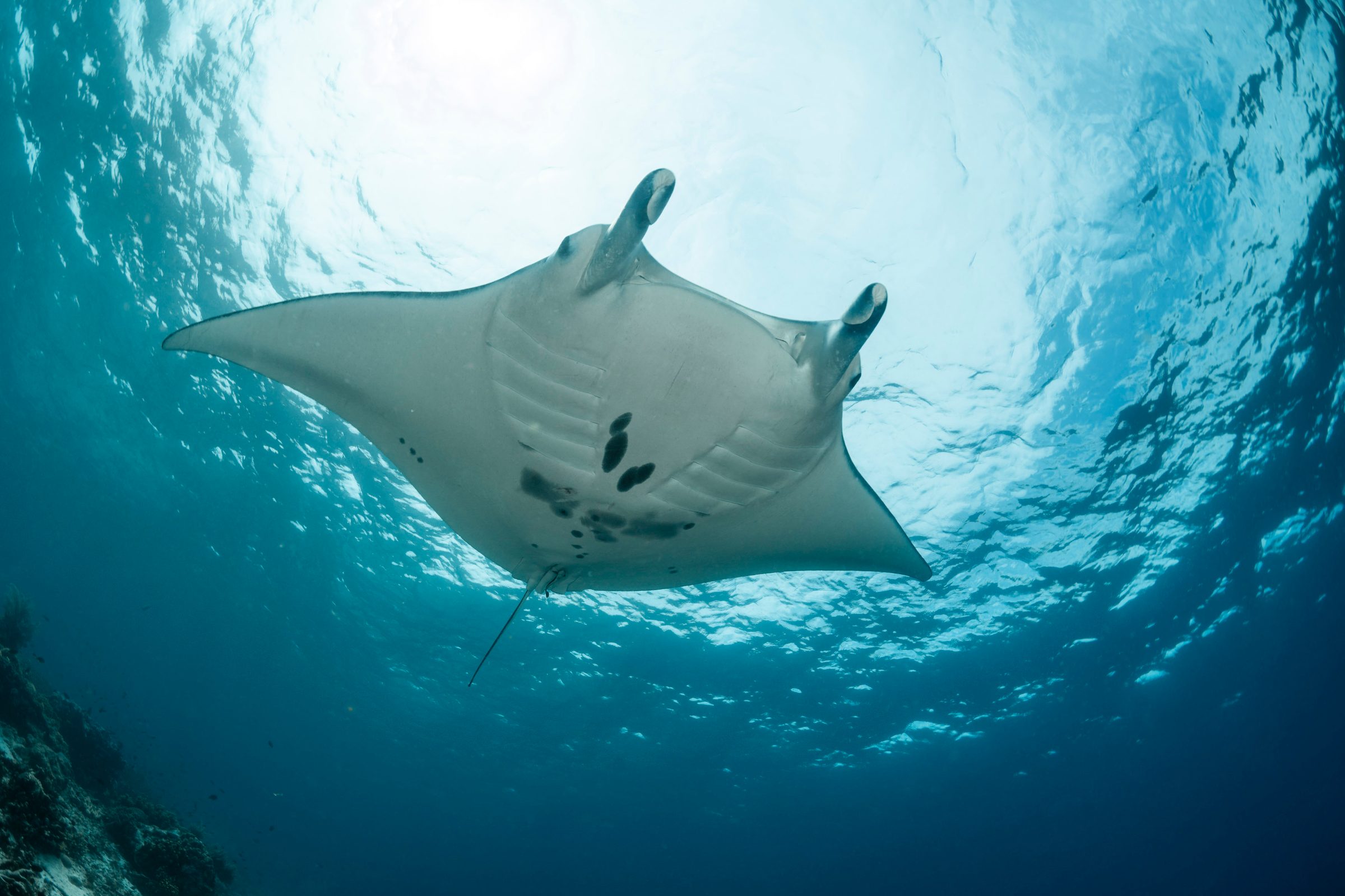
Devil rays, also called mobula rays, are open-water filter feeders without a functional sting. Some species are encountered so rarely that even their ranges are still being mapped. Our research is filling some of those gaps.
Manta and devil rays are among the most threatened of all vertebrate groups, mainly as a result of overfishing. A 2026 global analysis estimated that fisheries catch about 264,500 manta and devil rays a year, and the trade in dried gill plates has driven the fisheries behind many declines.
Devil rays cannot replace those losses quickly. A female gives birth to one large pup every one to five years. In the Philippines' Bohol Sea, populations of four manta and devil ray species were estimated to take 15.8 to 86.6 years to double, and no level of fishing appeared sustainable.
At Praia do Tofo in southern Mozambique, our surveys recorded an 81.3% fall in devil ray sightings between 2003 and 2023. The sicklefin devil ray and the Atlantic pygmy devil ray are both listed as Endangered on the IUCN Red List.
About devil rays
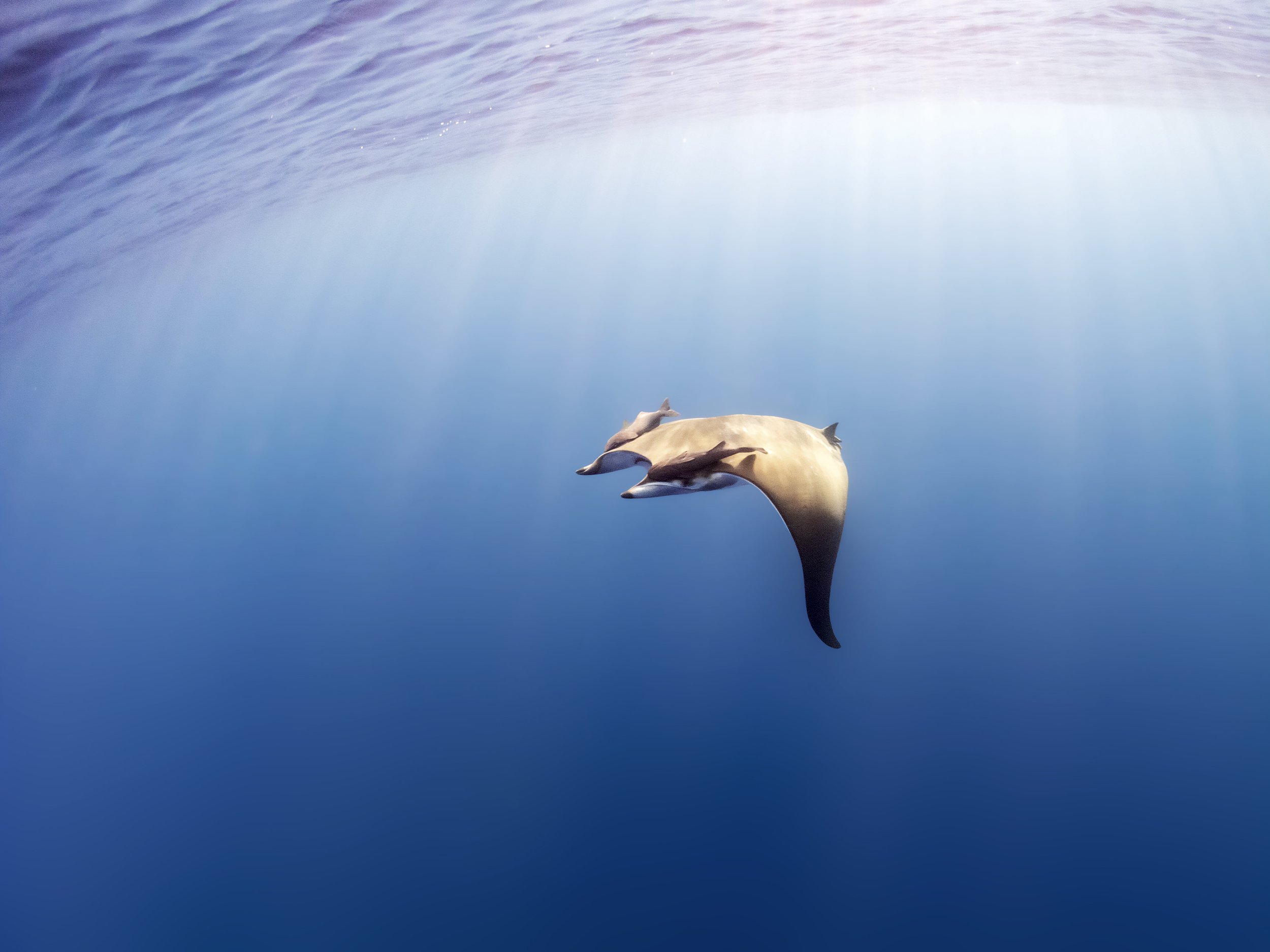
Devil rays belong to the genus Mobula, which is why they are also called mobula rays, and they live in tropical and warm temperate waters around the world. Manta rays are the largest members of the same genus (you can also adopt a manta ray). Devil rays have their mouths on the underside of the head, while mantas have a mouth at the front.
The spinetail devil ray (Mobula mobular), long called the "giant devil ray", has never been accurately measured at more than 3.5 meters (11 ft) across, and the sicklefin devil ray (M. tarapacana) is comparable at about 3.4 meters. At the small end, the shortfin devil ray (M. kuhlii) reaches about 1.3 meters (4 ft 3 in).
In the Bohol Sea, a single species of krill was present in 81 of 89 stomachs of four manta and devil ray species. The rays fed at night near the surface, on krill that spends the day at depths of 140 to 280 m (460 to 920 ft). Along the beaches of western Florida, Atlantic pygmy devil rays feed on dense patches of tiny mysid shrimp.
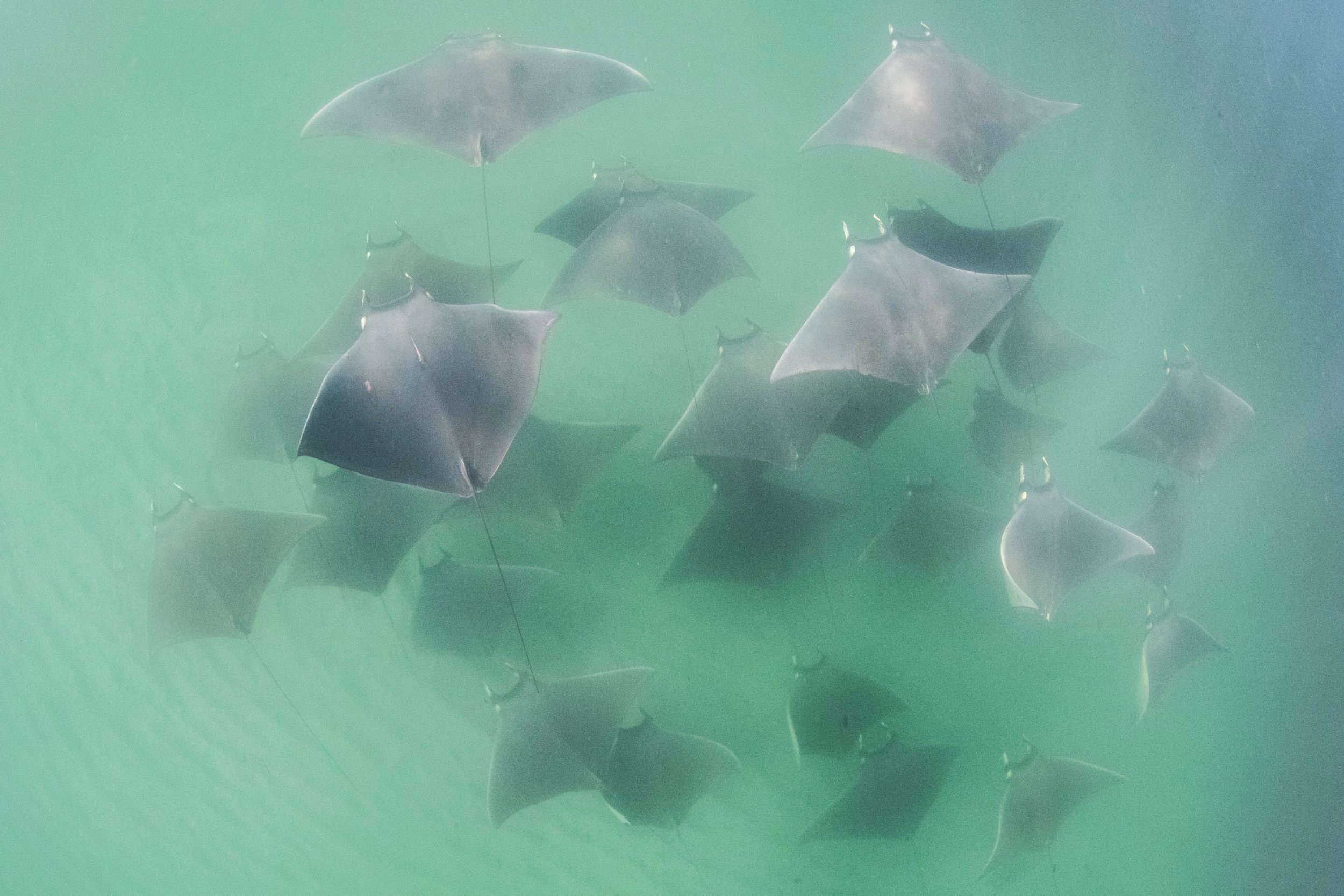
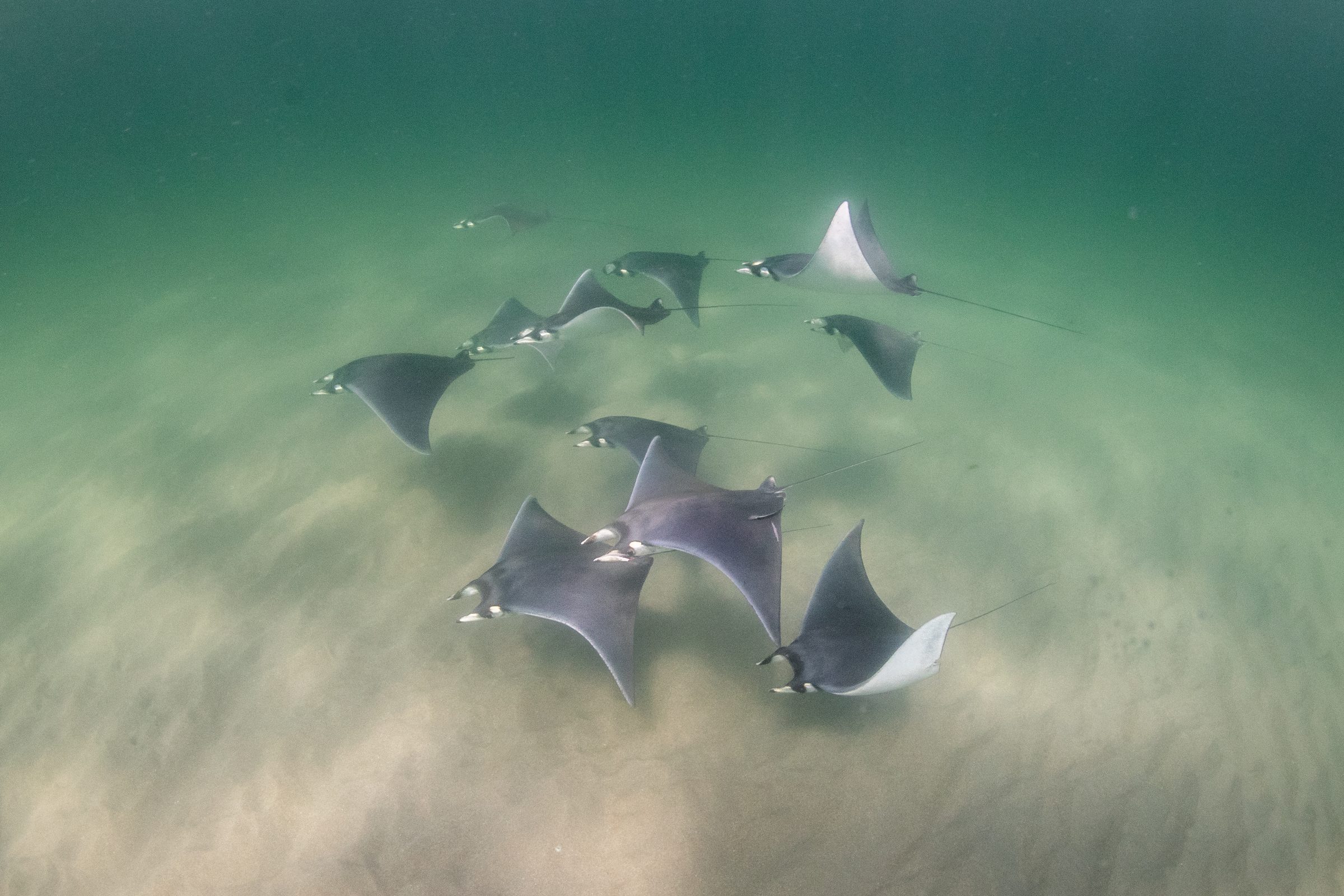
Atlantic pygmy devil rays typically gather in groups of 4 to 20, and up to 130 have been recorded together in northwestern Florida. Off Madagascar, spinetail devil rays form courtship trains, in which several rays follow a female, and off South Africa, shortfin devil rays gather in groups of more than 150 to be cleaned by bluestreak cleaner wrasse.
How your devil ray adoption helps
Your devil ray adoption supports MMF's work as a whole, including our current research on manta and devil rays and the threats they face, building on studies in four regions.
- Western Atlantic. Jessica Pate coordinates our Atlantic mobula ray research from Florida. Her 2023 study, prompted by a diver's photo, compiled 180 sightings of 361 sicklefin devil rays and extended the species' known range north to 40°N in the Atlantic. She also led a 2025 study of 970 sightings of three devil ray species, and co-authored a 2026 study, led by Atlantine Boggio-Pasqua of Aix-Marseille University, that confirmed the Atlantic pygmy devil ray in 10 more Caribbean countries and territories.
- Mozambique. Our manta and devil ray research in Mozambique runs a province-wide monitoring program on a coast that provides important breeding, feeding, and cleaning areas for the shortfin devil ray. Our research and advocacy were a major factor in the government's decision to give manta and devil rays legal protection in January 2021.
- Madagascar. The first dedicated study of manta and devil rays in Madagascar, led by Stella Diamant of the Madagascar Whale Shark Project, recorded 255 encounters off Nosy Be from 2016 to 2022, 165 of them with spinetail devil rays. It documented bottom-set gillnets that can catch up to 30 rays in a single night.
- Philippines. A LAMAVE-led study, with MMF scientists, examined 1,509 rays landed in the Bohol Sea to learn about their growth and reproduction, and a separate study of their stomach contents found krill in 81 of 89. The targeted fishery was banned in April 2017.
Ready to help? A devil ray adoption is $39, with a personalized certificate to download straight after checkout.
Adopt a devil ray · $39