
The team estimated that small-scale fishers brought at least 173,902 sharks and rays ashore at two sites in southern Senegal between June 2021 and July 2022. Species threatened with extinction made up more than four-fifths of the estimated catch weight.
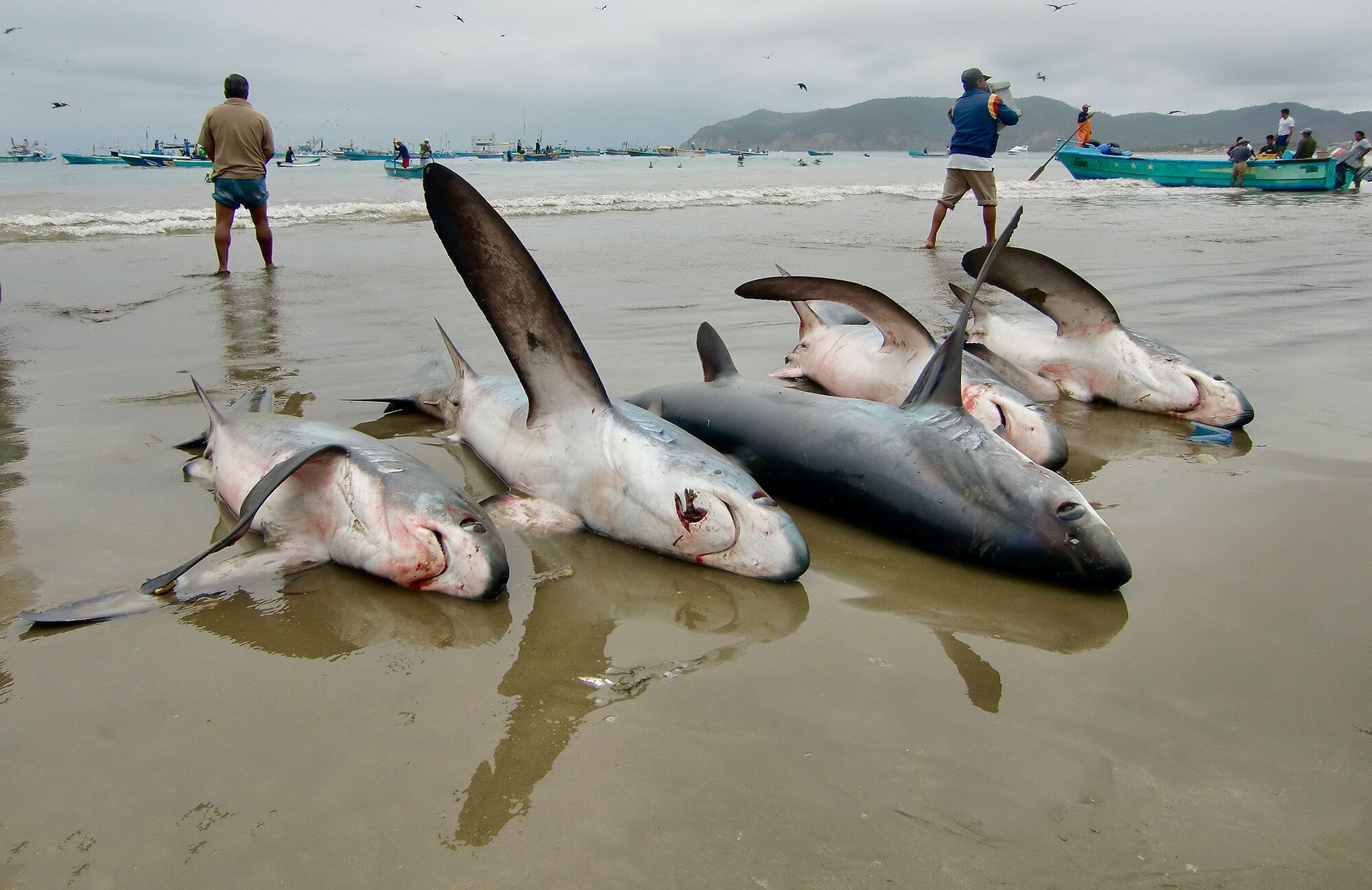
Thresher sharks landed by a fishery (not from this study). Photo: Dr. Andrea Marshall
What the team counted
The study was published in Ecology and Evolution on March 26, 2026. It was led by Dr. Rima Jabado of the Elasmo Project and the IUCN Shark Specialist Group. Her co-authors were Luc Badji, Ryan Charles, and MMF Principal Scientist Dr. Chris Rohner.
The team surveyed Kafountine and Elinkine, two major sites in the Casamance region where small-scale fishers, working from relatively small boats, bring their catch ashore to be salted and dried for sale. They directly counted 100,281 animals and identified 28 species: 13 sharks, 13 rays, and two guitarfishes. Some animals could only be identified to broader groups. The study counted guitarfishes, rays with shark-like bodies, separately from other rays.
Many more animals lay in stacks and piles where not every one could be seen. The researchers estimated those numbers cautiously, to avoid overstating them, and reached a minimum total of 173,902. Visits were roughly two weeks apart, with a gap during the rainy season, so some catches passed through between surveys.
Rays other than guitarfishes made up 80.7% of the estimated total, about 140,000 animals. Guitarfishes made up 10.8%. Sharks made up 8.6%, almost 15,000 animals. By estimated weight, guitarfishes were the largest share of the catch.
Threatened species, traded abroad
The IUCN Red List assesses species’ risk of extinction, and species listed as Vulnerable, Endangered, or Critically Endangered count as threatened. Threatened species made up more than four-fifths of the estimated catch weight. The Critically Endangered blackchin guitarfish (Glaucostegus cemiculus) alone accounted for 69% of the total estimated weight. The catch also included two Critically Endangered hammerhead species and the Critically Endangered Lusitanian cownose ray (Rhinoptera marginata). The estimated total included 978 Endangered manta and devil rays.
Species listed under CITES at the time of the surveys accounted for 76.5% of the total estimated weight. CITES is the international agreement that regulates trade in listed wildlife. The authors compared the species recorded at the sites with the available CITES trade records and found differences between them. They recommend better tracking of shark and ray products from catch to sale.
Why small-scale fisheries matter
The authors conclude that small-scale fisheries likely kill more sharks and rays in Senegal than industrial fleets do. They call for wider monitoring to establish the full scale of these catches.
The study covered only two sites. The authors used different assumptions to illustrate how large the national catch might be. One scenario gave about 1.7 million sharks and rays a year. A second gave almost 3.5 million, assuming two other southern processing sites handled similar catches. Both assume the region’s share of all fish landings also applies to sharks and rays.
“The study should be read as evidence of a serious problem, not as a ceiling on the true scale of exploitation,” Dr. Jabado told Mongabay.
Fisheries support the livelihoods of up to 600,000 people in Senegal through direct and indirect jobs, and conserving sharks and rays matters for long-term access to food across West Africa. The authors call for stronger monitoring of catches and better tracking of shark and ray products. They also recommend stronger enforcement of trade regulations and closer cooperation across West Africa.
MMF’s part
Chris is one of the study’s four authors. He helped organize and analyze the data, prepare the figures, and write and revise the paper. Our overfishing page explains how fishing affects sharks and rays, and how those impacts can be reduced.
Read the study, which is open access, or Mongabay’s article by Autumn Spanne.
This post is dated to the paper’s publication. Dr. Jabado’s quote is from Mongabay’s article, published on May 5, 2026.