



Why adopt a rhino ray?
When you adopt a rhino ray, you support MMF's work on some of the most threatened animals in the sea. Rhino rays are the wedgefishes, including the bowmouth guitarfish or shark ray, and the giant guitarfishes. A 2020 global assessment identified them as the world's most threatened families of marine fishes, with 15 of the 16 species assessed facing an extremely high risk of extinction.
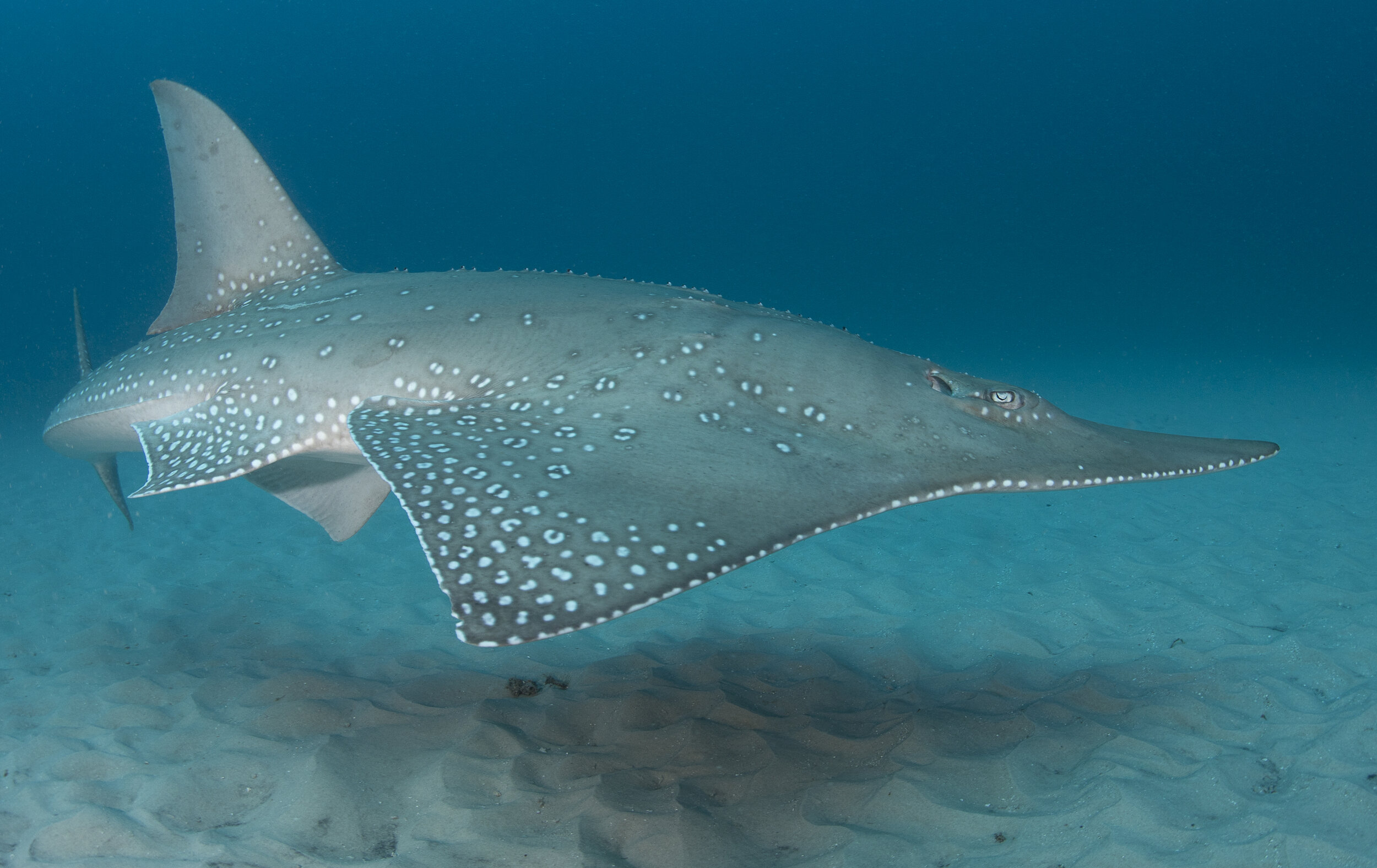
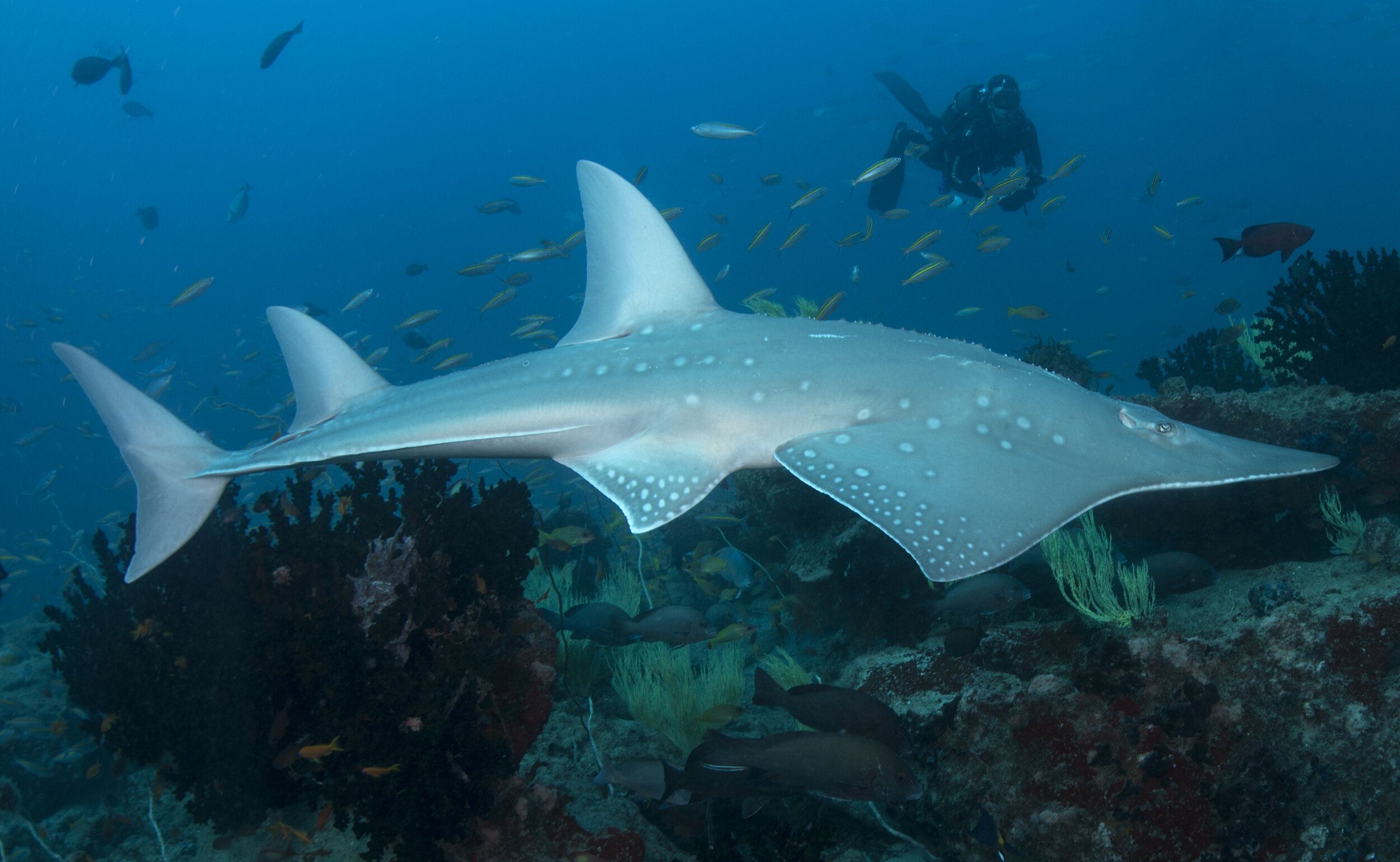
Wedgefish look like a ray at the front and a shark at the back, and they have gone by many names, from sand sharks to sharkrays. The group is now called rhino rays, a name chosen with conservation marketing in mind: people already know that rhinos need protecting.
Fishing is the biggest threat. Wedgefish fins have been the most expensive "shark fins" in China for at least 200 years, and can sell for as much as US$964 per kg. Their wedge-shaped heads and large fins also make them easy to catch by accident in coastal nets, and because they are so valuable, they are kept rather than released.
Wedgefish grow slowly, mature late, and have low reproductive rates. The 15 Critically Endangered species are all inferred to have declined by more than 80% over three generations (30 to 45 years). In Mozambique, wedgefish still lack legal protection, so those caught in nets are often kept and eaten.
About rhino rays
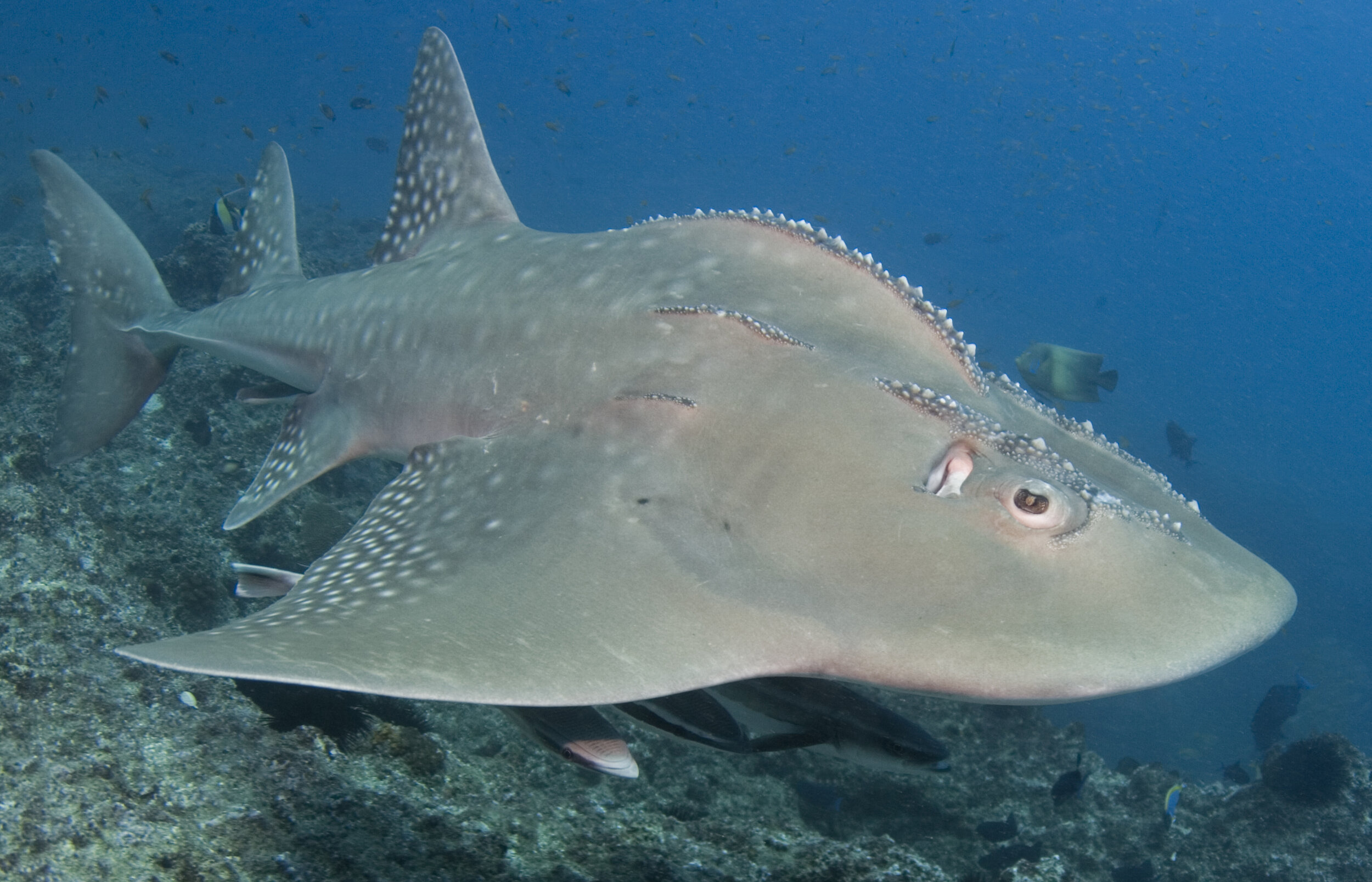
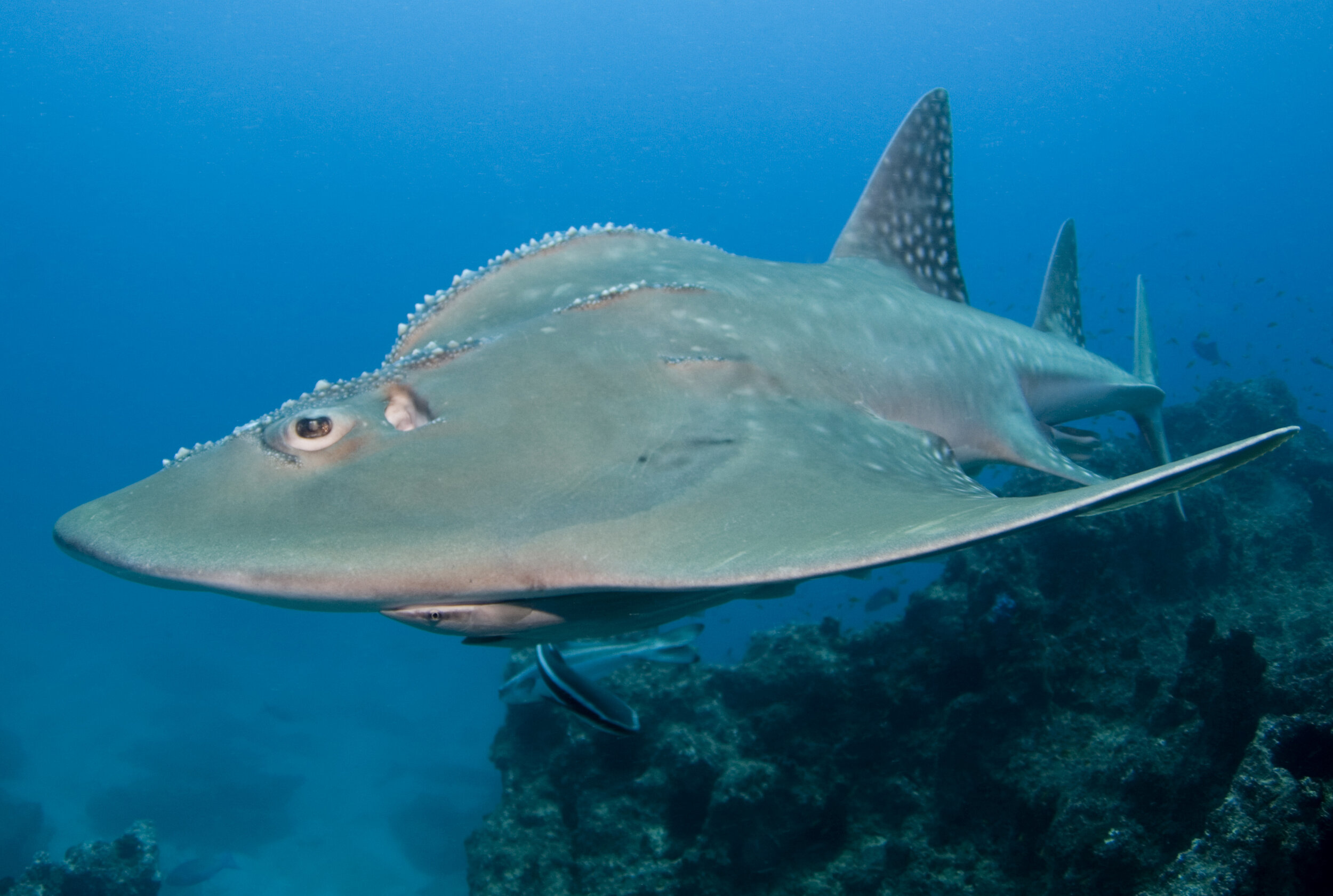
Wedgefish get their name from their pectoral fins, which join the head to form a wedge, like a slice of pie. Despite the shark-like fins and tail, they are rays: like all rays, they have their gills on the underside of the head.
Rhino rays live in shallow coastal water, close to the seabed. In Mozambique, MMF has found wedgefish using shallow reefs, sandflats, bays, and river mouths, and early work suggests the juveniles spend a lot of time in seagrass beds.
At least three wedgefish species and one guitarfish live off Mozambique's Inhambane Province: the bowmouth guitarfish (Rhina ancylostoma), the bottlenose wedgefish (Rhynchobatus australiae), the white-spotted wedgefish (R. djiddensis), and the grey-spotted guitarfish (Acroteriobatus leucospilus). The bowmouth has spikes all over its body. In Florida, MMF studies the Atlantic guitarfish (Pseudobatos lentiginosus), a small rhino ray listed as Vulnerable on the IUCN Red List.
Wedgefish are shy, fast swimmers that do not like being approached by divers. Even so, MMF's photo-identification catalog now holds more than 90 individual bottlenose wedgefish from Mozambique.
How your rhino ray adoption helps
Your rhino ray adoption supports MMF's work as a whole, including research and conservation on rhino rays, much of it in Mozambique's Bazaruto Seascape, which likely holds the most important rhino ray habitat in Africa.
In Florida, the Atlantic Guitarfish project completed the first acoustic-tagging study of the species, tracking 25 animals from Palm Beach to Miami. MMF also contributed to the 2025 CITES decision to set a zero export quota for wild-caught wedgefishes and giant guitarfishes, effectively ending legal commercial trade in them between countries.
On the unprotected Inhassoro coast, the Inhassoro Wedgefish Project works with 26 community rangers who record wedgefish and guitarfish landings. Their records helped the communities of Tsondzo and Mangarelane propose a no-net zone and a no-take zone, now moving through government processes. Across Inhambane Province, through the Mozambique Rhino Rays Research Project, MMF has:
- Compiled more than 20 years of rhino ray sighting records in Inhambane Province, and found wedgefish aggregation sites from the Bazaruto Seascape to Závora.
- Fitted bottlenose wedgefish and bowmouth guitarfish with acoustic and satellite tags; the acoustic tags are detected by a receiver network along roughly 400 km (250 miles) of coast. Wedgefish tagged in the south of the seascape have since been detected inside Bazaruto Archipelago National Park.
- Used that data to work toward a protected no-netting area around critical wedgefish habitat with The Sanctuary (Santuário Bravio de Vilanculos) and the Chingonguene community fishing council, backed by patrol boats, trained rangers, and a ranger camp completed in 2024.
- Begun training fishers in selective handline fishing as an alternative to netting, and reached more than 700 people with conservation education in Chingonguene during 2024 and 2025.
Ready to help? A rhino ray adoption is $39, with a personalized certificate to download straight after checkout.
Adopt a rhino ray · $39