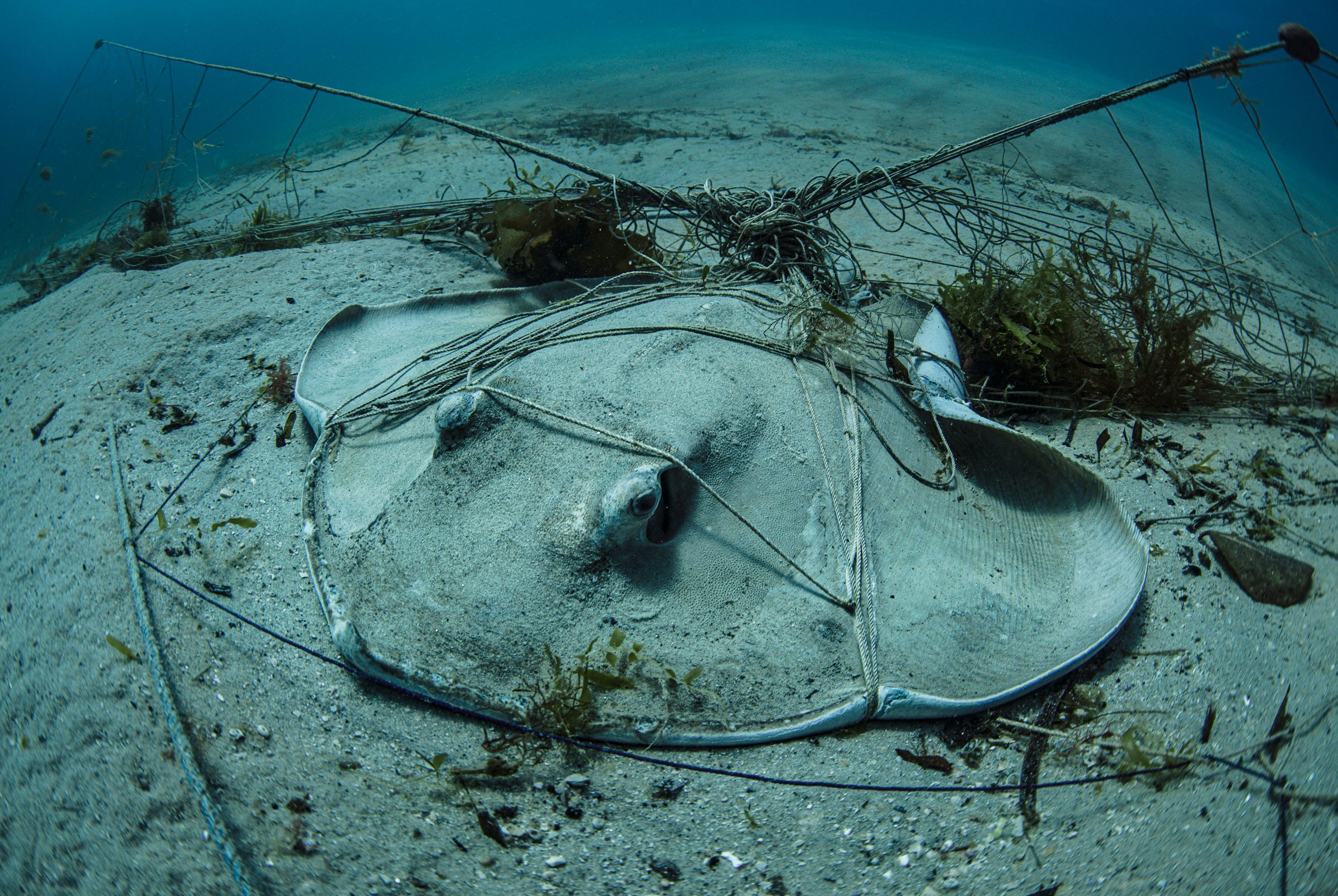

Of the approximately 1,200 known species of sharks, rays, and ghost sharks (chimaeras), 391 are presently threatened with extinction. Fishing is the primary threat to every single one. Overfishing, where fish are removed from a population faster than they can replace themselves through reproduction, has already led to the probable global extinction of three shark and ray species. Several more are now extinct through most of their historical range. All the sharks and rays listed on the Convention on the Conservation of Migratory Species of Wild Animals (CMS) are there primarily because they are, or have been, overfished.
Of course, wild fisheries are also a vital protein source for people. This has been the case for millennia, with evidence of fisheries traced back at least 40,000 years. Contemporary excavations of archaeological sites routinely identify sharks and rays that are no longer present in those countries, particularly distinctive animals like sawfish (family Pristidae), which are now presumed to be extinct in more than half of the 90 nations in which they were historically found. However, even with this long history of exploitation, catch rates have dramatically accelerated over the past century. The rise of motorized vessels and other technologies has allowed for the use of larger nets and longlines, fished further from shore, and opened global markets enabling the routine international trade of fish products.
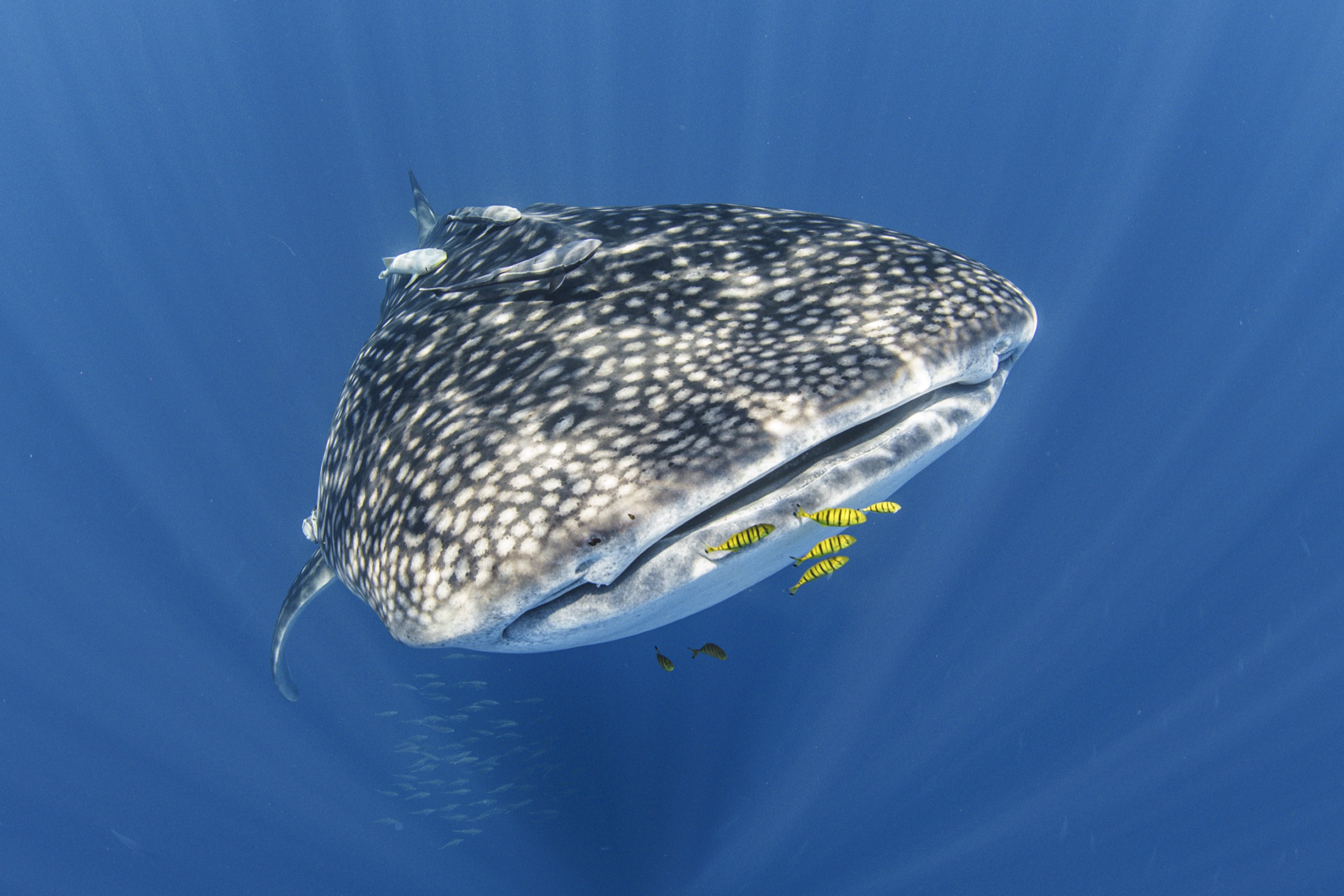
The contemporary harvest of sharks is estimated at approximately 1.5 million tonnes annually. This is driven largely by the demand for fins and meat for consumption, while other derivatives such as liver oil, gill rakers, and skin leather are sometimes sold as well. That said, it is important to keep in mind that a large proportion of shark and ray landings are from incidental catches in other fisheries, such as gillnet and longline fisheries for tuna. We generally use the term target to refer to the desired catch, byproduct for species that are not targeted, but are regularly retained for sale, and bycatch for the species that are caught accidentally and discarded, whether alive or dead. Few sharks are targeted in fisheries, but almost all shark and ray species, from 20 m Whale Sharks(Rhincodon typus) to 20 cm Dwarf Lanternsharks (Etmopterus perryi), many with no commercial value, are caught as bycatch.
At a high level, we can categorize shark fisheries as recreational, artisanal, or industrial. These labels represent a continuum, rather than a strict demarcation, but provide useful context to the diverse fisheries that catch sharks and rays. Recreational fishing, or sport fishing, is broadly defined as catching fish as a leisure activity, either for personal consumption or for the perceived challenge (e.g. where the fish are intended to be released alive). Artisanal fisheries, also referred to as small-scale or subsistence fisheries, are here defined as those involving relatively small vessels, fishing in national waters, generally for less than a week at a time. The catch may be for local consumption, export, or both. Industrial, or commercial fisheries, use larger, more technologically advanced vessels capable of multi-day trips, and aim to sell their catch for a profit.
In this fact sheet we will look at the general characteristics of these fisheries and the threat they pose to sharks and rays, with a particular focus on those listed on CMS, and identify some of the proven tools we can use to help shark and ray populations recover, without diminishing the contribution of fishing to human food security.
Recreational fisheries
The worldwide recreational catch of sharks and rays is poorly documented. Overall, the recreational harvest for all fish is approximately 1% of the total global fish catch. Most sharks and rays – typically 70–100% – are released after capture, rather than retained, so they are not included in this total. The majority of recreational shark and ray fishing takes place on the subtropical and tropical coasts of high-income countries, with the best data available from Australia and the USA.
A major national survey of recreational shark and ray fishing in Australia in 2000–2001 found that anglers catch over 1.2 million sharks and rays per year, releasing around 80% alive. More recently, dedicated monitoring efforts in Western Australia (WA) found that 33 shark and ray species were caught, dominated by the Dusky Shark (Carcharhinus obscurus). Catch reconstructions found the annual recreational catch to be increasing over time, from 14 tonnes in the early 1940s to 83 t in 2017–2018. In comparison, the industrial catch of sharks and rays in WA is around 1,000 t. An estimated 17,000 individual sharks and rays from all species are caught by recreational anglers in WA each year, with about 82% of them released. Aside from the Dusky Shark, catches of other CMS-listed species were considered negligible (less than 1 tonne in 2017–2018), and the recreational catch was assessed as being unlikely to impact overall shark and ray stocks. However, there were some catches of species classified as Critically Endangered on the IUCN Red List of Threatened Species, including sawfishes, Scalloped Hammerhead (Sphyrna lewini), and Oceanic Whitetip Sharks (Carcharhinus longimanus), which could warrant management attention.
Recreational fishing for sharks is also popular in Florida, USA. The total recreational catch of sharks in Florida was estimated at 733,000 in 1986. A recent study surveyed the 18,000 anglers (as of December 2020) that held permits for recreational shore-based shark fishing. The 856 respondents caught 9,617 sharks over a 12-month period in 2019–2020. Shore-based shark fishing is rapidly growing in participation, increasing from 11,277 permit holders in December 2019. The most commonly caught CMS-listed species was the Great Hammerhead (Sphyrna mokarran; 309 sharks). Other catches of CMS species, including Scalloped Hammerheads, Dusky Sharks, and Shortfin Mako (Isurus oxyrinchus), have also been documented from this fishery. Hammerheads and Dusky Sharks are both mandated release species, and release rates overall are thought to exceed 80%.
The high release rate of sharks and rays in recreational shark fisheries means the primary concern is not direct take, but rather the potential for capture stress, injury, or post-release mortality, adding pressure on species that are already threatened by other processes. Pregnant and gravid sharks and rays, including CMS-listed species as diverse as Largetooth Sawfish (Pristis pristis), Angelsharks (Squatina squatina), and Blue Sharks (Prionace glauca), commonly abort their young due to capture stress. Hammerhead Sharks, in particular, are known to have a relatively high rate of post-release mortality due to the stress of capture. The possibility of negative population-level effects needs to be considered when there is recreational fishing pressure on key shark and ray habitats, such as inshore nursery areas, or on Critically Endangered species.
Artisanal fisheries
Artisanal fisheries are an important economic sector and a vital contributor to food security in many coastal areas, particularly tropical nations in the developing world. Much of the catch, including shark and ray meat, is consumed domestically. Locally-caught fish accounts for 60–70% of the animal protein eaten by people in the Union of Comoros, while the artisanal fleet accounts for over 80% of the national fish catch in Madagascar.
While artisanal fisheries are sometimes called ‘small-scale’, they can still have a large footprint in coastal areas. Fishing pressure has increased in line with rapid human population growth. For instance, in Mauritania, there were 125 pirogues (artisanal fishing vessels) in 1950, rising to nearly 4,000 in 2005. The number of pirogues in Madagascar rose from 5,000 in 1983 to 22,000 in 1996. Oman has 19,000 artisanal boats, Sri Lanka had 24,600 gillnet vessels in 2004, and there are 600,000 fishing vessels in Indonesia.
Sharks and rays have always been a common byproduct of these fisheries, but the rapid rise in demand and price for certain shark and ray fins has led to increased targeting of some species, and severe population declines as a result. In particular, the shark-like rays (order Rhinopristiformes), including sawfishes, guitarfishes, and wedgefishes, are now among the world’s most endangered ocean wildlife. Wedgefish species include the CMS-listed Bottlenose Wedgefish (Rhynchobatus australiae) and two species on the Memorandum of Understanding on the Conservation of Migratory Sharks (Sharks MOU), the Whitespotted Wedgefish (Rhynchobatus djiddensis) and Smoothnose Wedgefish (Rhynchobatus laevis). Wedgefishes are caught by a variety of techniques, live in shallow coastal waters, and are extremely valuable. Aside from their meat, which is sold at high prices locally and internationally, the fins of this group are considered the most valuable in the international shark fin trade. Large wedgefishes have been sold for up to US$680 each, while prices for their fins can reach as high as US$964 per kg.
Many artisanal fisheries keep their operating costs low by sharing profit from catches, rather than paying fixed salaries for labor. Catching even a small number of high-value sharks or rays can be a major boost to income, incentivizing the continued targeting of these species even as they decline closer to extinction. All except one of the 16 wedgefishes and giant guitarfishes were recently assessed as Critically Endangered. These 15 species are all inferred to have undergone population reductions of more than 80% over the last 30–45 years. One species, the False Shark Ray (Rhynchorhina mauritaniensis), is now found only in Banc d’Arguin National Park in Mauritania, where it is still caught in artisanal and illegal fisheries. Another, the Clown Wedgefish (Rhynchobatus cooki), has only been recorded recently from Lingga and Singkep Islands in Indonesia. The intensity of fishing pressure on coastal and shelf waters leaves little refuge for this unique group.
Industrial fisheries
Industrial fisheries are the most immediate global threat to the majority of sharks and rays. Modern industrial fishing vessels tend to be large, can operate around the clock, and are often capable of extended trips (in both time and distance) into international waters, with many ships having onboard processing and freezing facilities. Depending on target species, some vessels have the capacity to deploy huge nets, often exceeding 30 km (19 miles) in length, while an average longline set in US waters is 45 km (28 miles). The expansion of these large, highly-automated vessels into the open ocean has hastened the decline of many sharks and rays whose habitats were previously inaccessible to fisheries.
Industrial fishing did not start regularly targeting sharks in international waters until the 1950s. Large pelagic sharks now account for 52% of the identified shark catch worldwide. The abundance of 18 open ocean shark and ray species declined by 71% from 1970 to 2018, owing to an 18-fold increase in relative fishing pressure from 1970 to 2014. While oceans cover huge areas, sharks are not evenly distributed; major oceanographic features, such as the Gulf Stream in the North Atlantic and the East Australian Current in the southern Pacific Ocean, aggregate multiple pelagic shark species together. The industrial fleet is well aware of this, and concentrates fishing effort on these productive areas. A recent major tracking study, aggregating 1,804 satellite tracks from 23 pelagic shark species, compared shark occurrence hotspots to the position of industrial fishing vessels. Sharks and shark fishers showed a high degree of overlap, up to 76% for Blue Sharks in the North Atlantic. Distance from shore is no longer a refuge for these species.
The open ocean is the world’s largest habitat, and many oceanic sharks and rays were historically common. Oceanic Whitetip Sharks, for instance, were described in the 1969 book The Natural History of Sharks as being “extraordinarily abundant, perhaps the most abundant large animal… on the face of the earth”. Twenty-four of these 31 species are now threatened with extinction. The formerly-abundant Oceanic Whitetip has suffered a >98% reduction in numbers; they are now Critically Endangered.
Industrial fisheries that catch slow-growing sharks and rays as a byproduct or bycatch can remain profitable even while species decline to local or global extinction. The Angelshark is a good example of this scenario. As fishing effort and capabilities increased during the 20th century, there was a well-documented decline of large bottom-dwelling sharks and rays in European waters, including the ironically-named Common Blue Skate (Dipturus batis) and Common Guitarfish (Rhinobatos rhinobatos), both of which are now Critically Endangered. The Angelshark, a slow-moving ambush predator, is similarly catchable in bottom trawls, nets, and baited lines, which operate through most of its coastal habitat in Europe and northwestern Africa. Initially, Angelsharks were caught in targeted fisheries, but as their numbers plummeted these fisheries were no longer viable. However, the numbers of faster-breeding teleost species that shared their coastal habitat, such as Anglerfish (Lophius spp.), remained high, so these fisheries could catch and market these fish to operate profitably despite the declining shark catches. The Angelshark is also now Critically Endangered, extinct through most of its historical range, with no recorded industrial landings of the species in the North Sea since the 1970s. The species remains relatively common only in the Canary Islands, where trawl fishing has been prohibited since 1986.