
Uae · Since 2005
Sea Turtle Rescue and Recovery
Satellite tracking of rescued and rehabilitated sea turtles showed that most survive and resume normal lives after release, and one green turtle swam 8,283 km (5,147 miles).
Led by Dubai Turtle Rehabilitation Project, with MMF
Every year, sick and injured sea turtles wash ashore in the United Arab Emirates. The Dubai Turtle Rehabilitation Project tracked rescued turtles by satellite to assess whether they survive once they return to the sea, and we helped analyze the results.
The Dubai Turtle Rehabilitation Project has operated in its current form since 2004. It treats sick and injured turtles from around the Gulf and has released more than 1,800 back into the wild, most of them young hawksbill turtles (Eretmochelys imbricata). Since 2005, it has fitted some of the turtles it releases with satellite tags. Dr. David Robinson, then with the Jumeirah Group and the rehabilitation project, led two studies of these tracks, published in PLOS ONE in 2017 and 2021, with Dr. Rima Jabado of the Gulf Elasmo Project, Kevin Hyland of Dubai’s Wildlife Protection Office, and Warren Baverstock of the Jumeirah Group. MMF’s Dr. Chris Rohner and Dr. Simon Pierce helped analyze the data and write up the results.
What the project has done
- Helped analyze the tracks of eight rehabilitated green turtles (Chelonia mydas) released off the UAE between 2005 and 2013, published in 2017.
- Helped analyze the tracks of 26 more rehabilitated turtles of four species, including six that had lost a front flipper, released between 2012 and 2018, published in 2021.
- Helped map the coastal feeding areas the turtles settled into, and the routes of those that left UAE waters.
- Helped document how many turtles survived after release, and the causes of death among those that did not.
Support our sea turtle research
This study is complete. Your gift supports our current sea turtle research in Indonesia, where we identify and monitor hawksbill and green turtles on the reefs.
Tracking results
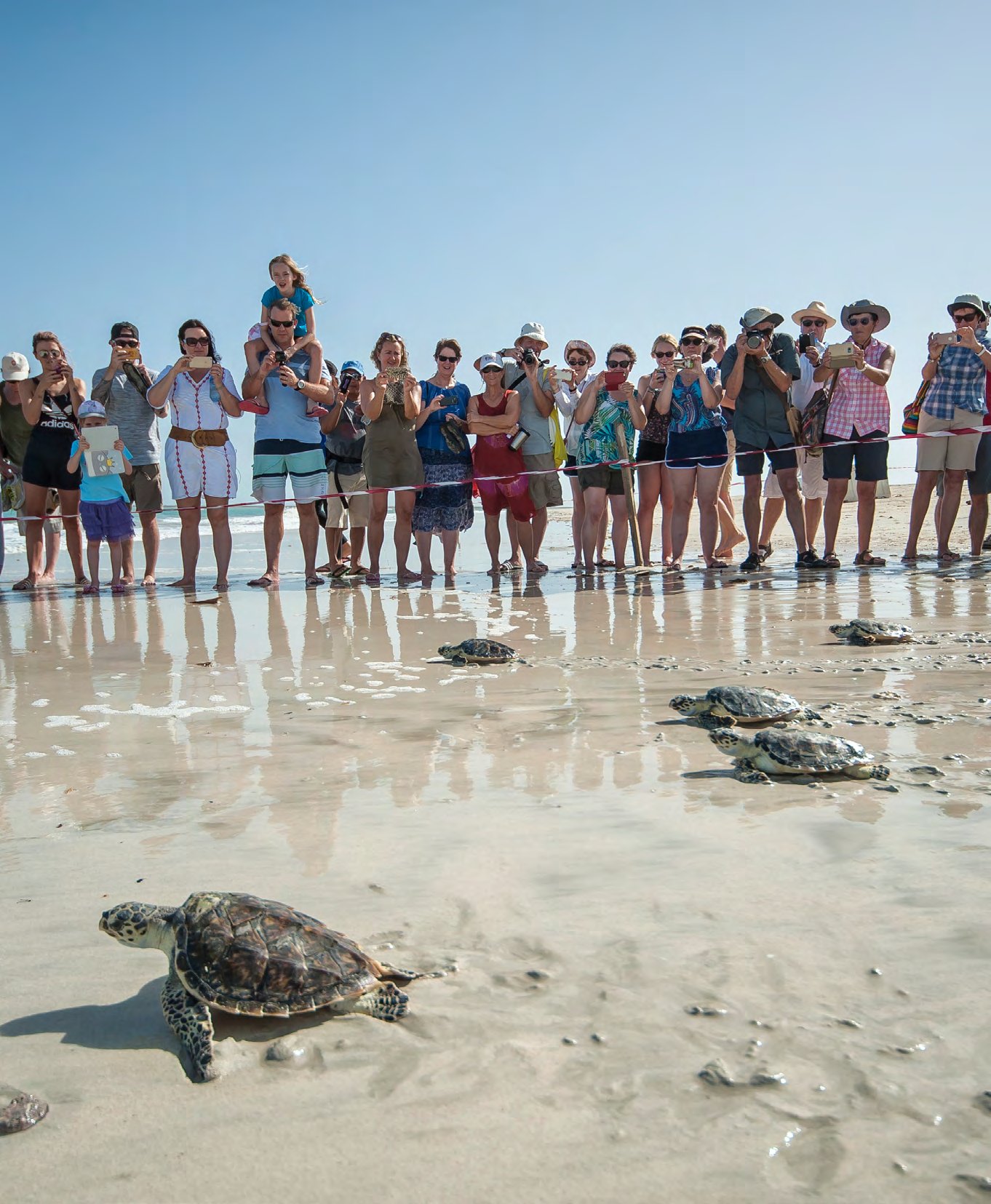
Rehabilitation and release
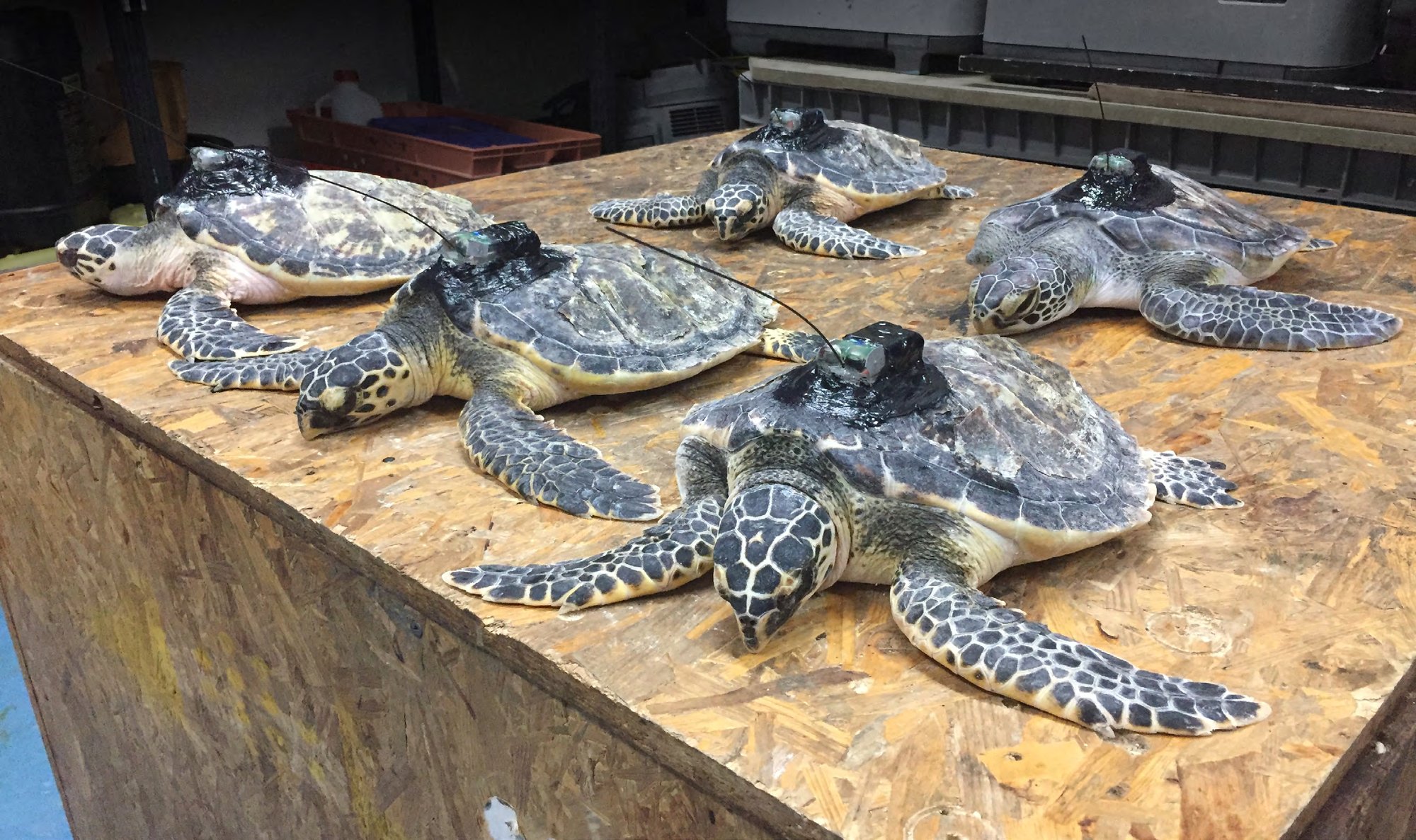
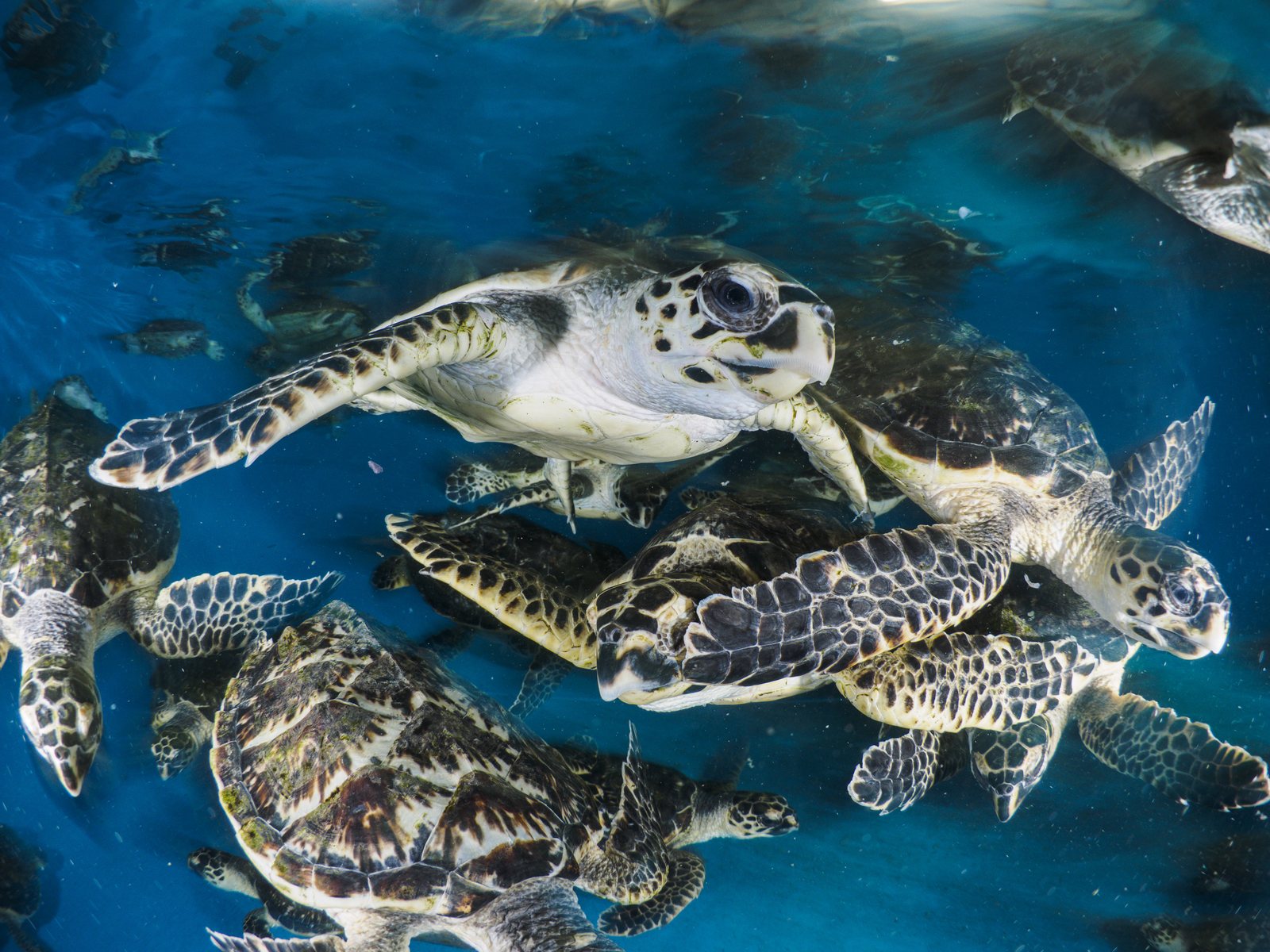
Turtles are admitted to the project for many reasons. Of the eight green turtles in the first study, four had been weakened by “cold stunning” when the shallow Gulf cooled suddenly in winter, three had severe injuries probably caused by boat propellers, deliberate harm, or entanglement, and one had a blocked gut. Treatment ranged from rehydration and assisted feeding to antibiotics, antiparasitic medicine, and surgery. Before release, each turtle spent at least two months in a sea-fed outdoor enclosure and had to demonstrate that it could feed and swim well, pass a health check, and have normal blood results. Recovery could be lengthy: the green turtles spent between 96 and 1,353 days in care. A satellite tag was then glued to each turtle’s shell before release.
Green turtles on their feeding grounds
Seven of the eight green turtles survived after release. Most of them (63%) settled into shallow coastal feeding areas between Dubai and Abu Dhabi, on the same stretch of coast where they had washed ashore, all within known seagrass areas. The seagrass beds off Ghantoot were the most heavily used, with the core areas of three turtles overlapping there. One adult female, Jade, crossed the Gulf in a straight line to Qeshm Island in Iran in 11 days, remained there for 14 days, then returned to her home area near Ghantoot. The timing is consistent with a nesting migration, though her tag could not confirm it. In summer, these turtles remained in coastal water warmer than 36 °C (97 °F) rather than moving to deeper, cooler water, which suggests that green turtles can tolerate very warm seas.
Dibba’s 8,283 km (5,147-mile) journey
Dibba, an adult female green turtle, was found on the UAE’s east coast in August 2006 with a massive head injury, believed to have been inflicted deliberately, and was close to death. After 546 days in care, she was released near where she was found, in February 2008. Over the next 259 days she swam 8,283 km (5,147 miles): through Omani waters, across the Arabian Sea to the Maldives, on to Sri Lanka, and into the Bay of Bengal, where her last signal came from near the Andaman and Nicobar Islands. It was the longest track yet published for a green turtle, more than twice the longest journey previously reported for a green turtle leaving its nesting beach, and she was still traveling when her tag stopped transmitting. A young turtle, Maju, crossed to Iran, passed through the Strait of Hormuz, and its last received signal came from Pakistani waters. Altogether, four of the eight green turtles crossed international borders.
Twenty-six turtles, four species
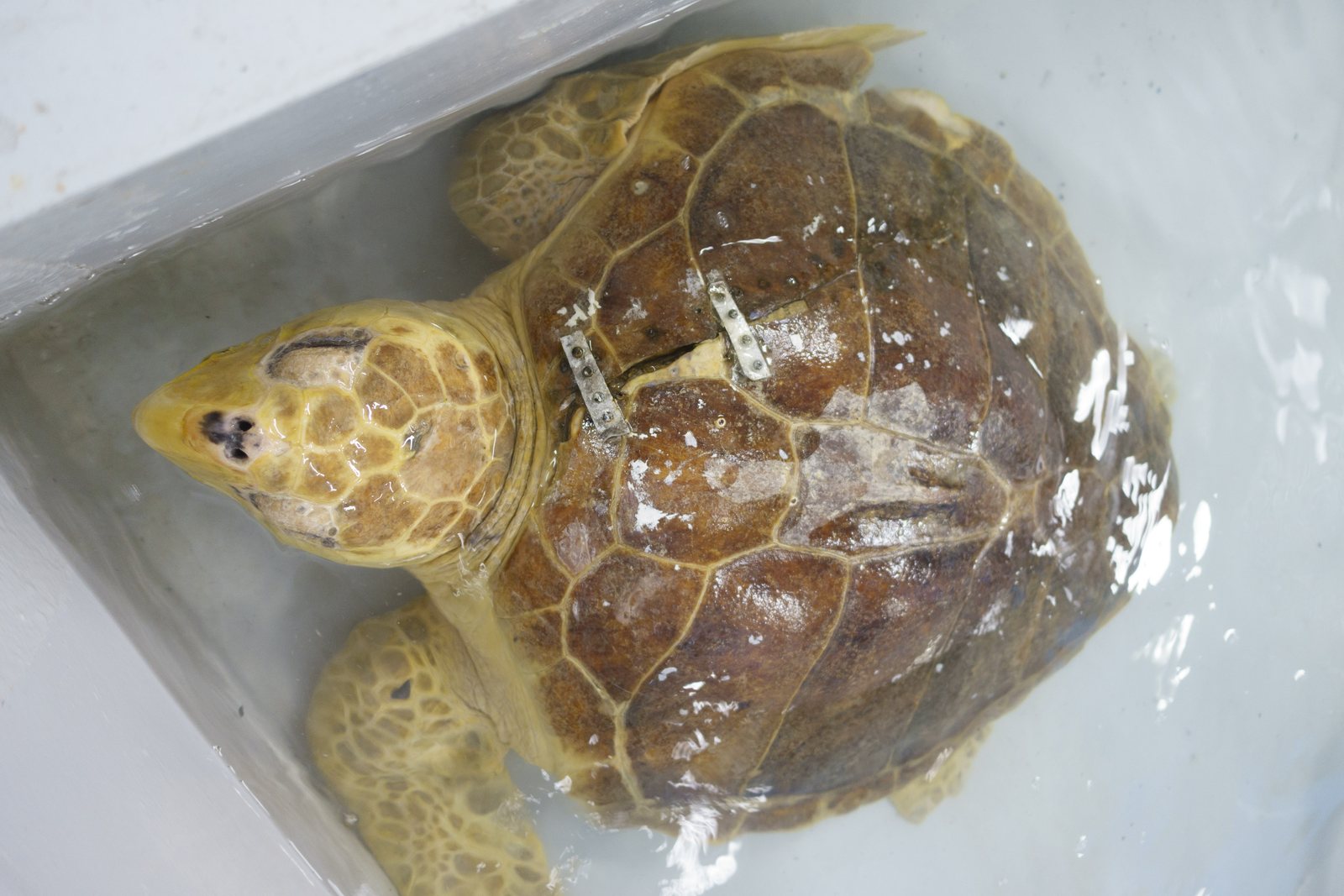
The second study tracked 12 hawksbill, 11 loggerhead (Caretta caretta), two green, and one olive ridley turtle (Lepidochelys olivacea) for between 8 and 387 days. Six had lost a front flipper, through injury or because a vet had to amputate it after the turtle became entangled in discarded waste. Half of the turtles crossed at least one international border. Loggerheads ranged widely: 80% crossed a border, one reached the waters of Iraq, two left the Gulf through the Strait of Hormuz, and one track extended to 5,060 km (3,144 miles). These were the first loggerheads tracked in the region. Hawksbills, in contrast, remained closer to home, with 66% staying in UAE waters and their main core area on the coast between Dubai and Abu Dhabi, where up to four tracked hawksbills used the same sites. Turtles missing a flipper moved in the same way as others of their species, and the amputee hawksbills traveled faster.
Threats after release
Twenty-one of the 26 turtles survived for as long as they were tracked. The five that died were most likely killed by people, not by their earlier injuries or illness. Three were hit by boats within four days of release: an olive ridley, and two amputees, a green turtle and a hawksbill, that were released on the same day in November 2017, swam into the Dubai Canal, and were struck by separate boats. A loggerhead died after about 192 days near the Shatt Al Arab, and an amputee hawksbill died after 27 days, entangled in a fishing net off Musandam in Oman. In the first study, one of the green turtles, Bahar, was killed after release by what was thought to be a speargun wound. All sea turtles are protected under UAE law; boat traffic and fishing, however, remain the main threats to turtles in the Gulf.
Implications for rehabilitation
Turtles that had spent years in care, or lost a flipper, resumed normal lives in the wild, feeding on known grounds or undertaking long migrations. The results therefore support releasing turtles that have recovered from major injuries, including amputations. Rehabilitation also gives scientists a rare opportunity to track young turtles and sub-adults, since most tracking studies follow nesting females, which are easy to reach on the beach. The tracks suggest that the coast between Dubai and Abu Dhabi, where coral reefs and seagrass beds feed both hawksbill and green turtles, is an ideal place for targeted protection. Because so many turtles crossed borders, their protection also requires cooperation among countries across the region. A next step would be to determine whether released adults return to their nesting beaches.
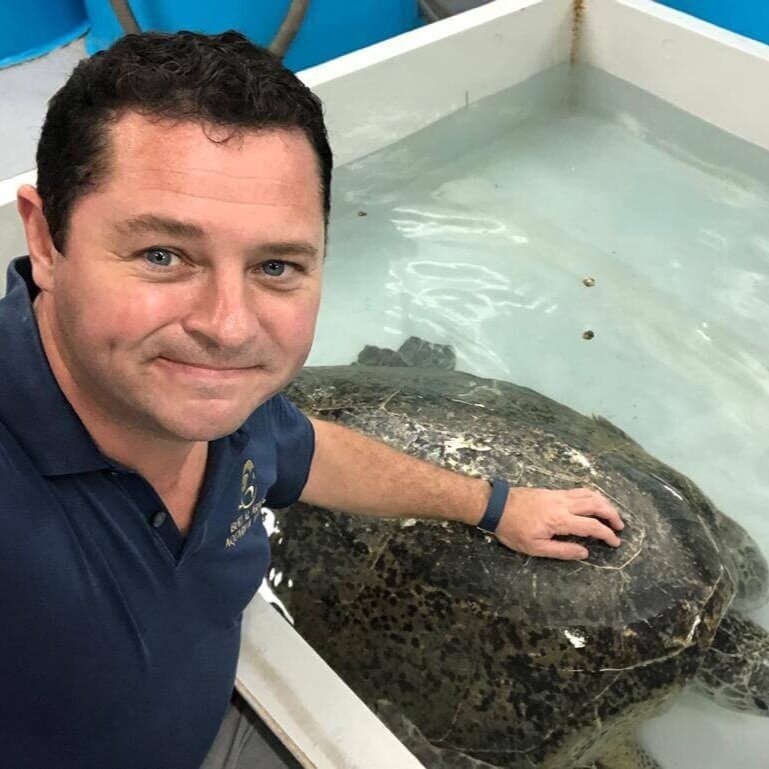 Dr. David Robinson
 Dr. Chris Rohner
 Dr. Simon Pierce
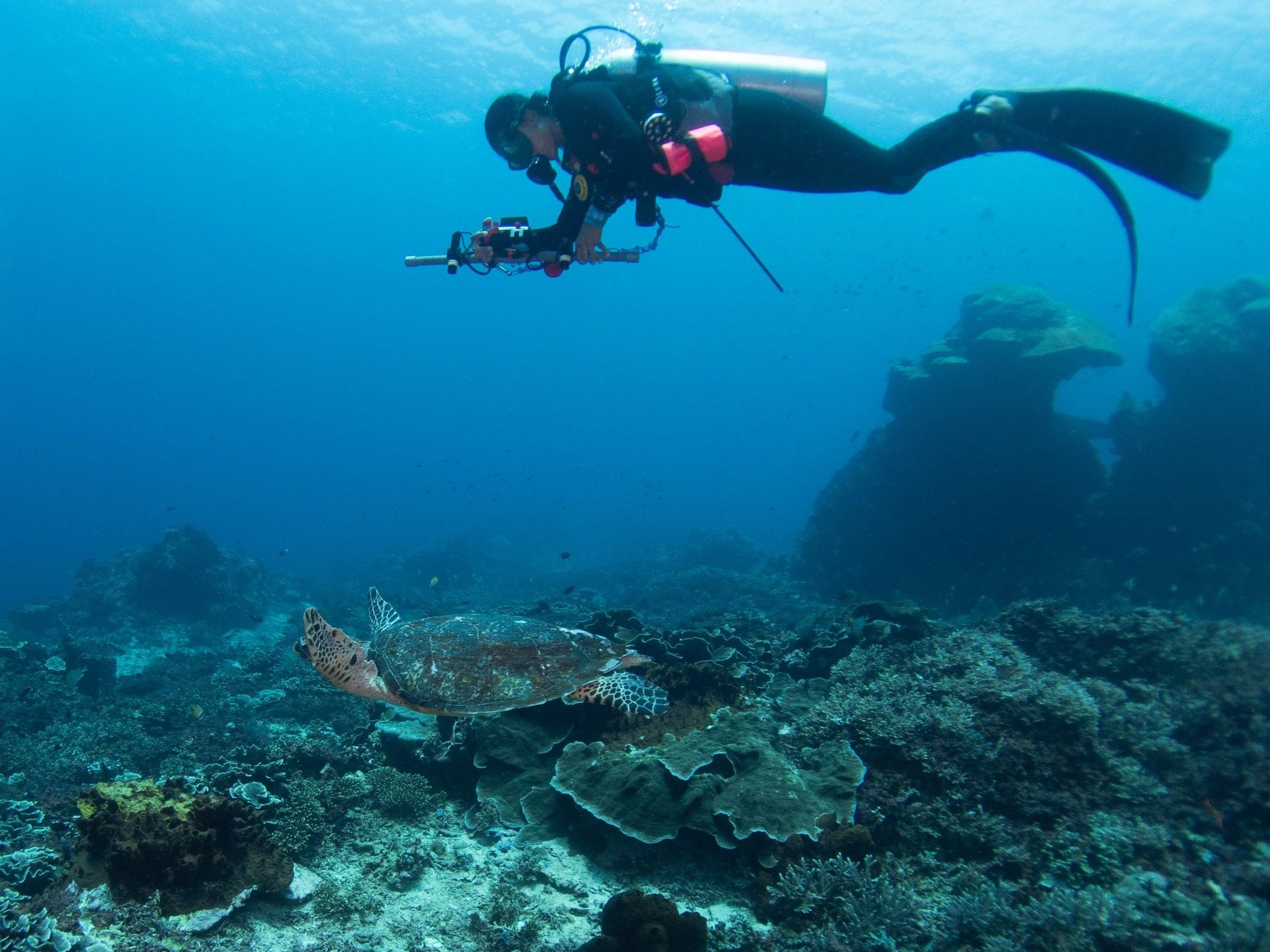 Indonesia Sea Turtle Project
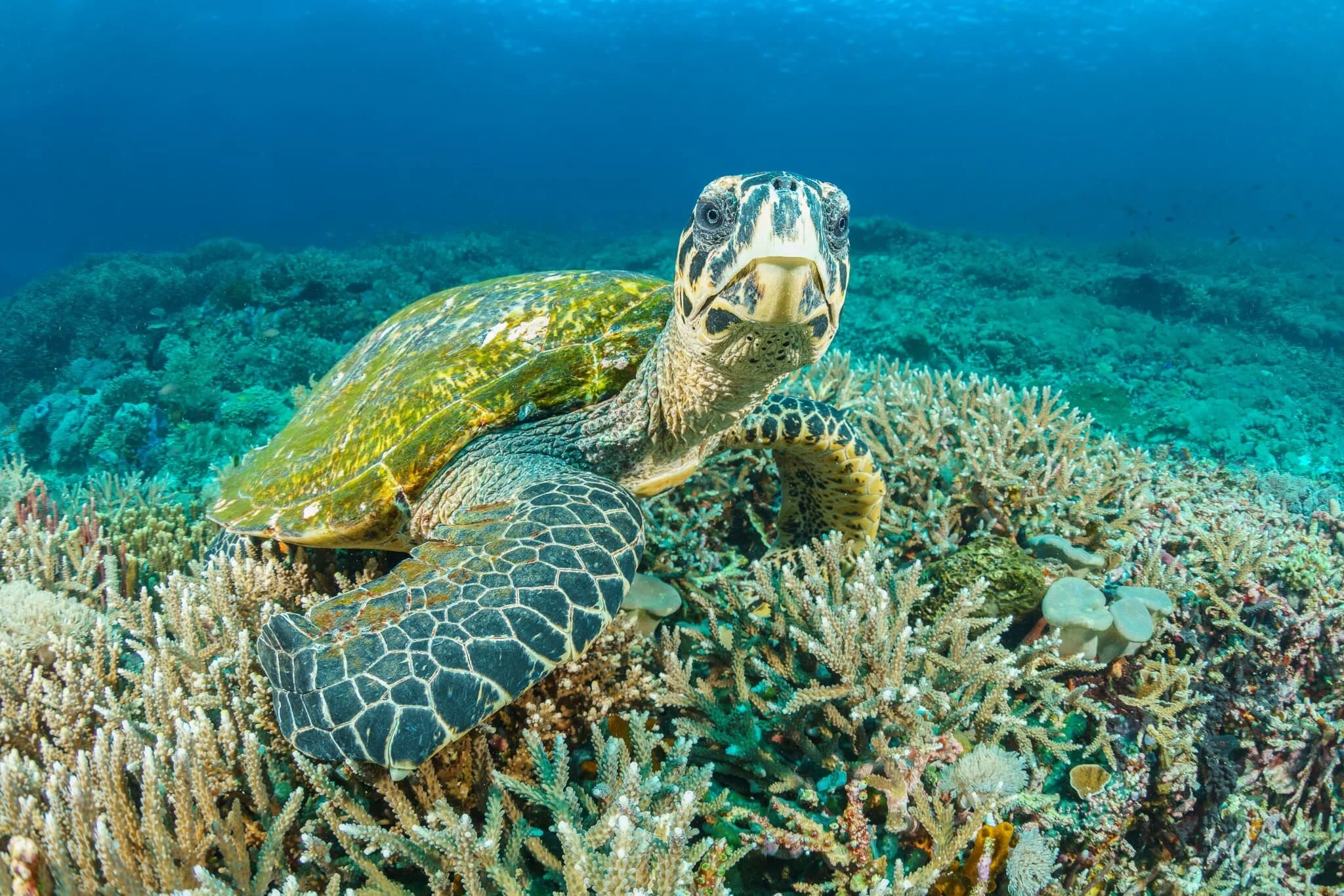 Mozambique Sea Turtle Project