
Philippines · Since 2015
Tubbataha Shark Monitoring
Diver surveys and baited cameras recorded about seven sharks and rays per hectare (about three per acre) at Tubbataha, three times the density of reef sharks in the Great Barrier Reef's no-take zones.
Led by LAMAVE, with MMF
Tubbataha Reefs Natural Park, isolated far out in the Sulu Sea, has been closed to all fishing since 1988. Working with LAMAVE (Large Marine Vertebrates Research Institute Philippines) and the Tubbataha Management Office, we helped conduct the park’s first comprehensive survey of its sharks and rays.
The park lies about 170 km (110 miles) southeast of Puerto Princesa, Palawan, and encompasses the North and South Atolls and Jessie Beazley Reef. The no-take park covers about 1,000 km² (390 square miles) and became a UNESCO World Heritage Site in 1993. The survey was led by Ryan Murray of LAMAVE, who lived for months at the park’s ranger station, with the Tubbataha Management Office, including protected area superintendent Angelique Songco and Segundo Conales Jr. Dr. Simon Pierce helped collect the field data and co-authored the study, published in the Journal of Asia-Pacific Biodiversity in 2018. The data were also contributed to the Global FinPrint project, which supported the work.
What the project has done
- Helped LAMAVE survey the park’s sharks and rays in 2015 and 2016 with 20 diver surveys and 113 drops of baited remote underwater video cameras.
- The survey recorded 8 species on the diver surveys and 14 on the cameras, establishing a baseline for 15 species of sharks and rays in the park.
- Co-authored the park’s first comprehensive assessment of its sharks and rays, published in 2018.
Support our shark research
This survey is complete. Your gift supports our current research on sharks and rays and the threats they face.
Survey findings
Diver surveys and baited cameras
Divers counted sharks and rays on 10 surveys in May 2015 and 10 in June 2016, recording 309 encounters with 8 species. Baited cameras, deployed between March and June in both years, recorded 14 species at an average of 2.09 sharks and rays per hour, and at least one shark or ray appeared in 92% of the 113 drops. Numbers did not differ between the two years.
Reef shark density
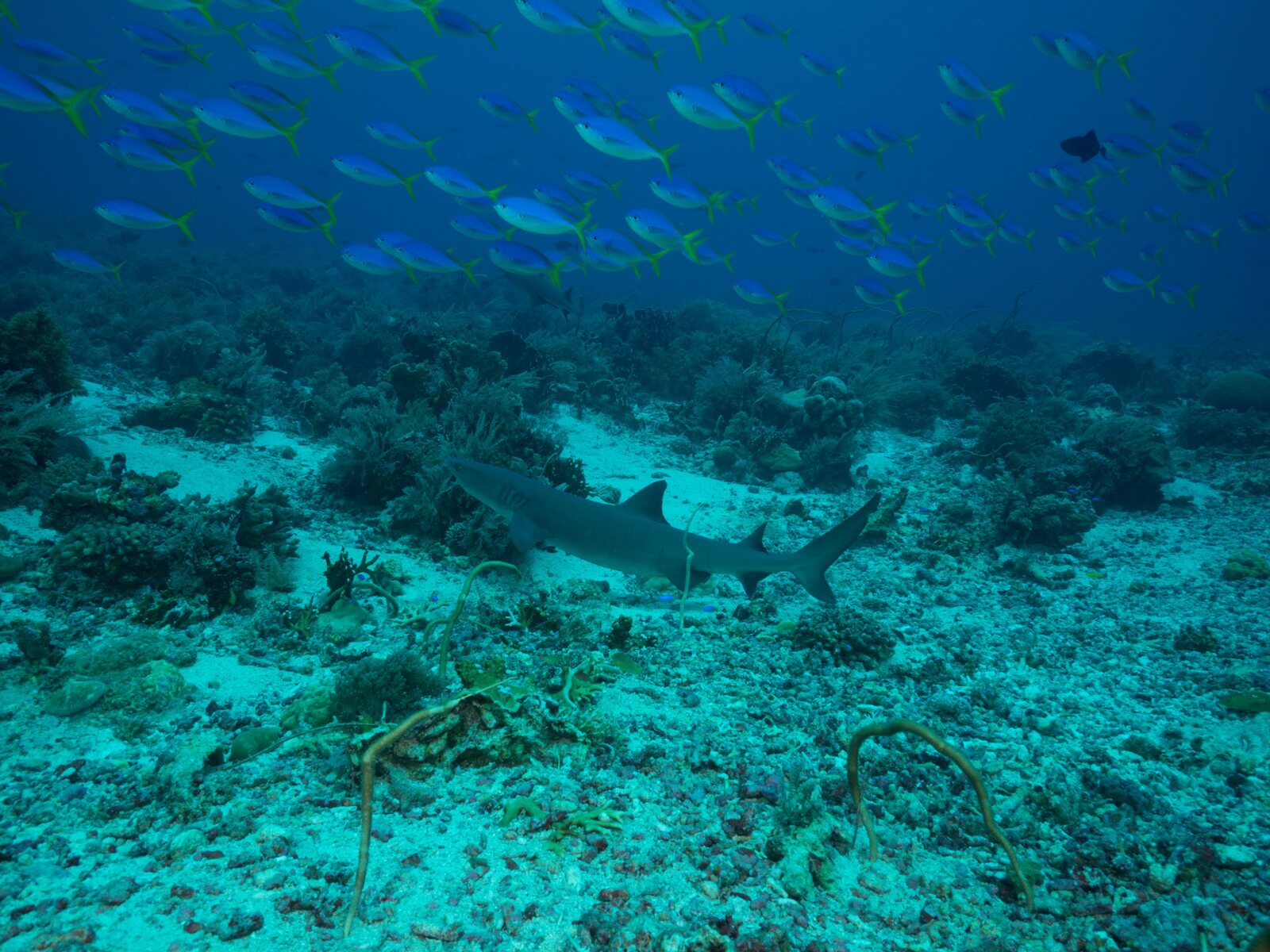
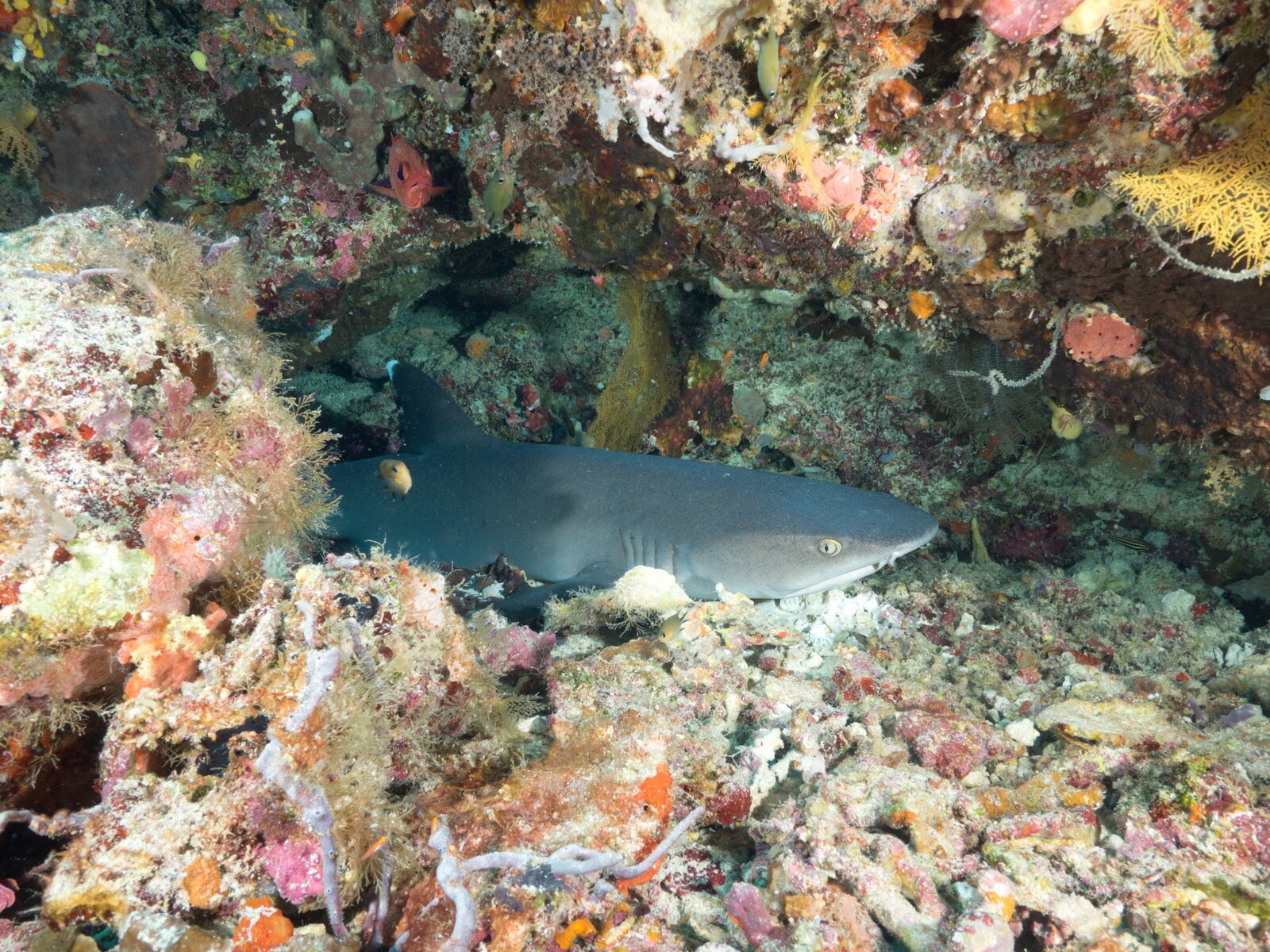
Reef sharks accounted for 95.8% of the divers’ encounters. Overall density was about 7 sharks and rays per hectare (about 3 per acre), including 3.72 whitetip reef sharks (Triaenodon obesus) and 3.16 gray reef sharks (Carcharhinus amblyrhynchos) per hectare (1.51 and 1.28 per acre, respectively). That is three times the density of reef sharks in the Great Barrier Reef’s no-take zones and about twice that at the Cocos (Keeling) Islands. In the camera surveys, reef sharks appeared about three and seven times as often as in two no-take zones in Raja Ampat, Indonesia, and about 2.5 times as often as in Fiji’s Namena Reserve.
Larger species
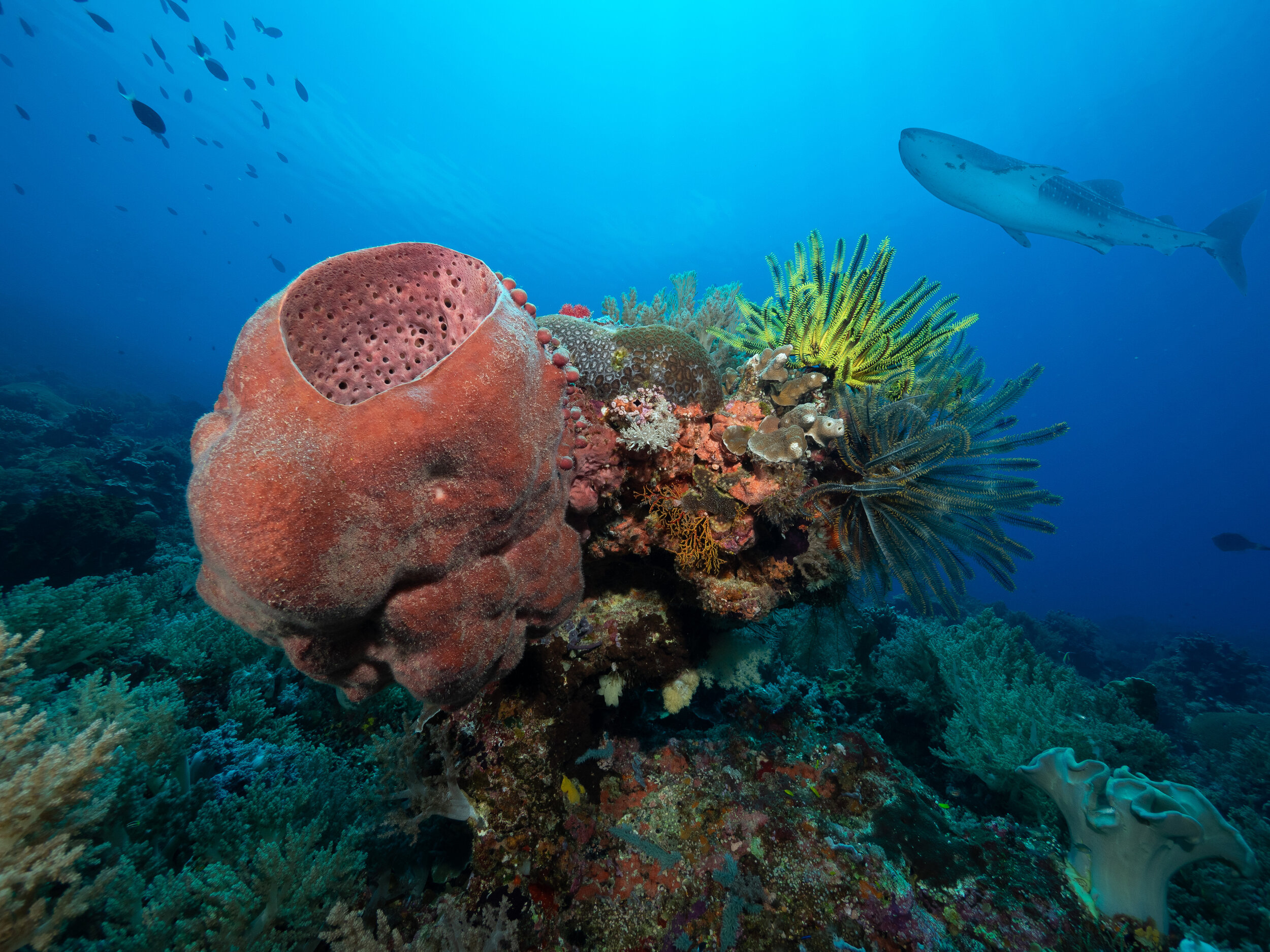
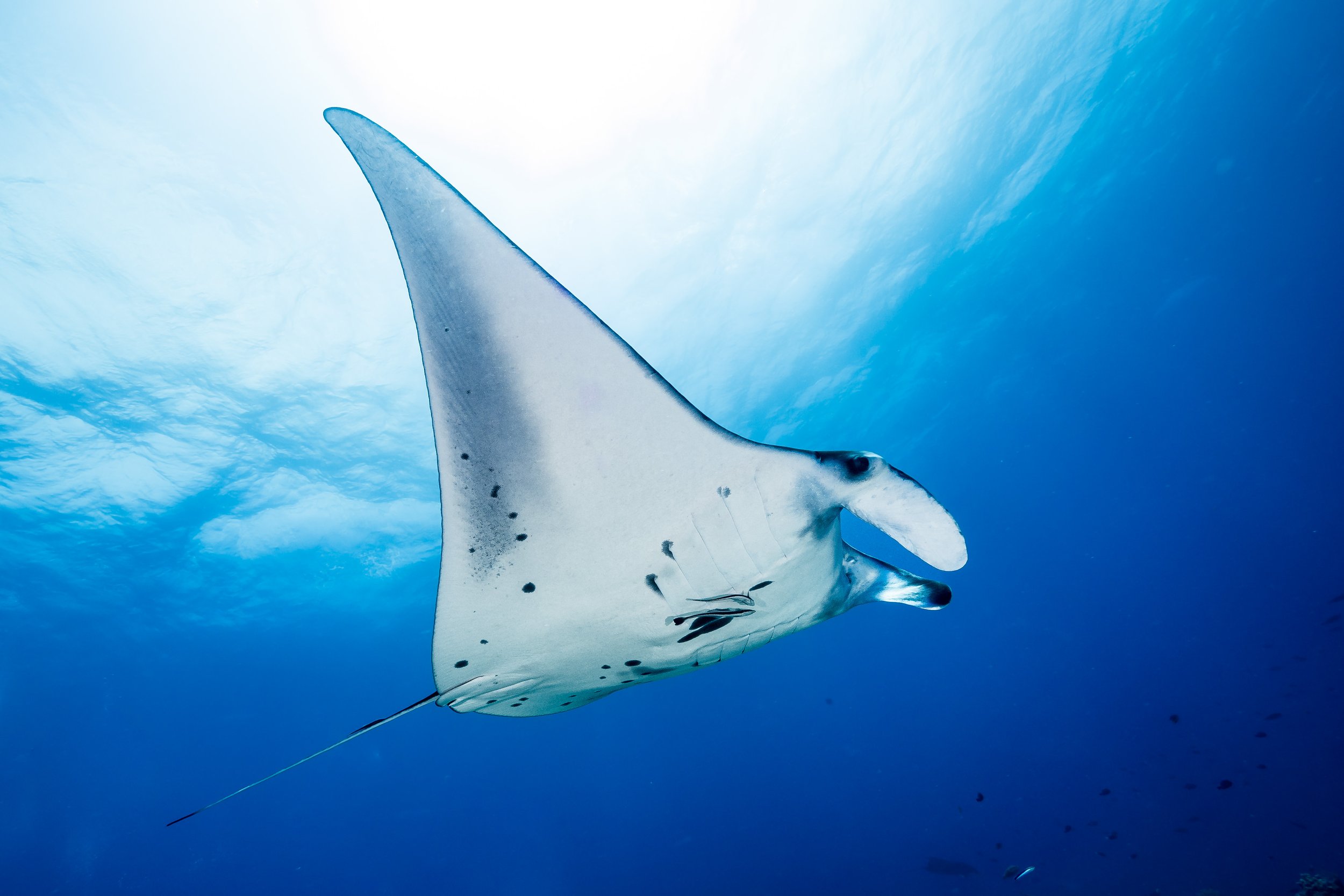
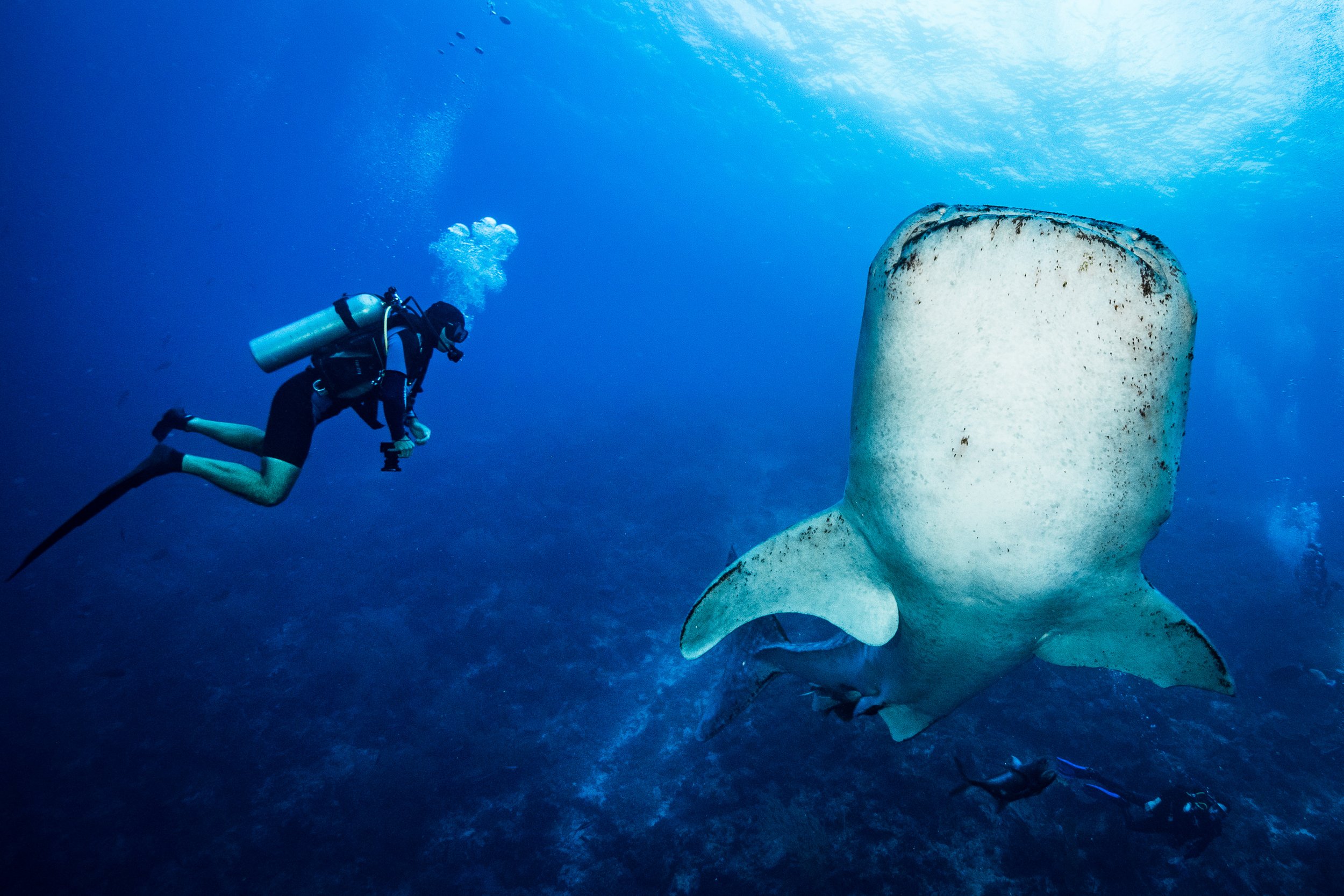
The cameras also recorded larger species: tiger sharks, scalloped hammerheads, thresher sharks, silky sharks, silvertip sharks, whale sharks, and manta rays. Our work with LAMAVE has also tracked young whale sharks tagged at Tubbataha, and 32 reef manta rays identified at Tubbataha and Cagayancillo were included in a national manta ray study.
Factors behind the high shark density
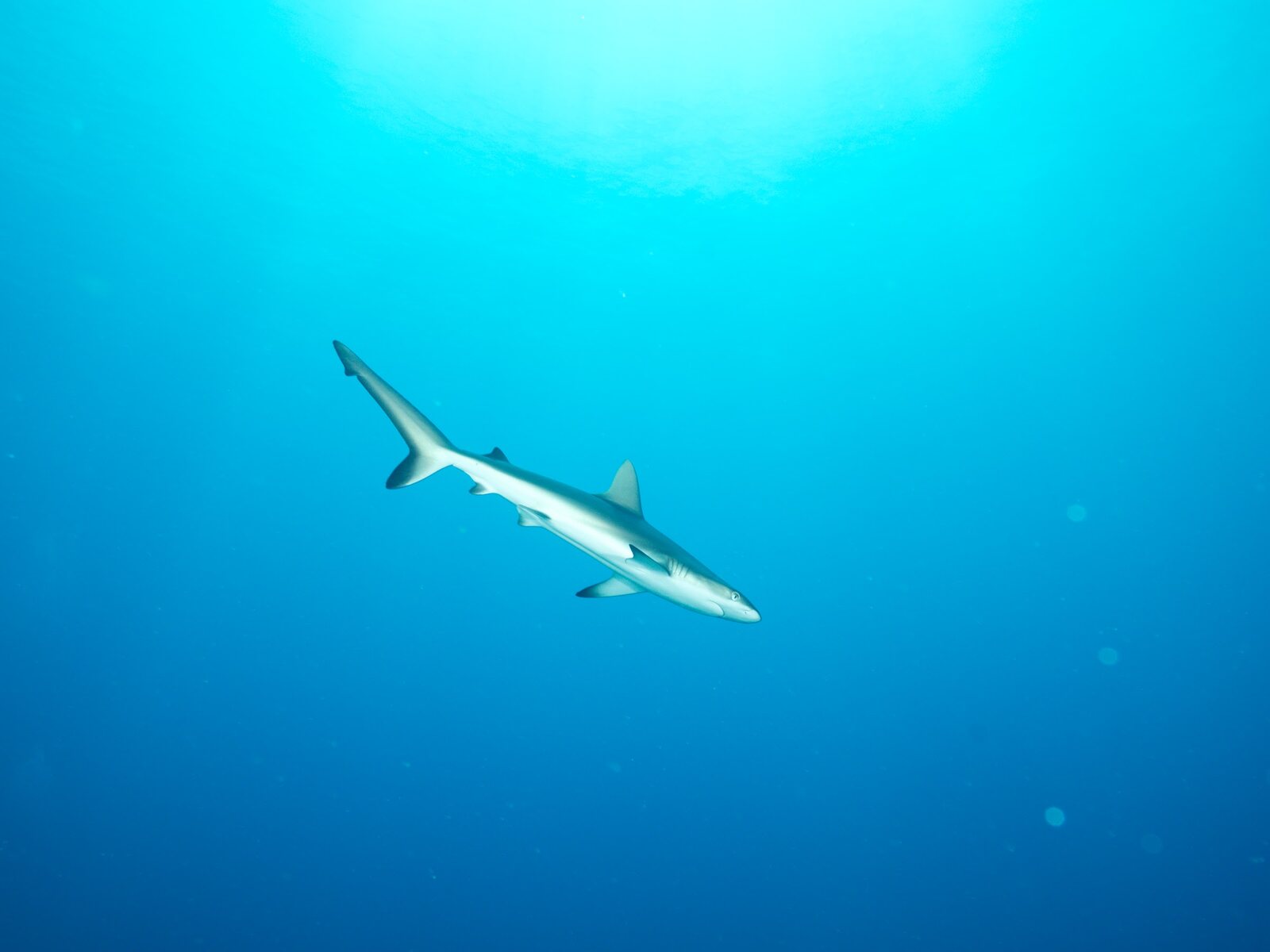
The study points to four factors: the park’s large size; strict enforcement, with ranger patrols and radar; its isolation; and its age. Reef sharks take 7 to 10 years to mature, so protection since 1988 has covered at least two generations. The park’s rangers are drawn from the Tubbataha Management Office, the Philippine Coast Guard, the Philippine Navy, and the municipality of Cagayancillo.
Study recommendations
- Agencies creating large no-take marine protected areas should adopt management and zoning like Tubbataha’s, and use its shark populations as a baseline to measure recovery elsewhere.
- Continue diver and camera surveys in the park to monitor long-term trends.
- Use tracking tags to test how well the park’s boundaries protect its sharks.
 Dr. Simon Pierce
 Philippines Manta and Devil Rays
 Philippines Whale Shark Project