
Philippines · Global Manta Ray Program
Philippines Manta and Devil Rays
Four species of manta and devil rays landed together in the Bohol Sea fed almost entirely on krill, and reproduce so slowly that no level of fishing appeared sustainable.
Led by LAMAVE, with MMF
Four species of manta and devil rays were once landed together at Jagna, on the island of Bohol. Working with LAMAVE (Large Marine Vertebrates Research Institute Philippines), we studied their diet and reproductive rates, and helped map the distribution of manta rays across the country.
The Bohol Sea is the main fishing ground for manta and devil rays in the Philippines, and Bunga Mar, in the town of Jagna, was its largest landing port. Fishers set drift gillnets at night, 5 to 60 km (3 to 37 miles) offshore, over water more than 1,000 m (3,300 ft) deep. Between 2012 and 2016, LAMAVE researchers led by Joshua Rambahiniarison, together with Dr. Chris Rohner, collected samples from rays landed at Bunga Mar, with the consent of the Local Government Unit of Jagna, the fishers and buyers, and with the regional offices of the Bureau of Fisheries and Aquatic Resources and the Department of Environment and Natural Resources. The targeted fishery was banned in April 2017, following the listing of manta and devil rays under CITES.
What the project has done
- Identified the diet of four species of manta and devil rays from the stomach contents of rays landed at Jagna, in a study led by Dr. Chris Rohner and published in Royal Society Open Science in 2017.
- Co-authored a DNA study of the rays’ diet (Ecology and Evolution, 2019) and a stable-isotope study of their long-term diet (Marine Ecology Progress Series, 2017).
- Co-authored a study of the growth and reproduction of four species in the Bohol Sea, from 1,509 rays, published in Frontiers in Marine Science in 2018.
- Co-authored a national study of manta ray sightings across the Philippines from 2004 to 2020, published in the Journal of Fish Biology in 2022.
Support our manta and devil ray research
This research is complete. Your gift supports our current research on manta and devil rays and the threats they face.
Research findings
Four species in one catch
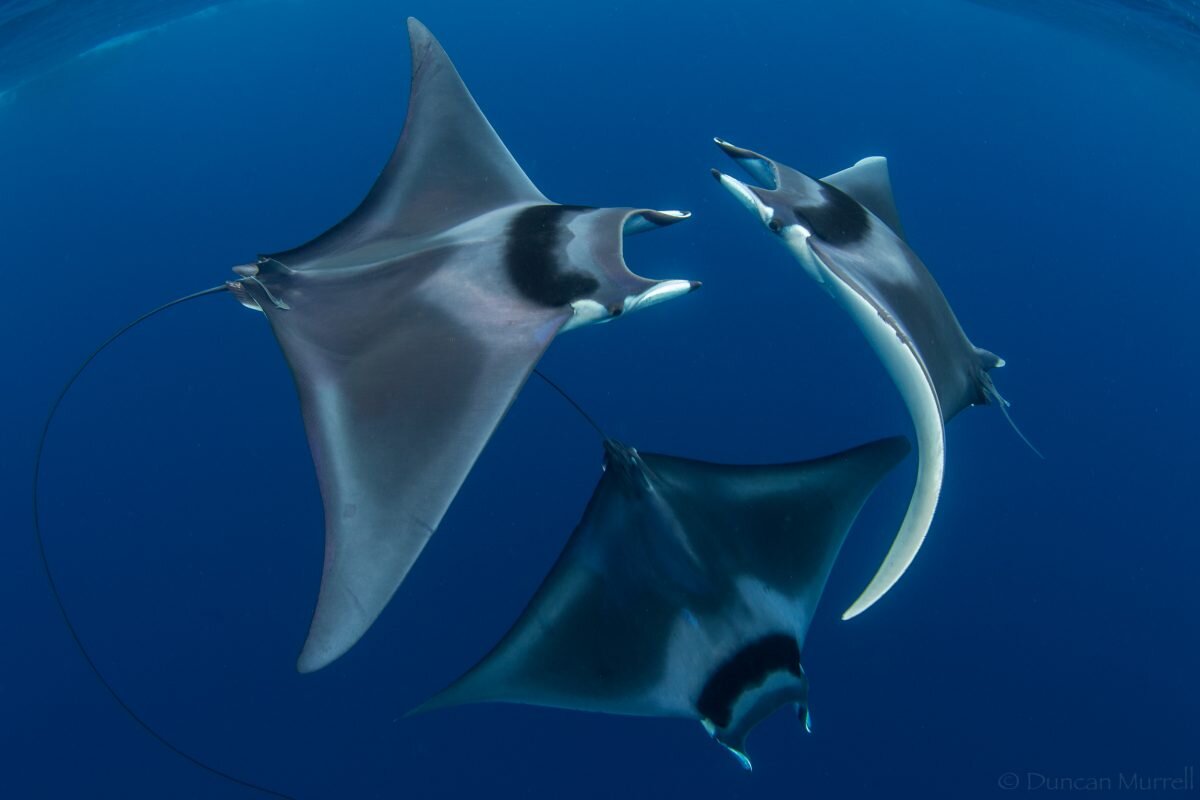
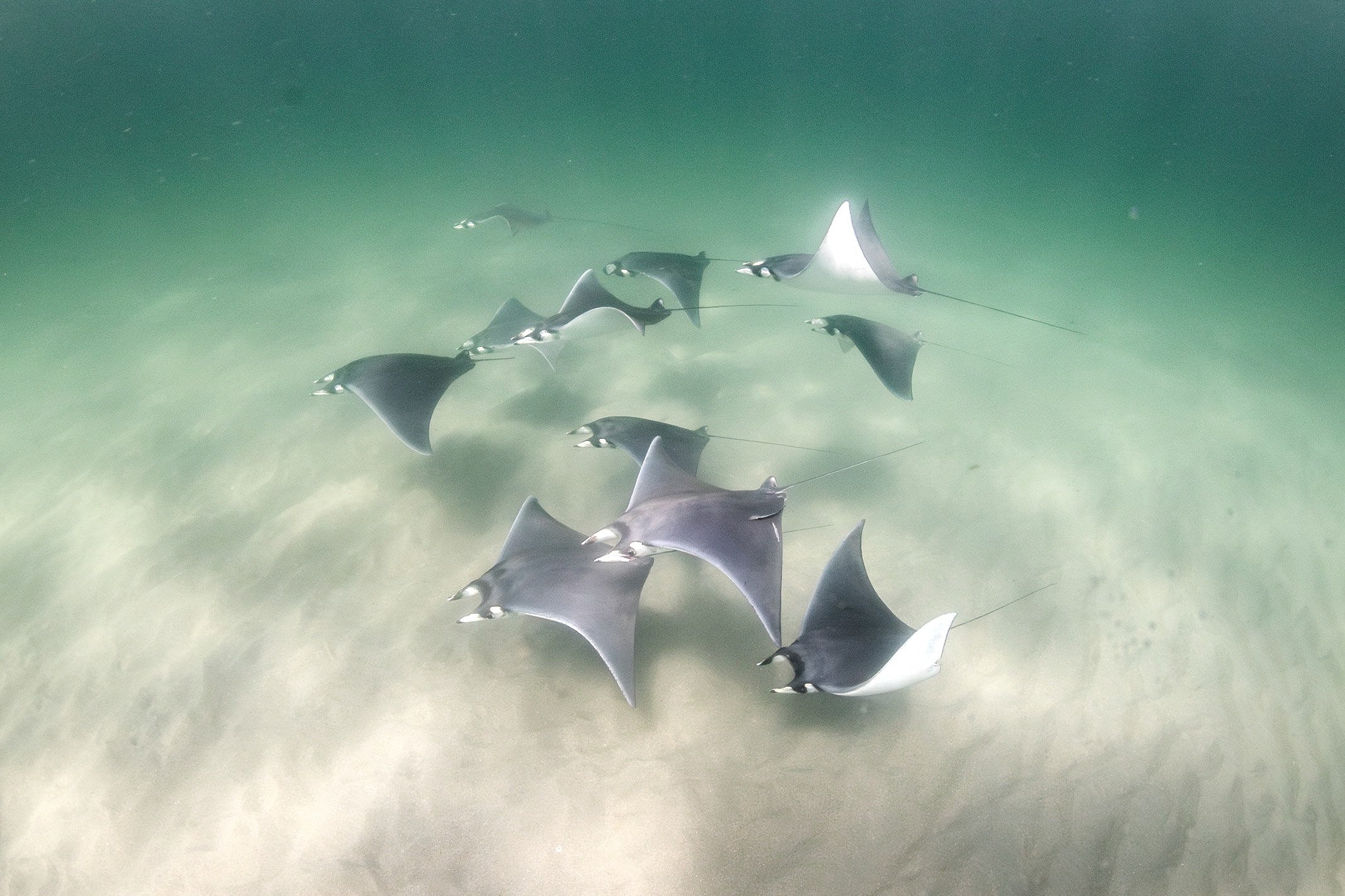
The rays landed at Jagna were oceanic manta rays (Mobula birostris), sicklefin devil rays (M. tarapacana), spinetail devil rays (M. mobular), and bentfin devil rays (M. thurstoni). Between February 2015 and May 2016, the team examined 1,509 of the more than 4,000 rays landed over two fishing seasons: 817 bentfin devil rays, 450 spinetail devil rays, 173 oceanic manta rays, and 69 sicklefin devil rays. (Photo: Duncan Murrell.)
A diet of krill
A single species of krill, Euphausia diomedeae, was present in 81 of 89 stomachs and accounted for 93% of identifiable prey. Every spinetail and bentfin devil ray stomach contained krill; oceanic manta rays had also eaten lanternfishes and copepods, and sicklefin devil rays squid and fish. The rays fed at night near the surface, on krill that spends the day at depths of 140 to 280 m (460 to 920 ft), and the November to May fishing season coincides with a seasonal upwelling in the Bohol Sea. One oceanic manta ray’s stomach held an estimated 631,167 kcal of krill.
The four species differed little in diet, and stable isotopes from 192 Philippine muscle samples confirmed that their diets also overlap over the long term. Because the rays share feeding grounds that overlap with fishing, identifying those grounds could help guide where fishing takes place.
Evidence from DNA
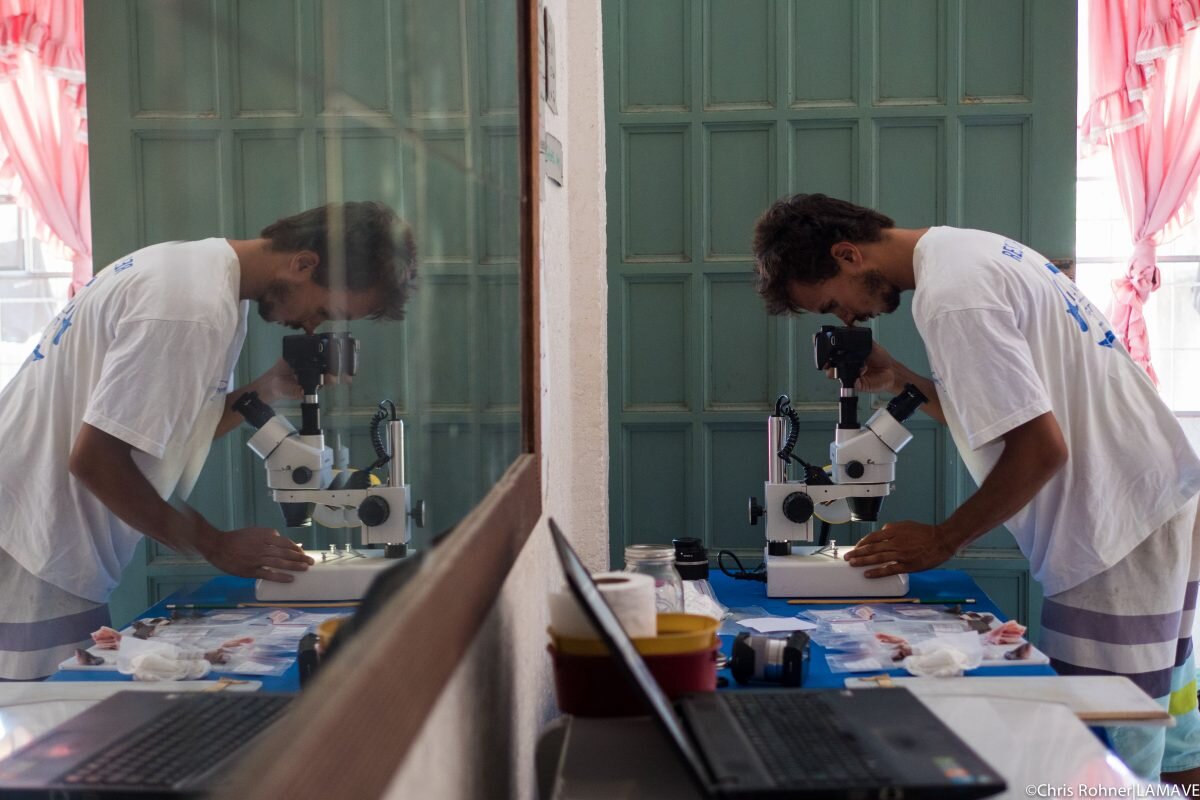
DNA analysis of 101 stomachs identified 44 prey taxa (taxonomic groups), including a surprising variety of bony fishes. Krill, however, accounted for 95% of the 1,335,305 prey DNA sequences. The rays depend on it almost entirely.
Growth and reproduction
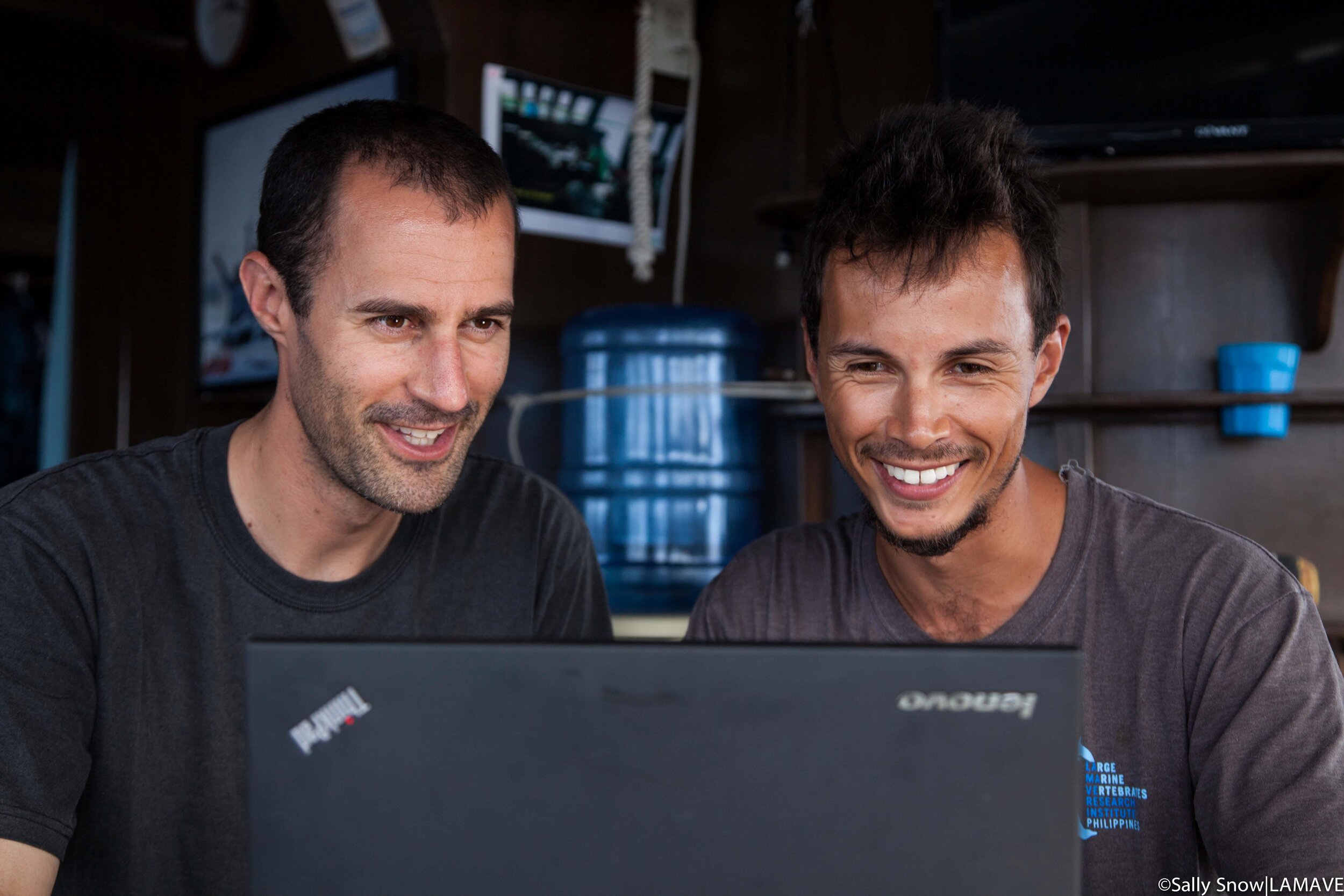
Females of all four species mature at a larger size than males and become pregnant later still. Females matured at a disc width of 163.6 cm (64.4 in) in bentfin devil rays, 217.8 cm (85.7 in) in spinetail devil rays, and 448 cm (14.7 ft) in oceanic manta rays. The study also recorded the largest known bentfin devil ray, at 197 cm (78 in), and showed that the Bohol Sea is a pupping and mating ground for at least three of the species. Estimated population growth rates were just 0.008 to 0.055 per year, so populations would take 15.8 to 86.6 years to double. The authors concluded that “the sustainability of any level of harvesting and fishery exploitation seems unrealistic and strongly discouraged”. (Photo: Sally Snow, LAMAVE.)
Manta rays across the Philippines
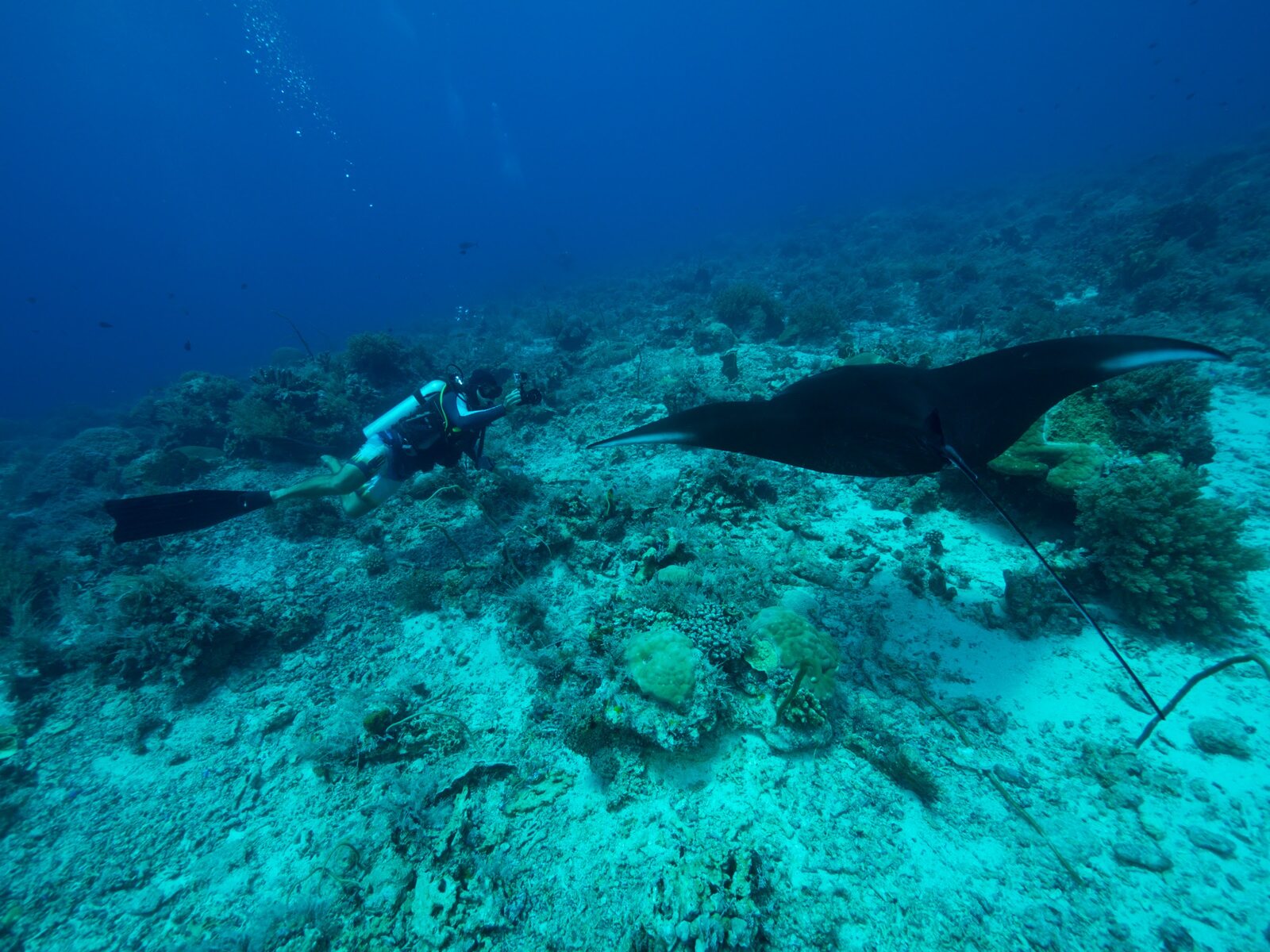
A national study, with Dr. Simon Pierce, Dr. Chris Rohner, and Anna Flam among its co-authors, compiled 2,659 manta ray sightings from 2004 to 2020. Photo-identification recorded 392 reef manta rays (Mobula alfredi) and 107 oceanic manta rays at 22 sites, with 89% of the individuals concentrated at four sites in Masbate and Palawan. Sightings of oceanic manta rays fell by 80% at Daanbantayan and San Jacinto. At Tubbataha and Cagayancillo, 309 sightings were of 32 individual reef manta rays.
Research recommendations
- Continue monitoring rays caught as bycatch in tuna fisheries and at other landing sites, and regulate non-selective gillnets.
- Because rays have continued to be caught as bycatch since the ban, protect the cleaning stations they visit, reduce bycatch, and develop a national recovery plan.
MMF Project Team
 Dr. Chris Rohner
 Dr. Simon Pierce
 Anna Flam
Collaborators and Partners

Recent research
- 2022Distribution of the reef manta ray Mobula alfredi and the oceanic manta ray Mobula birostris in the Philippines: A collaborative effort for conservation
- 2019DNA metabarcoding assays reveal a diverse prey assemblage for Mobula rays in the Bohol Sea, Philippines
- 2018Life history, growth, and reproductive biology of four mobulid species in the Bohol Sea, Philippines
- 2017Trophic overlap in mobulid rays: Insights from stable isotope analysis
- Mobulid rays feed on euphausiids in the Bohol Sea
 Philippines Whale Shark Project
 Tubbataha Shark Monitoring
 Madagascar Manta and Devil Rays
 Atlantic Mobula Rays