
Philippines · Global Whale Shark Program · Since 2014
Philippines Whale Shark Project
Satellite tags on 17 young whale sharks showed that they remained in Philippine waters yet spent most of their time far offshore, over deep water.
Led by LAMAVE, with MMF
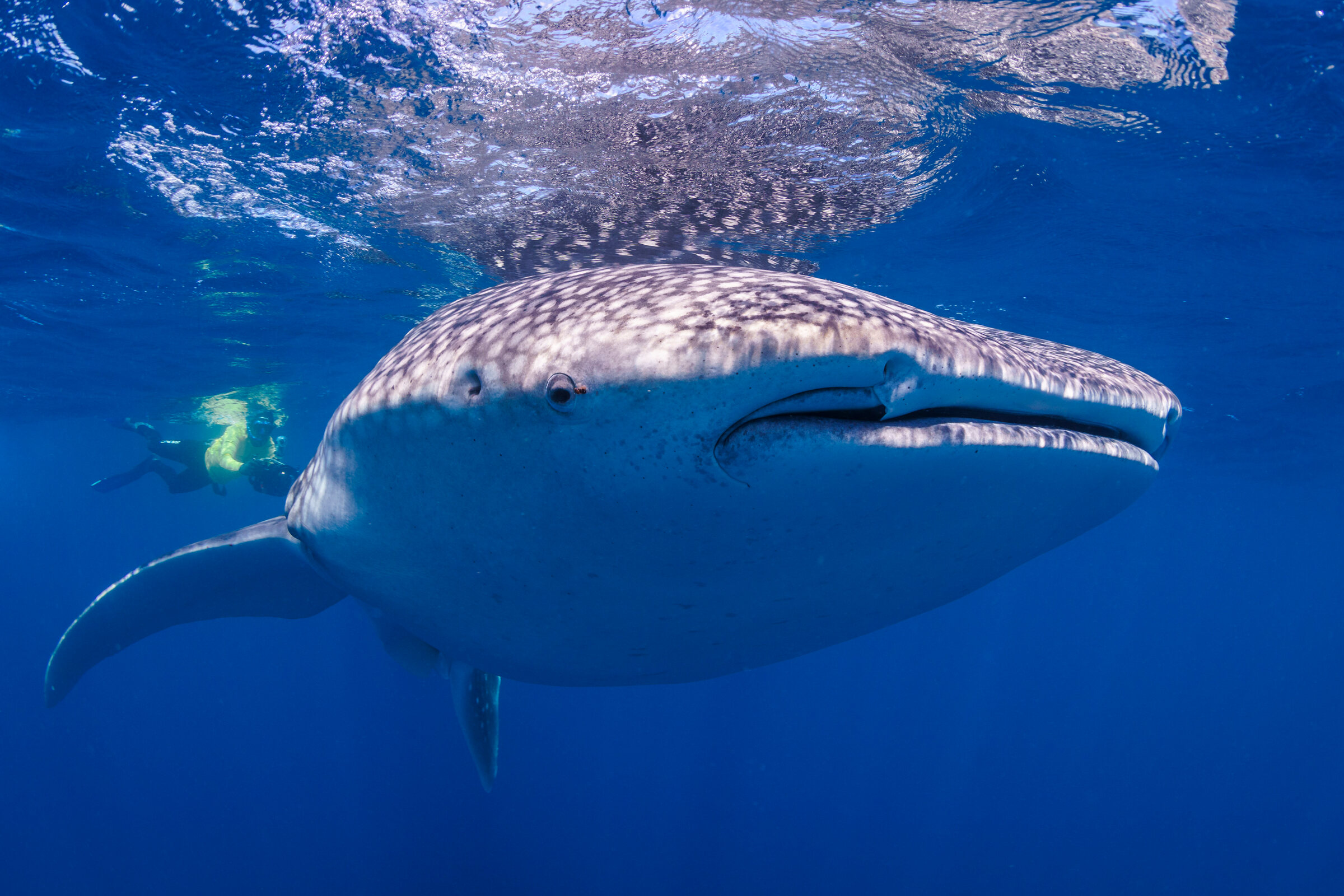
Young whale sharks (Rhincodon typus) aggregate at several sites around the Philippines. LAMAVE (Large Marine Vertebrates Research Institute Philippines) tracked them with satellite tags, in a study we co-authored, and found that they spend most of their time far from the coast.
MMF has worked with LAMAVE in the Philippines since 2014, beginning with whale sharks. More than 700 whale sharks were caught in the Sulu and Bohol Seas between 1991 and 1997, before the species was protected nationally in 1998. In 2015 and 2016, LAMAVE researchers led by Gonzalo Araujo tagged juvenile sharks at Panaon Island in Southern Leyte, off northern Mindanao, and in Tubbataha Reefs Natural Park in the Sulu Sea, together with the Tubbataha Management Office and in collaboration with the regional offices of the Department of Environment and Natural Resources, the Bureau of Fisheries and Aquatic Resources, and the Palawan Council for Sustainable Development. Dr. Chris Rohner and Dr. Simon Pierce co-authored the resulting study, published in PeerJ in 2018.
What the project has done
- Co-authored LAMAVE’s satellite-tracking study of 17 juvenile whale sharks tagged at Panaon Island, northern Mindanao and Tubbataha Reefs Natural Park, published in PeerJ in 2018.
- Co-authored the first direct evidence that whale sharks ingest microplastics, from scat collected at Oslob, Cebu, published in Microplastics and Nanoplastics in 2021.
- Co-authored a new method for estimating whale shark residency at a site, calibrated on eight years of near-daily photo-identification at Oslob and applied to 25 sites around the world, published in Frontiers in Marine Science in 2022.
Support our whale shark research
This study is complete. Your gift supports our current whale shark research in Mozambique, Tanzania, Madagascar, Oman, and the Galápagos.
Study findings
Movements across the Sulu and Bohol Seas
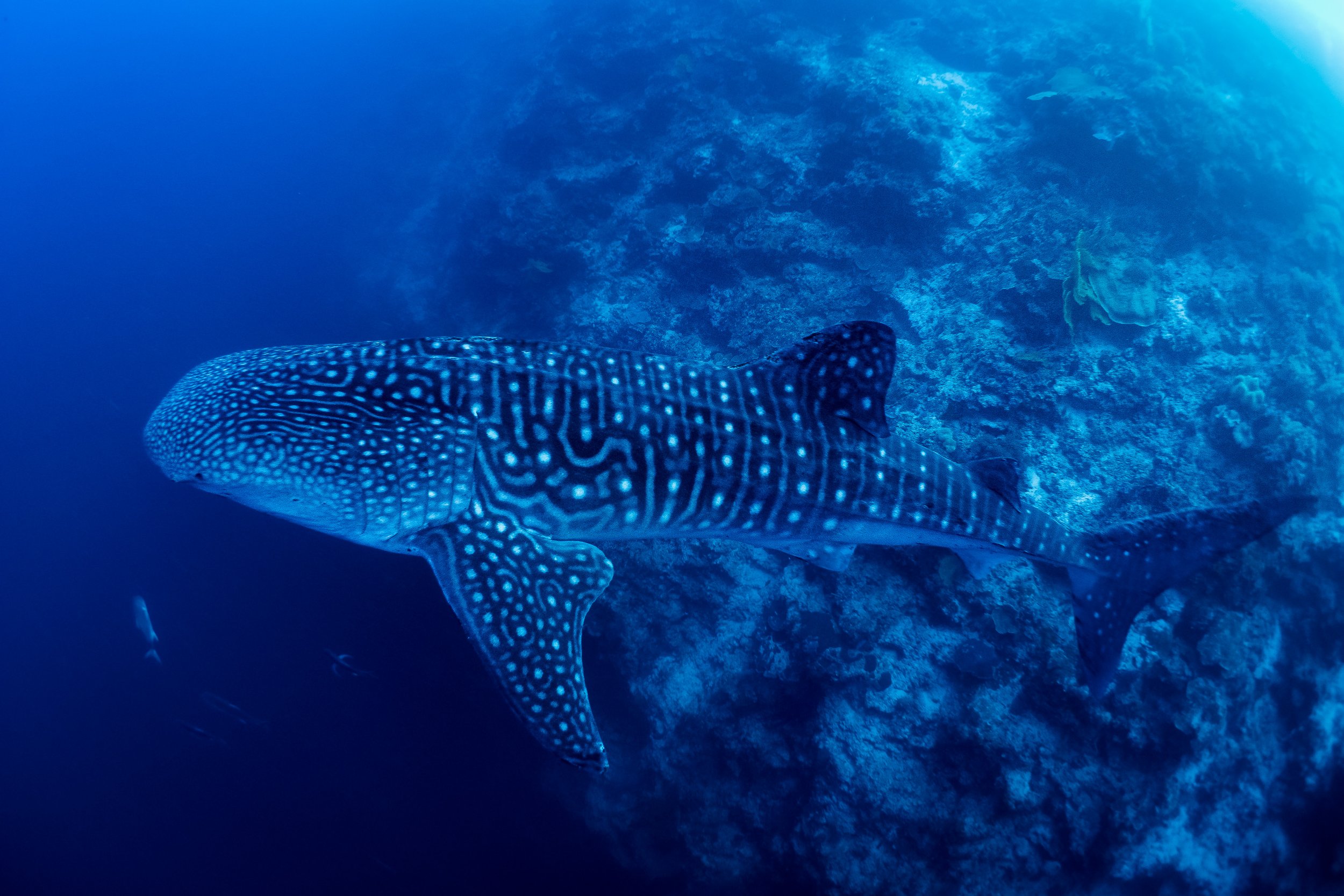
The tagged sharks were all juveniles, with an estimated average length of 5.6 m (18.4 ft) and a range of 4.5 to 7 m (15 to 23 ft), and 73% were male. Towed satellite tags tracked them for 6 to 126 days over distances of 86 to 2,580 km (53 to 1,600 miles), at an average of 15.5 km (9.6 miles) a day. Every shark remained in Philippine waters. Within those waters, three of the 12 sharks tagged in the Bohol Sea moved into the Sulu Sea, and two traveled east through the Surigao Strait to eastern Leyte. One shark tagged at Tubbataha swam to northern Palawan; its tag later detached in the Pacific Ocean off eastern Mindanao.
Offshore habitat and diving
Whale sharks in the Philippines are best known from coastal sites, yet the tagged sharks spent 74% of their time offshore, over water more than 200 m (660 ft) deep. Sharks tagged at Tubbataha likewise spent most of their time in the open Sulu Sea rather than inside the park, which suggests the reefs may be a waypoint on longer journeys. The sharks spent most of their time (74.2%) in water of 25 to 30 °C (77 to 86 °F), and their dives into cold water below 20 °C (68 °F) took place mainly at night, the reverse of the pattern seen in Mozambique.
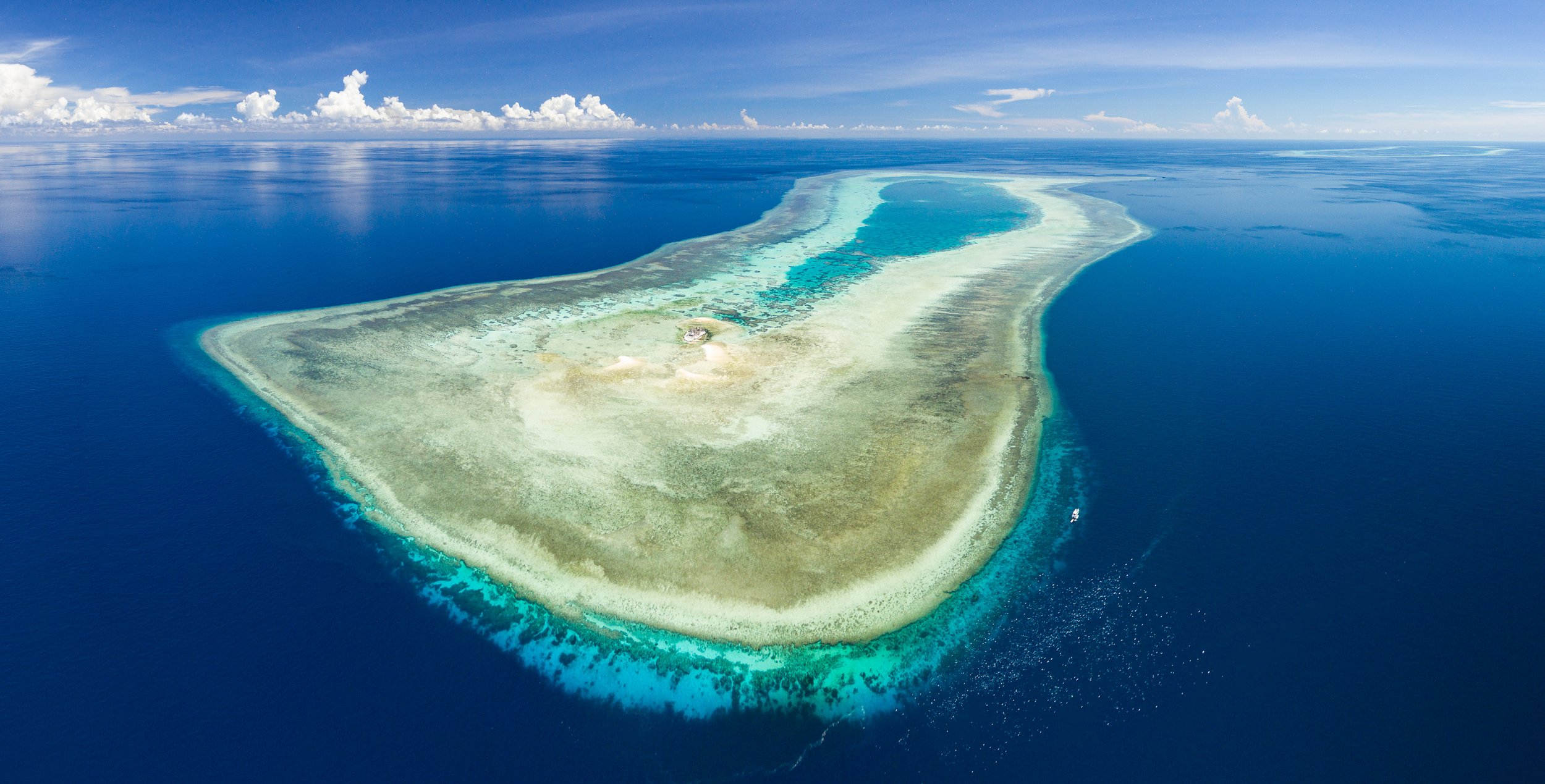
Photo-identification and site connections
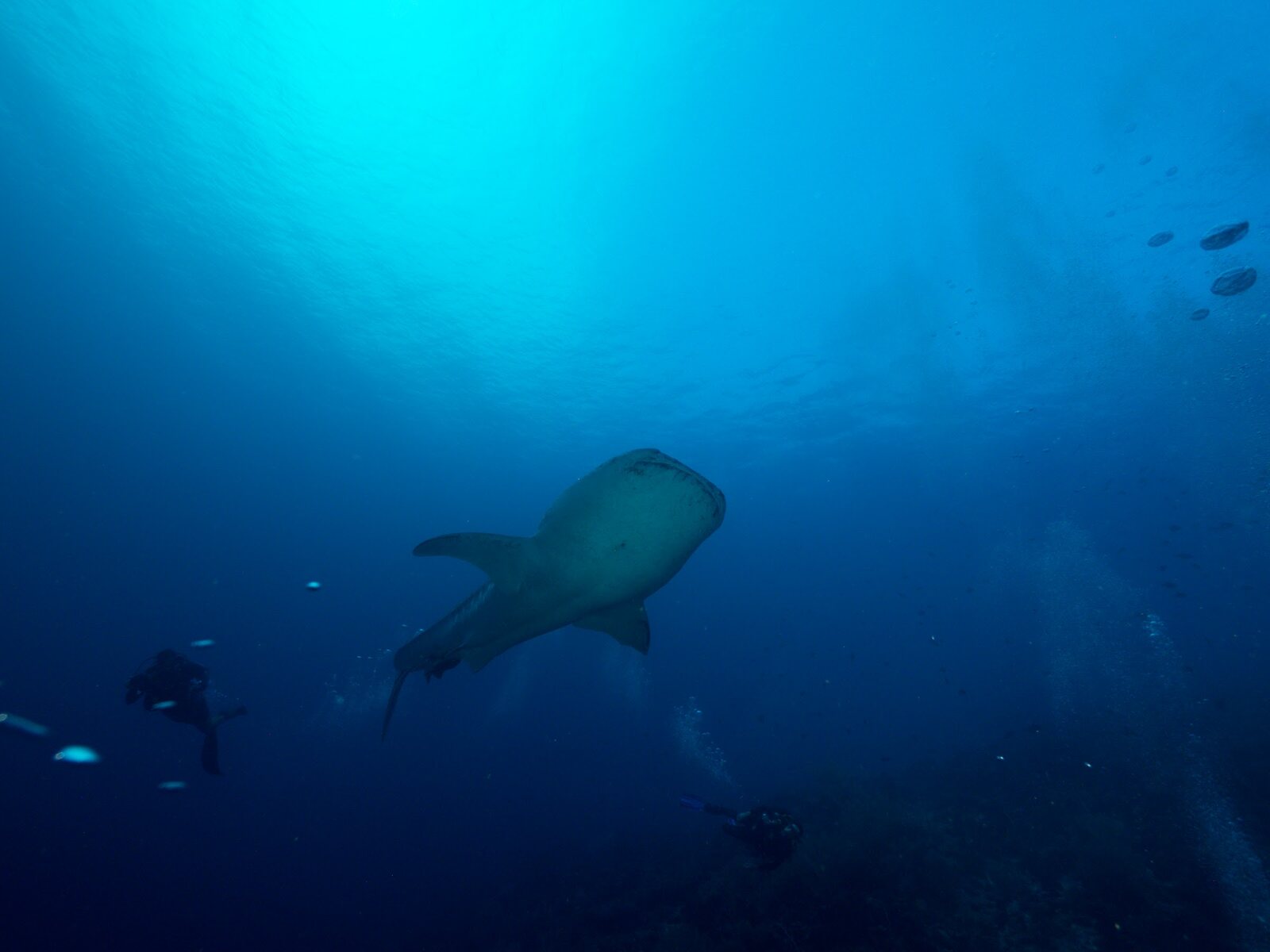
By May 2018, photo-identification, based on each shark’s unique spot pattern, had cataloged more than 500 sharks at Donsol, more than 350 at Oslob, more than 250 at Panaon, and more than 74 at Tubbataha. The same records also connect sites over many years. One shark tagged in this study, known as P-430, was first identified at Oslob in 2012, tagged at Panaon in 2015, and resighted at Oslob in 2016 and at Panaon in 2017.
Microplastics in whale shark scat
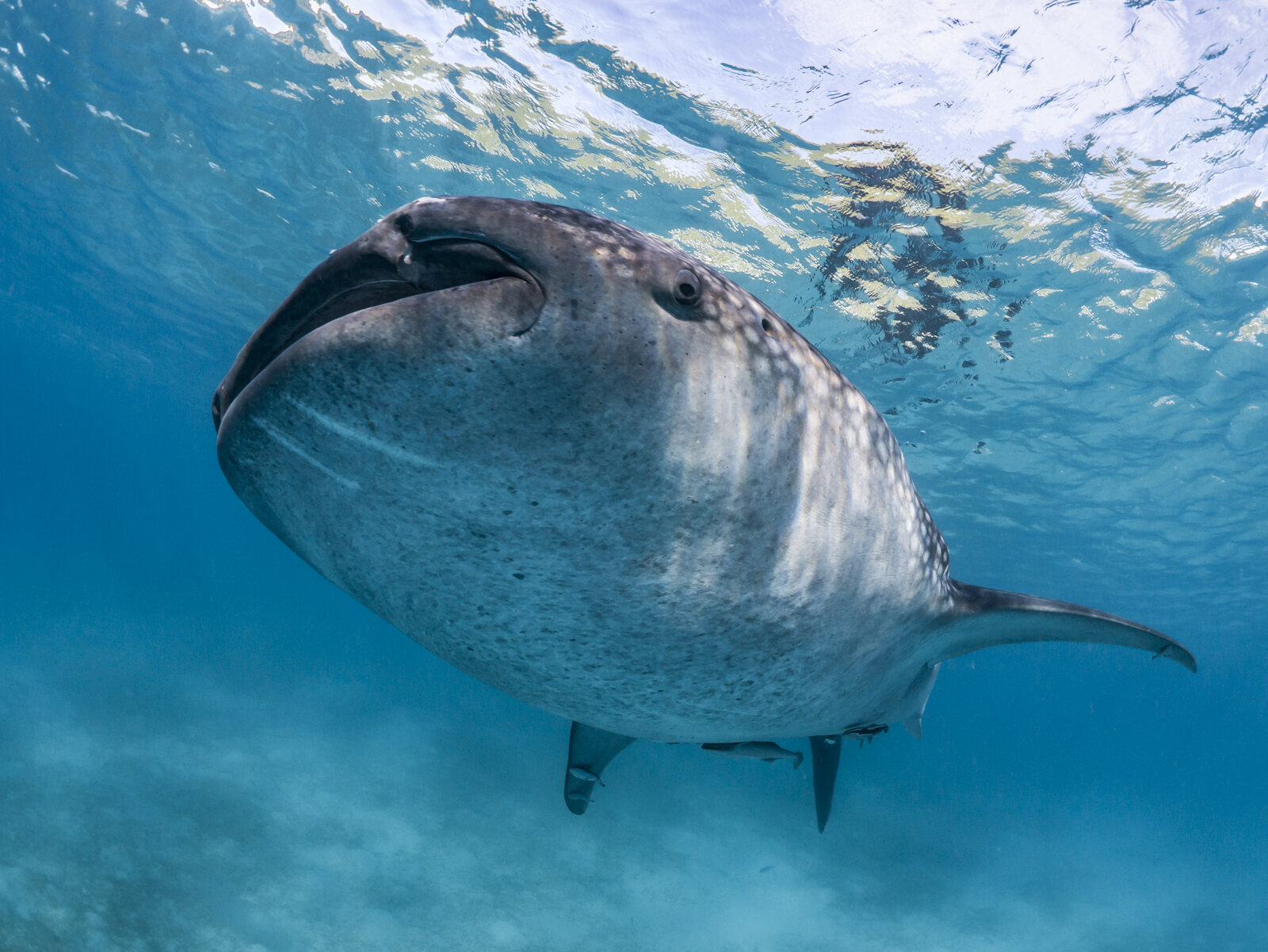
At Oslob, in Cebu, researchers analyzed 99 scat samples collected from 40 identified whale sharks between 2012 and 2019. The study, co-authored by MMF’s Dr. Elitza Germanov, provided the first direct evidence that whale sharks ingest microplastics. Almost half of the samples, 47 of 99, contained at least one particle, at an average of 2.8 particles per gram of scat, with no increase over the eight years. Most particles were polypropylene (59%) or polyethylene (34%), two of the most common plastics, and surface water at the site held 5.83 particles per cubic meter in November 2019.
Residency across sites
Comparing whale shark sites is difficult because each is monitored differently. A 2022 study, with Dr. Simon Pierce, Dr. Chris Rohner, and Dr. Clare Prebble among its co-authors, used Oslob’s near-daily photo-identification records (2,791 days of sampling and 423 sharks, from March 2012 to December 2019) to calibrate a new measure: the number of days a year a shark spends at a site. Applied to 25 sites around the world, the measure gave Oslob the highest residency of all, at an average of 124.6 days a year. Pintuyan, on Panaon Island, averaged 62.0 days, Donsol 61.4, and Honda Bay 7.6.
Study recommendations
The 2018 tracking study concluded that the Sulu and Bohol Seas are important habitat for young whale sharks, and that identifying the threats they face there “must be a conservation priority”, in line with the Convention on Migratory Species’ Concerted Action for whale sharks agreed in October 2017. It recommended:
- Longer-term tracking, alongside genetic tools, to monitor the sharks’ movements.
- Stronger collaboration across East Asia and the Coral Triangle.
- Monitoring to determine whether the population is recovering or still declining.
MMF Project Team
 Dr. Chris Rohner
 Dr. Simon Pierce
Collaborators and Partners
Recent research
- 2022Improving sightings-derived residency estimation for whale shark aggregations: A novel metric applied to a global data set
- 2021Microplastics in fecal samples of whale sharks (Rhincodon typus) and from surface water in the Philippines
- 2018Satellite tracking of juvenile whale sharks in the Sulu and Bohol Seas, Philippines
 Coral Sea Whale Shark Project
 Galapagos Whale Shark Project
 Madagascar Whale Shark Project
 Microplastics & Megafauna