
Where we work
Galápagos
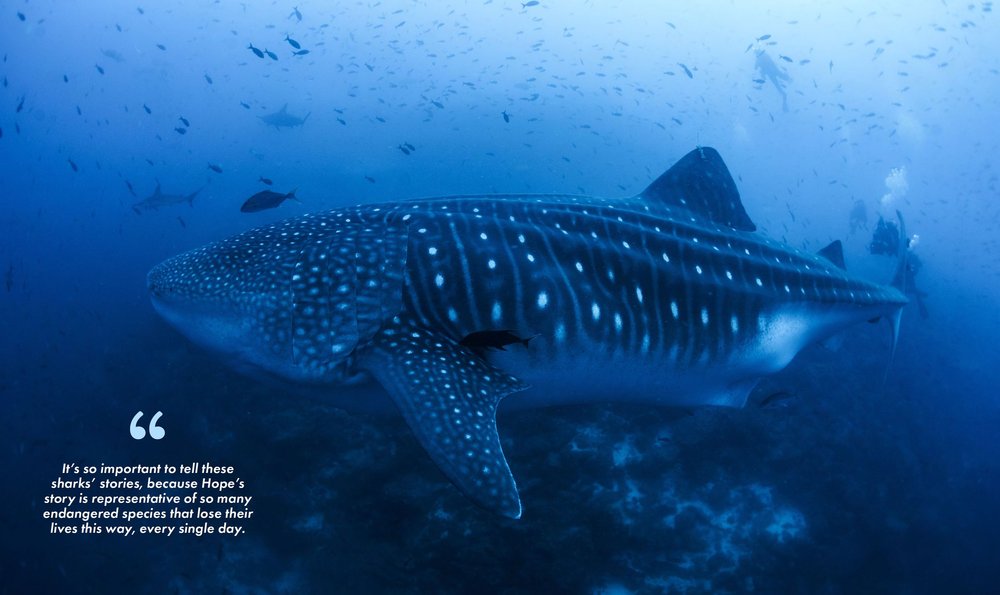
At Darwin Island, in the far north of the archipelago, we study giant female whale sharks found almost nowhere else, and track their movements across the Pacific.
In the Galápagos, MMF works with partners on the sharks of these remote volcanic islands. Through the Galápagos Whale Shark Project we study the giant whale sharks (Rhincodon typus) that pass Darwin Island, the archipelago’s northernmost island. Our work helped secure the Hermandad Marine Reserve, an expansion covering 60,000 km² (23,000 square miles) of Ecuador’s marine protection declared in 2022.
Almost every whale shark seen at Darwin is a large adult female, the reverse of nearly every other whale shark aggregation known. We have identified 736 individual sharks there and satellite tagged more than 100. To investigate their reproduction, we also carried out the first underwater ultrasound scans and blood sampling of free-swimming whale sharks.
The Universidad San Francisco de Quito leads a collaborative tracking study of silky sharks (Carcharhinus falciformis) across the Galápagos and the other offshore islands of the Eastern Tropical Pacific, and we are part of it.
Our projects in Galápagos
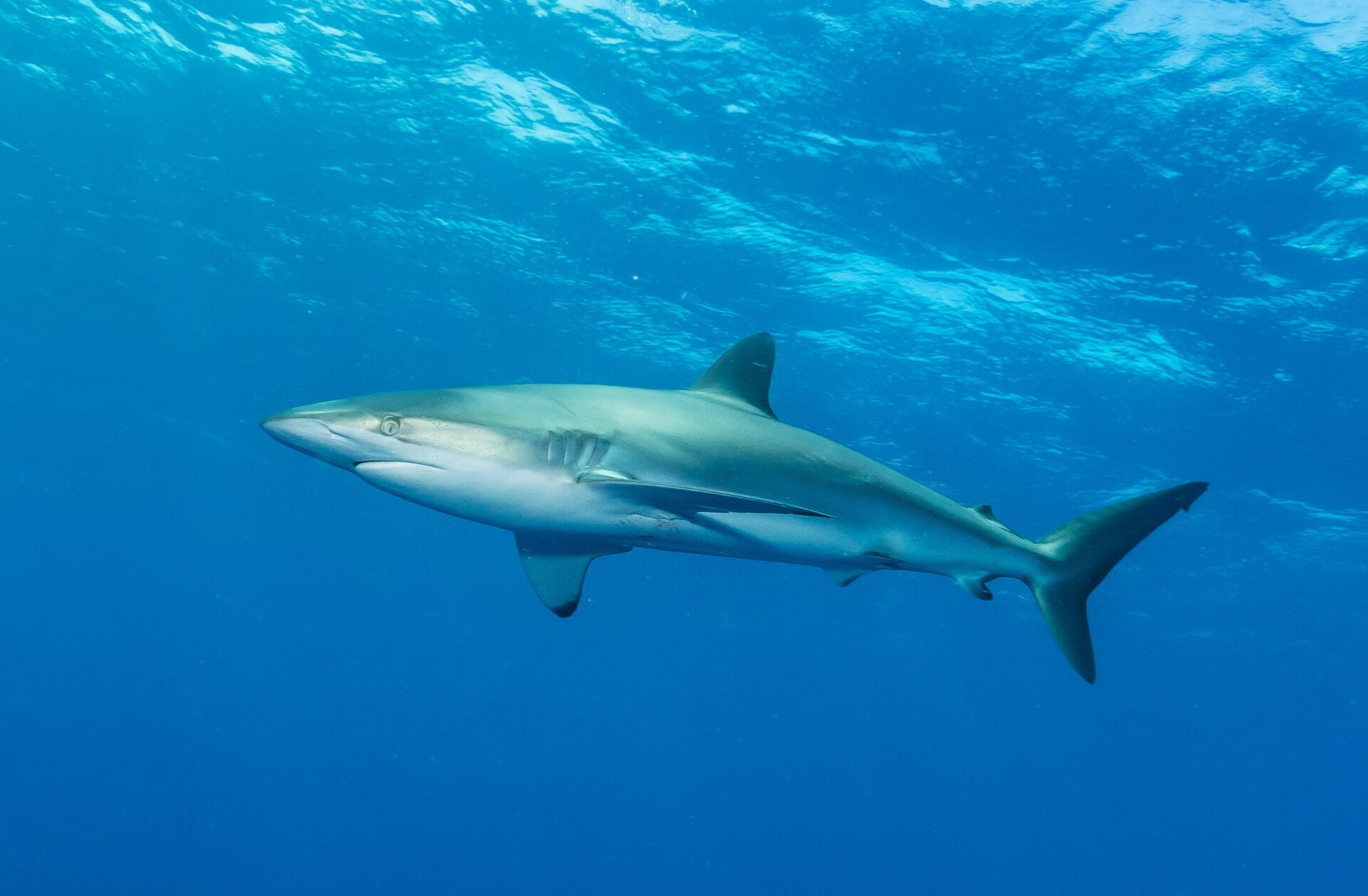
Galapagos Silky Shark Project
Tracking silky sharks between the offshore islands of the Eastern Tropical Pacific to assess how well the region's marine protected areas protect them.
44 silky sharks fitted with acoustic tags, 2009 to 2016Led by Dr. Chris RohnerAbout the project →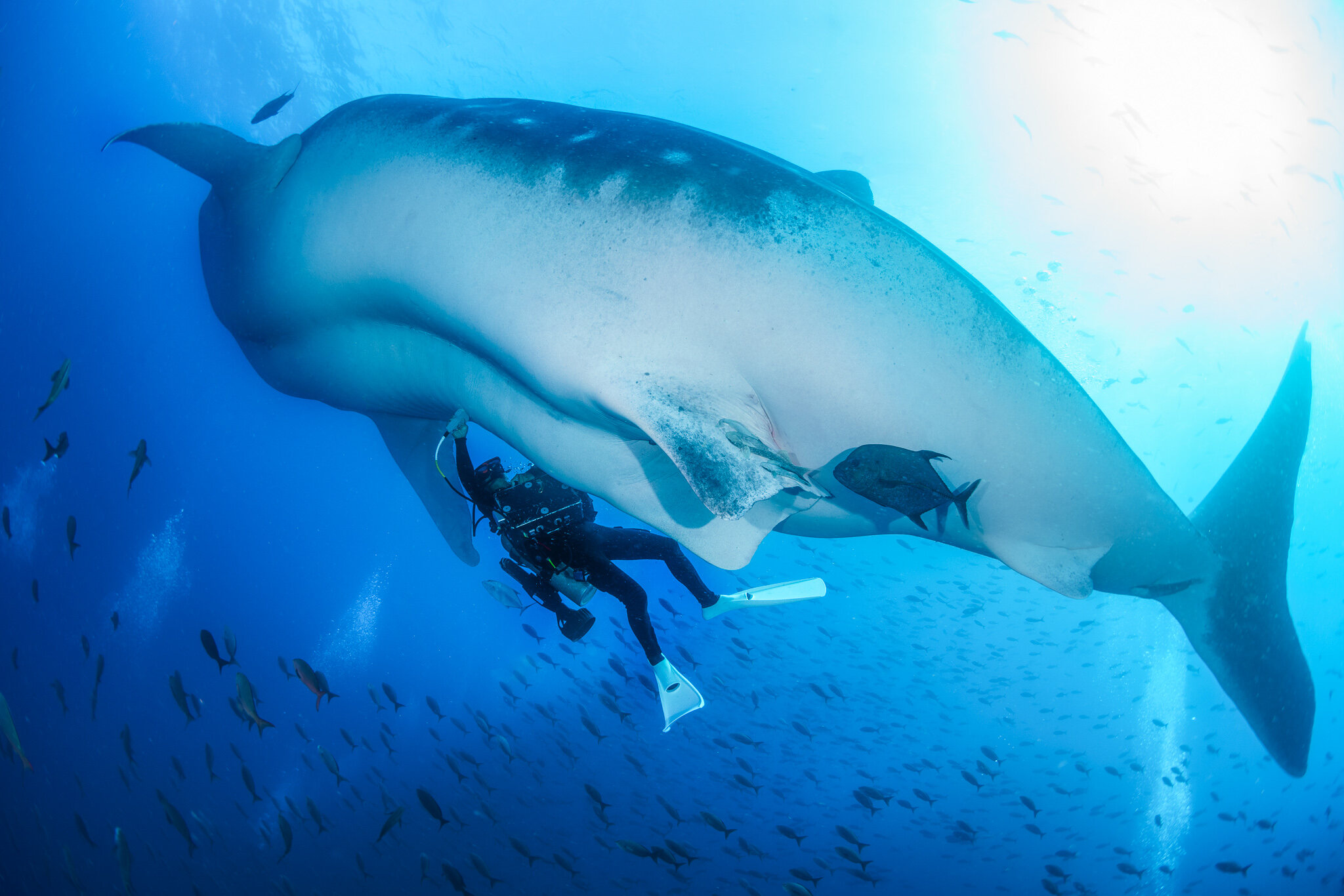
Galapagos Whale Shark Project
Almost all the whale sharks passing Darwin Island are large adult females, a pattern found nowhere else in the world.
736 individual whale sharks identified passing Darwin IslandLed by Dr. Simon PierceAbout the project →Completed projects
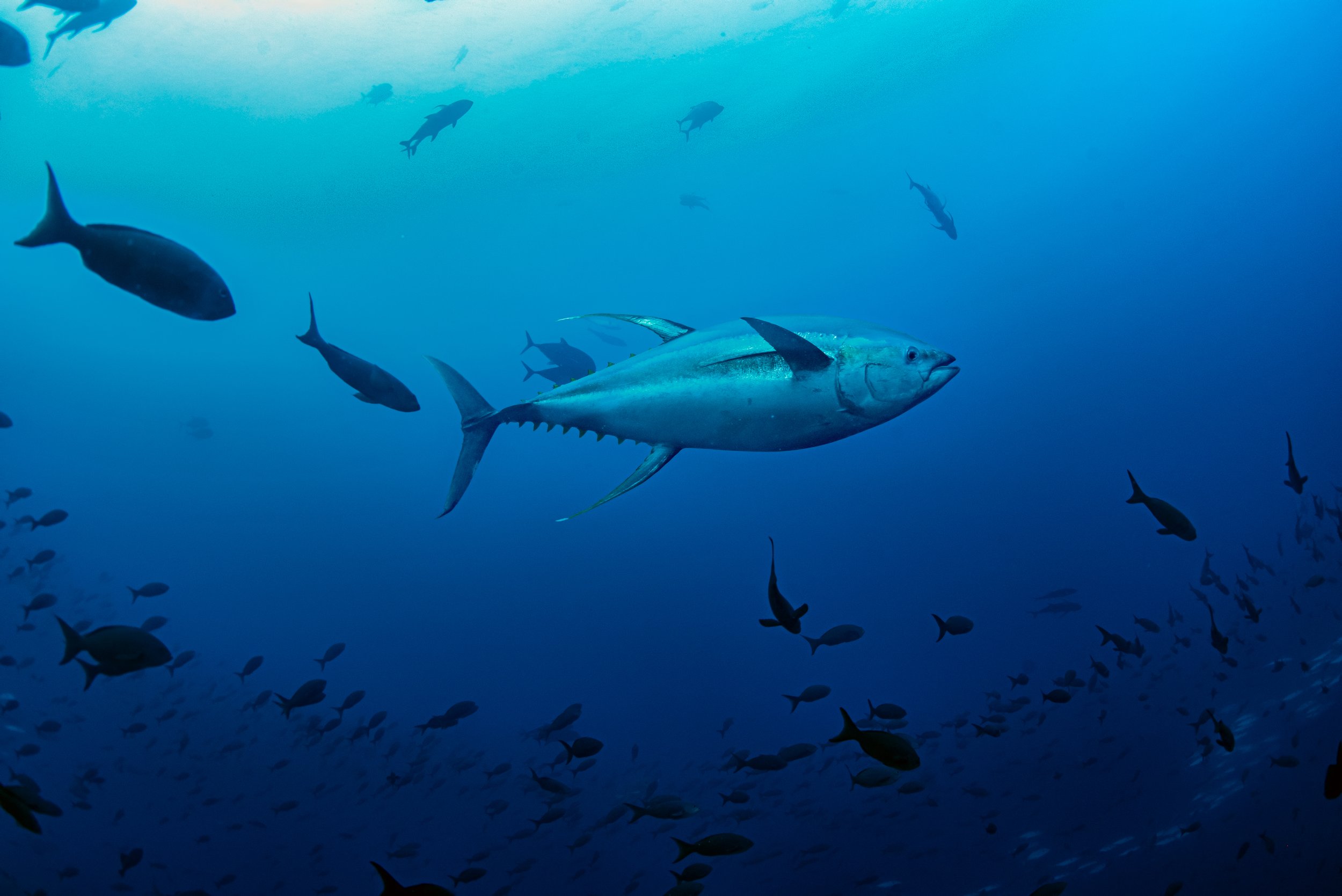 Galápagos Marine Reserve, EcuadorGalápagos Yellowfin Tuna ProjectSatellite tags on yellowfin tuna in the Galápagos showed that oxygen, not depth, limits their dives, keeping them close to the surface and within reach of fishing gear.
What we work on
More than 100 whale sharks have been satellite tagged at Darwin, one of the largest tracking efforts on the species anywhere. The sharks follow oceanic fronts, where cool upwelling meets warm tropical water; as a result, protecting them means protecting moving ocean features, not just fixed places.
Our work helped secure the Hermandad Marine Reserve in 2022, which raised the share of Ecuador's ocean under protection from 13% to 18.9%, and the protected share of whale shark habitat from 27% to 34%. Tracks such as the one to Cocos Island also support the marine corridor agreed by Ecuador, Costa Rica, Panama, and Colombia.
With a team from Okinawa, we carried out the first underwater ultrasound scans and blood sampling of free-swimming whale sharks. Where these large females go to give birth, however, remains one of the biggest open questions in marine biology.
Silky sharks are listed as Vulnerable on the IUCN Red List. The regional tracking study will show how much protection they receive inside marine protected areas, and where they encounter fishing outside them.
News from Galápagos
 Aug 2023NEW STUDY: Tracking Tuna in Galápagos Helps Guide Climate Change Models
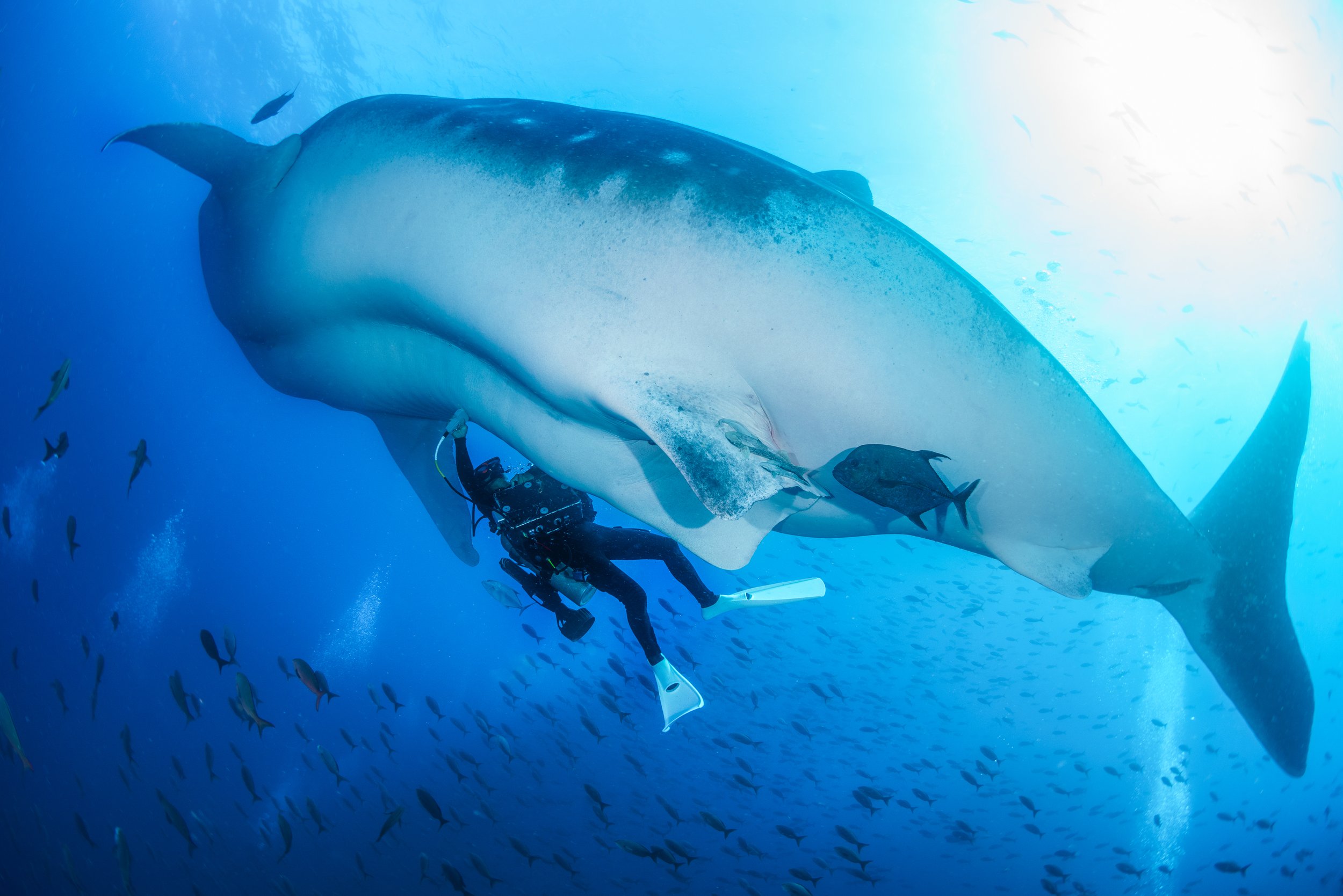 Mar 2023New Science: Studying Whale Sharks in the Galapagos with Underwater Ultrasound and Blood Sampling
 Sep 2022BREAKING: The global operations behind China’s massive fishing fleets targeting the Galapagos Islands revealed