Where we work
Mayotte
Around Mayotte, satellite tags and divers' photos revealed a small reef manta ray population that remains close to the island, and a shallow bay where young mantas aggregate.
Until this study, nothing had been published on the reef manta rays (Mobula alfredi) of Mayotte, a French overseas department in the northern Mozambique Channel. In a project run by Dr. Jeremy Kiszka of Florida International University with the team of the Parc naturel marin de Mayotte, we tracked mantas with satellite tags and identified 34 individuals from photographs taken by local divers and snorkelers. The results, published in 2025, point to a small population that remains close to the island and relies on its lagoon, where young mantas aggregate in shallow Handrema Bay.
MMF’s Dr. Chris Rohner led the analysis and writing. The study is now complete: read more about our Mayotte Manta Ray Project.
Completed projects
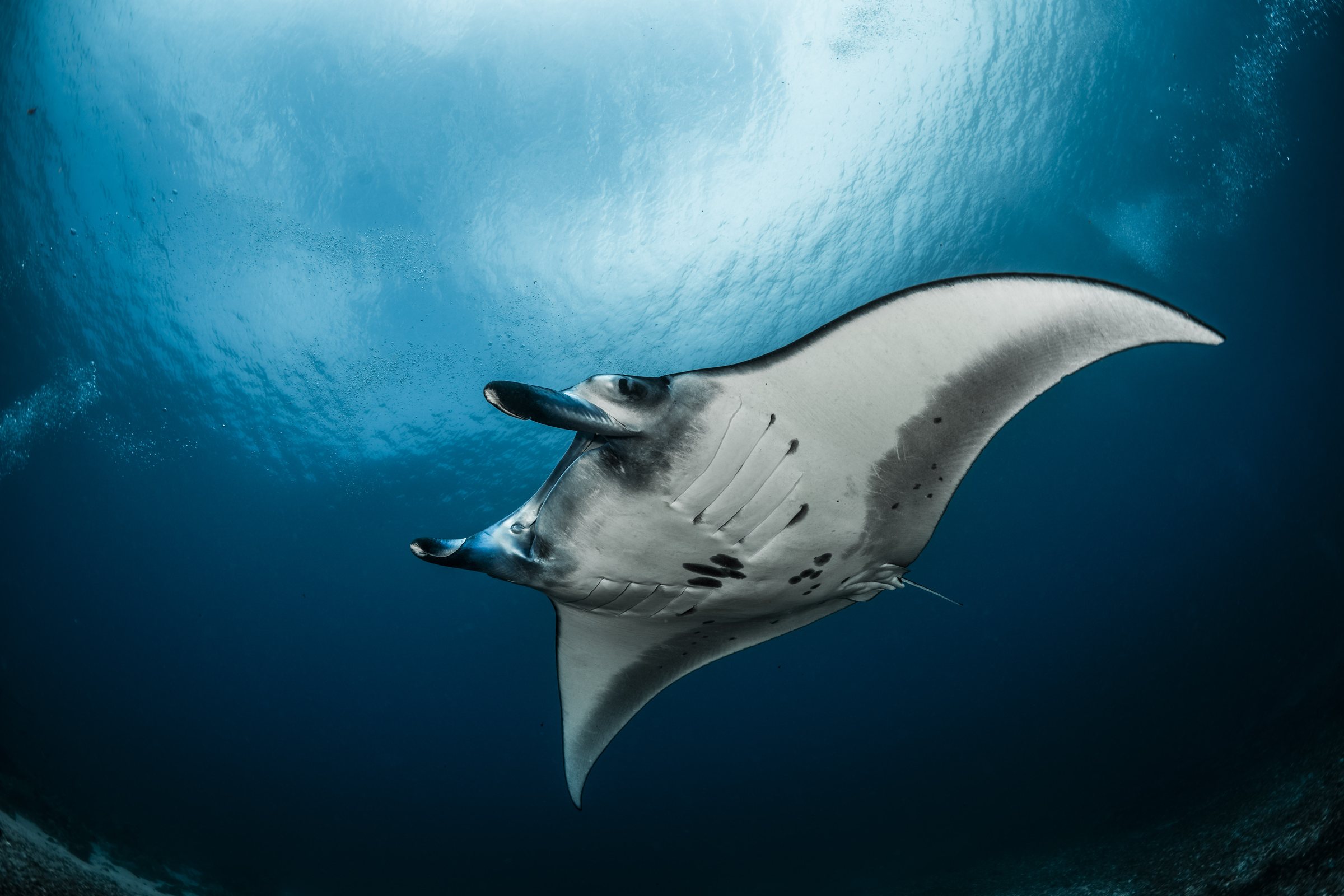 Mayotte, northern Mozambique ChannelMayotte Manta Ray ProjectSatellite tags and photographs from local divers showed that Mayotte's reef manta rays remain close to the island and dive to nearly 400 m (1,300 ft), and that young mantas aggregate in one shallow bay.
What we work on
All satellite-tagged mantas remained in the northern Mozambique Channel, within about 285 km (177 miles) of Mayotte. Within that range, they often left the lagoon for the open ocean, and one dived to 397 m (1,300 ft).
Of all the manta encounters reported, 41% were with newborns or young of the year, most of them in shallow water in Handrema Bay. The bay meets the criteria used to recognize a shark or ray nursery.
Reef mantas are protected within the Parc naturel marin de Mayotte. However, the tracked mantas often left the park for fished waters, so the study found that protecting them will also require regional coordination.